Weber Grills & Smokers
Weber has 34 grills and smokers on Grill Picker, priced from $65 to $4,399, 5 of which have WiFi control. The highest-rated Weber pick is the Weber Smokey Mountain 18 at 4.8★. Compare the full lineup below.
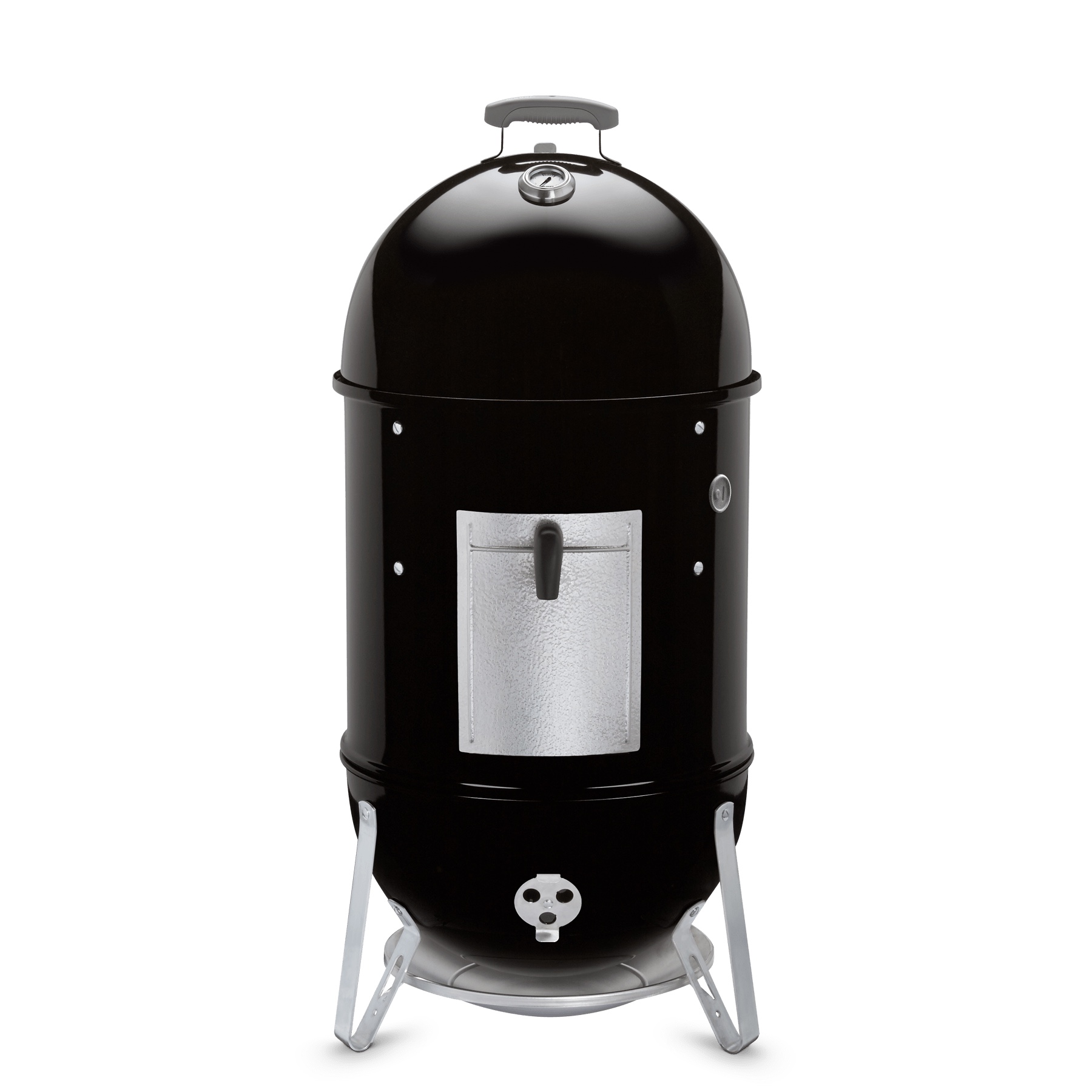
The Weber Smokey Mountain is the legendary bullet-shaped charcoal water smoker that has been the 'first real smoker' recommendation for decades. Two stacked grates and a water pan turn out competition-quality BBQ for under $500.

The Weber Master-Touch 22 is the upgraded version of Weber's iconic charcoal kettle, adding a hinged Gourmet BBQ System grate, a built-in thermometer, and a Tuck-Away lid holder. It's a benchmark backyard charcoal grill.
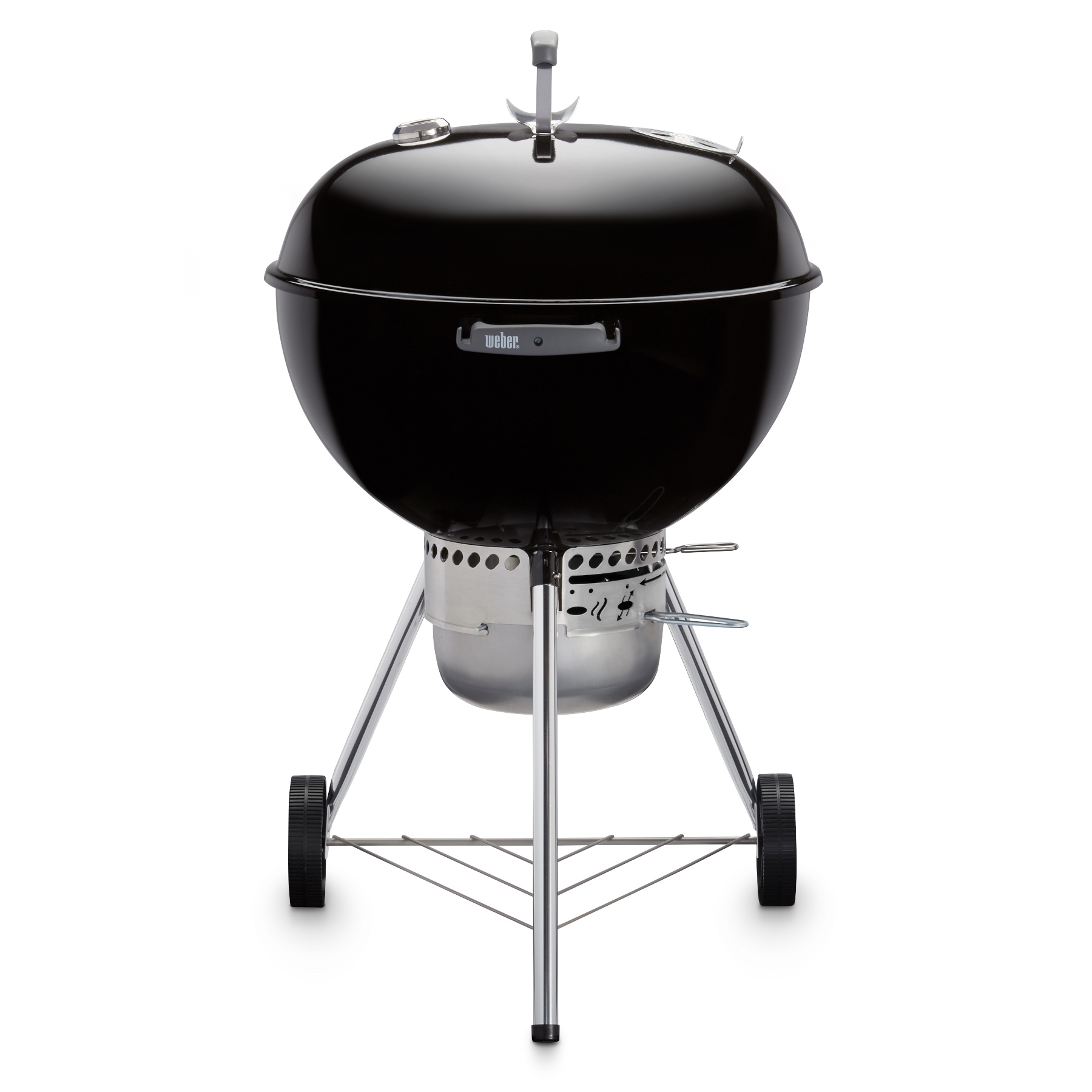
The Weber Original Kettle Premium 22 is the iconic charcoal kettle that started backyard grilling in America, upgraded with a built-in thermometer, hinged grate, and sealed One-Touch ash catcher. It's the single most-recommended first grill in owner discussions.
Weber
Weber Slate 36
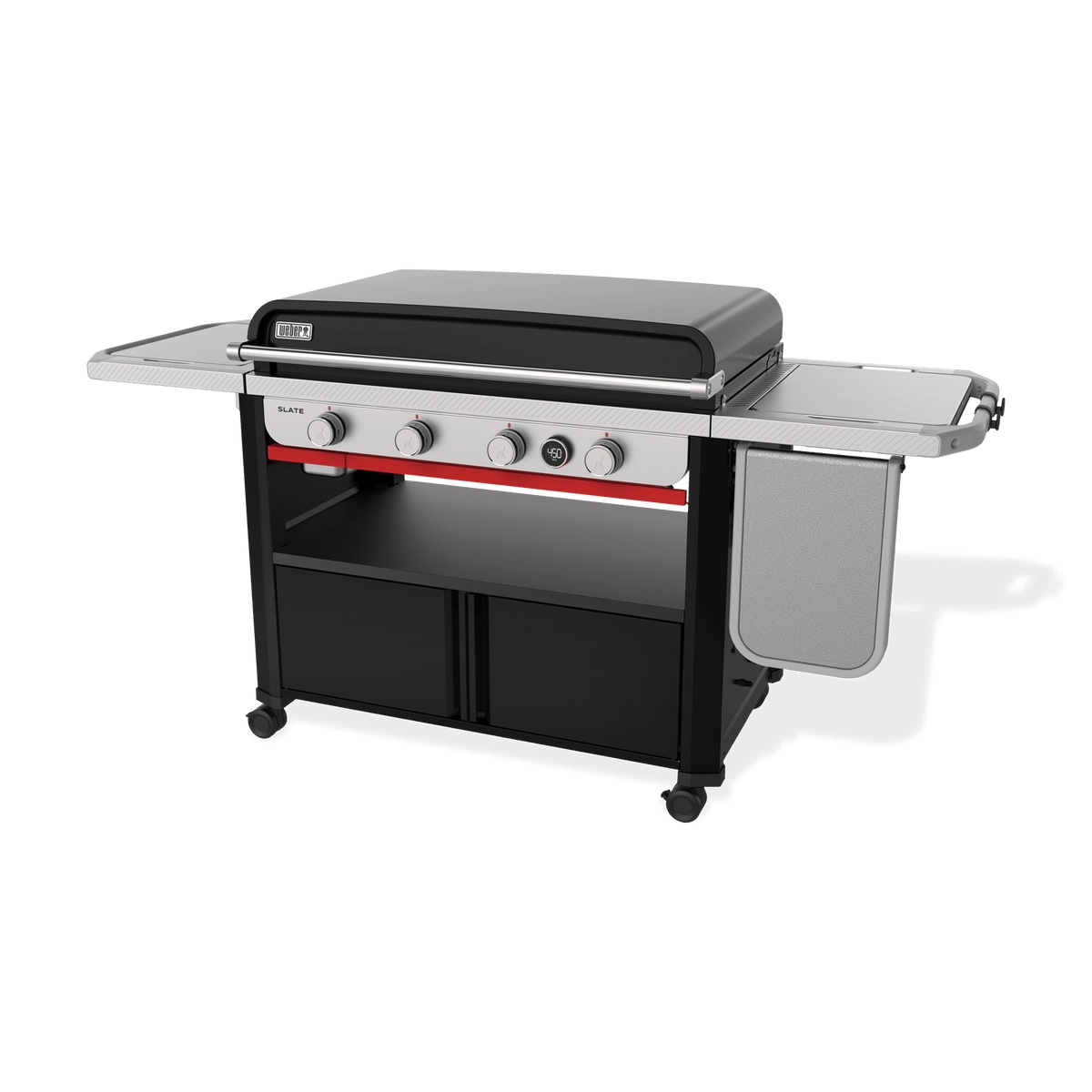
The Weber Slate 36 is Weber's flagship flat-top griddle, pairing a pre-seasoned rust-resistant carbon steel cooktop with four independent burners, a built-in digital cooktop thermometer, and the storage and side tables that made it an instant Blackstone rival.
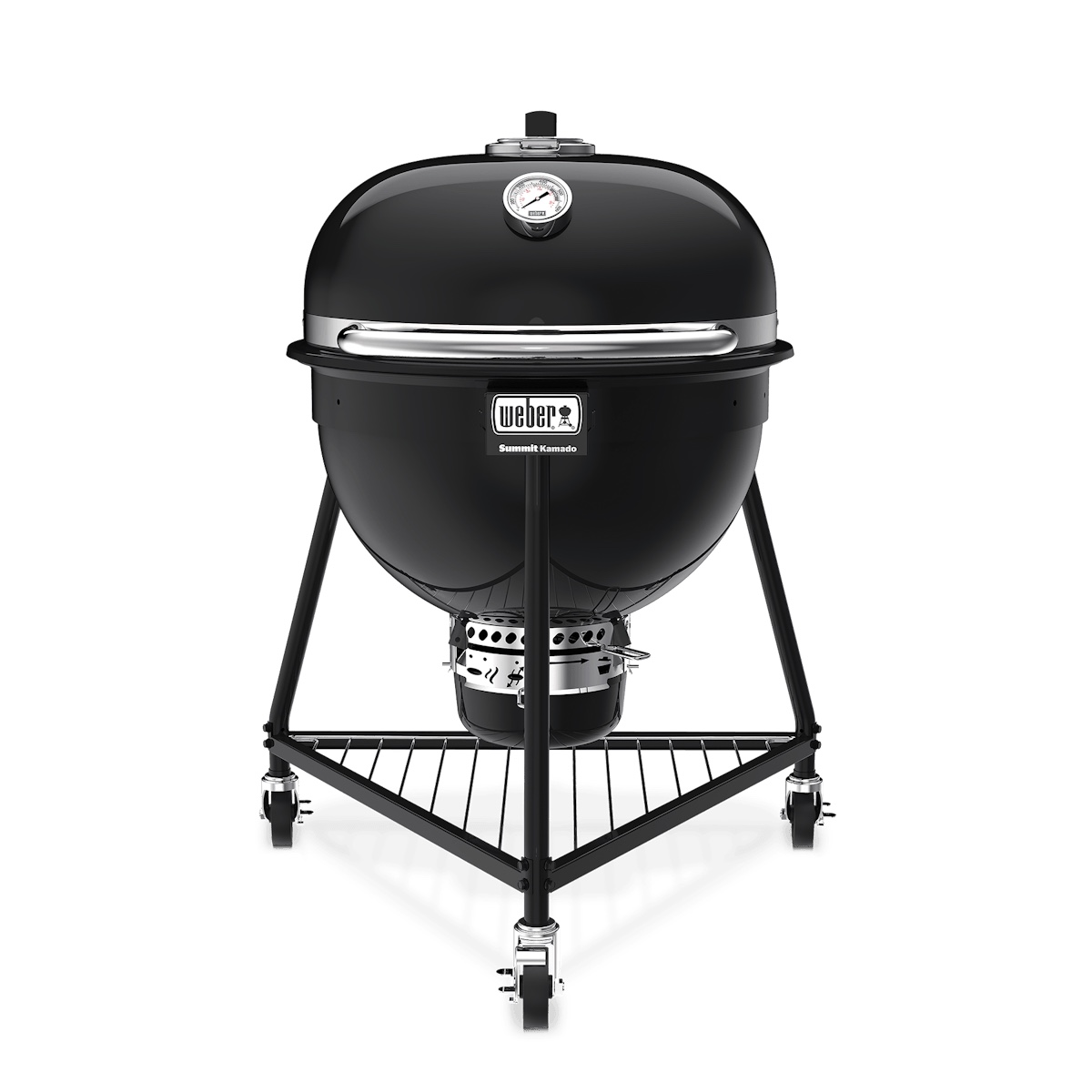
The Weber Summit Kamado E6 is Weber's 24-inch kamado-style charcoal grill built from dual-walled, air-insulated porcelain-enameled steel instead of ceramic. It pairs kamado heat retention with kettle conveniences like the One-Touch ash cleanup, a hinged RapidFire lid damper, and a flip-up diffuser for easy fuel access.

Weber
Weber Smoque
The Smoque is Weber's 2025 answer to the entry-level Traeger, and it deliberately does less than the Searwood to cost $300 less: no direct-flame searing, no 600F mode, just a smoker-first pellet grill that nails the fundamentals. Reviewers and early owners consistently rate its smoke flavor ahead of equivalently priced Traegers - the SmokeBoost setting and SmoqueVent circulation produce visibly better smoke rings and bark - and the Rapid React PID recovers temp fast after lid opens. The porcelain-enameled barrel (the same coating Weber kettles wear for decades) and 5-year warranty make the hardware feel more durable than the sheet-metal norm at this price, and the enclosed grease-plus-ash drawer is genuinely tidy. Trade-offs are real: 500F max with no sear zone means steaks finish better on a separate grill, 594 sq in is one-brisket territory, the single-position upper rack limits tall cooks, and Weber Connect - though improved - still draws occasional app-pairing complaints carried over from the SmokeFire era. Against the $799 Traeger Woodridge you're choosing more smoke flavor and simpler controls over Traeger's bigger 860 sq in and accessory ecosystem.
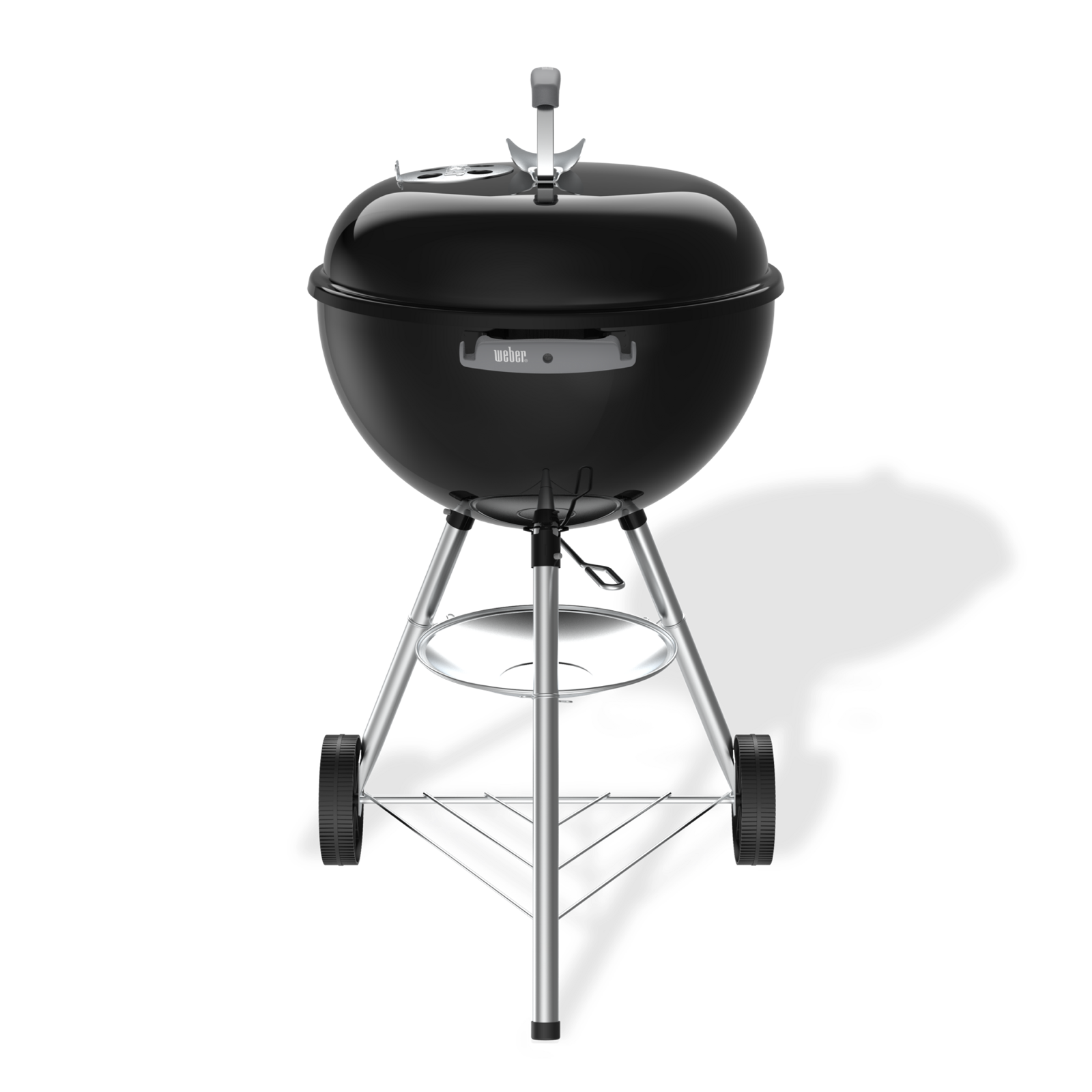
The smallest full-size Weber kettle, an 18-inch bowl with 240 sq in of grate against the 22-inch model's 363. It keeps the One-Touch ash sweep, enclosed ash catcher and the same porcelain-enameled bowl and lid as its bigger sibling, so the only real difference is diameter. Weber sells it as the apartment-balcony and small-patio kettle rather than a budget version of the 22.
Weber
Weber Smokey Joe 14
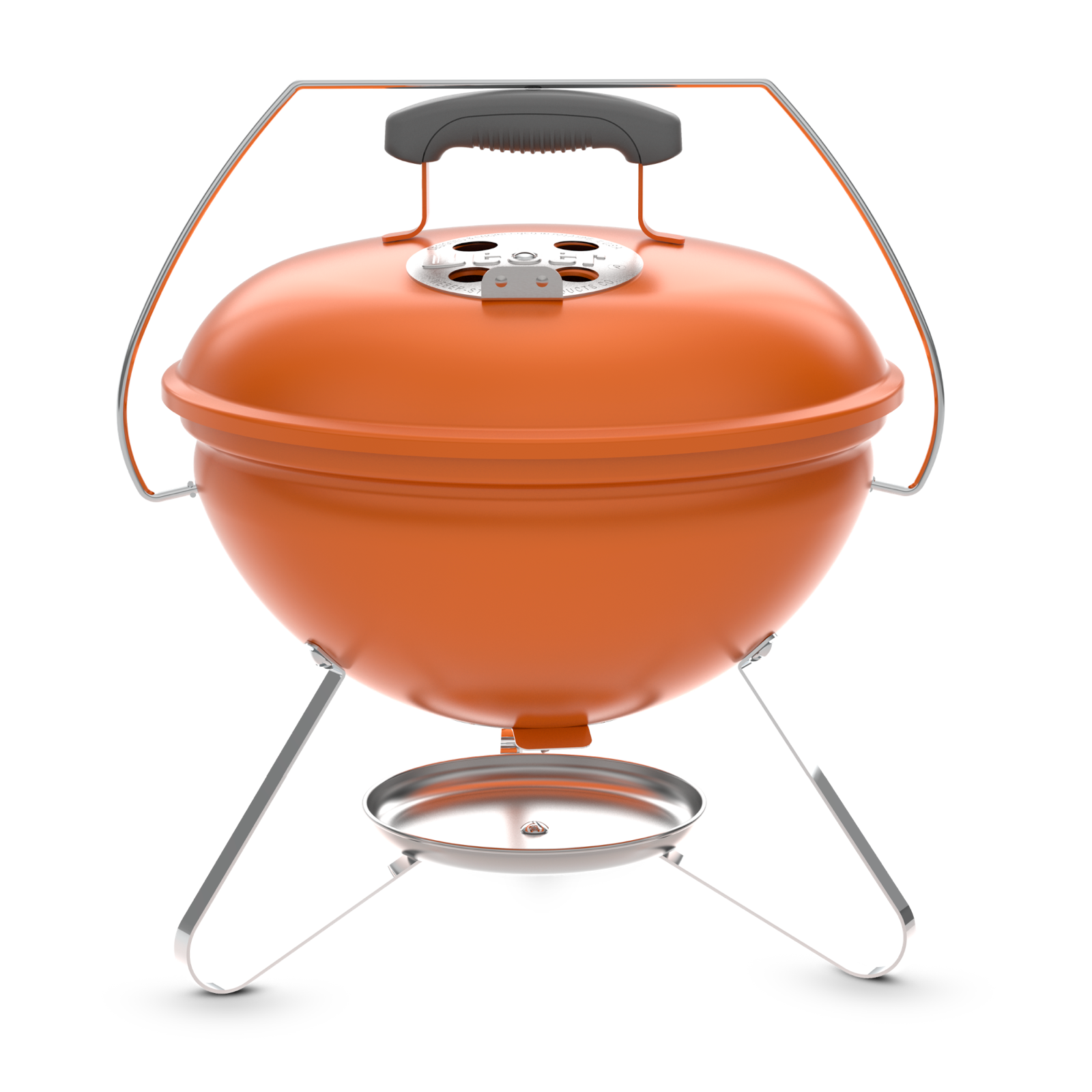
The 14-inch tabletop kettle, and the cheapest charcoal grill Weber sells. The Tuck-N-Carry lid lock clamps the lid to the bowl so the whole grill carries by its handle, then doubles as a lid rest once open. It is a true kettle in miniature — same porcelain-enameled bowl, same damper control — not a stamped-steel picnic grill.

Weber
Weber Genesis E-325s
The Weber Genesis E-325s is a 3-burner premium propane gas grill with a dedicated sear zone and side burner, part of Weber's redesigned Genesis line. Weber is the benchmark brand for backyard gas grills. Note: this model is no longer sold new as of 2026. Its current equivalent is the Weber Genesis E-325. (2024 refresh dropped the 's' (stainless flavorizer bars became porcelain); weber.com E-325s NG listed $849 'Currently Unavailable', new E-325 $899)
Weber
Weber Searwood 600
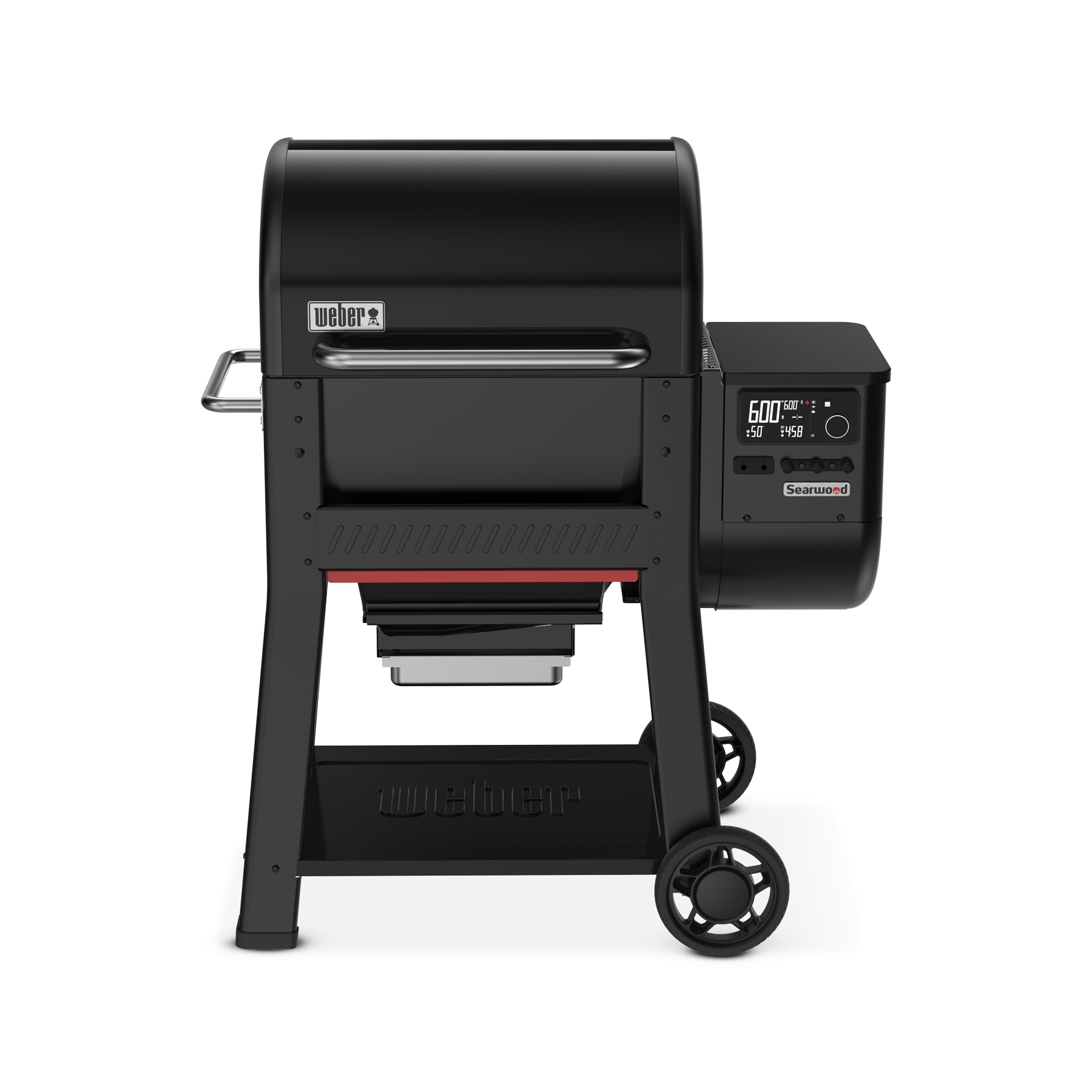
The Weber Searwood 600 is Weber's 2024 pellet grill that finally fixed the SmokeFire's sins - a 180-600°F range, DirectFlame searing, manual offline mode, and a Rapid React PID controller at a sharper price. owner discussions's pellet crowd calls it the redemption arc.

Weber
Weber Slate 30
The Slate 30 is Weber's answer to the mid-size Blackstone, and its whole pitch is lower maintenance: the carbon-steel cooktop is case-hardened and pre-seasoned at the factory, and owners consistently report it shrugs off the surface rust that plagues bare-steel Blackstones left outside. Reviewers and owners also praise how evenly it heats edge to edge — three burners under 540 sq in with far fewer cold corners than the 4-burner Blackstone 36 — and the front-corner grease trap is easier to manage than rear-scrape systems. The build is classic Weber: heavy, rigid cart, good casters, and a 5-year warranty versus Blackstone's 1 year. The honest trade-offs: at $649 it costs roughly twice as much as a Blackstone 28 with similar cooking area, the digital temp display is reserved for the $799 premium trim, rust resistance is explicitly excluded from the cooktop warranty, and you still need to season and oil it like any griddle. If you griddle weekly and hate rust babysitting, the Slate is worth the premium; occasional smash-burger cooks will get 90% of the experience from a Blackstone for half the price.

Weber
Weber Q 1200
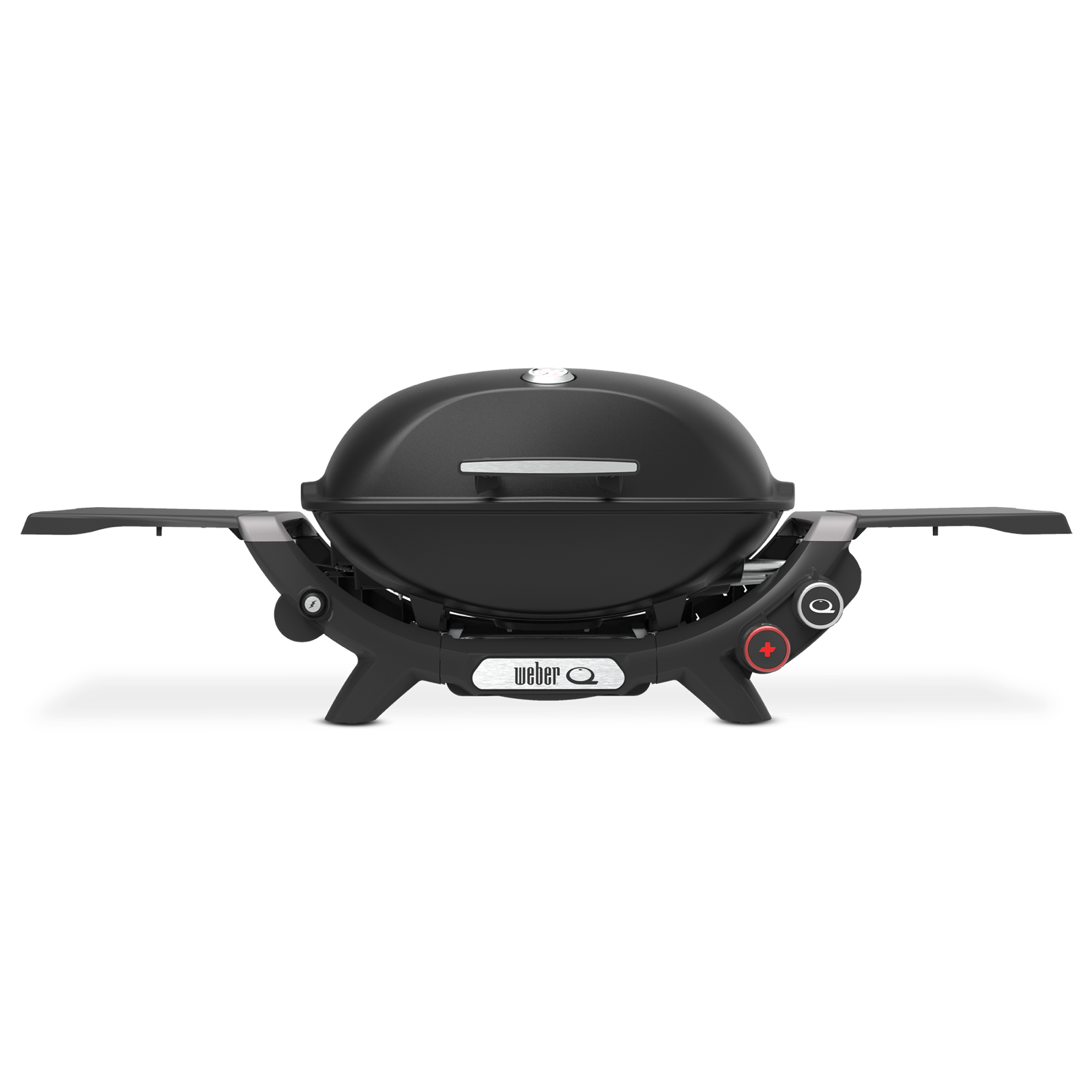
The Q 1200 has been the default answer to 'best portable gas grill' for over a decade, and the review volume backs it up - it's one of the most-reviewed grills Weber sells. Unlike the thin folding camp grills it competes with, the Q is a real grill shrunk down: a cast aluminum cookbox that retains heat like a full-size Weber and porcelain-enameled cast iron grates that lay down legitimate sear marks on steaks and burgers. OutdoorGearLab has ranked it their top tabletop portable for years, and owner threads about balcony and tailgate setups almost always land here. Honest limitations: one U-shaped burner means no two-zone cooking, so thick cuts and bone-in chicken take lid management and patience; 189 sq in feeds about four people; it drinks 1 lb canisters, so most owners buy the adapter hose for a 20 lb tank; and the low-profile grease tray will flare if you never clean it. The regulator's low-flow safety lockout (weak flames after a bottle swap) is the most common owner complaint, fixable with the well-known reset ritual. Against a Blackstone 22 you're trading griddle versatility for real grill marks and a lid.
Weber
Weber Q 2800N+
The grill that replaced the Q 2200 in Weber's US lineup and is now effectively the whole Q series here. Against the old Q 2200 it adds 14% more grate area (320 vs 280 sq in) and 50% more heat (18,000 vs 12,000 BTU), plus a separate 4,000 BTU "Plus" burner that lets the dome hold a genuine 250°F for roasting. Priced as the tabletop unit; the rolling stand is a separate $129.99 accessory, or $599 bundled.

Weber
Weber Spirit E-210
The Spirit E-210 is the compact half of Weber's best-selling gas grill family - the current Snap-Jet generation of the 2-burner that thousands of small-patio owners have run for decades. The formula hasn't changed because it works: a porcelain-enameled cookbox that won't rust through (and is warrantied for 10 years against it), cast iron grates, Flavorizer bars that turn drippings into flavor instead of flare-ups, and burners that light on the first click years in. At 48 inches wide it fits patios and townhome decks where even the 3-burner E-310 feels bulky, and the 2025 refresh added per-burner Snap-Jet ignition and Weber Works rails for accessories. The honest limits: 26,600 BTU across two burners means preheating takes a while, a hard steakhouse sear takes patience, and two burners make real indirect cooking cramped - a whole chicken works, a brisket doesn't. Owners also note the current generation's lid can drip rainwater into the grease tray if stored uncovered. Against value rivals like the Char-Broil Performance, you pay roughly double up front and get a grill that routinely outlives three of them; used Spirits famously hold resale value.
Weber
Weber Spirit E-325
The top of Weber's non-smart Spirit line and the model directly above the Spirit E-310 already in this catalog. It adds a Sear Zone — two Boost Burners that concentrate roughly 40% more power over one section of the grate — on the same 360 sq in primary grate as the current E-310. Priced as the LP version in black; natural gas runs $549.

Weber
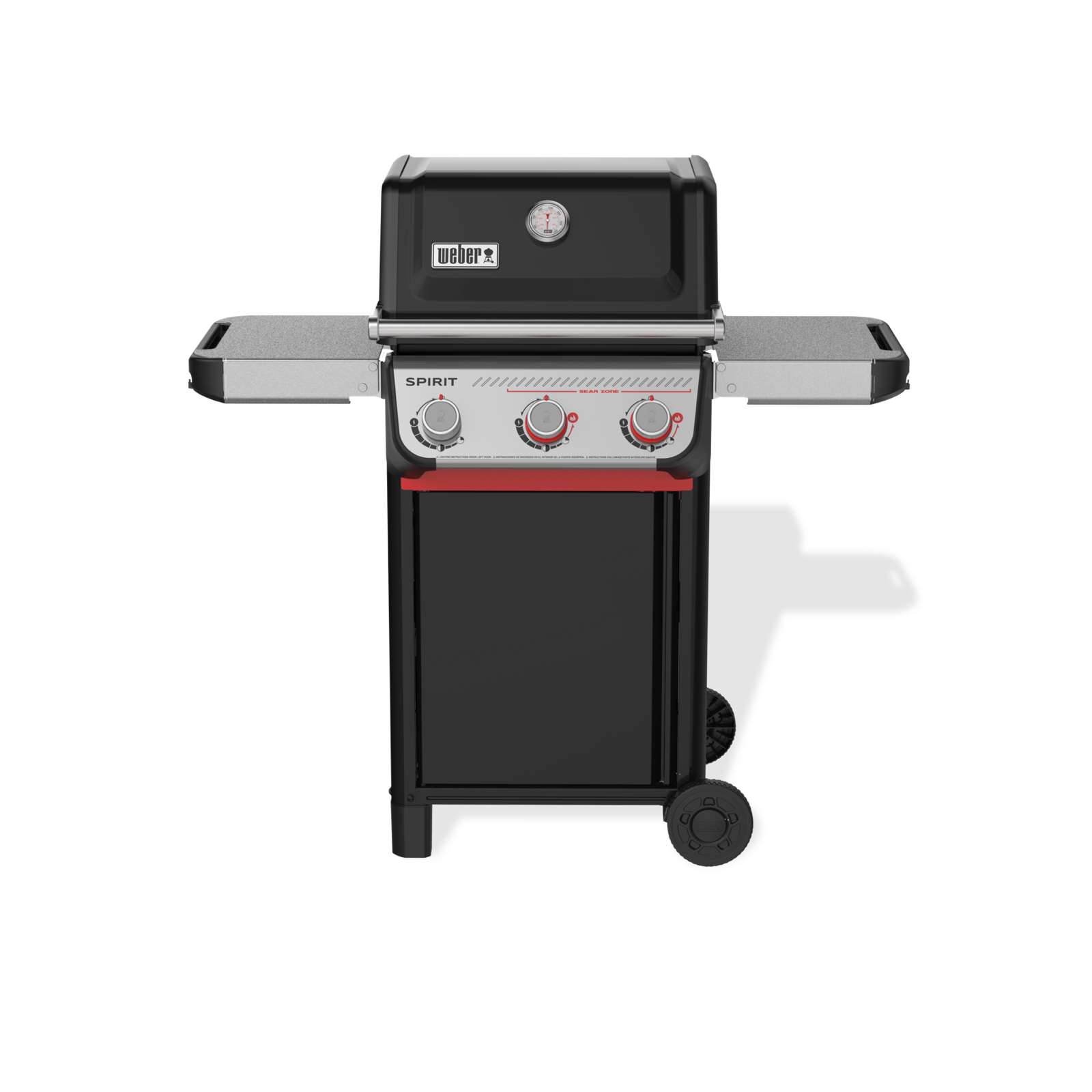
Weber Spirit E-310
The Weber Spirit E-310 is a compact 3-burner propane gas grill and one of the best-selling backyard grills in America. The latest redesign adds Snap-Jet ignition and a more modern cart.
Weber
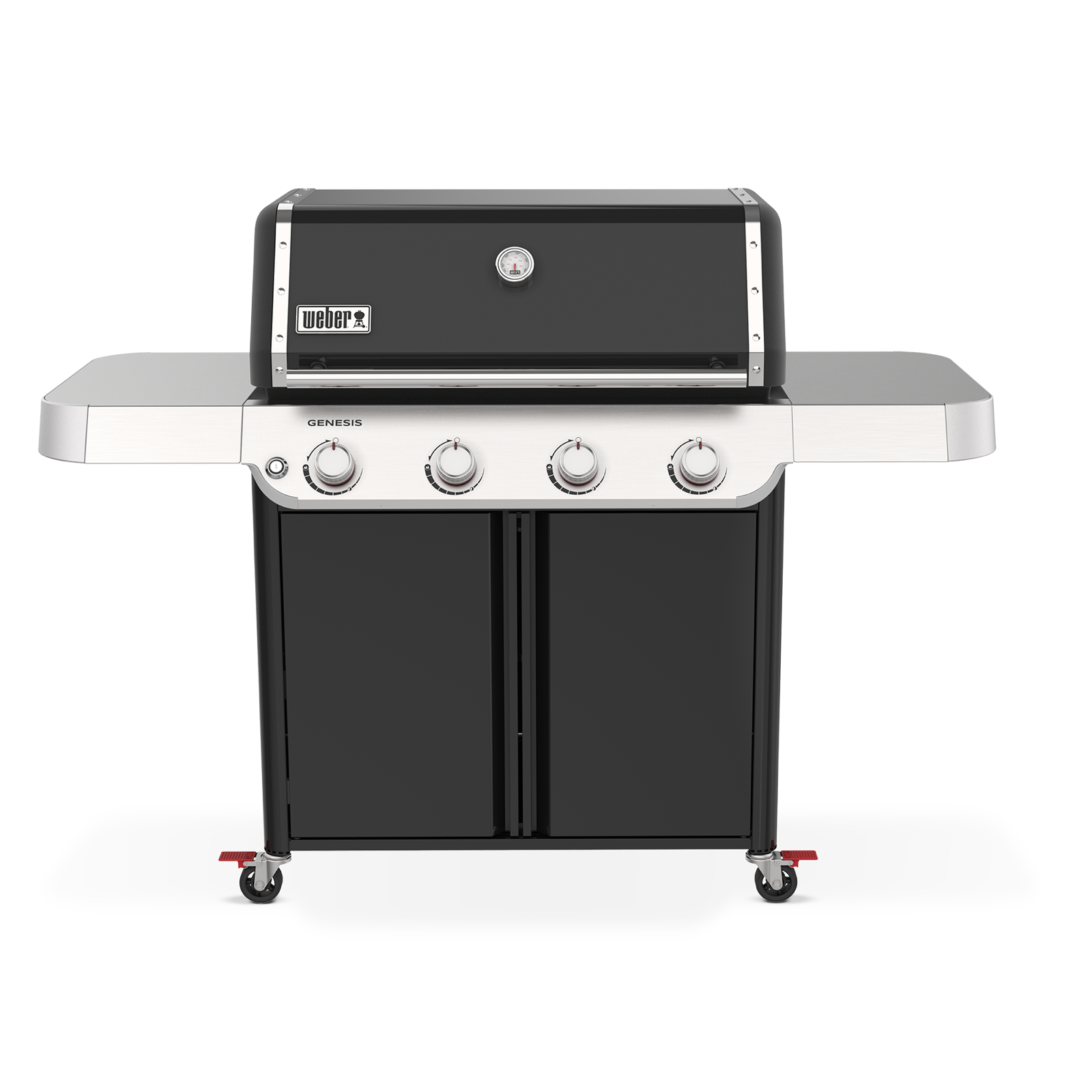
Weber Genesis E-415
The four-burner Genesis with an enclosed cabinet, and the volume seller of the Genesis line. 646 sq in of primary grate — 820 sq in with the warming rack — makes it roughly a third larger than the 3-burner Genesis models, at the cost of the Sear Zone and smart thermometer those carry. Porcelain-enameled steel lid and painted steel doors; the S-415 is the same grill in stainless for $100 more.
Weber
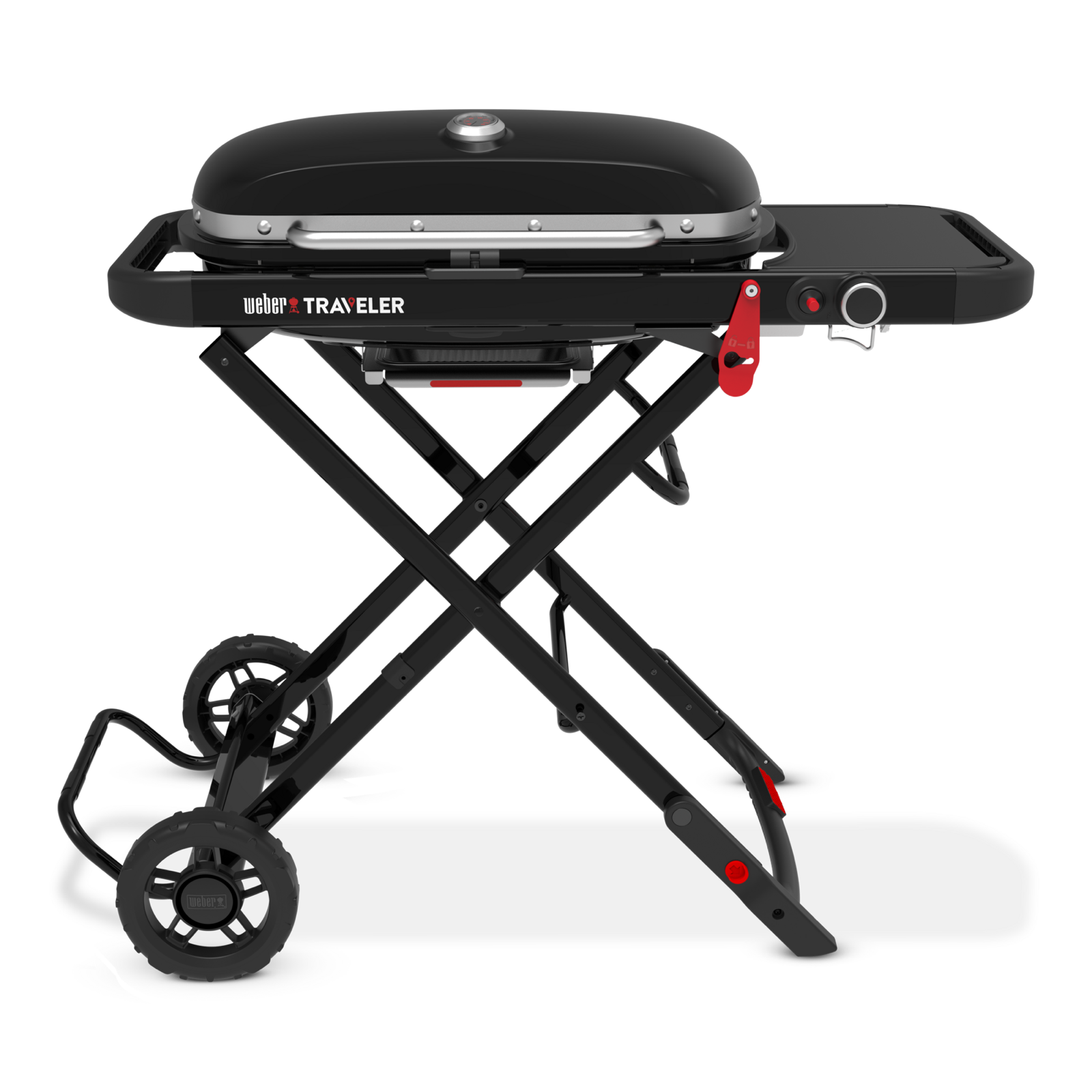
Weber Traveler
A full-size portable: 320 sq in of cast-iron grate on a folding cart that collapses in one motion and rolls on two wheels like a hand truck. That is roughly the grilling area of a Weber Spirit compacted into something that fits a car trunk, which is what separates it from the tabletop Q series. Single 13,000 BTU burner, so it trades heat output for footprint. A Traveler Compact and an RV-specific version are also sold.
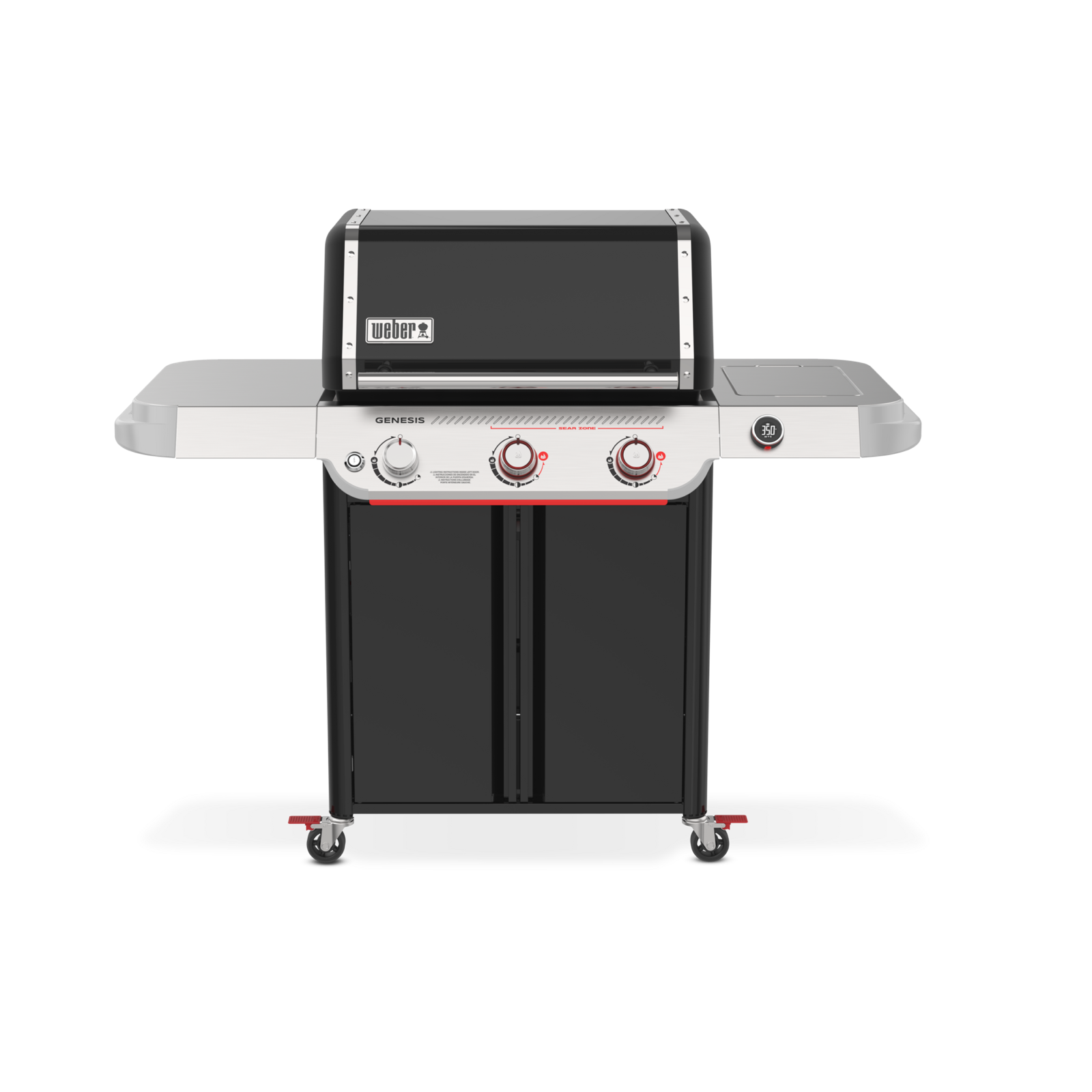
The smart 3-burner Genesis in Weber's current "W" generation, which replaced the 2022 E-325s generation the existing catalog entry refers to. It carries the same 513 sq in primary grate as the old E-325s but adds a built-in WiFi thermometer with one wired food probe reporting to the Weber Connect app, and a Sear Zone that Weber rates to 750°F. LP as priced; natural gas is $949.

Weber
Weber SmokeFire EX6
The Weber SmokeFire EX6 is Weber's WiFi pellet grill, notable for reaching 600°F to sear and using a steep-walled firebox for direct grilling. The 2nd-gen revision fixed many early reliability issues. Note: this model is no longer sold new as of 2026. Its current equivalent is the Weber Searwood XL 600.
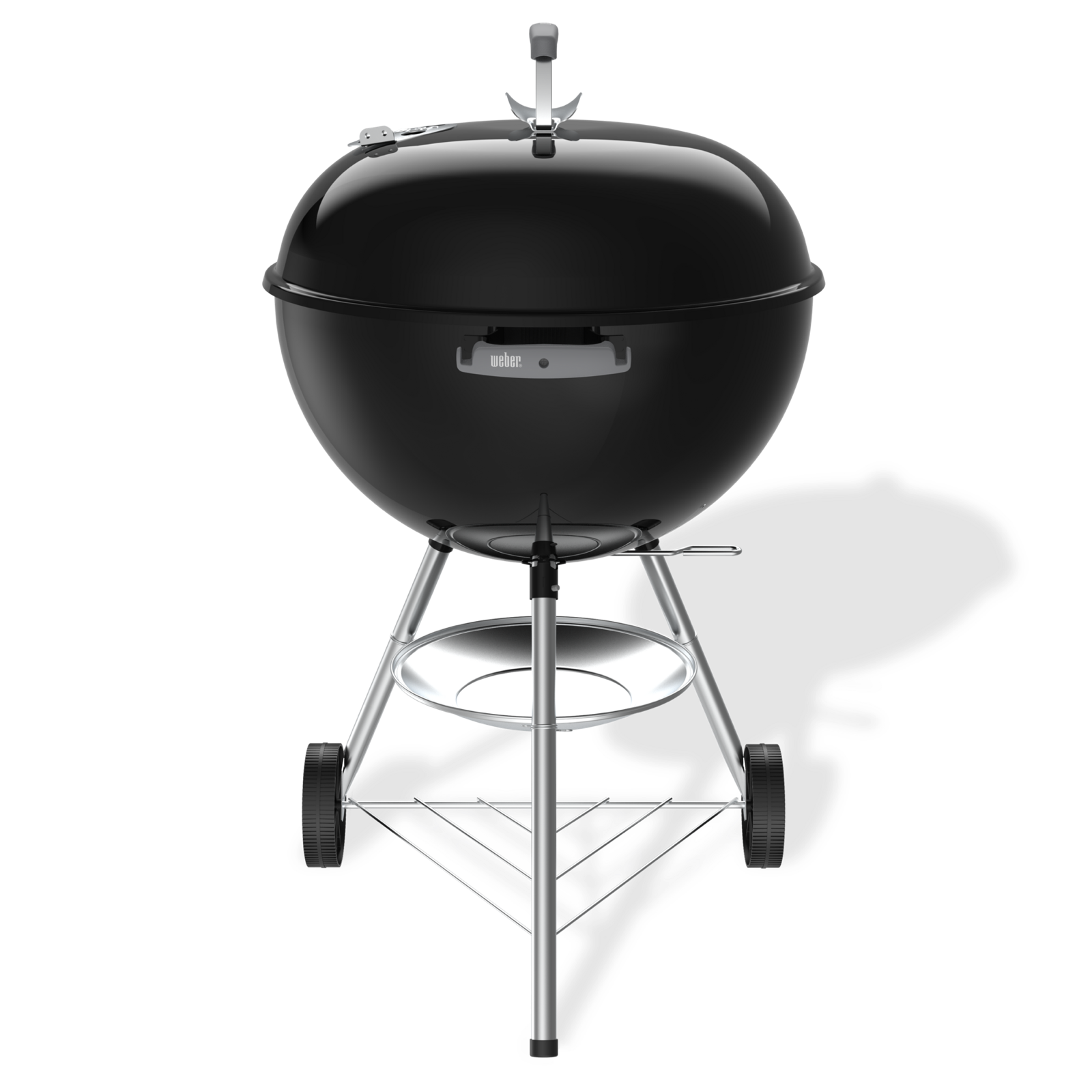
The base 22-inch Weber kettle and the entry point to the whole charcoal ladder. It has the same 363 sq in grate and One-Touch ash sweep as the Original Kettle Premium above it, but drops that model's hinged grate, built-in lid thermometer and enclosed ash catcher for an open ash pan. Against the 18-inch below it, the extra four inches is the difference between fitting a two-zone fire and not.
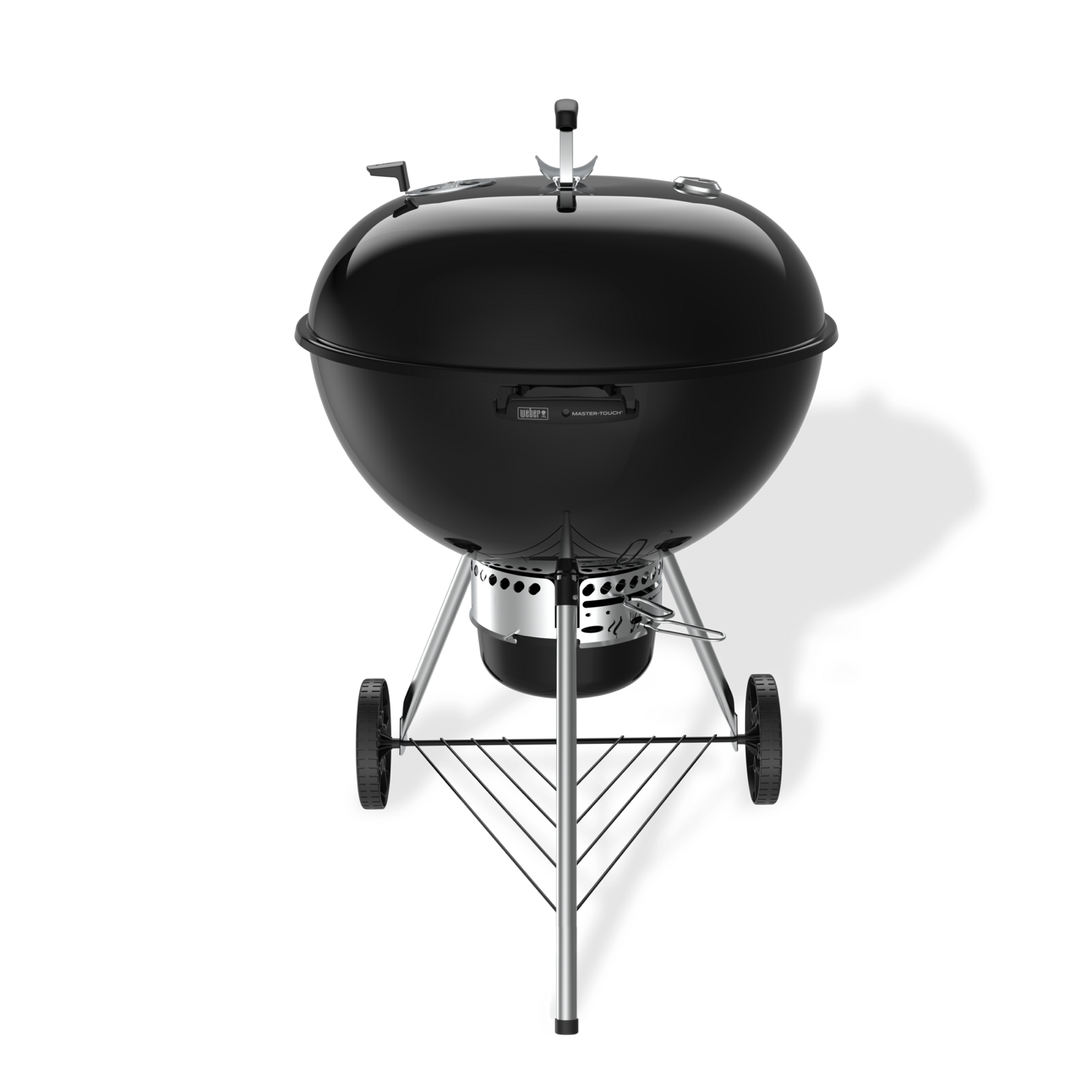
The 26-inch Master-Touch is the largest kettle Weber makes below the Ranch, with a 508 sq in primary grate plus an 80 sq in warming rack. It carries the Master-Touch package — hinged stainless grate, Char-Rails, lid thermometer and Tuck-Away lid holder — on a bowl four inches wider than the 22-inch Master-Touch already in the catalog. Weber no longer lists a plain 26-inch Original Kettle, so this is the only way to buy the 26-inch bowl new.
Weber
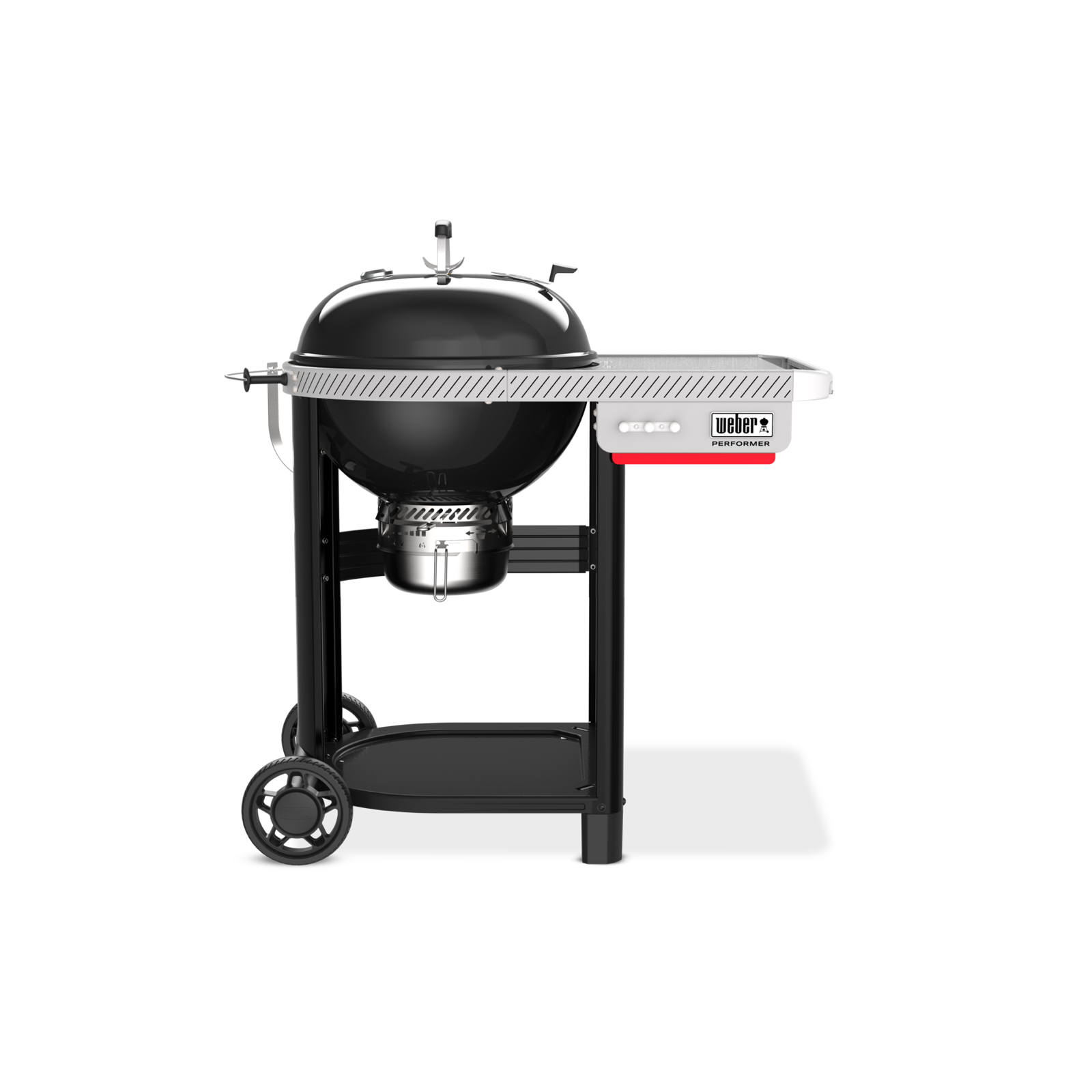
Weber Performer 22
Weber redesigned the Performer for 2026: it is a 22-inch kettle bowl mounted on a wheeled cart with a fixed side table, a bottom storage shelf and the Weber Works side rail for snap-on accessories. The grate, at 363 sq in, is identical to the Original Kettle 22 — what the money buys is the cart, the hinged grate, the lid thermometer and the improved ash catcher. It sits above the 22-inch Master-Touch and below the Smart version, which adds a Wi-Fi airflow controller.
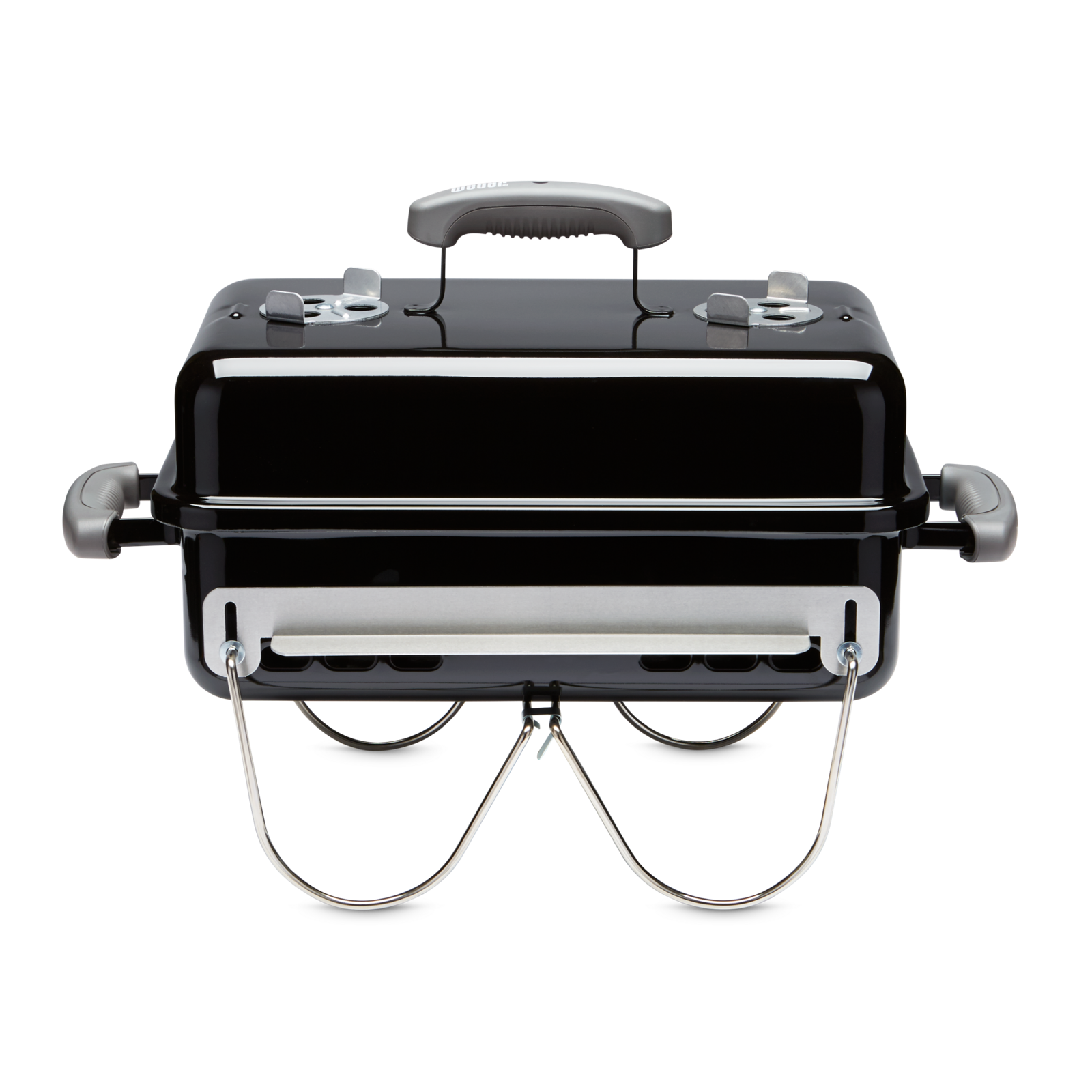
A rectangular portable charcoal grill with legs that fold up and lock the lid shut for carrying. The 160 sq in rectangular grate suits long items — sausages, corn, a rack of ribs cut in half — better than the round Smokey Joe's 147 sq in. It is the charcoal twin of Weber's long-running Go-Anywhere gas model.
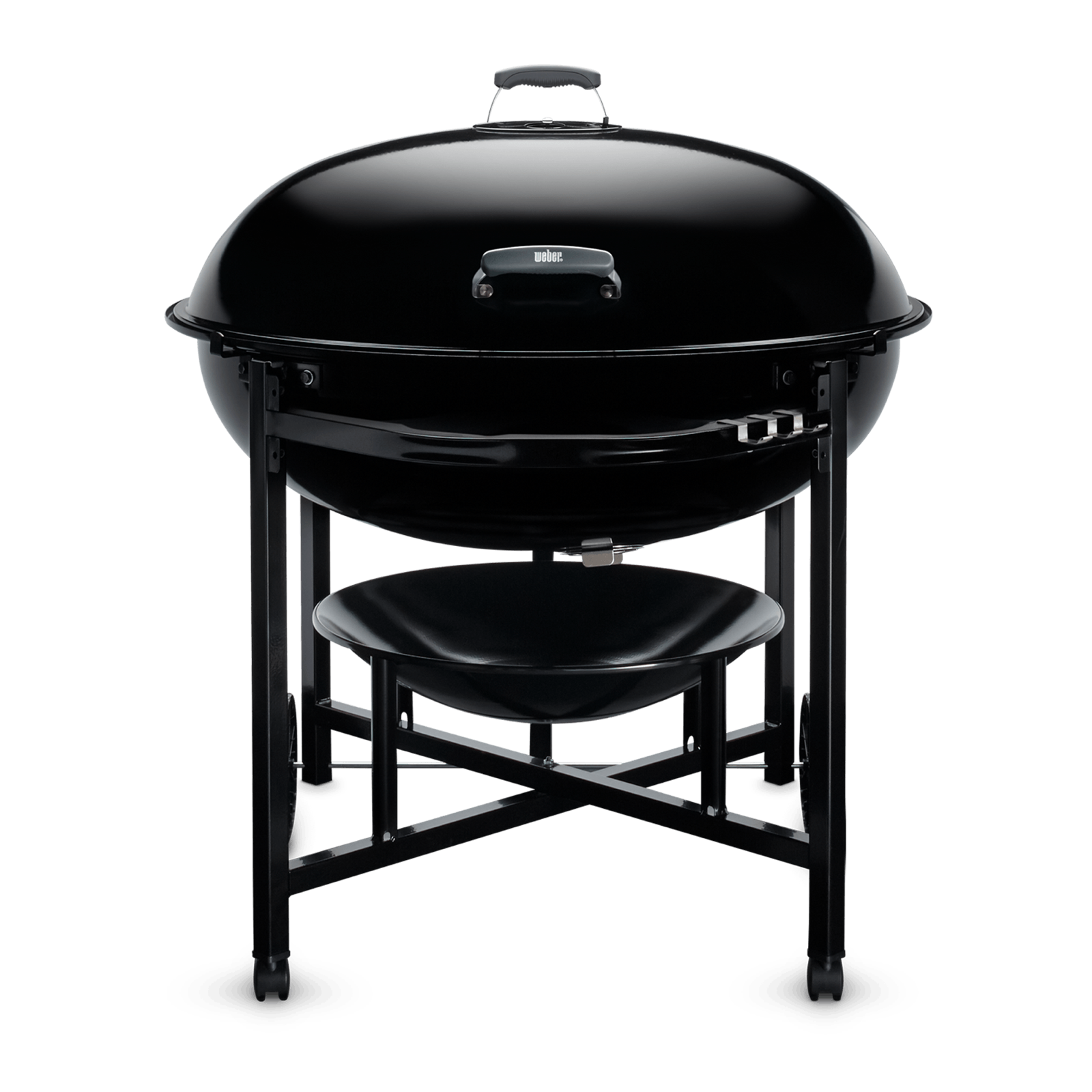
A 37-inch kettle on a heavy steel cart with 1,104 sq in of stainless grate — three times the Original Kettle 22 and more than twice the 26-inch Master-Touch. Weber has built it essentially unchanged for decades as a catering and large-party grill. Four dampers instead of the usual two are needed to move air through a bowl this large.
Weber
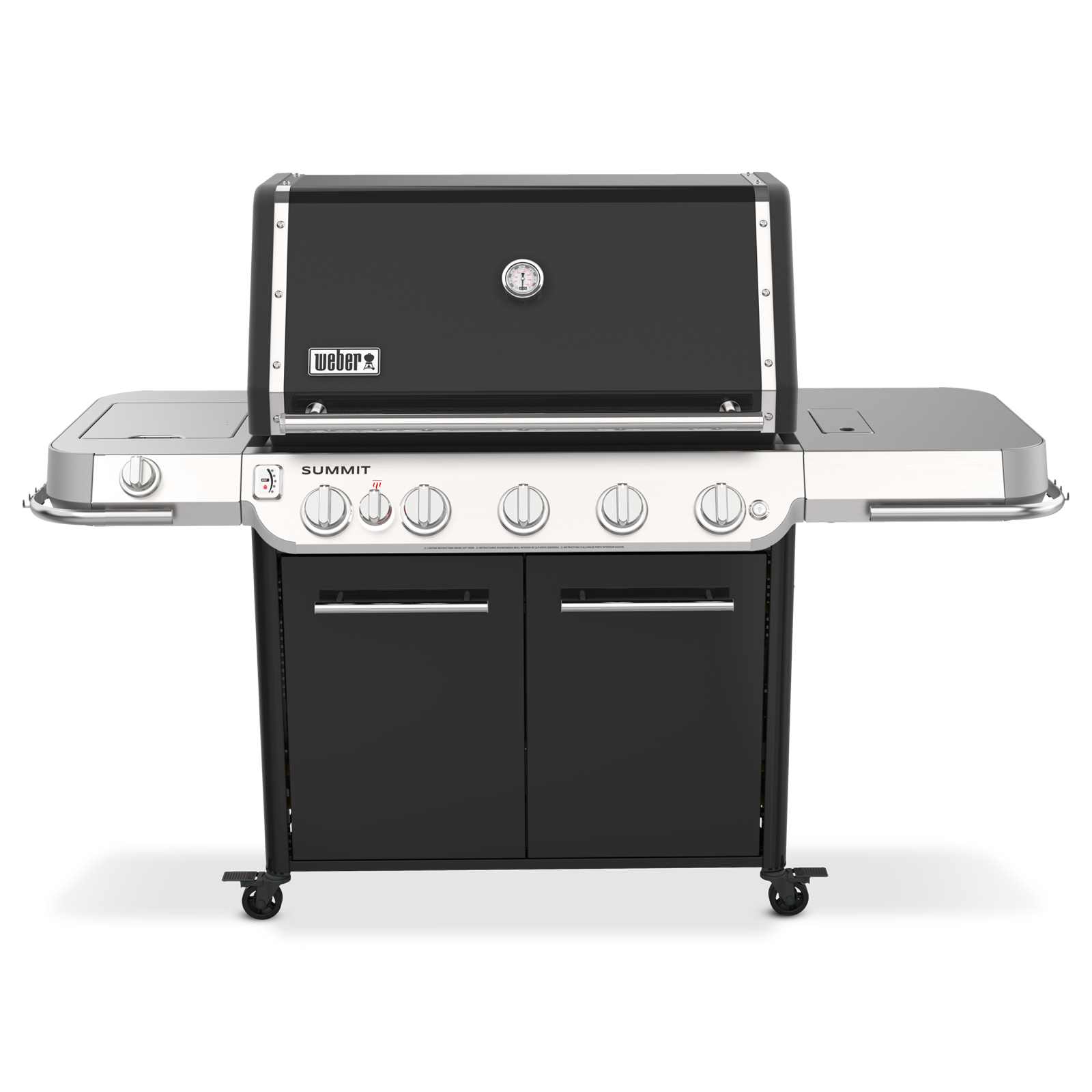
Weber Summit FS38 E
Weber's current flagship freestanding gas grill, replacing the long-running Summit S-Series. Five tapered PureBlu burners make 65,000 BTU, with a 12,000 BTU side burner and a 16,000 BTU top-down infrared broiler that sears from above rather than below. A rotisserie motor, spit and forks are included rather than sold separately, as is a stainless smoker box. The Smart FS38X adds Weber Connect for roughly $1,300 more.
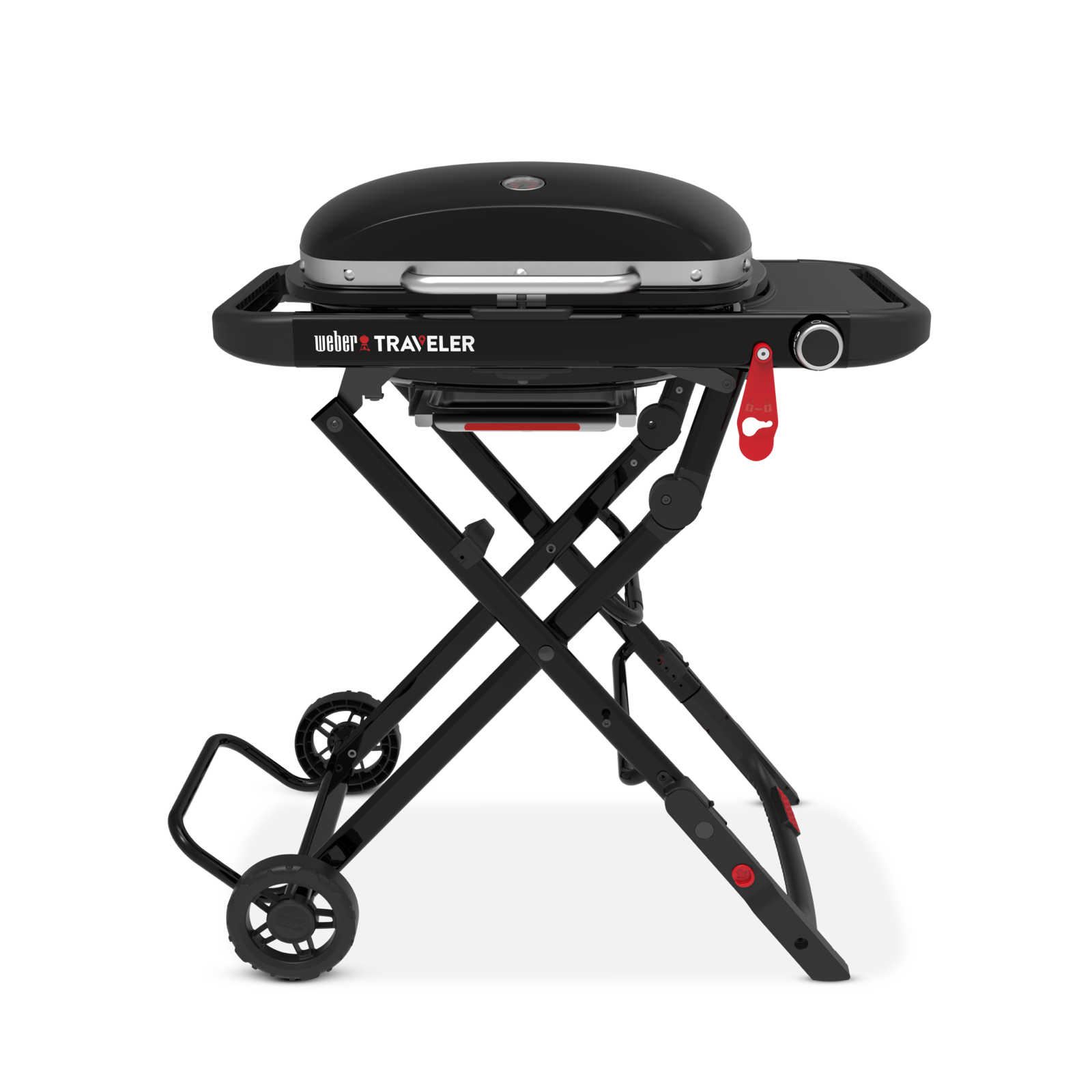
The Traveler shrunk by about a fifth: 240 sq in, 11,000 BTU, 37 lbs and 34 inches wide folded, which is the difference between fitting in a compact car trunk and not. Same folding-cart mechanism and same warranty as the full Traveler. It also uses split cooking grates, so one half can be swapped for a griddle insert.
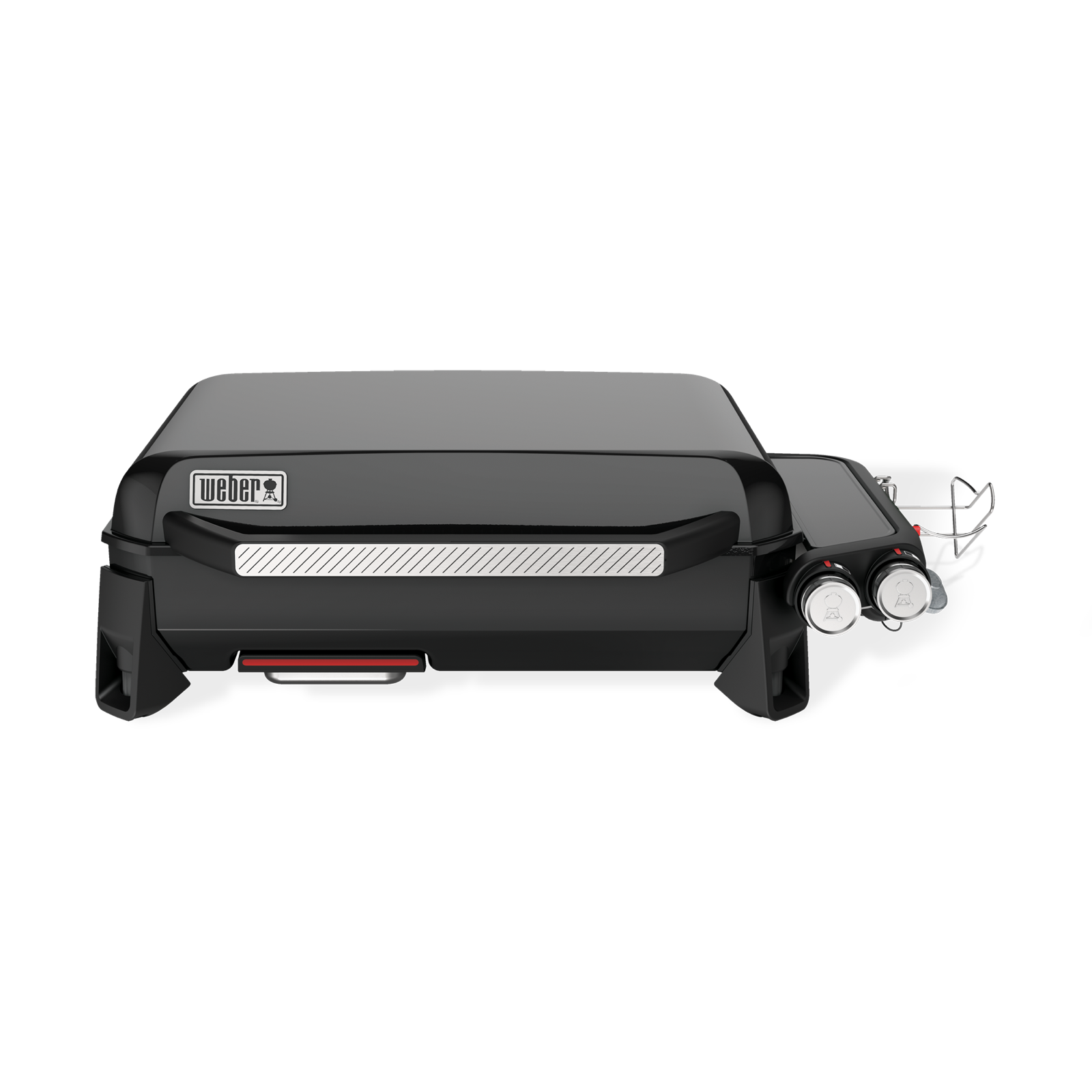
The tabletop Slate: 352 sq in and 16,000 BTU across two burners, with the same case-hardened, pre-seasoned carbon steel plate as the full-size Slate 30 and 36 the catalog already carries. The plate is the reason this line exists — Weber case-hardens it so it arrives ready to cook and resists the flash rust that defines ordinary griddle steel. It folds to under 10 inches tall with a hard cover.
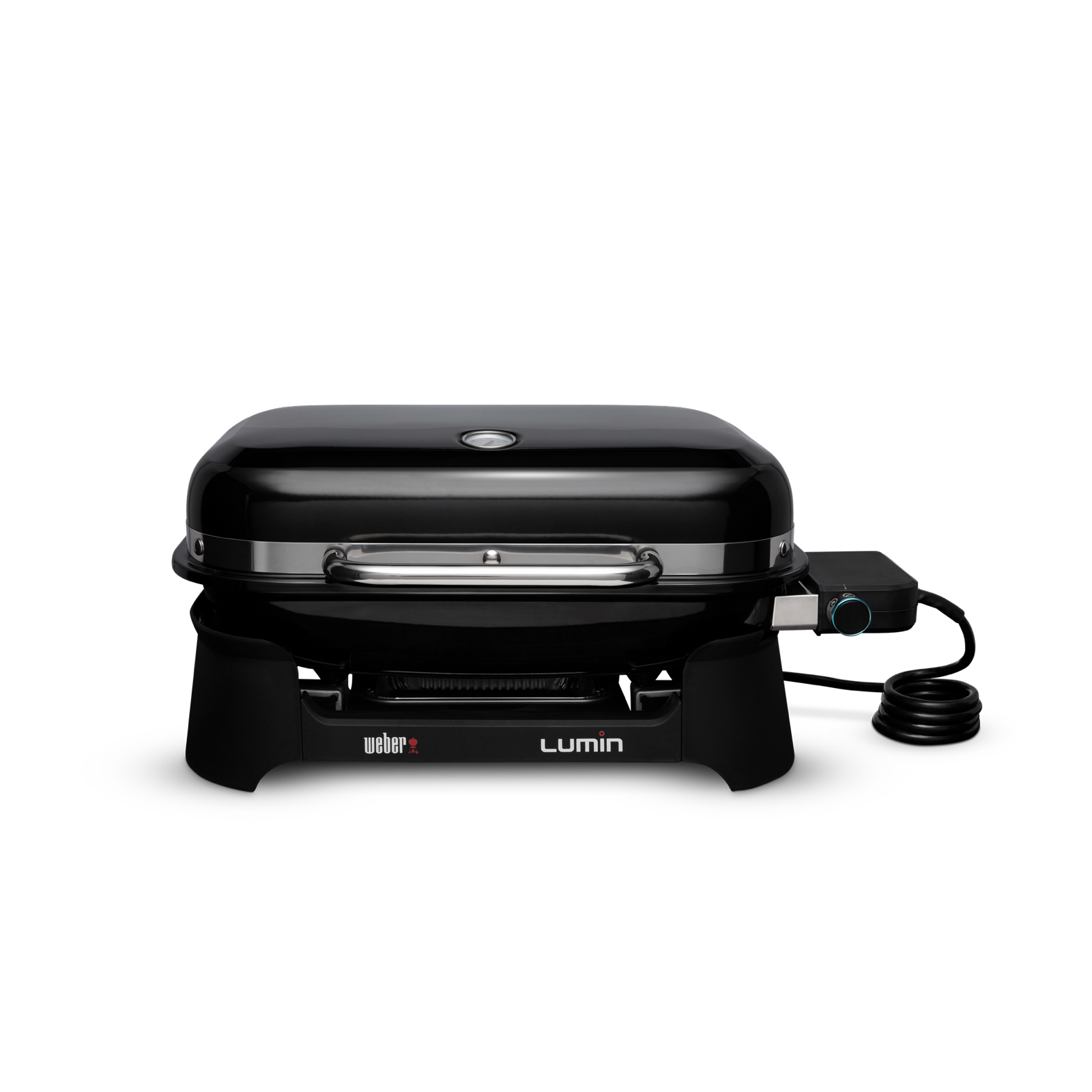
Weber's full-size electric: 1,560 W on a standard 120 V outlet, 242 sq in of porcelain cast-iron grate, and a published max over 600°F — high enough to actually sear, which is what separates it from the low-watt electrics it competes with. A reservoir under the grate lets it add wood smoke, steam or boil, so it does more than one thing. This is Weber's answer for people who cannot use fire where they live.
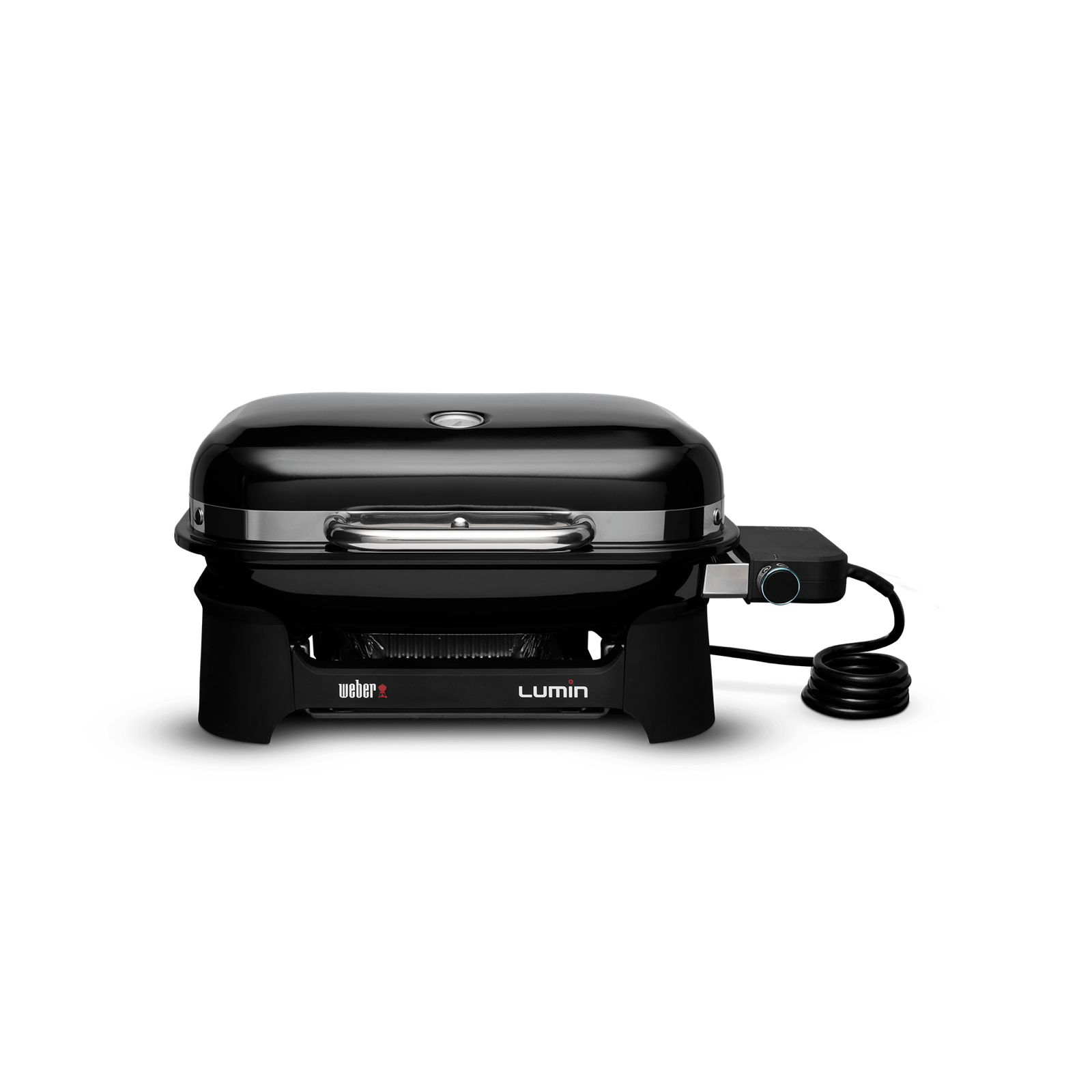
The smaller Lumin: same 1,560 W element and same 600°F+ ceiling, but 180 sq in instead of 242 and 26 lbs instead of 36.5. It keeps the sear, smoke, steam and boil modes and ships with the steam and smoking reservoir. The trade is purely grate area and footprint — nothing is given up on heat.
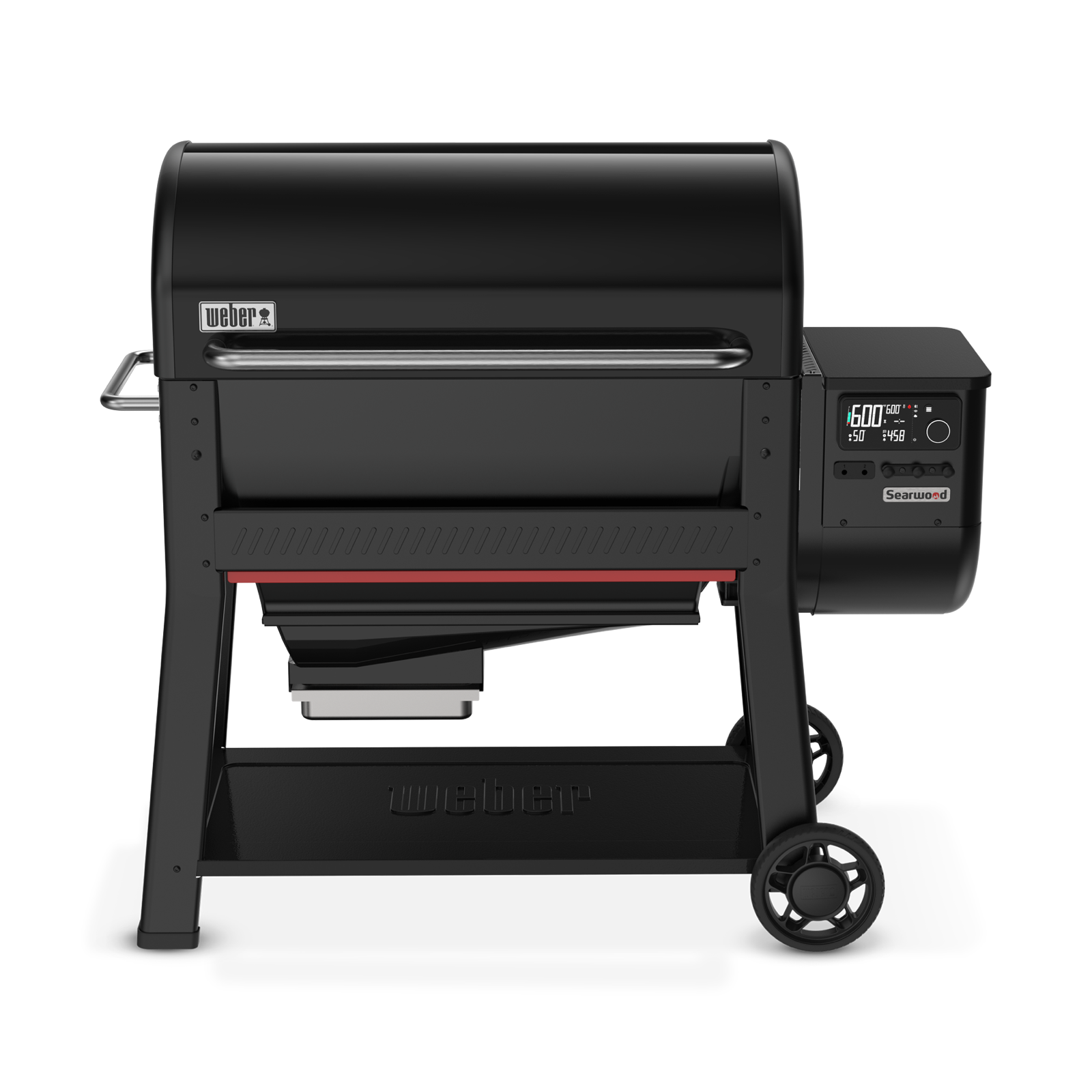
The XL 600 is the 36-inch version of the Searwood 600 already in the catalog: the same DirectFlame sear system, Weber Connect controller and 600°F ceiling, in a chamber that holds 972 sq in across two racks instead of 600. The extra width is the point — the top rack lifts out to leave 11.5 inches of headroom for a turkey or a pair of pork butts. Hopper capacity stays at 20 lb and the burn pot is unchanged, so cook times and pellet consumption scale with load rather than with chamber size.
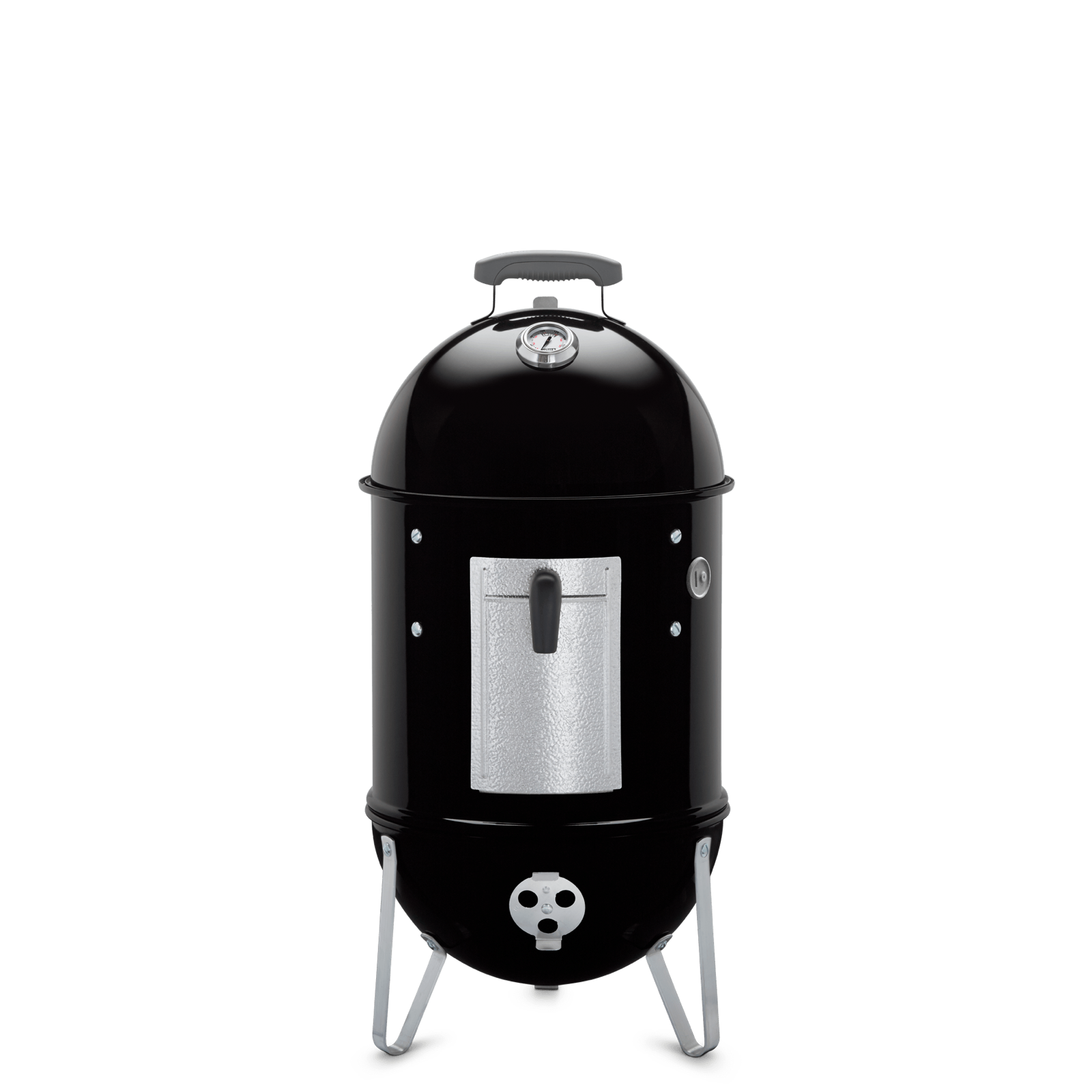
The smallest of Weber's three bullet smokers: a two-rack water smoker on a 14.5-inch charcoal bowl, the same diameter as the Smokey Joe. It runs the identical design as the 18-inch already in the catalog — charcoal ring at the bottom, water pan in the middle, two cooking grates above — scaled down to 286 sq in and 23 lbs, which is the point: it is the only WSM light enough to carry to a campsite or a tailgate. The small fuel ring is also the catch, since it holds enough charcoal for roughly 6 to 8 hours rather than the overnight burns the larger bullets manage.
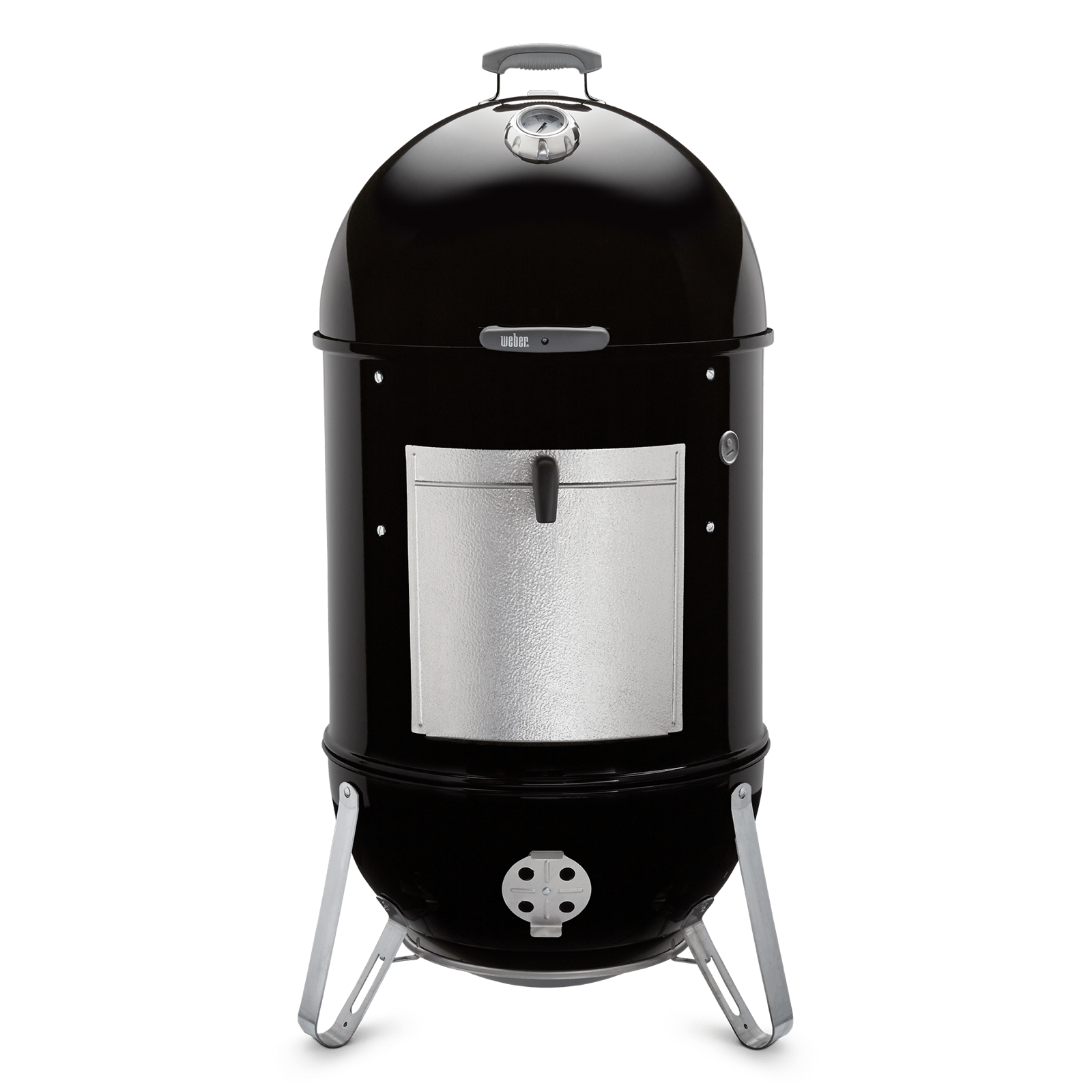
The largest Weber bullet: a 22.5-inch-diameter water smoker with 726 sq in across two racks, versus 481 on the 18-inch. The extra diameter matters more than the number suggests, because a full packer brisket lies flat on the 22 and has to be bent or trimmed on the 18. The bigger charcoal ring also holds enough fuel for a genuine overnight burn, which is the reason competition teams standardised on this size.
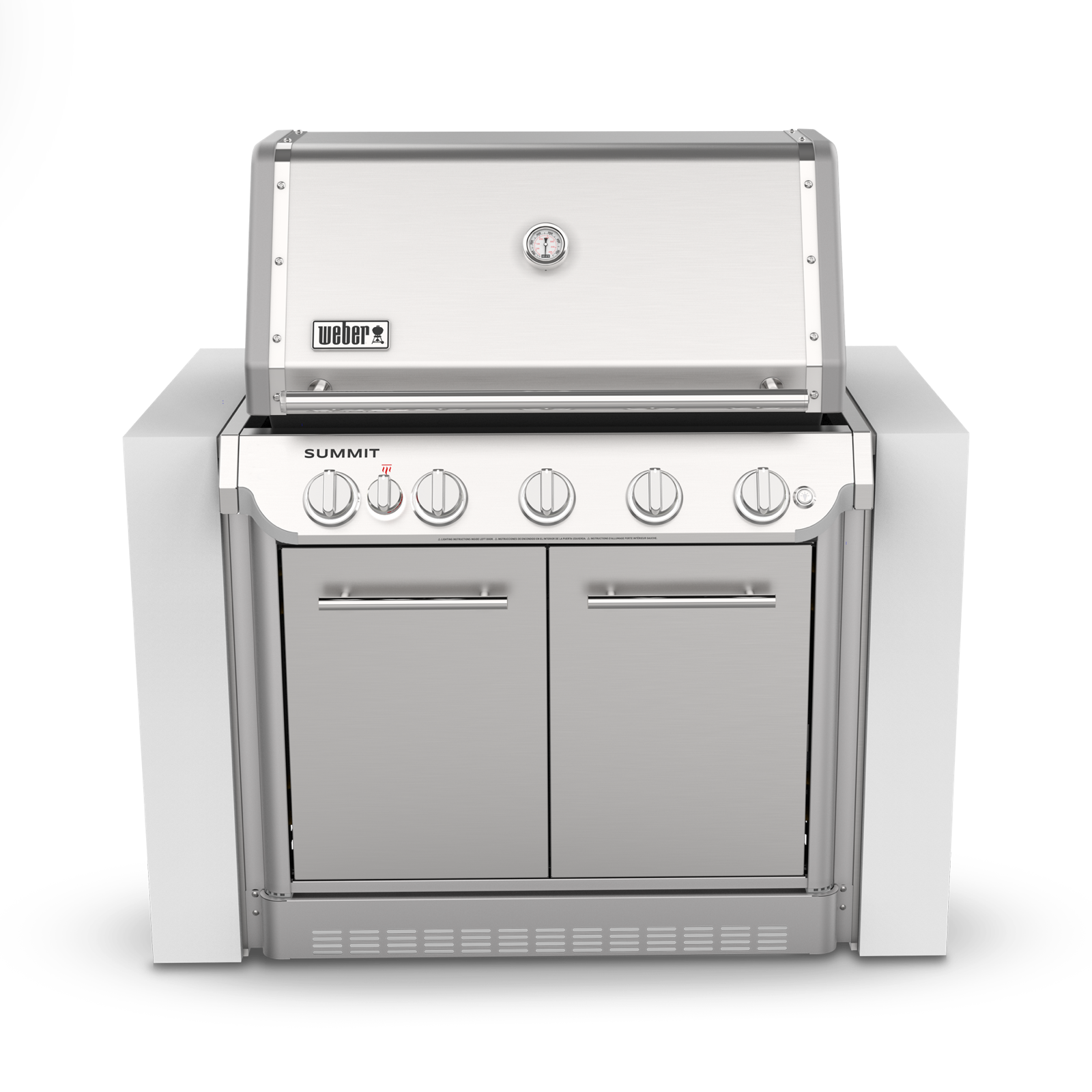
Weber's only built-in gas grill, and the reason it belongs beside the Blaze and Bull heads: instead of a rear rotisserie burner, it uses a 16,000 BTU top-down infrared broiler that fires heat downward onto the food from above, which browns a steak edge-to-edge rather than only where it touches the grate. Five PureBlu burners make 65,000 BTU for 81,000 total across 681 square inches. The rotisserie and a large stainless smoker box are included. Price is for the BUILT-IN unit in propane, including the trim kit for the cutout.