Weber
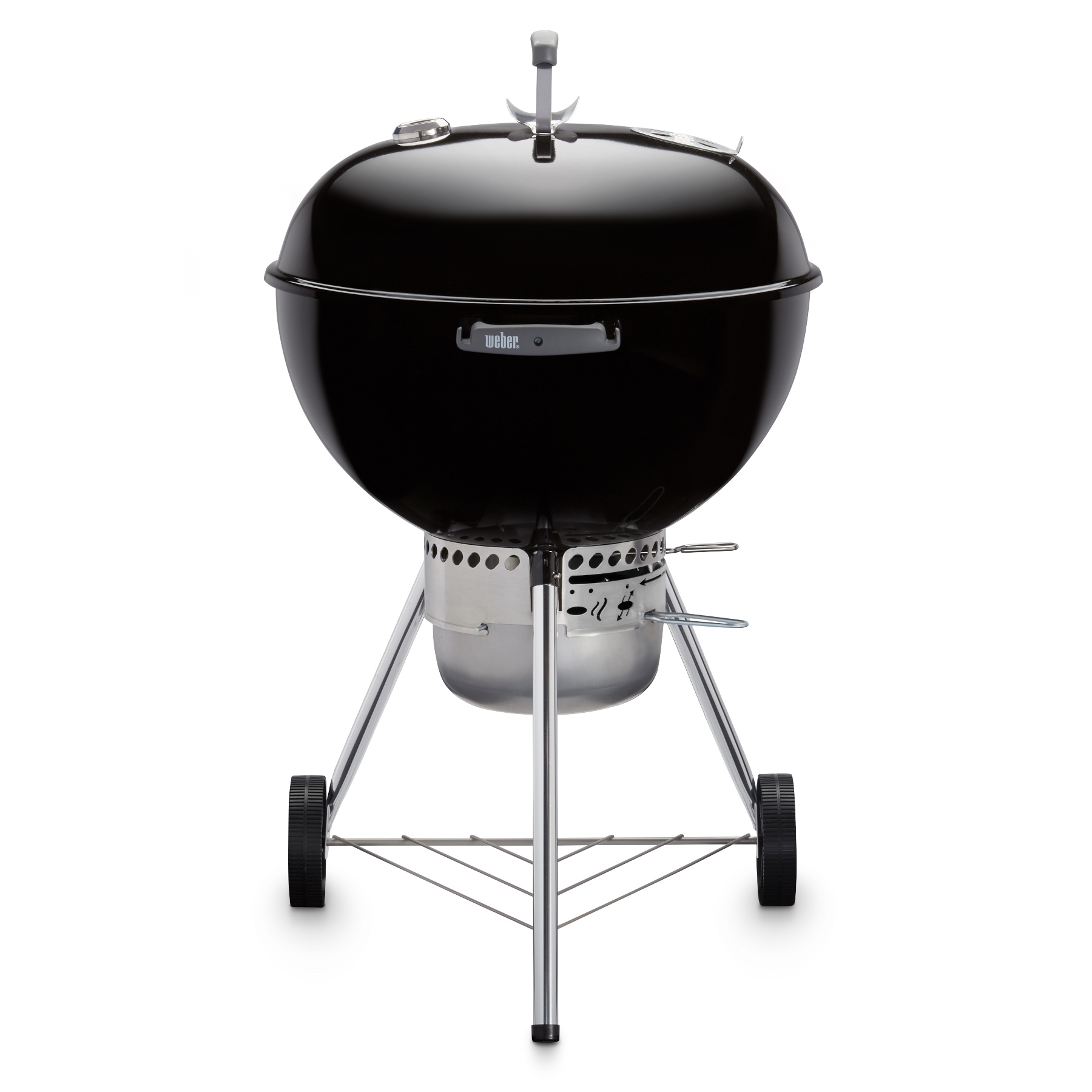
Weber Original Kettle Premium 22
The Weber Original Kettle Premium 22 is the iconic charcoal kettle that started backyard grilling in America, upgraded with a built-in thermometer, hinged grate, and sealed One-Touch ash catcher. It's the single most-recommended first grill in owner discussions.
We may earn a commission. Price and availability on Amazon may differ.
Specifications
Features
Pros
- ✓It's the default 'just get a Weber kettle' answer in owner discussions for a reason - sear, roast, and even smoke with the snake method on one $170 grill
- ✓The porcelain-enameled bowl and lid shrug off rust and weather, and it's common to see 15-20 year old kettles still cooking every weekend
- ✓Two-zone cooking is dead simple - bank coals to one side and you get a searing zone and an indirect zone that handles everything from wings to whole chickens
- ✓The Premium's hinged grate lets you add charcoal mid-cook, a big quality-of-life upgrade over the base Original Kettle
- ✓The sealed high-capacity ash catcher and One-Touch sweep make cleanup a ten-second job instead of a shovel-and-dustpan chore
- ✓Charcoal reaches searing temps north of 700°F that no pellet grill can touch, with real charcoal flavor
- ✓At 32 lbs it's light enough to roll anywhere on the patio or throw in a truck for camping and tailgates
- ✓The mod and accessory ecosystem (Vortex, rotisserie rings, Slow 'N Sear) is enormous, and cheap parts keep it running forever
Cons
- ✗Charcoal has a learning curve - lighting a chimney, managing vents, and juggling two-zone fires takes practice versus push-button gas or pellets
- ✗There's no thermometer probe, WiFi, or automation of any kind - long cooks mean checking vents and fuel by hand
- ✗363 sq in fills up fast for parties - a couple of racks of ribs or 13 burgers is the realistic ceiling
- ✗Holding a steady 225-250°F for a long brisket is doable with the snake method but fiddly, and wind or rain will swing your temps
- ✗Every cook starts with lighting charcoal and ends with ash disposal, which adds 20-30 minutes versus turning a knob
- ✗The lid thermometer sits high above the grate and can read 50°F off from food level, so serious cooks add a grate probe
- ✗No side tables or prep space - you're balancing tongs and platters on a nearby table
- ✗The Master-Touch is only about $70 more and adds the GBS hinged accessory grate and Tuck-Away lid holder, which makes the Premium a slightly awkward middle child
Owner Insightssummarized from owner discussions
The 22-inch Weber kettle is the grill that gets recommended more than any other in these discussions, and the reasons owners give are not really about cooking performance. They are about cost, durability and the sheer availability of the thing. People find them on the curb, buy them brand-new for $30 from someone moving house, catch them on clearance for under $100, and put them straight into weekly service. When something does fail, the warranty is repeatedly described as the best in the business and every part is still made and sold. The Premium adds three things to the base model that matter in practice: a lid thermometer, a hinged grate so you can add coals without unloading the food, and the sealed One-Touch ash catcher.
What trips up new owners is heat, and it trips up nearly all of them the same way. The most common post is someone who cannot push past 300-350°F with both vents wide open, and the answer is almost always that there is not enough charcoal in there, or that the chimney was dumped before the coals were truly lit. Experienced owners set a timer, wait until the chimney looks like an inferno rather than merely hot, use more fuel than feels right, and keep the bed concentrated rather than spread thin. Propping the lid an inch or two adds air when you need a hard sear. The other thing worth knowing early: the lid thermometer reads about 75°F above grate temperature, so treat it as a trend indicator rather than a number, and add a probe if you plan to smoke. Because you can smoke on it — the snake method turns it into a genuine low-and-slow cooker for pork shoulder and ribs, and briquettes work better than lump for that because they burn longer and more evenly, while lump is the choice for hot and fast.
It suits almost anyone as a first charcoal grill, and it suits experienced cooks as the grill they keep forever alongside whatever else they buy. The honest caveats are ergonomic rather than mechanical: there is no work surface anywhere on it, 363 sq in gets tight for a party of ten, and the legs wobble. Owners resolve the first two by building a table or stepping up to the Performer, which adds a work surface, charcoal storage and gas-assisted lighting — the debate there is whether that convenience is worth a large price jump for what is the same cooking vessel. Against a gas grill the trade is honest and everyone in these threads admits it: better food, twenty minutes of setup, and ash to deal with afterwards.
What owners like
- +Nothing else in grilling has a used market like this one. Owners report finding them on the curb in usable condition, buying a brand-new one for $30 on marketplace, catching one on clearance for $95, and picking up a like-new Performer for $125 — patience genuinely gets you this grill for almost nothing
- +Maintenance is close to zero and owners are casual about it in a way that says a lot. One admits to not cleaning his in three years beyond replacing the grates once; the standard routine is vacuum the ash, run it hot, and scrub the grate with half an onion
- +It converts gas owners permanently. The threads are full of people who bought one as a second grill and now use it several times a week, with the gas grill reserved for nights they are in a hurry
- +Weber's warranty support on it is repeatedly called the best people have dealt with. The advice that comes with that is practical: keep the receipt, because you may be making a claim eight years from now
- +It does far more than grill. Two-zone cooking is a matter of banking the coals, the snake method turns it into a real low-and-slow smoker for pork shoulder and ribs, a wood chunk on the coals adds smoke, and accessories like a Slow N Sear basket or a Vortex make the zones more deliberate
- +The charcoal series is still made in Illinois — Weber confirmed directly that all charcoal models except the Go-Anywhere and the Limited Edition Red Kettle are built there, which is not true of their Spirit gas grills
- +Over the base Original, the Premium adds a lid thermometer, a hinged grate for adding coals mid-cook, and the sealed One-Touch ash catcher, which is the upgrade owners who bought the cheaper one most often wish they had
Common complaints
- −The lid thermometer reads roughly 75°F higher than the actual grate temperature, and it is also in the wrong place for most heat setups — it only sits correctly if you run parallel coal baskets with the food in the middle. Owners who care add a second thermometer on the vent side, drilled in with a step bit
- −New owners routinely cannot get past 300-350°F, with both vents wide open and a chimney start. The causes are almost always the same: not enough charcoal, dumping the chimney before the coals are fully lit, and spreading the bed too thin. The fixes are more fuel, waiting for the chimney to look like an inferno, and propping the lid open an inch or two for extra air
- −There is no work surface at all. No side shelves, no table, nowhere to put a platter, which is why people build entire cabinets and carts around them — and why the Performer, which adds a table, charcoal storage and gas-assisted lighting, tempts so many buyers despite the price jump
- −363 sq in with no warming rack means cooking for ten takes planning, and new owners consistently worry about the coals dying before the last batch is done
- −The legs and lower support ring have a noticeable wobble that unsettles new owners. It is common rather than a defect, but the grill is a tall lightweight bowl full of live coals and people do build sturdier stands for exactly that reason
- −The dissent, though it is a minority: some owners say Weber is overpriced and that their last two fell apart within a few years while a neighbor's much cheaper grill outlasted them. Rust does eventually take old kettles, though owners note it is treatable and every replacement part is still available
Common Questions
Is the Premium worth the extra money over the base Original kettle?
Why can't I get mine above 300°F?
Can you actually smoke on a kettle?
How accurate is the lid thermometer?
Lump charcoal or briquettes?
Should I get the Performer instead?
Compare the Weber Original Kettle Premium 22
The Weber Original Kettle Premium 22 is one of 7 sizes in this line.
See every size, to scale →Related grills
More from Weber →
The Weber Master-Touch 22 is the upgraded version of Weber's iconic charcoal kettle, adding a hinged Gourmet BBQ System grate, a built-in thermometer, and a Tuck-Away lid holder. It's a benchmark backyard charcoal grill.
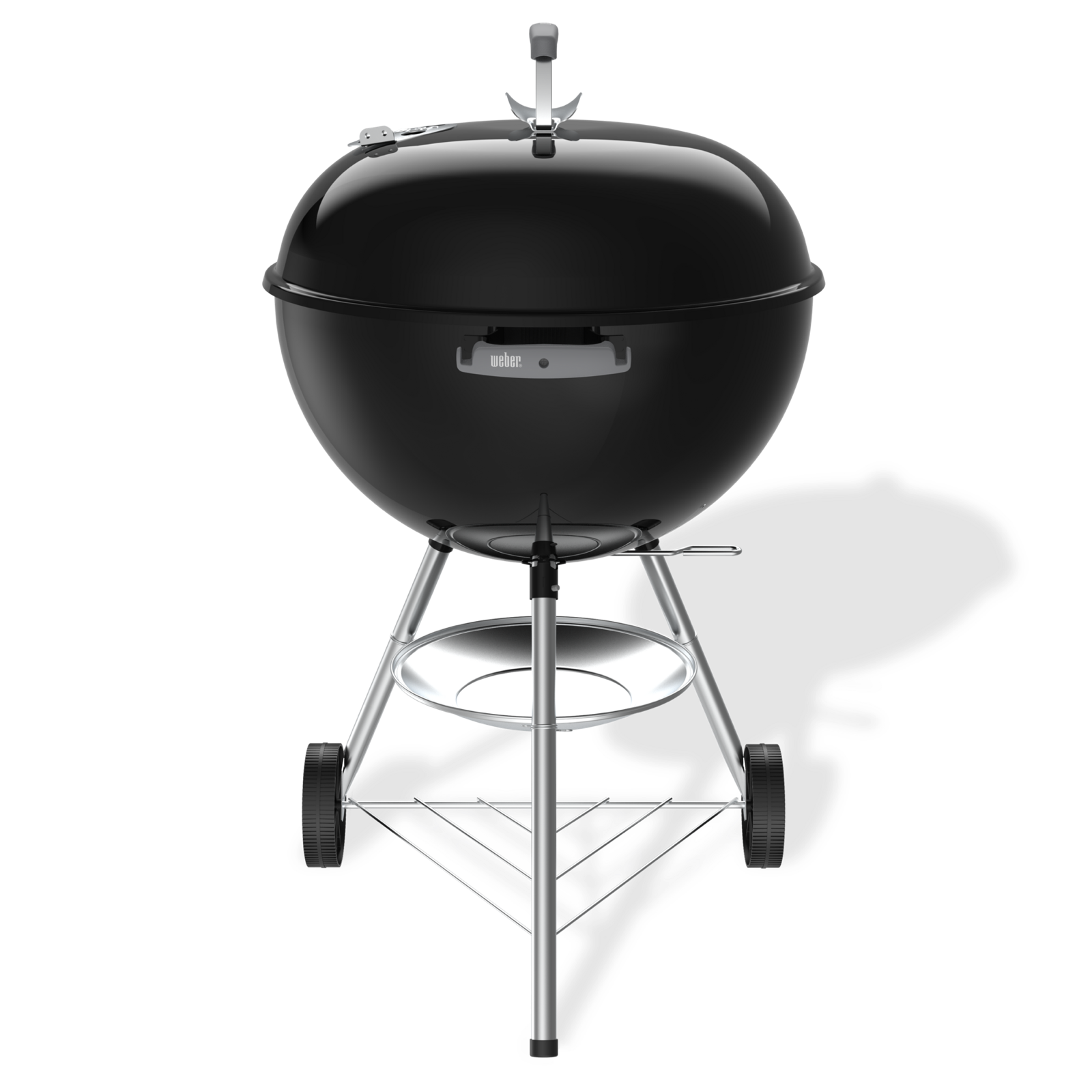
The base 22-inch Weber kettle and the entry point to the whole charcoal ladder. It has the same 363 sq in grate and One-Touch ash sweep as the Original Kettle Premium above it, but drops that model's hinged grate, built-in lid thermometer and enclosed ash catcher for an open ash pan. Against the 18-inch below it, the extra four inches is the difference between fitting a two-zone fire and not.
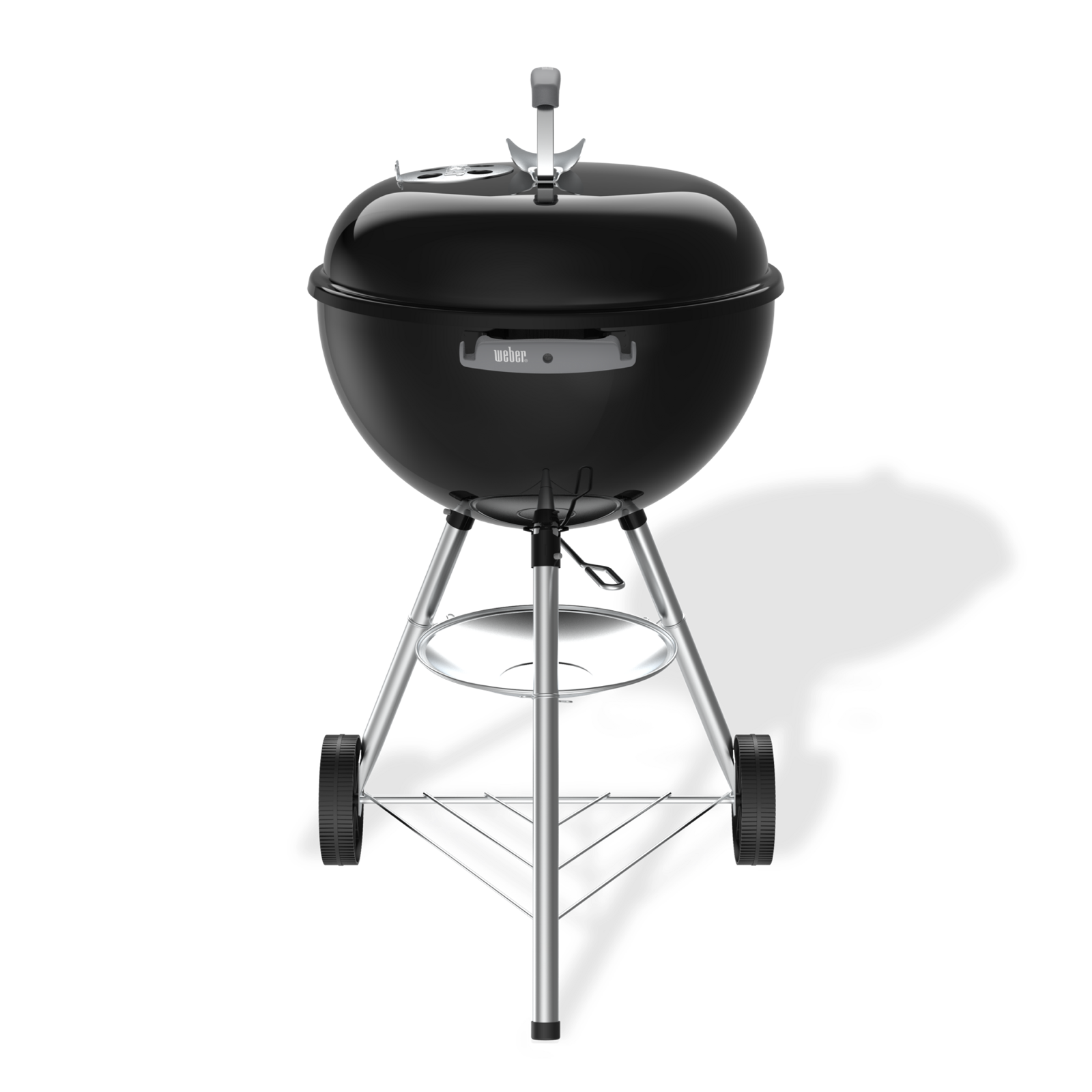
The smallest full-size Weber kettle, an 18-inch bowl with 240 sq in of grate against the 22-inch model's 363. It keeps the One-Touch ash sweep, enclosed ash catcher and the same porcelain-enameled bowl and lid as its bigger sibling, so the only real difference is diameter. Weber sells it as the apartment-balcony and small-patio kettle rather than a budget version of the 22.
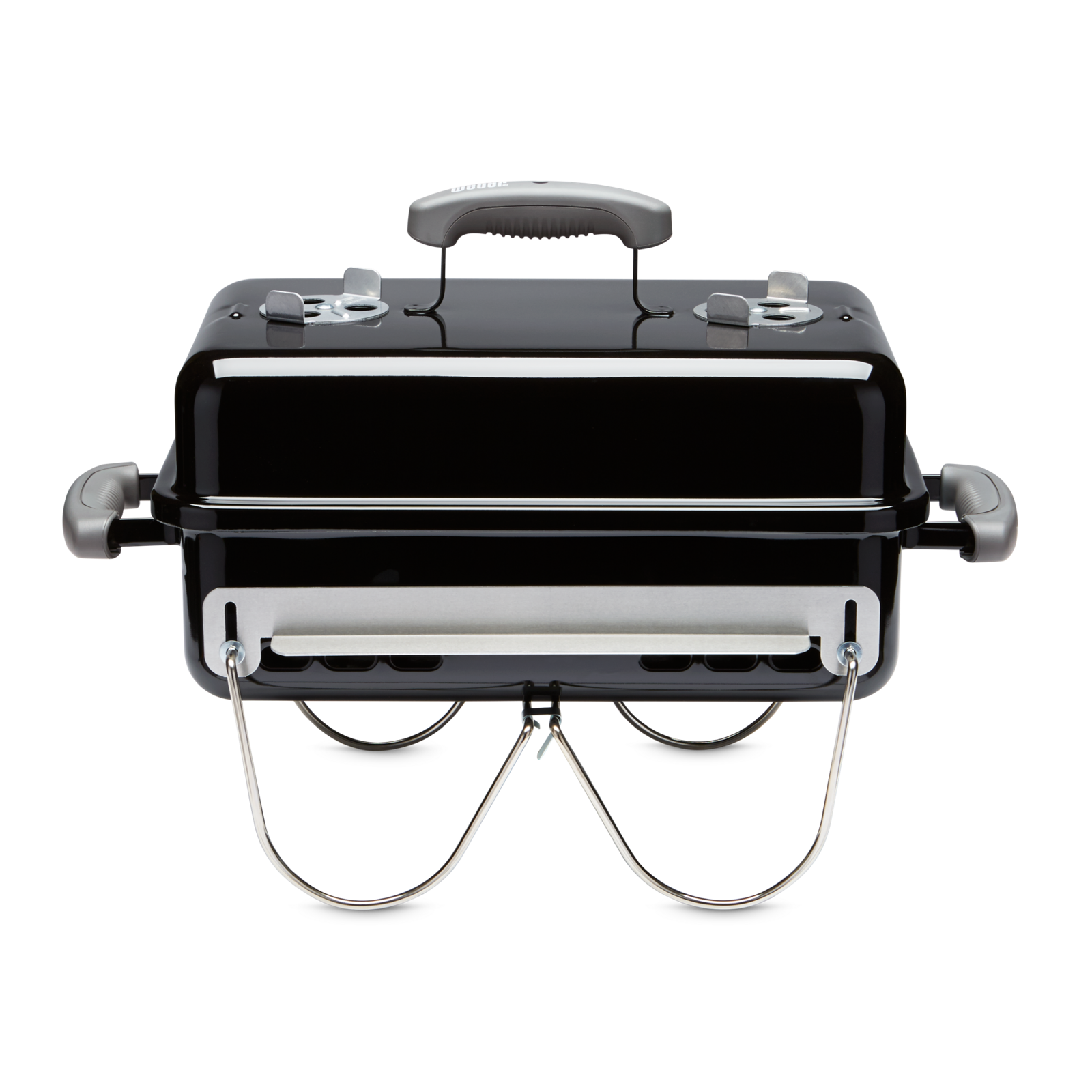
A rectangular portable charcoal grill with legs that fold up and lock the lid shut for carrying. The 160 sq in rectangular grate suits long items — sausages, corn, a rack of ribs cut in half — better than the round Smokey Joe's 147 sq in. It is the charcoal twin of Weber's long-running Go-Anywhere gas model.
Weber
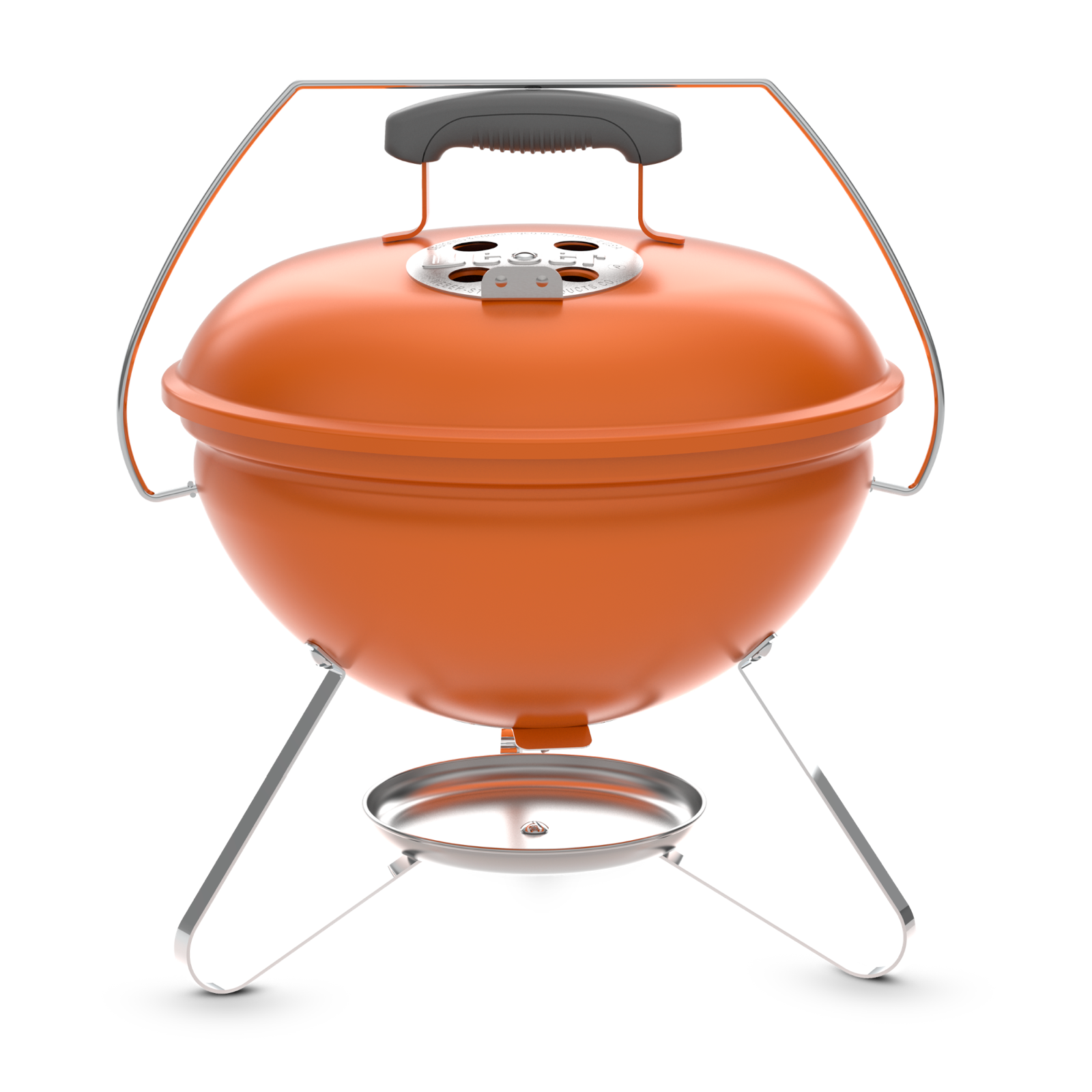
Weber Smokey Joe 14
The 14-inch tabletop kettle, and the cheapest charcoal grill Weber sells. The Tuck-N-Carry lid lock clamps the lid to the bowl so the whole grill carries by its handle, then doubles as a lid rest once open. It is a true kettle in miniature — same porcelain-enameled bowl, same damper control — not a stamped-steel picnic grill.
Weber
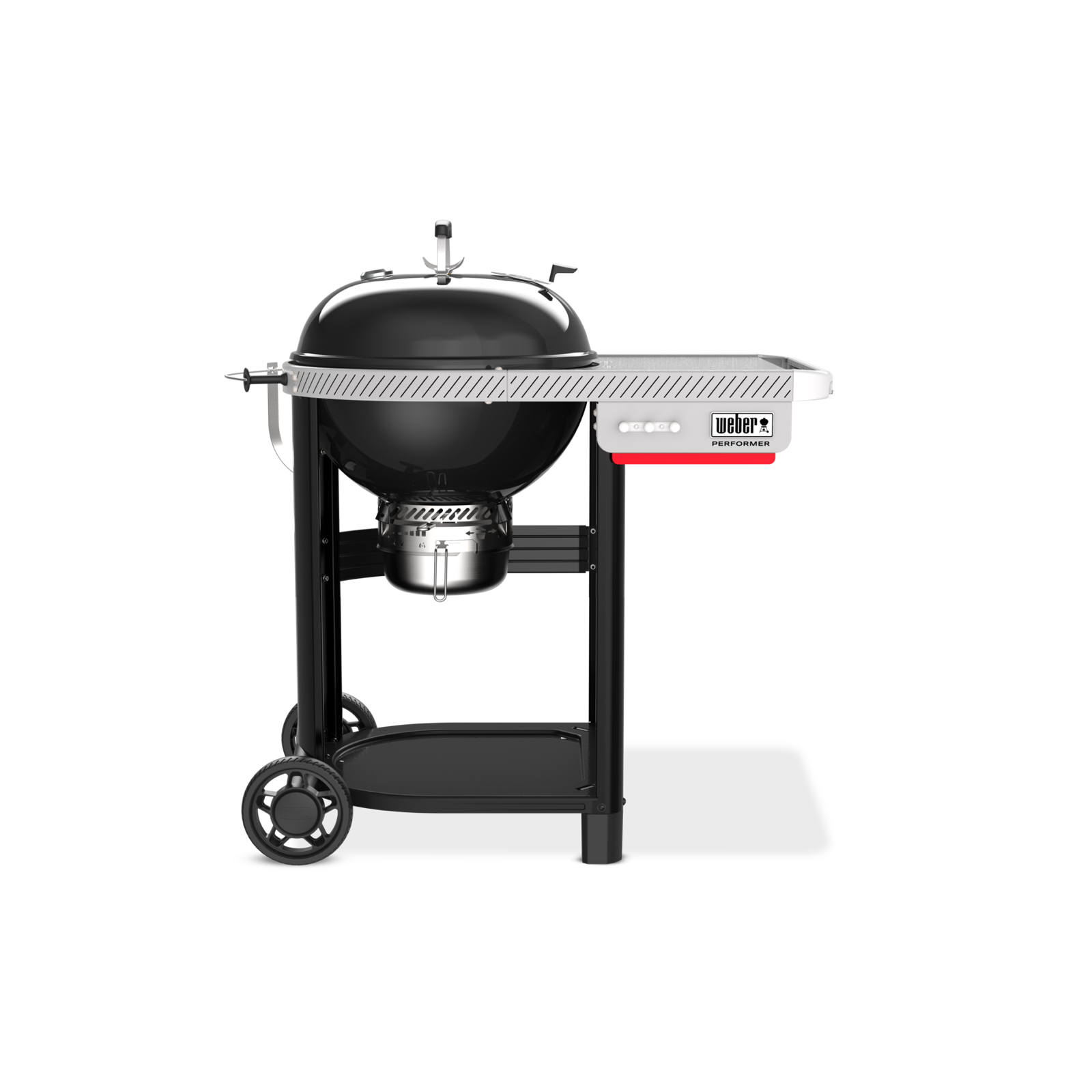
Weber Performer 22
Weber redesigned the Performer for 2026: it is a 22-inch kettle bowl mounted on a wheeled cart with a fixed side table, a bottom storage shelf and the Weber Works side rail for snap-on accessories. The grate, at 363 sq in, is identical to the Original Kettle 22 — what the money buys is the cart, the hinged grate, the lid thermometer and the improved ash catcher. It sits above the 22-inch Master-Touch and below the Smart version, which adds a Wi-Fi airflow controller.