Traeger Grills & Smokers
Traeger has 13 grills and smokers on Grill Picker, priced from $480 to $3,999, 10 of which have WiFi control. The highest-rated Traeger pick is the Traeger Ironwood 885 at 4.6★. Compare the full lineup below.

Traeger
Traeger Ironwood 885
The Traeger Ironwood 885 is a WiFi-connected wood-pellet grill and smoker from Traeger, the company that popularized pellet grills. It uses the D2 direct-drive controller and WiFIRE app for hands-off cooks. Traeger has moved it to its Legacy Grills line — still sold new on traeger.com, but the current equivalent is the Ironwood XL.

Traeger
Traeger Pro 575
The Traeger Pro 575 is Traeger's best-selling entry-level WiFi pellet grill, using the D2 controller and WiFIRE app. It's the model most people picture when they think 'Traeger.' Note: this model is no longer sold new as of 2026. Its current equivalent is the Traeger Woodridge.
Traeger
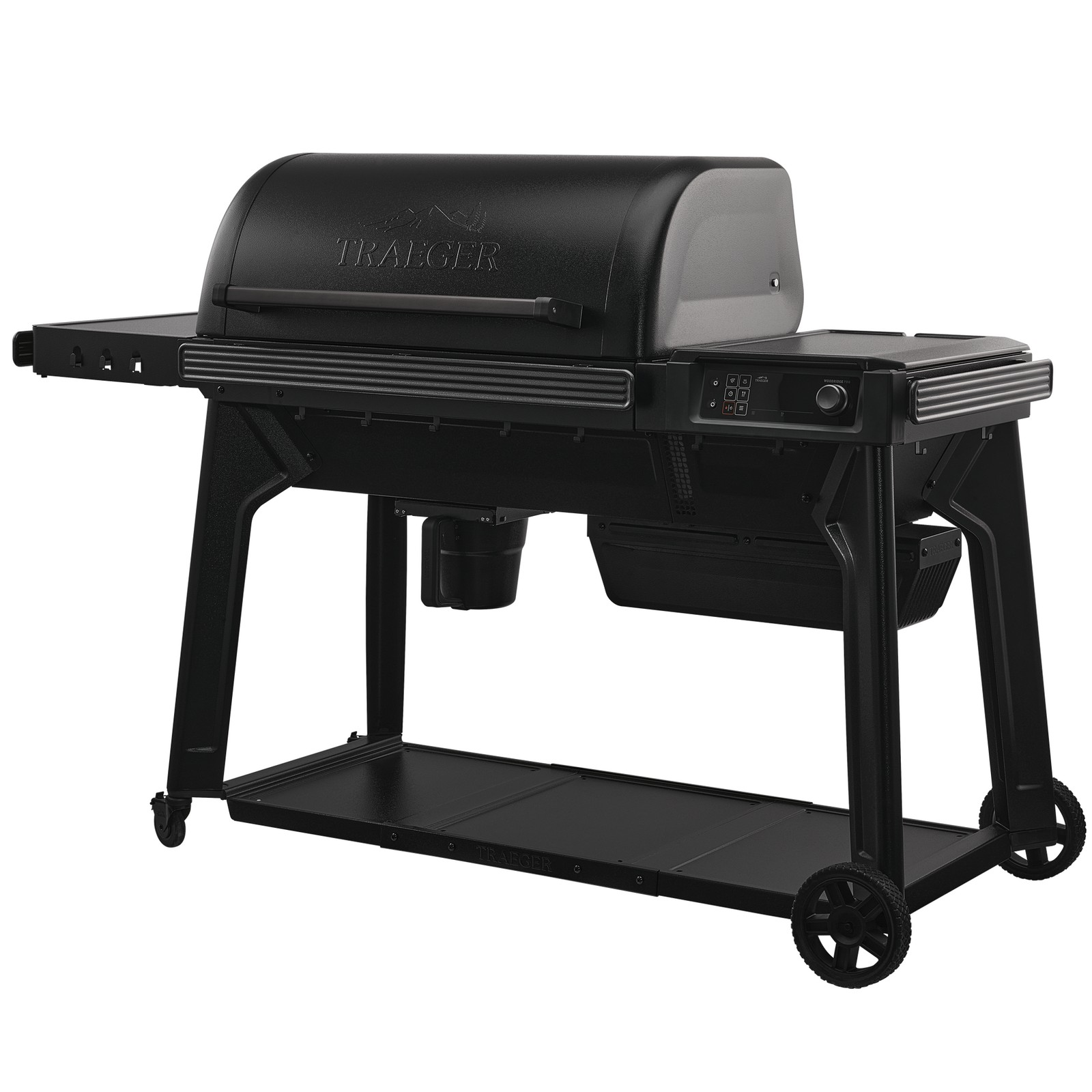
Traeger Woodridge Pro
The Traeger Woodridge Pro is the 2025 replacement for the aging Pro series - 970 sq in, a 24 lb hopper with pellet sensor, Super Smoke mode, and a 10-year warranty at $1,000. Reviewers call it the biggest upgrade to Traeger's entry lineup in years.
Traeger
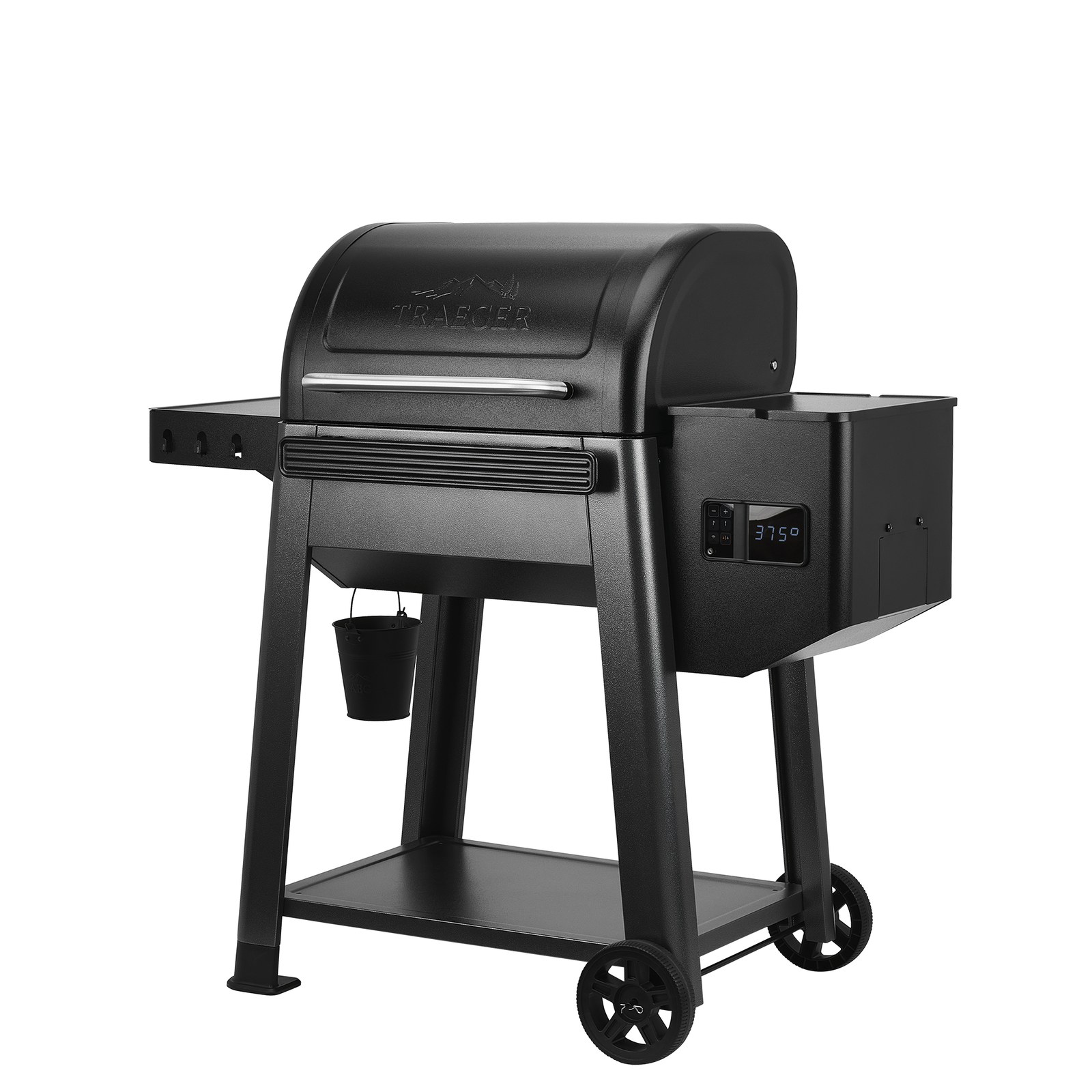
Traeger Westwood
The Westwood is the model Traeger built to replace the Pro 575 at the bottom of the line, and it is now the cheapest WiFIRE grill the company sells. It gives up the Woodridge's 500°F ceiling, 24 lb hopper and Super Smoke mode, capping out at 450°F with an 18 lb hopper and a plain digital controller. What it keeps is the part buyers actually came for: app control, a wired probe, the P.A.L. accessory rail and a two-tier 653 sq in chamber.

Traeger
Traeger Ironwood
The current-generation Ironwood replaced the discontinued Ironwood 885 in Traeger's lineup, trading raw cooking area for a dual-wall insulated barrel, a color touchscreen, and Smart Combustion tech that owners consistently say holds temps within a few degrees even in wind and cold. The EZ-Clean ash keg is the sleeper feature — cleanup drops from a shop-vac session to emptying a bucket. The honest knocks: at $1,800 you're paying a steep premium over a Woodridge Pro that cooks nearly as well with more space, the 500F ceiling still won't sear like a gas grill or a Weber Searwood's 600F, and Traeger's smoke profile stays on the mild side unless you lean on Super Smoke and 225F cooks. Some owners report WiFIRE connectivity drops and occasional startup temp overshoot, and the induction fan is audible. But as a set-and-forget smoker with genuinely modern controls and a 10-year warranty, it's the best-sorted mid-size Traeger yet — just know you're paying for polish, not capacity.

Traeger
Traeger Woodridge
The Woodridge is the grill that finally retired Traeger's ancient Pro Series platform — it's the true successor to the Pro 575/780, and at $799 it undercuts them while fixing their two biggest complaints: cleanup and hopper size. You get 860 sq in (more than the old Pro 780), a 24 lb hopper with a clean-out chute, WiFIRE, a wired probe, and the same EZ-Clean ash keg as the $1,800 Ironwood, all under a 10-year warranty. owners call it the best value Traeger has ever shipped, with steady temps from the new digital controller. The honest trade-offs: no Super Smoke mode (that's the $1,149 Woodridge Pro), no pellet sensor or side shelf, and like every Traeger it tops out at 500F with a mild smoke profile — Camp Chef's Woodwind and the Weber Smoque both produce noticeably more smoke flavor. Early-batch owners reported some app-pairing friction and thin-ish lid steel. If you want the Traeger ecosystem without flagship pricing, this is the one to buy; if you mostly chase heavy smoke, look at the Pro trim or a competitor.
Traeger
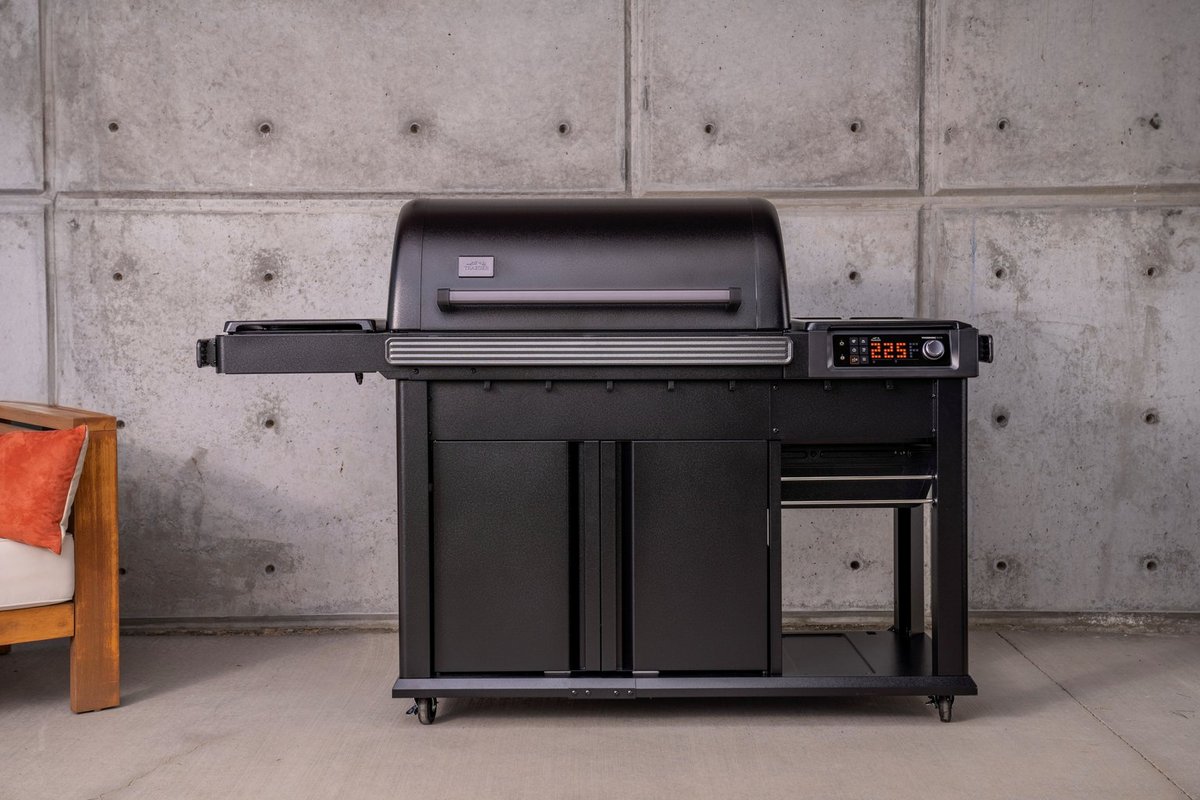
Traeger Woodridge Elite
The top of the Woodridge family and the only one with a gas side burner. Chamber, hopper and controller are identical to the Woodridge Pro Plus — 970 sq in across two racks, 24 lb hopper, 500°F ceiling — so the entire $400 step up buys the burner plus the enclosed cabinet. It sits at the same $1,800 as the Ironwood, which trades the burner for a touchscreen, pellet sensor and a sealed chamber.

Traeger
Traeger Timberline XL
The Traeger Timberline XL is Traeger's top-of-the-line flagship pellet grill, with a fully insulated double-wall body, induction side burner, and a touchscreen controller. It's aimed at serious enthusiasts.
Traeger
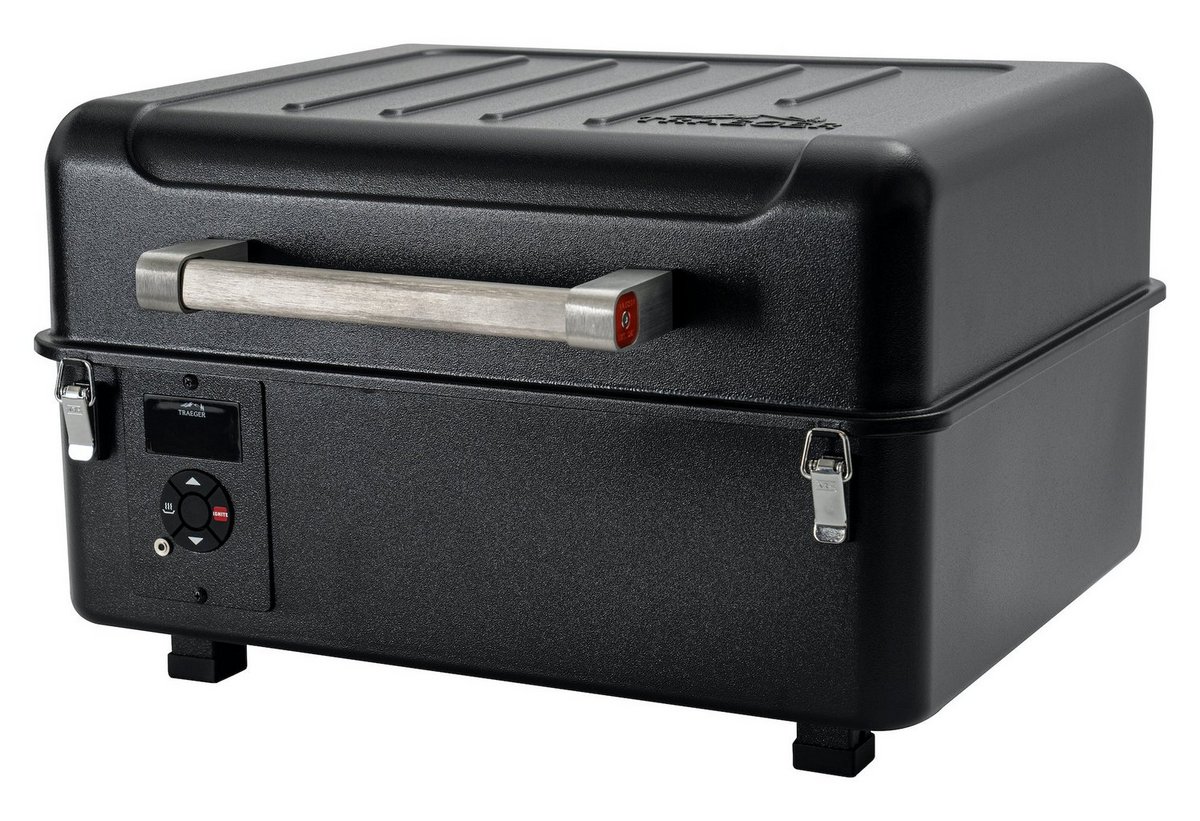
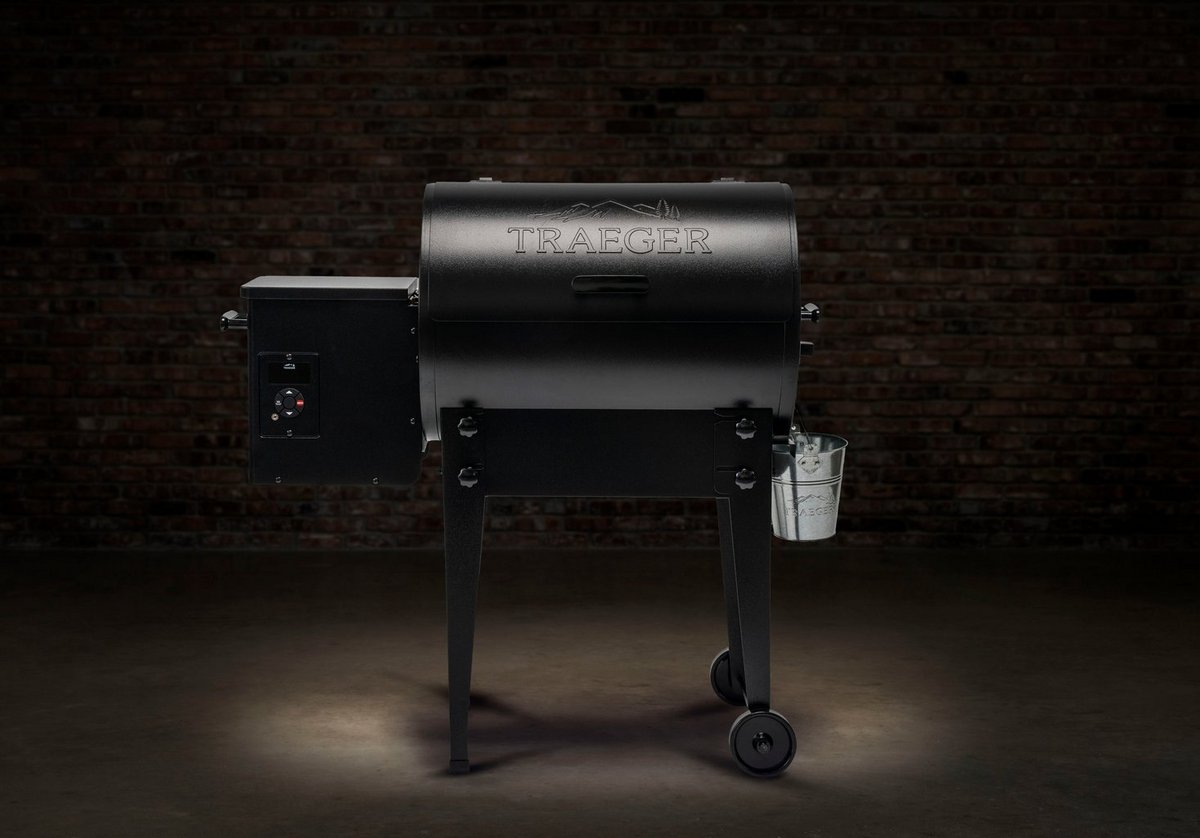
Traeger Ranger
Traeger's tabletop pellet grill — a legless box meant to sit on a truck gate or picnic table rather than stand on its own. It runs the same Digital Arc controller and 8 lb hopper as the Tailgater but only 176 sq in of grate, and it ships with a cast iron griddle insert that the Tailgater does not include. Its 60 lbs is heavy for a tabletop, which is the one thing buyers consistently do not expect.
Traeger
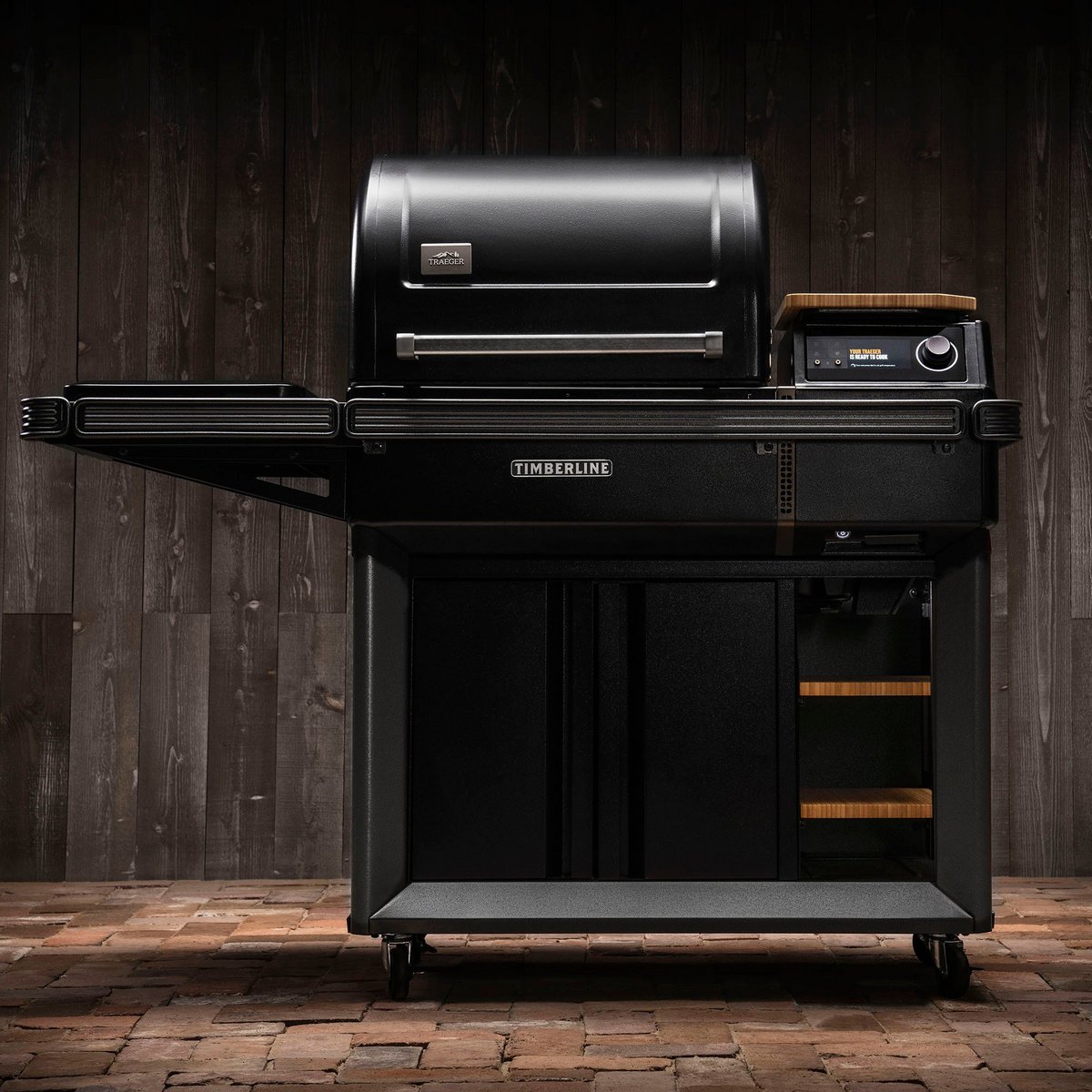
Traeger Tailgater
Traeger's folding-leg portable, and the larger of its two. It runs the Digital Arc controller rather than a WiFIRE board, so there is no app and no Super Smoke — you set a temperature on the dial and the grill holds it. The 300 sq in grate takes two chickens or three rib racks, which is more than most portables and enough that people buy it as a small patio grill rather than only for tailgates.
Traeger
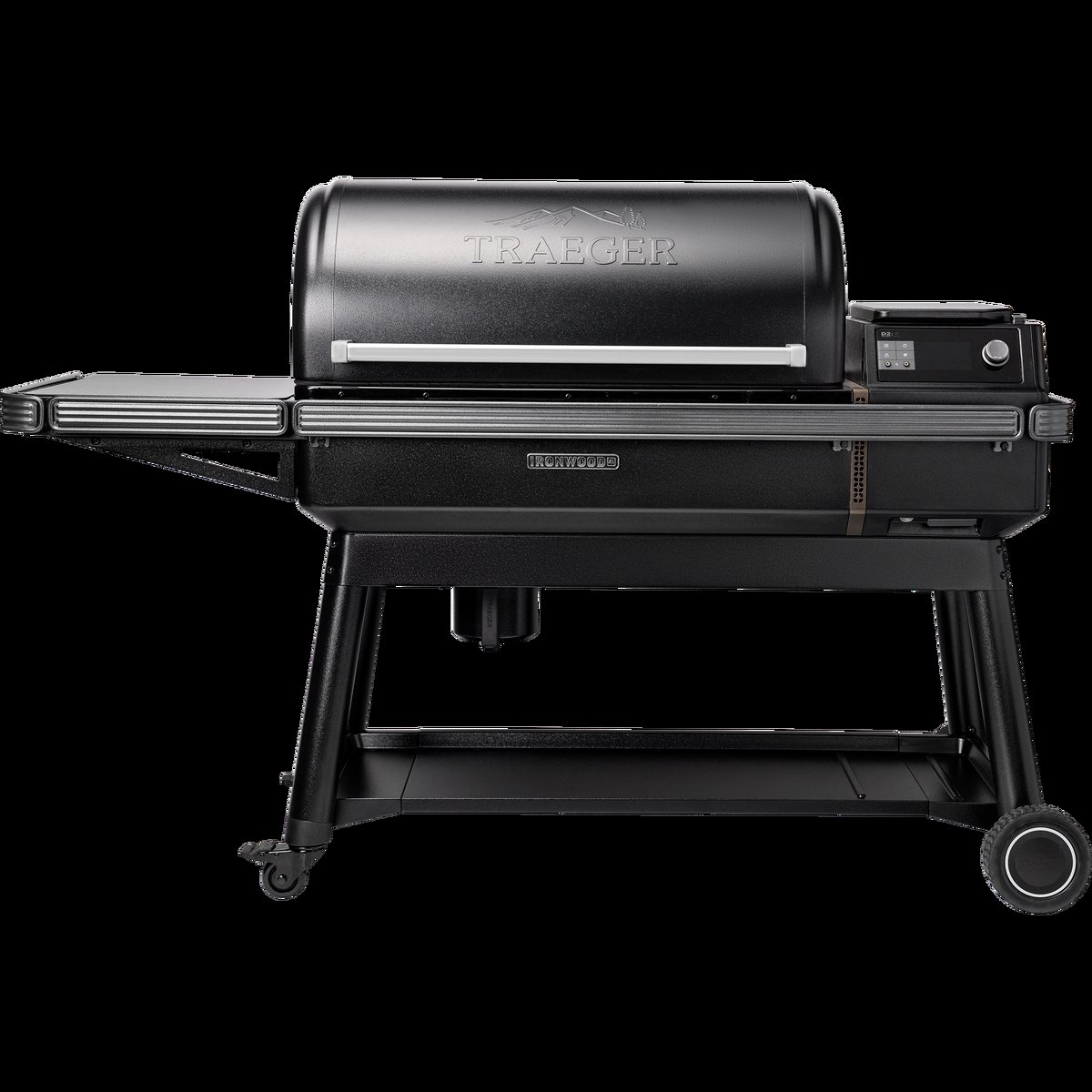
Traeger Timberline
The smaller of Traeger's two flagships: 880 sq in across three racks in a stainless cabinet, with an electric induction cooktop built into the left side and a soft-close lid. It ships with two wired probes and two Traeger x MEATER wireless thermometers. The only difference from the $4,000 Timberline XL is chamber size — 880 sq in against 1,320.
Traeger
Traeger Ironwood XL
The Ironwood XL is the standard Ironwood stretched from 616 to 924 sq in; controller, touchscreen, sealed chamber, pellet sensor and grease keg are all identical. Against the Timberline above it, it gives up the third rack, the induction side cooktop and the stainless build for $1,500. Against the Woodridge Elite at the same money, it trades the gas burner for the touchscreen controller and the better-sealed chamber.
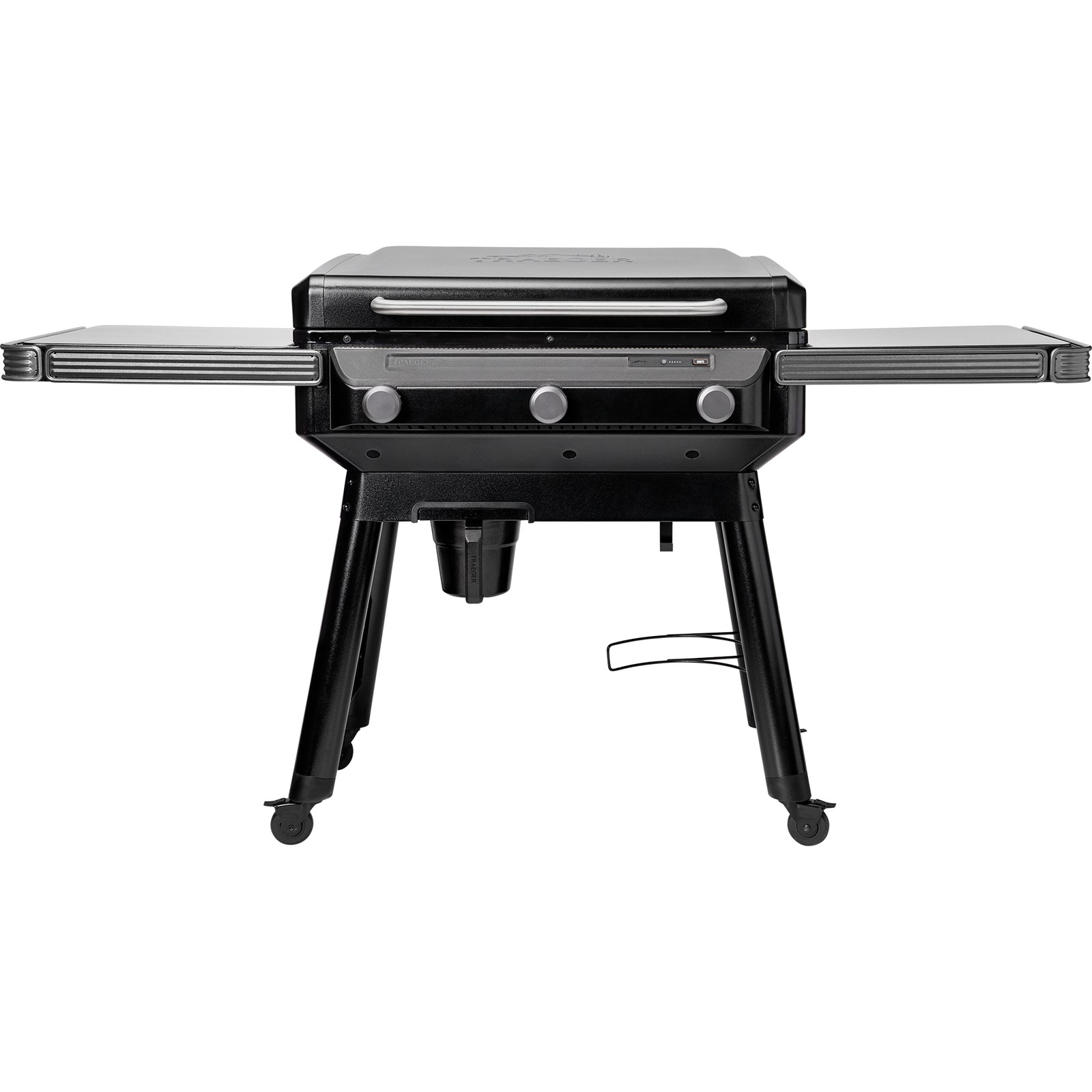
Traeger's only griddle, and its pitch is insulation rather than raw size. Each of the three zones is physically separated by insulated walls and fed by a U-shaped burner, so a 350°F holding zone can sit beside a 600°F sear zone without bleeding into it — the thing a single open Blackstone plate cannot do. FlameLock construction wraps the burners to block wind, which is the other reason griddles lose temperature.