
Traeger
Traeger Woodridge
The Woodridge is the grill that finally retired Traeger's ancient Pro Series platform — it's the true successor to the Pro 575/780, and at $799 it undercuts them while fixing their two biggest complaints: cleanup and hopper size. You get 860 sq in (more than the old Pro 780), a 24 lb hopper with a clean-out chute, WiFIRE, a wired probe, and the same EZ-Clean ash keg as the $1,800 Ironwood, all under a 10-year warranty. owners call it the best value Traeger has ever shipped, with steady temps from the new digital controller. The honest trade-offs: no Super Smoke mode (that's the $1,149 Woodridge Pro), no pellet sensor or side shelf, and like every Traeger it tops out at 500F with a mild smoke profile — Camp Chef's Woodwind and the Weber Smoque both produce noticeably more smoke flavor. Early-batch owners reported some app-pairing friction and thin-ish lid steel. If you want the Traeger ecosystem without flagship pricing, this is the one to buy; if you mostly chase heavy smoke, look at the Pro trim or a competitor.
We may earn a commission. Price and availability on Amazon may differ.
Specifications
Features
Pros
- ✓Outstanding value — 860 sq in, WiFIRE, and probe for $799
- ✓EZ-Clean grease/ash keg eliminates the shop-vac ritual
- ✓24 lb hopper with clean-out chute swaps pellet flavors fast
- ✓New digital PID controller holds temps noticeably better than the old Pro Series
- ✓10-year warranty at a budget price point
- ✓Big enough for six pork butts or eight rib racks
Cons
- ✗No Super Smoke mode — smoke flavor is mild at higher temps
- ✗No pellet level sensor or included side shelf at base trim
- ✗500F ceiling rules out true searing
- ✗Lighter-gauge steel than the insulated Ironwood, so cold weather costs pellets
Owner Insightssummarized from owner discussions
The Woodridge is the grill Traeger built to replace the ageing Pro 575 and 780, and the thing owners praise first is not the cooking but the cleaning. The grease and ash cup underneath draws genuine enthusiasm, with one owner describing maintenance as a brush and you are done, and another who cleans his father-in-law's before every cook saying the routine amounts to changing the foil on the drip tray and emptying the ash bin. The food backs the grill up: one owner's first season covered brisket, pork butt, salmon, tri-tip, ribeyes and sides, with essentially everything landing well. Beginners buy it as a first smoker and get usable results quickly, and it discounts often enough that several owners paid substantially under list.
The reservations are real and they are about heat and smoke. The most pointed came from an owner arriving from a six-year Green Mountain Grill, who called it terrible at holding temperature and said that opening the lid for more than a minute cost him a hundred degrees, which left him worried about how it would behave in winter and considering sending it back. Another owner could not get it hot enough conveniently for burgers and steaks and replaced it with a Weber Searwood. Smoke output is the other recurring theme: owners describe it as well short of charcoal and supplement with smoke tubes, and prospective buyers ask about it before purchase because the reputation precedes the grill. Worth knowing before you spend up: Super Smoke, the headline difference between the base grill and the Pro, is dismissed by owners who have it, one calling it ehh after a year and saying a twenty dollar smoke tube does more for flavor than the mode does.
It suits someone who wants the Traeger ecosystem, wants low-effort cleanup, and treats smoke flavor as a nice-to-have rather than the point. The comparison that dominates every buying thread is the Weber Searwood, and shoppers looking at both in store often find the Woodridge the better-built and better-warrantied of the two, while owners who left for the Searwood did so chasing higher temperatures and easier grilling. The honest caveat is that this is a smoker first: owners who also want to sear describe finishing steaks in a cast iron pan or keeping a gas grill alongside, and one describes the Woodridge as an addition to his setup rather than a replacement for anything.
What owners like
- +Cleanup is the standout improvement and owners say so unprompted: the grease and ash cup underneath means a brush and you are finished, a long way from the foil-and-shop-vac routine the old Pro series demanded
- +The food is good across a wide range. One owner's first summer covered brisket, pork butt, salmon, tri-tip, ribeyes and even mac and cheese, and he rated essentially all of it a success
- +It is easy to learn on. Complete beginners buying it as a first smoker report usable brisket and ribs early, and the WiFi control means adjusting temperature without walking outside
- +Discounts are common. Owners report buying it well under list through Home Depot military pricing, retailer connections and holiday sales, which changes how it compares against a Weber Searwood at full price
- +It is the direct replacement for the aging Pro 575 and 780, and shoppers cross-shopping them in store consistently find the Woodridge the more modern grill for the money
Common complaints
- −Temperature stability is the sharpest complaint. One owner moving from a six-year-old Green Mountain Grill called it terrible at holding temperature and said opening the lid for more than a minute dropped it a hundred degrees, leaving him worried about winter and considering a return
- −Smoke flavor is mild, which is the complaint that makes people sell it. One former owner said it was nowhere near charcoal and he was compensating with smoke tubes; prospective buyers repeat the same concern before purchase
- −Super Smoke, the feature that separates the Pro from the base model, is not worth the upgrade according to owners who use it. One who has run it for a year called it ehh and said a twenty dollar smoke tube is where the flavor actually comes from
- −It can be slow to heat and reluctant at the top end. An owner who wanted to do burgers and steaks on it found he could not get high temperatures conveniently and moved to a Weber Searwood instead
- −App notifications have a known fault, and the response one owner got from Traeger suggested it was not going to be fixed
- −The brand's reputation works against it. Buyers researching it repeatedly raise the perception that build quality feels cheap and that Traeger has been cutting costs while competitors improved, and they arrive asking to be talked out of that impression
Common Questions
Is the Pro worth the extra money over the base Woodridge?
Does it hold temperature well?
How much smoke flavor does it actually produce?
Can you grill and sear on it, or is it only a smoker?
Woodridge or Weber Searwood?
Compare the Traeger Woodridge
Related grills
More from Traeger →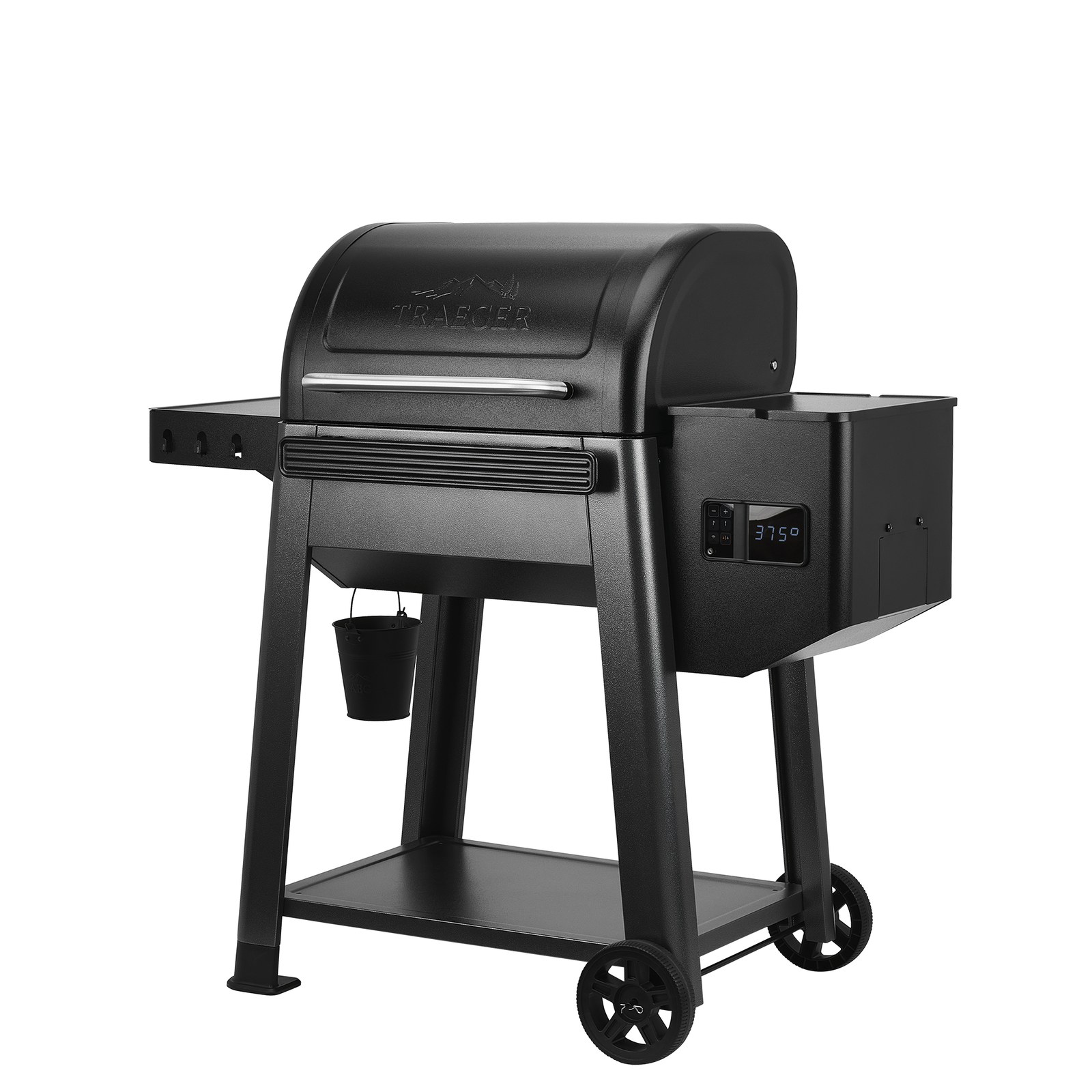
Traeger
Traeger Westwood
The Westwood is the model Traeger built to replace the Pro 575 at the bottom of the line, and it is now the cheapest WiFIRE grill the company sells. It gives up the Woodridge's 500°F ceiling, 24 lb hopper and Super Smoke mode, capping out at 450°F with an 18 lb hopper and a plain digital controller. What it keeps is the part buyers actually came for: app control, a wired probe, the P.A.L. accessory rail and a two-tier 653 sq in chamber.

Traeger
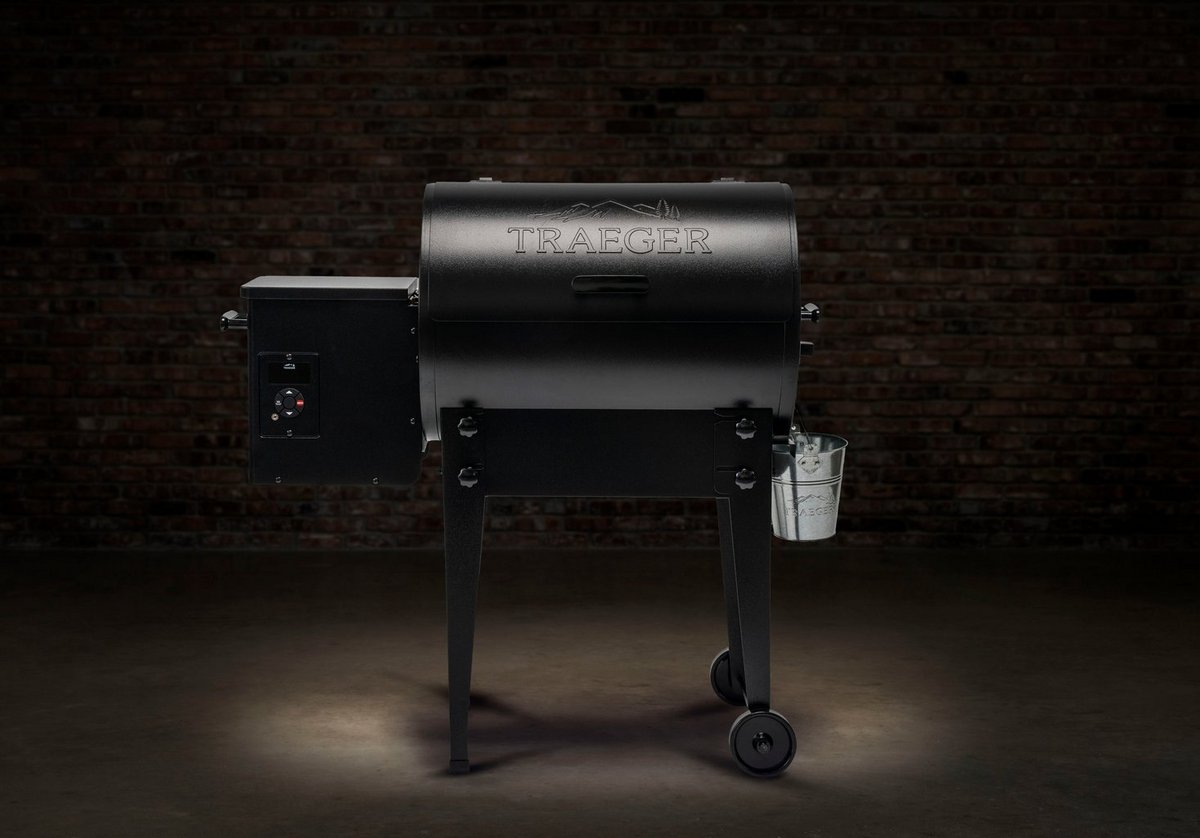
Traeger Pro 575
The Traeger Pro 575 is Traeger's best-selling entry-level WiFi pellet grill, using the D2 controller and WiFIRE app. It's the model most people picture when they think 'Traeger.' Note: this model is no longer sold new as of 2026. Its current equivalent is the Traeger Woodridge.
Traeger
Traeger Tailgater
Traeger's folding-leg portable, and the larger of its two. It runs the Digital Arc controller rather than a WiFIRE board, so there is no app and no Super Smoke — you set a temperature on the dial and the grill holds it. The 300 sq in grate takes two chickens or three rib racks, which is more than most portables and enough that people buy it as a small patio grill rather than only for tailgates.
Traeger
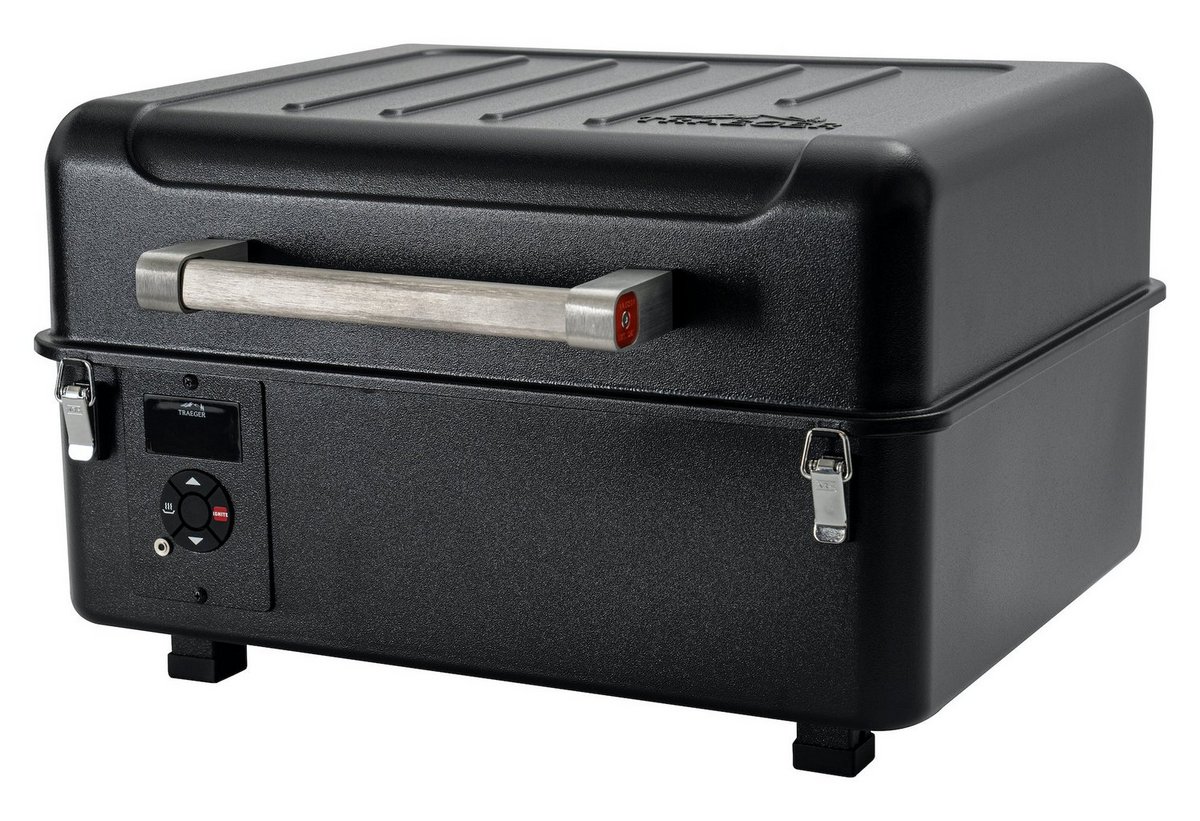
Traeger Ranger
Traeger's tabletop pellet grill — a legless box meant to sit on a truck gate or picnic table rather than stand on its own. It runs the same Digital Arc controller and 8 lb hopper as the Tailgater but only 176 sq in of grate, and it ships with a cast iron griddle insert that the Tailgater does not include. Its 60 lbs is heavy for a tabletop, which is the one thing buyers consistently do not expect.
Traeger
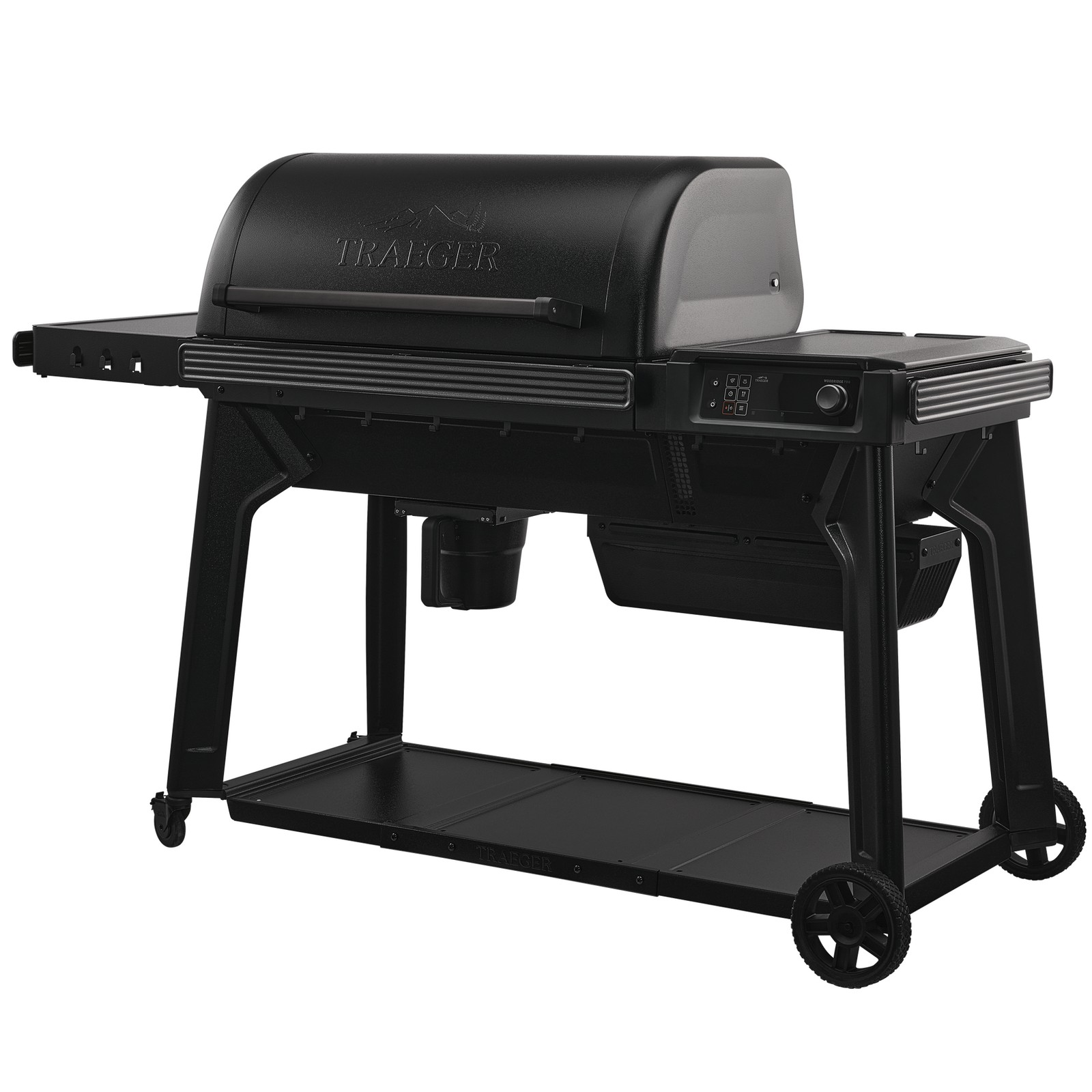
Traeger Woodridge Pro
The Traeger Woodridge Pro is the 2025 replacement for the aging Pro series - 970 sq in, a 24 lb hopper with pellet sensor, Super Smoke mode, and a 10-year warranty at $1,000. Reviewers call it the biggest upgrade to Traeger's entry lineup in years.

Traeger
Traeger Ironwood 885
The Traeger Ironwood 885 is a WiFi-connected wood-pellet grill and smoker from Traeger, the company that popularized pellet grills. It uses the D2 direct-drive controller and WiFIRE app for hands-off cooks. Traeger has moved it to its Legacy Grills line — still sold new on traeger.com, but the current equivalent is the Ironwood XL.