
Traeger
Traeger Pro 575
The Traeger Pro 575 is Traeger's best-selling entry-level WiFi pellet grill, using the D2 controller and WiFIRE app. It's the model most people picture when they think 'Traeger.' Note: this model is no longer sold new as of 2026. Its current equivalent is the Traeger Woodridge.
We may earn a commission. Price and availability on Amazon may differ.
Specifications
Features
Pros
- ✓It's the most accessible entry into the Traeger ecosystem and frequently goes on sale at Home Depot for $400-$560, making it a great value buy
- ✓The D2 controller and single meat probe make hands-off ribs and chicken genuinely easy for a complete beginner
- ✓WiFIRE app control means you can start, monitor, and shut down the grill from the couch or the store
- ✓575 sq in fits about five racks of ribs or four chickens - enough for most families without being huge
- ✓Quick 15-minute startup and reliable auto-ignition get you cooking fast on weeknights
- ✓It's lightweight at 128 lbs with all-terrain wheels, so one person can reposition it on the patio
- ✓Smoke flavor at the 180-225°F range is solid for a budget pellet grill, especially with the optional smoke setting
- ✓Parts and accessories are everywhere and the huge owner community means troubleshooting any issue is a quick search away
Cons
- ✗Single-wall construction means it struggles to hold temp in cold or windy weather and burns through pellets fast in winter
- ✗It tops out around 450-500°F and has no real sear zone, so steaks come out grilled rather than seared
- ✗The same WiFi drop-off issues as the rest of the lineup plague it - the connection is flaky and the app loses the grill mid-cook
- ✗Only one meat probe is included, which is limiting when you're cooking multiple proteins at once
- ✗Temperature can swing 25-30°F around the set point, more than premium PID grills, so it's less precise for delicate cooks
- ✗The powder-coated steel body and grease management feel cheap, and the bucket-style grease catch is messy to empty
- ✗No pellet-level sensor, so you have to manually check the hopper to avoid running dry on long cooks
- ✗Owners report auger and hot-rod failures after a couple seasons, and the 3-year warranty is shorter than budget rivals offer
Owner Insightssummarized from owner discussions
The Pro 575 is the grill most people picture when they hear 'Traeger', and for years it was the default first pellet smoker: WiFi, an app, a hopper big enough for an overnight cook, and stocked at every big-box store at a price that drops $150 several times a year. Owner sentiment is genuinely split. The people who use it as a convenience appliance — ribs, chicken thighs, pork butt, weeknight dinners you start from your phone — are mostly happy with it. The people who bought it expecting barbecue that tastes like barbecue are the ones writing the disappointed posts, and there are a lot of those.
The practical experience has three recurring quirks. Smoke output is light, especially above 225°F, and the standard fixes owners trade are running the first two or three hours at 180-200°F where pellets burn dirtier, switching from fruit pellets to hickory, mesquite or oak, keeping the meat cold going on, wrapping late, and adding a smoke tube. Heat is uneven — the chimney side runs roughly 30°F hotter and several owners identify the back left corner as the hot spot, with the readout sitting in the coldest part of the chamber, so rotating food is part of the routine. And the onboard instrumentation is not trusted: the meat probe commonly reads about 10°F high, and owners routinely set 250°F to get an actual 225°F, which is why nearly everyone running long cooks on one has bought a separate wireless thermometer. Hardware failures are not universal but they recur in the threads: melted probe wires, a dead ignition out of the box, and at least one unit powering off mid-cook.
It suits someone who wants hands-off convenience and treats deep smoke flavor as a bonus rather than the point — and it is a reasonable fit for an HOA that bans open flame, since it registers as an electric appliance and stays quiet. The comparisons owners actually make are against Recteq and Camp Chef, both of which get recommended over it on build quality, warranty and customer service, and against a charcoal kettle or kamado for anyone chasing flavor over convenience. The honest caveat is the biggest one: it has been replaced by the Woodridge line, and owners who have run both say the newer controller simply holds temperature better. Buying a 575 now means buying it used or on clearance, and inheriting the hot spots, the soft smoke and the untrustworthy gauge that its replacement was designed to fix.
What owners like
- +It is genuinely easy for a first-time smoker. Owners who had never smoked anything describe getting decent ribs and chicken thighs on early attempts, and one long-time brisket cook calls it the easiest way he has found to make good brisket
- +The hopper holds enough for a full overnight cook, which is the specific thing that pushes people here from Masterbuilt-style electric smokers where you feed wood chips every 30-45 minutes
- +App control earns its keep on long cooks — owners check the pit from the ballpark or from bed, and several say it is the feature they would not give up
- +Traeger's support record on this model is better than the brand's reputation suggests: one owner had the stock temp gauge fail and the probe wires melt mid-brisket, and got both replaced free
- +It is everywhere and it discounts constantly. Home Depot, Ace and Costco all carry it, $150 off is routine, and some retailers include assembly and haul-away — which mattered to at least one buyer carrying a grill to a third-floor townhouse deck
- +It solves a specific problem for people under HOA rules that ban open flame: it reads as an electric appliance, runs quiet, and does not throw enough smoke for neighbors to complain
- +There is a deep accessory ecosystem — extra racks and a grease-box attachment from third-party makers, a pizza oven insert that drops onto the grates, smoke tubes, and an adjustable chimney cap you can crank down for smoking
- +It is an excellent outdoor oven. Even owners who moved on to charcoal keep theirs for jerky, fish, sides and lazy weeknights where you press ignite and walk away for ten minutes
Common complaints
- −Weak smoke flavor is the single most common complaint by a wide margin. Owner after owner describes food that could have come out of a kitchen oven, with a visible smoke ring but almost no smoke taste, and it is why people sell this grill
- −Heat is noticeably uneven. Owners independently report the left or chimney side running about 30°F hotter, and a one-year owner pins the hot spot at the back left corner while the readout sits in the coldest area. The workaround is rotating food and running a biscuit test to map it
- −The built-in temperature readout and probe are not trusted. Owners report the meat probe reading roughly 10°F high and the pit running cool enough that they set 250°F to actually get 225°F
- −It cannot reliably hold the low temperatures it advertises. One owner is blunt that the 165-170°F settings do not hold in practice, and that is where the most smoke would be produced
- −Above about 400°F it falls apart. The one-year owner calls setting it that high a disaster and questions why the dial goes there; searing is not what this grill does, and people who want a crust finish steaks on a separate cooker
- −Failures show up in the threads: probe wires melting during a wrapped brisket, an ignition failure on a brand-new unit that would not climb past 112°F, at least one grease fire, and a unit that powered itself off twice mid-cook with no shutdown sequence, which made the owner afraid to run it overnight
- −575 sq in runs out faster than people expect. One couple hit the wall within two years once they started cooking for parties and began shopping offsets instead
- −The model is discontinued, and owners who have used its replacement say the newer Woodridge line holds temperature better than both the 575 and the 780 — so you are buying a known-quirky grill rather than a current one
Common Questions
Why does my food have a smoke ring but no smoke flavor?
Can I sear a steak on it?
Is one side of the grill hotter than the other?
Should I trust the built-in thermometer and meat probe?
Is 575 sq in enough, or should I size up?
It's discontinued — is it still worth buying used or on clearance?
Compare the Traeger Pro 575
This model is no longer sold new. Its current equivalent is the Traeger Westwood.
We keep this page for the many still in use and on the used market — specs and honest pros/cons below still apply.
Related grills
More from Traeger →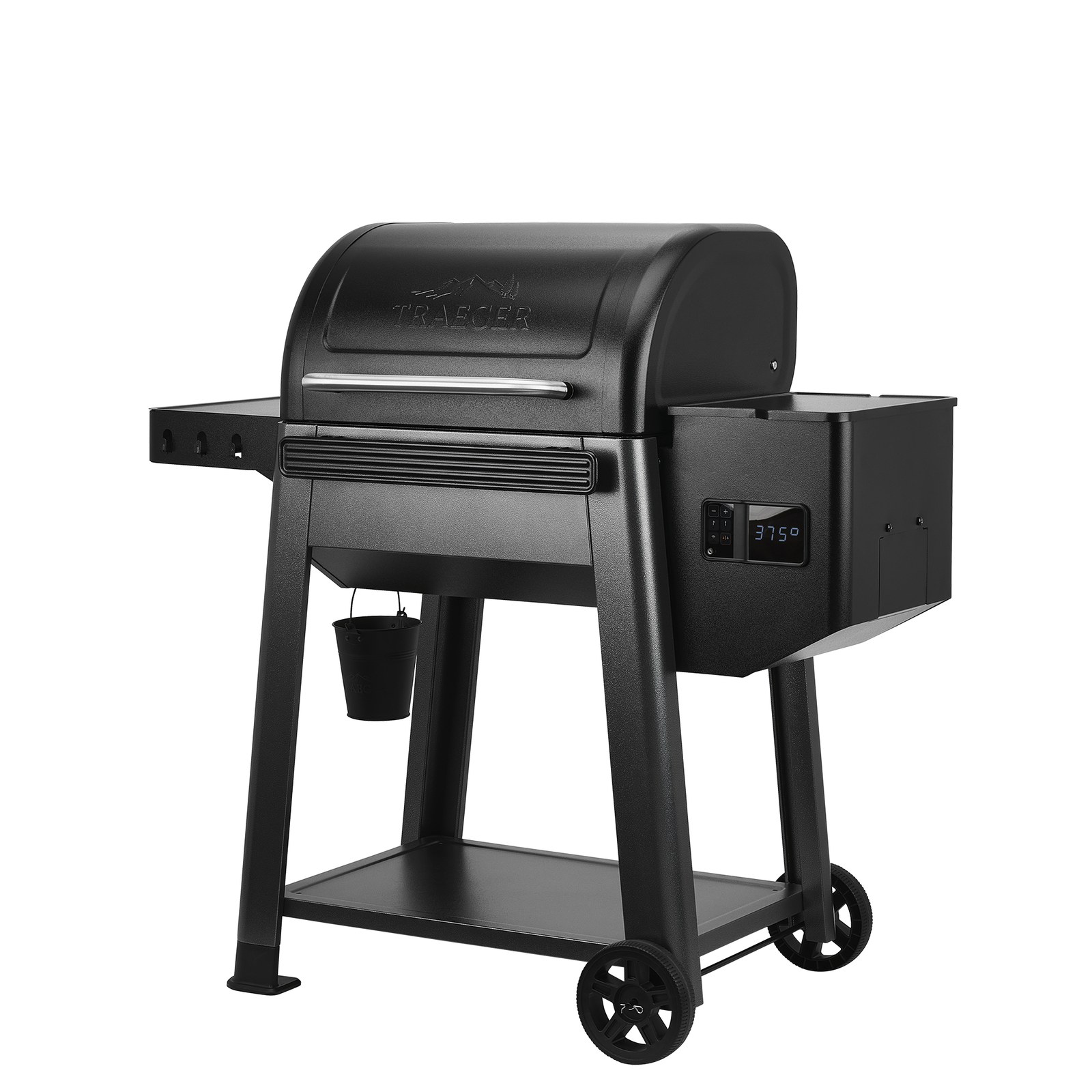
Traeger
Traeger Westwood
The Westwood is the model Traeger built to replace the Pro 575 at the bottom of the line, and it is now the cheapest WiFIRE grill the company sells. It gives up the Woodridge's 500°F ceiling, 24 lb hopper and Super Smoke mode, capping out at 450°F with an 18 lb hopper and a plain digital controller. What it keeps is the part buyers actually came for: app control, a wired probe, the P.A.L. accessory rail and a two-tier 653 sq in chamber.
Traeger
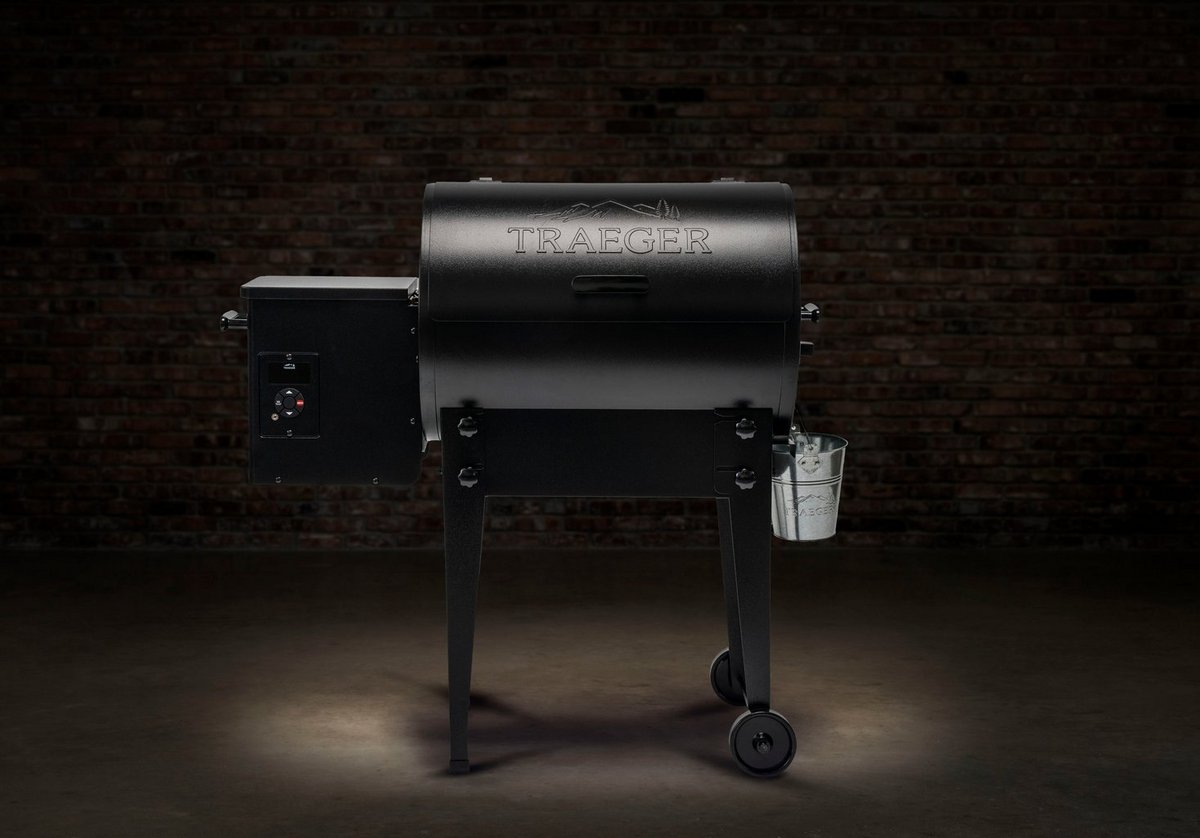
Traeger Tailgater
Traeger's folding-leg portable, and the larger of its two. It runs the Digital Arc controller rather than a WiFIRE board, so there is no app and no Super Smoke — you set a temperature on the dial and the grill holds it. The 300 sq in grate takes two chickens or three rib racks, which is more than most portables and enough that people buy it as a small patio grill rather than only for tailgates.
Traeger
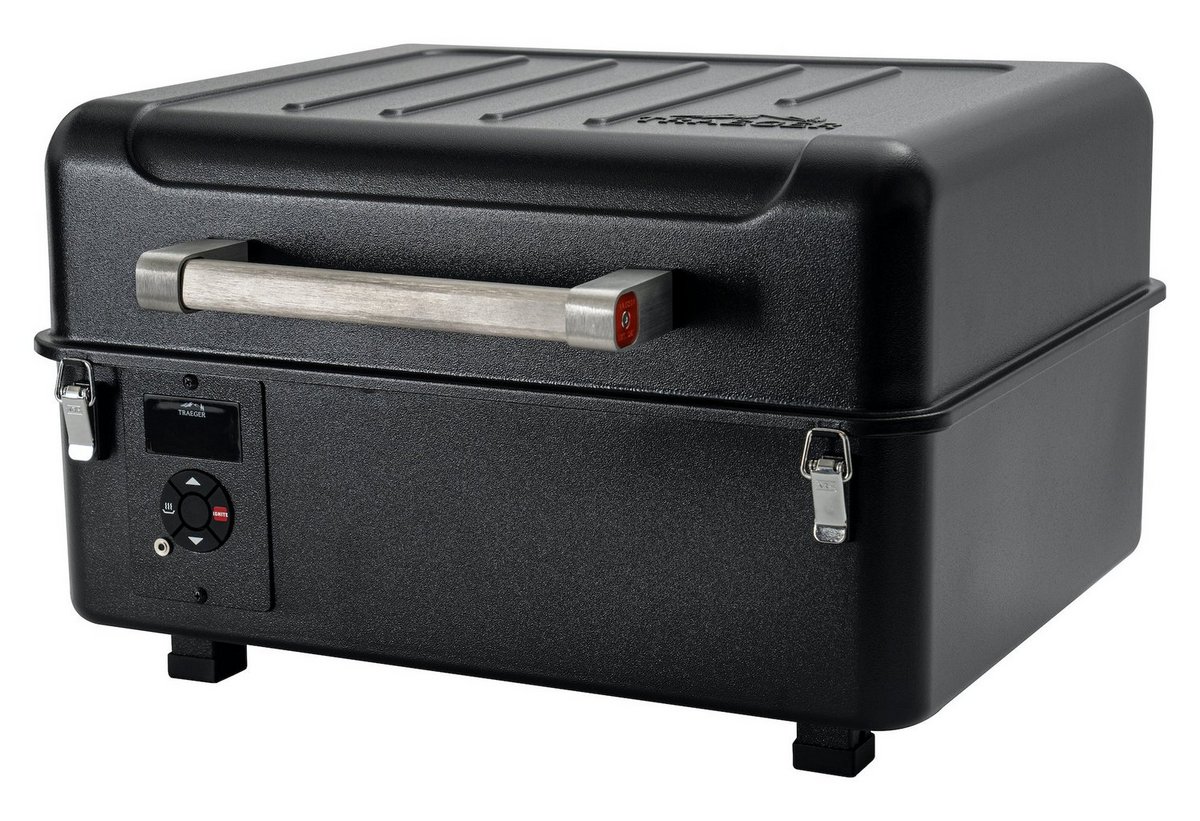
Traeger Ranger
Traeger's tabletop pellet grill — a legless box meant to sit on a truck gate or picnic table rather than stand on its own. It runs the same Digital Arc controller and 8 lb hopper as the Tailgater but only 176 sq in of grate, and it ships with a cast iron griddle insert that the Tailgater does not include. Its 60 lbs is heavy for a tabletop, which is the one thing buyers consistently do not expect.

Traeger
Traeger Woodridge
The Woodridge is the grill that finally retired Traeger's ancient Pro Series platform — it's the true successor to the Pro 575/780, and at $799 it undercuts them while fixing their two biggest complaints: cleanup and hopper size. You get 860 sq in (more than the old Pro 780), a 24 lb hopper with a clean-out chute, WiFIRE, a wired probe, and the same EZ-Clean ash keg as the $1,800 Ironwood, all under a 10-year warranty. owners call it the best value Traeger has ever shipped, with steady temps from the new digital controller. The honest trade-offs: no Super Smoke mode (that's the $1,149 Woodridge Pro), no pellet sensor or side shelf, and like every Traeger it tops out at 500F with a mild smoke profile — Camp Chef's Woodwind and the Weber Smoque both produce noticeably more smoke flavor. Early-batch owners reported some app-pairing friction and thin-ish lid steel. If you want the Traeger ecosystem without flagship pricing, this is the one to buy; if you mostly chase heavy smoke, look at the Pro trim or a competitor.
Traeger
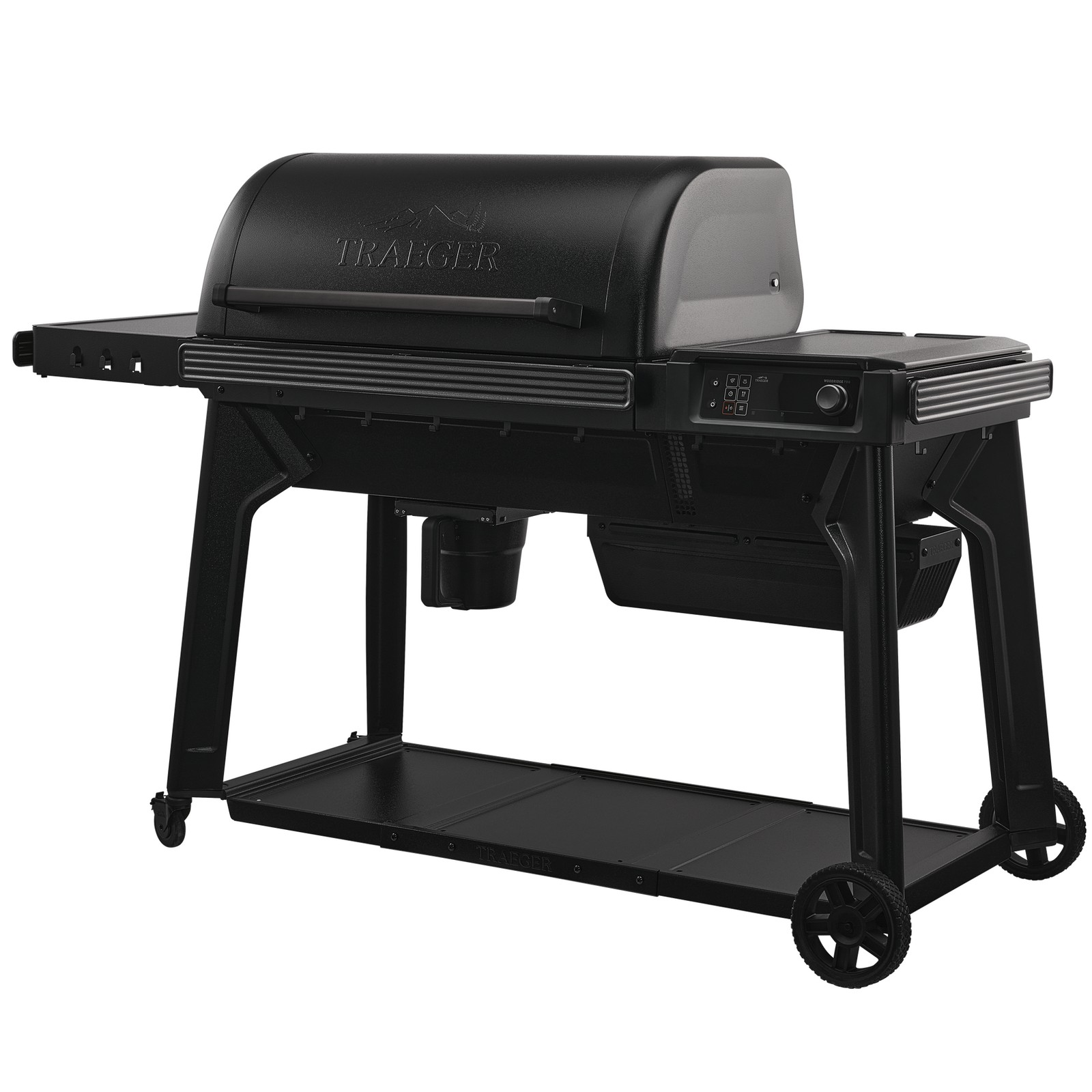
Traeger Woodridge Pro
The Traeger Woodridge Pro is the 2025 replacement for the aging Pro series - 970 sq in, a 24 lb hopper with pellet sensor, Super Smoke mode, and a 10-year warranty at $1,000. Reviewers call it the biggest upgrade to Traeger's entry lineup in years.

Traeger
Traeger Ironwood 885
The Traeger Ironwood 885 is a WiFi-connected wood-pellet grill and smoker from Traeger, the company that popularized pellet grills. It uses the D2 direct-drive controller and WiFIRE app for hands-off cooks. Traeger has moved it to its Legacy Grills line — still sold new on traeger.com, but the current equivalent is the Ironwood XL.