
Traeger
Traeger Ironwood 885
The Traeger Ironwood 885 is a WiFi-connected wood-pellet grill and smoker from Traeger, the company that popularized pellet grills. It uses the D2 direct-drive controller and WiFIRE app for hands-off cooks. Traeger has moved it to its Legacy Grills line — still sold new on traeger.com, but the current equivalent is the Ironwood XL.
We may earn a commission. Price and availability on Amazon may differ.
Specifications
Features
Pros
- ✓The D2 controller holds your set temp within roughly 5-15°F once it settles, which is plenty accurate for ribs, brisket, and pork butt without babysitting
- ✓Super Smoke mode genuinely cranks up smoke output at low temps (under 225°F) and gives noticeably more bark and smoke ring than the old Pro series
- ✓The downdraft exhaust and double-sidewall insulation help it hold heat better than older Traegers, so it recovers faster when you open the lid
- ✓WiFIRE app is the most mature in the category and lets you adjust temp, set probe alarms, and monitor cooks from your phone anywhere
- ✓885 sq in over two racks easily handles two pork butts plus a couple racks of ribs, so it's a real family/party-sized cooker not just a weeknight grill
- ✓The built-in pellet sensor warns you before the hopper runs dry, which saves you from the dreaded stalled-out overnight brisket cook
- ✓TurboTemp gets it up to cooking temp in about 10-15 minutes, faster than many competing pellet grills
- ✓Cleanup is straightforward thanks to the EZ-clean grease and ash keg, and the porcelain grates wipe down easily
Cons
- ✗WiFi connectivity is the number-one owner complaint - the grill regularly drops off the network mid-cook and you have to re-pair it through the app
- ✗Like all pellet grills it tops out around 450-500°F, so you won't get a true steakhouse sear without a separate cast-iron skillet or GrillGrates
- ✗At roughly $1,400 it's expensive for powder-coated steel, and many feel Recteq or Camp Chef give you more grill for the money
- ✗Pellet consumption is on the higher side, especially in cold weather where the single-wall areas leak heat despite the marketing about insulation
- ✗Some owners report the auger jamming or the hot rod failing after a year or two, and Traeger service can be slow to ship parts
- ✗The 3-year warranty trails Recteq (6 yr) and Camp Chef, which feels stingy at this price point
- ✗Temperature swings of 20-30°F are common during the initial heat-up and after lid openings before the PID re-stabilizes
- ✗It needs 120V power and the controller electronics are a known failure point, so a true 'set it and forget it' overnight cook is a small gamble
Owner Insightssummarized from owner discussions
The Ironwood 885 is Traeger's old flagship-adjacent pellet grill, and by now almost nobody in owner threads is paying list for it. The prices people report are $400 and $660 and $999 CAD talked down to $900, mostly clearance shelves at big-box stores or secondhand pickups. That colors the whole verdict: at $300 to $700 it reads as a steal and owners defend it hard, and at $1,400 the same people tell first-time buyers to look at a Camp Chef Woodwind Pro 36, a Weber Searwood 600, or a Recteq instead.
What it does well is hold a number. Temp stability through wind and cold is one of the few things owners consistently praise, and the capacity is genuine — a 19+ lb packer, three racks of ribs, a turkey with room above it. What it does not do is put much smoke on food. That is the complaint that dominates, and it is not a minority view: an owner who moved up from a Pro 22 burned 18 lb of hickory pellets on a pork butt and got barely any smoke flavor, and the standard fix among owners is to run a smoke tube in parallel and stop expecting the grill to do it alone. The other recurring failures are electrical. WiFi drops and refuses to re-pair, and igniters and control boards go. Out of warranty that becomes expensive, because Traeger sells parts on a trial-and-error basis and dealers often will not service older units.
Buy it if you want set-and-forget cooking with real capacity, you are buying it used or on clearance, and you already know you will add a smoke tube. Buy something else if smoke flavor is the point, or if you want a machine that will still be serviceable in year six. Owners who left it went to the Searwood 600 for better grilling versatility, the Woodwind Pro 36 for its separate smoke box, or Recteq and Yoder for build quality. Nobody who left for those reported regretting it, which is the honest headline for a grill that is now the previous generation.
What owners like
- +Temperature holding is the part owners rarely argue about. One owner ran a full rib cook through Scottish wind and rain and described the temps as steady the whole way, and long-cook reports generally treat the set point as something you stop thinking about.
- +885 sq in is real capacity, not a spec-sheet number. Owners report fitting a 19.4 lb untrimmed packer, three racks of St. Louis ribs, or a spatchcocked turkey with the upper rack still free.
- +The optional pellet sensor comes up repeatedly as the accessory owners say they would not give up, because it catches a hopper running dry before an overnight cook stalls out.
- +It goes down to 165F, which is lower than several of the grills it gets cross-shopped against. Jerky and slow cold-ish smokes are one of the specific reasons buyers pick it over a Weber Searwood 600, which starts at 180F.
- +Keep Warm sits around 160F and owners use it as a faux holding oven for 12-hour brisket rests, which is a workaround for not owning a low-temp oven.
- +Five-year-old units still in weekly service show up in owner threads, and one owner who already had one said they would buy a second at clearance price just to have a spare.
Common complaints
- −Light smoke is the single most common complaint. One owner burned roughly 18 lb of hickory pellets on a 10-hour pork butt and got what they described as the lightest hint of smoke. Another with a new backyard setup called the smoke output disappointing outright. Most owners who care about smoke end up running a smoke tube alongside it.
- −Super Smoke helps but does not close the gap. Owners who also run a kamado or an offset describe the Traeger flavor as a different thing rather than a weaker version of the same thing.
- −WiFi failures are chronic and Traeger appears to know it. One owner logged about four hours across multiple support calls over a connection that worked fine and then simply stopped.
- −Out-of-warranty repair is where the brand loses people. A 2020 unit died before Thanksgiving, support sold the owner parts that did not fix it and then proposed another round at roughly $100 a part with no guarantee, and the local hardware store would not touch an out-of-warranty Traeger at all.
- −Igniter and control-board faults are a known used-market risk. At least one owner replaced a hot rod on a secondhand unit and still could not get it above 210-220F, pointing at the controller instead.
- −Searing at the 500F ceiling can get away from you. One owner turned it up to sear a tri-tip and had flames coming out of the grill before it forced a shutdown.
- −Hands-on, it does not feel like a $1,400 grill. Shoppers who compared it in a store against a similarly priced Pit Boss Pro 1600 described the Ironwood as lackluster and cheaply built, and that impression pushed several of them to Camp Chef or Weber instead.
Common Questions
Does the Ironwood 885 actually make food taste smoky?
What is a fair price now that it is the old generation?
Can it sear a steak?
How big a brisket will it take?
What happens when something breaks after the warranty?
Do I have to use Traeger pellets?
Compare the Traeger Ironwood 885
This model is no longer sold new. Its current equivalent is the Traeger Ironwood XL.
We keep this page for the many still in use and on the used market — specs and honest pros/cons below still apply.
Related grills
More from Traeger →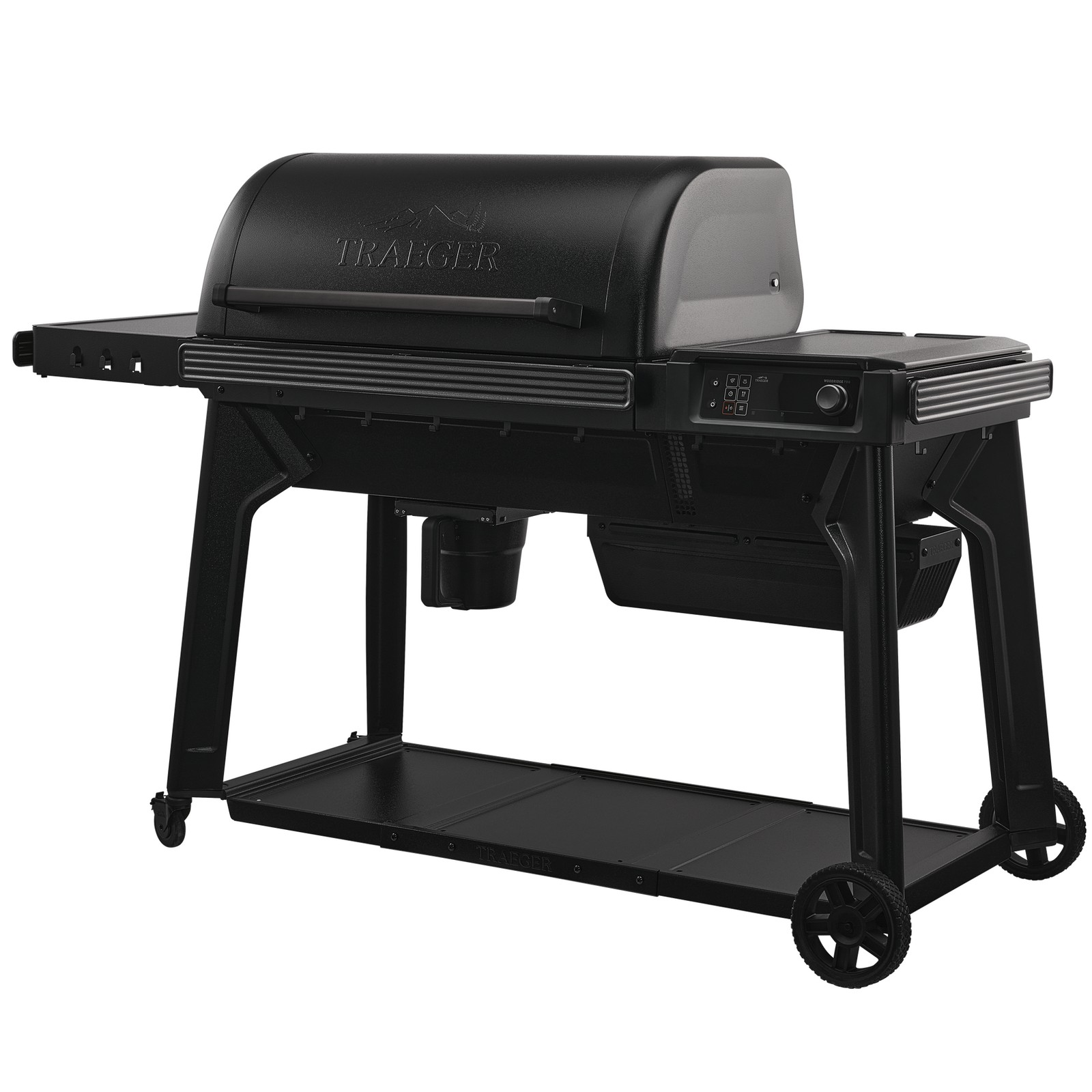
Traeger
Traeger Woodridge Pro
The Traeger Woodridge Pro is the 2025 replacement for the aging Pro series - 970 sq in, a 24 lb hopper with pellet sensor, Super Smoke mode, and a 10-year warranty at $1,000. Reviewers call it the biggest upgrade to Traeger's entry lineup in years.

Traeger
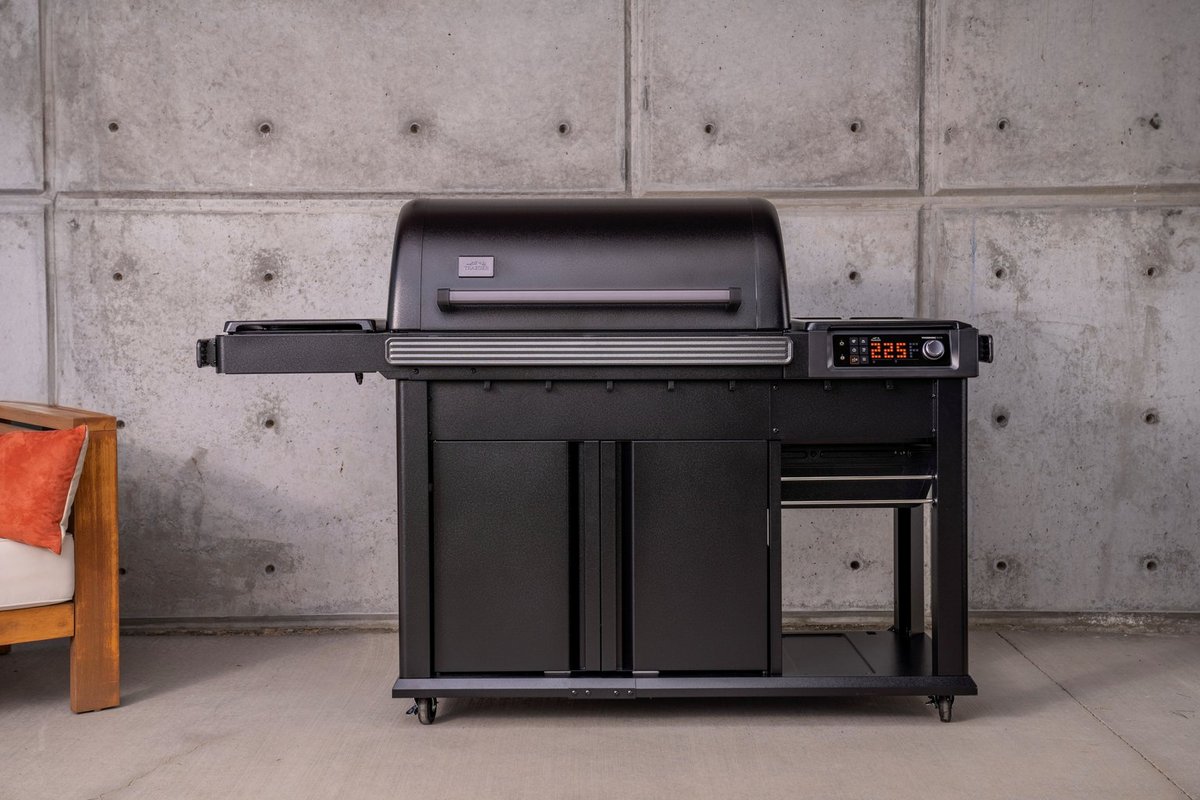
Traeger Ironwood
The current-generation Ironwood replaced the discontinued Ironwood 885 in Traeger's lineup, trading raw cooking area for a dual-wall insulated barrel, a color touchscreen, and Smart Combustion tech that owners consistently say holds temps within a few degrees even in wind and cold. The EZ-Clean ash keg is the sleeper feature — cleanup drops from a shop-vac session to emptying a bucket. The honest knocks: at $1,800 you're paying a steep premium over a Woodridge Pro that cooks nearly as well with more space, the 500F ceiling still won't sear like a gas grill or a Weber Searwood's 600F, and Traeger's smoke profile stays on the mild side unless you lean on Super Smoke and 225F cooks. Some owners report WiFIRE connectivity drops and occasional startup temp overshoot, and the induction fan is audible. But as a set-and-forget smoker with genuinely modern controls and a 10-year warranty, it's the best-sorted mid-size Traeger yet — just know you're paying for polish, not capacity.
Traeger
Traeger Woodridge Elite
The top of the Woodridge family and the only one with a gas side burner. Chamber, hopper and controller are identical to the Woodridge Pro Plus — 970 sq in across two racks, 24 lb hopper, 500°F ceiling — so the entire $400 step up buys the burner plus the enclosed cabinet. It sits at the same $1,800 as the Ironwood, which trades the burner for a touchscreen, pellet sensor and a sealed chamber.
Traeger
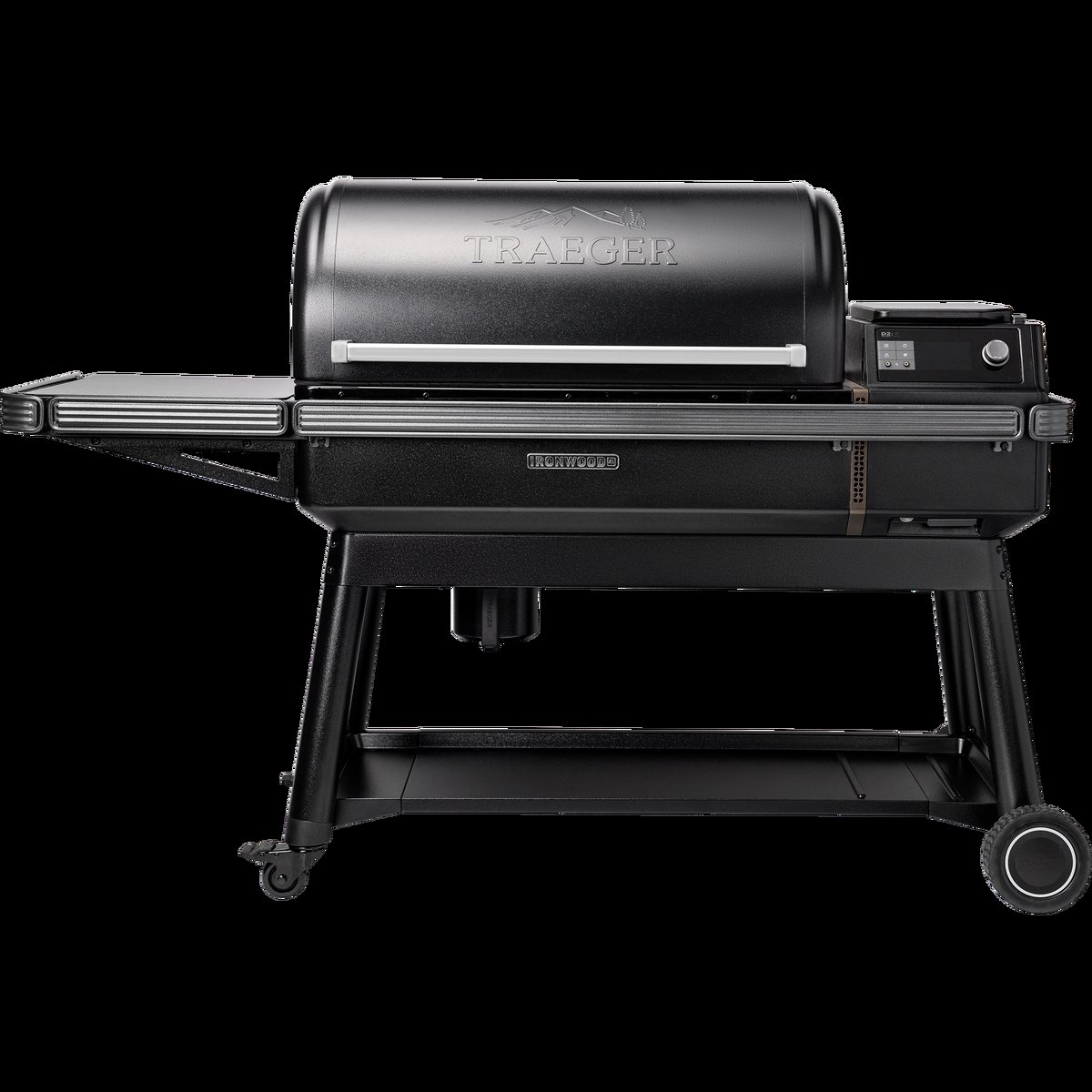
Traeger Ironwood XL
The Ironwood XL is the standard Ironwood stretched from 616 to 924 sq in; controller, touchscreen, sealed chamber, pellet sensor and grease keg are all identical. Against the Timberline above it, it gives up the third rack, the induction side cooktop and the stainless build for $1,500. Against the Woodridge Elite at the same money, it trades the gas burner for the touchscreen controller and the better-sealed chamber.

Traeger
Traeger Woodridge
The Woodridge is the grill that finally retired Traeger's ancient Pro Series platform — it's the true successor to the Pro 575/780, and at $799 it undercuts them while fixing their two biggest complaints: cleanup and hopper size. You get 860 sq in (more than the old Pro 780), a 24 lb hopper with a clean-out chute, WiFIRE, a wired probe, and the same EZ-Clean ash keg as the $1,800 Ironwood, all under a 10-year warranty. owners call it the best value Traeger has ever shipped, with steady temps from the new digital controller. The honest trade-offs: no Super Smoke mode (that's the $1,149 Woodridge Pro), no pellet sensor or side shelf, and like every Traeger it tops out at 500F with a mild smoke profile — Camp Chef's Woodwind and the Weber Smoque both produce noticeably more smoke flavor. Early-batch owners reported some app-pairing friction and thin-ish lid steel. If you want the Traeger ecosystem without flagship pricing, this is the one to buy; if you mostly chase heavy smoke, look at the Pro trim or a competitor.
Traeger
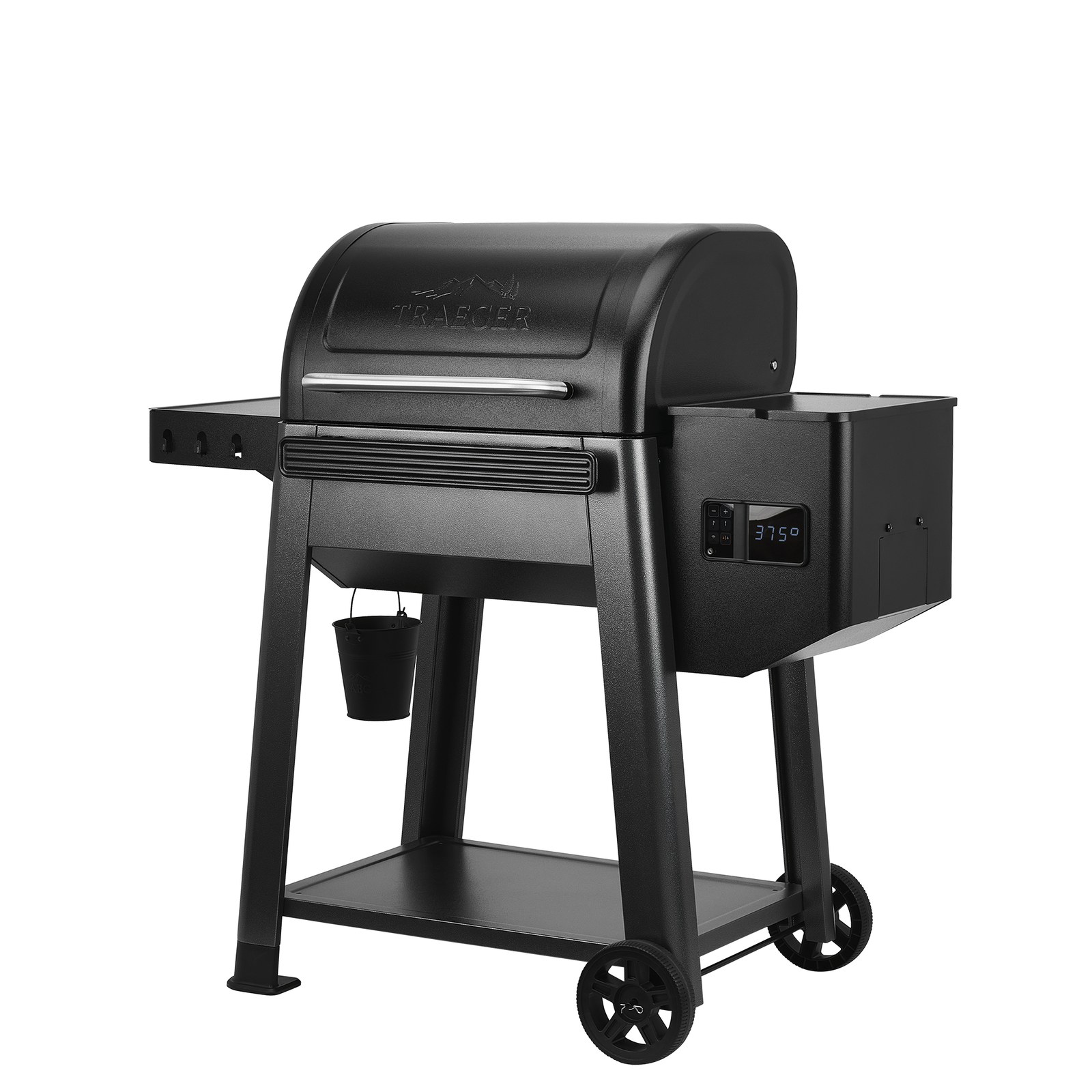
Traeger Westwood
The Westwood is the model Traeger built to replace the Pro 575 at the bottom of the line, and it is now the cheapest WiFIRE grill the company sells. It gives up the Woodridge's 500°F ceiling, 24 lb hopper and Super Smoke mode, capping out at 450°F with an 18 lb hopper and a plain digital controller. What it keeps is the part buyers actually came for: app control, a wired probe, the P.A.L. accessory rail and a two-tier 653 sq in chamber.