Traeger
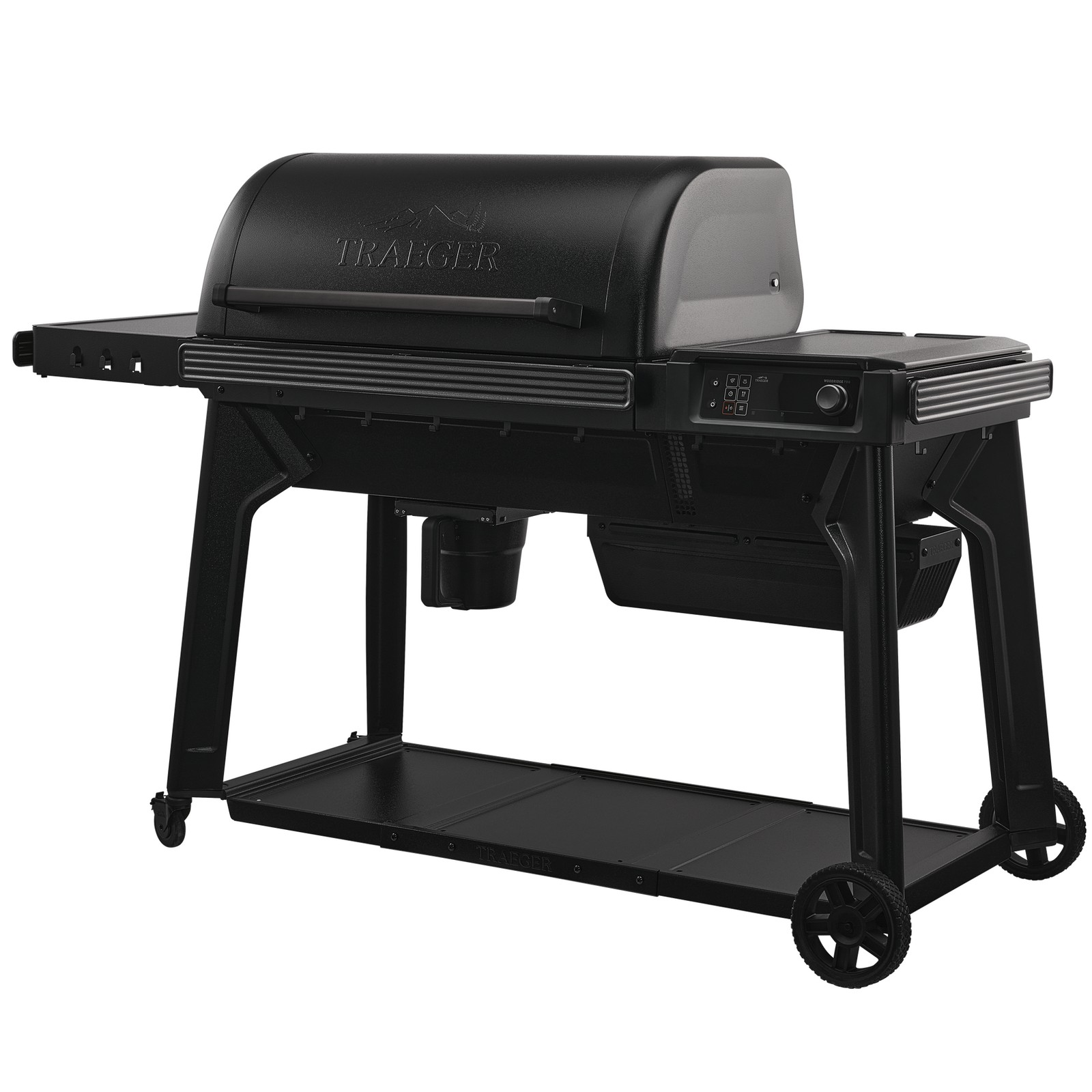
Traeger Woodridge Pro
The Traeger Woodridge Pro is the 2025 replacement for the aging Pro series - 970 sq in, a 24 lb hopper with pellet sensor, Super Smoke mode, and a 10-year warranty at $1,000. Reviewers call it the biggest upgrade to Traeger's entry lineup in years.
We may earn a commission. Price and availability on Amazon may differ.
Specifications
Features
Pros
- ✓It replaces the Pro 575/780 with far more grill per dollar - 970 sq in, a pellet sensor, Super Smoke, and a side shelf for about $1,000
- ✓Traeger extended a 10-year warranty to the Woodridge line, a massive jump from the 3 years on the old Pro and Ironwood models
- ✓The updated controller holds temps noticeably tighter than the old D2 Pro series, and WiFIRE app control is the most mature in the category
- ✓Super Smoke mode - previously reserved for Ironwood and up - delivers genuinely better bark and smoke ring at low temps
- ✓The 24 lb hopper with a digital pellet sensor covers overnight briskets and warns you before running dry
- ✓Dual meat probes come standard, an upgrade over the single probe Traeger used to include at this tier
- ✓The bottom storage shelf and folding side shelf address long-running complaints about bare-bones Traeger carts
- ✓Early owner discussions owner reports and Engadget's review agree it fixes most of what made the Pro series feel dated
Cons
- ✗It still tops out at 500°F with no direct-flame access, so searing steaks means a cast-iron pan or GrillGrates
- ✗Single-wall powder-coated steel means winter cooks lean on pellet consumption just like the old Pros
- ✗The platform launched in 2025, so long-term reliability of the new controller and drivetrain is still unproven
- ✗Traeger's WiFi drop-off gremlins persist on the new lineup per early owner threads
- ✗At 67 inches wide it has a bigger footprint than the Pro 780 it replaces - measure your patio first
- ✗Smoke flavor still trails the Camp Chef Woodwind Pro's real-wood Smoke Box despite Super Smoke
- ✗The $1,000 price puts it against the Recteq lineup with stainless builds and a cult service reputation
- ✗Assembly is a long job with lots of panels, and at 172 lbs you'll want a second set of hands
Owner Insightssummarized from owner discussions
The Woodridge Pro is Traeger's 2025 reset of its entry lineup, and it is doing better in owner discussion than the Pro 575 and 780 it replaces — but for different reasons than Traeger markets. The thing owners genuinely praise is cleaning. The ash and grease keg means you never get out a shop vac, and that single design decision is what wins it against the Weber Searwood XL and the Recteq Backyard Beast 1200 in the cross-shopping threads where all three appear. The other consistent positive is temperature stability: an owner who has run the old Pro models alongside it reports no swings and prefers this controller outright.
The disappointment is Super Smoke. It is the headline feature and the reason buyers pay up to the Pro tier, and the owners running it are not impressed. One smoked a pork butt for more than nine hours on Super Smoke and got almost no smoke flavor. Another, a year in, calls it 'ehhh' and says a $20 smoke tube is where the flavor actually is. A third came off a long brisket cook with a smoke ring he described as poor. That is worth knowing before you pay the premium over the base Woodridge, because Super Smoke plus WiFi is most of what the premium buys. Beyond that, the included meat probe reads off, it carries no insulation and nobody in these threads vouches for it through a hard winter, and at least one two-year-old unit came back from a cold spell with a dead, light-flashing controller. Owners do get very good food off it — salmon, tri-tip, ribs, beef cheeks all land on first attempts — and the app makes stepping away from a long cook comfortable.
It suits someone who wants pellet-grill convenience, a lot of grate space for around $1,000, and who hates cleaning more than they care about maximum smoke. If deep smoke flavor is the point, owners steer you elsewhere and you should listen — to a Recteq for build and temperature discipline, to a Camp Chef Woodwind Pro for its smoke box, or to charcoal. The honest caveat is reputational as much as mechanical: buyers arrive at this grill already asking whether Traegers rust, and people who handle it next to a Recteq on a showroom floor consistently describe the Recteq as the more solid object. The counterweight is that the Woodridge is meaningfully better than the Traegers that earned that reputation, and the cleaning design is a real advantage nobody else at this price matches.
What owners like
- +Cleaning is the thing owners actually rave about, and it is the reason this grill wins cross-shops. The ash and grease keg means no shop vac — one owner who cleans after every single cook moved to it specifically for that, and buyers comparing it against the Searwood XL and the Recteq Backyard Beast rank it the easiest of the three
- +Temperature control is a real improvement on what came before. An owner who has run the line against the old Pro models reports no temp swings and prefers it to both the 575 and the 780
- +A year in, owners report no complaints. The two things they name as worth the upgrade are the jump in cooking space and the WiFi, which on this line is reserved for the Pro and Elite tiers
- +Early cooks come out well and easily. Owners describe salmon, tri-tip, ribs, chicken thighs, beef cheeks and steak all landing on the first attempt, with app-based probe tracking making it comfortable to walk away mid-cook
- +It is a genuine step up in build from the Ironwood it often replaces — an owner whose Ironwood 650 developed structural problems shopped the Woodridge Pro on the basis that it is the better-built grill of the two
- +It discounts regularly. $999 is the usual price, and holiday sales bring it closer to $800, which is what tips several buyers toward it over a Searwood or a Recteq at the same moment
Common complaints
- −Super Smoke, the feature people buy this tier for, does not deliver what buyers expect. An owner who smoked a pork butt for over nine hours on Super Smoke describes the smoke flavor as almost non-existent; another with a year on the grill says it is 'ehhh' and that a $20 smoke tube is where the flavor actually comes from; a third finds the smoke ring poor after a long brisket cook
- −Because of that, the $150-plus premium over the base Woodridge is genuinely questionable if Super Smoke is your reason for paying it. Buyers ask this outright and owners do not give a confident yes
- −The included meat probe reads inaccurately enough that one owner says it has partly ruined cooks, and he was shopping a separate instant-read to work around it
- −It has no insulation, which owners in cold climates raise as an open worry — the question gets asked and does not get a reassuring answer from anyone running one through a northern winter
- −Electronics failures happen. A two-year-old Woodridge Pro that was unplugged for cold weather came back flashing white and colored lights and would not respond to the dial or any button
- −Rust is a live question rather than a settled one. Buyers arrive specifically asking whether the newer models still rust the way Traegers are known to, which tells you what the brand's reputation is before anyone has owned one
- −Build quality reads as light to people who handle it in person. One buyer went to compare it against a Recteq on a showroom floor, found the Recteq noticeably more heavy duty, and bought that instead. The brand also carries a lot of general goodwill damage that buyers absorb before they ever cook on one
Common Questions
Does Super Smoke actually add smoke flavor?
Is the Pro worth the extra money over the base Woodridge?
How hard is it to clean compared to its rivals?
Can I trust the built-in meat probe?
How does it handle cold weather?
Woodridge Pro, Weber Searwood XL, or Recteq Backyard Beast 1200?
Compare the Traeger Woodridge Pro
Related grills
More from Traeger →
Traeger
Traeger Ironwood 885
The Traeger Ironwood 885 is a WiFi-connected wood-pellet grill and smoker from Traeger, the company that popularized pellet grills. It uses the D2 direct-drive controller and WiFIRE app for hands-off cooks. Traeger has moved it to its Legacy Grills line — still sold new on traeger.com, but the current equivalent is the Ironwood XL.

Traeger
Traeger Woodridge
The Woodridge is the grill that finally retired Traeger's ancient Pro Series platform — it's the true successor to the Pro 575/780, and at $799 it undercuts them while fixing their two biggest complaints: cleanup and hopper size. You get 860 sq in (more than the old Pro 780), a 24 lb hopper with a clean-out chute, WiFIRE, a wired probe, and the same EZ-Clean ash keg as the $1,800 Ironwood, all under a 10-year warranty. owners call it the best value Traeger has ever shipped, with steady temps from the new digital controller. The honest trade-offs: no Super Smoke mode (that's the $1,149 Woodridge Pro), no pellet sensor or side shelf, and like every Traeger it tops out at 500F with a mild smoke profile — Camp Chef's Woodwind and the Weber Smoque both produce noticeably more smoke flavor. Early-batch owners reported some app-pairing friction and thin-ish lid steel. If you want the Traeger ecosystem without flagship pricing, this is the one to buy; if you mostly chase heavy smoke, look at the Pro trim or a competitor.
Traeger
Traeger Westwood
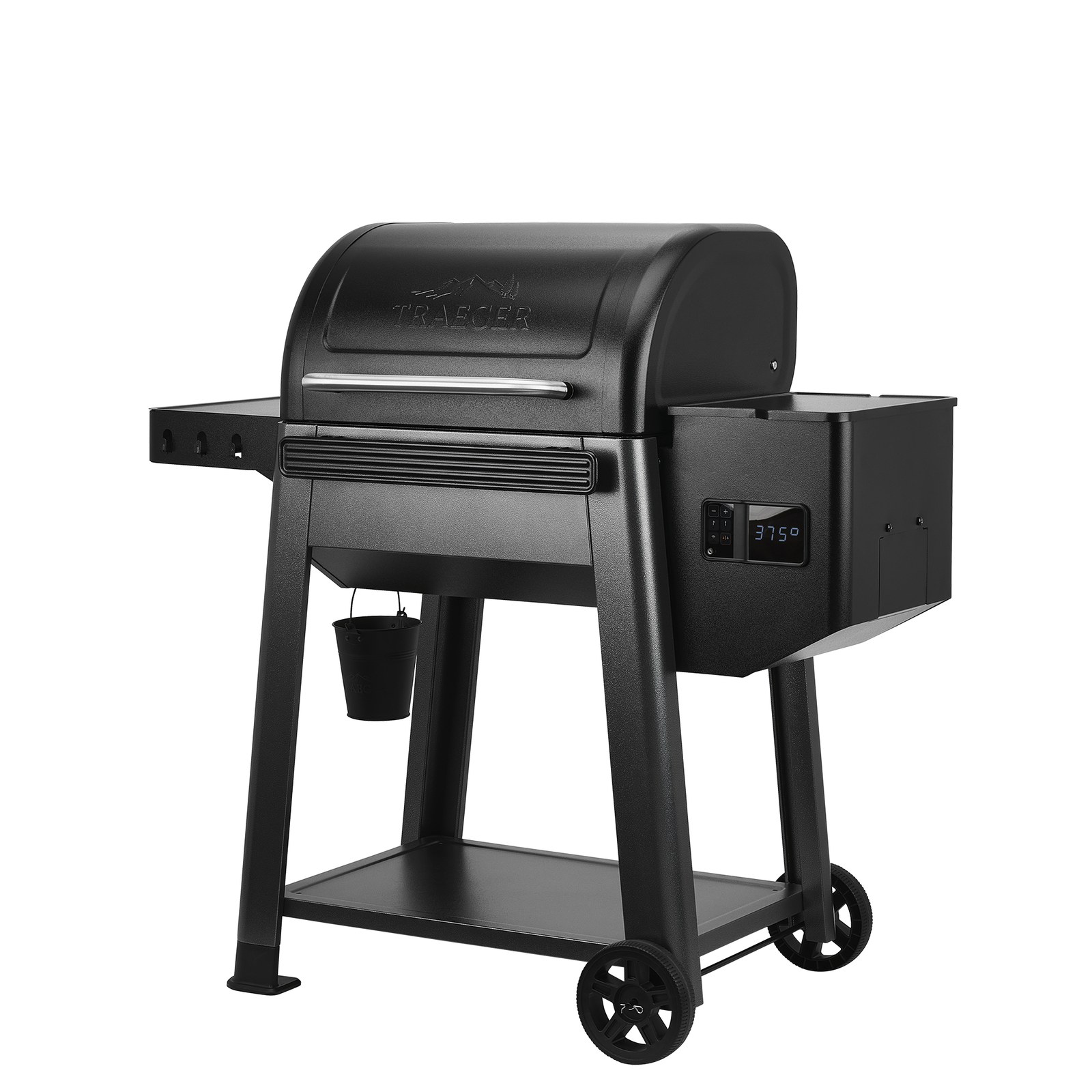
The Westwood is the model Traeger built to replace the Pro 575 at the bottom of the line, and it is now the cheapest WiFIRE grill the company sells. It gives up the Woodridge's 500°F ceiling, 24 lb hopper and Super Smoke mode, capping out at 450°F with an 18 lb hopper and a plain digital controller. What it keeps is the part buyers actually came for: app control, a wired probe, the P.A.L. accessory rail and a two-tier 653 sq in chamber.

Traeger
Traeger Pro 575
The Traeger Pro 575 is Traeger's best-selling entry-level WiFi pellet grill, using the D2 controller and WiFIRE app. It's the model most people picture when they think 'Traeger.' Note: this model is no longer sold new as of 2026. Its current equivalent is the Traeger Woodridge.

Traeger
Traeger Ironwood
The current-generation Ironwood replaced the discontinued Ironwood 885 in Traeger's lineup, trading raw cooking area for a dual-wall insulated barrel, a color touchscreen, and Smart Combustion tech that owners consistently say holds temps within a few degrees even in wind and cold. The EZ-Clean ash keg is the sleeper feature — cleanup drops from a shop-vac session to emptying a bucket. The honest knocks: at $1,800 you're paying a steep premium over a Woodridge Pro that cooks nearly as well with more space, the 500F ceiling still won't sear like a gas grill or a Weber Searwood's 600F, and Traeger's smoke profile stays on the mild side unless you lean on Super Smoke and 225F cooks. Some owners report WiFIRE connectivity drops and occasional startup temp overshoot, and the induction fan is audible. But as a set-and-forget smoker with genuinely modern controls and a 10-year warranty, it's the best-sorted mid-size Traeger yet — just know you're paying for polish, not capacity.
Traeger
Traeger Woodridge Elite
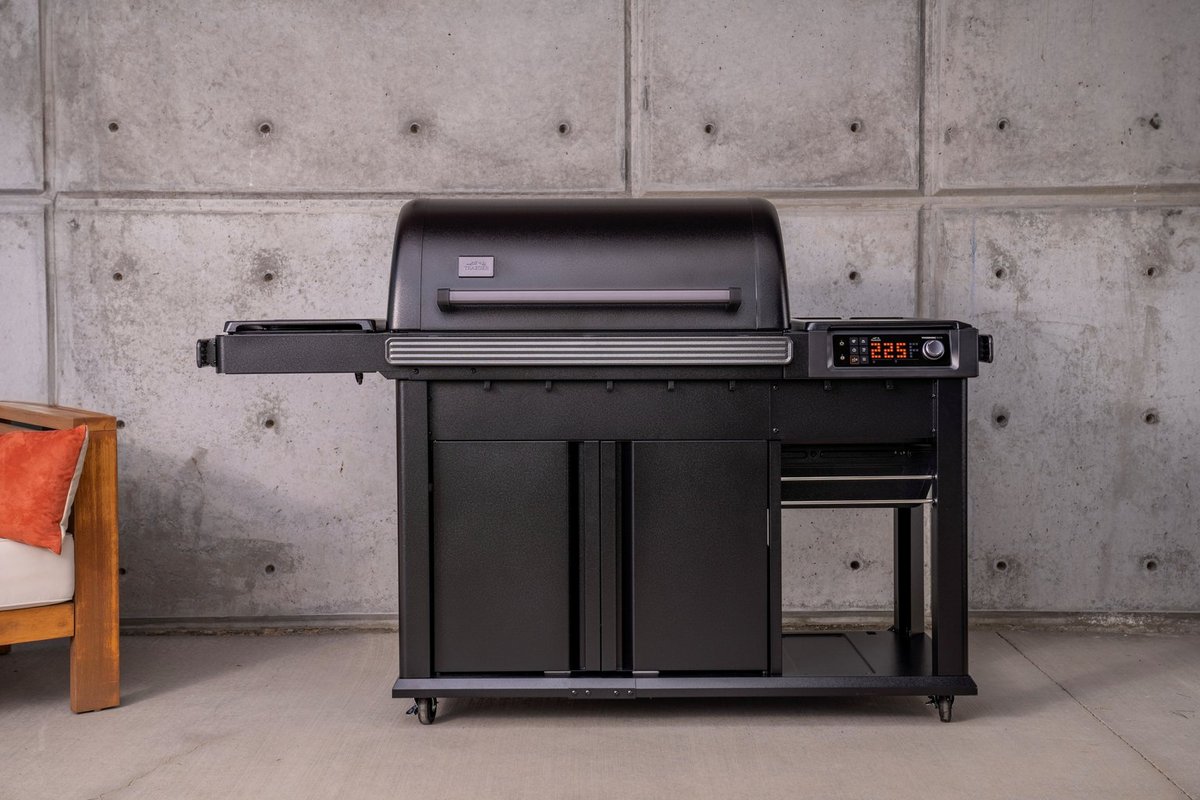
The top of the Woodridge family and the only one with a gas side burner. Chamber, hopper and controller are identical to the Woodridge Pro Plus — 970 sq in across two racks, 24 lb hopper, 500°F ceiling — so the entire $400 step up buys the burner plus the enclosed cabinet. It sits at the same $1,800 as the Ironwood, which trades the burner for a touchscreen, pellet sensor and a sealed chamber.