
Traeger
Traeger Ironwood
The current-generation Ironwood replaced the discontinued Ironwood 885 in Traeger's lineup, trading raw cooking area for a dual-wall insulated barrel, a color touchscreen, and Smart Combustion tech that owners consistently say holds temps within a few degrees even in wind and cold. The EZ-Clean ash keg is the sleeper feature — cleanup drops from a shop-vac session to emptying a bucket. The honest knocks: at $1,800 you're paying a steep premium over a Woodridge Pro that cooks nearly as well with more space, the 500F ceiling still won't sear like a gas grill or a Weber Searwood's 600F, and Traeger's smoke profile stays on the mild side unless you lean on Super Smoke and 225F cooks. Some owners report WiFIRE connectivity drops and occasional startup temp overshoot, and the induction fan is audible. But as a set-and-forget smoker with genuinely modern controls and a 10-year warranty, it's the best-sorted mid-size Traeger yet — just know you're paying for polish, not capacity.
We may earn a commission. Price and availability on Amazon may differ.
Specifications
Features
Pros
- ✓Exceptional temp stability from dual-wall insulation and Smart Combustion
- ✓EZ-Clean grease/ash keg is the easiest cleanup system in the pellet category
- ✓Full-color touchscreen and refined WiFIRE app experience
- ✓Pellet sensor and two included probes cover long cooks unattended
- ✓10-year warranty doubles most rivals
- ✓Quieter, more efficient combustion than the old Ironwood 885
- ✓P.A.L. rail and ModiFIRE grate ecosystem add real utility
Cons
- ✗$1,800 is a big premium over the Woodridge Pro for less cooking space
- ✗500F max still can't produce a hard sear
- ✗616 sq in is a downgrade from the 885 it replaced
- ✗Smoke flavor is mild unless you run low temps with Super Smoke
- ✗Occasional WiFIRE dropouts and startup overshoot reported by owners
Owner Insightssummarized from owner discussions
The current Ironwood is the mid-size Traeger, an insulated double-wall cabinet with a touchscreen, a pellet sensor and the ash and grease cleanup system that owners of the previous Ironwood say is the upgrade they actually wanted. Sentiment splits along a predictable line. Owners like it: it holds temperature, it cleans up easily, it survives weather, and the app works. Buyers who have not bought yet are much harder on it, and the recurring objection is not that it cooks badly but that it costs too much for what it is, with a Recteq Flagship in stainless, a Pit Boss Sportsman 1100 at a fraction of the money and Traeger's own cheaper Woodridge Pro all named as better value in the same threads.
The practical picture is of a smoker that grills rather than a grill that smokes. Owners run overnight pork butts at 200F, briskets at 225 with Super Smoke for the first hour, and full rib cooks without incident, and cold weather barely registers thanks to the insulated walls. What it will not do is sear. There is no direct-flame option, which owners raise immediately against the Weber Searwood and Traeger's own Woodridge Elite, and the owner who tried to use it as a propane replacement found chicken breasts taking 45 minutes with no crust and half a hopper of pellets gone after two cooks at 500F. Expect roughly 20F of swing around the set point, a heavy puff of smoke at ignition, and mild smoke flavour unless you stay low and lean on Super Smoke.
It suits someone who already has a gas grill or a kettle for high heat, cooks for a household plus guests, and wants a set-and-forget smoker that handles winter. On size, one owner who cooks for up to 20 at a cabin fits two large rib racks on the top grate and another two or three below and says it gets tight past about 15 people, with pork belly burnt ends the one cook that made him wish he had bought the XL. The caveat worth weighing is reliability: most owners report years of trouble-free use, but one had multiple sensor failures inside a year with sensors he could not replace, and Traeger support is the part of the ownership experience that people describe in the widest range of terms.
What owners like
- +The insulated double wall is what cold-climate owners buy it for. One owner ran short ribs in it at -53C with the windchill and no blanket, and Midwest and Canadian buyers picking between this and a single-wall Recteq name the thick walls as the deciding factor.
- +Temperature holding is the thing owners trust it on. Buyers cross-shopping it against a Recteq 1250 conclude the Ironwood holds temperature better, and an owner of the previous generation who checked it against an independent probe found it more accurate than his kitchen oven. Expect a band of roughly 20F either side of the set point, which is normal for any pellet cooker managing a live fire.
- +The cleanup system is a genuine differentiator. Owners comparing it against a Camp Chef Woodwind at the same size say the Traeger is the easier one to clean, and owners of the older Ironwood name the cleanup as the one thing the new model improved on their grill.
- +Super Smoke is the feature people buy the Ironwood line for rather than a cheaper Traeger. Owners who moved to models without it miss it, and it is the reason several buyers rejected a Recteq that cooks well but has no equivalent.
- +The pellet system is practical in a way owners notice daily: a sensor that warns before the hopper runs dry, and a hopper you can empty easily to swap pellet varieties between cooks rather than burning down what is already in there.
- +It is heavy and solidly put together for a pellet grill. One long-term owner of the previous generation left it uncovered through a big storm more than once with no problems to fix afterwards, and buyers repeatedly cite build quality as the reason they pay the Traeger premium over a Pit Boss.
Common complaints
- −There is no direct-flame sear option, which is the complaint owners raise first when they compare it to a Weber Searwood or Traeger's own Woodridge Elite. Buyers who like everything else about the design specifically flag this as the missing feature.
- −Treating it as a grill disappoints people. An owner coming from propane found chicken breasts at 350 to 400F took around 45 minutes with no sear and none of the look he expected, and when he ran it at 500F to compensate he burned through half a hopper of pellets in two cooks.
- −Price is the standing objection. Owners say plainly that they cannot see how the Ironwood costs what it does when a Pit Boss Sportsman 1100 offers roughly the same feature set at a fraction of the money, a Recteq Flagship is cheaper in stainless, and Traeger's own Woodridge Pro is less money with Super Smoke and, in the view of at least one owner who compared them, a better build.
- −Sensor failures are the most alarming reliability report in the file. One owner's Ironwood stopped working entirely a year in after about six cooks, with multiple sensor failures and sensors he described as very difficult or impossible to replace.
- −New owners report the readouts and probes disagreeing with reality. One found the supplied probe reading 10F above an instant-read and 20F above a second thermometer on his first cook, which is a bad thing to discover mid-chicken. Verify against your own probe before you trust it on an expensive cut.
- −Ignition produces a heavy burst of smoke, which surprises new owners, and the smoke flavour during the cook itself is mild unless you stay at low temperatures with Super Smoke running. Owners who want more lean on a smoke tube, which is a common addition across the whole Traeger line.
Common Questions
Ironwood or Ironwood XL?
Can it sear, or do I still need another grill?
How much smoke flavour does it actually produce?
Ironwood or a Recteq?
Does it work in cold weather?
Compare the Traeger Ironwood
Related grills
More from Traeger →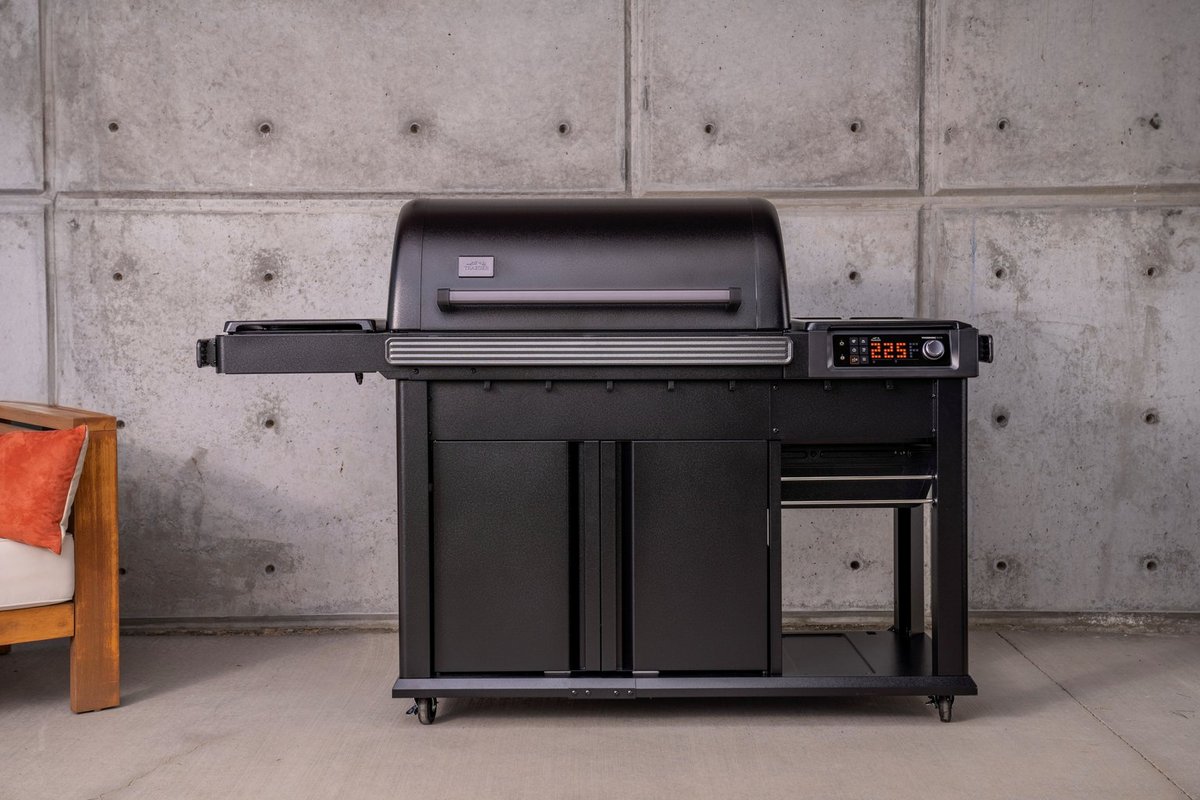
Traeger
Traeger Woodridge Elite
The top of the Woodridge family and the only one with a gas side burner. Chamber, hopper and controller are identical to the Woodridge Pro Plus — 970 sq in across two racks, 24 lb hopper, 500°F ceiling — so the entire $400 step up buys the burner plus the enclosed cabinet. It sits at the same $1,800 as the Ironwood, which trades the burner for a touchscreen, pellet sensor and a sealed chamber.
Traeger
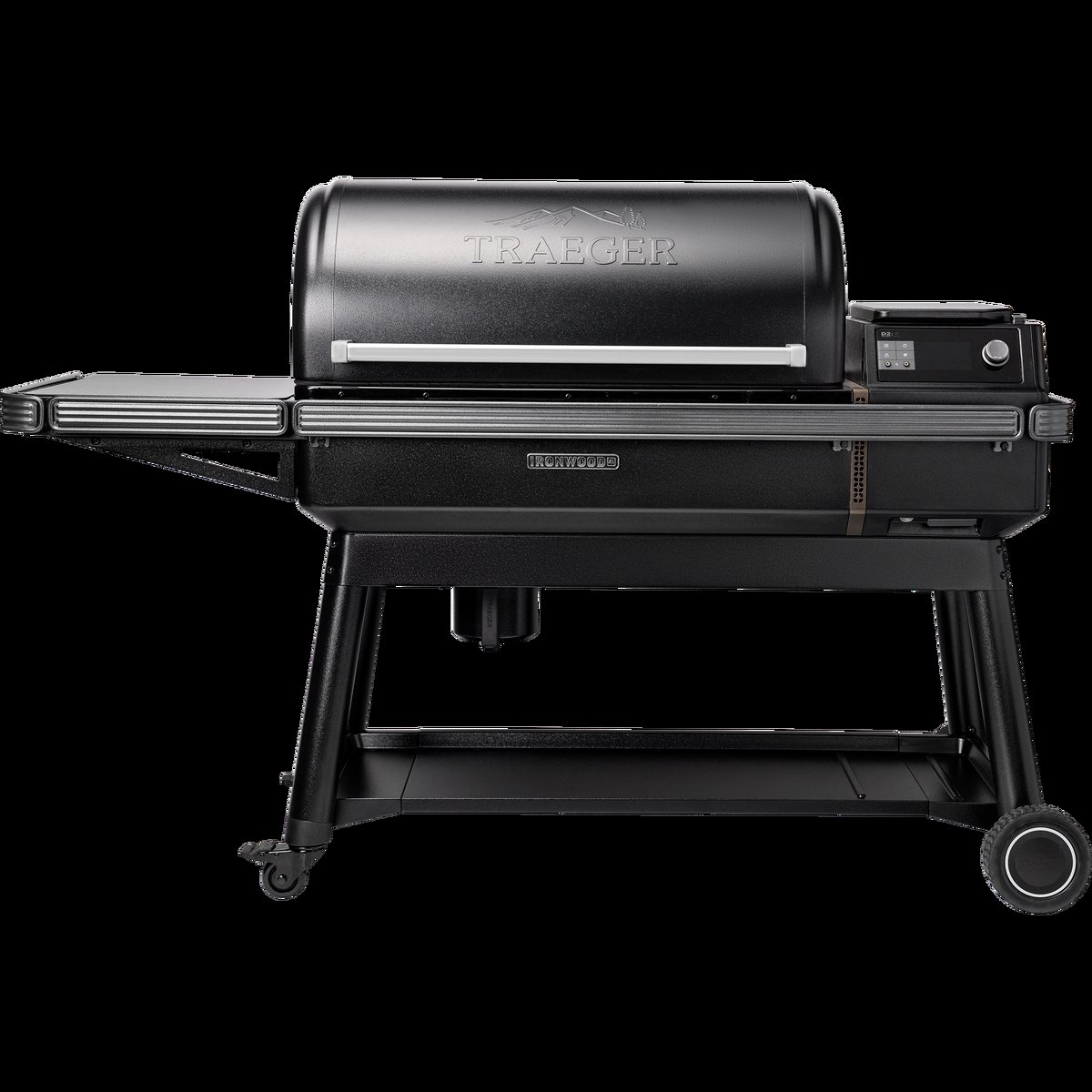
Traeger Ironwood XL
The Ironwood XL is the standard Ironwood stretched from 616 to 924 sq in; controller, touchscreen, sealed chamber, pellet sensor and grease keg are all identical. Against the Timberline above it, it gives up the third rack, the induction side cooktop and the stainless build for $1,500. Against the Woodridge Elite at the same money, it trades the gas burner for the touchscreen controller and the better-sealed chamber.

Traeger
Traeger Ironwood 885
The Traeger Ironwood 885 is a WiFi-connected wood-pellet grill and smoker from Traeger, the company that popularized pellet grills. It uses the D2 direct-drive controller and WiFIRE app for hands-off cooks. Traeger has moved it to its Legacy Grills line — still sold new on traeger.com, but the current equivalent is the Ironwood XL.
Traeger
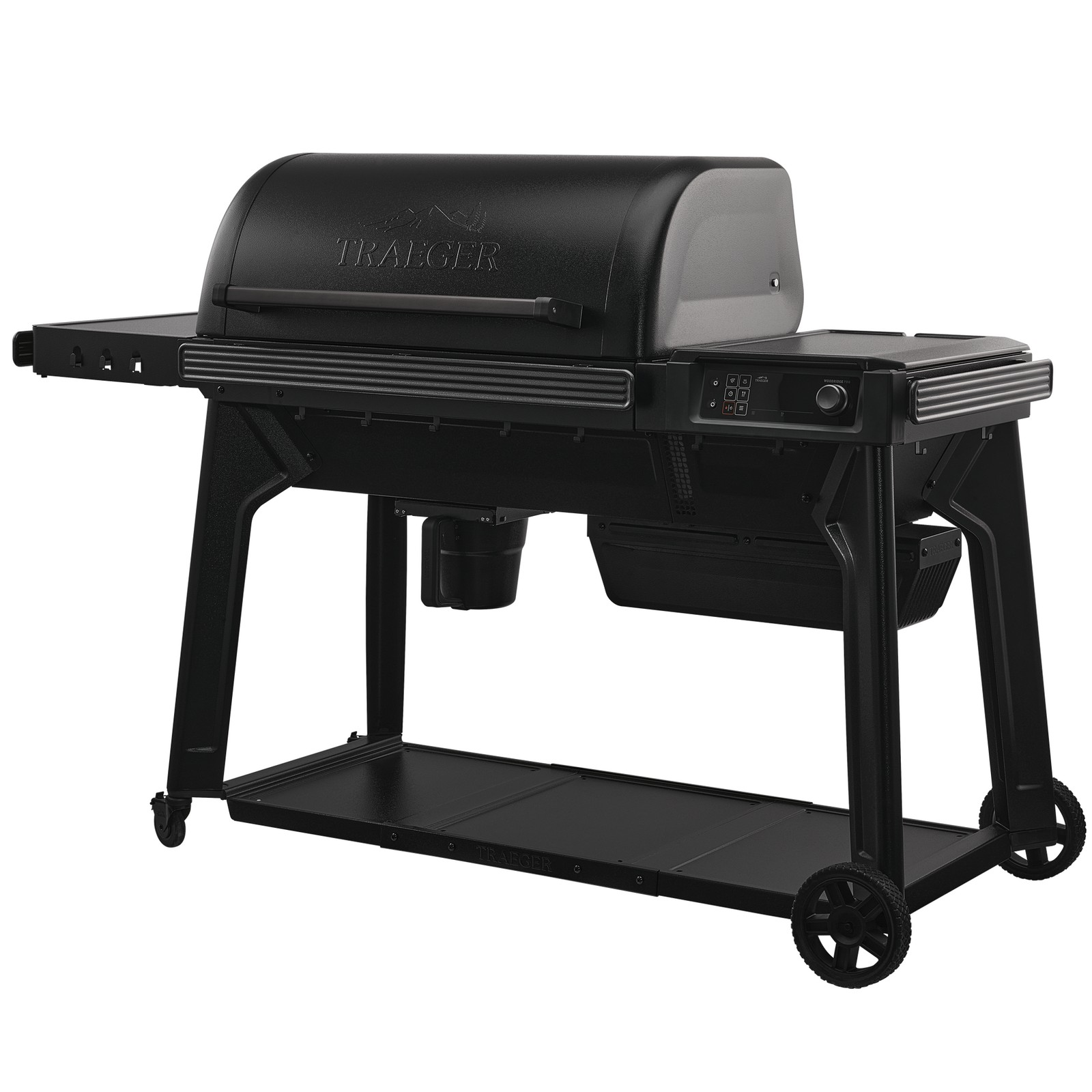
Traeger Woodridge Pro
The Traeger Woodridge Pro is the 2025 replacement for the aging Pro series - 970 sq in, a 24 lb hopper with pellet sensor, Super Smoke mode, and a 10-year warranty at $1,000. Reviewers call it the biggest upgrade to Traeger's entry lineup in years.

Traeger
Traeger Woodridge
The Woodridge is the grill that finally retired Traeger's ancient Pro Series platform — it's the true successor to the Pro 575/780, and at $799 it undercuts them while fixing their two biggest complaints: cleanup and hopper size. You get 860 sq in (more than the old Pro 780), a 24 lb hopper with a clean-out chute, WiFIRE, a wired probe, and the same EZ-Clean ash keg as the $1,800 Ironwood, all under a 10-year warranty. owners call it the best value Traeger has ever shipped, with steady temps from the new digital controller. The honest trade-offs: no Super Smoke mode (that's the $1,149 Woodridge Pro), no pellet sensor or side shelf, and like every Traeger it tops out at 500F with a mild smoke profile — Camp Chef's Woodwind and the Weber Smoque both produce noticeably more smoke flavor. Early-batch owners reported some app-pairing friction and thin-ish lid steel. If you want the Traeger ecosystem without flagship pricing, this is the one to buy; if you mostly chase heavy smoke, look at the Pro trim or a competitor.
Traeger
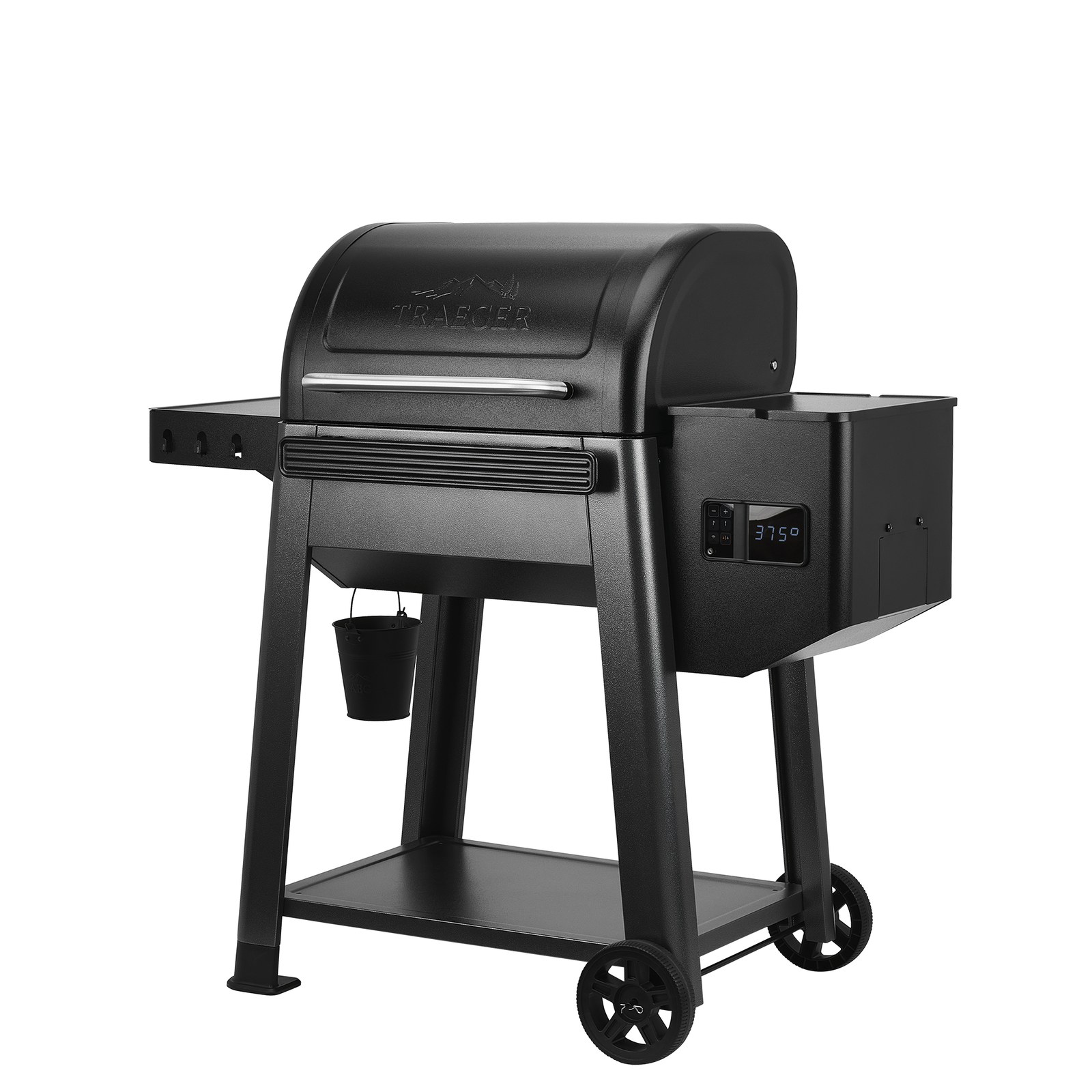
Traeger Westwood
The Westwood is the model Traeger built to replace the Pro 575 at the bottom of the line, and it is now the cheapest WiFIRE grill the company sells. It gives up the Woodridge's 500°F ceiling, 24 lb hopper and Super Smoke mode, capping out at 450°F with an 18 lb hopper and a plain digital controller. What it keeps is the part buyers actually came for: app control, a wired probe, the P.A.L. accessory rail and a two-tier 653 sq in chamber.