Green Mountain Grills
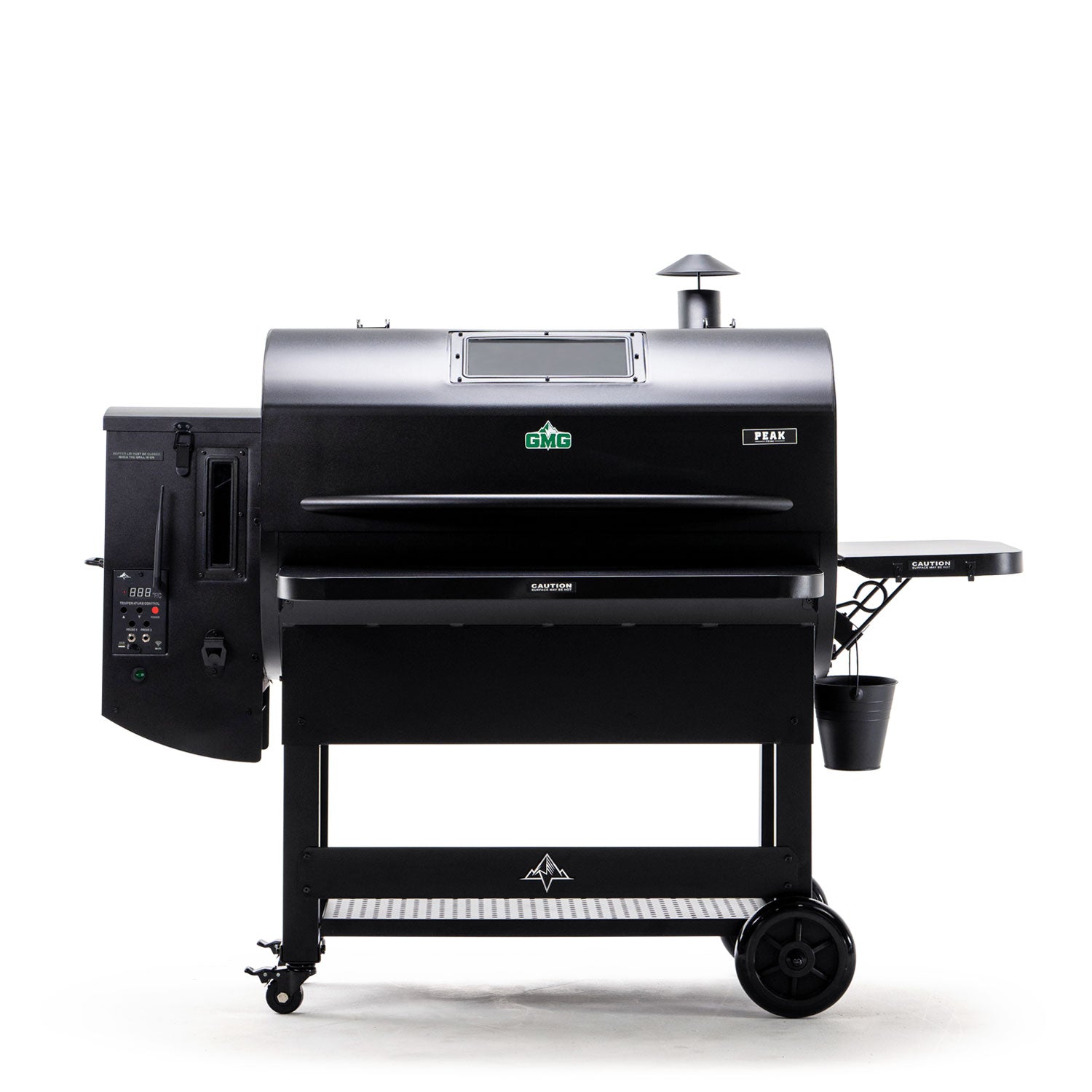
Green Mountain Grills Peak Prime 2.0
The Peak is the top of GMG's three-grill line, above the Ledge our catalog already carries. It brings 658 sq in on the main grate plus an upper rack and a 20 lb hopper, on the same 12V direct system, PRIME app and 150–550°F range as the Trek and Ledge. GMG sells a rotisserie kit and a SideBurn propane burner that fit it, both as separate accessories.
Goes to the manufacturer. We earn nothing on this one.
Specifications
Features
Pros
- ✓550°F ceiling, 50°F above Traeger's flagship Timberline and its equal in price bracket
- ✓658 sq in main grate plus an upper rack covers most household cooking without being unmanageable
- ✓12V direct drive system is the same one that lets the Trek run off a car battery — it tolerates unstable power well
- ✓A genuine rotisserie kit exists for it, which almost no pellet grill offers
- ✓SideBurn propane burner is an available add-on for searing and sauces
Cons
- ✗208 lbs and 62.5 inches wide; it needs a dedicated patio position
- ✗Rotisserie and side burner are both extra-cost accessories, not included
- ✗GMG does not publish a warranty term on the listing
- ✗$1,099 puts it against the Recteq Backyard Beast 1200, which has nearly twice the grate and a 30 lb hopper
Owner Insightssummarized from owner discussions
The Peak Prime 2.0 is the biggest grill in Green Mountain's line and the model the brand's long-time owners are upgrading into. The most useful thing about the owner discussion around it is who is doing the talking: people running Daniel Boones and Jim Bowies that are six, eight and ten years old, who describe those grills as having felt cheap and this one as heavy-duty. GMG's reputation has always been durability over refinement, and the 2.0 appears to close part of the gap, with the firebox now adjustable by a rod so heat can be evened out across the chamber, a fix aimed squarely at the hot spots earlier owners fought.
In use it is a large, straightforward cooker. Owners fill it — one loaded a pork loin, sausages, a whole chicken and a couple of sirloins on his first cook and called it huge — and long low-and-slow runs of 14 hours are reported without drama. The app allows both a grill temperature offset and a probe offset, which is unusual and worth setting up early. Two behaviours come up in practice: heat coming off the deflector will overcook the bottom of a large cut on long cooks above 250°F, which owners solve by raising the meat off the grates, and the igniter is fragile enough that owners tell new buyers to keep a spare on hand. The stock accessories also get replaced quickly — the front shelf is too narrow for a cutting board, the grease bucket is too open, and the rack system is the first aftermarket purchase for most.
It makes most sense for someone already in the GMG ecosystem or who values a grill that keeps running for a decade over one that is the most refined out of the box. Two caveats matter. Rust is the brand's most persistent complaint and it comes from owners who covered their grills and kept them under shelter, and the company went through a stretch of bad quality after moving manufacturing before publicly moving back. The other is availability: GMG stayed with dealer distribution, so finding this model in stock can mean a long drive or sorting the reputable online retailers from the ones that take the money. Cross-shopped against a Camp Chef Woodwind Pro the argument is simple and goes to the Camp Chef on smoke, since its wood box burns chunks and this cannot; against a Recteq, buyers weighing the two in these threads more often walk away with the Recteq.
What owners like
- +The 2.0 generation is a visible step up from the GMGs people remember, and the ones saying so are owners of the old grills. Long-time Daniel Boone and Jim Bowie owners describe the earlier models as feeling cheap and the Prime 2.0 as heavy-duty, and several are planning it as the replacement for grills they have run for six to ten years
- +GMG's old grills last, which is the brand's real argument. Owners report a 2018 model still going strong, a ten-year-old Daniel Boone and a four-year-old Trek both running like tanks, and one buyer chose the Peak on the strength of a friend's six-year-old GMG in Arizona still working
- +The firebox on the newer grills can be shifted with a rod to even out heat across the chamber. That is a direct answer to the complaint older GMG owners have lived with, where the heat shield could not be adjusted while the grill was running and one side cooked faster than the other
- +The SideBurn sear station is a genuinely useful companion to it rather than an afterthought. Owners use it to reverse sear steaks that were smoked in the main chamber, which is the workflow most single-chamber pellet grills cannot finish on their own
- +Support is US-based and owners rate it, including help with the app. One owner who had an igniter fail early was looked after, and the advice that circulates is simply to keep a spare igniter on the shelf
Common complaints
- −Buying one can be the hardest part. GMG sells through brick-and-mortar dealers rather than the big online channels, and a shopper in Oregon found every authorized dealer near her out of stock of this exact model, then had to work out which out-of-state web retailers were real after nearly ordering from a site with a bad reputation
- −GMG's recent quality record has a hole in it. Owners describe a stretch a year or two before the current models where the company changed manufacturing facilities and quality fell off badly enough that GMG publicly announced it was switching back. It is reported as behind them, but it is why longtime buyers still ask before ordering
- −Rust is the most repeated GMG complaint and it is not from careless owners. One reports his rusting badly within six months; another says the one he cooks on at his father's house rusted quickly despite a cover and an awning and needed sanding and repainting
- −The igniter is fragile. A current-generation GMG owner had his fail after three cooks, and the advice other owners give new buyers is to order a spare before you need one. The same owner reports the low-pellet alarm going off at odd times
- −The stock accessories are the weak point and owners replace them. The factory front shelf is narrow enough that a cutting board will not sit on it, and the grease bucket is open enough that a dog can get into it; the rack system is the first thing most buyers upgrade, with a five-minute aftermarket kit adding two more shelves
- −Heat radiating off the deflector overcooks the underside of meat on long cooks above 250°F. An owner of a current GMG says he lifts anything he is running at 275°F higher off the grates to deal with it
Common Questions
Is GMG's quality reputation still a concern?
Do these rust?
How is the heat distribution?
Where do I actually buy one?
Peak Prime 2.0 or a Camp Chef Woodwind Pro?
Compare the Green Mountain Grills Peak Prime 2.0
Related grills
More from Green Mountain Grills →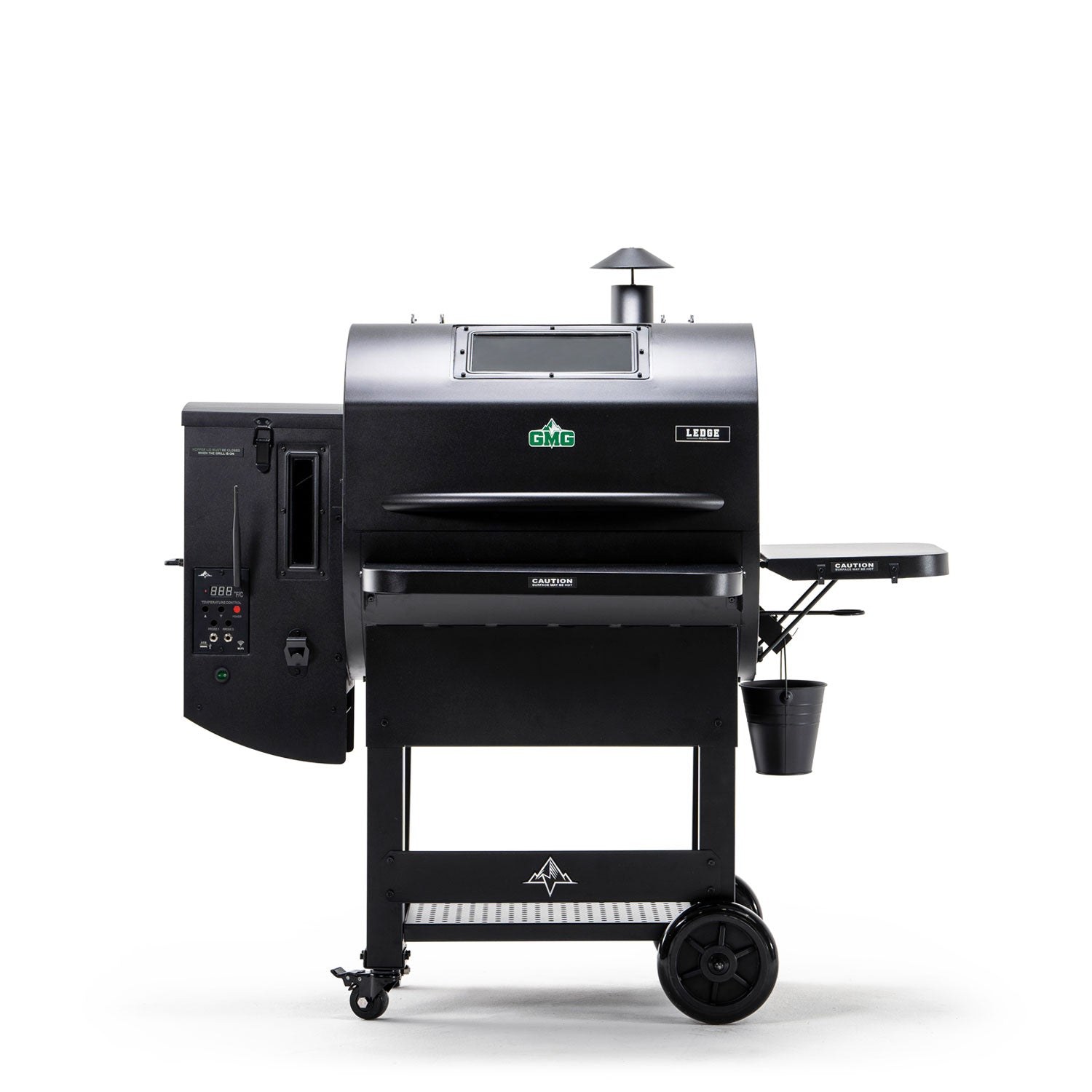
Green Mountain Grills
Green Mountain Grills Ledge Prime 2.0
The Green Mountain Grills Ledge Prime 2.0 is the successor to the popular Daniel Boone, a mid-size WiFi pellet grill that runs on 12V direct power and spans a wider temperature range than most rivals - from a 150°F cold-smoke setting up to a 550°F sear.
Green Mountain Grills
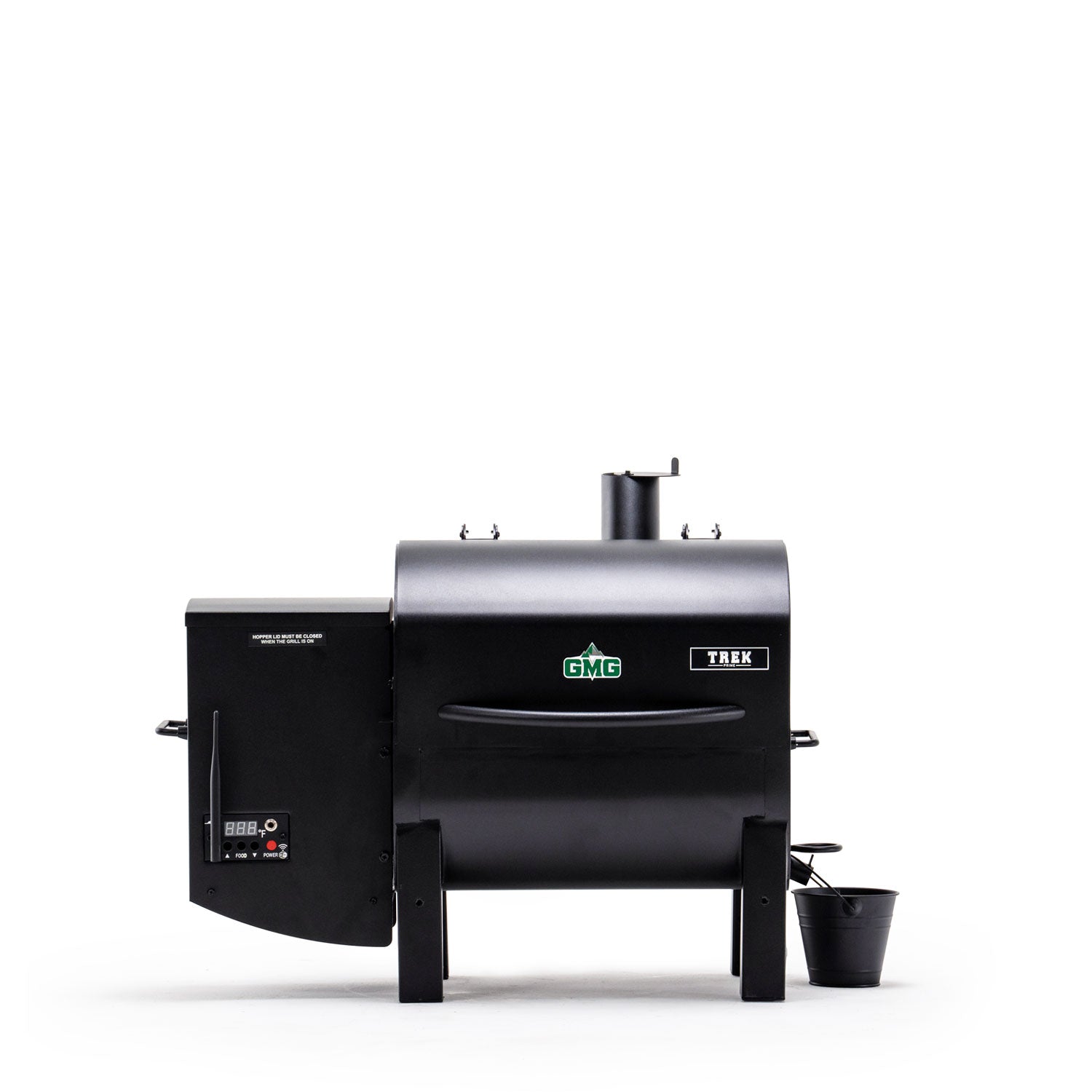
Green Mountain Grills Trek Prime 2.0
The Trek is GMG's portable, and it runs off a 12V car battery as well as household power — that is the whole point of it. It carries 219 sq in on the main grate plus an upper rack, a 9 lb hopper, and the same 150–550°F range and PRIME app as the full-size Ledge and Peak. At $399 it is also the cheapest WiFi pellet grill from a known brand.
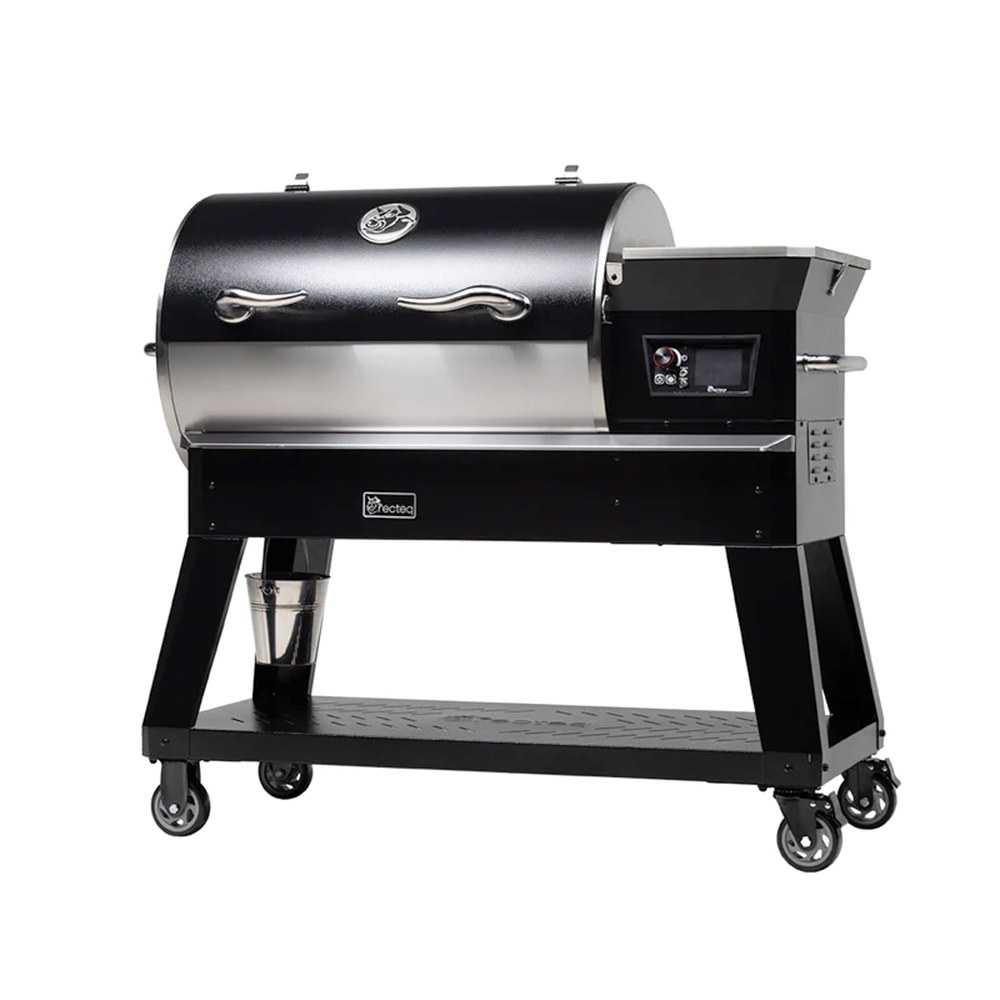
The Backyard Beast 1200 replaced the Backyard Beast 1000 and gained both grate and hopper: 1,220 sq in with the sliding second rack in, fed by a 30 lb hopper good for about 30 hours. Stainless runs from the cooking chamber through the firepot, drip pan and the bull-horn handles, with a cast iron heat deflector underneath. Against the Deck Boss 900 below it, the step up is capacity, hopper and two more years of warranty.
Grilla Grills
Grilla Grills Silverbac 2.0
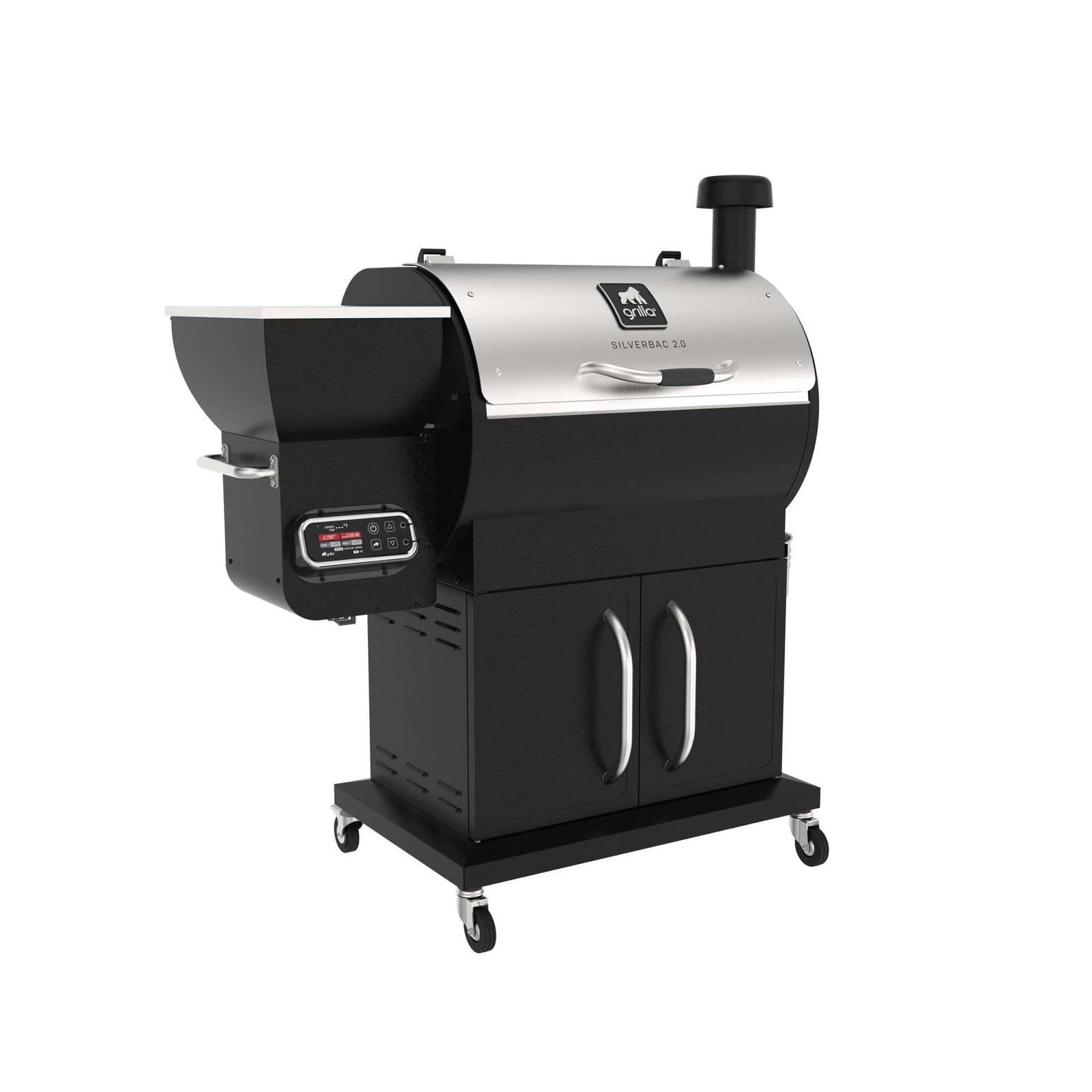
The Silverbac is Grilla's barrel-style workhorse and the model owners put up against the Recteq Deck Boss and Camp Chef Woodwind. The 2.0 revision, which replaced the Silverbac Alpha Connect, reshapes the body to take less deck space, adds probe ports and raises the hopper from 20 lb to 33 lb — among the largest on any pellet grill under $1,500. Double-wall insulated construction is standard rather than an upcharge, which is the specification that separates it from most barrel grills at this price.
Louisiana Grills
Louisiana Grills 1000 Black Label Series
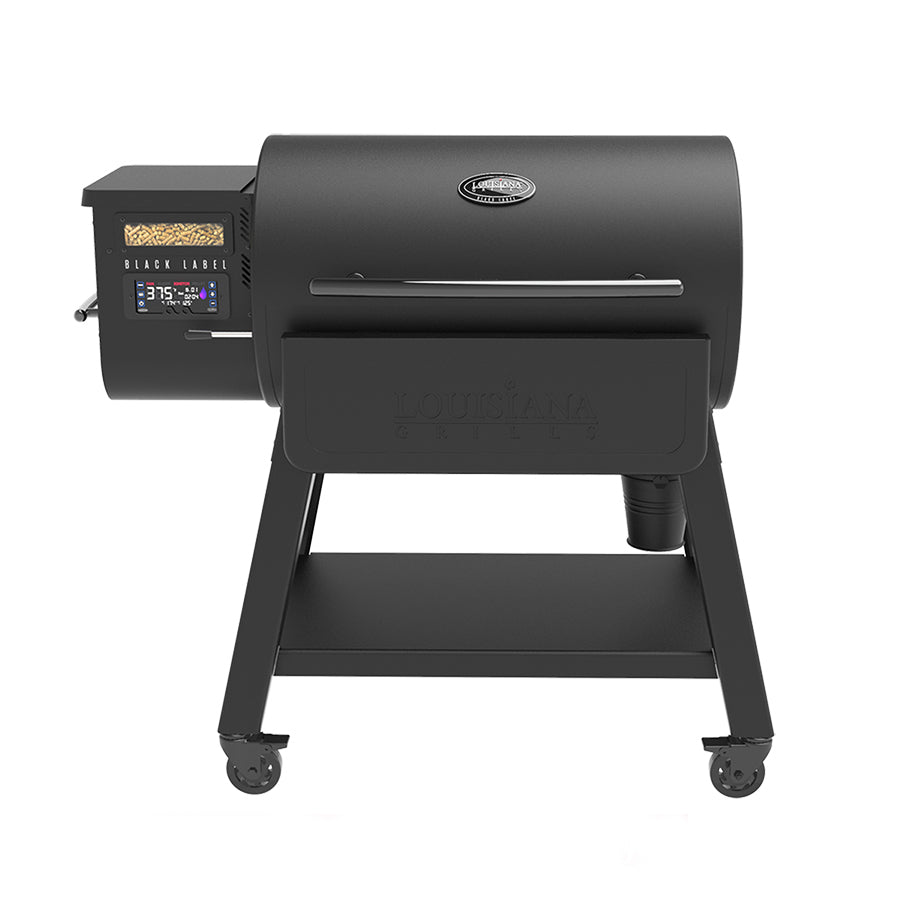
Louisiana Grills is Dansons' upmarket pellet brand, built alongside Pit Boss but in heavier steel. The Black Label 1000 is the middle of three cart models (800/1000/1200) and gives 1,028 sq in in a 14-gauge body, where Pit Boss uses thinner stock at the same price. Its slide-plate flame broiler pulls the diffuser aside for direct flame over the burn pot, so it sears without an add-on grate. Sold new through Tractor Supply, Walmart and Home Depot; the maker's own web store currently lists every SKU, pellets and bucket lids included, as sold out.
Traeger
Traeger Woodridge Pro
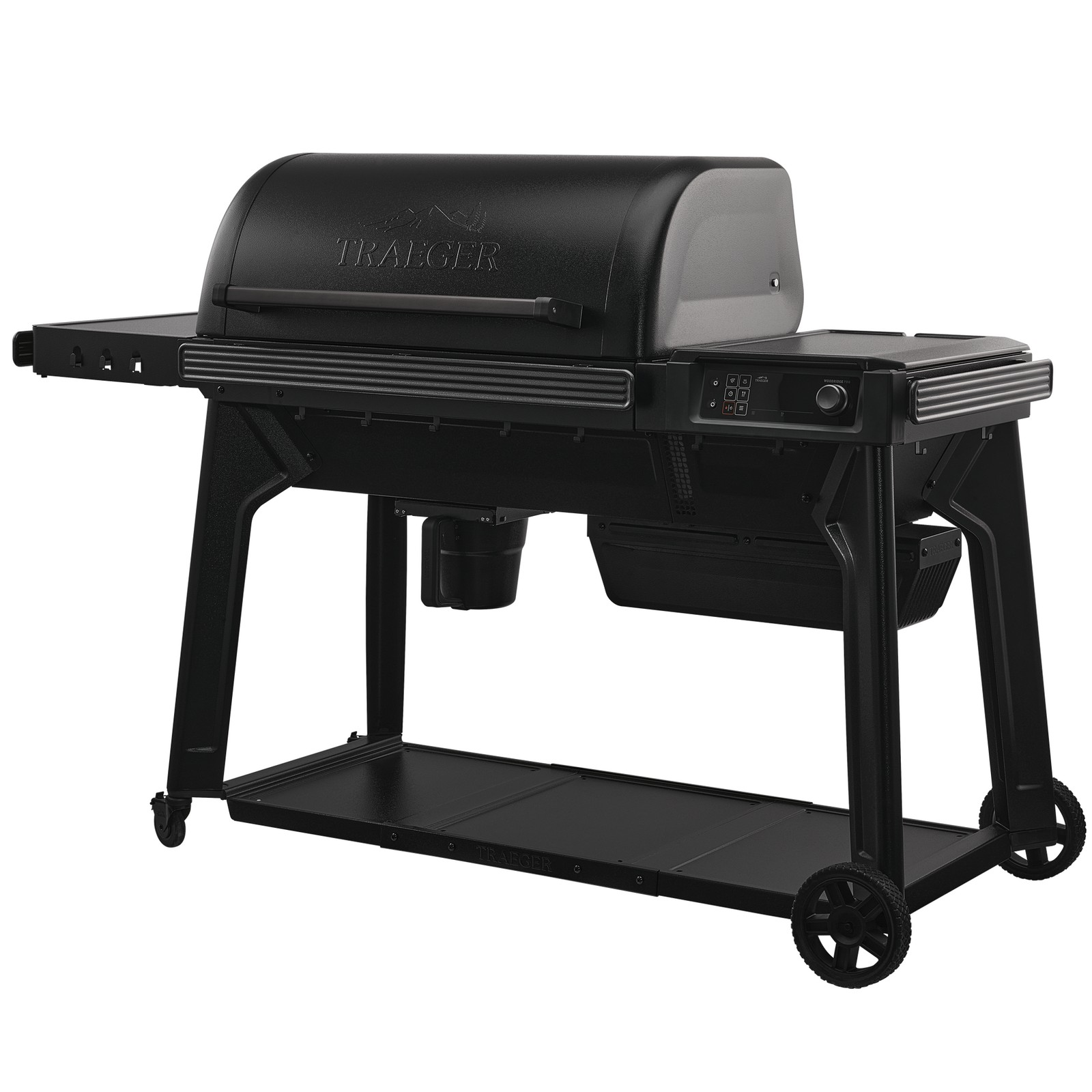
The Traeger Woodridge Pro is the 2025 replacement for the aging Pro series - 970 sq in, a 24 lb hopper with pellet sensor, Super Smoke mode, and a 10-year warranty at $1,000. Reviewers call it the biggest upgrade to Traeger's entry lineup in years.