Green Mountain Grills
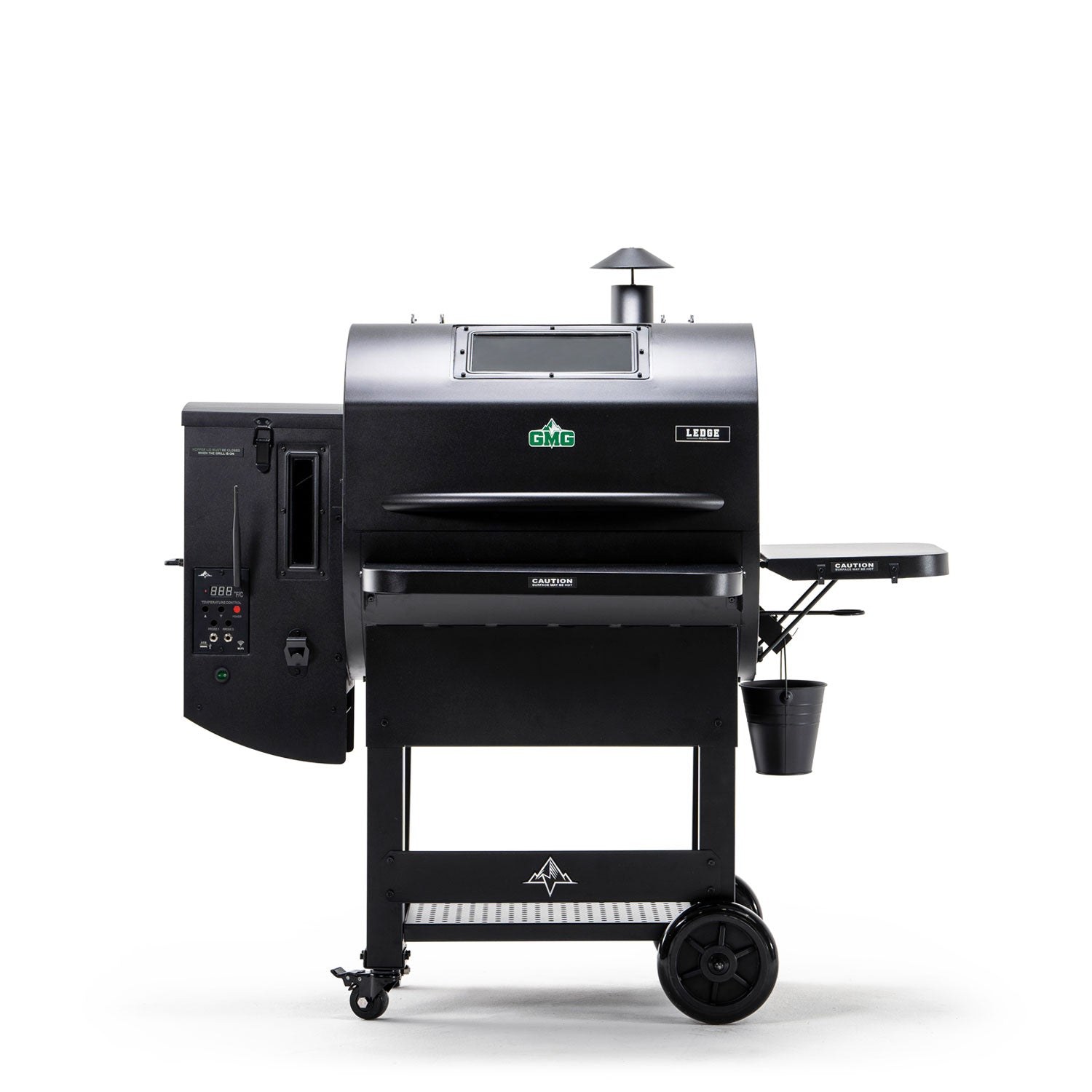
Green Mountain Grills Ledge Prime 2.0
The Green Mountain Grills Ledge Prime 2.0 is the successor to the popular Daniel Boone, a mid-size WiFi pellet grill that runs on 12V direct power and spans a wider temperature range than most rivals - from a 150°F cold-smoke setting up to a 550°F sear.
Specifications
Features
Pros
- ✓The 150-550°F range beats most pellet grills at this price - low enough for real cold-ish smoking of cheese and jerky, hot enough for a legitimate pizza or sear session
- ✓Temperature adjusts in precise 5°F increments and the digital controller holds set point tightly once dialed in, comparable to grills costing hundreds more
- ✓Runs on 12V direct current, so startups are faster and you can power it from a vehicle outlet or battery adapter for true off-grid tailgating
- ✓GMG ships it loaded with extras Traeger charges for or skips: interior light, fold-down front shelf, pellet view window, and probe support out of the box
- ✓The ceramic ignitor lasts far longer than the cheap metal hot rods that are the most common failure point on budget pellet grills
- ✓GMG's app is one of the more capable in the category with server mode for away-from-home monitoring, temp graphs, and food profiles
- ✓The adjustable heat shield lets you bias heat left or right across the grate, a zone-tuning trick almost no other pellet grill offers
- ✓At $899 with all accessories included it undercuts a Traeger Ironwood by several hundred dollars while matching or beating its spec sheet
Cons
- ✗WiFi connectivity drops are the most common owner complaint - the grill occasionally falls off the network mid-cook and needs re-pairing
- ✗The 14-gauge enameled steel body is middle-of-the-pack for thickness, so it burns noticeably more pellets in cold or windy weather without the thermal blanket accessory
- ✗The lid viewing windows soot over after a cook or two and stay dark unless you clean them religiously, making them mostly cosmetic
- ✗458 sq in is on the small side for the price bracket - two pork butts fit, but big rib cooks or whole packers get tight
- ✗The 3-year warranty trails Recteq's 6 years, and GMG is primarily dealer-sold so buying and servicing can be less convenient than big-box brands
- ✗The side shelf and some trim pieces feel thin relative to the otherwise solid cookbox
- ✗Rotisserie mode requires a separately purchased kit even though the grill is advertised as rotisserie-enabled
- ✗Owners report occasional auger feed hiccups on startup if the hopper runs low or pellets bridge, so the first-light routine takes some learning
Owner Insightssummarized from owner discussions
The Ledge is the successor to the Daniel Boone, a name that carried real weight in the budget-pellet era, and GMG's playbook hasn't changed: undercut Traeger while including the stuff Traeger charges for. Owners tick off the list with satisfaction — interior light, front shelf, pellet window, dual-probe support, a 150-550°F range that out-spans most rivals, and a controller that adjusts in 5°F steps and holds them honestly.
The ownership file has two recurring entries. WiFi dropouts are the headline complaint across years of threads — the grill cooks on unbothered, but the app connection needs re-pairing often enough to annoy — with the 2.4GHz-band tricks as standard advice. Mechanically, auger binding at the bushing and moisture-swollen pellets jamming the feed are the known issues; the community gives GMG support real credit for shipping replacement assemblies quickly when either strikes.
Where the Ledge carves out its niche is versatility per dollar: the 12V direct-power system enables true tailgate and off-grid running that mainstream competitors simply can't do, and the adjustable heat shield gives zone-tuning nobody else offers at $899. The comparison verdicts usually land the same way — Recteq for maximum longevity and warranty, Traeger for ecosystem, GMG for the most grill and features per dollar if you'll tolerate a flaky app.
What owners like
- +The out-of-box extras win the unboxing: light, front shelf, pellet window, and probes where Traeger hands you a bare barrel
- +5°F increment control and a steady hold once dialed — owners compare its stability favorably to grills a tier up
- +12V direct power is a genuine differentiator: faster ignition and battery-adapter tailgating no 120V rival manages
- +The ceramic ignitor quietly fixes the most common budget-pellet-grill failure, the burned-out hot rod
- +GMG's app does away-from-home monitoring through server mode, and support has a reputation for shipping parts without a fight
Common complaints
- −WiFi drops are the defining complaint — the grill wanders off the network mid-cook often enough that owners screenshot their temps
- −Auger binding at the bushing shows up in enough threads to be a known thing, though support sends replacement assemblies readily
- −The thin-ish body wants the thermal blanket accessory once temps drop, or pellet consumption climbs fast
- −Let moisture into that hopper and you're dealing with swollen pellets and a jammed feed — dry storage discipline required
- −Dealer-first distribution makes buying and warranty service clunkier than big-box brands
Common Questions
How do I fix the WiFi dropping?
What's the auger jam issue about?
Does it need the thermal blanket in winter?
GMG Ledge or a Traeger?
Can it actually sear at 550°F?
Compare the Green Mountain Grills Ledge Prime 2.0
Related grills
More from Green Mountain Grills →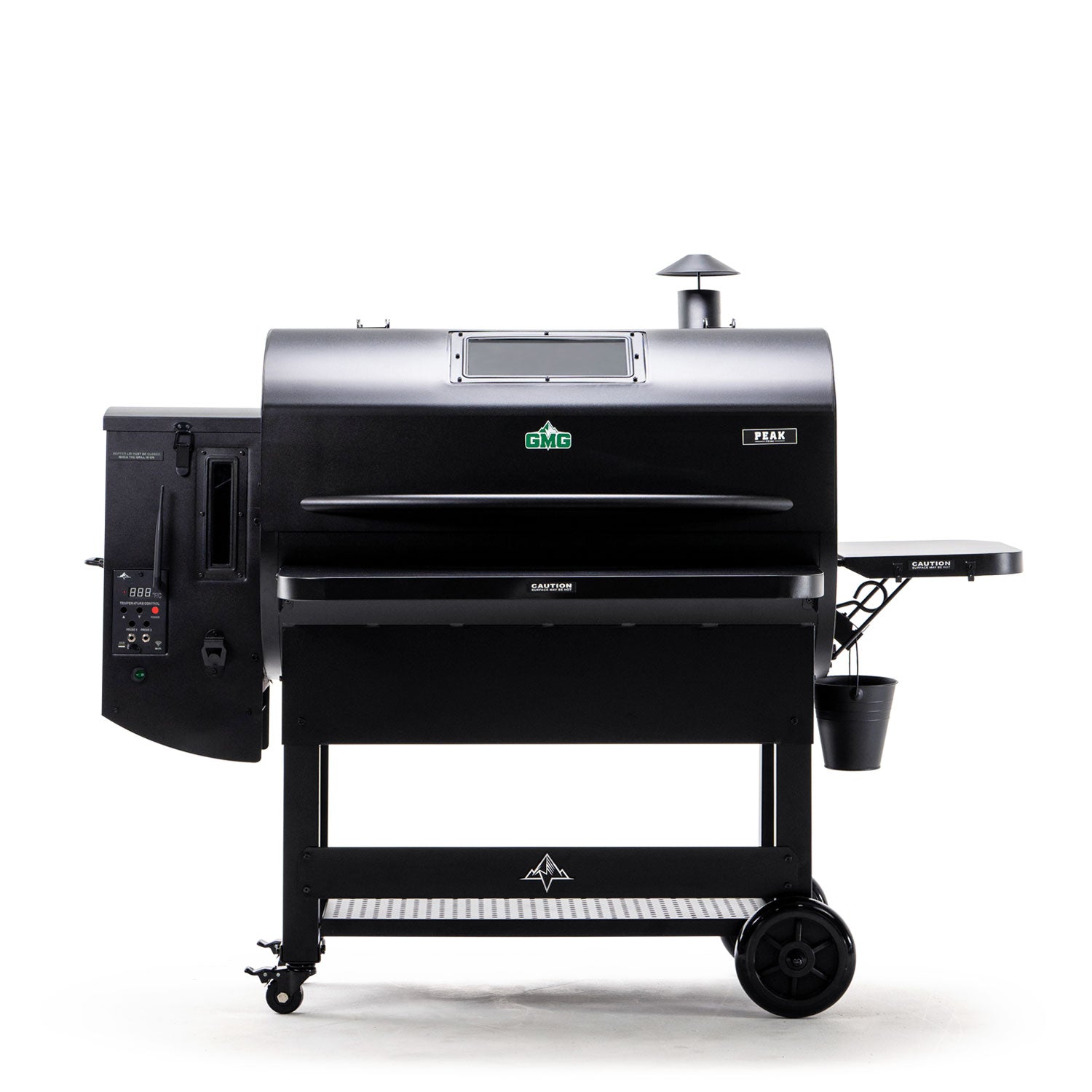
Green Mountain Grills
Green Mountain Grills Peak Prime 2.0
The Peak is the top of GMG's three-grill line, above the Ledge our catalog already carries. It brings 658 sq in on the main grate plus an upper rack and a 20 lb hopper, on the same 12V direct system, PRIME app and 150–550°F range as the Trek and Ledge. GMG sells a rotisserie kit and a SideBurn propane burner that fit it, both as separate accessories.
Green Mountain Grills
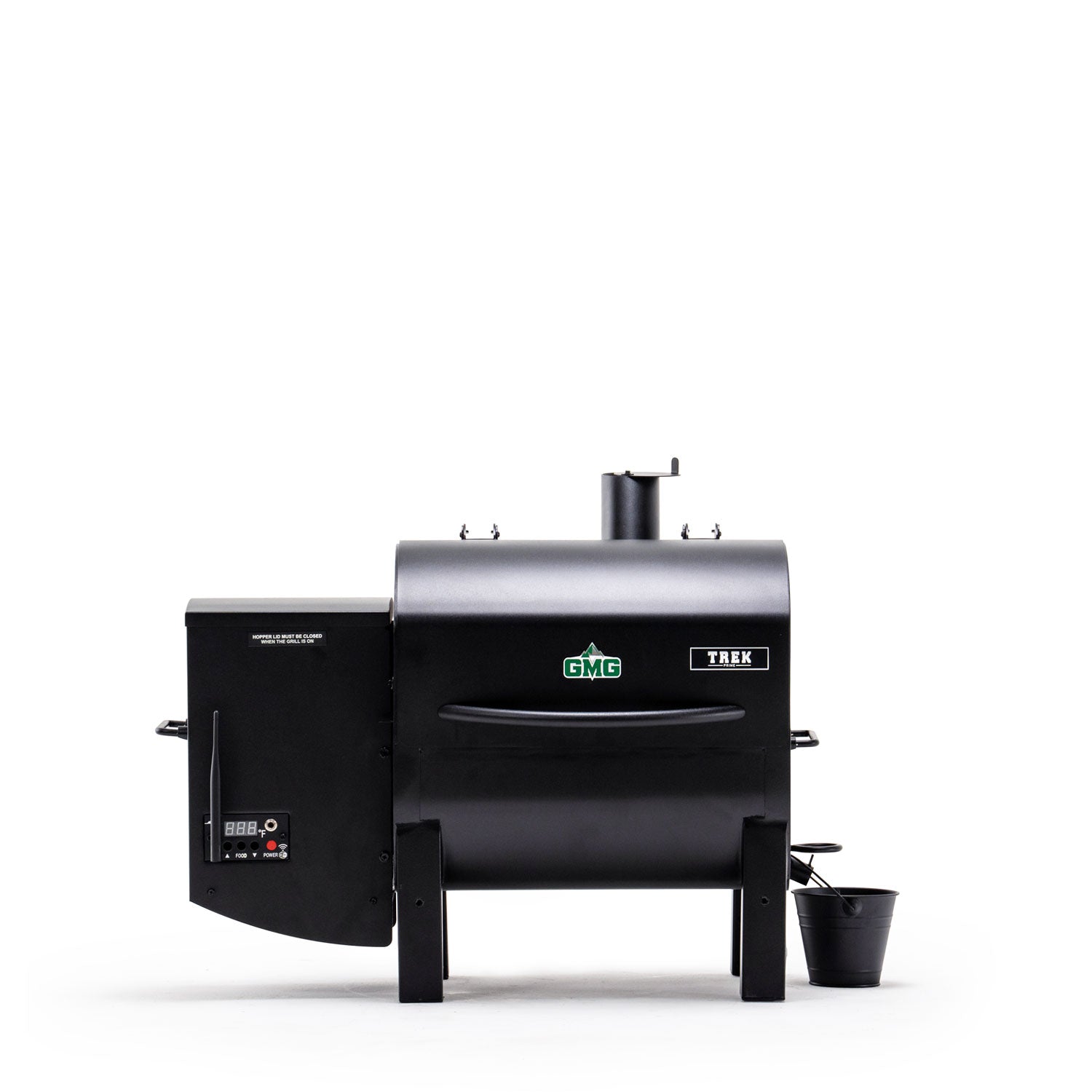
Green Mountain Grills Trek Prime 2.0
The Trek is GMG's portable, and it runs off a 12V car battery as well as household power — that is the whole point of it. It carries 219 sq in on the main grate plus an upper rack, a 9 lb hopper, and the same 150–550°F range and PRIME app as the full-size Ledge and Peak. At $399 it is also the cheapest WiFi pellet grill from a known brand.

Traeger
Traeger Woodridge
The Woodridge is the grill that finally retired Traeger's ancient Pro Series platform — it's the true successor to the Pro 575/780, and at $799 it undercuts them while fixing their two biggest complaints: cleanup and hopper size. You get 860 sq in (more than the old Pro 780), a 24 lb hopper with a clean-out chute, WiFIRE, a wired probe, and the same EZ-Clean ash keg as the $1,800 Ironwood, all under a 10-year warranty. owners call it the best value Traeger has ever shipped, with steady temps from the new digital controller. The honest trade-offs: no Super Smoke mode (that's the $1,149 Woodridge Pro), no pellet sensor or side shelf, and like every Traeger it tops out at 500F with a mild smoke profile — Camp Chef's Woodwind and the Weber Smoque both produce noticeably more smoke flavor. Early-batch owners reported some app-pairing friction and thin-ish lid steel. If you want the Traeger ecosystem without flagship pricing, this is the one to buy; if you mostly chase heavy smoke, look at the Pro trim or a competitor.

Weber
Weber Smoque
The Smoque is Weber's 2025 answer to the entry-level Traeger, and it deliberately does less than the Searwood to cost $300 less: no direct-flame searing, no 600F mode, just a smoker-first pellet grill that nails the fundamentals. Reviewers and early owners consistently rate its smoke flavor ahead of equivalently priced Traegers - the SmokeBoost setting and SmoqueVent circulation produce visibly better smoke rings and bark - and the Rapid React PID recovers temp fast after lid opens. The porcelain-enameled barrel (the same coating Weber kettles wear for decades) and 5-year warranty make the hardware feel more durable than the sheet-metal norm at this price, and the enclosed grease-plus-ash drawer is genuinely tidy. Trade-offs are real: 500F max with no sear zone means steaks finish better on a separate grill, 594 sq in is one-brisket territory, the single-position upper rack limits tall cooks, and Weber Connect - though improved - still draws occasional app-pairing complaints carried over from the SmokeFire era. Against the $799 Traeger Woodridge you're choosing more smoke flavor and simpler controls over Traeger's bigger 860 sq in and accessory ecosystem.
Camp Chef
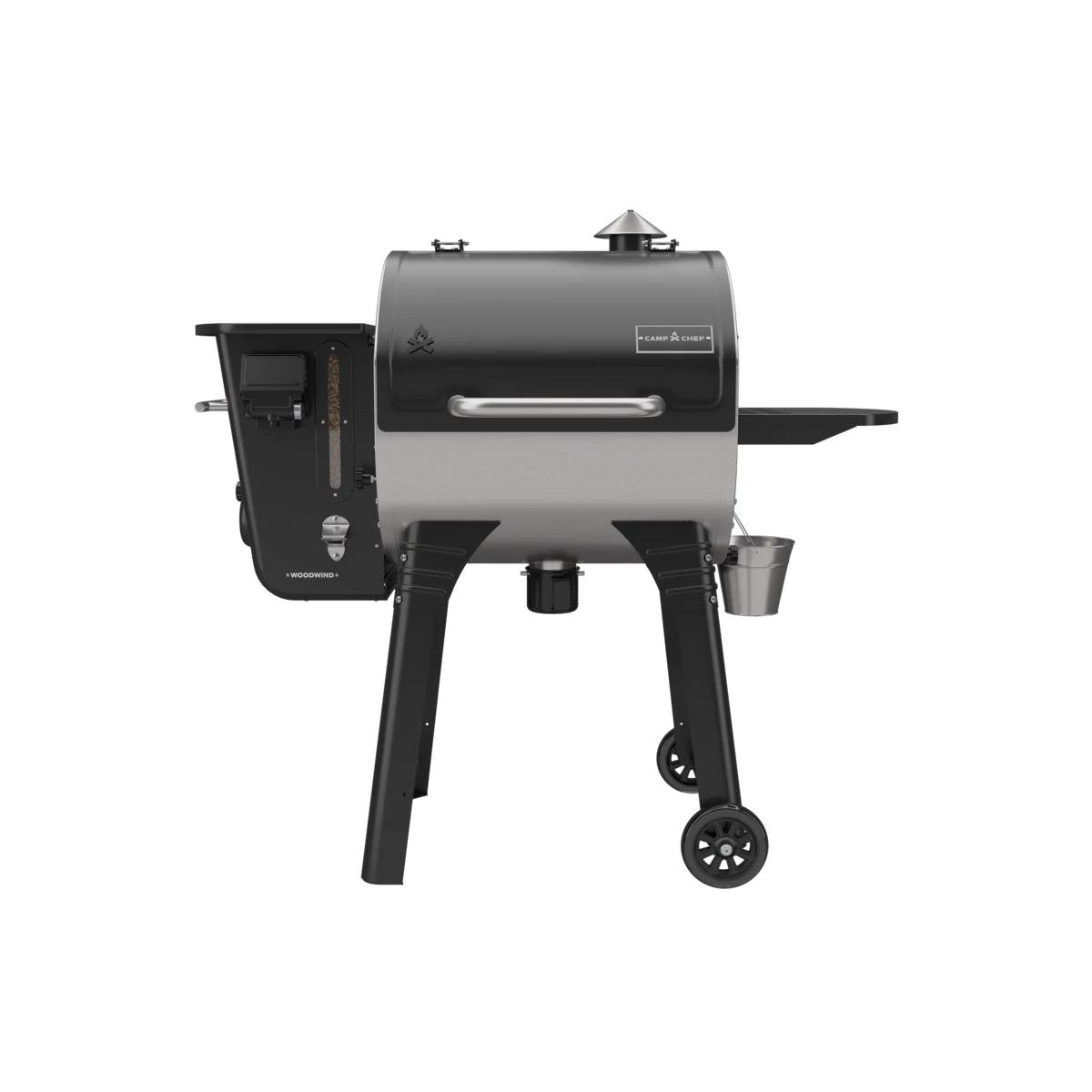
Camp Chef Woodwind 24
The redesigned Woodwind — black lid over a stainless body — is the only pellet grill Camp Chef currently lists on its own store. Its distinguishing feature is Slide and Grill: pull a knob and the heat diffuser slides aside, exposing the fire for direct-flame grilling at 650°F while the chamber itself runs 160–500°F. It ships with four meat probes, a full-color WiFi PID controller and a pull-knob ash cleanout into a removable cup.
Pit Boss
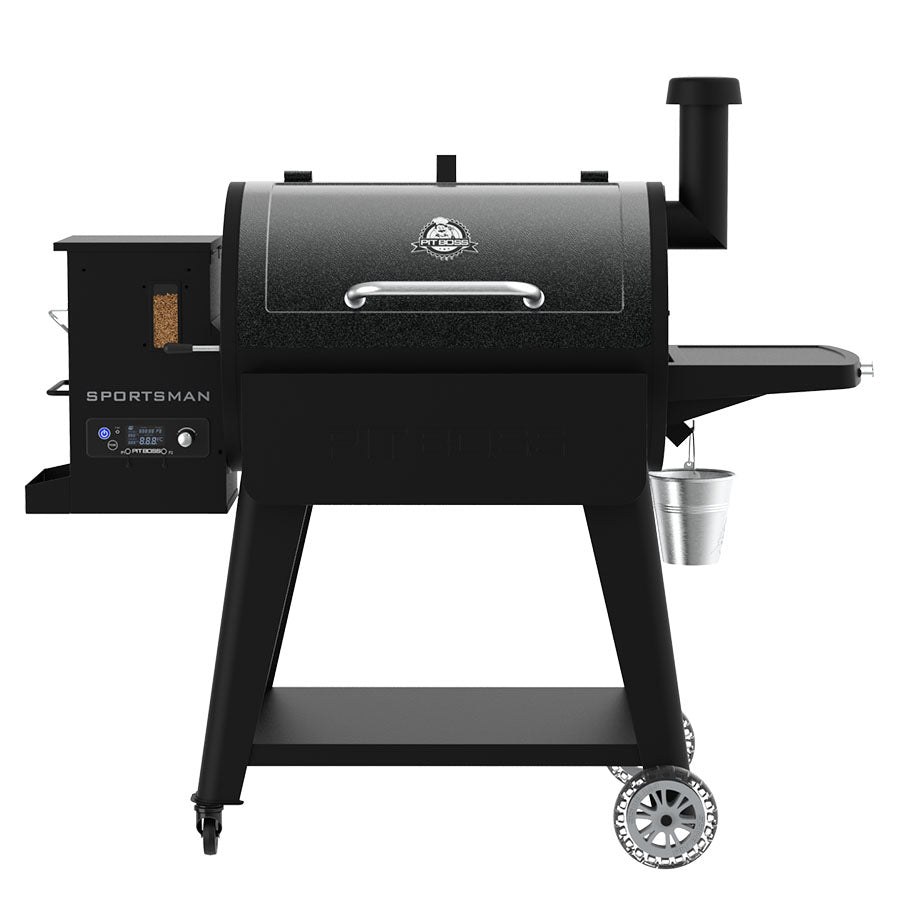
Pit Boss Sportsman 850
Sportsman is the hunting-and-outdoors trim of the Pit Boss line, and the 850 is its core size — 849 sq in, 21 lb hopper, WiFi and Bluetooth, one probe included. It adds connectivity and a hammertone finish over the FB2 700 below it while keeping the same 180–500°F range and the Flame Broiler lever for direct-flame searing. Against the Navigator 850 at $50 more, the difference is styling and prep space rather than capability.