
Weber
Weber Smoque
The Smoque is Weber's 2025 answer to the entry-level Traeger, and it deliberately does less than the Searwood to cost $300 less: no direct-flame searing, no 600F mode, just a smoker-first pellet grill that nails the fundamentals. Reviewers and early owners consistently rate its smoke flavor ahead of equivalently priced Traegers - the SmokeBoost setting and SmoqueVent circulation produce visibly better smoke rings and bark - and the Rapid React PID recovers temp fast after lid opens. The porcelain-enameled barrel (the same coating Weber kettles wear for decades) and 5-year warranty make the hardware feel more durable than the sheet-metal norm at this price, and the enclosed grease-plus-ash drawer is genuinely tidy. Trade-offs are real: 500F max with no sear zone means steaks finish better on a separate grill, 594 sq in is one-brisket territory, the single-position upper rack limits tall cooks, and Weber Connect - though improved - still draws occasional app-pairing complaints carried over from the SmokeFire era. Against the $799 Traeger Woodridge you're choosing more smoke flavor and simpler controls over Traeger's bigger 860 sq in and accessory ecosystem.
We may earn a commission. Price and availability on Amazon may differ.
Specifications
Features
Pros
- ✓Noticeably stronger smoke flavor than Traeger equivalents at 180-275F
- ✓Rapid React PID heats up in under 15 minutes and holds tight temps
- ✓Porcelain-enameled construction resists rust far better than painted rivals
- ✓Two probes and Weber Connect app control included at $799
- ✓Quick-release hopper dump makes pellet swaps painless
- ✓Enclosed grease and ash drawer keeps cleanup contained
- ✓5-year warranty beats most sub-$1,000 pellet grills
Cons
- ✗No direct-flame sear mode - the Searwood exists for that
- ✗594 sq in fits only one brisket or two rib racks per grate
- ✗Single-position upper rack limits flexibility
- ✗Weber Connect app still has occasional pairing hiccups
Owner Insightssummarized from owner discussions
The Smoque is Weber's deliberate step down from the Searwood: same porcelain-enameled build, same controller family, no direct-flame searing and a 500°F ceiling instead of 600. Owners who bought it on purpose rather than as a compromise are the most enthusiastic group in the archive. First-brisket and first-rib reports come back good with unusually little fumbling — ten hours at 225°F wrapped at 175, overnight chuck roasts, ribs unwrapped at 250 — and one owner several cooks in said flatly that the Searwood gets all the attention and his Smoque had been top notch every time. It also does one thing better than its more expensive sibling: owners of both note that the Searwood's lower rack sits too close to the flame to be truly indirect, so the Smoque gives you more usable low-and-slow space than the grill that costs $300 more.
The honest complication is the smoke, which is awkward given the name. Reports split. Several owners get exactly what they wanted; at least one new owner's first pork shoulder with hickory came out noticeably light on smoke, and the comparison circulating from video reviewers is that the Searwood puts out more. The technique that separates the two groups appears to be Smoke Boost — running the first couple of hours at 180°F before raising the temperature is the near-universal advice from owners who are happy. Beyond that the gaps are specific rather than general: no rotisserie support, which owners consider a genuine miss for a smoker; no front shelf included; a lid underside that rusts sooner than Weber buyers expect; and a 180°F minimum that is not always low enough to stretch an overnight cook to fit a work schedule.
It suits someone who already owns something that sears — a gas grill, a kettle, a griddle — and wants a dedicated smoker rather than a compromise appliance. That describes most of the people buying it, and it is the configuration Searwood owners say in hindsight they should have chosen. Against the Recteq alternatives at similar money, buyers who chose Weber cite the porcelain enamel and the warranty; buyers who chose Recteq cite build heft and a longer reliability record. The thing to weigh honestly is that this is a young model with very little owner discussion behind it, from a brand whose first pellet grill went badly, so there is less collective knowledge to fall back on than for a Traeger. The steep discounts that appear regularly are what tip the decision for a lot of buyers.
What owners like
- +Owners' first cooks land well with very little learning curve. Reported results include a ten-hour first brisket at 225°F wrapped at 175 and pulled at 202, an overnight chuck roast started at 200°F and finished at 250, and ribs at 250°F unwrapped. One owner three months in said every cook had been top notch and that the Searwood gets all the attention undeservedly
- +It is genuinely better at indirect cooking than the Searwood, which is the opposite of what the price implies. Owners of both point out the Searwood's bottom rack is not quite far enough from the flame to count as indirect, so you are effectively limited to its top rack, while the Smoque's diffuser gives you the whole chamber
- +Searwood owners keep saying, unprompted, that this would have been enough for them. The recurring line is that they rarely run above 400°F and that the Smoque covers the same ground for $300 less — advice from people who spent the extra money, which is the most credible kind
- +The app earns its place on long cooks in a way it does not on short ones. One owner ran a brisket overnight while working a twelve-hour shift, watched the internal temperature climb from work, and had the option of shutting the grill down remotely when it hit target
- +Starting a couple of hours on the 180°F Smoke Boost setting before raising the temperature is the technique owners converge on, and it is the lever that makes the difference on how much smoke you get out of it
- +It is discounted aggressively and often. Owners report Walmart clearance units at $350, a display model dropped to $300 from $699, and half-price promotions — which changes the value calculation against a Traeger Pro or Recteq entirely
Common complaints
- −The smoke flavor does not automatically live up to the name. One new owner's first cook, a pork shoulder with hickory, came out disappointingly light on smoke, and the widely circulated comparison from video reviewers is that the Searwood delivers deeper smoke. Owner experience genuinely splits here, and Smoke Boost seems to be what separates the good reports from the bad
- −There is no rotisserie option, and owners flag it as a real omission rather than a nice-to-have — rotisserie chicken is one of the things people buy a pellet smoker to do, and this is the model that cannot
- −No front shelf at this price. Owners call it petty of Weber given what the grill costs, and it is the first accessory most add
- −The underside of the lid rusts more readily than owners expect from Weber. The complaint is specifically about the coating choice on a machine positioned this far upmarket, and it comes from people who otherwise like the grill
- −The 180°F floor can be too high for a genuinely slow overnight. An owner smoking a brisket while at work found it running ahead of schedule with no lower setting available to stretch the cook out
- −There is almost nothing written about it. Buyers repeatedly describe finding near-zero owner discussion or video coverage before purchase, which is uncomfortable when Weber's previous pellet grill is the reason people are nervous in the first place
Common Questions
Does it actually produce good smoke flavor?
Smoque or Searwood?
Can I do a rotisserie chicken on it?
What is the lowest temperature it will hold?
What should my first cook be?
Is it worth waiting for a discount?
Compare the Weber Smoque
Related grills
More from Weber →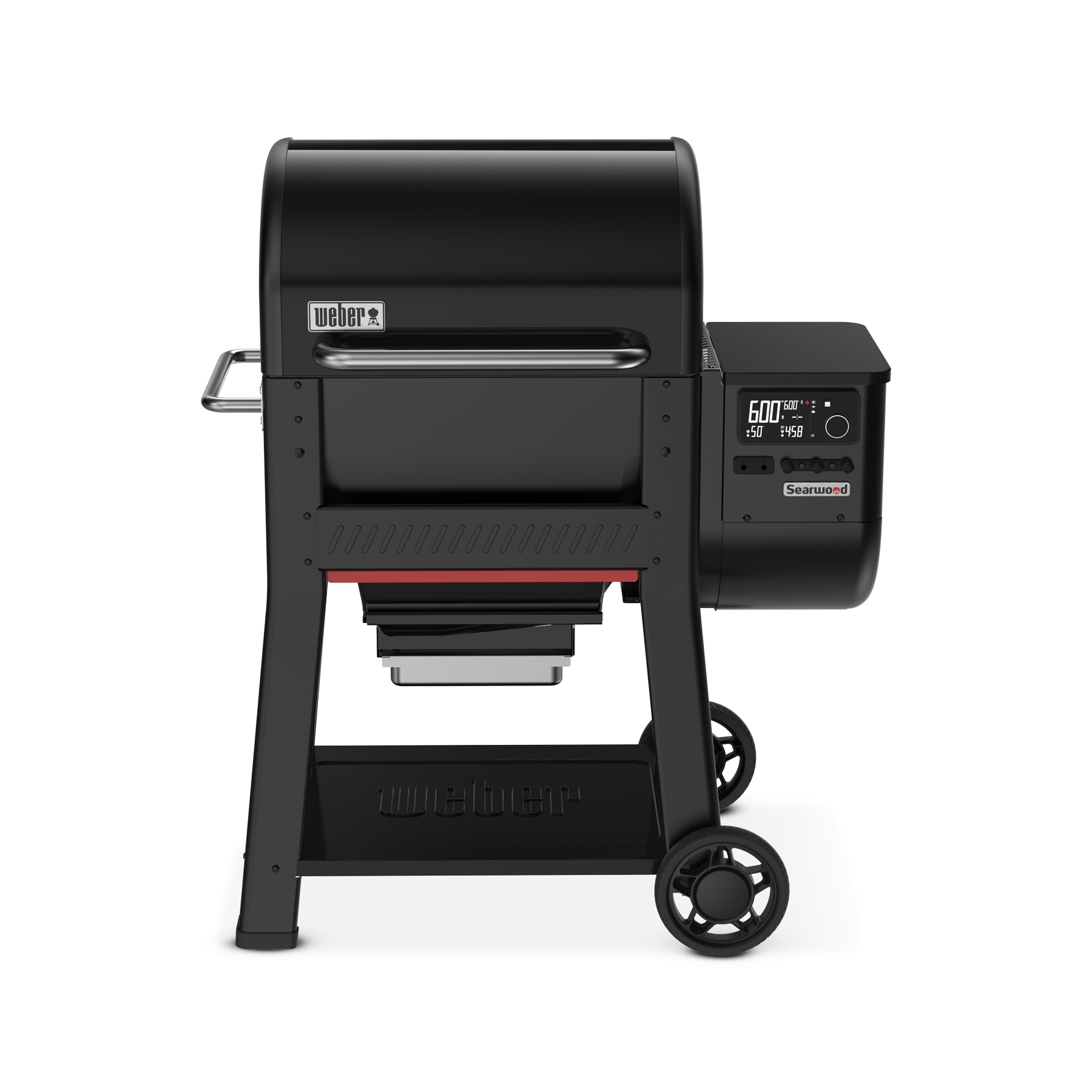
Weber
Weber Searwood 600
The Weber Searwood 600 is Weber's 2024 pellet grill that finally fixed the SmokeFire's sins - a 180-600°F range, DirectFlame searing, manual offline mode, and a Rapid React PID controller at a sharper price. owner discussions's pellet crowd calls it the redemption arc.

Weber
Weber SmokeFire EX6
The Weber SmokeFire EX6 is Weber's WiFi pellet grill, notable for reaching 600°F to sear and using a steep-walled firebox for direct grilling. The 2nd-gen revision fixed many early reliability issues. Note: this model is no longer sold new as of 2026. Its current equivalent is the Weber Searwood XL 600.
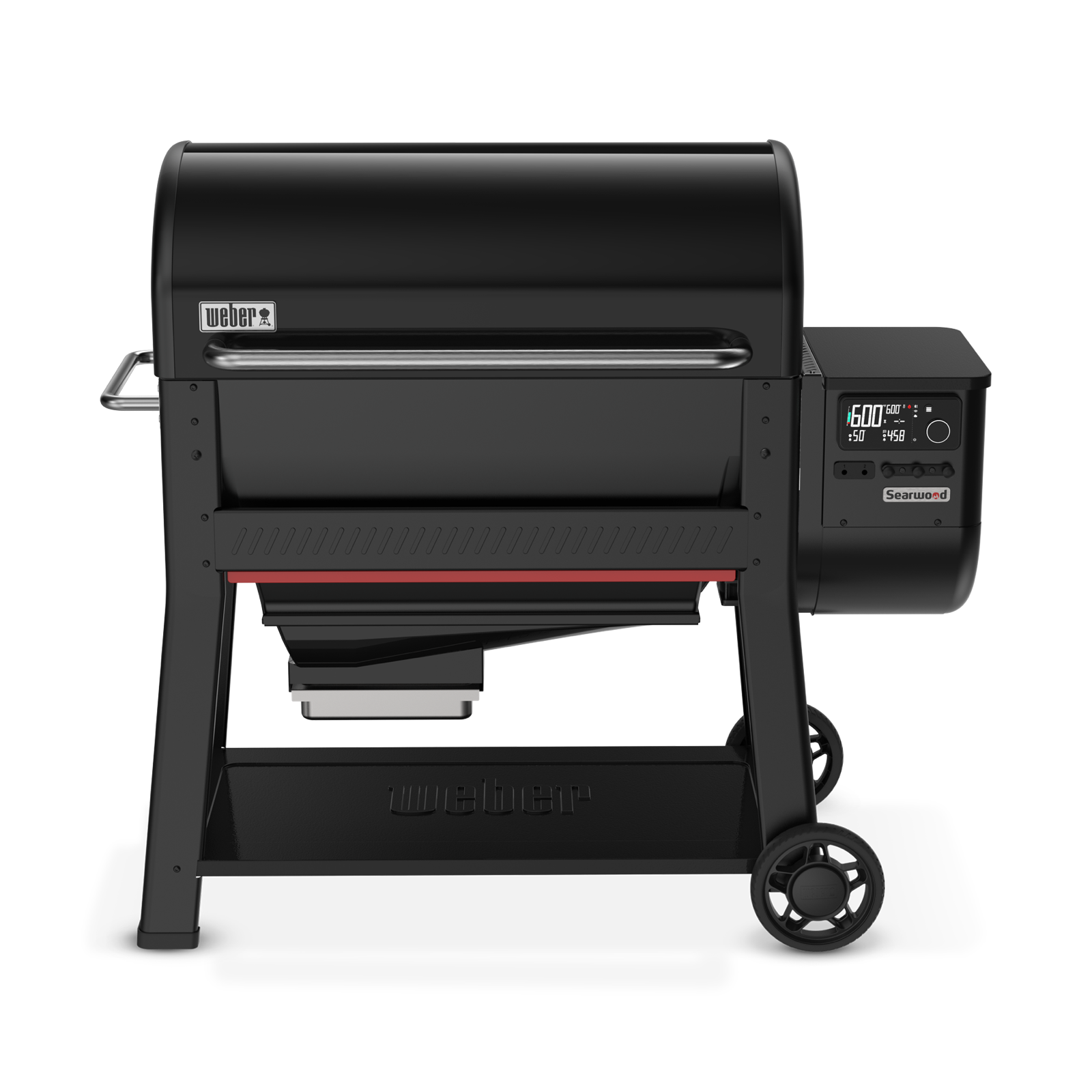
The XL 600 is the 36-inch version of the Searwood 600 already in the catalog: the same DirectFlame sear system, Weber Connect controller and 600°F ceiling, in a chamber that holds 972 sq in across two racks instead of 600. The extra width is the point — the top rack lifts out to leave 11.5 inches of headroom for a turkey or a pair of pork butts. Hopper capacity stays at 20 lb and the burn pot is unchanged, so cook times and pellet consumption scale with load rather than with chamber size.

Weber
Weber Genesis E-325s
The Weber Genesis E-325s is a 3-burner premium propane gas grill with a dedicated sear zone and side burner, part of Weber's redesigned Genesis line. Weber is the benchmark brand for backyard gas grills. Note: this model is no longer sold new as of 2026. Its current equivalent is the Weber Genesis E-325. (2024 refresh dropped the 's' (stainless flavorizer bars became porcelain); weber.com E-325s NG listed $849 'Currently Unavailable', new E-325 $899)
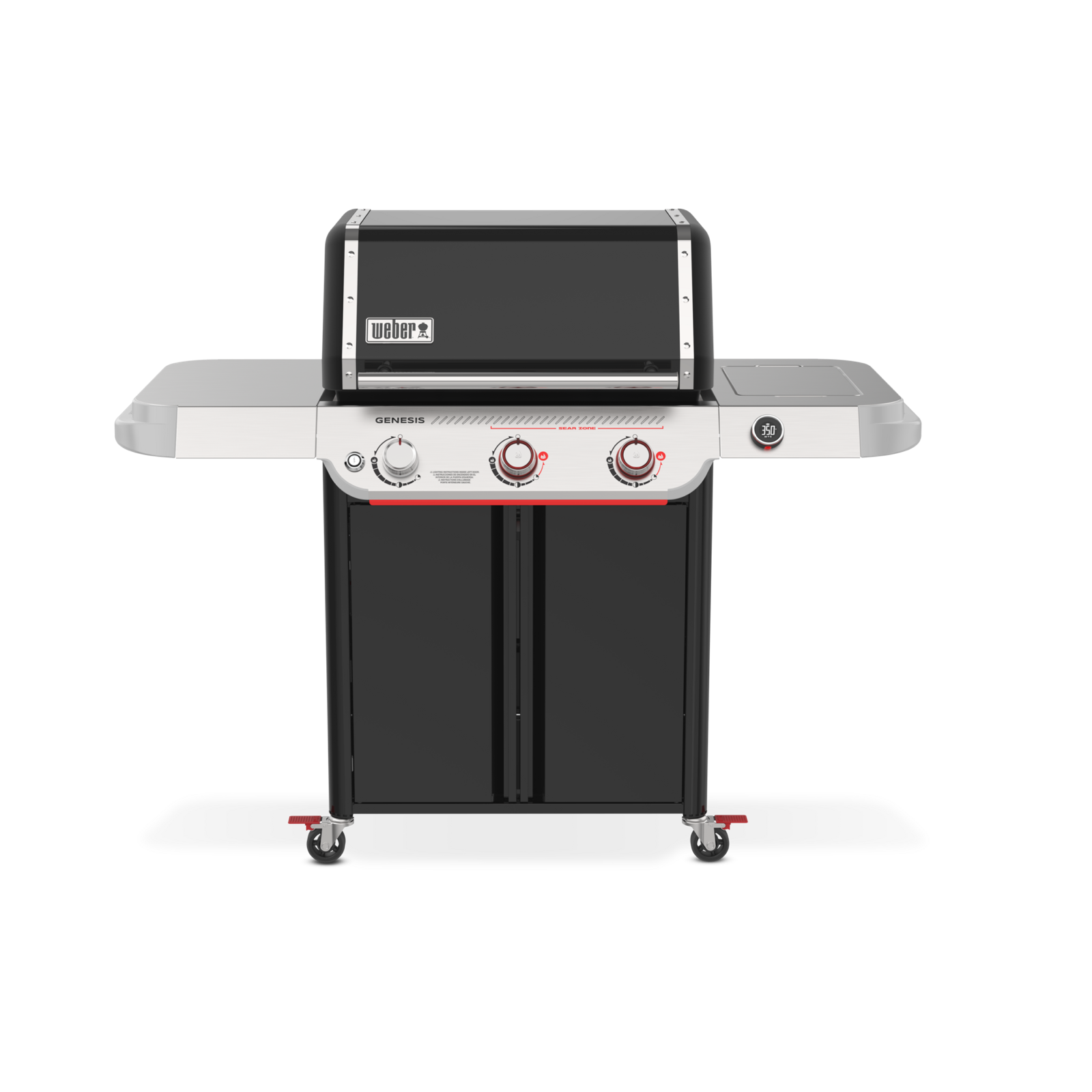
The smart 3-burner Genesis in Weber's current "W" generation, which replaced the 2022 E-325s generation the existing catalog entry refers to. It carries the same 513 sq in primary grate as the old E-325s but adds a built-in WiFi thermometer with one wired food probe reporting to the Weber Connect app, and a Sear Zone that Weber rates to 750°F. LP as priced; natural gas is $949.

Weber
Weber Slate 30
The Slate 30 is Weber's answer to the mid-size Blackstone, and its whole pitch is lower maintenance: the carbon-steel cooktop is case-hardened and pre-seasoned at the factory, and owners consistently report it shrugs off the surface rust that plagues bare-steel Blackstones left outside. Reviewers and owners also praise how evenly it heats edge to edge — three burners under 540 sq in with far fewer cold corners than the 4-burner Blackstone 36 — and the front-corner grease trap is easier to manage than rear-scrape systems. The build is classic Weber: heavy, rigid cart, good casters, and a 5-year warranty versus Blackstone's 1 year. The honest trade-offs: at $649 it costs roughly twice as much as a Blackstone 28 with similar cooking area, the digital temp display is reserved for the $799 premium trim, rust resistance is explicitly excluded from the cooktop warranty, and you still need to season and oil it like any griddle. If you griddle weekly and hate rust babysitting, the Slate is worth the premium; occasional smash-burger cooks will get 90% of the experience from a Blackstone for half the price.