Weber
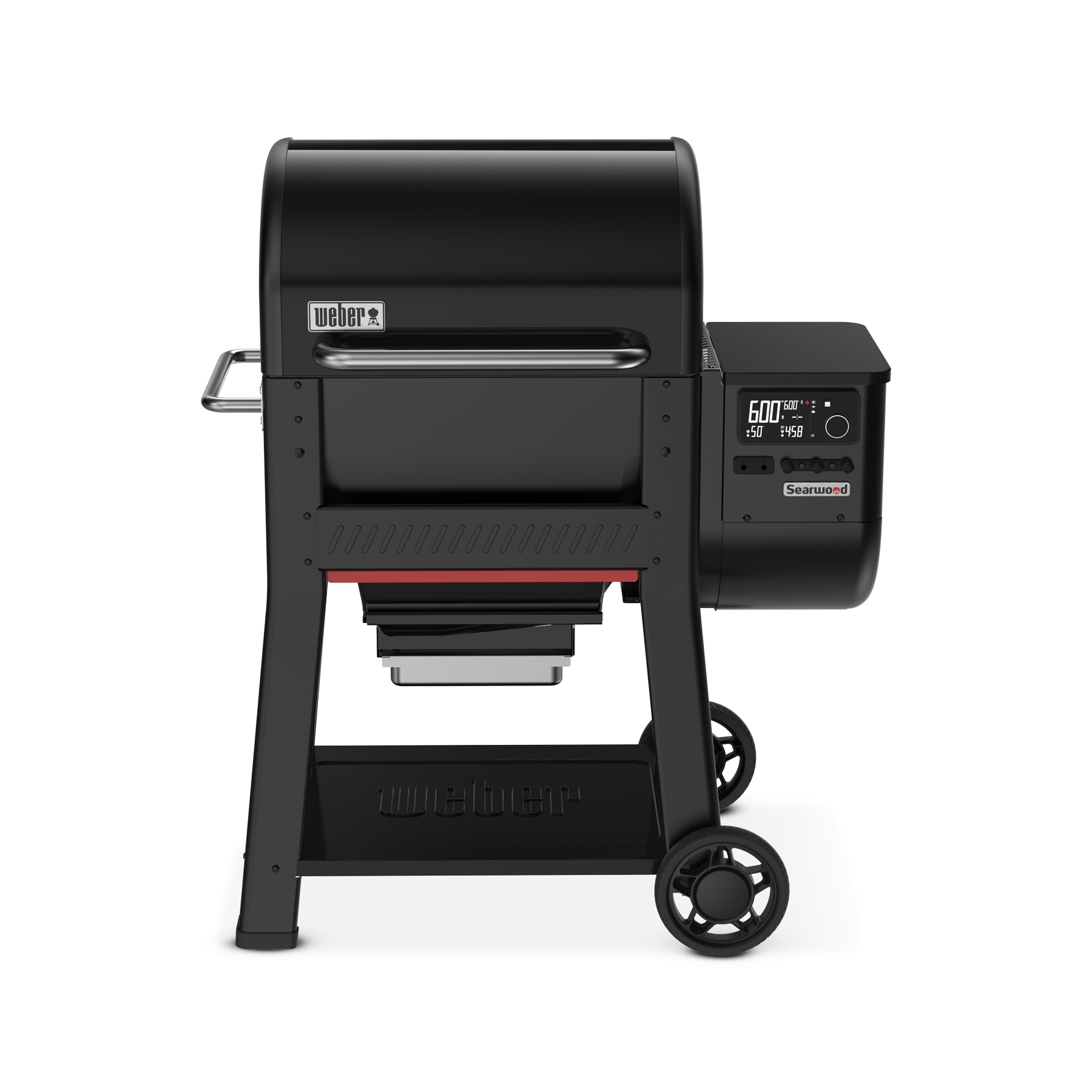
Weber Searwood 600
The Weber Searwood 600 is Weber's 2024 pellet grill that finally fixed the SmokeFire's sins - a 180-600°F range, DirectFlame searing, manual offline mode, and a Rapid React PID controller at a sharper price. owner discussions's pellet crowd calls it the redemption arc.
We may earn a commission. Price and availability on Amazon may differ.
Specifications
Features
Pros
- ✓The 180-600°F range with DirectFlame grating means it genuinely grills and sears steaks and smash burgers, not just smokes - rare in this class
- ✓Reviewers and owners consistently report some of the best smoke flavor and color of any mainstream pellet grill
- ✓The Rapid React PID recovers temperature fast after lid openings and holds set points tightly for overnight cooks
- ✓Unlike the SmokeFire, it runs fully offline with a manual dial mode - no app or WiFi required to cook
- ✓At $899 it undercuts the Traeger Ironwood while offering higher max heat and a 5-year warranty
- ✓The removable ash/grease drawer with disposable liners is one of the easiest cleanup systems in the category
- ✓648 sq in over two grates handles two briskets or several rib racks - real family capacity
- ✓Weber Connect app guidance, probe alerts, and firmware updates are polished, and Weber's dealer network backs service
Cons
- ✗No side or front shelves come standard - prep space costs extra, which stings at $899
- ✗Only one meat probe is included even though the controller supports two
- ✗Grate-level temps run about 15°F below the set point per AmazingRibs testing, so you learn to compensate
- ✗The porcelain-enameled steel body is single-wall, so cold-weather cooks burn noticeably more pellets
- ✗At 600°F it generates serious grease vapor - the firepot area needs regular cleaning to avoid flare-ups, a lesson SmokeFire owners know well
- ✗The SmokeFire's reputation still haunts Weber pellet grills, and long-term reliability of the new platform is unproven
- ✗No pellet-level sensor, so you check the 20 lb hopper manually on long cooks
- ✗The lid is light-gauge compared to a Yoder or Recteq, and wind can affect temps more than heavy-bodied rivals
Owner Insightssummarized from owner discussions
The Searwood 600 is the grill Weber built after the SmokeFire went badly, and owner sentiment reflects that history in both directions. People who owned the first-generation SmokeFire describe an auger that would jam if you looked at it wrong, and they report no such trouble on the Searwood. At the same time, the SmokeFire's reputation is the reason a lot of shoppers cross-shop Recteq at all. What the Searwood actually delivers is a fast, hot, accessory-rich pellet grill: 600°F in about fifteen minutes, smoke output that satisfies people moving from Camp Chef, Green Mountain and Pit Boss, and an unusually deep parts catalog where the rotisserie and front shelf are the two upgrades existing owners recommend unprompted.
The practical experience has one recurring quirk worth planning around. The cookbox sensor reads high relative to the grate, typically by around 20°F, and the community answer is to set the controller higher rather than to trust the number. Owners who put a proper ambient probe at food level and stopped watching the controller are satisfied; owners who expected the app reading to be the truth felt the remote monitoring had been undermined. The grill also overshoots when you ramp from smoking to roasting temperature, blowing past 350°F into the 400s often enough that lid-opening is the accepted fix. Ash accumulation matters more than on other pellet grills: one owner's temperatures dropped 70°F below set point from a few cooks' worth of ash, and cleaning the firepot and thermocouple fixed it entirely. Failures are not common but they exist — dead controllers within the first few cooks, and one case of the fan melting after a power cut mid-run.
It suits someone who wants one pellet grill that will also grill and sear, and who is buying into the Weber ecosystem deliberately. Against the Recteq alternatives at the same price the tradeoff owners describe is consistent: Recteq owners praise build heft, Searwood owners praise heat, speed and accessories, and nearly everybody on both sides reports liking what they bought. Against Weber's own Smoque, the split is simpler — the Smoque cannot sear, so if the searing is genuinely a requirement, this is the model. If it is not, several Searwood owners have said plainly that they rarely use the high heat and the Smoque would have covered their needs for $300 less. Price is worth watching either way: clearance units have shown up at $499 against a $999 list.
What owners like
- +It gets to 600°F in about fifteen minutes, and the owners who use that most are not searing with it — they are running a whole cook on a weeknight because it is ready before a charcoal grill would be lit
- +Smoke output satisfies people arriving from other pellet grills. First-cook reports describe good smoke on an eleven-hour pork butt run with an hour on smoke boost, and owners coming off Camp Chef, Green Mountain and Pit Boss units generally rate it above what they left
- +The accessory range is the deepest reason long-term owners give for choosing it. The rotisserie and front shelf are the two most recommended by existing owners, with a sear grate, pizza stone, griddle and crisping basket available, and parts from other Weber lines fitting it
- +Contrary to a widely repeated warning that it needs Weber-brand pellets, owners run Costco, Bear Mountain, Smokey Woods and Royal Oak charcoal-blend pellets without jamming. The hopper handles normal pellets fine
- +The pellet dump with its paddle, the ash tray and the enclosed grease trap are features owners specifically name when comparing it to Recteq, which has none of them. Emptying the hopper to change pellet varieties is a two-minute job
- +Weber put the cookbox temperature sensor in the middle of the chamber rather than on the side wall, which at least one buyer picked it over a Recteq for — and it is the reason the grate-versus-controller offset is consistent enough to compensate for
- +Assembly is faster than advertised. Owners report finishing in a little over an hour against a two-to-three-hour estimate, and free store assembly is widely available if you would rather not
Common complaints
- −The cookbox sensor reads high relative to the food. Owners putting a grate-level probe in find it running around 20°F cooler than the controller claims, and the standard advice passed around is simply to set it 20°F higher. That is workable, but one owner pointed out it undercuts the remote-monitoring feature he bought the grill for
- −It overshoots badly when you ramp up mid-cook. Going from 225°F to 350°F to crisp chicken skin lands owners in the 400s, and the usual recovery is opening the lid to bleed heat back down rather than waiting for the controller to settle
- −Ash builds up faster than people expect and it affects temperature directly. One owner found his grill running 70°F under after only two to five cooks' worth of ash; clearing the ash and wiping the thermocouple restored accurate readings
- −Losing mains power mid-run can destroy the fan. A buyer who lost power ten minutes into his first cook found the fan completely melted on the restart, which makes an outlet on a reliable circuit more than a nicety
- −Early unit failures do happen. One owner's Searwood threw an error code on its second cook and would not power on at all by the third, and the support process moved slowly enough that he was still waiting after the first call
- −No casters, and owners bring it up constantly. Several describe it as the pettiest thing that still annoys them daily about an otherwise well-made grill, and a front shelf is not standard either
Common Questions
Does the temperature really run low?
Do I have to use Weber pellets?
Is the 600 big enough or should I get the XL?
Why does it blow past my target when I raise the temperature?
How often does it need cleaning out?
Is the searing mode actually useful?
Compare the Weber Searwood 600
Related grills
More from Weber →
Weber
Weber Smoque
The Smoque is Weber's 2025 answer to the entry-level Traeger, and it deliberately does less than the Searwood to cost $300 less: no direct-flame searing, no 600F mode, just a smoker-first pellet grill that nails the fundamentals. Reviewers and early owners consistently rate its smoke flavor ahead of equivalently priced Traegers - the SmokeBoost setting and SmoqueVent circulation produce visibly better smoke rings and bark - and the Rapid React PID recovers temp fast after lid opens. The porcelain-enameled barrel (the same coating Weber kettles wear for decades) and 5-year warranty make the hardware feel more durable than the sheet-metal norm at this price, and the enclosed grease-plus-ash drawer is genuinely tidy. Trade-offs are real: 500F max with no sear zone means steaks finish better on a separate grill, 594 sq in is one-brisket territory, the single-position upper rack limits tall cooks, and Weber Connect - though improved - still draws occasional app-pairing complaints carried over from the SmokeFire era. Against the $799 Traeger Woodridge you're choosing more smoke flavor and simpler controls over Traeger's bigger 860 sq in and accessory ecosystem.
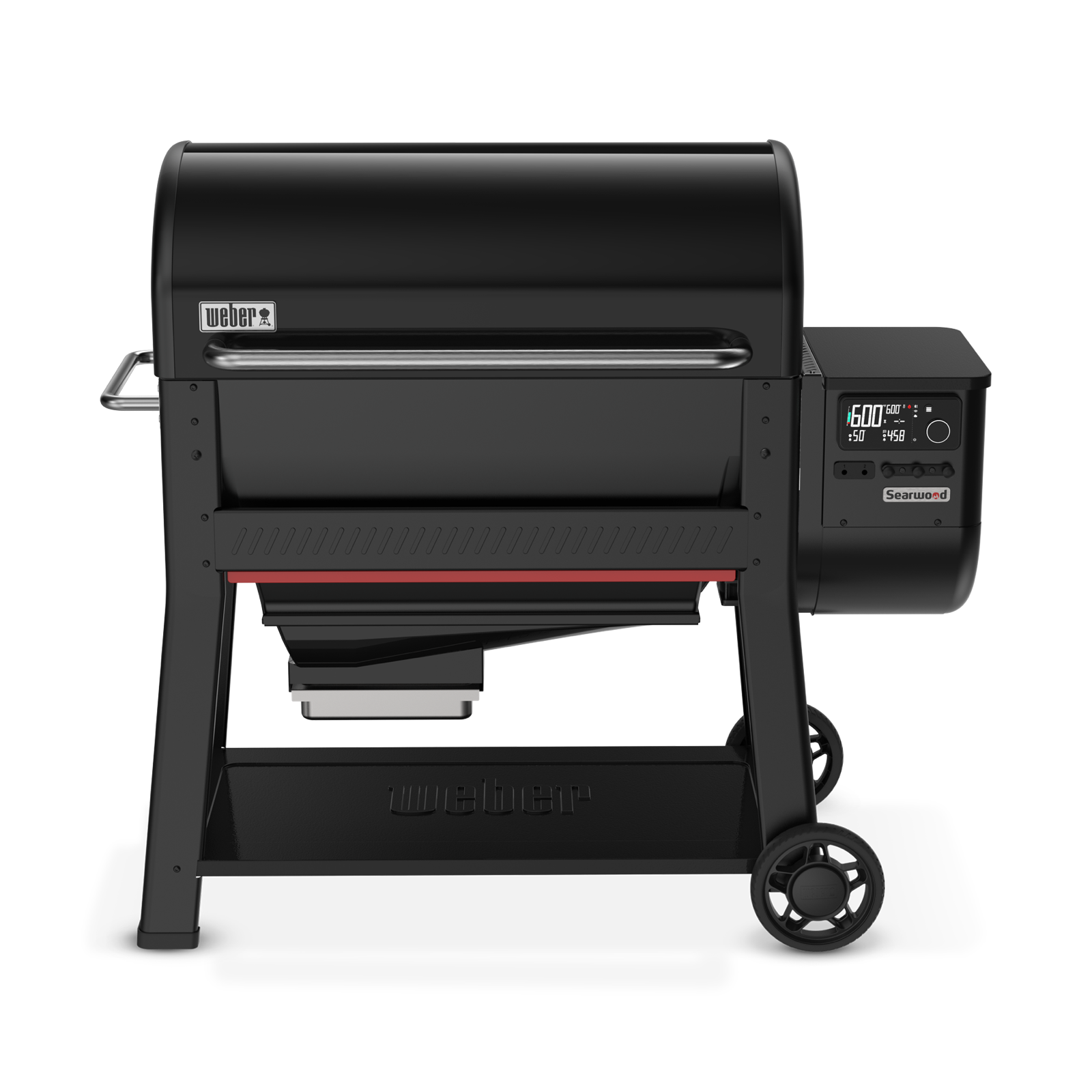
The XL 600 is the 36-inch version of the Searwood 600 already in the catalog: the same DirectFlame sear system, Weber Connect controller and 600°F ceiling, in a chamber that holds 972 sq in across two racks instead of 600. The extra width is the point — the top rack lifts out to leave 11.5 inches of headroom for a turkey or a pair of pork butts. Hopper capacity stays at 20 lb and the burn pot is unchanged, so cook times and pellet consumption scale with load rather than with chamber size.

Weber
Weber SmokeFire EX6
The Weber SmokeFire EX6 is Weber's WiFi pellet grill, notable for reaching 600°F to sear and using a steep-walled firebox for direct grilling. The 2nd-gen revision fixed many early reliability issues. Note: this model is no longer sold new as of 2026. Its current equivalent is the Weber Searwood XL 600.

Weber
Weber Genesis E-325s
The Weber Genesis E-325s is a 3-burner premium propane gas grill with a dedicated sear zone and side burner, part of Weber's redesigned Genesis line. Weber is the benchmark brand for backyard gas grills. Note: this model is no longer sold new as of 2026. Its current equivalent is the Weber Genesis E-325. (2024 refresh dropped the 's' (stainless flavorizer bars became porcelain); weber.com E-325s NG listed $849 'Currently Unavailable', new E-325 $899)
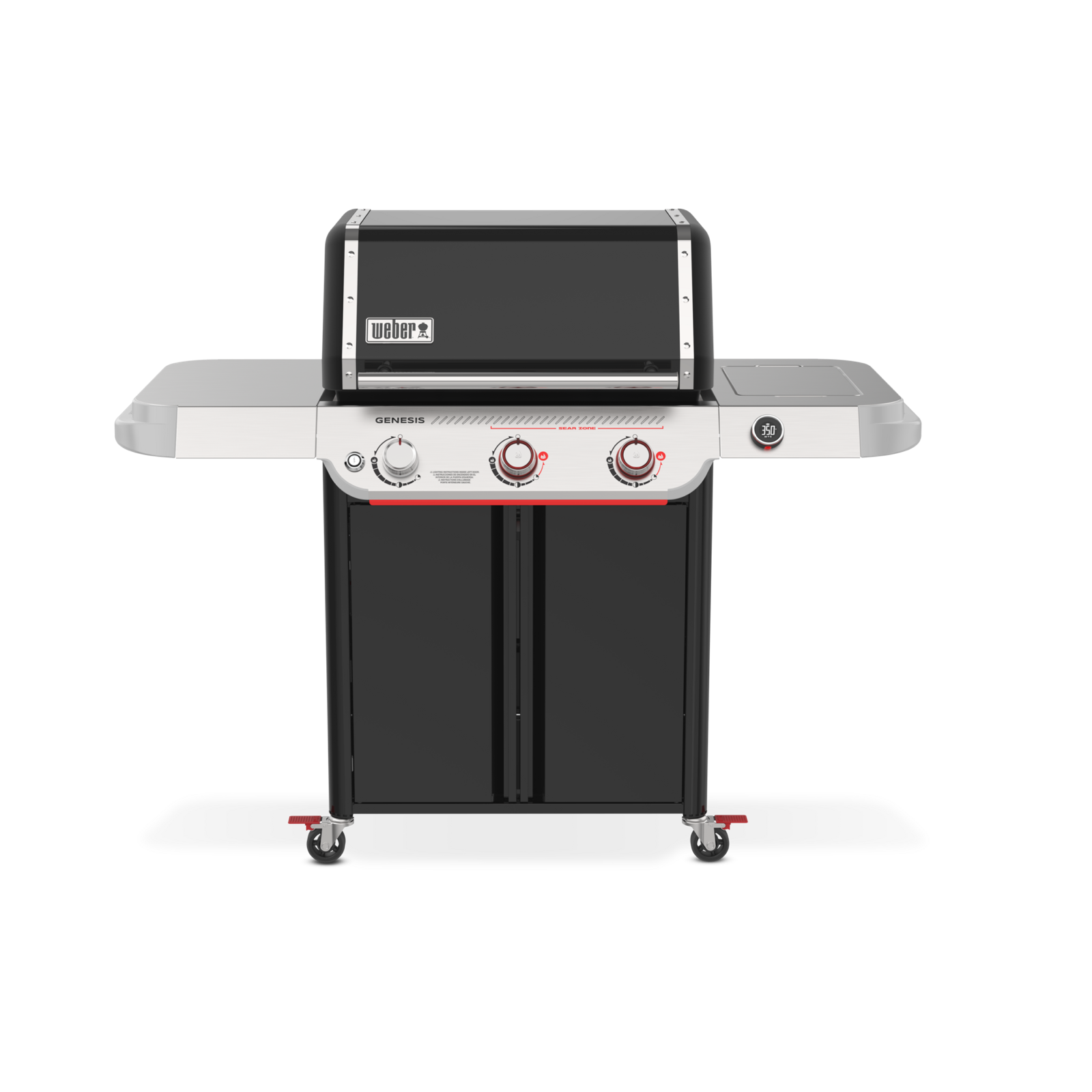
The smart 3-burner Genesis in Weber's current "W" generation, which replaced the 2022 E-325s generation the existing catalog entry refers to. It carries the same 513 sq in primary grate as the old E-325s but adds a built-in WiFi thermometer with one wired food probe reporting to the Weber Connect app, and a Sear Zone that Weber rates to 750°F. LP as priced; natural gas is $949.
Weber
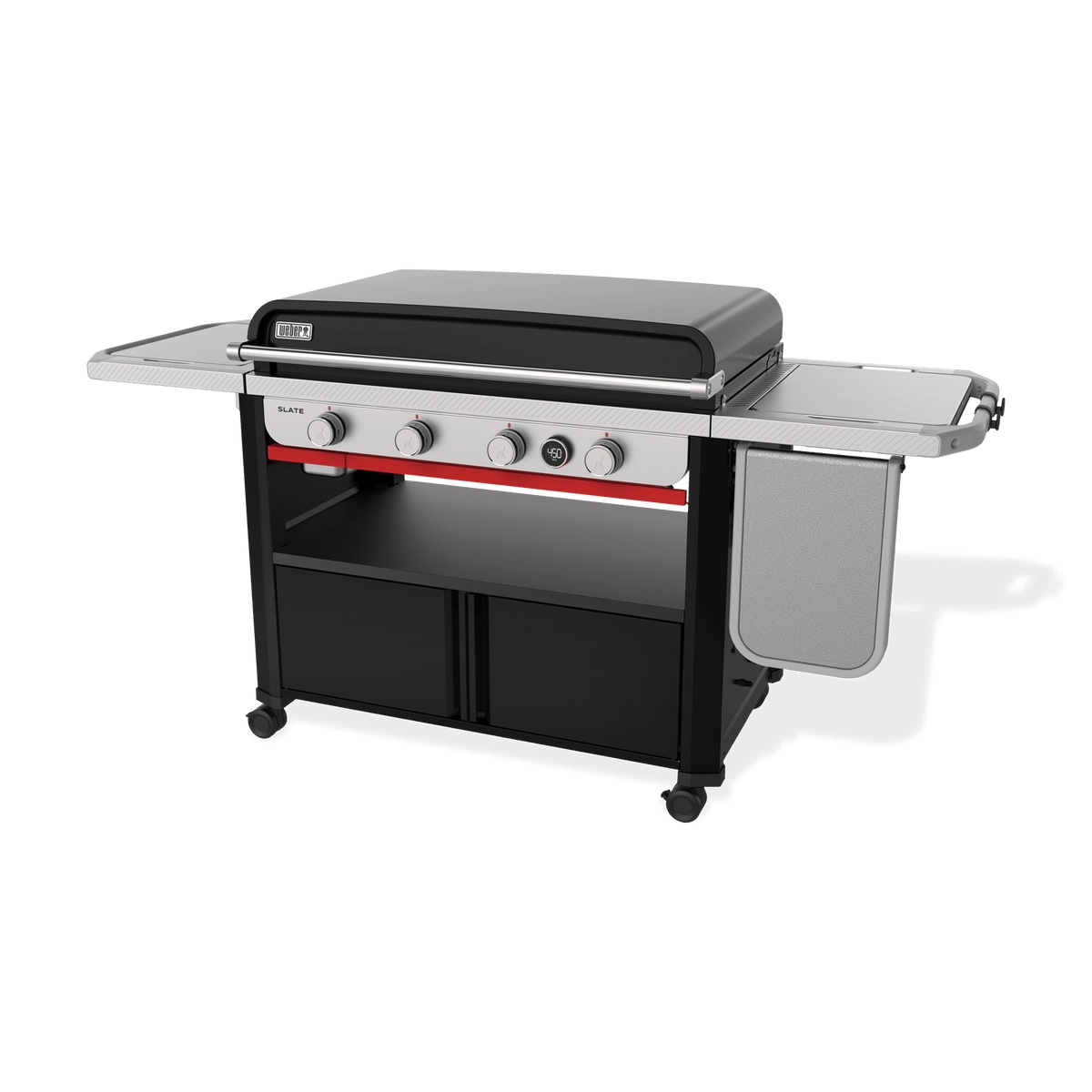
Weber Slate 36
The Weber Slate 36 is Weber's flagship flat-top griddle, pairing a pre-seasoned rust-resistant carbon steel cooktop with four independent burners, a built-in digital cooktop thermometer, and the storage and side tables that made it an instant Blackstone rival.