Weber Genesis E-325s vs Weber Searwood 600

vs
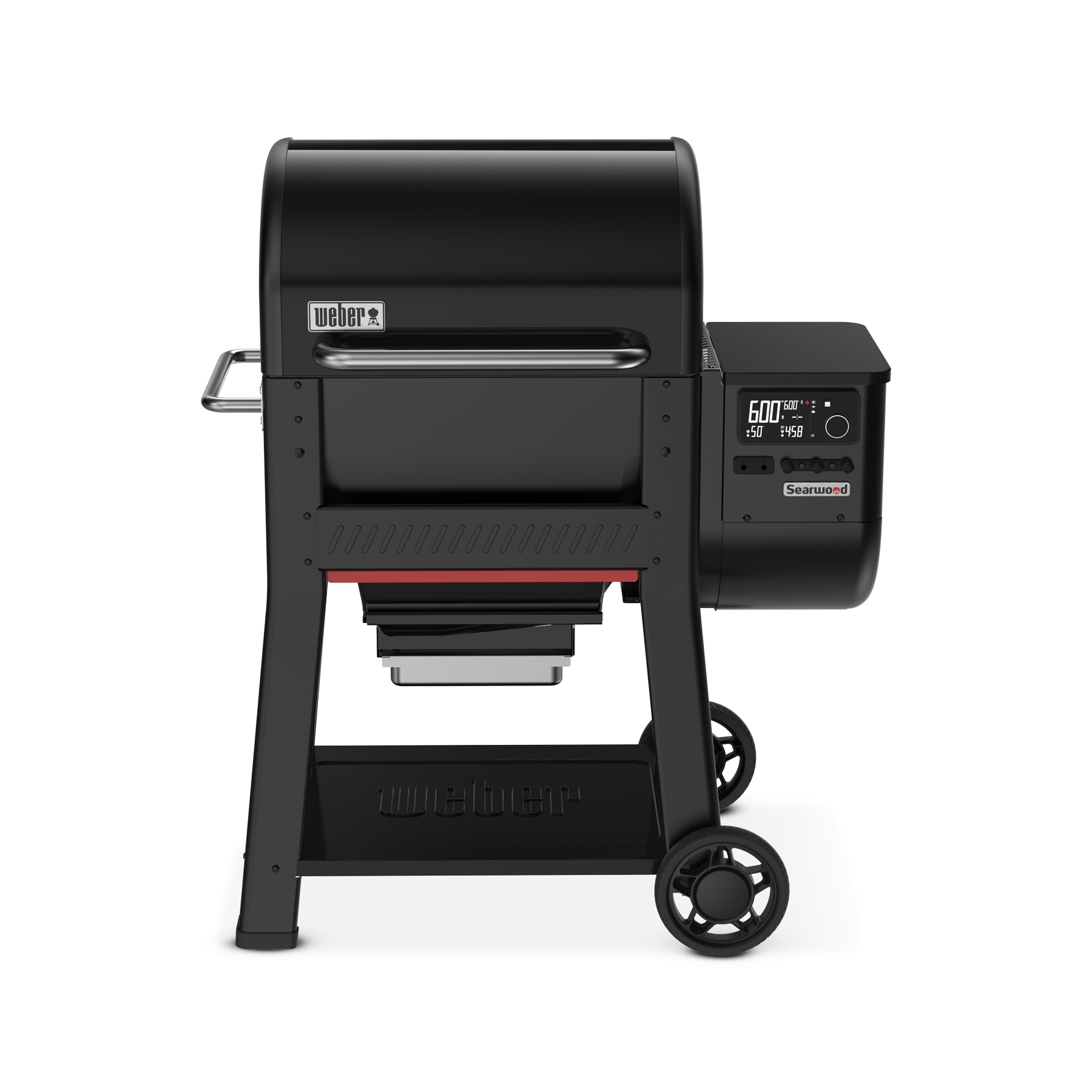
Quick take: The Weber Searwood 600 offers more cooking space (648 vs 513 sq in).
| Spec | Weber Genesis E-325s | Weber Searwood 600 |
|---|---|---|
| Price | ~$899 | ~$899 |
| Rating | 4.6★ (1,046) | 4.6★ (1,663) |
| Type | Gas Grill | Pellet Grill |
| Cooking Area | 513 sq in | 648 sq in |
| Max Temp | 600°F | 600°F |
| Fuel Type | Propane/Natural Gas | Wood Pellets |
| Build Material | Porcelain-Enameled Steel | Porcelain-Enameled Steel |
| Hopper Capacity | — | 20 lb |
| Burners | 3 | — |
| WiFi / App | No | Yes |
| App control | No | Yes |
| Meat probe | No | Yes |
| PID controller | No | Yes |
| Side burner | Yes | No |
| Rotisserie | No | No |
| Searing | Yes | Yes |
| Dimensions | 62 x 27 x 48.5 in | 38.5 x 23 x 45.75 in |
| Weight | 188 lbs | 125 lbs |
| Warranty | 12 years | 5 years |
Pros & cons
Weber Genesis E-325s
- ✓Weber's legendary build quality means this grill routinely lasts 10-15+ years, and the 12-year warranty backs every component
- ✓The dedicated sear zone burner gets hot enough for steakhouse-quality crusts, a real step up from basic 3-burner grills
- ✓Porcelain-enameled cast-iron grates retain heat beautifully and deliver even, dark sear marks
- ✓Flavorizer bars vaporize drippings for added flavor and funnel grease away to dramatically reduce flare-ups
- ✓Even heat distribution across the three burners makes indirect roasting and multi-zone cooking easy and predictable
- ✓The integrated side burner is genuinely useful for sauces, sides, or boiling without running back to the kitchen
- ✓Fit, finish, and ignition reliability are top-tier - the burners light first try every time for years
- ✓Parts availability is excellent, so even a decade in you can easily refresh grates, bars, or igniters
- ✗At ~$900 it's significantly pricier than comparable Char-Broil or Monument 3-burners, so you pay for the Weber name
- ✗513 sq in of main cooking space is modest - big parties may want a 4-burner for more real estate
- ✗It has no WiFi, app, or built-in temperature probe, which feels dated next to smart grills at this price
- ✗The newer redesign moved from stainless to porcelain-coated steel Flavorizer bars, which some long-time Weber fans see as a downgrade
- ✗Assembly is lengthy and the grill is heavy at 188 lbs, so plan for two people and a couple hours
- ✗The open-cart lower shelf offers no enclosed storage to hide the propane tank or accessories
- ✗It only reaches gas-grill temps, so it's not a smoker - low-and-slow BBQ isn't its strength
- ✗Some owners note the lid thermometer is imprecise and recommend a separate probe for accuracy
Weber Searwood 600
- ✓The 180-600°F range with DirectFlame grating means it genuinely grills and sears steaks and smash burgers, not just smokes - rare in this class
- ✓Reviewers and owners consistently report some of the best smoke flavor and color of any mainstream pellet grill
- ✓The Rapid React PID recovers temperature fast after lid openings and holds set points tightly for overnight cooks
- ✓Unlike the SmokeFire, it runs fully offline with a manual dial mode - no app or WiFi required to cook
- ✓At $899 it undercuts the Traeger Ironwood while offering higher max heat and a 5-year warranty
- ✓The removable ash/grease drawer with disposable liners is one of the easiest cleanup systems in the category
- ✓648 sq in over two grates handles two briskets or several rib racks - real family capacity
- ✓Weber Connect app guidance, probe alerts, and firmware updates are polished, and Weber's dealer network backs service
- ✗No side or front shelves come standard - prep space costs extra, which stings at $899
- ✗Only one meat probe is included even though the controller supports two
- ✗Grate-level temps run about 15°F below the set point per AmazingRibs testing, so you learn to compensate
- ✗The porcelain-enameled steel body is single-wall, so cold-weather cooks burn noticeably more pellets
- ✗At 600°F it generates serious grease vapor - the firepot area needs regular cleaning to avoid flare-ups, a lesson SmokeFire owners know well
- ✗The SmokeFire's reputation still haunts Weber pellet grills, and long-term reliability of the new platform is unproven
- ✗No pellet-level sensor, so you check the 20 lb hopper manually on long cooks
- ✗The lid is light-gauge compared to a Yoder or Recteq, and wind can affect temps more than heavy-bodied rivals