
Weber
Weber SmokeFire EX6
The Weber SmokeFire EX6 is Weber's WiFi pellet grill, notable for reaching 600°F to sear and using a steep-walled firebox for direct grilling. The 2nd-gen revision fixed many early reliability issues. Note: this model is no longer sold new as of 2026. Its current equivalent is the Weber Searwood XL 600.
We may earn a commission. Price and availability on Amazon may differ.
Specifications
Features
Pros
- ✓It reaches a genuine 600°F, the highest of the mainstream pellet grills, so you can actually sear steaks and burgers on the main grates
- ✓The Weber Connect app with step-by-step guidance and probe alerts is well-designed and popular with new users
- ✓1008 sq in over two large levels gives serious capacity for big cooks and multiple proteins
- ✓The porcelain-enameled lid carries Weber's reputation for durable, rust-resistant finishes
- ✓The 2nd-gen redesign with a DC motor, shorter auger, and updated firmware fixed most of the auger-jamming and grease-fire problems of the original
- ✓It's a true do-it-all grill - low-and-slow smoking plus high-heat searing in one unit, reducing the need for a second grill
- ✓Weber's 5-year warranty and broad dealer/service network give buyers solid support
- ✓The ash and grease funnel down into a removable drawer, simplifying cleanup after high-heat cooks
Cons
- ✗The original EX6 was plagued by grease fires and auger jams, and that reputation still scares off many buyers even after the Gen-2 fixes
- ✗It runs hot and burns through pellets faster than rivals, so fuel costs are higher per cook
- ✗At 600°F the firebox produces a lot of grease and smoke, so you must keep it scrupulously clean to avoid flare-ups
- ✗Smoke flavor at low temps is on the lighter side - some owners feel it doesn't smoke as heavily as a Traeger in Super Smoke
- ✗WiFi can be finicky and the app occasionally loses the connection mid-cook like other pellet grills
- ✗At ~$1,400 it competes with Recteq and Traeger flagships while using painted/enameled steel rather than full stainless
- ✗Temperature can swing during the transition between low smoking and high searing modes
- ✗The tall, steep firebox design means the lower rack runs hotter, requiring you to manage two-zone placement carefully
Owner Insightssummarized from owner discussions
The SmokeFire EX6 is Weber's first pellet grill, and the honest owner verdict is that it was a bad product that Weber spent two generations partly fixing before giving up and replacing it. The launch units jammed augers, over-fed the firepot, and caught grease fires often enough that Weber issued a wet smoke kit and, in at least one case, refunded a buyer outright. The second-generation EPX revision changed the hopper, auger, firebox and glow plug mounting, and Gen 2 owners genuinely do report trouble-free years. But the failures did not stop cleanly at the generation line — the most detailed complaint thread in the archive is a Gen 2 owner describing repeated flameouts and smoke pouring out of the hopper.
When it works, it cooks well, and that is what keeps the arguments going. It climbs to about 300°F in under ten minutes and 600°F in under fifteen, which is faster than most pellet grills and hot enough to actually sear. Smoke output is the standout: owners switching from Camp Chef and Green Mountain say it puts out more smoke than either, and it produces real smoke rings on long briskets. The catch is that every satisfied owner describes the same maintenance routine — sweep the ash and grease out of the bottom of the barrel after every few cooks, and put trays or foil liners under the grates on anything fatty. Owners who skip that are the ones posting about flare-ups. It is also unusually sensitive to pellet moisture; one buyer's first several cooks were ruined by the previous owner's damp pellets before he diagnosed it.
This is a used-market buy, not a new purchase, because it is no longer sold. At $230-600 for a Gen 2 with the auger and firepot parts already replaced it is a lot of grill for the money, and Weber's parts support has been good. At anything approaching its old list price it makes no sense — the Searwood 600 is the same idea with the problems engineered out, and the Smoque is the cheaper smoke-first version. Buy this one only if it is cheap, only if it is second generation, and only if you are willing to clean it on a schedule rather than when it occurs to you.
What owners like
- +Second-generation units are a different machine from the launch model. Owners who bought the EPX/Stealth revision list the changes specifically: redesigned hopper, updated auger and firebox, new glow plug holder, and they report long runs without incident where first-gen owners could not get through a cook
- +It heats fast for a pellet grill. One owner clocks roughly 300°F in 8-10 minutes and 600°F in under fifteen, which is why it gets used as a weeknight grill and not just a weekend smoker
- +Smoke output is the thing even skeptics concede. Owners coming off Camp Chef and Green Mountain units say the SmokeFire puts out more smoke than either, and an 11.5-hour brisket at 225°F posted with a proper smoke ring is one of the threads people still link to when someone claims pellet grills cannot produce one
- +Weber's service record on this grill is unusually good, because it had to be. One owner with a first-run unit was simply refunded the whole purchase after repeated failures, and others describe warranty parts arriving without argument
- +Now that it is discontinued it is very cheap. Clearance buyers report $599 against a $1,299 list, $750 for an EX6 at end of year, and working used Gen 2 units at $230-600 — and the accessories carry over if you later move to a Searwood
Common complaints
- −The first generation earned its reputation and owners do not soften it: pellets jamming, pellets over-dumping into the firepot, grease fires, flameouts mid-cook, smoke coming out of the hopper. One long-time Weber owner with a whole collection of their grills wrote up leaving the SmokeFire after it nearly caught fire and ruined a rack of beef ribs
- −Those failures are not all confined to Gen 1. The owner above was on a Gen 2 when it kept flaming out, so buying the revision reduces the risk rather than removing it
- −Glow plugs are a consumable on this grill. At least one owner left for a Traeger specifically because the replacement interval kept getting shorter
- −It only stays safe if you stay on top of it. The owners who report zero problems all say the same thing — keep the ash and grease swept out of the bottom of the barrel — and many run foil trays or dollar-store oven liners under the grates on fatty cooks
- −It is intolerant of damp pellets in a way other grills are not. A buyer who ran a second-hand unit on the previous owner's stored pellets described the first cooks as a disaster before working out that moisture content was the cause
- −The hopper runs down faster than owners want on overnight cooks, and the app's low-pellet alert is the workaround rather than a fix
- −It is discontinued. Weber replaced it with the Searwood and the Smoque, so you are buying into a platform that gets no further firmware or design attention
Common Questions
Is the Gen 2 SmokeFire actually fixed?
How do I stop the grease fires people talk about?
Does it actually produce good smoke flavor?
Is it worth buying used?
What replaced it?
Does the glow plug really need replacing that often?
Compare the Weber SmokeFire EX6
This model is no longer sold new. Its current equivalent is the Weber Searwood XL 600.
We keep this page for the many still in use and on the used market — specs and honest pros/cons below still apply.
Related grills
More from Weber →
Weber
Weber Smoque
The Smoque is Weber's 2025 answer to the entry-level Traeger, and it deliberately does less than the Searwood to cost $300 less: no direct-flame searing, no 600F mode, just a smoker-first pellet grill that nails the fundamentals. Reviewers and early owners consistently rate its smoke flavor ahead of equivalently priced Traegers - the SmokeBoost setting and SmoqueVent circulation produce visibly better smoke rings and bark - and the Rapid React PID recovers temp fast after lid opens. The porcelain-enameled barrel (the same coating Weber kettles wear for decades) and 5-year warranty make the hardware feel more durable than the sheet-metal norm at this price, and the enclosed grease-plus-ash drawer is genuinely tidy. Trade-offs are real: 500F max with no sear zone means steaks finish better on a separate grill, 594 sq in is one-brisket territory, the single-position upper rack limits tall cooks, and Weber Connect - though improved - still draws occasional app-pairing complaints carried over from the SmokeFire era. Against the $799 Traeger Woodridge you're choosing more smoke flavor and simpler controls over Traeger's bigger 860 sq in and accessory ecosystem.
Weber
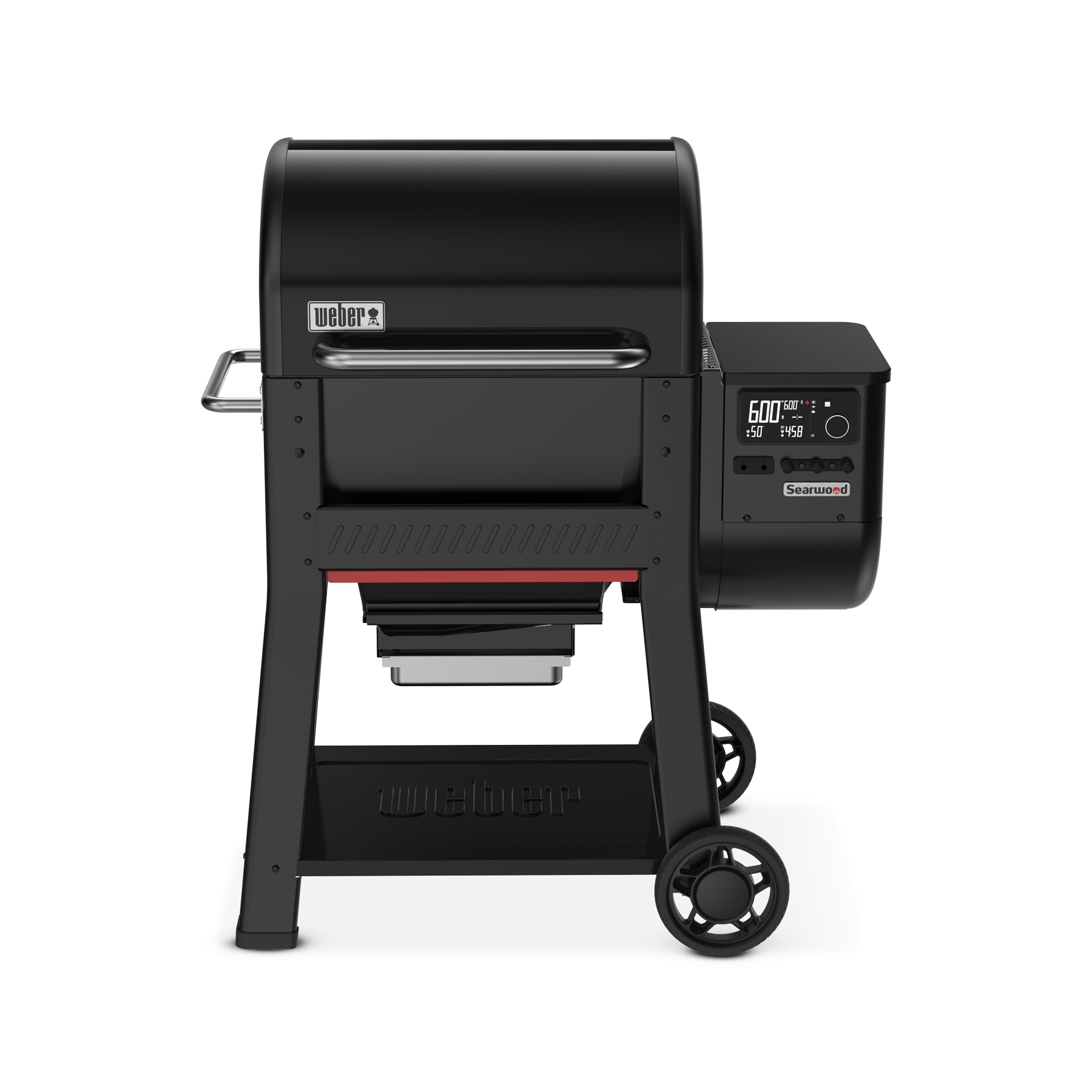
Weber Searwood 600
The Weber Searwood 600 is Weber's 2024 pellet grill that finally fixed the SmokeFire's sins - a 180-600°F range, DirectFlame searing, manual offline mode, and a Rapid React PID controller at a sharper price. owner discussions's pellet crowd calls it the redemption arc.
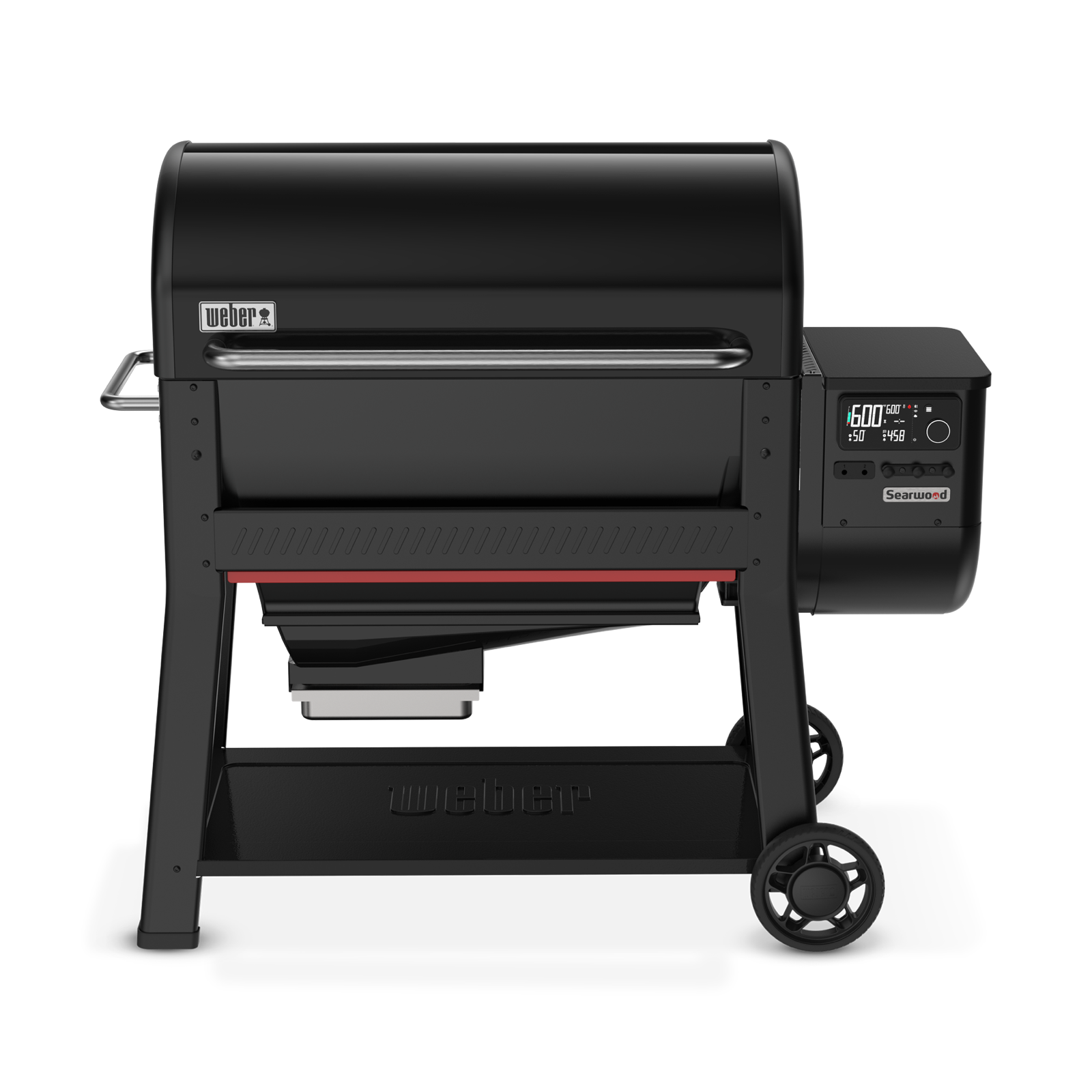
The XL 600 is the 36-inch version of the Searwood 600 already in the catalog: the same DirectFlame sear system, Weber Connect controller and 600°F ceiling, in a chamber that holds 972 sq in across two racks instead of 600. The extra width is the point — the top rack lifts out to leave 11.5 inches of headroom for a turkey or a pair of pork butts. Hopper capacity stays at 20 lb and the burn pot is unchanged, so cook times and pellet consumption scale with load rather than with chamber size.
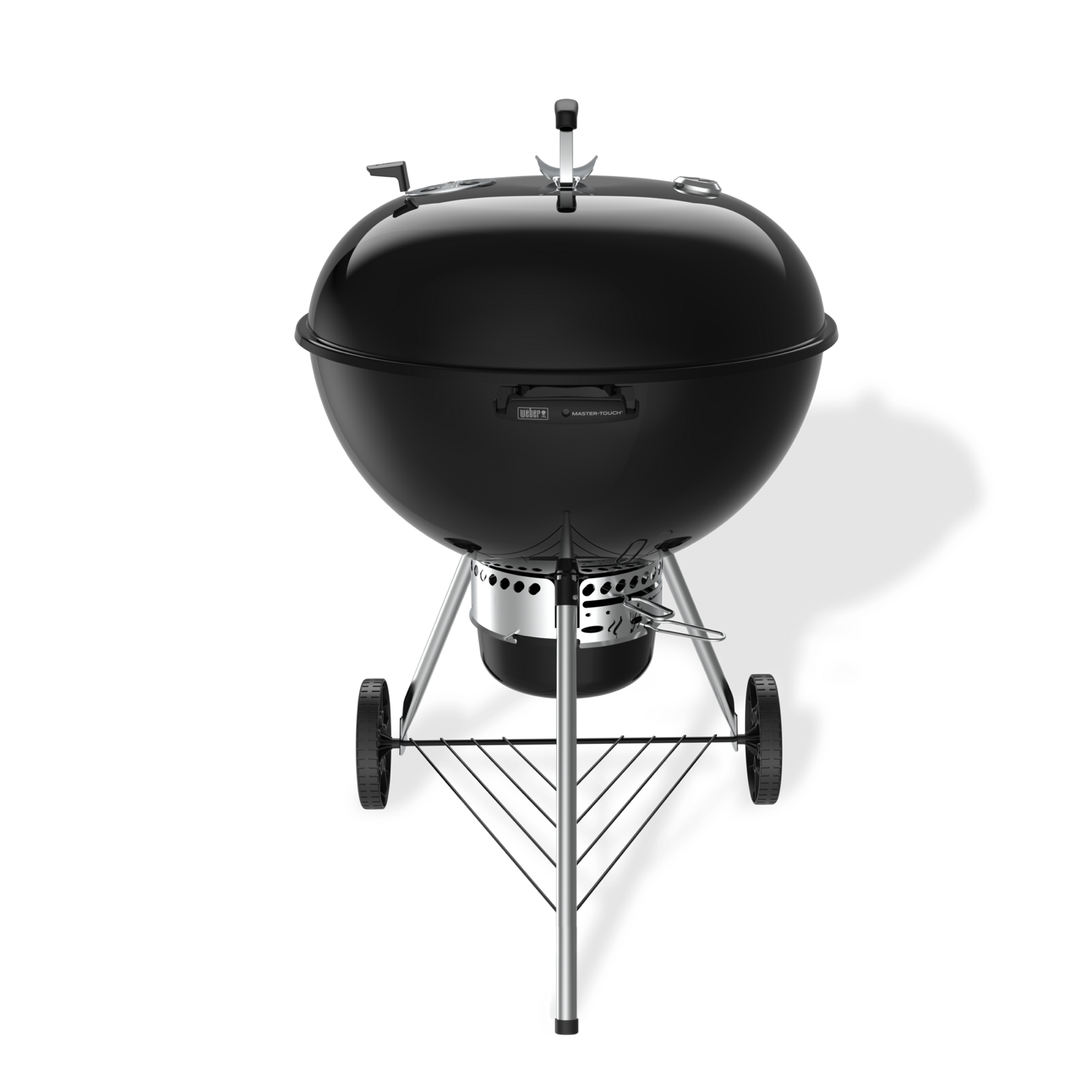
The 26-inch Master-Touch is the largest kettle Weber makes below the Ranch, with a 508 sq in primary grate plus an 80 sq in warming rack. It carries the Master-Touch package — hinged stainless grate, Char-Rails, lid thermometer and Tuck-Away lid holder — on a bowl four inches wider than the 22-inch Master-Touch already in the catalog. Weber no longer lists a plain 26-inch Original Kettle, so this is the only way to buy the 26-inch bowl new.
Weber
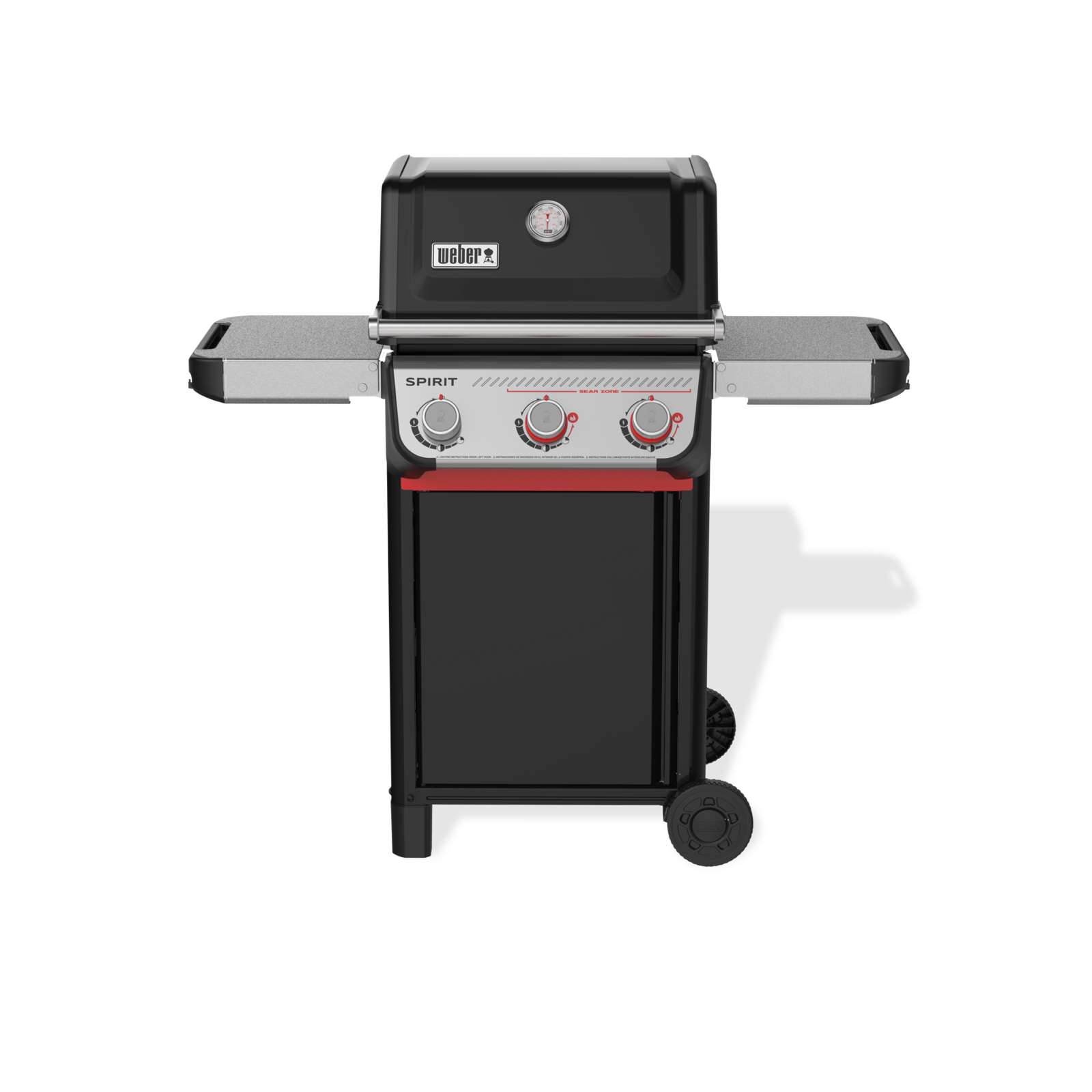
Weber Spirit E-325
The top of Weber's non-smart Spirit line and the model directly above the Spirit E-310 already in this catalog. It adds a Sear Zone — two Boost Burners that concentrate roughly 40% more power over one section of the grate — on the same 360 sq in primary grate as the current E-310. Priced as the LP version in black; natural gas runs $549.
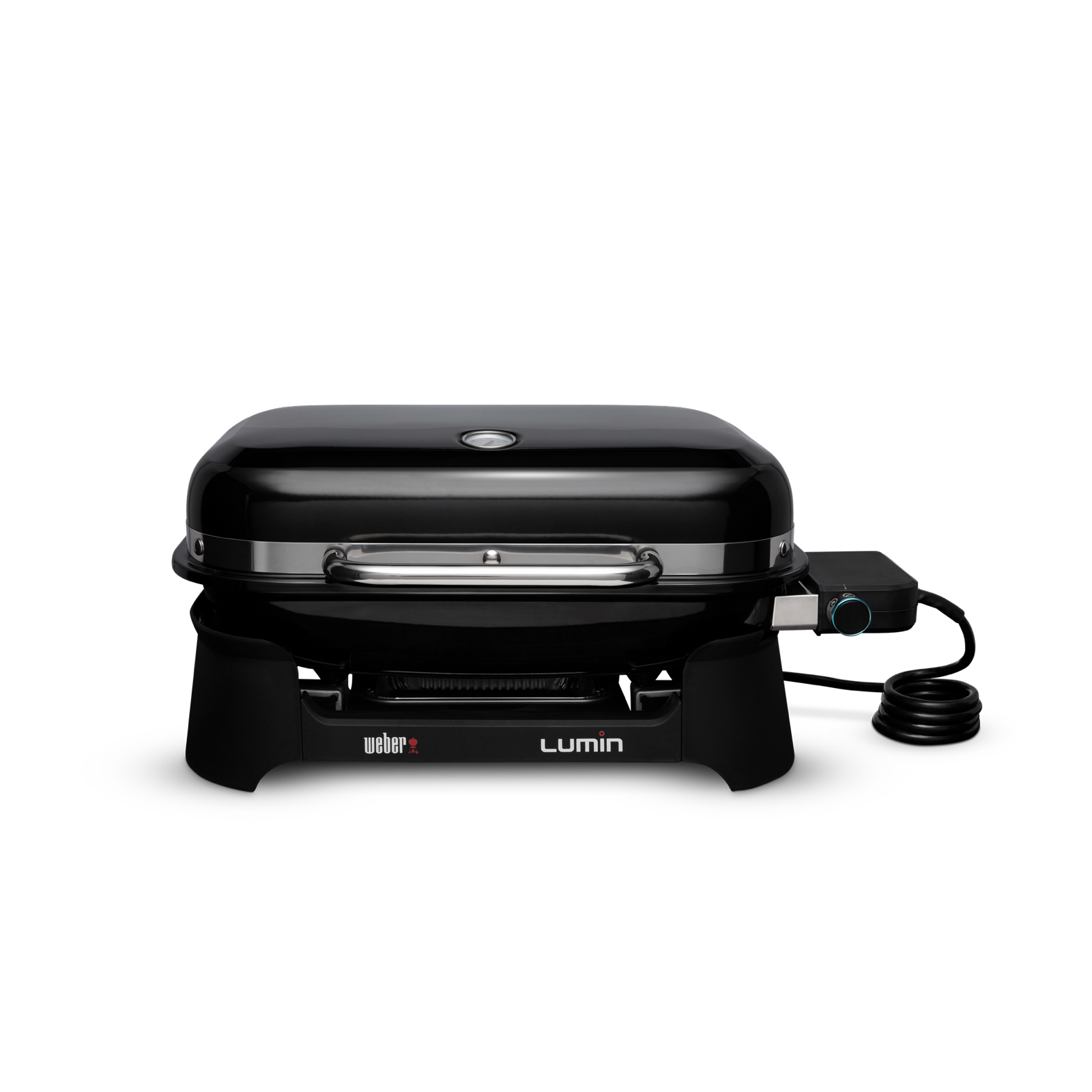
Weber's full-size electric: 1,560 W on a standard 120 V outlet, 242 sq in of porcelain cast-iron grate, and a published max over 600°F — high enough to actually sear, which is what separates it from the low-watt electrics it competes with. A reservoir under the grate lets it add wood smoke, steam or boil, so it does more than one thing. This is Weber's answer for people who cannot use fire where they live.