Weber
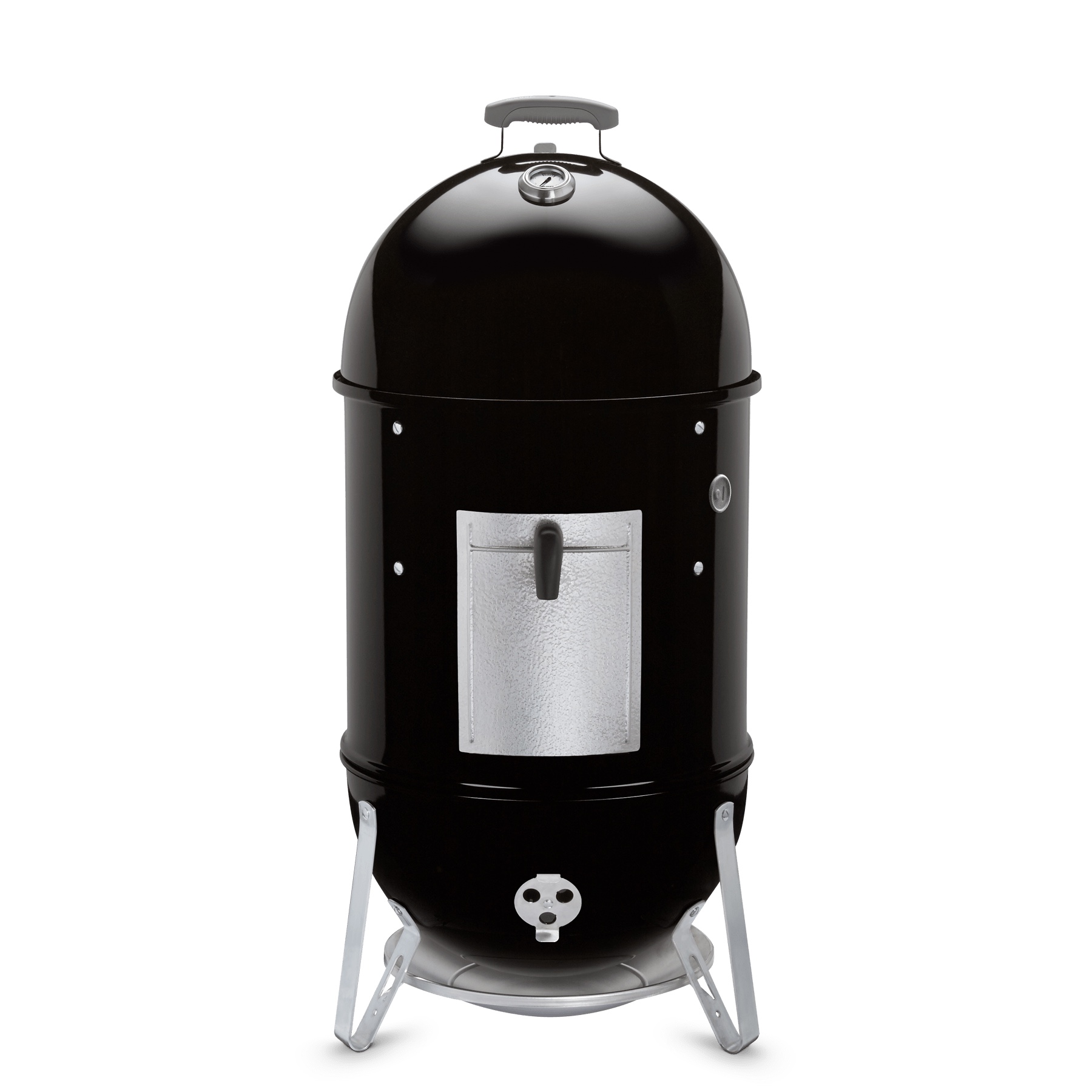
Weber Smokey Mountain 18
The Weber Smokey Mountain is the legendary bullet-shaped charcoal water smoker that has been the 'first real smoker' recommendation for decades. Two stacked grates and a water pan turn out competition-quality BBQ for under $500.
We may earn a commission. Price and availability on Amazon may differ.
Specifications
Pros
- ✓It's the most-recommended charcoal smoker in owner discussions, full stop - decades of competition wins and a massive knowledge base (Virtual Weber Bullet) back it up
- ✓Once dialed in, a full Minion-method charcoal ring holds 225-275°F for 8-12 hours with barely any vent fiddling - real overnight-brisket territory
- ✓The water pan acts as a heat sink and humidifier, making it very forgiving of beginner mistakes and keeping meat moist
- ✓481 sq in over two stacked grates fits two pork butts plus a rack of ribs, plenty for a family and guests
- ✓The porcelain-enameled body is the same buy-it-for-life quality as the Weber kettle, with a 10-year warranty on the major parts
- ✓It produces genuine charcoal-and-wood-chunk flavor that pellet smokers can't fully replicate
- ✓The side door lets you add fuel and wood mid-cook without dismantling anything
- ✓Resale value is famously strong, and the aftermarket (gaskets, hinges, fan controllers like the FireBoard) can modernize it over time
Cons
- ✗It's a smoker, not a grill - it tops out around 350°F and can't sear, so you still need a grill alongside it
- ✗There's no automation - you manage temps with three bottom vents and charcoal quantity, which takes a few cooks to learn
- ✗The stock lid thermometer is famously inaccurate, so nearly everyone adds a digital grate probe
- ✗Accessing the bottom grate or the charcoal ring means lifting the entire hot middle section off - awkward with food on
- ✗The door is thin stamped metal that leaks smoke until you bend it into shape or buy the aftermarket Cajun Bandit door
- ✗Water pan management (filling, emptying greasy water) is a messy extra chore each cook
- ✗In cold or windy weather the thin steel loses heat and burns noticeably more charcoal than insulated cookers
- ✗At $399 for a manual smoker, gravity-fed and pellet units at similar prices offer set-and-forget convenience it can't match
Owner Insightssummarized from owner discussions
The Smokey Mountain is the charcoal bullet that has been the default answer to "what should my first real smoker be" for long enough that the answer has stopped being argued about. It is the most discussed cooker in the whole owner archive, and the striking thing is how many of those discussions come from people who already own something more expensive. One owner who has had six smokers keeps an offset, an electric box and the bullet, and rates its smoke flavour a 7 out of 10 against the offset's 10 while putting it well clear of any pellet grill. The dissent is real but narrow: a minority call it good rather than great, and the people who leave it usually leave for a drum smoker, which they describe as the true overnight set-and-forget cooker.
In practice the cook itself is easy and everything around the cook is fiddly. Load the charcoal ring, light a partial chimney in the middle, top vent wide open and the bottom vents cracked to roughly the width of a pencil, and an 18 will hold 225-275F for eight to twelve hours with the temperature sliding gently down rather than running away. The two things that break that are wind, which can push an unwatched fire past 300F, and leaks, because the stamped access door and the lid seam both let smoke out until you bend the door true or fit a gasket kit. The real complaints are ergonomic: the ash pan, the water pan and the lower grate all sit under a hot middle section that has to come off to reach them, and the water pan comes out full of greasy water after every cook. Owners who quit the bullet almost always cite that cleanup rather than the cooking.
It suits someone who wants charcoal-and-wood-chunk flavour, is willing to learn vents, and does not need the cooker to also grill. Against a kamado it wins on price and, most owners think, on smoke profile, while losing badly on fuel range and on how pleasant it is to clean. Against a pellet grill it wins on flavour and loses on convenience, which is the trade that sends retiring owners toward pellets. Against a Weber kettle with a Slow N Sear it is the better dedicated smoker and the worse single grill, and enough experienced owners recommend the kettle first that it is worth taking seriously if deck space is limited. The honest caveat is that its famous ease applies to holding temperature, not to owning it.
What owners like
- +Once it settles, an 18 will run 8-10 hours on a single Minion-method charcoal load with almost no attention. Owners describe the drift as starting near 250F and sagging to 215-225F by the end, which is a far easier problem to manage than a cooker that spikes.
- +Smoke flavour is the reason long-term owners keep it. One owner who has cycled through six smokers and still runs three rates it a 7/10 against an offset's 10, and says it beat his pellet grill by enough that he sold the pellet grill rather than keep feeding it.
- +The water pan is a large thermal buffer, so it forgives the vent mistakes that wreck a first cook. People who could never settle a kettle down report the bullet holding a line on their first or second try.
- +It is cheap new and cheaper used. Clean 22-inch units change hands around $175, and floor models and holiday clearance 18s turn up near $250, so the entry cost to real charcoal barbecue is low.
- +The build takes abuse. One owner had a century-old white oak fall on his: it bent the handle, the body kept its shape, and he has cooked on it for ten years since.
- +Two stacked grates take two pork butts plus a rack of ribs, which covers family cooking without ever feeling tight. Owners who need genuine crowd volume step to the 22, where a single 8-10 lb charcoal load will carry eight butts.
- +The reference material is unusually deep. Owners point newcomers at the Virtual Weber Bullet and amazingribs for cook-by-cook walkthroughs, so almost every question has already been answered in detail by someone who owns one.
- +Simple enough to keep running forever. Gasket kits, replacement handles and probe ports are cheap and widely used, and nothing on it is electronic enough to fail.
Common complaints
- −Anything other than the cook itself means lifting the hot middle section off. One multi-year owner calls it the exact opposite of set and forget, because moving it, emptying ash or topping up water all require taking it apart.
- −The water pan is a genuine chore. It comes out full of greasy water that has to go somewhere, and owners cite exactly that cleanup as the reason they eventually moved to a kamado. Running it dry or foiling it is common, though owners split on whether the water softens bark.
- −Wind is the main enemy. Owners report the fire climbing past 300F unwatched on a gusty day, and the standard fix is physical: tuck it into a sheltered corner and keep a wireless probe on you.
- −The door and lid leak smoke out of the box. Bending the stamped door back into shape, and then fitting a gasket kit when that fails, is one of the most common first modifications owners discuss.
- −Fuel range is mid-pack for charcoal. Owners are adding charcoal around the twelve-hour mark, where a kamado runs 24-plus hours on a load with fuel to spare.
- −Lump charcoal is noticeably twitchier in it than briquettes. Owners who want the long steady line use briquettes and treat lump as the fuel that needs babysitting.
- −It is a smoker and nothing else. There is no searing and no high-heat grilling, so almost every owner keeps a kettle or a gas grill alongside it, and a vocal group argues that a kettle with a Slow N Sear is the more versatile first purchase for the same money.
Common Questions
Should I get the 18 or the 22?
How long will it hold temperature on one load of charcoal?
Do I actually need water in the water pan?
Why is my temperature so hard to control when everyone says it is easy?
Do I still need a grill if I buy one?
Smokey Mountain, or a Weber kettle with a Slow N Sear?
Compare the Weber Smokey Mountain 18
The Weber Smokey Mountain 18 is one of 3 sizes in this line.
See every size, to scale →Related grills
More from Weber →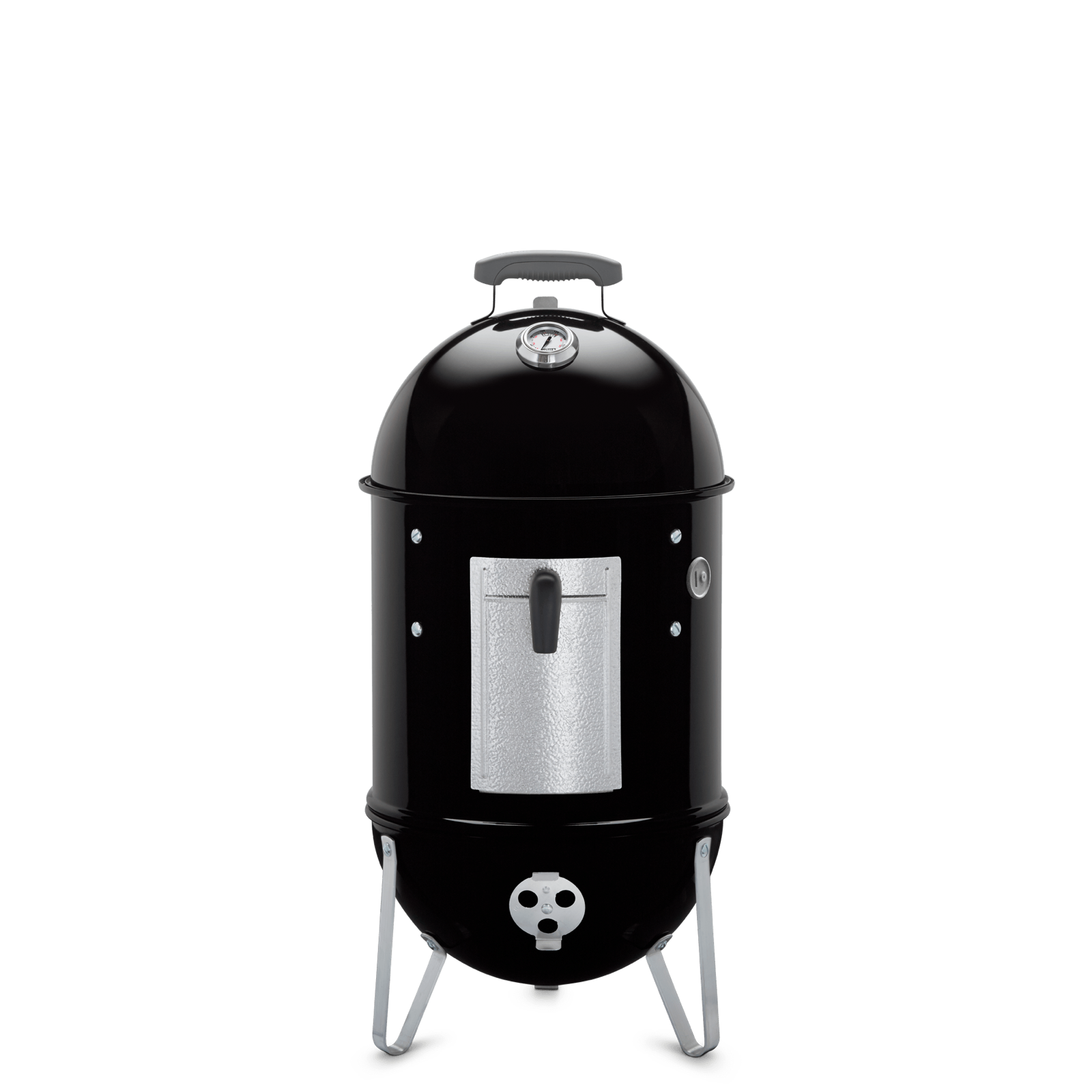
The smallest of Weber's three bullet smokers: a two-rack water smoker on a 14.5-inch charcoal bowl, the same diameter as the Smokey Joe. It runs the identical design as the 18-inch already in the catalog — charcoal ring at the bottom, water pan in the middle, two cooking grates above — scaled down to 286 sq in and 23 lbs, which is the point: it is the only WSM light enough to carry to a campsite or a tailgate. The small fuel ring is also the catch, since it holds enough charcoal for roughly 6 to 8 hours rather than the overnight burns the larger bullets manage.
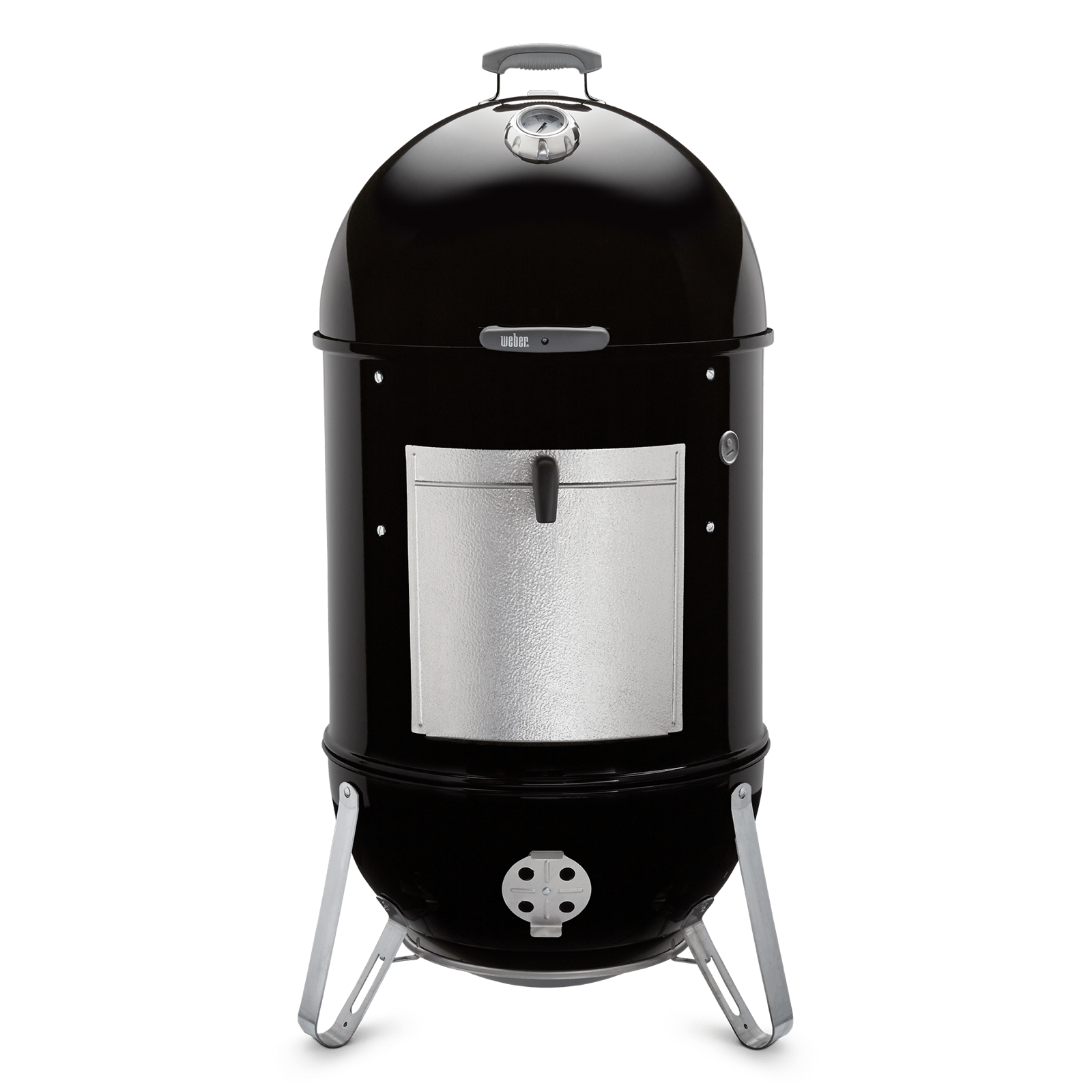
The largest Weber bullet: a 22.5-inch-diameter water smoker with 726 sq in across two racks, versus 481 on the 18-inch. The extra diameter matters more than the number suggests, because a full packer brisket lies flat on the 22 and has to be bent or trimmed on the 18. The bigger charcoal ring also holds enough fuel for a genuine overnight burn, which is the reason competition teams standardised on this size.

Weber
Weber Spirit E-210
The Spirit E-210 is the compact half of Weber's best-selling gas grill family - the current Snap-Jet generation of the 2-burner that thousands of small-patio owners have run for decades. The formula hasn't changed because it works: a porcelain-enameled cookbox that won't rust through (and is warrantied for 10 years against it), cast iron grates, Flavorizer bars that turn drippings into flavor instead of flare-ups, and burners that light on the first click years in. At 48 inches wide it fits patios and townhome decks where even the 3-burner E-310 feels bulky, and the 2025 refresh added per-burner Snap-Jet ignition and Weber Works rails for accessories. The honest limits: 26,600 BTU across two burners means preheating takes a while, a hard steakhouse sear takes patience, and two burners make real indirect cooking cramped - a whole chicken works, a brisket doesn't. Owners also note the current generation's lid can drip rainwater into the grease tray if stored uncovered. Against value rivals like the Char-Broil Performance, you pay roughly double up front and get a grill that routinely outlives three of them; used Spirits famously hold resale value.
Weber
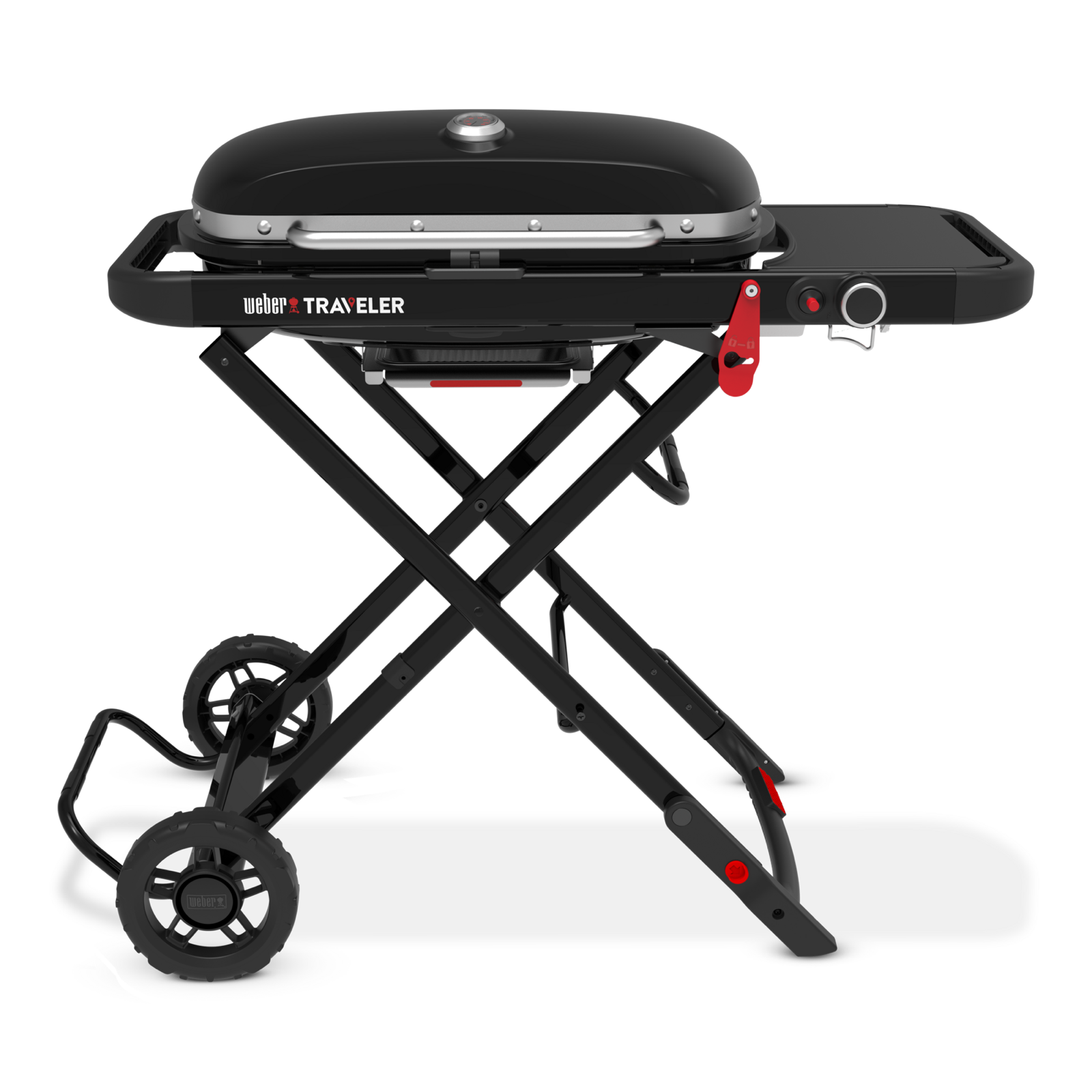
Weber Traveler
A full-size portable: 320 sq in of cast-iron grate on a folding cart that collapses in one motion and rolls on two wheels like a hand truck. That is roughly the grilling area of a Weber Spirit compacted into something that fits a car trunk, which is what separates it from the tabletop Q series. Single 13,000 BTU burner, so it trades heat output for footprint. A Traveler Compact and an RV-specific version are also sold.
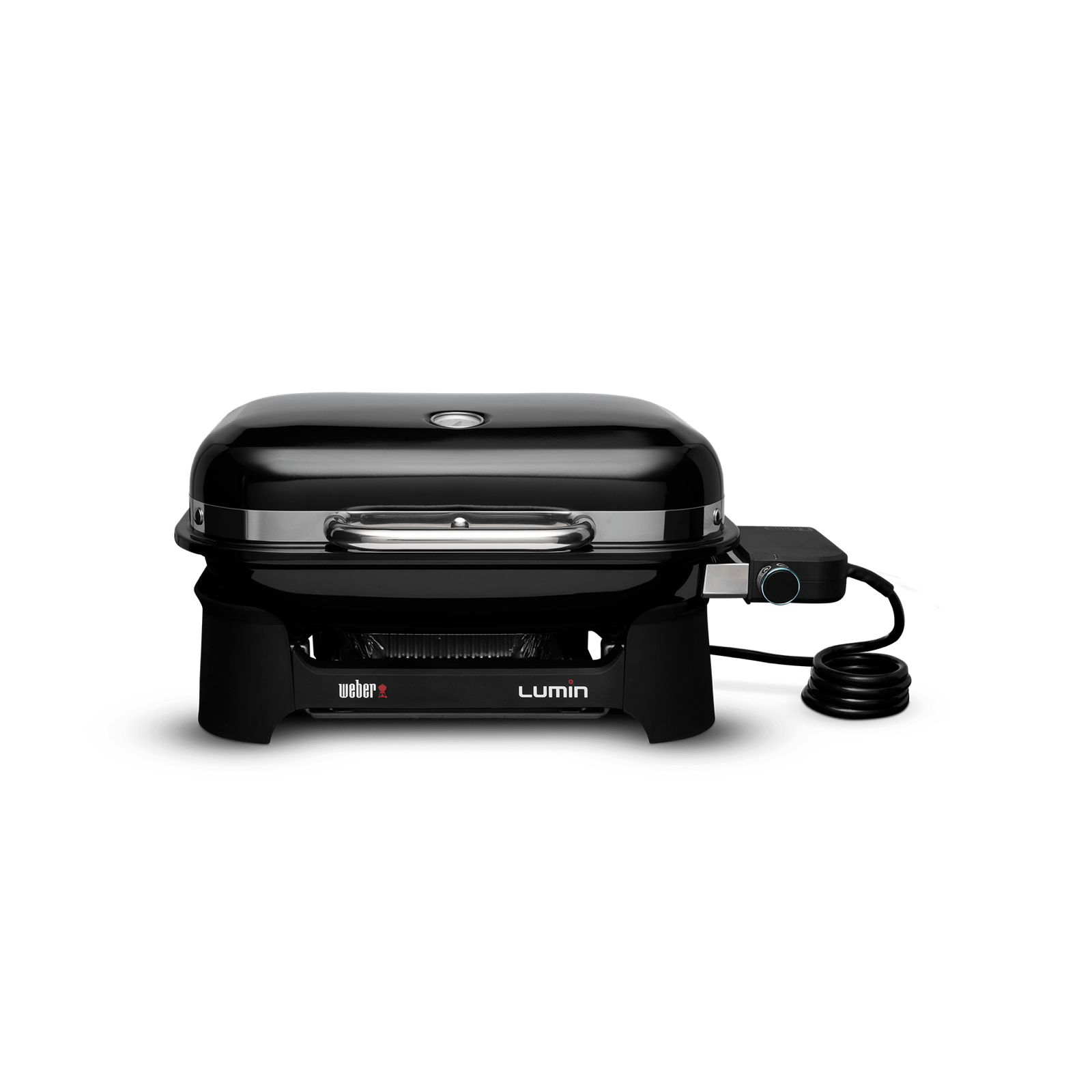
The smaller Lumin: same 1,560 W element and same 600°F+ ceiling, but 180 sq in instead of 242 and 26 lbs instead of 36.5. It keeps the sear, smoke, steam and boil modes and ships with the steam and smoking reservoir. The trade is purely grate area and footprint — nothing is given up on heat.

Weber
Weber Spirit E-310
The Weber Spirit E-310 is a compact 3-burner propane gas grill and one of the best-selling backyard grills in America. The latest redesign adds Snap-Jet ignition and a more modern cart.