
Weber
Weber Slate 30
The Slate 30 is Weber's answer to the mid-size Blackstone, and its whole pitch is lower maintenance: the carbon-steel cooktop is case-hardened and pre-seasoned at the factory, and owners consistently report it shrugs off the surface rust that plagues bare-steel Blackstones left outside. Reviewers and owners also praise how evenly it heats edge to edge — three burners under 540 sq in with far fewer cold corners than the 4-burner Blackstone 36 — and the front-corner grease trap is easier to manage than rear-scrape systems. The build is classic Weber: heavy, rigid cart, good casters, and a 5-year warranty versus Blackstone's 1 year. The honest trade-offs: at $649 it costs roughly twice as much as a Blackstone 28 with similar cooking area, the digital temp display is reserved for the $799 premium trim, rust resistance is explicitly excluded from the cooktop warranty, and you still need to season and oil it like any griddle. If you griddle weekly and hate rust babysitting, the Slate is worth the premium; occasional smash-burger cooks will get 90% of the experience from a Blackstone for half the price.
We may earn a commission. Price and availability on Amazon may differ.
Specifications
Features
Pros
- ✓Rust-resistant hardened cooktop genuinely reduces upkeep vs bare rolled steel
- ✓Very even heat across all 540 sq in - fewer hot/cold zones than Blackstone
- ✓36,000 BTU across 3 burners preheats fast and holds sear temps over 500F
- ✓Front-corner grease trap is simple and mess-free
- ✓Heavy, rigid cart with side tables, wind guards, and locking casters
- ✓5-year warranty is the best in the griddle category
Cons
- ✗Twice the price of a similar-size Blackstone
- ✗Base 1500014 trim lacks the premium model's digital temp display
- ✗Cooktop rust is excluded from the warranty despite the rust-resistant pitch
- ✗Weber Works accessories add up quickly
- ✗Still requires seasoning and oiling like any carbon-steel griddle
Owner Insightssummarized from owner discussions
The Slate 30 is the mid-size Weber griddle, and its pitch is simple: a coated cooktop that does not demand the seasoning and rust vigilance a bare-steel griddle does. Owners buy it for that and report getting it. The phrase that recurs is that it suits someone who wants to cook rather than look after equipment, and the most persuasive report in the archive comes from an owner who had a Blackstone 36, ended up with a Slate 30, gave the Blackstone away and says he has no regrets unless you truly need the bigger surface. Heat is even for most people, the cart is sturdy with real storage and prep room, and the lid does not rattle.
The honest limits are heat and price. An owner who otherwise praises it says flatly that it does not get hot enough for a proper steak sear, which is worth knowing if you imagined it replacing a grill rather than joining one. Heat evenness is not guaranteed either, with one owner finding more than 80 degrees of spread across the plate. The buying process is more annoying than it should be: list prices run $699 to $799 depending on retailer, the version sold direct differs in what is included, the premium trim charges about $150 for a fold-out table and a thermometer owners generally rate as useless, and natural gas availability has been tied to the higher trim. Assembly is another soft spot, with one owner receiving scratches courtesy of a retailer's assembly service and another finding the cabinet doors hanging crooked after building it himself.
Buy it if you griddle often and have decided that rust and seasoning maintenance is the part you want to stop doing, and buy it on a markdown, since this model does discount and a base unit at around $350 is a very different value proposition from $799. Buy a Blackstone instead if you want the most cooking surface per dollar and do not mind the upkeep. Step up to the Slate 36 if you host, since owners who compared the two sizes in person consistently went bigger. And if you already own a compatible gas grill, price the griddle insert first, because that comparison, roughly $150 against several hundred, is one owners genuinely wrestle with.
What owners like
- +The coated cooktop is the whole reason people choose it, and owners describe the benefit in terms of time rather than performance. One puts it as being right for someone who wants to cook rather than maintain equipment, and a long-term owner reports no rust and a surface he calls a non-stick dream after regular use.
- +It converts Blackstone owners. One who had a Blackstone 36, inherited a Slate 30 and gave the Blackstone away reports zero regrets and says that unless you genuinely need the extra space, the Weber is the better-made griddle.
- +Heat is even across the plate for most owners, which is the thing a three-burner griddle has to get right. A new owner several cooks in describes it as pretty consistent edge to edge, and that consistency is what people cite when comparing it against similarly-sized competitors.
- +The cart is where the money shows. Owners call it sturdy, praise the amount of storage and prep space, and note the lid sits solid rather than wobbling, which is a common failing on cheaper griddles.
- +It recovers heat better than griddling on a pellet grill, which is a specific reason at least one owner bought it. Having sold a griddle on the assumption that a pellet grill's griddle accessory would cover it, he found the pellet grill could not recover temperature once cold food hit the surface and bought the Slate instead.
- +It discounts more than Weber's larger griddle does. Owners report a base model at $350 at one electronics chain, a markdown at a home centre that was not even flagged as clearance in the app, and used units around $350, against list prices of $699 to $799.
- +Everyday cooking is where it shines and owners list the same things repeatedly: smash burgers, big breakfasts, stir fries and hibachi. Nobody in these threads reports the griddle failing at the food it was bought for.
Common complaints
- −It does not get hot enough for a proper steak sear, and an owner who otherwise loves it says so plainly, wondering whether a longer preheat would help. If you want a steakhouse crust you will still be finishing in a pan or on a grill, so do not buy this expecting it to replace one.
- −Even heating is not universal. One owner measured a difference of more than 80 degrees across the cooktop and had to ask whether that was normal, so it is worth checking your own plate with an infrared thermometer early rather than assuming the design guarantees it.
- −The trim and fuel line-up is genuinely confusing and the upgrade is hard to justify. The premium version adds a fold-out side table and a digital thermometer for roughly $150, and the thermometer is widely dismissed as useless. Natural gas complicates it further, since it has been offered on the version with the table and thermometer while Weber has told owners it has no plans for a base natural gas model.
- −The surface can look rough early. One owner four uses in, washing and oiling after each cook, found the cooktop already looking poor and could not tell whether it was residue or damage. It is not the common report, but it undercuts the low-maintenance pitch when it happens.
- −The accessories are priced like the griddle. Two separate owners balked at around $99 for the branded cover and went hunting for generic alternatives, and the caster wheels, which one owner describes as feeling cheap and rolling poorly, are the part people plan to replace themselves.
Common Questions
Do I need to season it?
Is the premium trim with the thermometer worth about $150 more?
Can it sear a steak?
Slate 30 or a griddle insert for a gas grill I already own?
What should I pay?
Compare the Weber Slate 30
Related grills
More from Weber →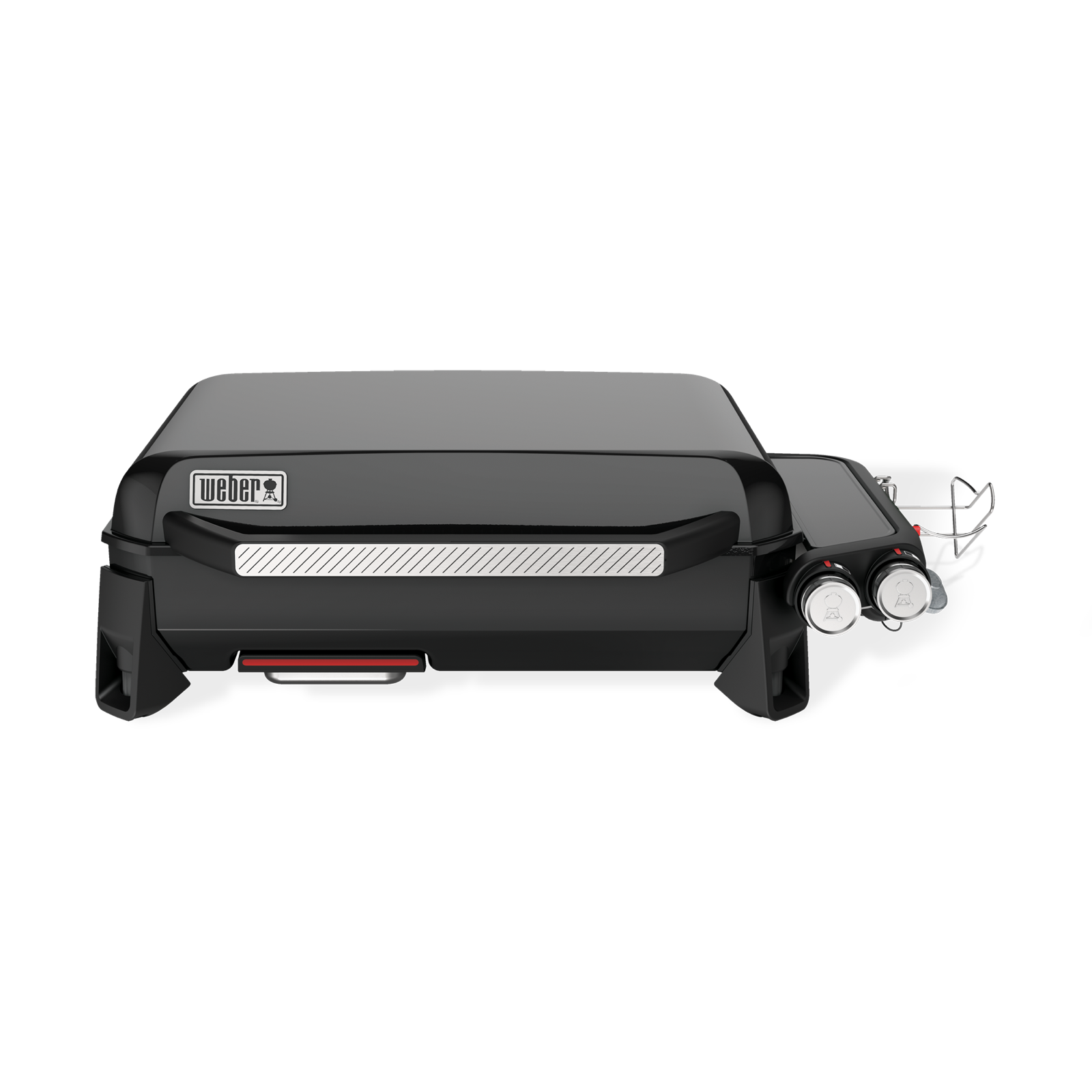
The tabletop Slate: 352 sq in and 16,000 BTU across two burners, with the same case-hardened, pre-seasoned carbon steel plate as the full-size Slate 30 and 36 the catalog already carries. The plate is the reason this line exists — Weber case-hardens it so it arrives ready to cook and resists the flash rust that defines ordinary griddle steel. It folds to under 10 inches tall with a hard cover.
Weber
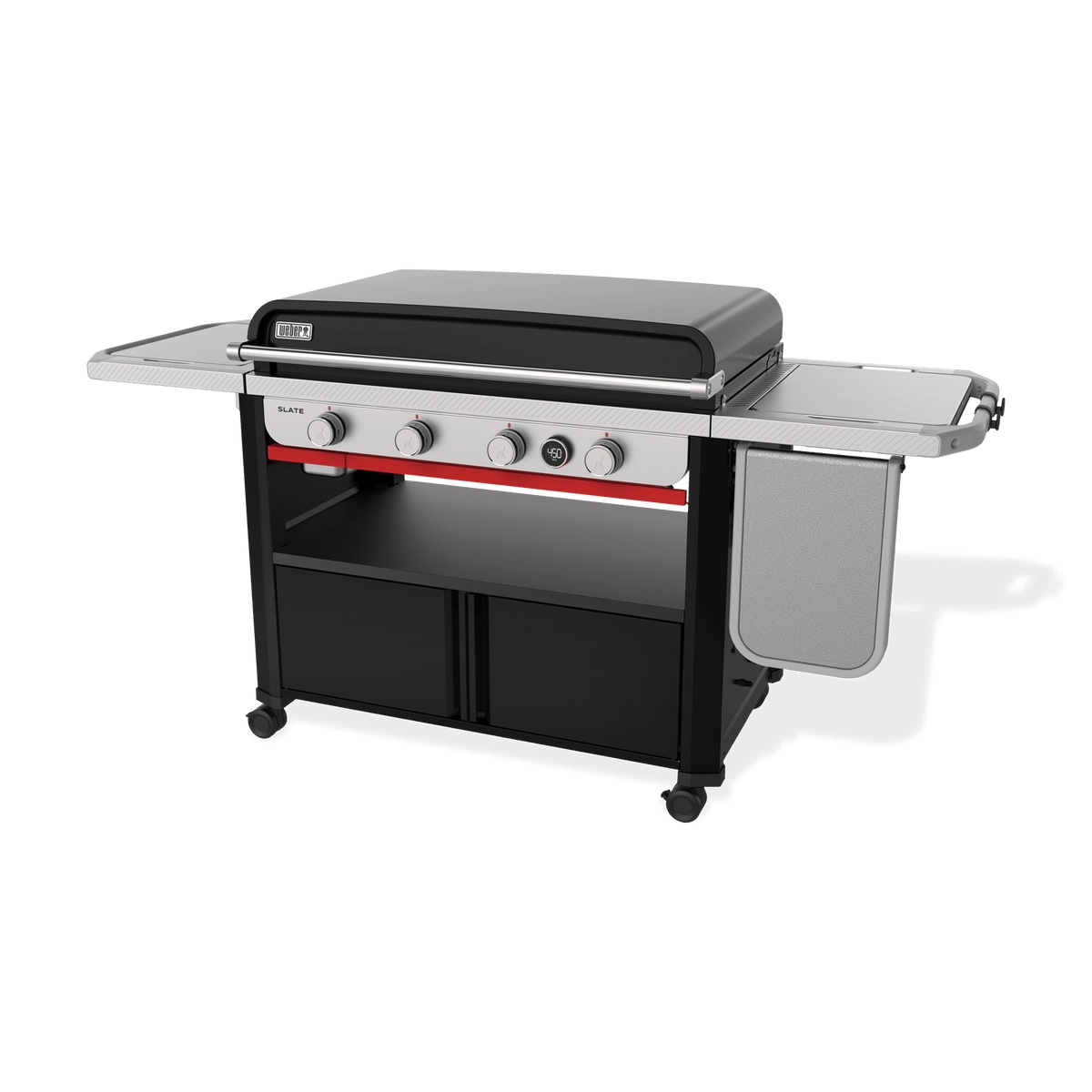
Weber Slate 36
The Weber Slate 36 is Weber's flagship flat-top griddle, pairing a pre-seasoned rust-resistant carbon steel cooktop with four independent burners, a built-in digital cooktop thermometer, and the storage and side tables that made it an instant Blackstone rival.
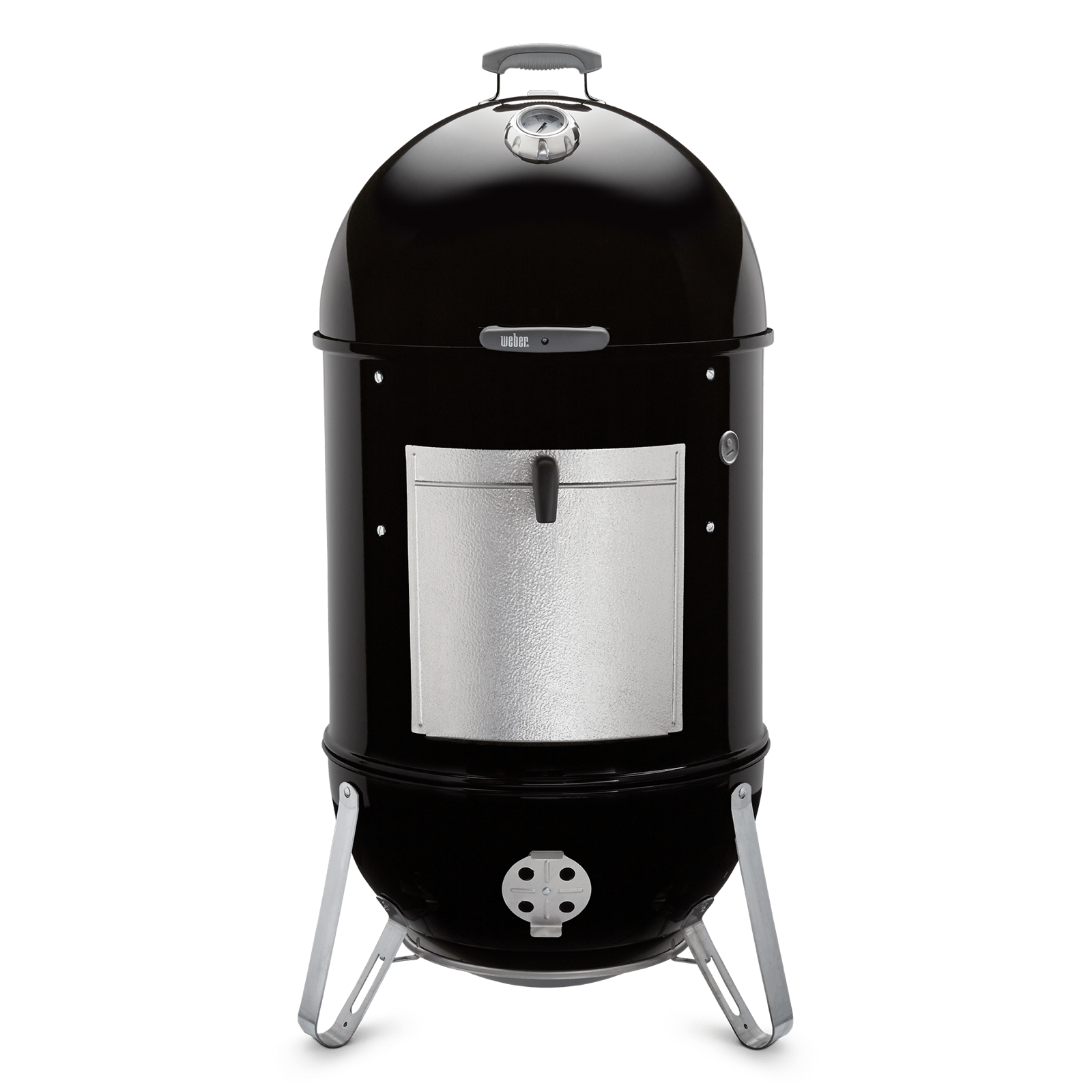
The largest Weber bullet: a 22.5-inch-diameter water smoker with 726 sq in across two racks, versus 481 on the 18-inch. The extra diameter matters more than the number suggests, because a full packer brisket lies flat on the 22 and has to be bent or trimmed on the 18. The bigger charcoal ring also holds enough fuel for a genuine overnight burn, which is the reason competition teams standardised on this size.

Weber
Weber SmokeFire EX6
The Weber SmokeFire EX6 is Weber's WiFi pellet grill, notable for reaching 600°F to sear and using a steep-walled firebox for direct grilling. The 2nd-gen revision fixed many early reliability issues. Note: this model is no longer sold new as of 2026. Its current equivalent is the Weber Searwood XL 600.

Weber
Weber Smoque
The Smoque is Weber's 2025 answer to the entry-level Traeger, and it deliberately does less than the Searwood to cost $300 less: no direct-flame searing, no 600F mode, just a smoker-first pellet grill that nails the fundamentals. Reviewers and early owners consistently rate its smoke flavor ahead of equivalently priced Traegers - the SmokeBoost setting and SmoqueVent circulation produce visibly better smoke rings and bark - and the Rapid React PID recovers temp fast after lid opens. The porcelain-enameled barrel (the same coating Weber kettles wear for decades) and 5-year warranty make the hardware feel more durable than the sheet-metal norm at this price, and the enclosed grease-plus-ash drawer is genuinely tidy. Trade-offs are real: 500F max with no sear zone means steaks finish better on a separate grill, 594 sq in is one-brisket territory, the single-position upper rack limits tall cooks, and Weber Connect - though improved - still draws occasional app-pairing complaints carried over from the SmokeFire era. Against the $799 Traeger Woodridge you're choosing more smoke flavor and simpler controls over Traeger's bigger 860 sq in and accessory ecosystem.
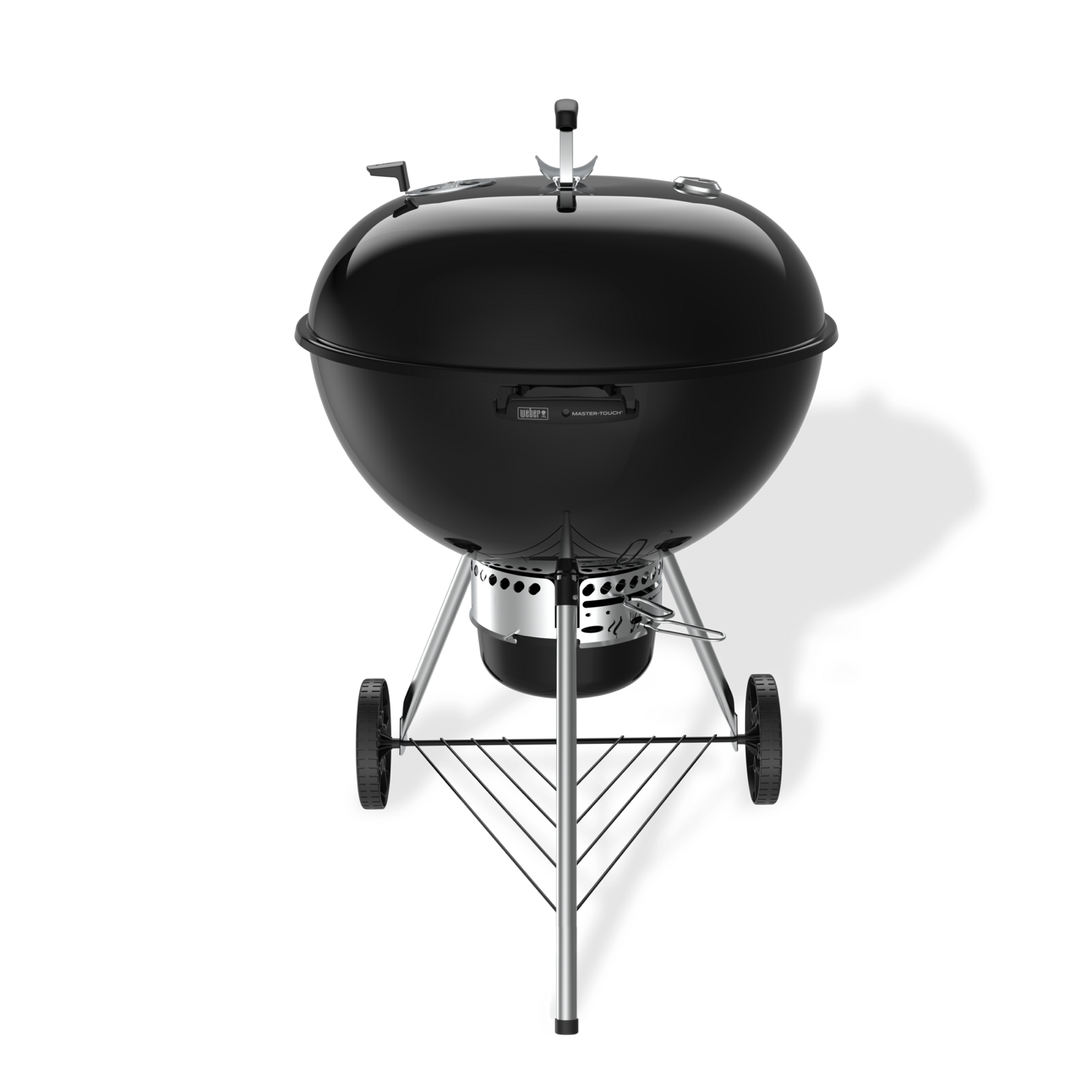
The 26-inch Master-Touch is the largest kettle Weber makes below the Ranch, with a 508 sq in primary grate plus an 80 sq in warming rack. It carries the Master-Touch package — hinged stainless grate, Char-Rails, lid thermometer and Tuck-Away lid holder — on a bowl four inches wider than the 22-inch Master-Touch already in the catalog. Weber no longer lists a plain 26-inch Original Kettle, so this is the only way to buy the 26-inch bowl new.