Weber
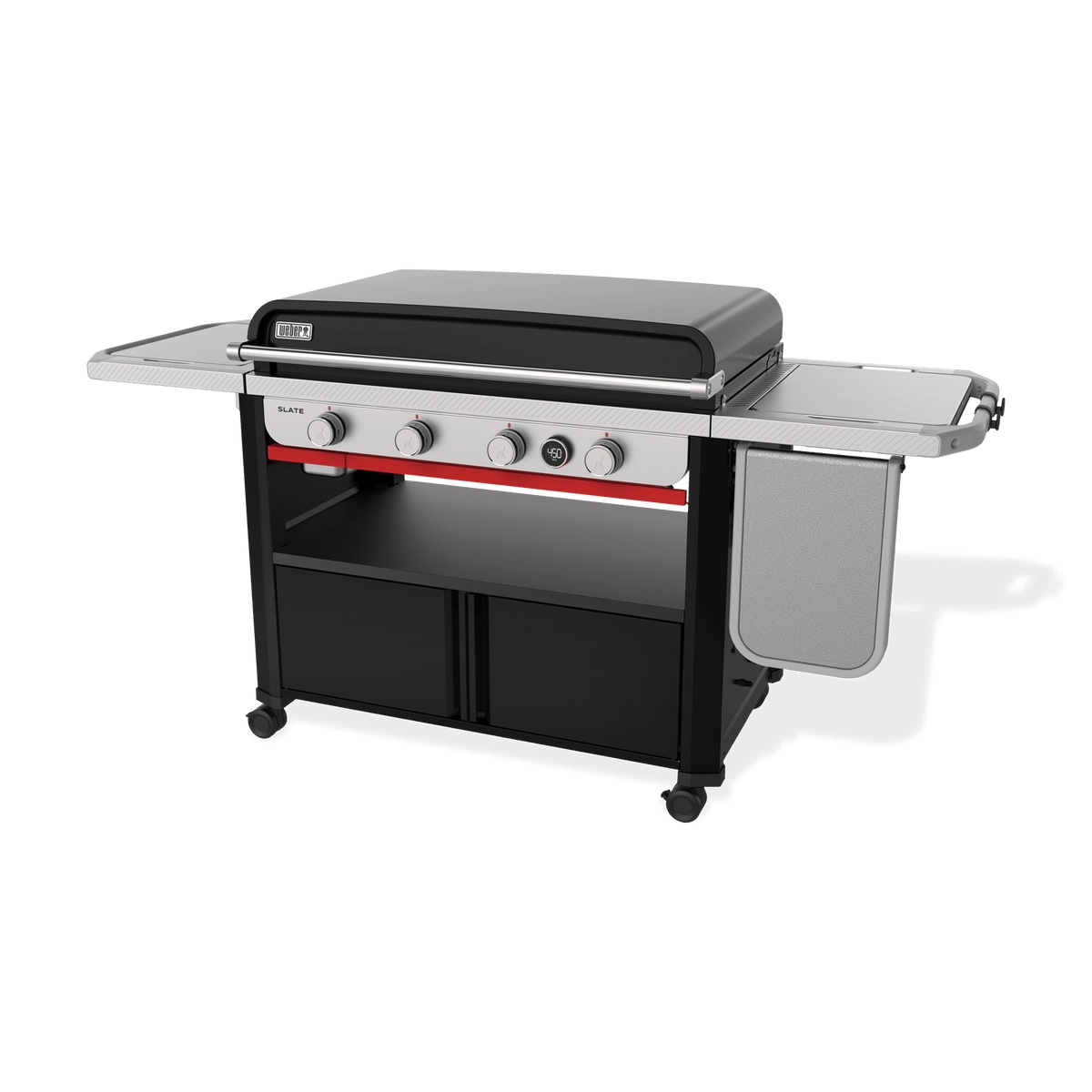
Weber Slate 36
The Weber Slate 36 is Weber's flagship flat-top griddle, pairing a pre-seasoned rust-resistant carbon steel cooktop with four independent burners, a built-in digital cooktop thermometer, and the storage and side tables that made it an instant Blackstone rival.
We may earn a commission. Price and availability on Amazon may differ.
Specifications
Features
Pros
- ✓The case-hardened, pre-seasoned carbon steel cooktop genuinely resists the rust that plagues Blackstone owners who leave their griddle outside
- ✓Four independently controlled burners give real multi-zone cooking - pancakes on low while smash burgers sear on high
- ✓The built-in digital cooktop thermometer takes the guesswork out of surface temp, something no Blackstone offers stock
- ✓48,000 BTUs heat the 756 sq in surface past 500°F quickly and evenly, with fewer cold corners than budget griddles
- ✓Weber's fit and finish is a clear step up - solid hinges, smooth-rolling casters, and an enclosed cart that keeps propane and tools out of the weather
- ✓The grease management system funnels into an easy-access catch pan instead of the messy rear-drip setups on cheaper flat tops
- ✓Flip-up side table and tool hooks add workspace without widening the footprint much
- ✓Backed by Weber's warranty and dealer network, so parts and service are far easier to get than for import-brand griddles
Cons
- ✗At $1,049 it costs roughly double a comparable 36-inch Blackstone, which is a hard sell for occasional griddlers
- ✗The digital thermometer reads one spot on the cooktop and can disagree with an IR gun by 30-50°F across zones
- ✗The cooktop is rust-resistant, not rust-proof - neglect the seasoning or leave it uncovered and it will still spot
- ✗No lid-down convection cooking - like all flat tops it's a one-trick pony compared to a grill/griddle combo
- ✗Assembly involves many cart panels and screws, commonly taking 1.5-2 hours
- ✗It's heavy (198 lbs) and wide with the side table up, so it needs real patio space
- ✗Propane-only out of the box - natural gas requires buying a different SKU, not a conversion kit
- ✗No WiFi or app connectivity even at this premium price, while Weber's own gas grills get Weber Connect
Owner Insightssummarized from owner discussions
The Slate 36 is Weber's full-size flat top, and the owner reaction to it is lopsided in a way worth understanding before you buy. Most of what gets posted is enthusiastic, and it comes from people with real points of comparison: kettle and Smokey Mountain owners, long-time gas grillers, someone who had already bought a Blackstone 36 because the Slate was not in stock yet and switched anyway. They describe it as well built, easy enough to assemble, and versatile enough that it gets used several nights a week rather than at weekends. Owners who compared the 30 and the 36 in person and went bigger report no regret, and at least one already finds himself short of space on the 36.
The minority reports are the ones that should shape expectations, because they go straight at the feature the griddle is sold on. One owner cooked on it once, oiled it before and after, and found the plate rusted over within a week, then spent hours trying to grind it back. Another posted a griddle at 48 hours old with a warped top, rust along the outer edges and a missing lid stop, and a third found gouges in a new cooking surface. These are not the common outcome, but rust resistance is the reason this costs what it does, so a failure of it is a failure of the whole proposition. The smaller frustrations are consistent: the built-in thermometer reads low enough that owners keep an infrared gun anyway, there is no factory natural gas version, and the accessories do not always fit the griddle they were sold for.
Buy it if you want a griddle that needs less babysitting than bare rolled steel and you value Weber's service network, and buy it knowing you should inspect the cooktop carefully in the first week while a return is still simple. Cross-shop it against the Blackstone 36, which owners do constantly and which costs a fraction as much, and be honest about whether you will actually keep up with oiling a bare-steel top. Go down to the Slate 30 only for space reasons rather than money, since the owners who compared both in person consistently picked the larger one.
What owners like
- +The first-month reports are unusually strong, and they come from people with other grills to compare against. One owner arriving from a kettle and a Smokey Mountain called the smash burgers the best he had made at home and had cooked hibachi, a meal-prep run of breakfast burritos, and a full bacon-and-pancake breakfast inside the first week. Another with a long history of grills called it his favourite of them.
- +Owners who compared the 30 and the 36 side by side in a store and chose the 36 report it was the right call, with one noting he already runs out of room at times. Nobody in these threads reports buying the 36 and wishing it were smaller.
- +Build quality is what buyers say they paid for and it mostly delivers. Assembly gets described as straightforward with one lift that is easier with two people, and a Slate owner shopping for a pellet smoker in Florida cited his griddle as having held up well in that climate.
- +It works as the finishing half of a two-cooker setup rather than as a replacement grill. Owners pair it with a pellet smoker and use the griddle to crisp and sear what came off the smoker, which is where the wide, evenly-heated surface earns its keep.
- +The pre-seasoned surface means you can cook sooner than on a bare-steel griddle. Owners still put two or three coats of canola or a similar oil down first out of habit, but nobody reports the long break-in period that dominates bare-steel griddle threads.
Common complaints
- −The rust-resistant cooktop is not rust-proof, and the failures are severe when they happen. One owner who cooked once, oiled the surface before and after, and closed the lid found the plate rusted over a week later, then spent hours on it with a wire wheel, vinegar and salt before considering 60-grit abrasive. His own point is that he could not find a single negative report before buying.
- −Early-life defects show up in a product at this price more than they should. One owner posted a 48-hour-old griddle with a warped top, rust along the outer sides and a missing rubber lid stop, and another found gouges in the cooking surface of a brand-new unit.
- −The built-in thermometer is not trusted by the people who own it. At least one owner keeps an infrared thermometer to hand because the built-in reading ran well below what he measured on the surface, which matters on a griddle where you cook to plate temperature.
- −It is propane only. There is no factory natural gas version of the 36, and owners who want it are looking at third-party conversion kits rather than a Weber part, which is a warranty question as well as a plumbing one.
- −The accessory ecosystem does not fit together as cleanly as the marketing implies. One owner bought the caddy tray only to find his side tables have no hole to mount it in, and could not find the correct side table sold anywhere. Grease trap liners carry brand-name pricing, and owners go looking for generic equivalents.
- −It effectively never discounts in a predictable way, and owners cannot establish a price history for it. Two separate shoppers asked whether it goes on sale and whether to hold out for Black Friday without getting a confident answer, which makes timing a purchase guesswork.
Common Questions
Does the rust-resistant cooktop actually resist rust?
Slate 36 or Slate 30?
Can I get it in natural gas?
Should I trust the built-in thermometer?
Does it ever go on sale?
Compare the Weber Slate 36
Related grills
More from Weber →
Weber
Weber Slate 30
The Slate 30 is Weber's answer to the mid-size Blackstone, and its whole pitch is lower maintenance: the carbon-steel cooktop is case-hardened and pre-seasoned at the factory, and owners consistently report it shrugs off the surface rust that plagues bare-steel Blackstones left outside. Reviewers and owners also praise how evenly it heats edge to edge — three burners under 540 sq in with far fewer cold corners than the 4-burner Blackstone 36 — and the front-corner grease trap is easier to manage than rear-scrape systems. The build is classic Weber: heavy, rigid cart, good casters, and a 5-year warranty versus Blackstone's 1 year. The honest trade-offs: at $649 it costs roughly twice as much as a Blackstone 28 with similar cooking area, the digital temp display is reserved for the $799 premium trim, rust resistance is explicitly excluded from the cooktop warranty, and you still need to season and oil it like any griddle. If you griddle weekly and hate rust babysitting, the Slate is worth the premium; occasional smash-burger cooks will get 90% of the experience from a Blackstone for half the price.
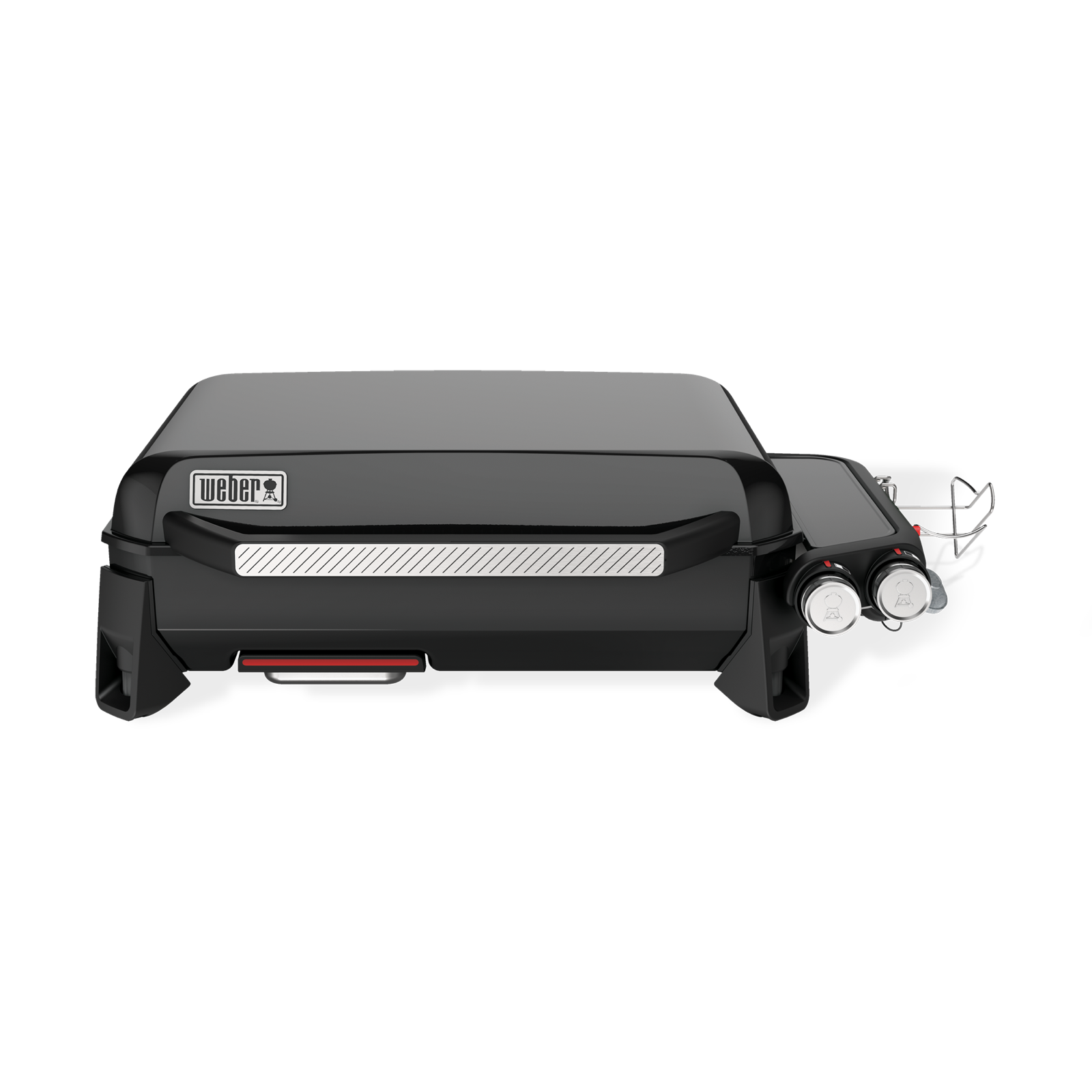
The tabletop Slate: 352 sq in and 16,000 BTU across two burners, with the same case-hardened, pre-seasoned carbon steel plate as the full-size Slate 30 and 36 the catalog already carries. The plate is the reason this line exists — Weber case-hardens it so it arrives ready to cook and resists the flash rust that defines ordinary griddle steel. It folds to under 10 inches tall with a hard cover.

Weber
Weber Genesis E-325s
The Weber Genesis E-325s is a 3-burner premium propane gas grill with a dedicated sear zone and side burner, part of Weber's redesigned Genesis line. Weber is the benchmark brand for backyard gas grills. Note: this model is no longer sold new as of 2026. Its current equivalent is the Weber Genesis E-325. (2024 refresh dropped the 's' (stainless flavorizer bars became porcelain); weber.com E-325s NG listed $849 'Currently Unavailable', new E-325 $899)
Weber
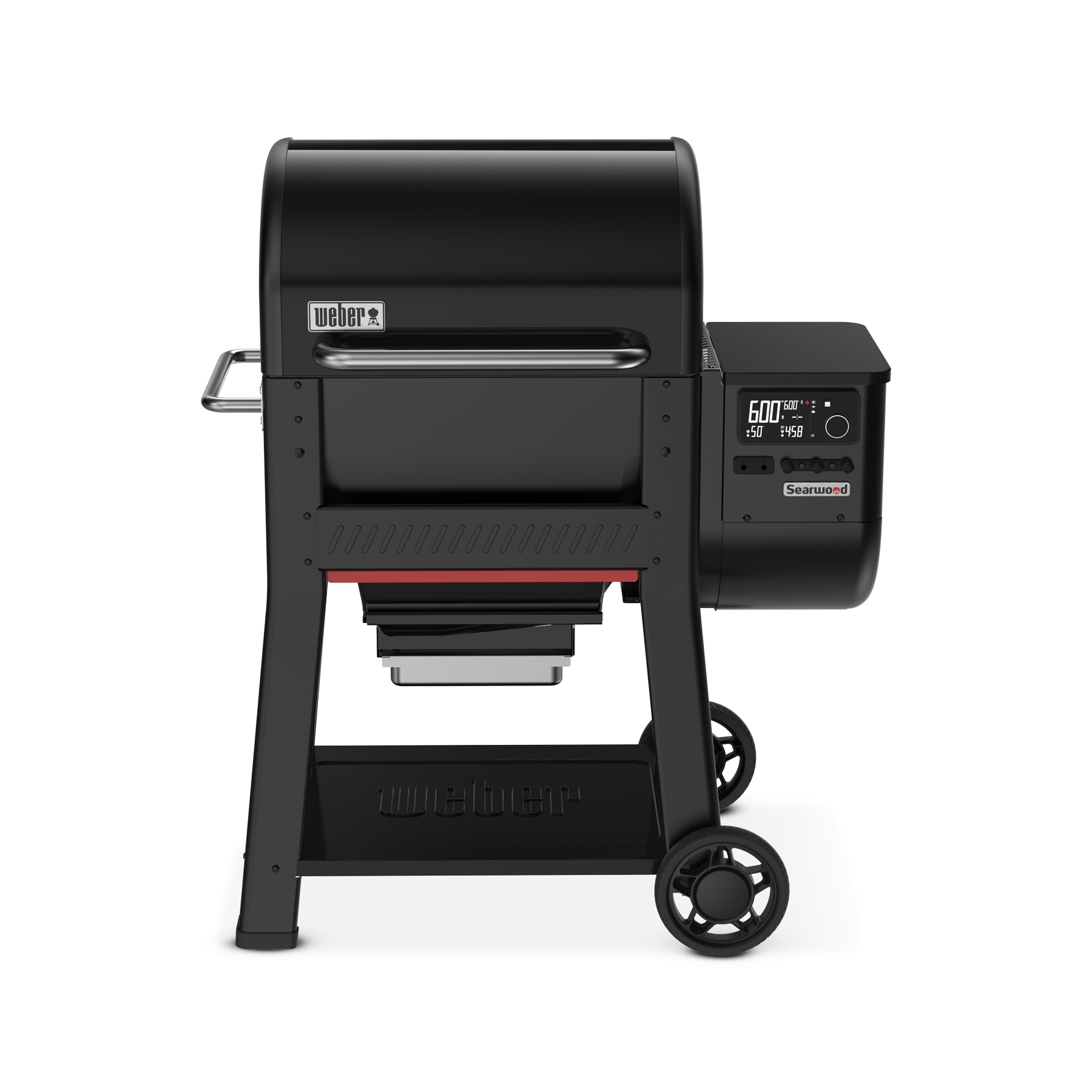
Weber Searwood 600
The Weber Searwood 600 is Weber's 2024 pellet grill that finally fixed the SmokeFire's sins - a 180-600°F range, DirectFlame searing, manual offline mode, and a Rapid React PID controller at a sharper price. owner discussions's pellet crowd calls it the redemption arc.
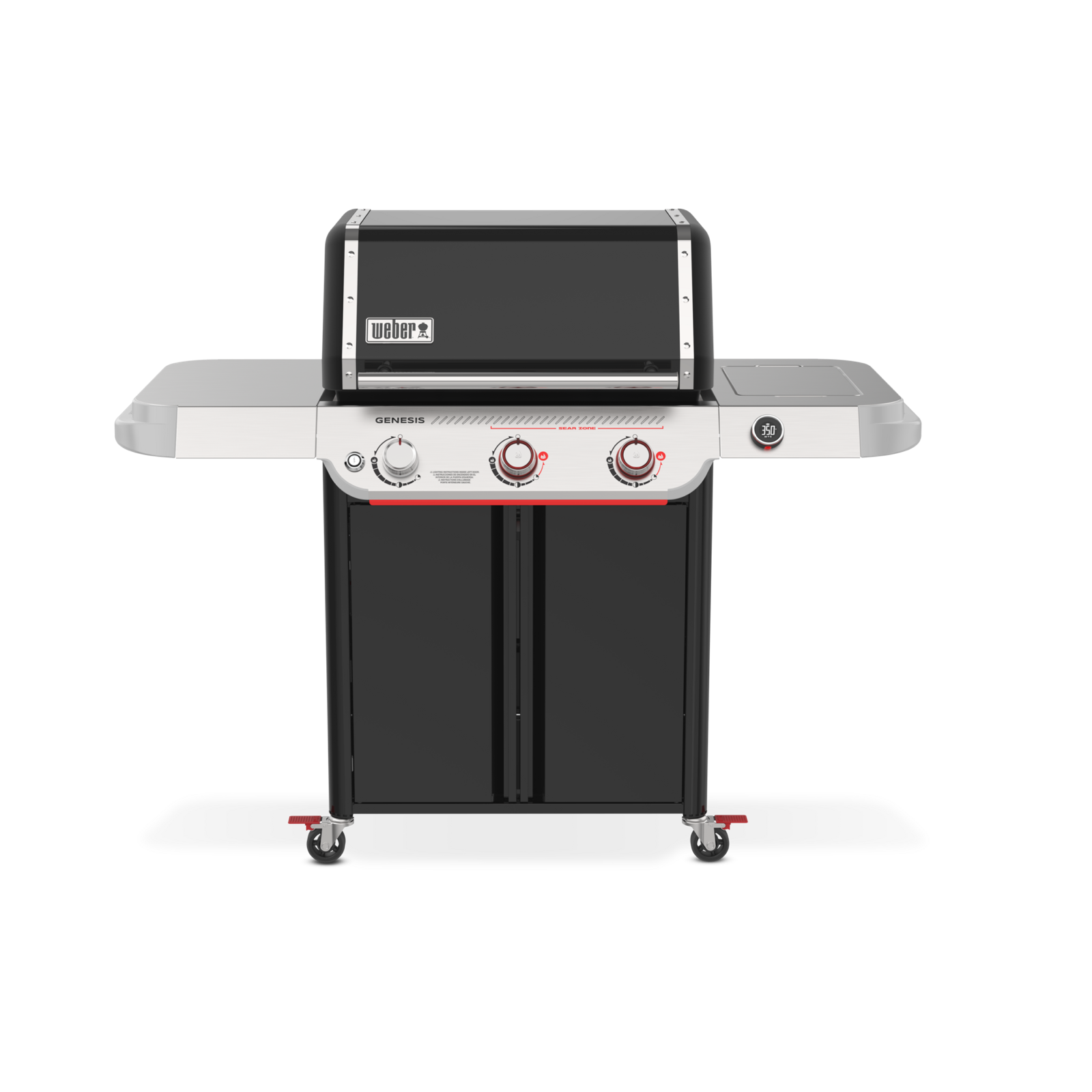
The smart 3-burner Genesis in Weber's current "W" generation, which replaced the 2022 E-325s generation the existing catalog entry refers to. It carries the same 513 sq in primary grate as the old E-325s but adds a built-in WiFi thermometer with one wired food probe reporting to the Weber Connect app, and a Sear Zone that Weber rates to 750°F. LP as priced; natural gas is $949.
Weber
Weber Genesis E-415
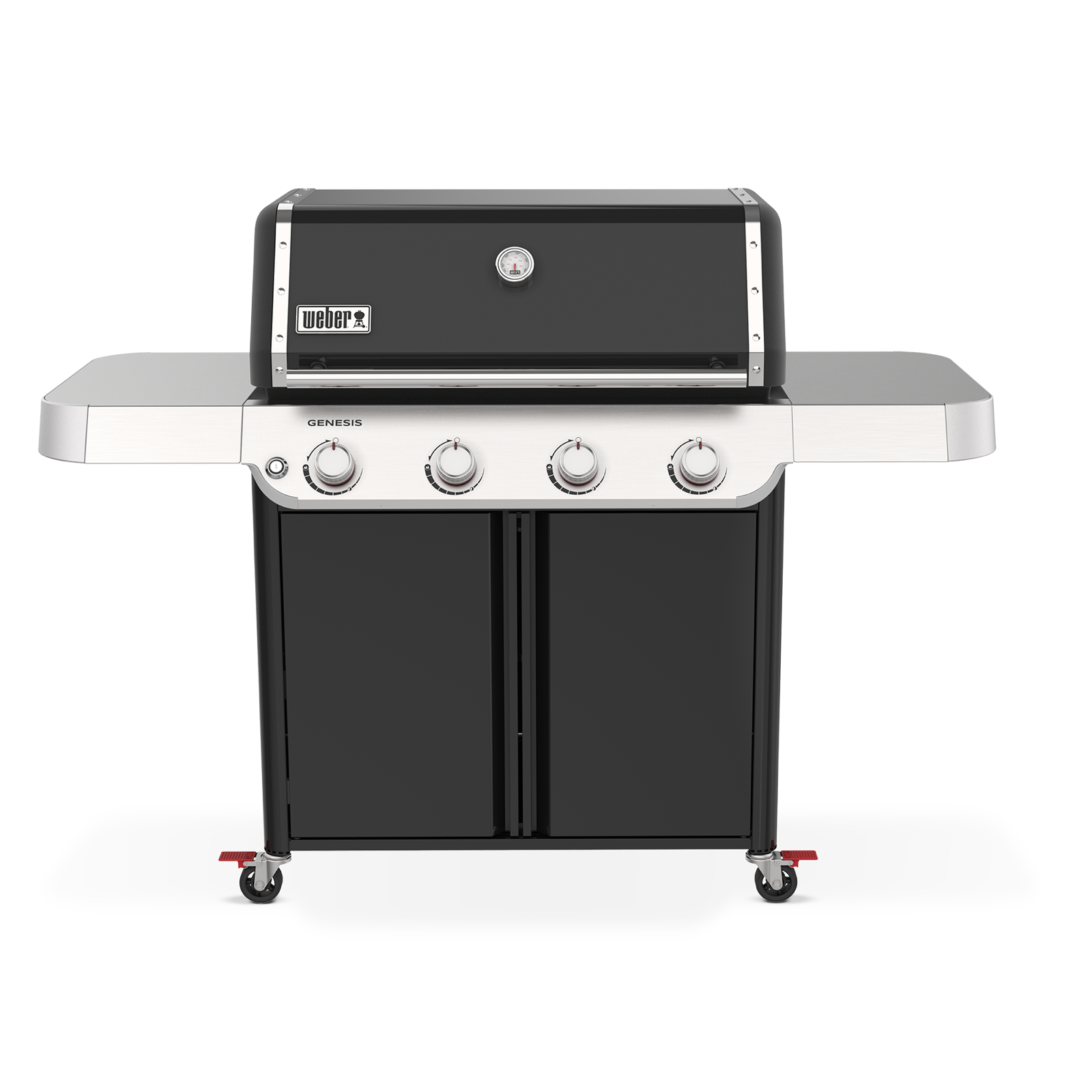
The four-burner Genesis with an enclosed cabinet, and the volume seller of the Genesis line. 646 sq in of primary grate — 820 sq in with the warming rack — makes it roughly a third larger than the 3-burner Genesis models, at the cost of the Sear Zone and smart thermometer those carry. Porcelain-enameled steel lid and painted steel doors; the S-415 is the same grill in stainless for $100 more.