Weber Searwood 600 vs Weber Slate 36
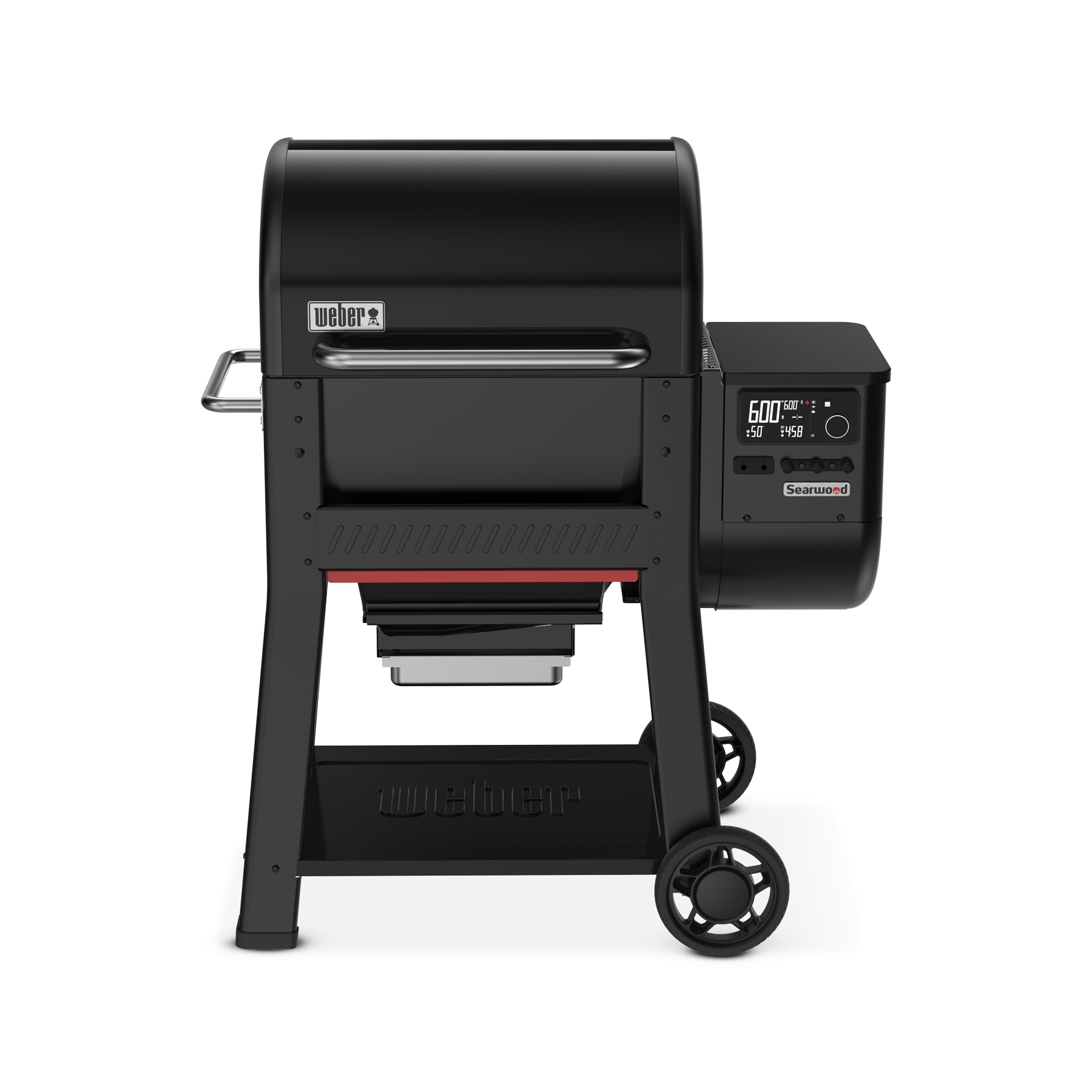
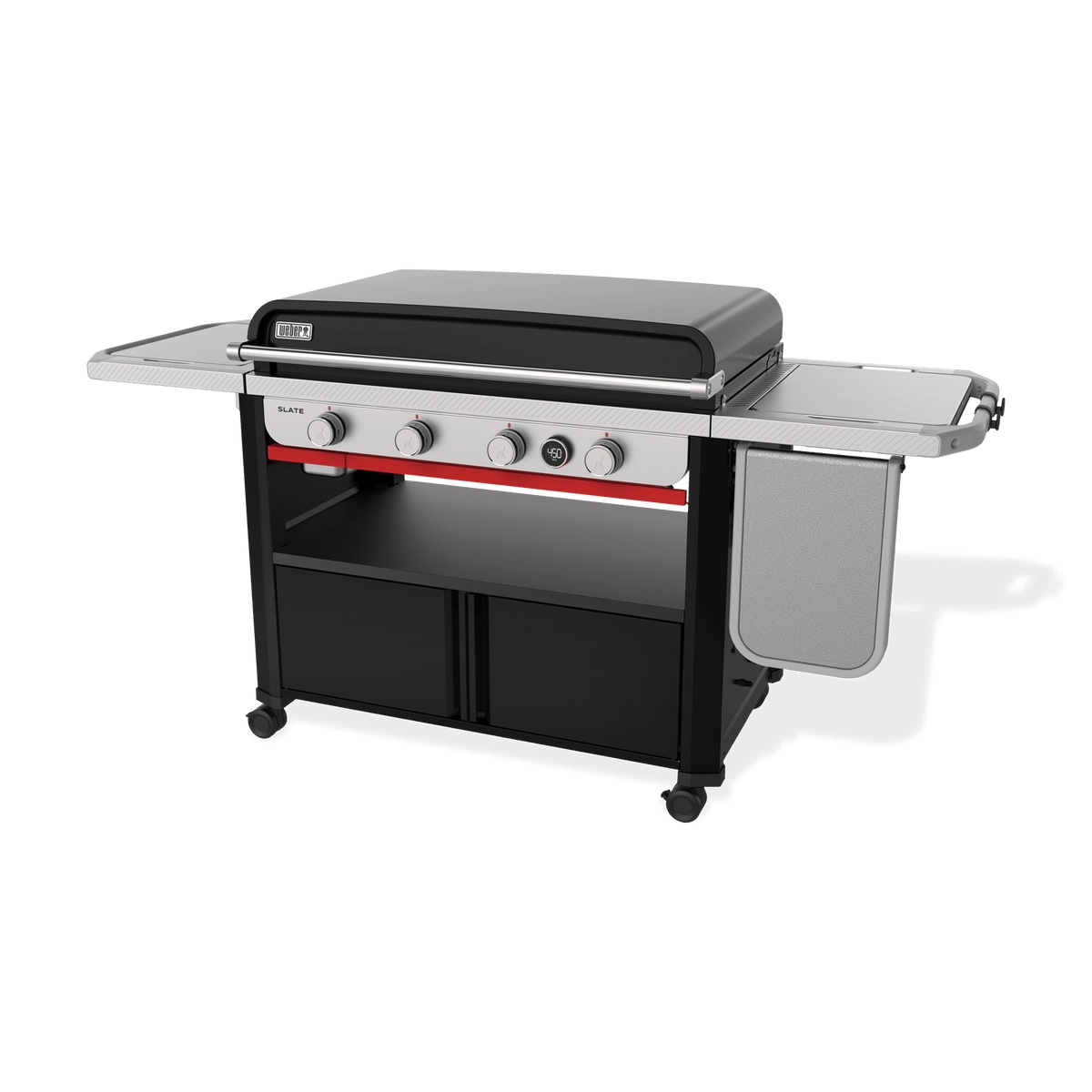
Quick take: The Weber Searwood 600 costs $150 less; the Weber Slate 36 offers more cooking space (756 vs 648 sq in); the Weber Searwood 600 reaches a higher max temp (600 vs 550°F).
| Spec | Weber Searwood 600 | Weber Slate 36 |
|---|---|---|
| Price | ~$899 | ~$1,049 |
| Rating | 4.6★ (1,663) | 4.7★ (506) |
| Type | Pellet Grill | Griddle |
| Cooking Area | 648 sq in | 756 sq in |
| Max Temp | 600°F | 550°F |
| Fuel Type | Wood Pellets | Propane/Natural Gas |
| Build Material | Porcelain-Enameled Steel | Carbon Steel / Powder-Coated Steel |
| Hopper Capacity | 20 lb | — |
| Burners | — | 4 |
| WiFi / App | Yes | No |
| App control | Yes | No |
| Meat probe | Yes | No |
| PID controller | Yes | No |
| Side burner | No | No |
| Rotisserie | No | No |
| Searing | Yes | Yes |
| Dimensions | 38.5 x 23 x 45.75 in | 65 x 47 x 28 in |
| Weight | 125 lbs | 150 lbs |
| Warranty | 5 years | 5 years (3 years cooktop rust-through) |
Pros & cons
Weber Searwood 600
- ✓The 180-600°F range with DirectFlame grating means it genuinely grills and sears steaks and smash burgers, not just smokes - rare in this class
- ✓Reviewers and r/pelletgrills owners consistently report some of the best smoke flavor and color of any mainstream pellet grill
- ✓The Rapid React PID recovers temperature fast after lid openings and holds set points tightly for overnight cooks
- ✓Unlike the SmokeFire, it runs fully offline with a manual dial mode - no app or WiFi required to cook
- ✓At $899 it undercuts the Traeger Ironwood while offering higher max heat and a 5-year warranty
- ✓The removable ash/grease drawer with disposable liners is one of the easiest cleanup systems in the category
- ✓648 sq in over two grates handles two briskets or several rib racks - real family capacity
- ✓Weber Connect app guidance, probe alerts, and firmware updates are polished, and Weber's dealer network backs service
- ✗No side or front shelves come standard - prep space costs extra, which stings at $899
- ✗Only one meat probe is included even though the controller supports two
- ✗Grate-level temps run about 15°F below the set point per AmazingRibs testing, so you learn to compensate
- ✗The porcelain-enameled steel body is single-wall, so cold-weather cooks burn noticeably more pellets
- ✗At 600°F it generates serious grease vapor - the firepot area needs regular cleaning to avoid flare-ups, a lesson SmokeFire owners know well
- ✗The SmokeFire's reputation still haunts Weber pellet grills, and long-term reliability of the new platform is unproven
- ✗No pellet-level sensor, so you check the 20 lb hopper manually on long cooks
- ✗The lid is light-gauge compared to a Yoder or Recteq, and wind can affect temps more than heavy-bodied rivals
Weber Slate 36
- ✓The case-hardened, pre-seasoned carbon steel cooktop genuinely resists the rust that plagues Blackstone owners who leave their griddle outside
- ✓Four independently controlled burners give real multi-zone cooking - pancakes on low while smash burgers sear on high
- ✓The built-in digital cooktop thermometer takes the guesswork out of surface temp, something no Blackstone offers stock
- ✓48,000 BTUs heat the 756 sq in surface past 500°F quickly and evenly, with fewer cold corners than budget griddles
- ✓Weber's fit and finish is a clear step up - solid hinges, smooth-rolling casters, and an enclosed cart that keeps propane and tools out of the weather
- ✓The grease management system funnels into an easy-access catch pan instead of the messy rear-drip setups on cheaper flat tops
- ✓Flip-up side table and tool hooks add workspace without widening the footprint much
- ✓Backed by Weber's warranty and dealer network, so parts and service are far easier to get than for import-brand griddles
- ✗At $999 it costs roughly double a comparable 36-inch Blackstone, which is a hard sell for occasional griddlers
- ✗The digital thermometer reads one spot on the cooktop and can disagree with an IR gun by 30-50°F across zones
- ✗The cooktop is rust-resistant, not rust-proof - neglect the seasoning or leave it uncovered and it will still spot
- ✗No lid-down convection cooking - like all flat tops it's a one-trick pony compared to a grill/griddle combo
- ✗Assembly involves many cart panels and screws, commonly taking 1.5-2 hours
- ✗It's heavy (about 150 lbs) and wide with the side table up, so it needs real patio space
- ✗Propane-only out of the box - natural gas requires buying a different SKU, not a conversion kit
- ✗No WiFi or app connectivity even at this premium price, while Weber's own gas grills get Weber Connect