Weber
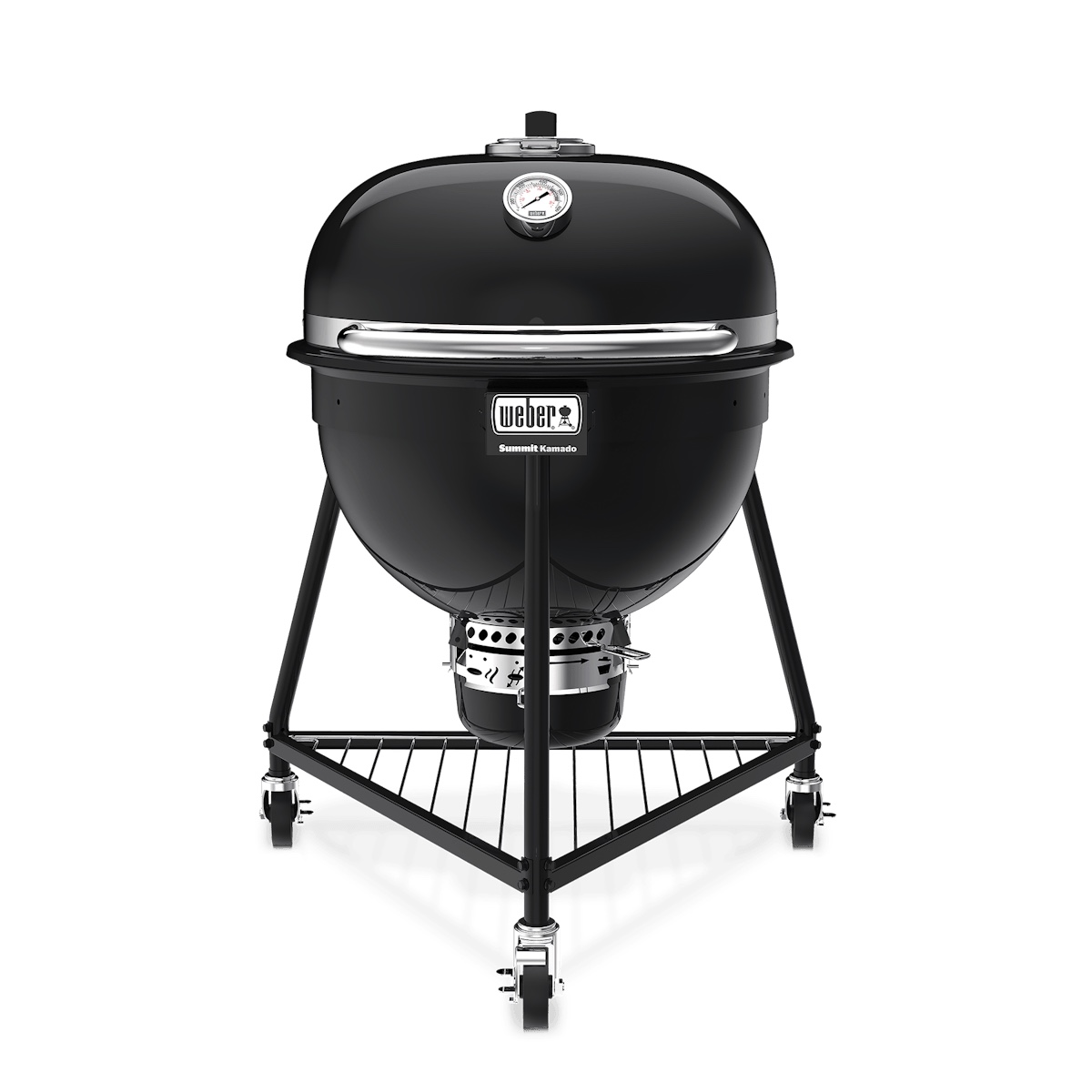
Weber Summit Kamado E6
The Weber Summit Kamado E6 is Weber's 24-inch kamado-style charcoal grill built from dual-walled, air-insulated porcelain-enameled steel instead of ceramic. It pairs kamado heat retention with kettle conveniences like the One-Touch ash cleanup, a hinged RapidFire lid damper, and a flip-up diffuser for easy fuel access.
We may earn a commission. Price and availability on Amazon may differ.
Specifications
Features
Pros
- ✓Dual-walled air-insulated steel holds low-and-slow temps like ceramic while burning noticeably less charcoal - a single load can run an overnight brisket
- ✓At 142 lbs it's roughly half the weight of a comparable 24-inch ceramic kamado, and steel can't crack from a drop, a move, or thermal shock
- ✓The 452 sq in grate is meaningfully bigger than a Big Green Egg Large or Kamado Joe Classic, so full packer briskets and multiple rib racks fit without a struggle
- ✓The hinged, two-position diffuser flips up so you can add charcoal or wood chunks mid-cook without unloading the grates - a real pain point on ceramic kamados
- ✓Weber's One-Touch cleaning system sweeps ash into a removable catch cup, making cleanup dramatically easier than scooping ash out of an egg
- ✓The hinged RapidFire lid damper flips fully open to spike airflow, so it climbs from smoking temps to 600-700°F searing heat impressively fast
- ✓The cooking grate accepts Weber's Gourmet BBQ System inserts (pizza stone, griddle, wok), adding versatility without kamado-priced accessories
- ✓AmazingRibs awarded the Summit Kamado line a Platinum Best Value medal, and the bowl and lid carry a 10-year rust and burn-through warranty
Cons
- ✗At around $1,399 it costs as much as many ceramic kamados, and stepping up to the S6 with cart and gas ignition pushes well past $1,800
- ✗The three-legged stand is the top owner complaint - the legs and small casters feel flimsy and wobbly under a premium-priced grill
- ✗The E6 has no Snap-Jet gas ignition (that's S6-only), so you're lighting with a chimney or starter cubes like any kettle
- ✗No side tables or work surface on the stand - there's nowhere to set a tray or tools without buying a separate table
- ✗No built-in temperature probes, fan control, or connectivity at a price where pellet grills include all three
- ✗Porcelain enamel is durable but chips if you knock the rim with heavy cast iron, and chips can eventually rust
- ✗The accessory ecosystem is far smaller than Big Green Egg's or Kamado Joe's - no included second cooking level like KJ's Divide & Conquer
- ✗The dome thermometer reads well above grate level, so most owners still end up buying a separate leave-in probe thermometer
Owner Insightssummarized from owner discussions
The Summit Kamado is Weber's kamado in insulated steel rather than ceramic, and among the people who own one the verdict is unusually strong: more than one long-time Weber owner calls it the best overall smoker-and-grill combination currently sold. The reason is range. Owners who have also run Performers and Smokey Mountains report it hitting 1100°F for searing at one end and holding a brisket for over twenty hours at the other. A ten-year Smokey Mountain owner who switched found temperature control markedly easier and ended up replacing both his WSM and his gas-assist kettle with this single cooker.
Day to day it behaves like a well-insulated charcoal cooker that rewards a fan controller, and it has a dedicated port for one, which owners call out as a practical edge over clipping a blower into a WSM vent. Fourteen-hour chuck roasts and overnight briskets at 235°F are routinely reported. The consistent tradeoff is smoke. Owners put it at roughly 90-95% of what a Smokey Mountain delivers, and the method that works is loading most of your wood at the start of the cook rather than feeding chunks as you go — some add a handful of pellets alongside. Curiously, the opposite complaint also exists: at grilling temperatures the charcoal flavor can be too assertive for delicate proteins, and one owner could not tame it by changing lump brands or running hotter. The other honest weakness is the accessory catalog, which one owner with both this and a Master-Touch described as dire, though third-party rotisserie kits including the Joetisserie do fit.
It suits someone consolidating several cookers into one and willing to run charcoal with instrumentation. Against a Smokey Mountain, owners frame it as trading a little smoke for much easier temperature management and a grill that also sears; one dissenter argues that if you only have room for a single cooker at this price, a kettle is still the better buy. Against a ceramic kamado it trades the accessory ecosystem and some thermal mass for a body that cannot crack and weighs far less. The caveat worth taking seriously comes from owners who love theirs: assembling thermometers, fans, controllers and charcoal before every cook is an amount of work that eventually pushes some people toward a pellet grill, whatever the food quality. Prices on the used market are good enough that this is frequently how people get in.
What owners like
- +The range is the headline and owners state it plainly: one who has owned Performers, Smokey Mountains and this says it will hit 1100°F or run a brisket for more than twenty hours. Very few cookers cover both ends
- +Temperature control is easier than on Weber's own Smokey Mountain. A ten-year WSM owner who switched said control was so much better on the Summit Kamado that he replaced both his WSM and his Performer with it and saved the patio space
- +It holds long low cooks with very little intervention. Owners report 14-hour chuck roasts at 225-235°F and overnight briskets held at 235°F, generally with a fan controller attached, and the insulated body is why a single load gets there
- +It has a dedicated port for a fan controller, which owners note as a real advantage over the WSM where you have to clip the fan into a bottom vent. Billows, FireBoard and similar units are in common use on it
- +Steel instead of ceramic changes the ownership risk. Owners who have compared it to Konnected and Kamado Joe models keep it for that reason, and one who smoked two briskets concurrently reported the Weber producing dark rendered bark overnight while the ceramic competitor came out with no bark and dry meat
- +Used and clearance prices are unusually good for a grill this well regarded. Owners report Costco clearance at $800, a marketplace K6 in near-new condition at $600 against a $2,300 list, and a used unit with a rotisserie at $500 — and third-party rotisserie kits including the Joetisserie fit it
Common complaints
- −It gives less smoke than a dedicated smoker and owners agree on roughly how much less. The common estimate is 90-95% of what a Smokey Mountain produces, and the standard workaround is loading mostly wood at the start of the cook, sometimes with a handful of pellets thrown in, rather than adding chunks later
- −The accessory situation is thin. One owner running both this and a Master-Touch described the accessory position for the E6 as dire, allowing that it is improving — a real contrast with Big Green Egg and Kamado Joe, where the ecosystem is a selling point
- −Coming from a kettle or a WSM, it needs a different cooking method rather than the same one in a new body. Owners who did not adjust wood quantity and placement were unhappy with early results, and at least one bought a Smokey Mountain afterwards because he preferred what his kettles gave him
- −When grilling rather than smoking, it can be too much smoke. One owner's family complained that most non-beef meats came out overpowering, and switching lump brands, lighting properly to clear the white smoke, and running hot at 500°F all failed to fix it
- −It is a setup rather than a grill you walk up to. An owner who called it his favorite cooker of all time was still considering replacing it with a pellet grill, because the thermometers, fans, controllers and charcoal had become a chore — particularly without a covered area to work under
Common Questions
How does the smoke flavor compare to a Weber Smokey Mountain?
Do I need a fan controller?
Is it better than a kettle for the money?
What accessories are available for it?
My food tastes too smoky when grilling. What can I do?
Compare the Weber Summit Kamado E6
Related grills
More from Weber →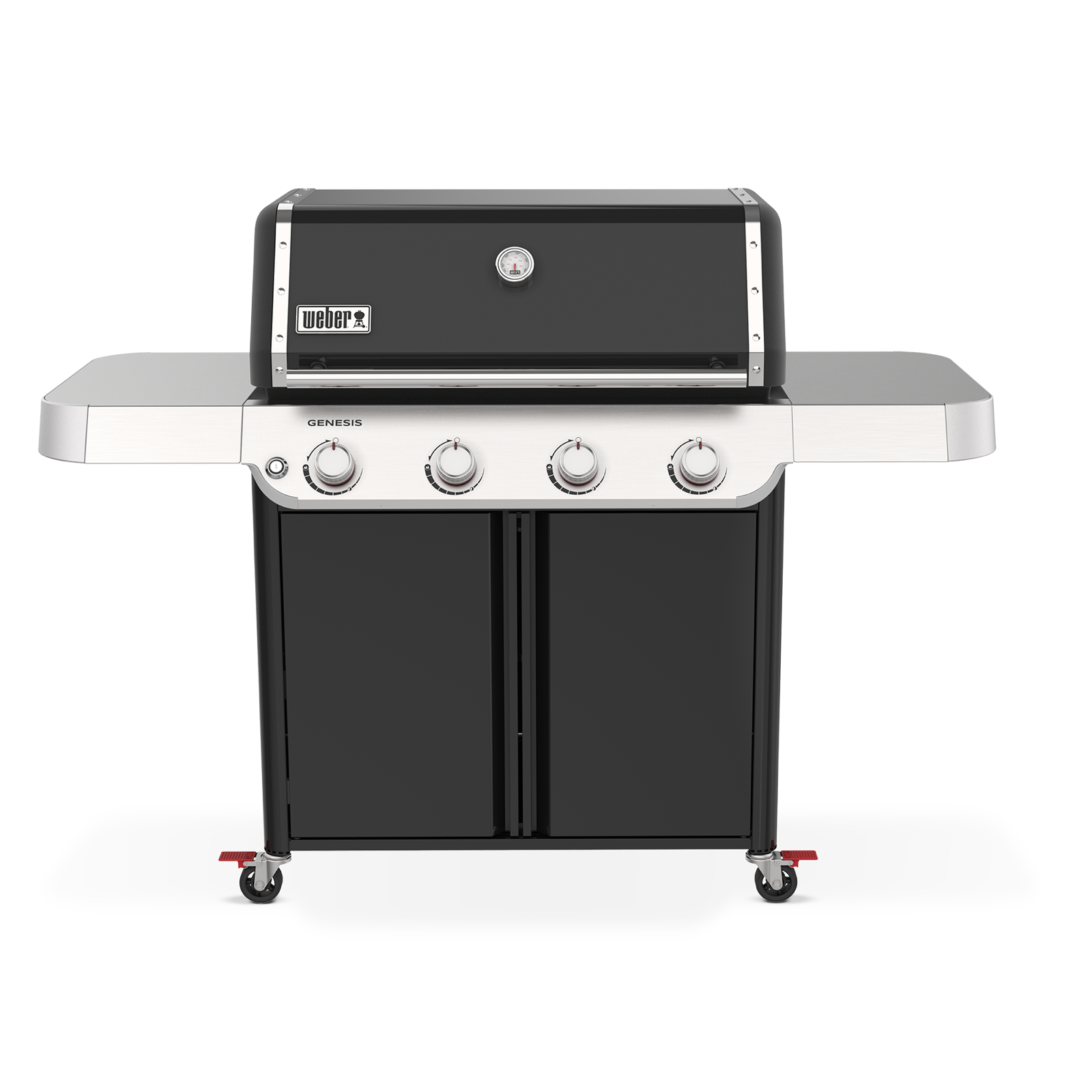
Weber
Weber Genesis E-415
The four-burner Genesis with an enclosed cabinet, and the volume seller of the Genesis line. 646 sq in of primary grate — 820 sq in with the warming rack — makes it roughly a third larger than the 3-burner Genesis models, at the cost of the Sear Zone and smart thermometer those carry. Porcelain-enameled steel lid and painted steel doors; the S-415 is the same grill in stainless for $100 more.
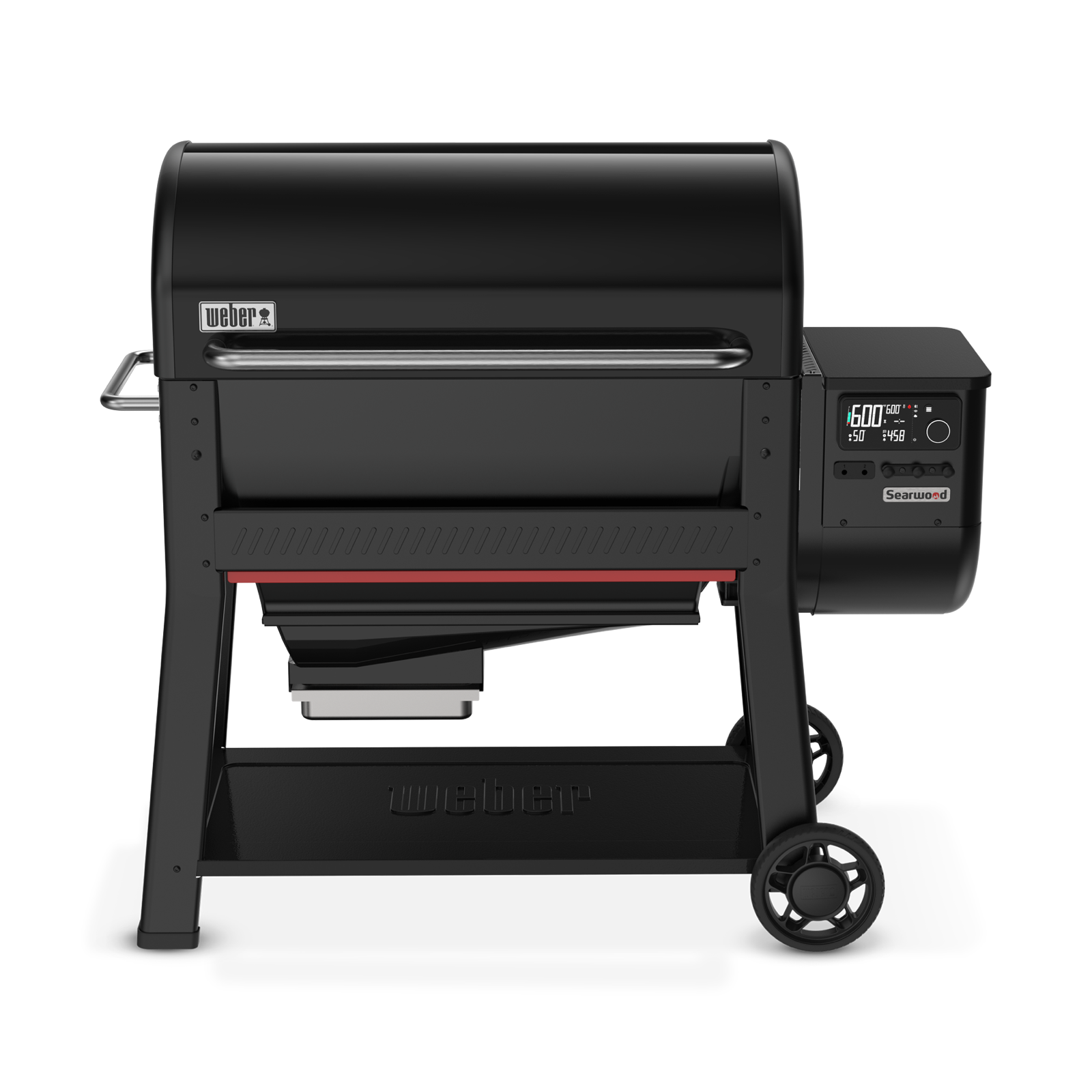
The XL 600 is the 36-inch version of the Searwood 600 already in the catalog: the same DirectFlame sear system, Weber Connect controller and 600°F ceiling, in a chamber that holds 972 sq in across two racks instead of 600. The extra width is the point — the top rack lifts out to leave 11.5 inches of headroom for a turkey or a pair of pork butts. Hopper capacity stays at 20 lb and the burn pot is unchanged, so cook times and pellet consumption scale with load rather than with chamber size.
Weber
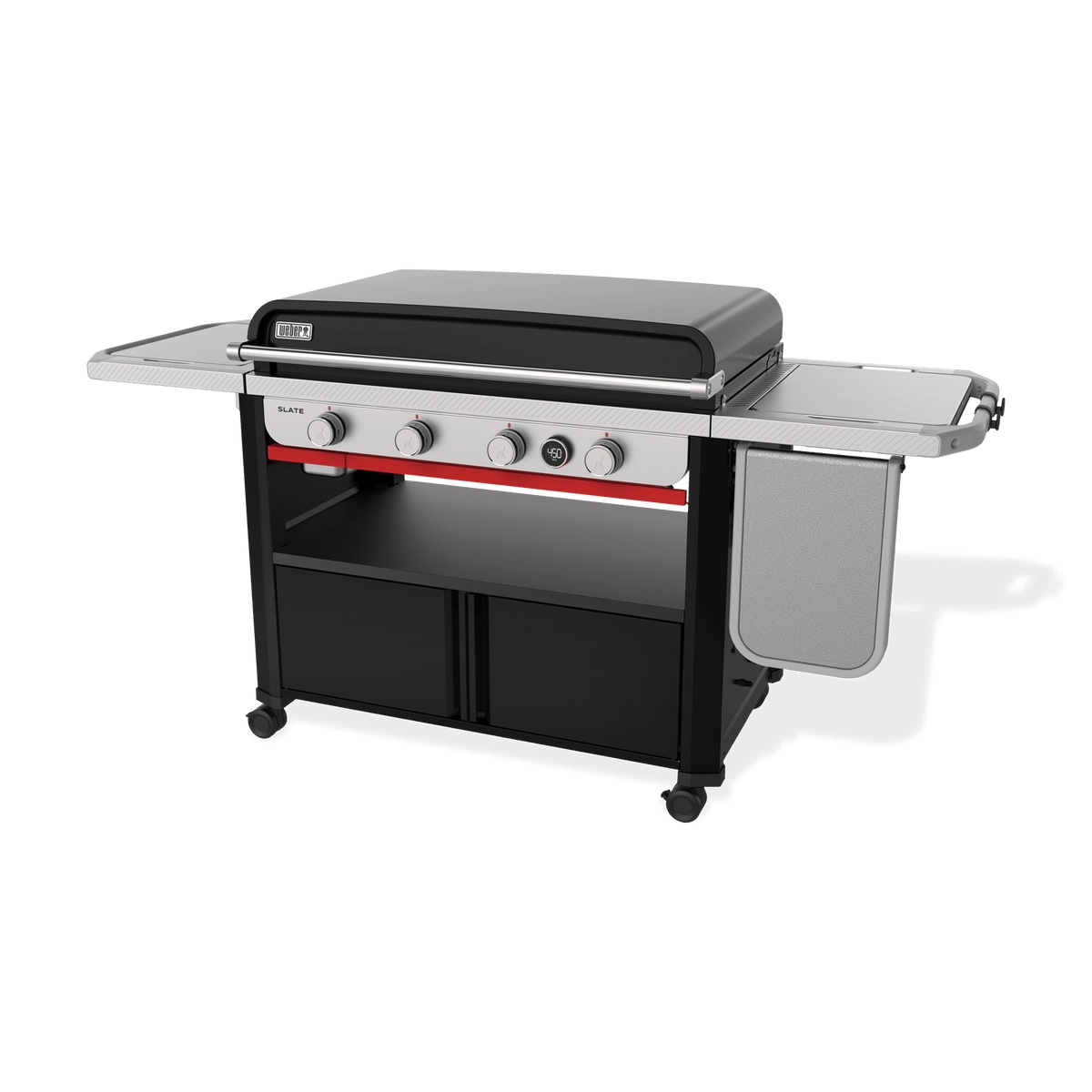
Weber Slate 36
The Weber Slate 36 is Weber's flagship flat-top griddle, pairing a pre-seasoned rust-resistant carbon steel cooktop with four independent burners, a built-in digital cooktop thermometer, and the storage and side tables that made it an instant Blackstone rival.

Weber
Weber Genesis E-325s
The Weber Genesis E-325s is a 3-burner premium propane gas grill with a dedicated sear zone and side burner, part of Weber's redesigned Genesis line. Weber is the benchmark brand for backyard gas grills. Note: this model is no longer sold new as of 2026. Its current equivalent is the Weber Genesis E-325. (2024 refresh dropped the 's' (stainless flavorizer bars became porcelain); weber.com E-325s NG listed $849 'Currently Unavailable', new E-325 $899)
Weber
Weber Searwood 600
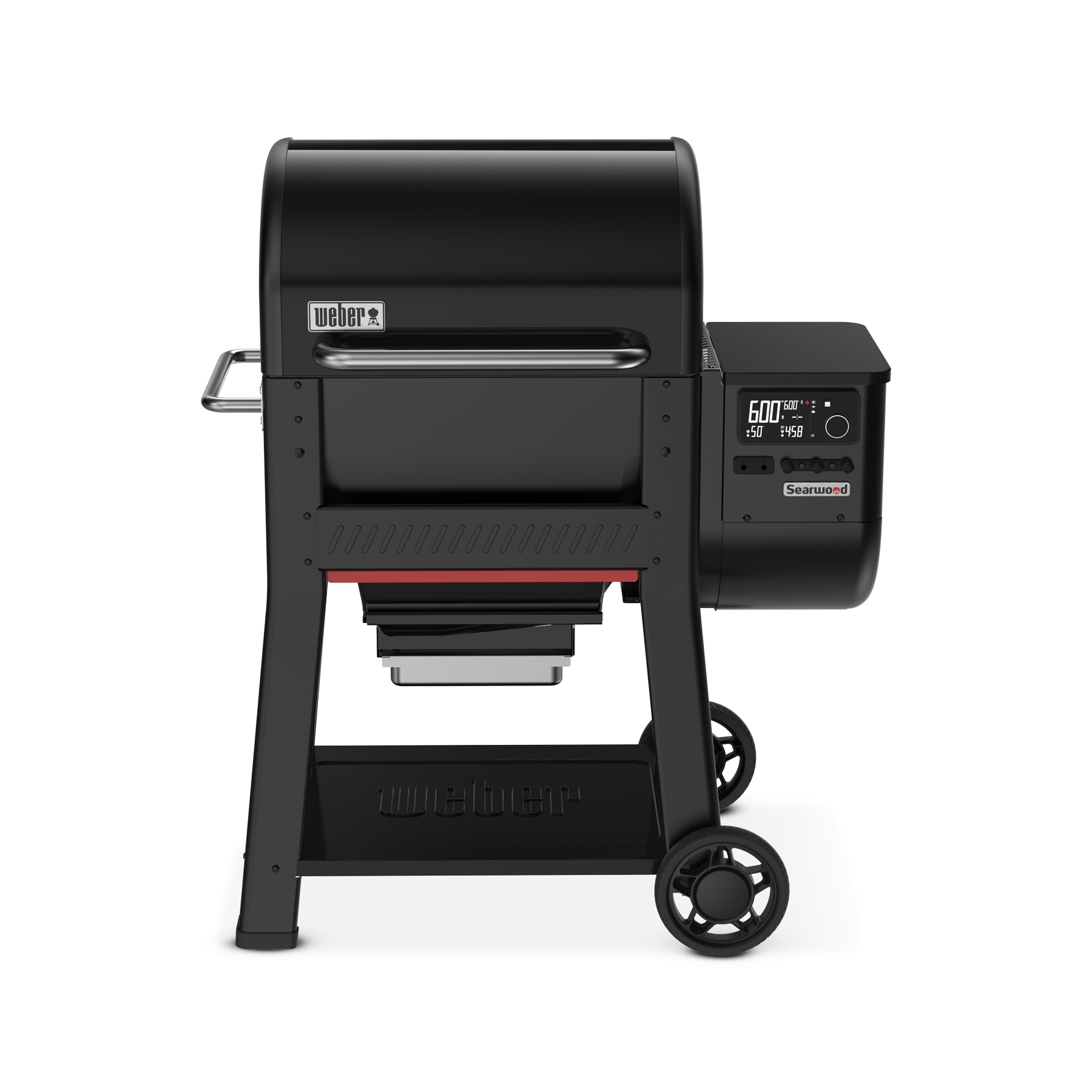
The Weber Searwood 600 is Weber's 2024 pellet grill that finally fixed the SmokeFire's sins - a 180-600°F range, DirectFlame searing, manual offline mode, and a Rapid React PID controller at a sharper price. owner discussions's pellet crowd calls it the redemption arc.
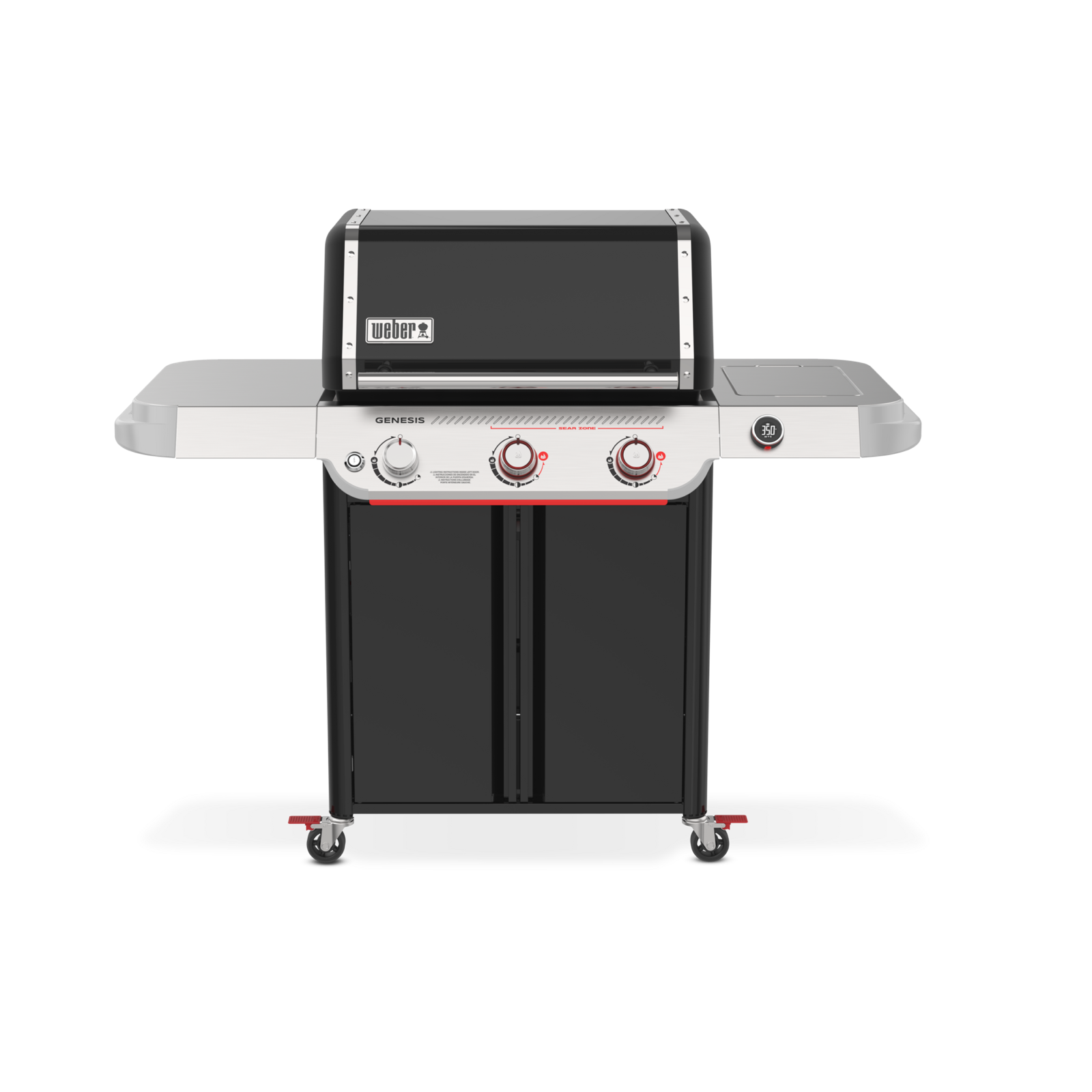
The smart 3-burner Genesis in Weber's current "W" generation, which replaced the 2022 E-325s generation the existing catalog entry refers to. It carries the same 513 sq in primary grate as the old E-325s but adds a built-in WiFi thermometer with one wired food probe reporting to the Weber Connect app, and a Sear Zone that Weber rates to 750°F. LP as priced; natural gas is $949.