Recteq
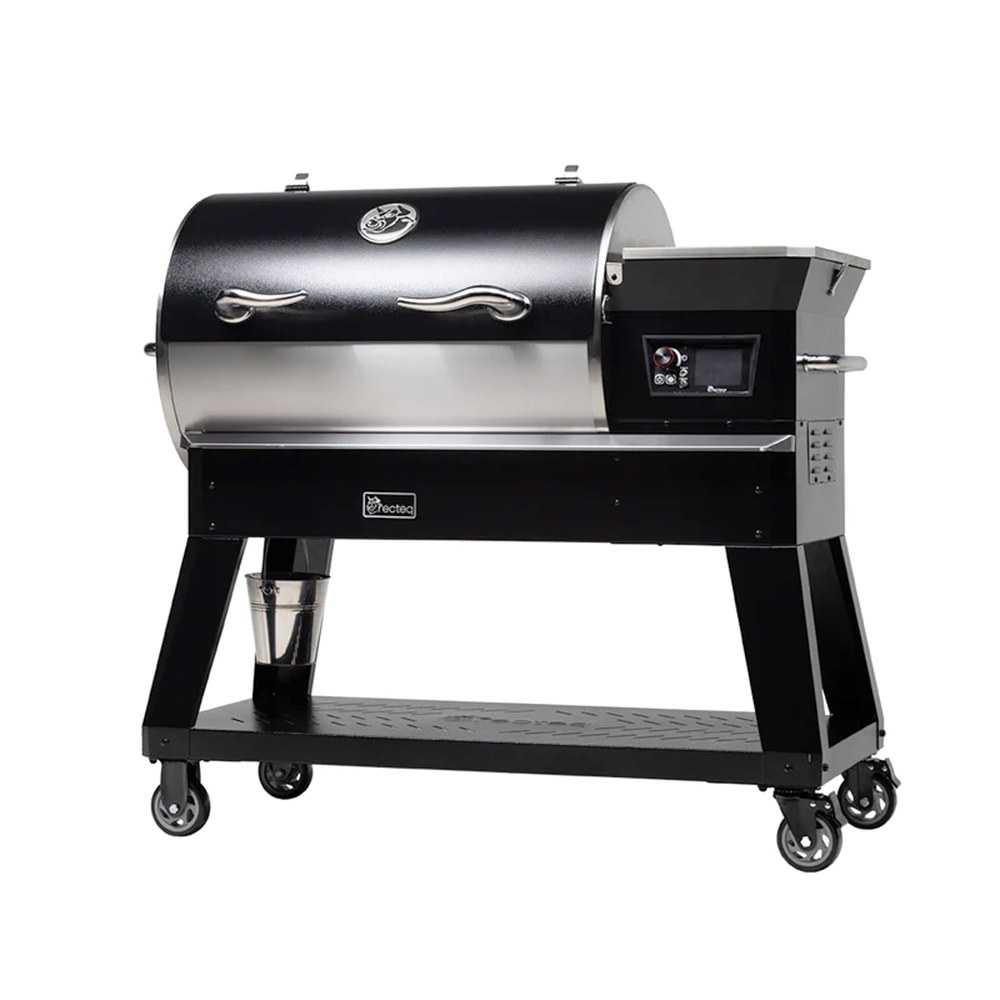
Recteq Backyard Beast 1200
The Backyard Beast 1200 replaced the Backyard Beast 1000 and gained both grate and hopper: 1,220 sq in with the sliding second rack in, fed by a 30 lb hopper good for about 30 hours. Stainless runs from the cooking chamber through the firepot, drip pan and the bull-horn handles, with a cast iron heat deflector underneath. Against the Deck Boss 900 below it, the step up is capacity, hopper and two more years of warranty.
We may earn a commission. Price and availability on Amazon may differ.
Specifications
Features
Pros
- ✓30 lb hopper runs an overnight cook with room to spare — double what most competitors hold at this price
- ✓1,220 sq in takes around eight racks of baby backs or 50 burgers
- ✓Second rack slides rather than lifts out, so you can reach the main grate without unloading it
- ✓700°F ceiling with PID control covers searing and low-and-slow on one grill
- ✓More stainless than anything else near the price — chamber, firepot, drip pan and grates
- ✓6-year bumper-to-bumper warranty, among the longest in pellet grilling
Cons
- ✗Recteq's near-permanent discounting makes the real price hard to pin down; list is $1,199.99 and it is often $1,049.99
- ✗No sear zone or side burner — high heat comes from the main chamber, which takes time to get there
- ✗Recteq publishes neither weight nor exterior dimensions for this model
- ✗Direct-to-consumer delivery means freight scheduling and self-assembly, not store pickup
- ✗Stainless is the visible surfaces, not the whole body — the cart and lower cabinet are painted steel
Owner Insightssummarized from owner discussions
The Backyard Beast 1200 is Recteq's high-volume backyard pellet grill, and it lands in almost every shopping thread as one of three finalists alongside the Weber Searwood XL 600 and the Traeger Woodridge Pro. The people who buy it tend to be upgrading rather than starting out — a failing Masterbuilt electric, an aging Pit Boss, a Traeger that misbehaved through two winters. Owner sentiment runs strongly positive, with the caveat that much of the loudest praise comes from people describing Recteqs in general across many years of ownership rather than this model specifically.
In use, the standout is temperature discipline: owners describe it holding a set point so steadily it feels artificial, running 225°F for long cooks and climbing to 650-700°F when they want to sear, usually with a cast iron insert added. It handles cold well enough that people cook on it through Wisconsin and Michigan winters, though one northern owner is blunt that without an insulating blanket you will burn through pellets fast. The app starts it remotely and works, but pairing is 2.4 GHz-only and several owners fought it for a session. The real complaint is cleaning — there is no external cleanout, the routine involves a shop vac, and buyers comparing it against the Searwood and Woodridge Pro consistently rank it the most tedious of the three. Owners work around that with the high-temperature burn-off mode, and they warn each other not to vacuum the firepot completely bare, because leftover ash is what keeps grease from flaring.
It suits someone cooking for a crowd who wants to load a hopper and walk away, and who values a company that answers the phone over a grill that wipes clean in five minutes. The service stories are unusually specific and unusually consistent, which is the strongest thing going for it. The honest caveat is that the brand is a live argument: owners of older Recteqs are the most devoted people in these threads, while a meaningful minority argue the current generation is not what it used to be and steer buyers toward the Searwood XL instead — that grill wins on cleaning, on rotisserie and griddle attachments, and on being easier to move with its wheel layout, and loses on hopper size and top-end temperature.
What owners like
- +Temperature holding is the thing owners bring up first — one buyer who cross-shopped it against the Searwood XL said it maintains temp 'almost too well that it seems fake', and a Recteq owner in metro Detroit reports the same stability from 90-100°F summers down to sub-zero
- +The 30 lb hopper and 1,220 sq in are genuinely aimed at volume cooks — one owner bought it specifically to do pulled pork and brisket for 60 people after outgrowing a Bullseye
- +It does run through a northern winter. Owners in Wisconsin cook on it all season, which is exactly why one of them abandoned a Traeger Pro 34 that kept choking in the cold
- +Recteq's customer service comes up constantly and specifically: a free replacement drip bucket plus a drip mat thrown in, an igniter shipped out fast under warranty, free replacement casters on a failure the owner admitted was his own fault
- +It will sear. Owners run it to 650-700°F for ribeyes, and the common upgrade is a cast iron insert or grate to get real char marks
- +Build quality reads as the reason people choose it over rivals — 'built like a tank', thick panels, and one cross-shopper picked it over the Searwood on the reasoning that it would simply last longer
- +It discounts hard. Ace and Scheels carry it, holiday sales are frequent, and one owner got over $300 off for a dent on the back panel nobody would ever see
Common complaints
- −It is slow to come up to temperature. Multiple owners say so, including one who otherwise calls it the best of the several pellet grills he has owned
- −Cleaning is the weak spot and owners know it. Shoppers comparing it against the Woodridge Pro and Searwood call it the fussiest of the three because it wants an actual shop vac, and it has no external ash cleanout
- −Related trap: do not vacuum the firepot completely clean. Owners warn that a little ash left behind is what catches grease, and stripping it bare invites flare-ups
- −There is no easy way to swap pellets mid-cook — a specific turnoff for buyers comparing it against grills with a hopper dump
- −The factory front shelf gets called out as thin and cheap. Enough owners replace it with an aftermarket shelf or build their own from a board and hinges that it is a known fix
- −Wi-Fi setup is a 2.4 GHz-only affair and several owners needed multiple attempts, a phone hotspot, or a dedicated 2.4 GHz band before it would pair
- −Brand trajectory is genuinely contested. Longtime owners with five- to nine-year-old Recteqs are the most enthusiastic voices, while others argue the current models are not the same grill and point at the change in ownership and production; a few also found the stainless needs regular polishing in humid or lakeside air
Common Questions
Backyard Beast 1200 or Weber Searwood XL 600?
Does it work in cold weather?
How much of a pain is it to clean?
Can it actually sear a steak?
Is the Recteq warranty and customer service really as good as people say?
Any setup problems to expect out of the box?
Compare the Recteq Backyard Beast 1200
Related grills
More from Recteq →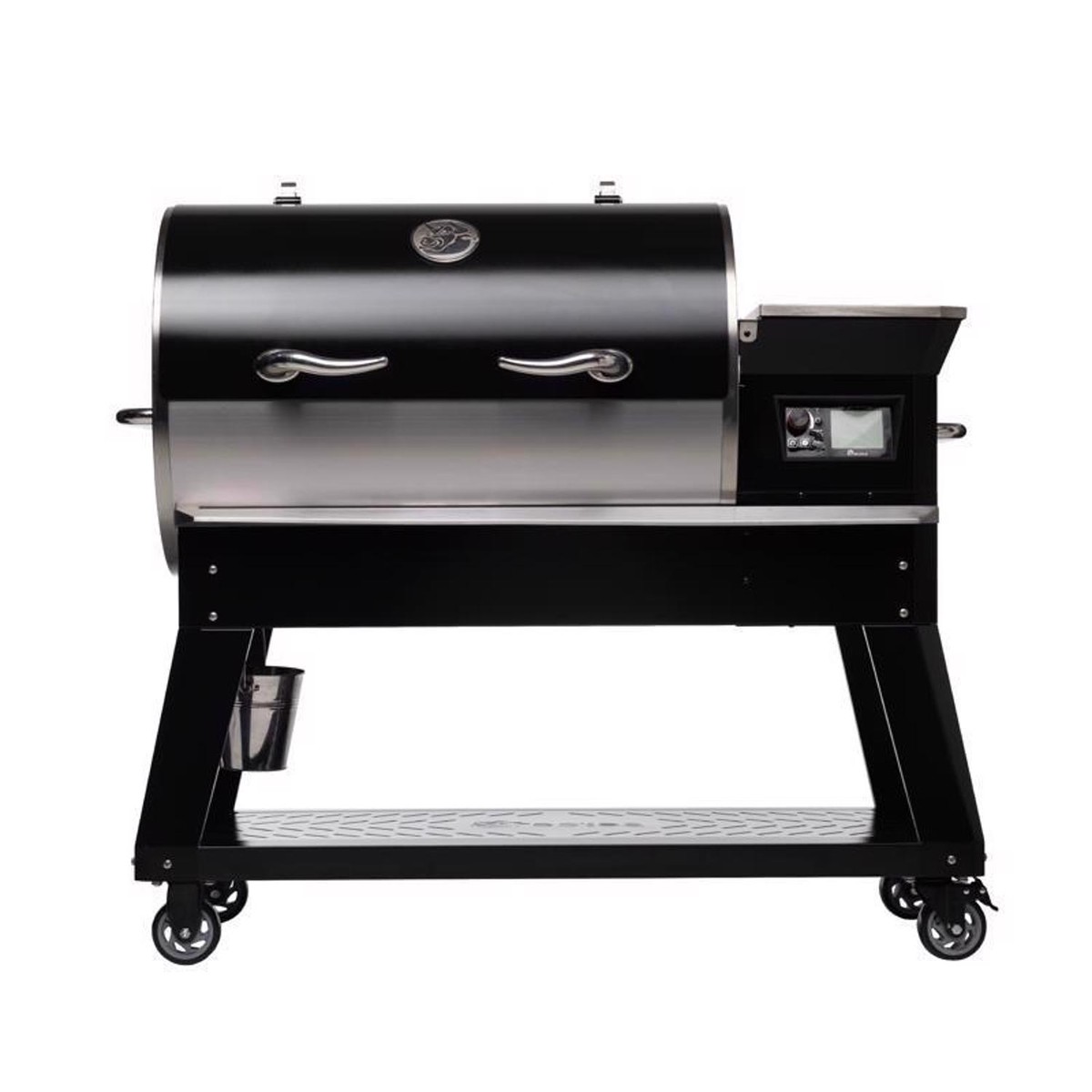
The Recteq Backyard Beast 1000 is the successor to the beloved RT-700 'Bull', pairing 1,014 sq in of stainless cooking space with a dual-band WiFi PID controller and a class-leading 180-700°F temperature range that lets it sear as well as it smokes. Note: this model is no longer sold new as of 2026. Its current equivalent is the Recteq Backyard Beast 1200 (RT-1200BB). (RT-1000 discontinued; Backyard Beast 1200 replaces it (and the Flagship 1100) at $1,199.99, frequently on sale at $1,049.99. No verified non-Amazon rating for the discontinued RT-1000)
Recteq
Recteq Deck Boss 590
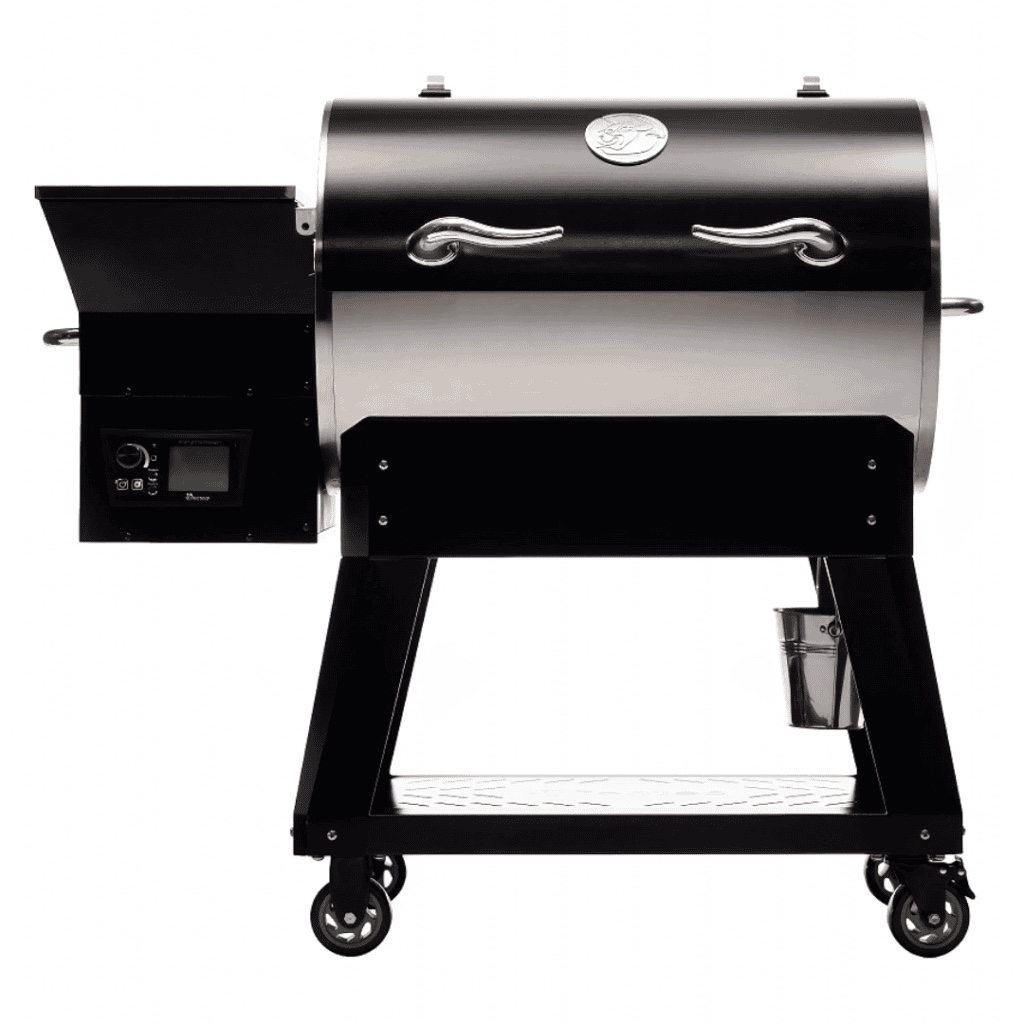
The Recteq Deck Boss 590 is the mid-size workhorse of Recteq's lineup, bringing the same 180-700°F WiFi PID controller and stainless build as its bigger siblings in a family-friendly 590 sq in footprint that fits comfortably on a standard deck or patio. Note: this model is no longer sold new as of 2026. Its current equivalent is the Recteq Deck Boss 900 (RT-900DB). (RT-590 lineage: Deck Boss 590 -> Deck Boss 800 -> Deck Boss 900 (introduced 2026) at $999.99. No verified non-Amazon rating with sufficient count for the discontinued 590)
Recteq
Recteq Deck Boss 900
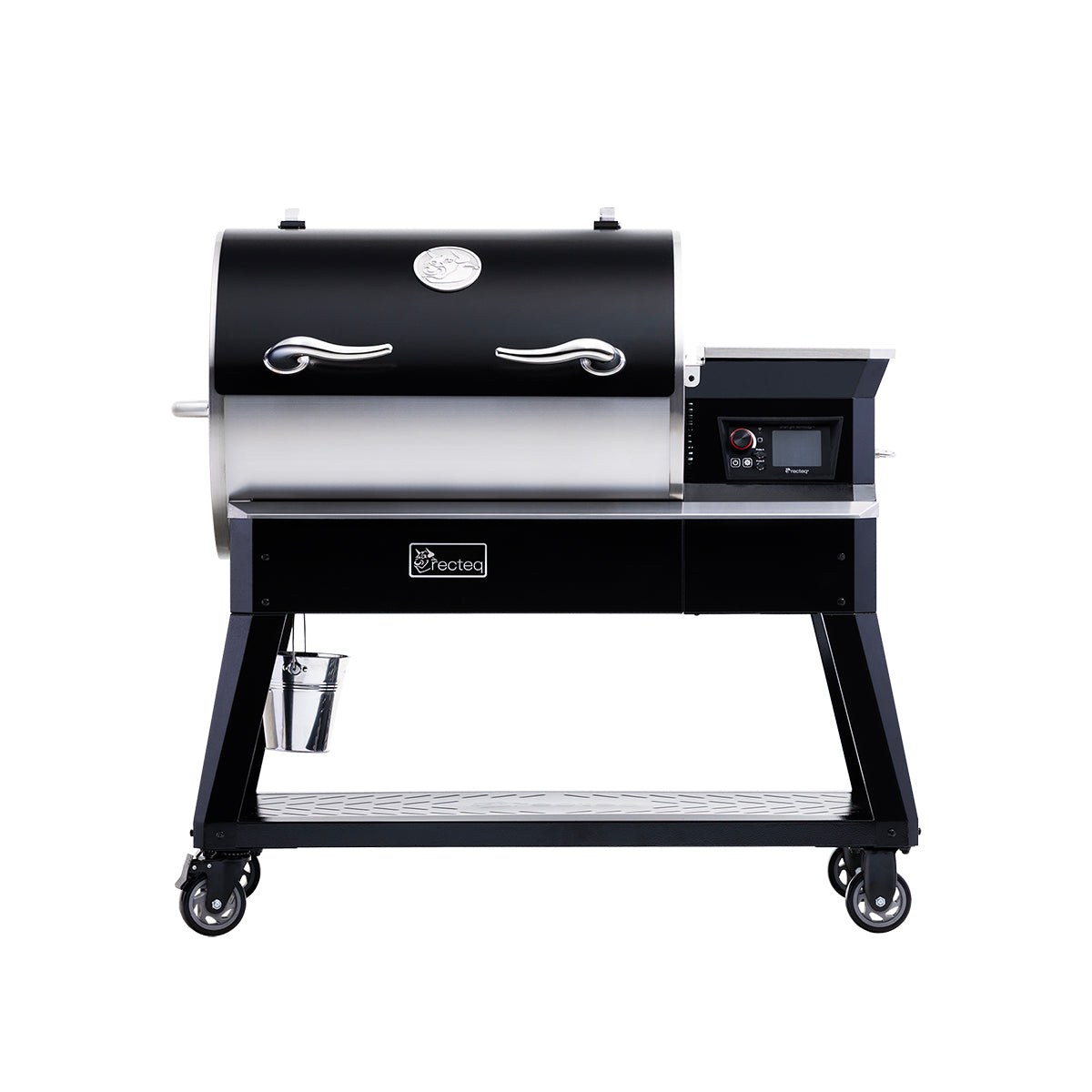
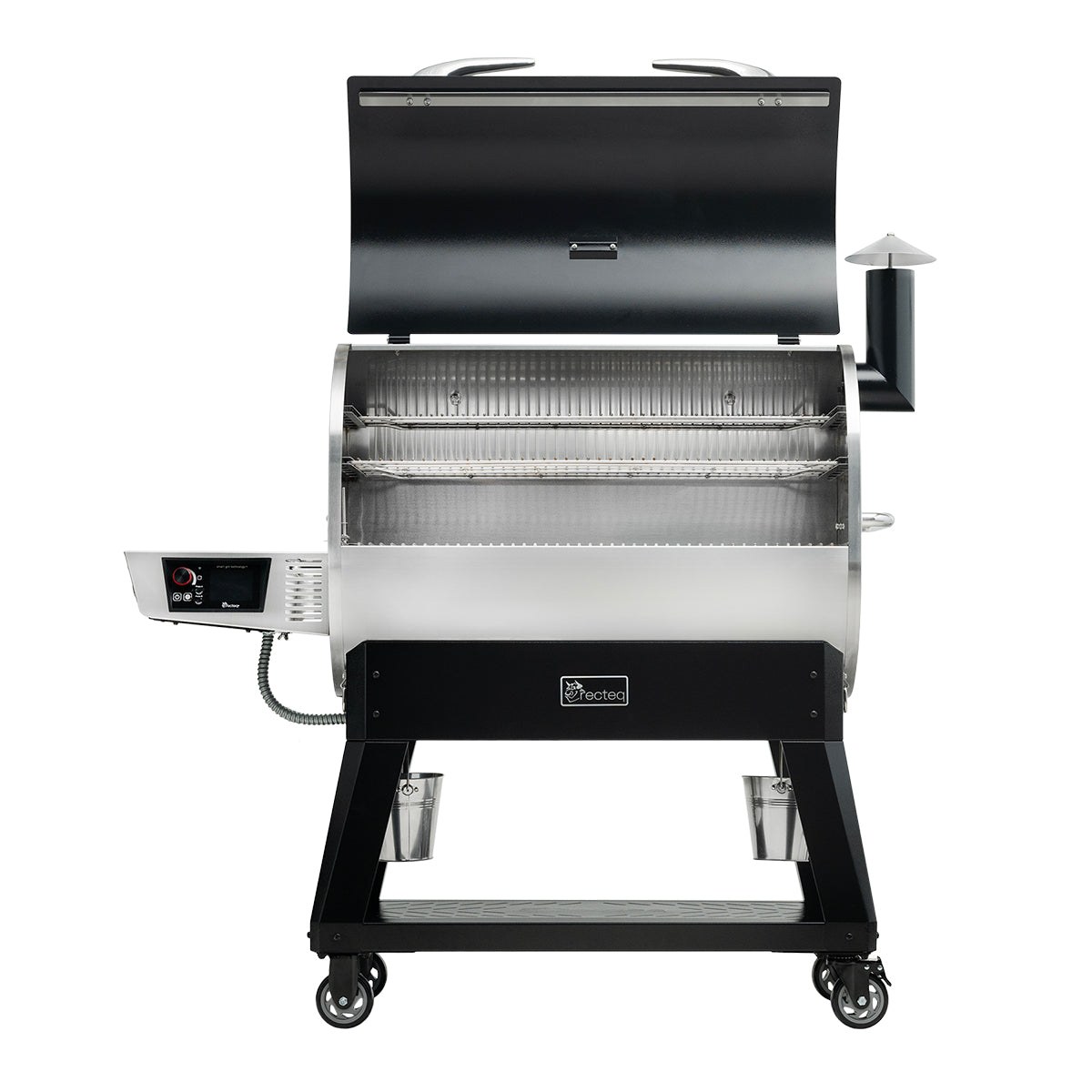
The Deck Boss 900 is what Recteq put in place of the Deck Boss 590, and it is a bigger grill than that name swap suggests — 956 sq in against the 590's 592. It keeps the 304 stainless firepot and drip pan, cast iron heat deflector and the PID controller, and the HotFlash ceramic igniter rated past 100,000 cycles. It sits below the Backyard Beast 1200 mainly on hopper size, 18 lb against 30.
Recteq
Recteq Flagship 1600
The Flagship 1600 is the current top of Recteq's main cabinet line, replacing the RT-700 and RT-1250 generation that our catalog's era of Recteq grills came from. It holds 1,667 sq in with the second shelf, a 40 lb hopper — a whole bag of pellets, about 40 hours — and 304 stainless grates. Everything below it in the line uses the same PID controller and 180–700°F range; the Flagship buys capacity, grate material and the bull-horn stainless build.
Recteq
Recteq Bullseye RT-B380
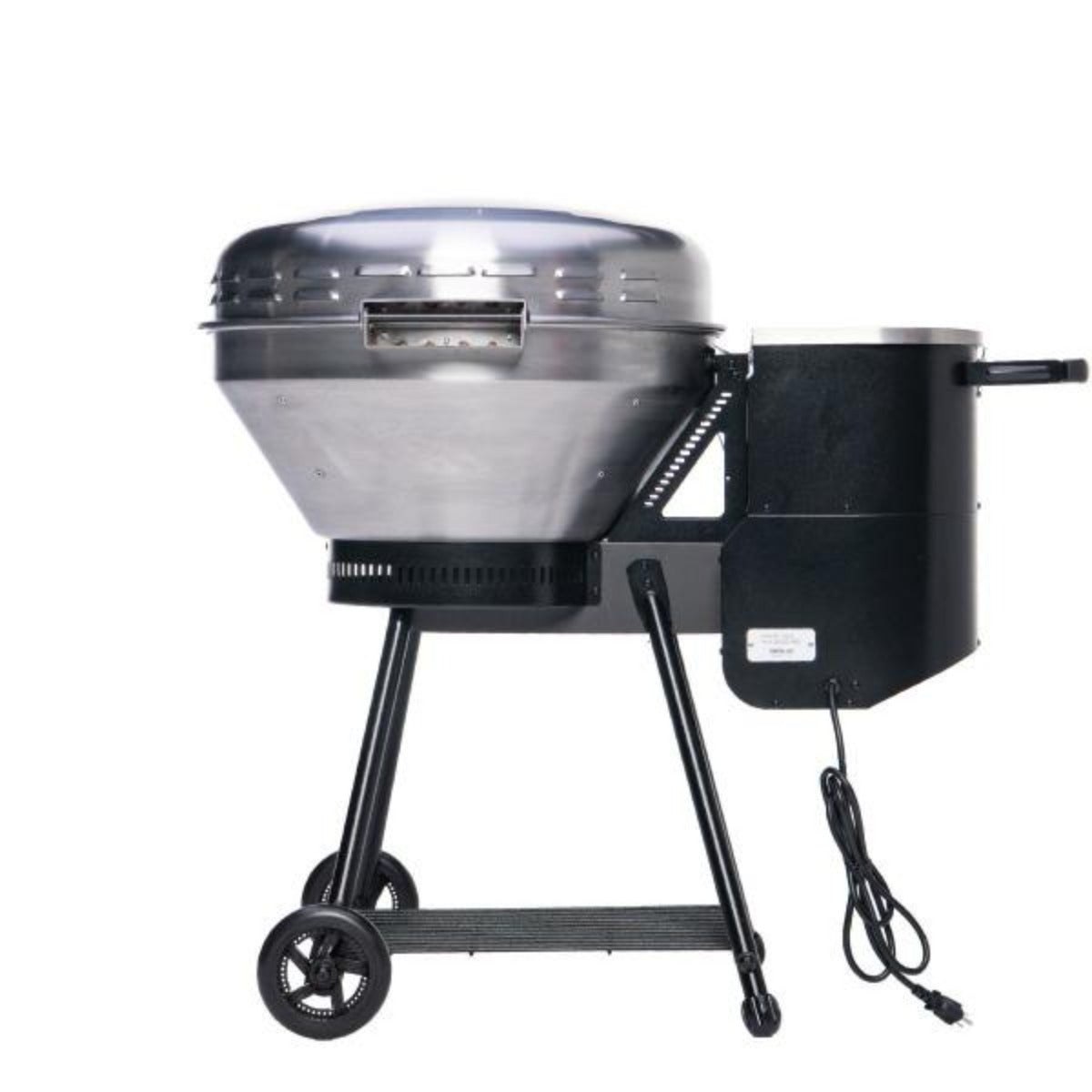
The Bullseye is the odd one in the Recteq line: a 22-inch kettle-shaped pellet grill that runs the fire directly under the grate instead of over a heat deflector. That is how it reaches 749°F when every cabinet pellet grill stops at 500–700°F. The trade is that it smokes less well than a Deck Boss, and the base RT-B380 is the non-WiFi version — the $949 Bullseye Deluxe RT-B380X adds WiFi and an 18 lb hopper.
Recteq
Recteq DualFire 1200
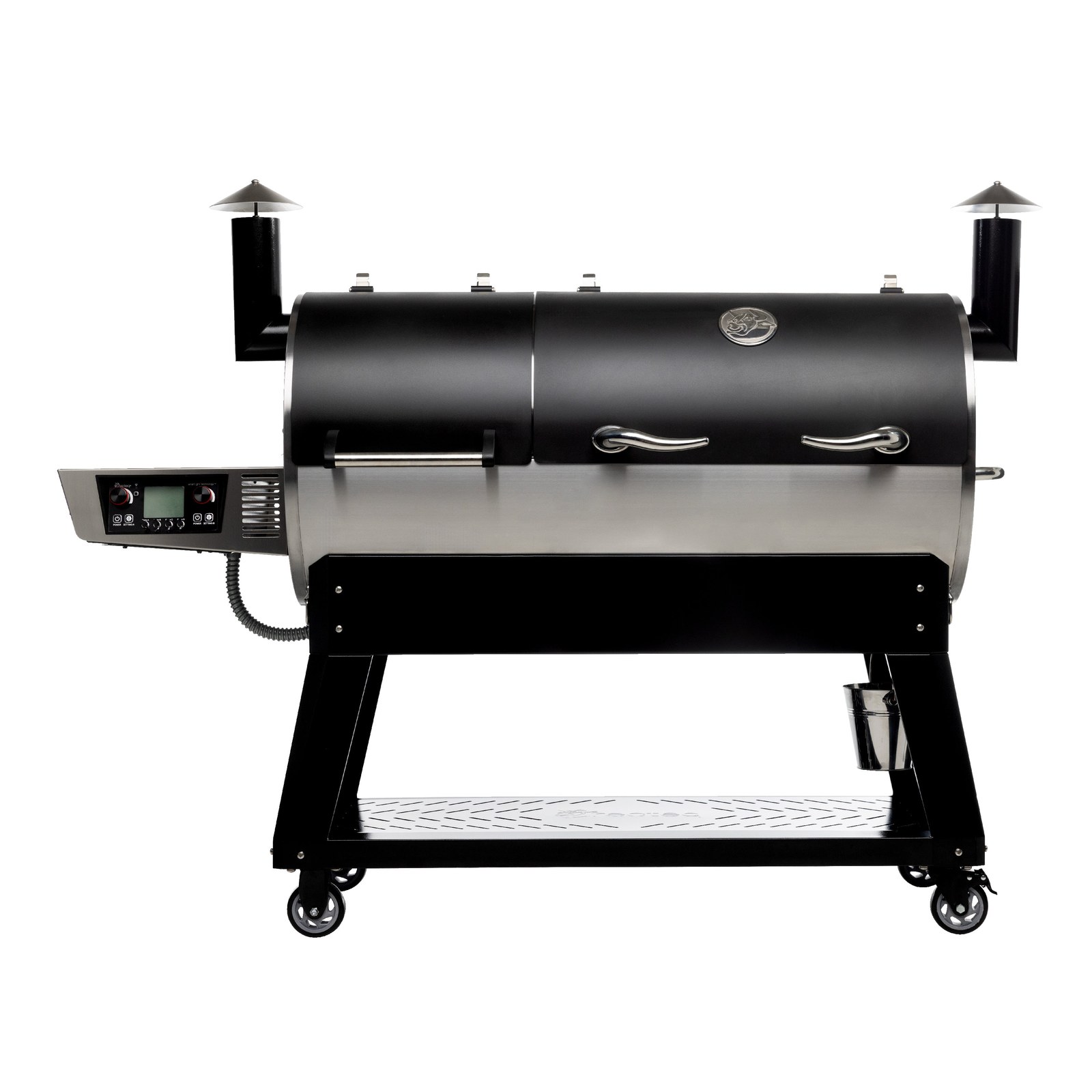
The DualFire 1200 is a two-chamber pellet grill: about 900 sq in of indirect smoking space on one side and roughly 300 sq in of direct-flame grilling on the other, each with its own fire and its own set point. That is the feature no other mainstream pellet grill has — you can hold 225°F on a brisket and sear at 700°F at the same time without moving anything. It carries a 70 lb hopper, the largest in Recteq's line.