Recteq
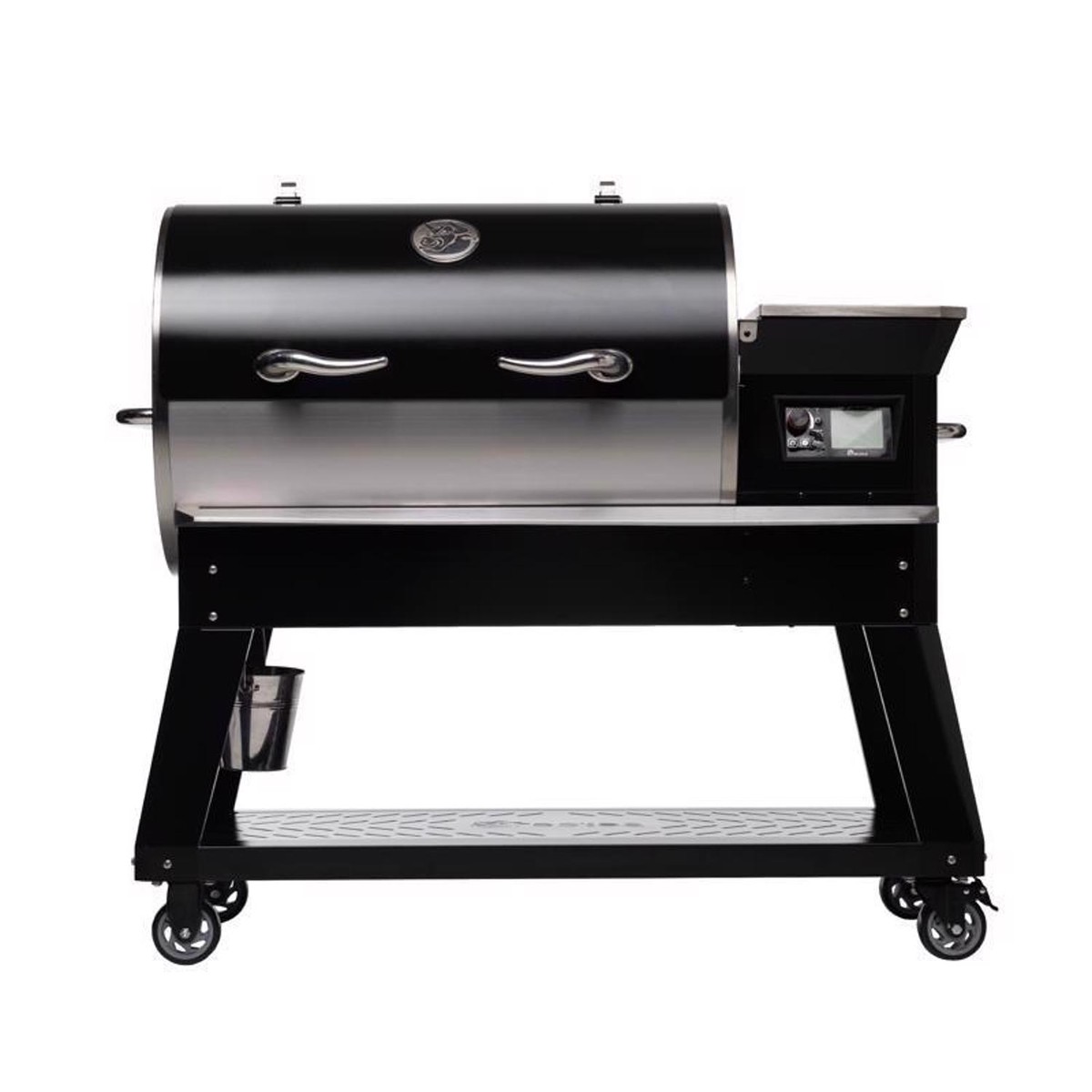
Recteq Backyard Beast 1000
The Recteq Backyard Beast 1000 is the successor to the beloved RT-700 'Bull', pairing 1,014 sq in of stainless cooking space with a dual-band WiFi PID controller and a class-leading 180-700°F temperature range that lets it sear as well as it smokes. Note: this model is no longer sold new as of 2026. Its current equivalent is the Recteq Backyard Beast 1200 (RT-1200BB). (RT-1000 discontinued; Backyard Beast 1200 replaces it (and the Flagship 1100) at $1,199.99, frequently on sale at $1,049.99. No verified non-Amazon rating for the discontinued RT-1000)
Specifications
Features
Pros
- ✓The 700°F ceiling is the highest of any mainstream pellet grill, so you can actually sear steaks without hauling out a separate cast-iron setup
- ✓Recteq's PID controller is famous for rock-steady temps - owners routinely report holding within 5°F of setpoint for entire overnight brisket cooks
- ✓The 30 lb hopper is huge, easily running 24+ hours at smoking temps without a refill
- ✓Stainless steel firepot, grates, and body components resist rust far better than the powder-coated steel most competitors use at this price
- ✓6-year warranty is double what Traeger offers, and Recteq's US-based phone support has a cult following for actually answering and shipping parts fast
- ✓1,014 sq in across two grates handles nine pork butts or eight racks of ribs - genuine party capacity
- ✓Dual-band WiFi connects more reliably than the 2.4GHz-only radios in most competitors, and the app supports two included meat probes
- ✓At around $1,100 it undercuts the comparable Traeger Ironwood XL by hundreds of dollars while offering better specs
Cons
- ✗No Super Smoke-style mode, so smoke flavor at higher temps is milder than offset purists want - many owners add a smoke tube
- ✗At roughly 180 lbs it's heavy and awkward to move, and assembly takes a solid two hours with a second person recommended
- ✗The horn handles and bull branding are polarizing - some find the styling gimmicky next to a Weber or Traeger
- ✗No included side shelf or front shelf at the base price - useful accessories push the real cost toward $1,300
- ✗Recteq sells direct-only, so you can't see one in person at a big-box store before buying
- ✗The controller display is small and hard to read in direct sunlight compared to Traeger's newer touchscreens
- ✗Searing at 700°F consumes pellets rapidly and can leave heavy grease smoke residue that means more frequent cleaning
- ✗No pellet-level sensor or auto-empty hopper chute refinements found on newer competitors
Owner Insightssummarized from owner discussions
The Backyard Beast 1000 is the big-barrel Recteq that sits between the Deck Boss and the Flagship, and owners buy it for build and temperature stability rather than features. The praise is consistent and concrete: one owner six cooks in reported holding within about 5°F with the app and WiFi behaving, and a retail employee who assembles Weber, Recteq and Grilla units for a living called the Recteq the heaviest and sturdiest of them with the best wheels. The counterpoint that comes up just as often is that the controller is plain, with none of the extras competitors advertise, though the app itself gets good marks from the same people.
The behaviour that surprises new owners is overshoot. Open the lid to spritz and the grill can run 60 to 90°F above the set temperature for 15 to 20 minutes afterward, which one owner logged repeatedly and assumed was bad pellets. It is not; it is how the controller compensates for the drop, and the responses he got were to set the temperature lower before opening and to call Recteq about adjusting the feed rate for his climate. Pellet consumption is real in cold weather, the barrel takes a while to come up, and there is no hopper dump, so changing pellet flavors means vacuuming the hopper out into a bucket. Assembly, on the other hand, is almost nothing, particularly through Ace Hardware or Scheels where several owners had theirs delivered and set up free.
The hardest question in these threads is not whether it is good but whether it is the right Recteq. The main grate is close to the same size as the far cheaper Deck Boss 590 and the extra area is the upper rack, so owners who only ever run one brisket will not use what they paid for, while those cooking short ribs, carne asada or meal-prep batches say the second shelf is exactly what they were missing. Some owners say to skip it and buy the Flagship for the larger chamber; one who assembles them says the opposite, because this model gets the larger controller instead of the shelf-mounted one his store saw problems with. Against a Yoder YS640 it is not a fair fight and owners say so plainly, but that grill costs well over a thousand dollars more.
What owners like
- +Temperature holding is the thing owners lead with. One who had run six cooks in his first months described it as holding within about 5°F of setpoint, with the WiFi and app working without incident over that stretch
- +Build quality impresses people who handle a lot of grills. A retail assembler who has put together the Weber, Recteq and Grilla units side by side called the Recteq the heaviest and sturdiest of the group with the nicest wheels, and other owners describe the craftsmanship as well ahead of Traeger at the price
- +That same assembler recommends this model over the Flagship 1100 specifically because of the controller: the Beast uses the larger controller body, where the shelf-mounted unit that hangs on the Flagship's left side had quality-control problems coming through his store
- +You do not have to buy it sight-unseen. Owners bought theirs at Ace Hardware and Scheels, several with free delivery and setup, and one who lost his old smoker the day before a Christmas brisket walked into Ace and had a working grill in time
- +Assembly is close to nothing when it arrives boxed. An owner coming off a Pit Boss said it was legs, bottom shelf and wheels, with no hopper or internal parts to fit, which he contrasted directly with the tinkering his previous grill needed
- +The upper rack earns its keep on the cooks that are not brisket. An owner of the smaller 590 who wished he had gone to the 1000 pointed at Korean-style short ribs, carne asada and meal-prep chicken as where grate space actually runs out, and noted the second rack also puts air between the meat and the drip pan, which radiates hard
- +Recteq's phone support has a real reputation among these owners. The advice when the grill misbehaves is to call them and have the feed rate adjusted for your climate, and a long-time owner of an older model was sent a replacement ignition rod free after his warranty had expired
Common complaints
- −It overshoots badly after the lid has been open. One owner measured 60 to 90°F above his set temperature, held for 15 to 20 minutes or more, every time he opened up to spritz or check. Other owners confirm this is how the controller behaves rather than a fault, and the workaround passed around is to dial the setpoint down before opening
- −Pellet consumption is not modest. An owner cooking through weather in the 20s said the grill really ate pellets, and the larger barrel is slower to come up to temperature than the smaller models
- −There is no pellet dump or hopper cleanout. Owners confirm the Beast does not have one, and the fix they use is a bucket-head shop vac to suck the hopper out into a five-gallon pail when they want to change pellet flavors
- −The main grate is barely larger than the much cheaper Deck Boss 590. Owners comparing the two found the lower grates close to the same size, with almost all the extra square inches on the upper rack, and pellet consumption between the two roughly matching as a result
- −The controller is basic by current standards. The same person who praised the build called the control unit plain and short on features next to the competition, even while rating the app itself highly
- −There is no smoke box or comparable feature, and buyers who care most about smoke flavor keep choosing elsewhere for it. The Camp Chef Woodwind Pro's ability to burn chunks or charcoal alongside pellets is the single feature that pulls shoppers off this grill in the buying threads
- −No rotisserie is offered. One shopper who otherwise liked what he read about Recteq went looking at the Weber Searwood because he wanted one
Common Questions
Why does it run 60 to 90°F over the set temperature after I open the lid?
Is it actually bigger than the cheaper Deck Boss?
Does it have a pellet dump for changing flavors?
Beast 1000 or Flagship — which should I get?
How does it compare to a Yoder YS640?
Do you have to order it direct from Recteq?
Compare the Recteq Backyard Beast 1000
This model is no longer sold new. Its current equivalent is the Recteq Backyard Beast 1200 (RT-1200BB).
We keep this page for the many still in use and on the used market — specs and honest pros/cons below still apply.
Related grills
More from Recteq →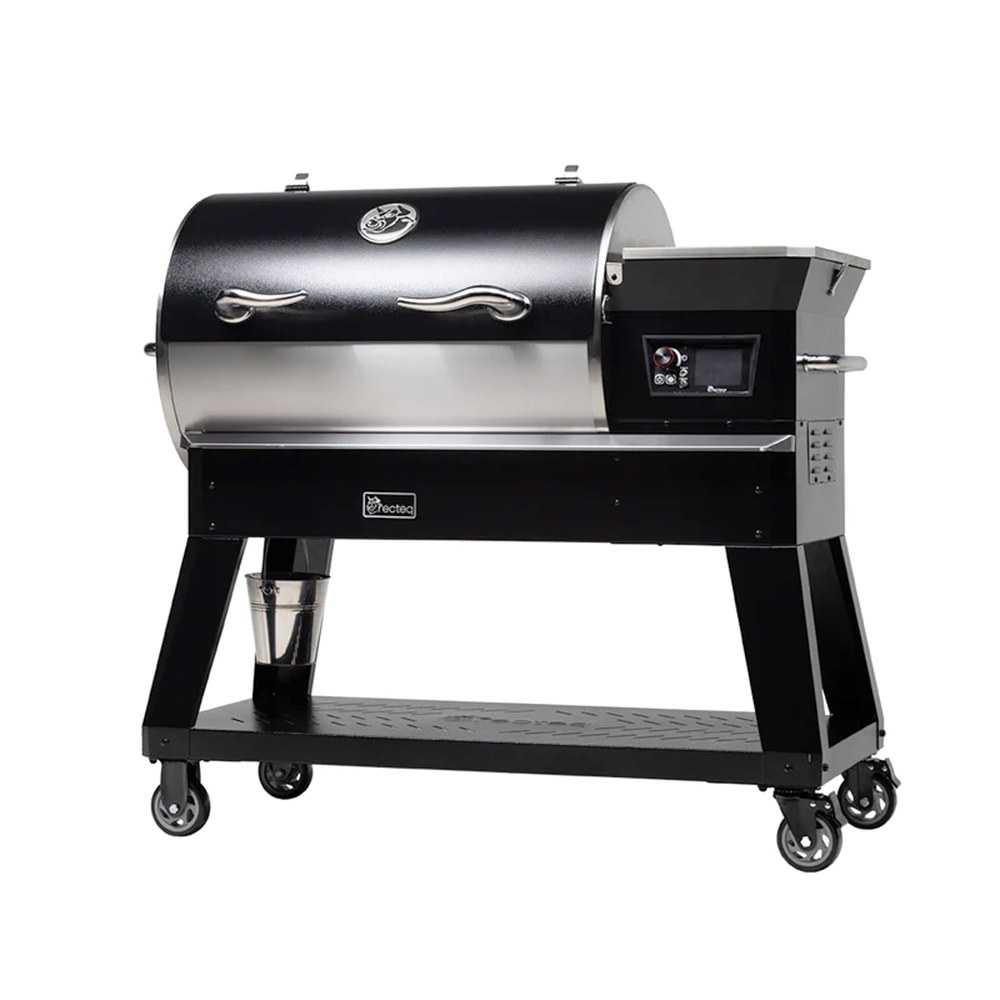
The Backyard Beast 1200 replaced the Backyard Beast 1000 and gained both grate and hopper: 1,220 sq in with the sliding second rack in, fed by a 30 lb hopper good for about 30 hours. Stainless runs from the cooking chamber through the firepot, drip pan and the bull-horn handles, with a cast iron heat deflector underneath. Against the Deck Boss 900 below it, the step up is capacity, hopper and two more years of warranty.
Recteq
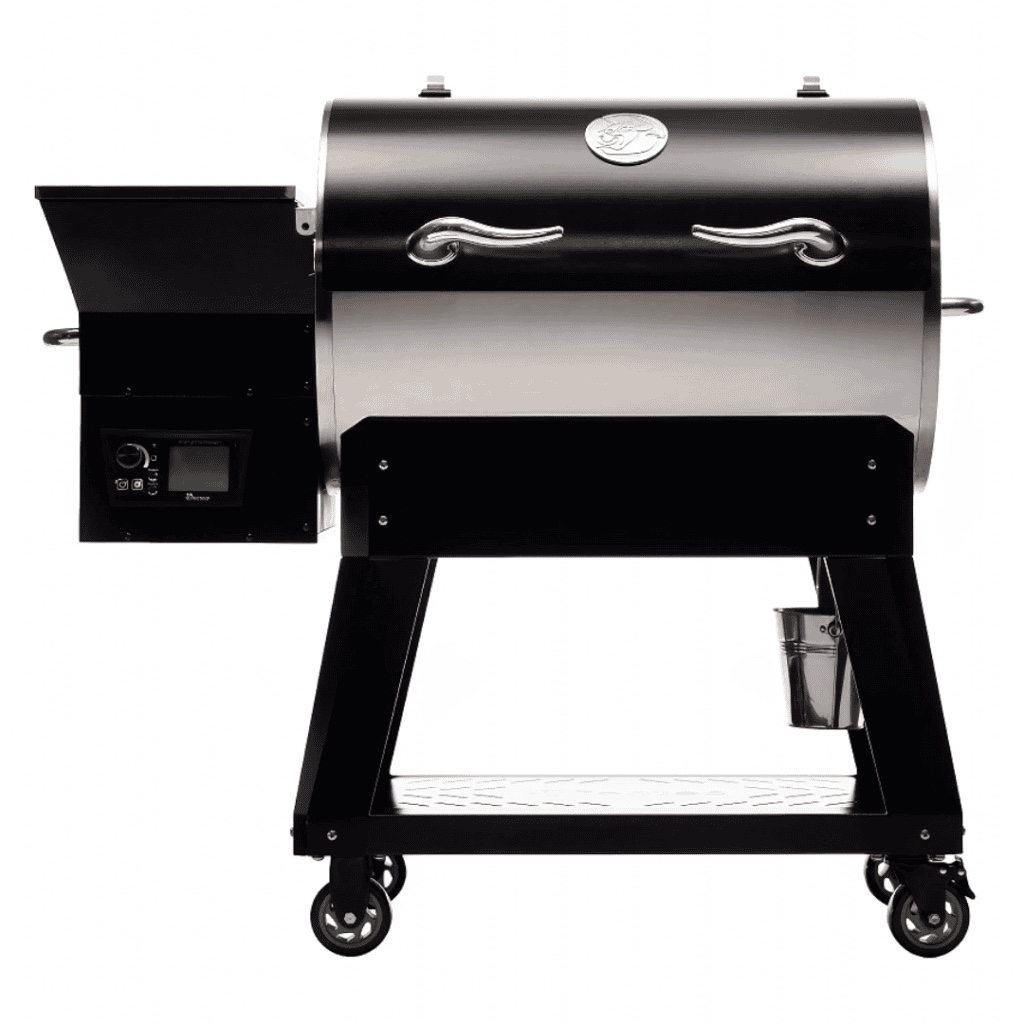
Recteq Deck Boss 590
The Recteq Deck Boss 590 is the mid-size workhorse of Recteq's lineup, bringing the same 180-700°F WiFi PID controller and stainless build as its bigger siblings in a family-friendly 590 sq in footprint that fits comfortably on a standard deck or patio. Note: this model is no longer sold new as of 2026. Its current equivalent is the Recteq Deck Boss 900 (RT-900DB). (RT-590 lineage: Deck Boss 590 -> Deck Boss 800 -> Deck Boss 900 (introduced 2026) at $999.99. No verified non-Amazon rating with sufficient count for the discontinued 590)
Recteq
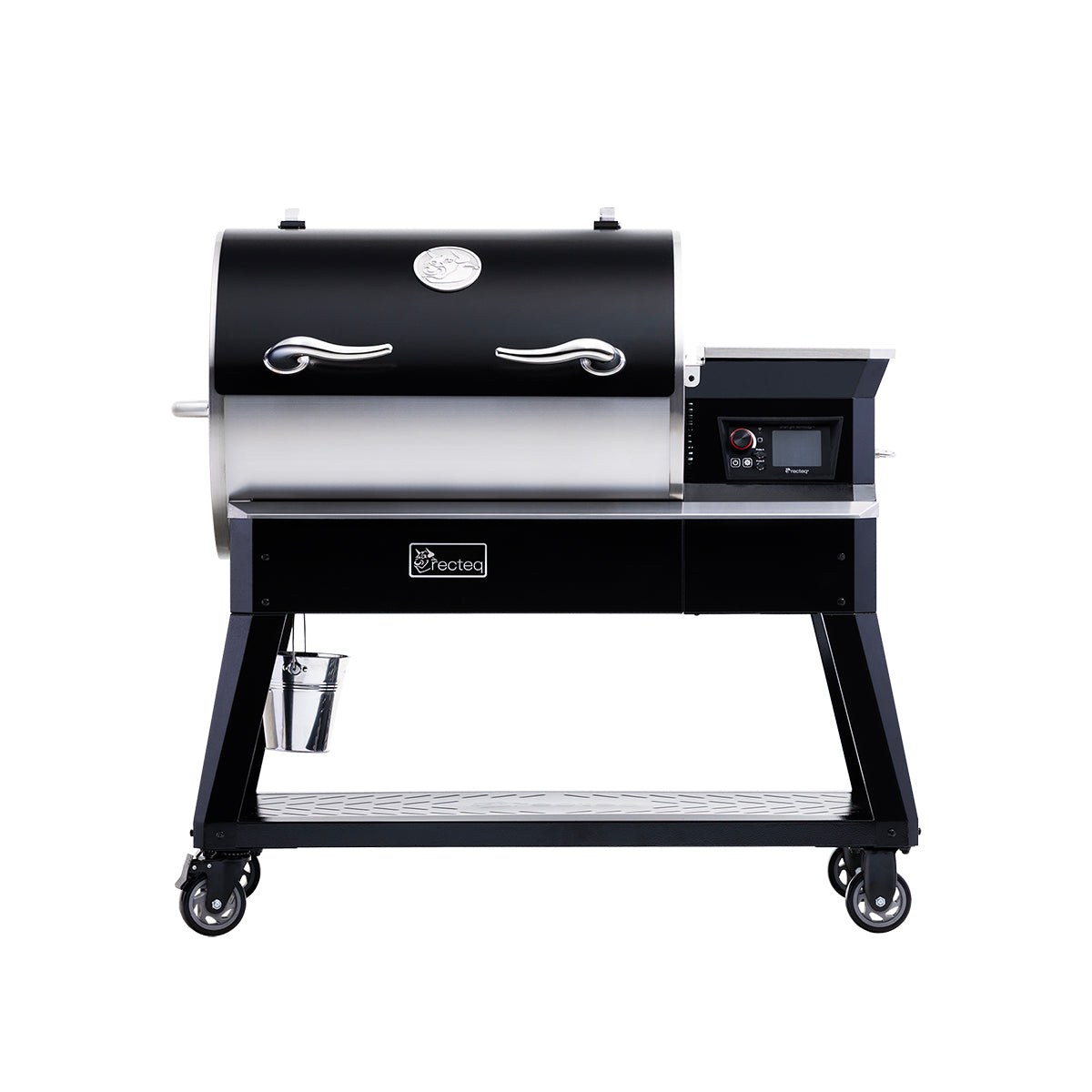
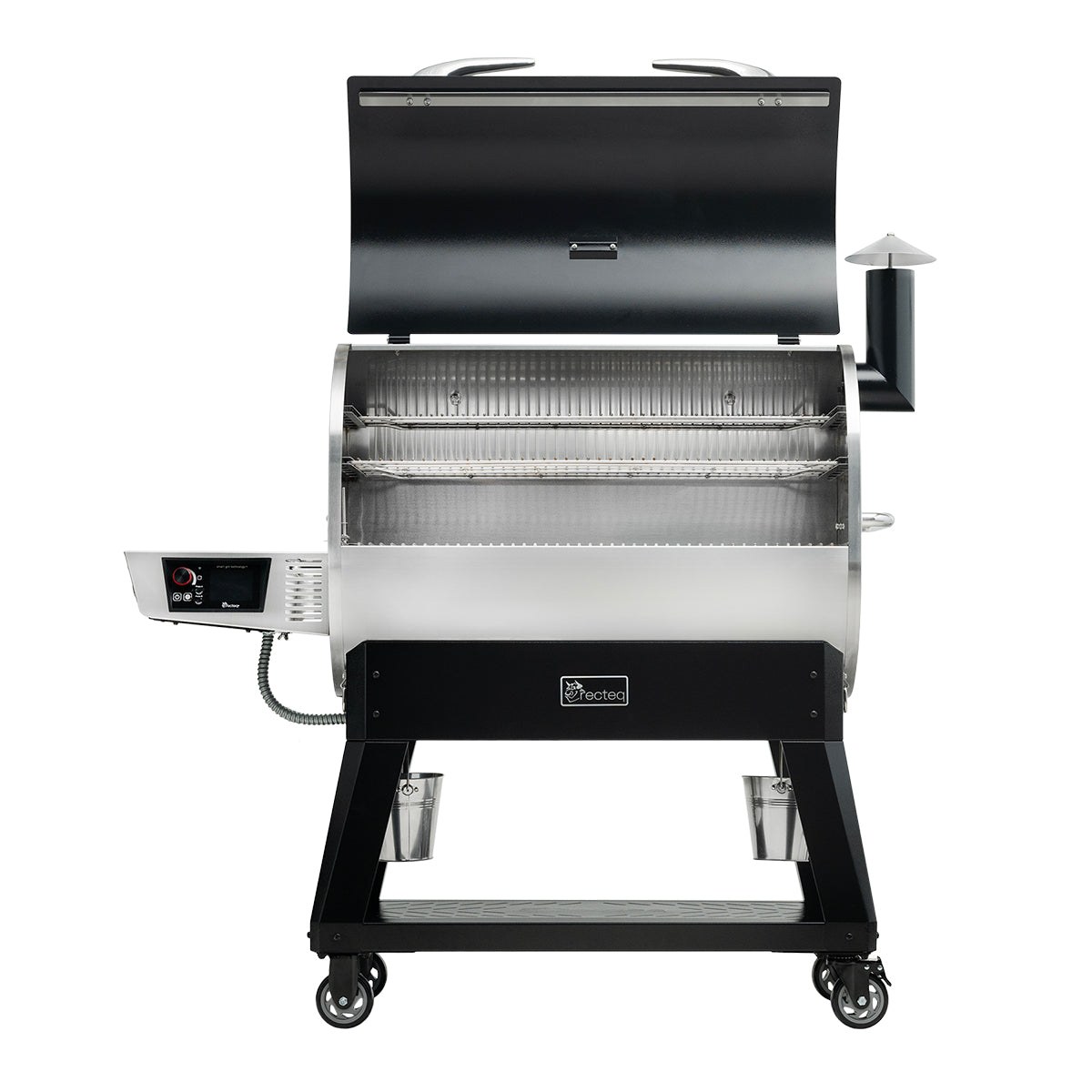
Recteq Deck Boss 900
The Deck Boss 900 is what Recteq put in place of the Deck Boss 590, and it is a bigger grill than that name swap suggests — 956 sq in against the 590's 592. It keeps the 304 stainless firepot and drip pan, cast iron heat deflector and the PID controller, and the HotFlash ceramic igniter rated past 100,000 cycles. It sits below the Backyard Beast 1200 mainly on hopper size, 18 lb against 30.
Recteq
Recteq Flagship 1600
The Flagship 1600 is the current top of Recteq's main cabinet line, replacing the RT-700 and RT-1250 generation that our catalog's era of Recteq grills came from. It holds 1,667 sq in with the second shelf, a 40 lb hopper — a whole bag of pellets, about 40 hours — and 304 stainless grates. Everything below it in the line uses the same PID controller and 180–700°F range; the Flagship buys capacity, grate material and the bull-horn stainless build.
Recteq
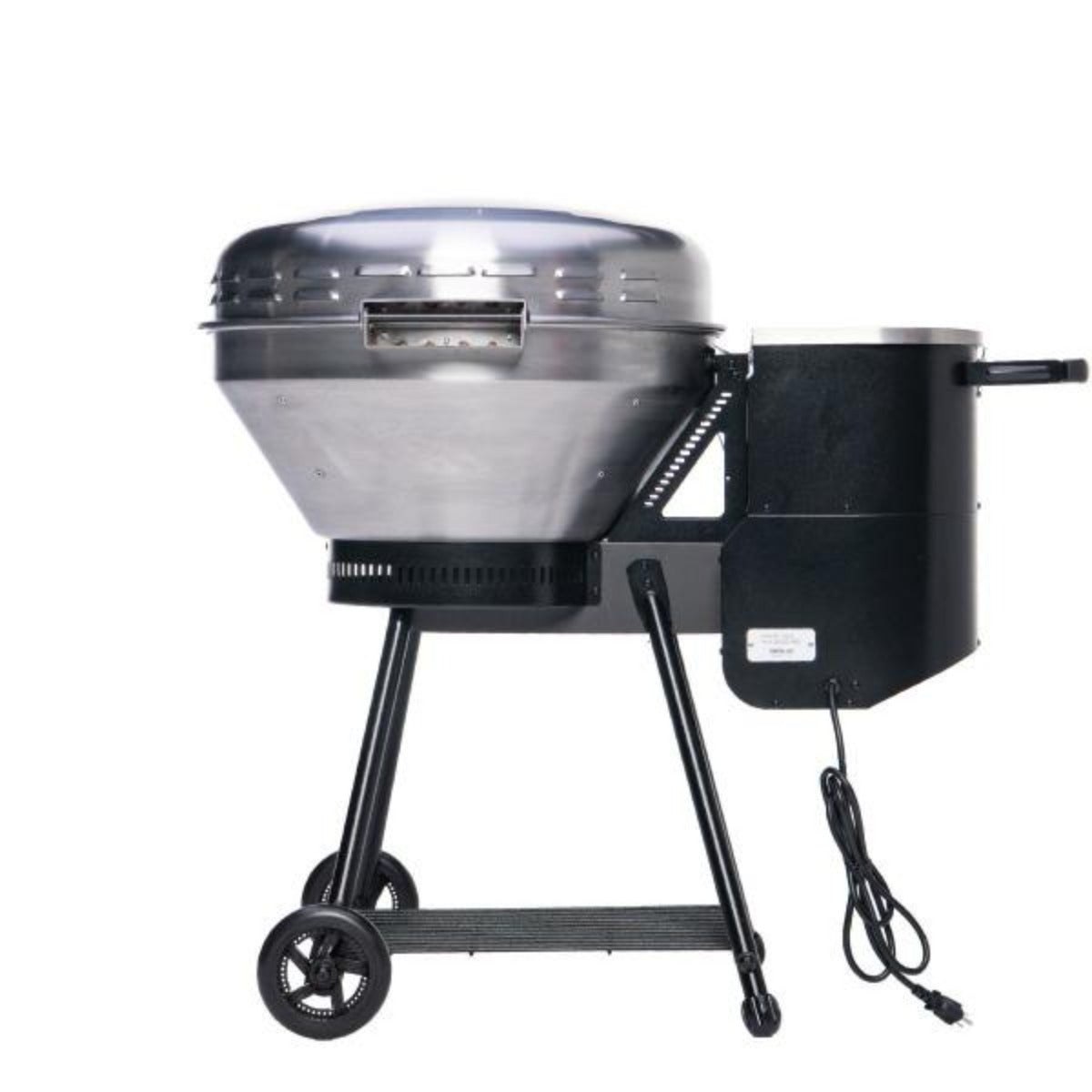
Recteq Bullseye RT-B380
The Bullseye is the odd one in the Recteq line: a 22-inch kettle-shaped pellet grill that runs the fire directly under the grate instead of over a heat deflector. That is how it reaches 749°F when every cabinet pellet grill stops at 500–700°F. The trade is that it smokes less well than a Deck Boss, and the base RT-B380 is the non-WiFi version — the $949 Bullseye Deluxe RT-B380X adds WiFi and an 18 lb hopper.
Recteq
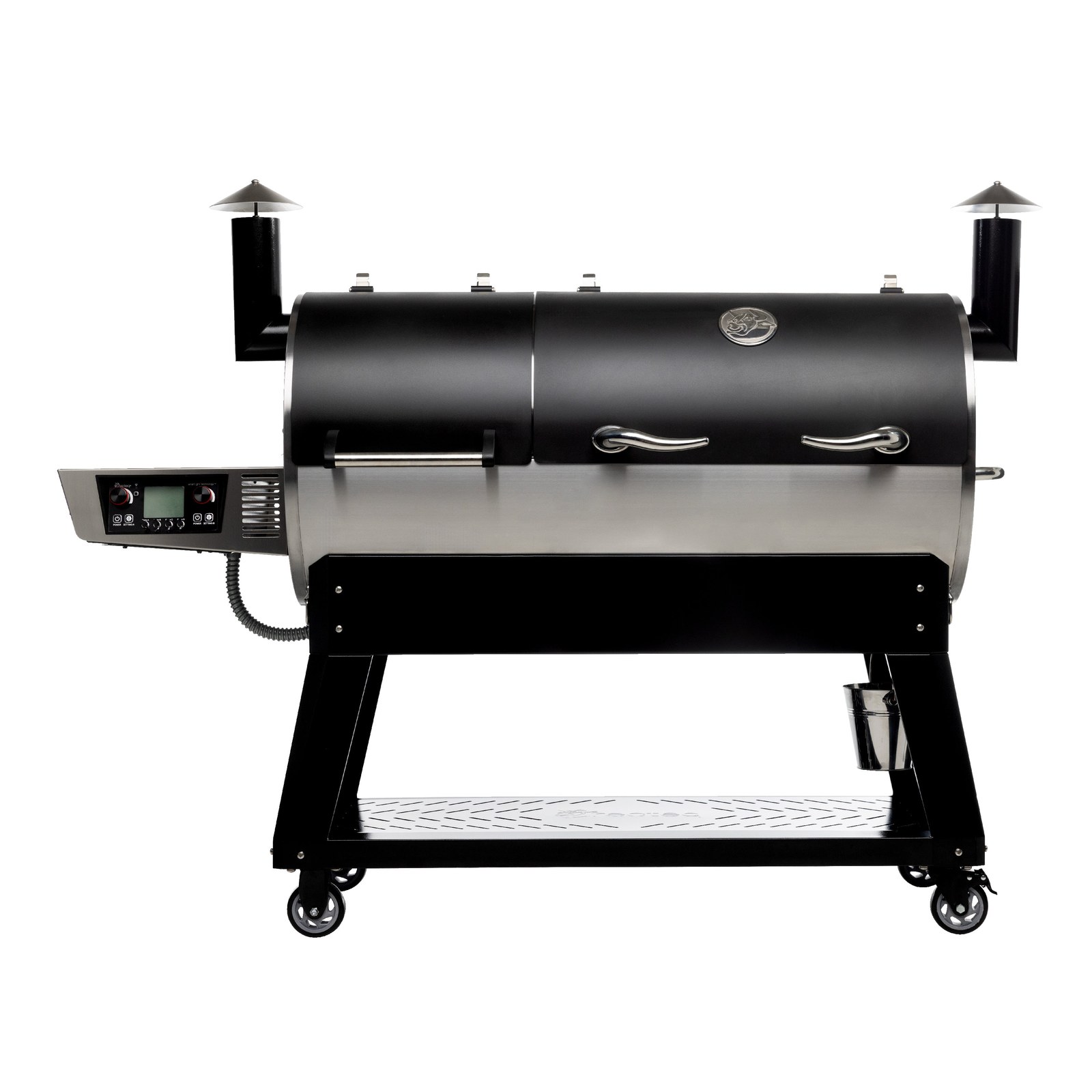
Recteq DualFire 1200
The DualFire 1200 is a two-chamber pellet grill: about 900 sq in of indirect smoking space on one side and roughly 300 sq in of direct-flame grilling on the other, each with its own fire and its own set point. That is the feature no other mainstream pellet grill has — you can hold 225°F on a brisket and sear at 700°F at the same time without moving anything. It carries a 70 lb hopper, the largest in Recteq's line.