Recteq
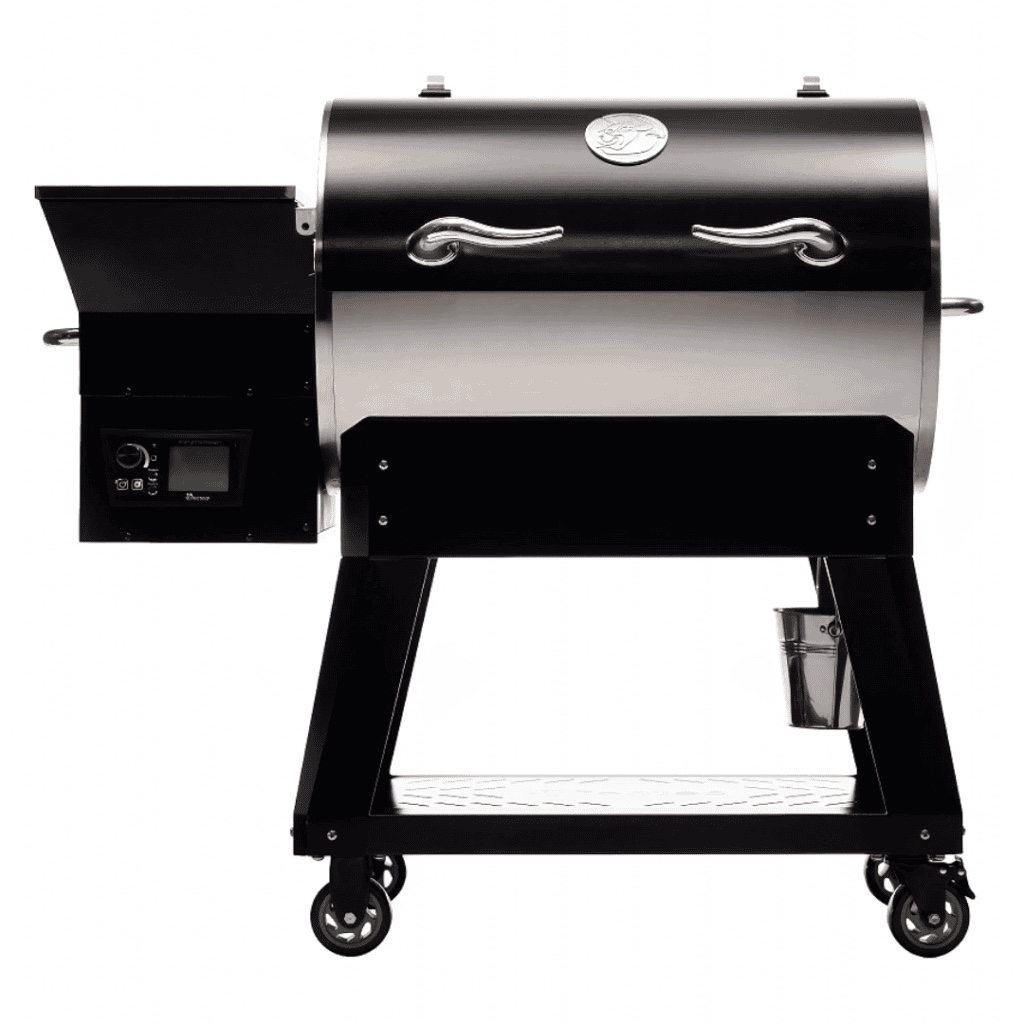
Recteq Deck Boss 590
The Recteq Deck Boss 590 is the mid-size workhorse of Recteq's lineup, bringing the same 180-700°F WiFi PID controller and stainless build as its bigger siblings in a family-friendly 590 sq in footprint that fits comfortably on a standard deck or patio. Note: this model is no longer sold new as of 2026. Its current equivalent is the Recteq Deck Boss 900 (RT-900DB). (RT-590 lineage: Deck Boss 590 -> Deck Boss 800 -> Deck Boss 900 (introduced 2026) at $999.99. No verified non-Amazon rating with sufficient count for the discontinued 590)
Specifications
Features
Pros
- ✓Same 180-700°F range as Recteq's flagship models, so it sears far hotter than a Traeger Pro or Pit Boss in the same price bracket
- ✓The PID controller holds setpoint with virtually zero temperature spikes for the entire cook - owners report unwavering temps even overnight
- ✓The oversized 30 lb hopper is unusual at this size and gives roughly 30 hours of low-and-slow cooking without a refill
- ✓Stainless steel firepot, drip pan, and grates shrug off rust that eats budget pellet grills within a couple of seasons
- ✓6-year warranty and Recteq's well-regarded US phone support beat nearly everyone in the sub-$1,000 pellet class
- ✓590 sq in is a sweet spot for families - six racks of ribs or four pork butts without heating a cavern of empty space
- ✓Dual-band WiFi and the Recteq app work reliably for remote temp changes and dual meat-probe monitoring
- ✓Adjustable-height legs and a compact footprint make it easier to fit on apartment decks and small patios than full-size competitors
Cons
- ✗No second-tier rack included at the base price, so the advertised capacity is a single grate unless you buy the add-on shelf
- ✗Direct-to-consumer only - no showroom, and freight shipping means a big heavy box and a two-hour assembly job
- ✗The powder-coated barrel areas around the lid can discolor or blister if you run frequent 700°F sear sessions
- ✗Smoke flavor at 250°F+ is mild, as with most efficient PID pellet grills - bark chasers often add a smoke tube
- ✗No pellet-level sensor, so you can still run the hopper dry on long cooks if you forget to check
- ✗The small controller screen is dim in sunlight and the knob interface feels dated next to touchscreen rivals
- ✗At roughly $900 it costs more than similarly-sized Pit Boss and Z Grills units, so the value shows up in longevity not sticker price
- ✗Side shelf, front shelf, and cover are all extra-cost accessories that quickly add $200+ to the real price
Owner Insightssummarized from owner discussions
The Deck Boss 590 is the mid-size Recteq, and the reason it comes up in almost every pellet buying thread is that it was the cheapest way into the brand's reputation for build quality. Owners consistently describe a thick stainless chamber that feels more substantial than the price suggests, assembly that takes about an hour alone, and a grill that does not care about weather. Cooking at 15°F without an insulating blanket is something owners point to directly when comparing it against Traegers they have owned. When it behaves, it holds temperature within a few degrees for a full overnight cook, and the standard verdict from a satisfied owner is that it makes them look like they know what they are doing.
The complaints are specific and they cluster. It overshoots the setpoint by 30 to 40 degrees on startup and every time the lid opens, and one owner who took a 275°F target up to 330°F and waited fifty minutes to settle was told by the company this was normal behavior. The app's notification feature is broken and has been for a long time by owners' accounts, so nobody trusts it to tell them when a probe hits target and most run a separate wireless thermometer. There is no pellet dump chute, which frustrates anyone who wants to switch wood types, and the more common daily annoyance is pellets bridging on the hopper walls and starving the auger until the grill shuts down. Reliability splits sharply. Plenty of owners report six briskets with no trouble at all, while others catalogue jammed augers, flame-outs, three failed displays and fried wiring. Customer service splits the same way: one owner got a full refund with free collection after a defect, another was told it was his fault and offered a 15 percent restocking fee.
It suits someone who wants sturdier hardware and better cold-weather behavior than a similarly priced Traeger and does not need the grill to be a grill. The single shelf is the practical limit worth planning around: it holds roughly one brisket, about three racks of ribs at a stretch, and owners doing meal-prep runs of chicken or short ribs find themselves short of space. Aftermarket rack systems are the common fix, and owners who fit one plus a lid seal say it transformed the grill. The other honest caveat is that this exact model is gone. Recteq replaced it with the Deck Boss 800, adding the second shelf and about $200, and then the 900, so new buyers are looking at a different grill and 590 owners are shopping the used market for parts and racks.
What owners like
- +The fixed structure is genuinely good for the money. Owners describe a thick stainless cook chamber that holds heat well, and one first-time buyer said it punches above its weight on build quality for the price
- +When it is behaving, temperature holding is excellent. Owners report it sitting within two to four degrees of setpoint, and one described twelve to eighteen hour holds within three degrees before his unit drifted with age
- +Cold and wind do not bother it. Owners cook on it at 15°F without insulation blankets and specifically contrast that with Traegers they have owned, which they say needed covering to work properly in the cold
- +Assembly is unusually painless. Multiple owners report finishing it alone in about an hour, with the cart taking longest, and nobody describes a box of two hundred parts
- +It will sear if you commit to it: pull the drip pan and deflector, set a cast iron pan directly over the firebox and crank the heat, which one owner describes as burning like a jet engine
- +Pellet brand barely matters. Several owners say they have run bargain warehouse pellets alongside premium blends and cannot tell the difference, which takes one variable out of the hobby
Common complaints
- −It overshoots. Owners report the grill blowing 30 to 40 degrees past setpoint on startup and after every lid opening, with one documenting a 275°F target that hit 330°F and took fifty minutes to settle. Recteq told him this was normal operating behavior; other owners disagree
- −The app's notifications are broken and have been for a long time, according to owners across multiple threads. Temperature readings lag badly, so nobody relies on it for probe alerts and most run a separate wireless thermometer alongside
- −There is no pellet cleanout chute, which owners who like switching wood types notice immediately. It is on the list of features that even entry-level competitors have, and one long-time owner cites its continued absence as evidence the brand has gone complacent
- −Pellets hang up on the hopper walls and let the auger run dry, which shuts the grill down mid-cook. Owners say they would rather have a pellet sensor than a cleanout for exactly this reason
- −Reliability is inconsistent and the bad experiences are severe: jammed augers, unexplained flame-outs, failed displays, fried electrical connections, and in one case a fire on the third cook
- −Customer service is polarized rather than merely good or bad. Some owners got a full refund with free return shipping on a defective unit; another was told the fault was user error and offered a return with a 15 percent restocking fee; a third never got a call back at all
- −One shelf is a real constraint. Owners say it holds about one brisket, that three racks of ribs is pushing it, and that meal-prep cooks run out of grate fast. Recteq discontinued its own second shelf, so owners buy aftermarket rack systems to fix it
- −It is slow to reach grilling temperature. Owners report 30 to 40 minutes to get up to searing heat, which is why several keep a kettle or a cast iron pan preheating instead
Common Questions
Is the lack of a pellet cleanout a problem?
Why does it blow past the temperature I set?
Can I trust the app?
Is 590 square inches enough?
How good is the customer service really?
Can it sear a steak?
Compare the Recteq Deck Boss 590
This model is no longer sold new. Its current equivalent is the Recteq Deck Boss 900 (RT-900DB).
We keep this page for the many still in use and on the used market — specs and honest pros/cons below still apply.
Related grills
More from Recteq →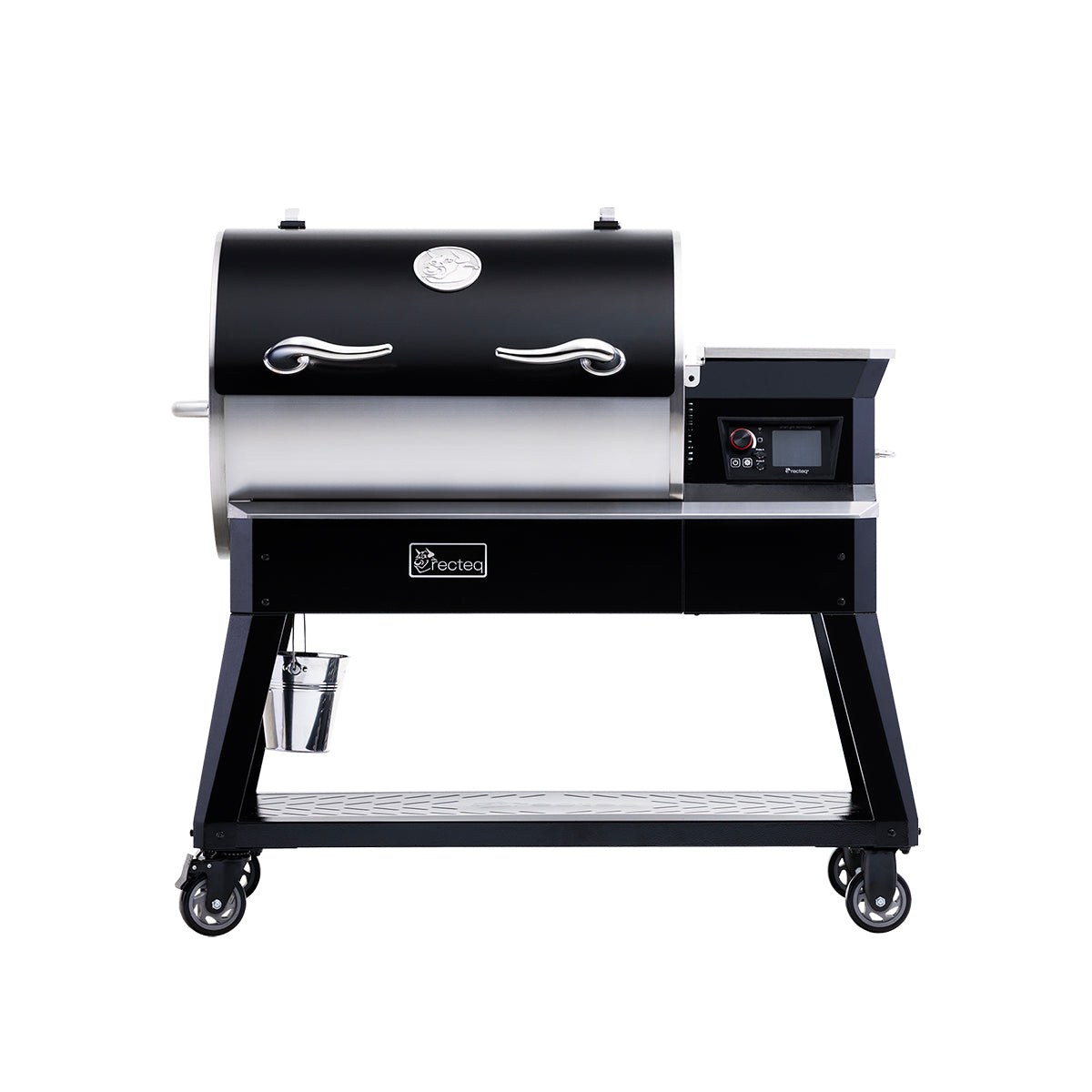
Recteq
Recteq Deck Boss 900
The Deck Boss 900 is what Recteq put in place of the Deck Boss 590, and it is a bigger grill than that name swap suggests — 956 sq in against the 590's 592. It keeps the 304 stainless firepot and drip pan, cast iron heat deflector and the PID controller, and the HotFlash ceramic igniter rated past 100,000 cycles. It sits below the Backyard Beast 1200 mainly on hopper size, 18 lb against 30.
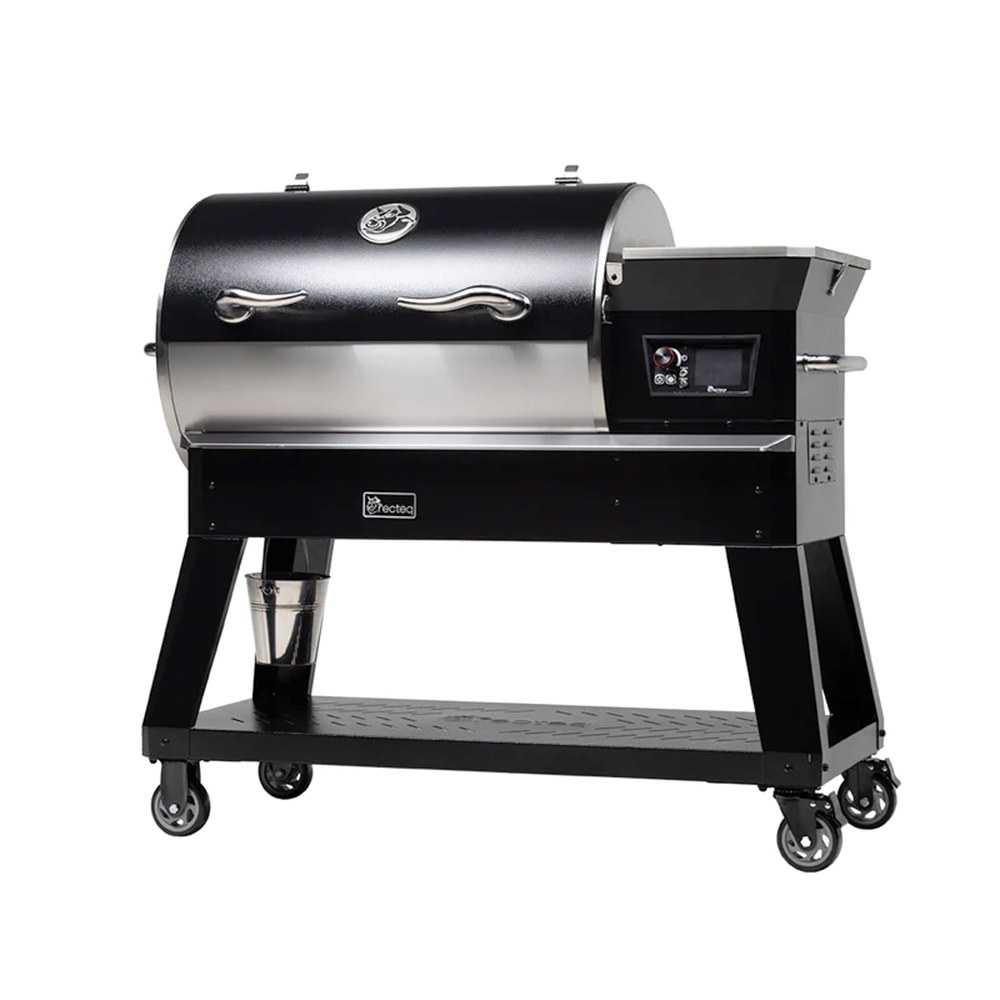
The Backyard Beast 1200 replaced the Backyard Beast 1000 and gained both grate and hopper: 1,220 sq in with the sliding second rack in, fed by a 30 lb hopper good for about 30 hours. Stainless runs from the cooking chamber through the firepot, drip pan and the bull-horn handles, with a cast iron heat deflector underneath. Against the Deck Boss 900 below it, the step up is capacity, hopper and two more years of warranty.
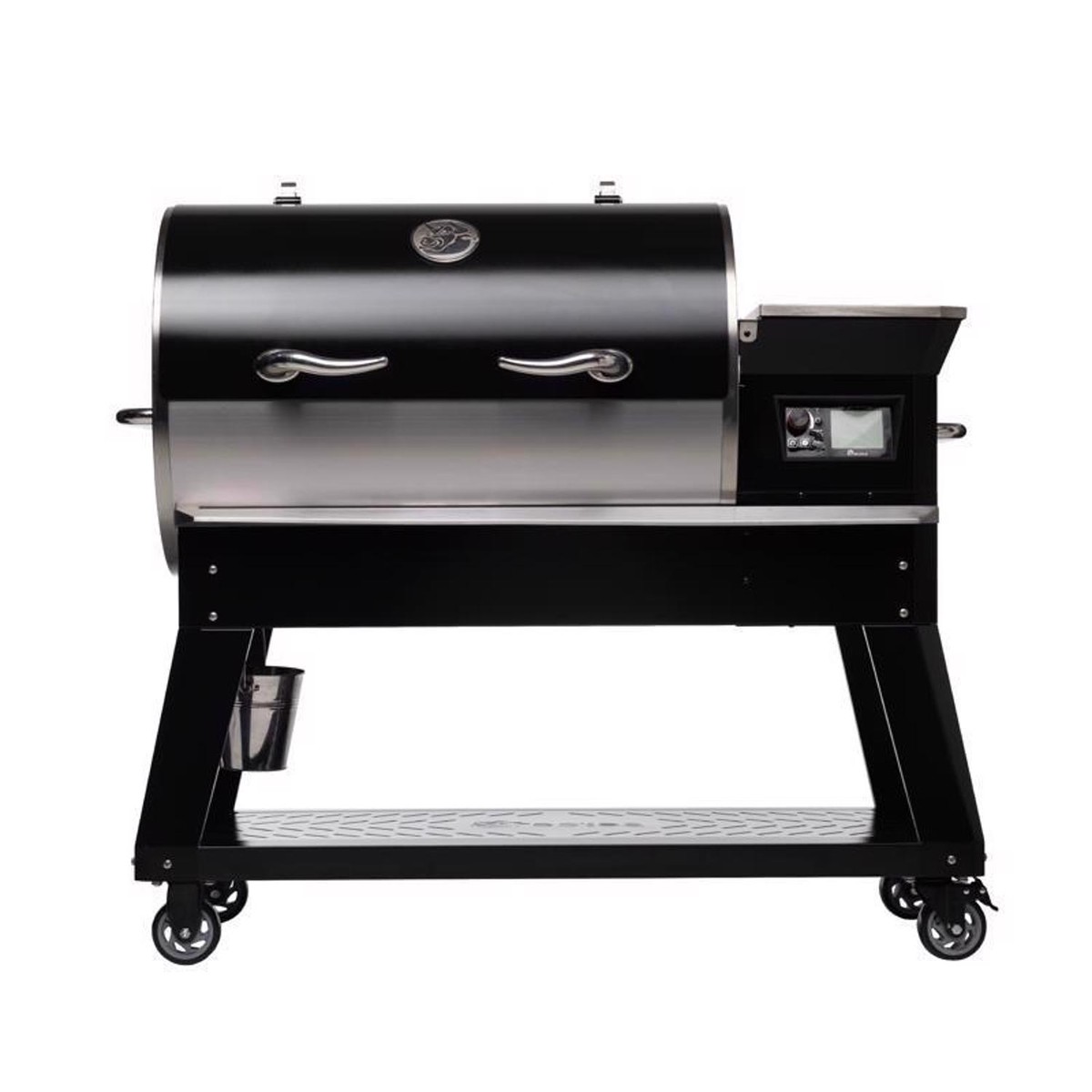
The Recteq Backyard Beast 1000 is the successor to the beloved RT-700 'Bull', pairing 1,014 sq in of stainless cooking space with a dual-band WiFi PID controller and a class-leading 180-700°F temperature range that lets it sear as well as it smokes. Note: this model is no longer sold new as of 2026. Its current equivalent is the Recteq Backyard Beast 1200 (RT-1200BB). (RT-1000 discontinued; Backyard Beast 1200 replaces it (and the Flagship 1100) at $1,199.99, frequently on sale at $1,049.99. No verified non-Amazon rating for the discontinued RT-1000)
Recteq
Recteq Bullseye RT-B380
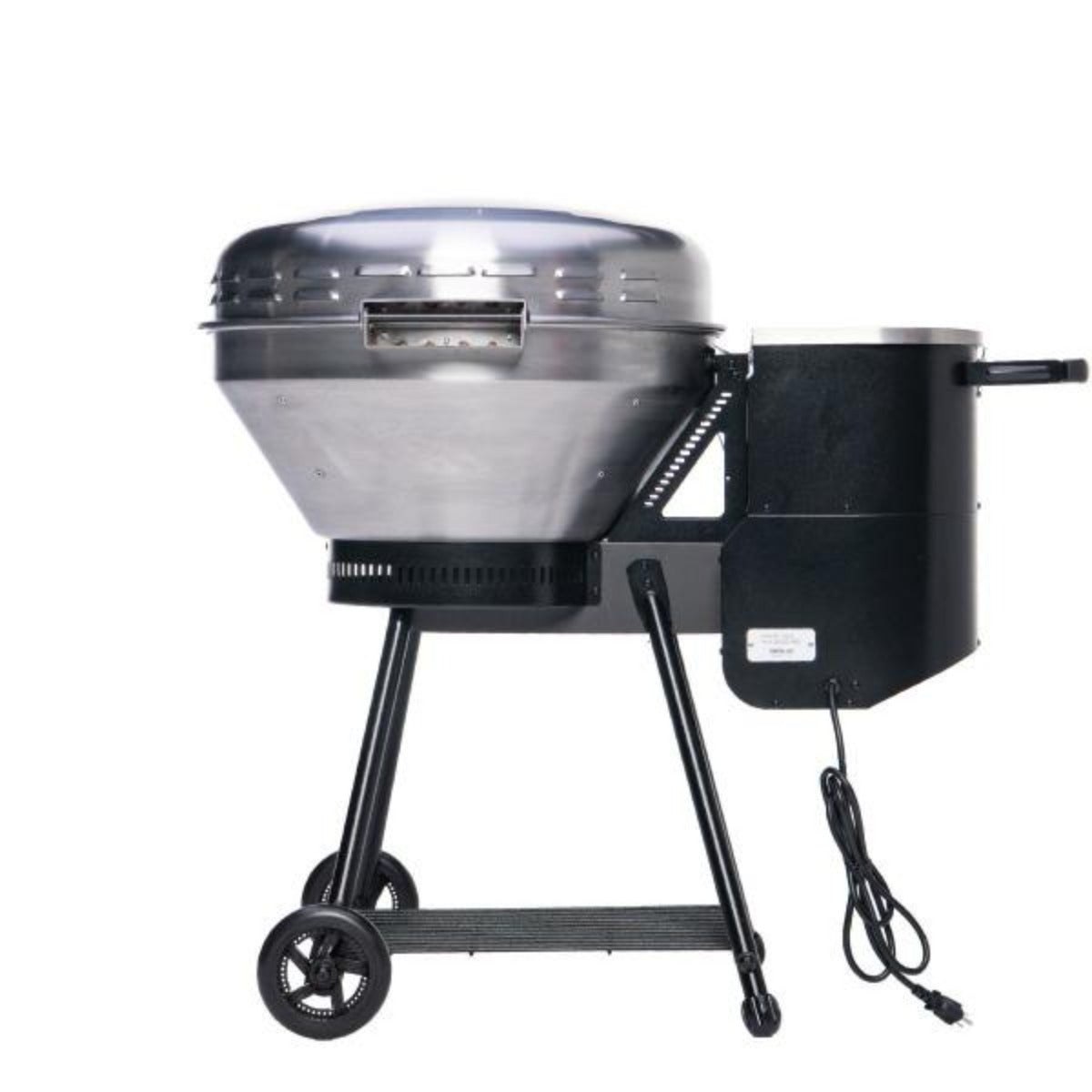
The Bullseye is the odd one in the Recteq line: a 22-inch kettle-shaped pellet grill that runs the fire directly under the grate instead of over a heat deflector. That is how it reaches 749°F when every cabinet pellet grill stops at 500–700°F. The trade is that it smokes less well than a Deck Boss, and the base RT-B380 is the non-WiFi version — the $949 Bullseye Deluxe RT-B380X adds WiFi and an 18 lb hopper.
Recteq
Recteq Flagship 1600
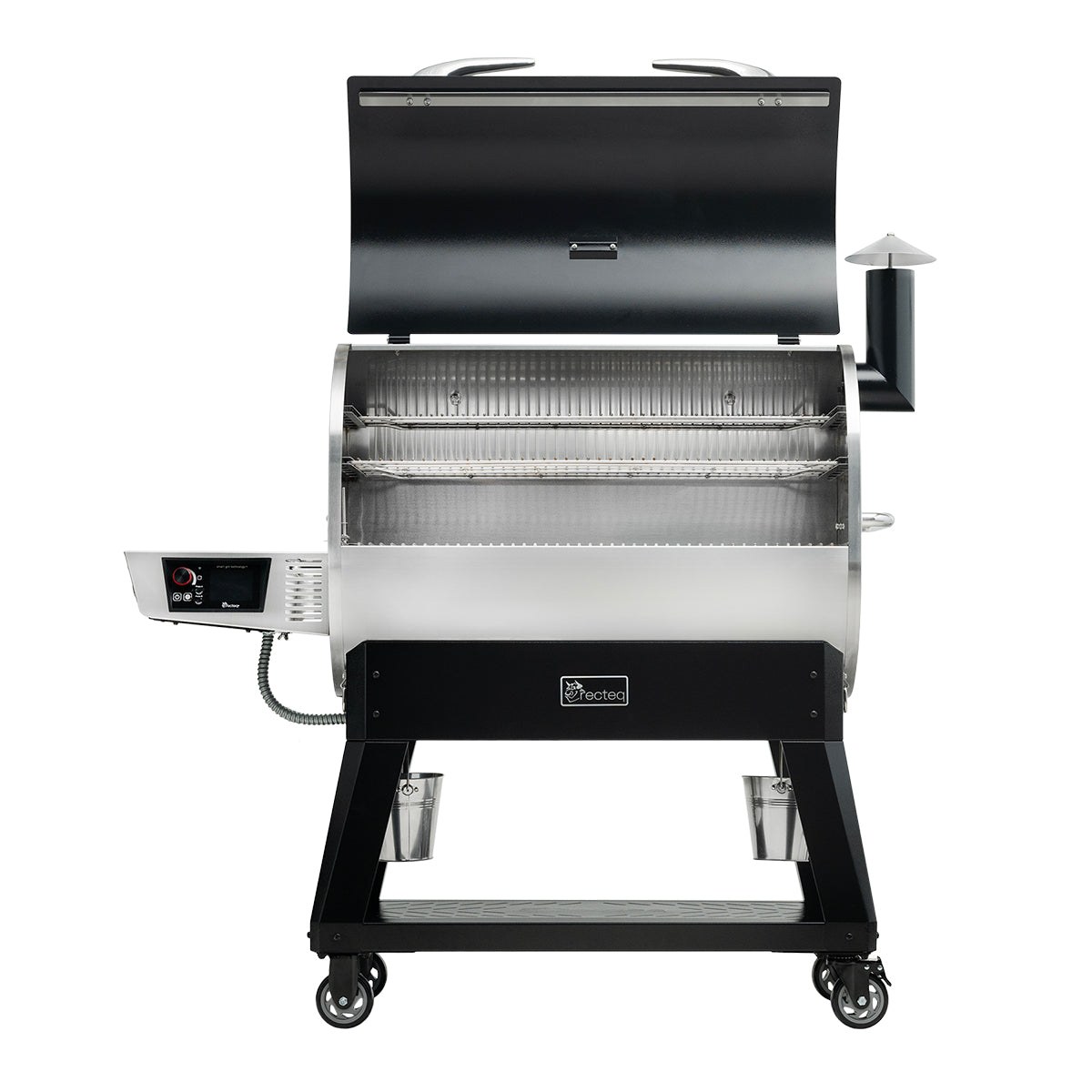
The Flagship 1600 is the current top of Recteq's main cabinet line, replacing the RT-700 and RT-1250 generation that our catalog's era of Recteq grills came from. It holds 1,667 sq in with the second shelf, a 40 lb hopper — a whole bag of pellets, about 40 hours — and 304 stainless grates. Everything below it in the line uses the same PID controller and 180–700°F range; the Flagship buys capacity, grate material and the bull-horn stainless build.
Recteq
Recteq DualFire 1200
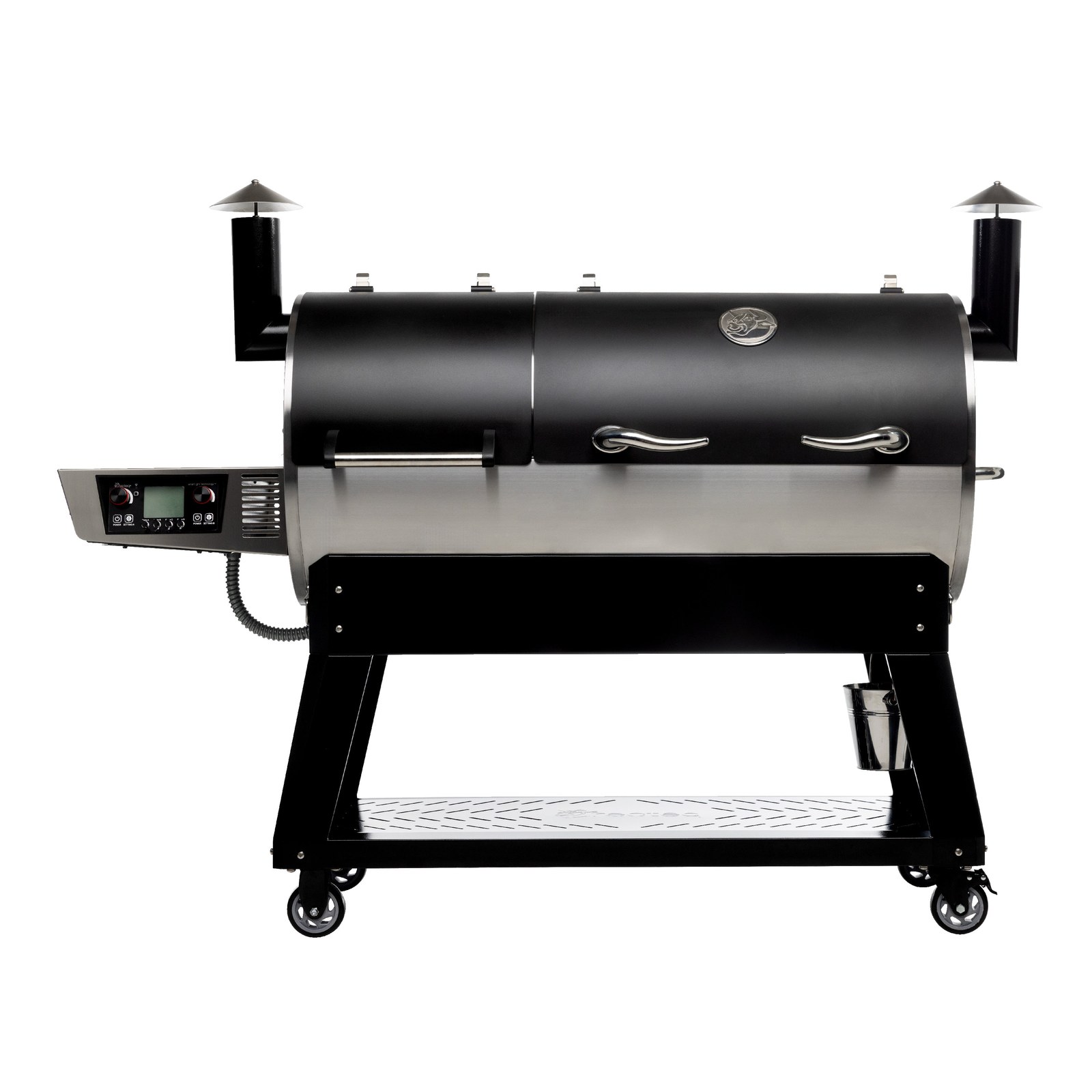
The DualFire 1200 is a two-chamber pellet grill: about 900 sq in of indirect smoking space on one side and roughly 300 sq in of direct-flame grilling on the other, each with its own fire and its own set point. That is the feature no other mainstream pellet grill has — you can hold 225°F on a brisket and sear at 700°F at the same time without moving anything. It carries a 70 lb hopper, the largest in Recteq's line.