Recteq
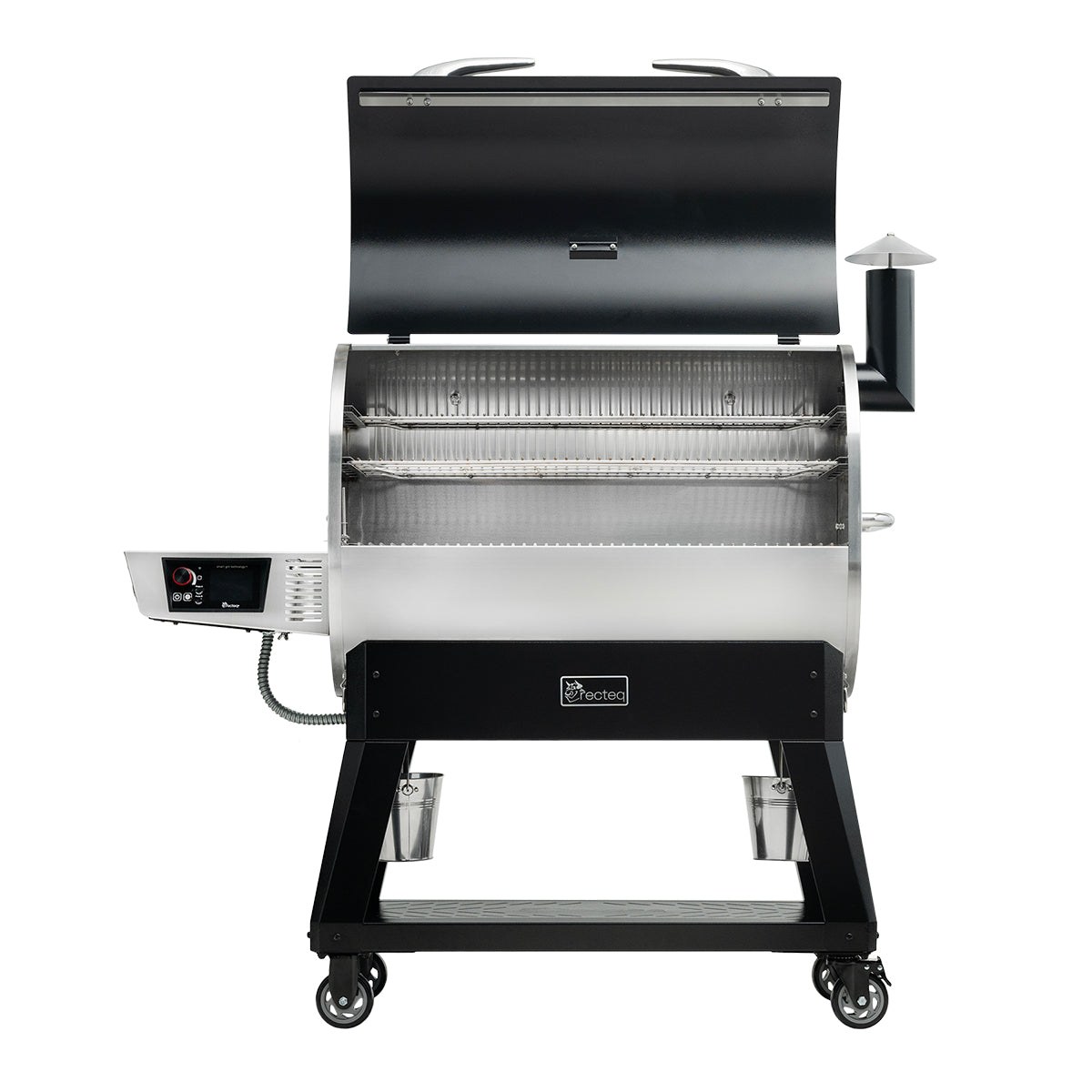
Recteq Flagship 1600
The Flagship 1600 is the current top of Recteq's main cabinet line, replacing the RT-700 and RT-1250 generation that our catalog's era of Recteq grills came from. It holds 1,667 sq in with the second shelf, a 40 lb hopper — a whole bag of pellets, about 40 hours — and 304 stainless grates. Everything below it in the line uses the same PID controller and 180–700°F range; the Flagship buys capacity, grate material and the bull-horn stainless build.
We may earn a commission. Price and availability on Amazon may differ.
Specifications
Features
Pros
- ✓1,667 sq in handles six briskets or 15 pork butts — genuine competition capacity
- ✓40 lb hopper takes an entire bag of pellets, so there is no half-bag left to store
- ✓304 stainless grates rather than porcelain-coated steel, which chips and then rusts
- ✓Two temperature probes and a WiFi PID controller standard, not an upsell
- ✓218 lbs is lighter than several smaller cabinet grills, which makes delivery and placement easier
- ✓6-year bumper-to-bumper warranty
Cons
- ✗1,667 sq in is far more grill than most households will ever fill, and a big chamber is slower to come to temperature
- ✗700°F is a chamber temperature, not a sear station — there is no direct-flame zone
- ✗Sold direct with limited dealer presence, so hands-on inspection before buying is difficult for most buyers
- ✗Recteq's list price and its standing sale price differ by several hundred dollars, which makes value comparison awkward
- ✗No induction or gas side burner at a price where Traeger's Woodridge Elite includes one
Owner Insightssummarized from owner discussions
The Flagship 1600 is the big one in Recteq's main line, and the people who buy it are mostly stepping up from something smaller that could not keep up: a Traeger Pro, a Pit Boss, an old Camp Chef, a Weber Smokey Mountain they were tired of babysitting. What they report is a grill that holds temperature far better than what they left, driven by the cast iron deflector over the burn pot, and enough space to do things that were not possible before. One owner ran about 60 lb of pork butt through it overnight for a 150-person potluck. Another coming off a single-grate Traeger pointed out something worth knowing before you buy: the main grate is only roughly the same size as his old grill, and almost all of the 1,600 square inches is the extra racks.
Two real problems come up repeatedly. The first is delivery. The largest discussion about this grill is an owner whose brand new Flagship arrived damaged, and the replies are full of people in the same spot, some waiting a week for an answer. Recteq's support has a strong reputation and it is deserved when you reach someone, but owners describe it as understaffed, and the honest reading is that the service stories exist partly because things arrive broken. The second is that it can run hot; an owner whose spare ribs finished in three hours instead of five measured 50 to 70°F above the controller with two independent thermometers, and lowering the feed rate on Recteq's advice only narrowed it to about 25°F. It also smokes out of the lid seam, which is normal for the brand and which owners fix with felt tape, and there is no pellet dump, so changing pellet varieties means a shop vac.
It is the right grill for someone who genuinely cooks for crowds, wants the smoke box, or is building a pellet cooker into an outdoor kitchen. Against a Camp Chef Woodwind Pro 36 the argument comes down to smoke against build: the Woodwind's wood chunk box makes more smoke and the people who own one say so plainly, while owners who have had both say the Recteq is sturdier, better finished and less trouble with the app and probes. Against a Weber Searwood XL the Recteq wins on size and loses on cleanup and the rotisserie. Against a Yoder or a Lone Star it is roughly half the money and owners who considered both and bought the Recteq say they do not regret it, though the people who went the other way are just as certain. The caveat worth taking seriously comes from a Flagship 1100 owner: if he were buying today he would take the Backyard Beast instead, because the extra racks on the larger grill are more than he would ever use.
What owners like
- +The capacity is real and owners use all of it. One ran roughly 60 lb of pork butt overnight to feed 120 to 150 people at a school potluck, and another moving off an original Traeger with a single 600 square inch grate described the jump to three racks as getting room for everything that used to have to wait
- +The optional smoke box is the accessory owners rave about and the main reason several chose this over the Backyard Beast. With the chamber at 180°F they measure roughly 90°F at the top of the box and 60°F at the bottom, which is genuine cold smoking for cheese, fish and jerky, and owners say it also raises the smoke level in the main chamber
- +Temperature stability converts people coming off cheaper grills. An owner who moved from a Pit Boss Austin XL said the difference was unbelievable and that he got better smoke flavor without needing a smoke tube, and the cast iron heat deflector over the burn pot is what owners credit for the even, steady chamber
- +The 40 lb hopper covers a full overnight without a refill, which is the single most common reason people step up from the smaller Recteqs
- +Build quality holds up to a side-by-side inspection. Buyers who compared it against Traeger and Weber on the same store floor at Ace describe the Recteq as visibly more solidly made, and an owner who lost a grill to a lightning strike chose it because the stainless was thicker than the Traeger's
- +It slots in well below the American-made competition it gets compared to. Owners weighing it against a Yoder YS640 at $2,700 to $2,800 or a Lone Star cabinet at $3,000-plus repeatedly land on the Flagship, and the ones who did say the food coming off it has been excellent; on sale it has been bought for around $1,350
- +It takes to being built in. One owner put his into an outdoor kitchen by pulling the lower legs and cart and anchoring it to a concrete counter, and it hits 550°F for reverse searing chicken and steaks with a cast iron insert
Common complaints
- −Freight damage is common enough that it dominates the biggest thread about this grill. One owner's brand new Flagship arrived damaged, and the replies filled with others in the same position: a week of unanswered emails, a smaller model delivered bent and dented and left in the driveway in the rain, an offer of $150 in store credit on a frame that could not be assembled
- −Recteq's support is genuinely good once you reach it and genuinely slow to reach. Owners who had free grates or parts sent unprompted sit in the same threads as owners waiting days for a reply, and the fairest summary in them is that support is understaffed but painless once you have someone. One owner's blunt version is that the stories of great service exist because there are so many problems in the first place
- −It can run hot, and not by a little. An owner two months in had four racks of spare ribs finish in three hours instead of five, and both a wireless ambient probe and a separate analog thermometer read 50 to 70°F above the controller the longer the grill ran. Recteq had him lower the feed rate, which brought it to about 25°F hot rather than fixing it
- −There is no lid gasket and it smokes out of the seam. Owners confirm this is normal for the brand rather than a defect, but new owners are startled by it, and the common fix is wrapping the inside of the lid with high-temperature felt tape
- −No pellet dump, which is the deal-breaker for a share of shoppers. Changing pellet varieties or emptying for storage means a shop vac, and more than one buyer chose a Weber Searwood specifically for its ash dump and hopper emptying
- −The factory front shelf gets poor marks. Owners call it thin and cheap for the money and a number of them either buy an aftermarket shelf or build their own out of wood and hinges
- −There is no rotisserie, and owners who want one leave for the Searwood over it. Recteq's own covers also get mixed reviews, fitting tight and trapping moisture, and at least one owner found no cover listed specifically for this model
Common Questions
Why is my Flagship running hotter than the set temperature?
Is smoke leaking out of the lid a problem?
Is the smoke box worth adding?
How does it compare to a Camp Chef Woodwind Pro 36 for smoke flavor?
What is delivery like, and what if it arrives damaged?
Compare the Recteq Flagship 1600
Related grills
More from Recteq →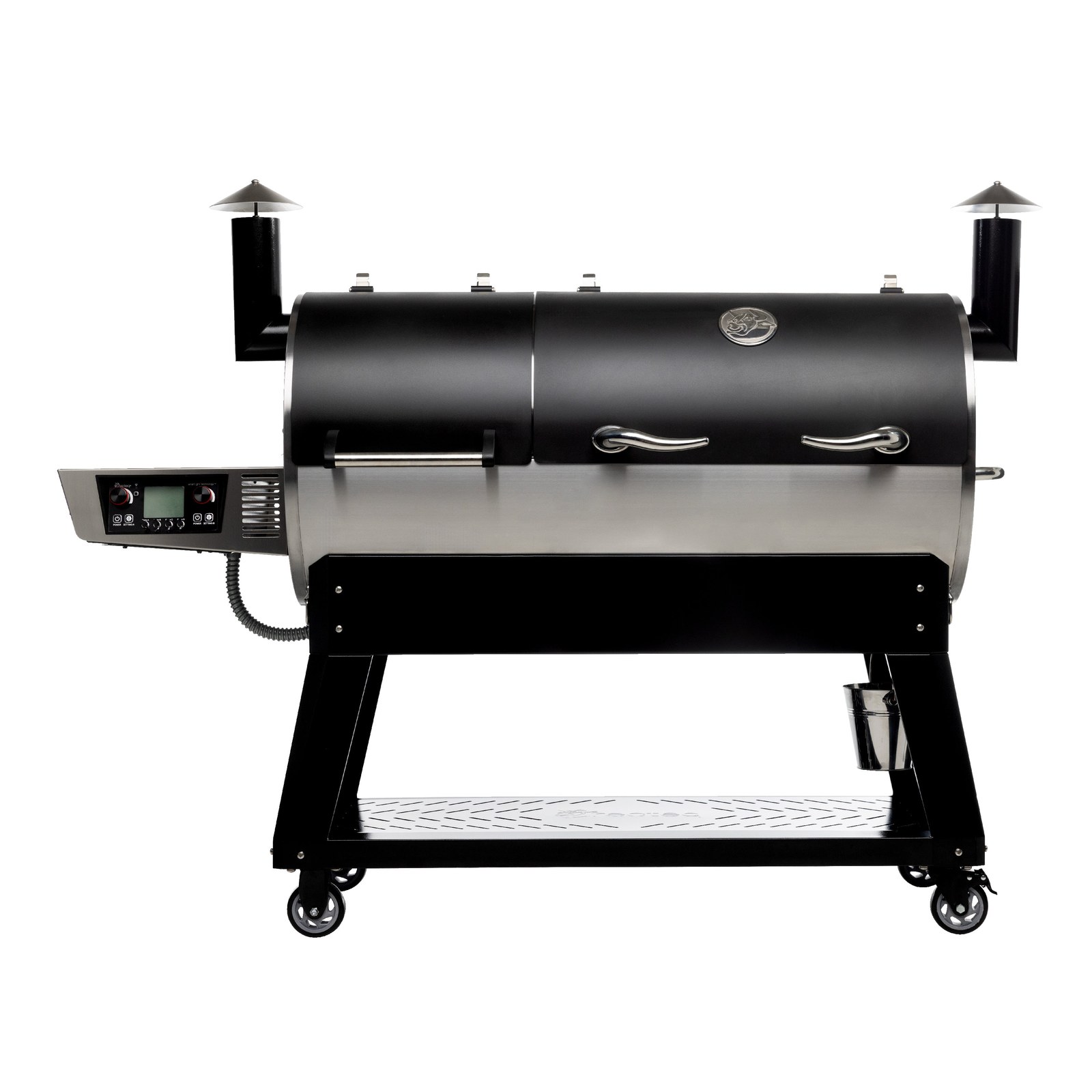
Recteq
Recteq DualFire 1200
The DualFire 1200 is a two-chamber pellet grill: about 900 sq in of indirect smoking space on one side and roughly 300 sq in of direct-flame grilling on the other, each with its own fire and its own set point. That is the feature no other mainstream pellet grill has — you can hold 225°F on a brisket and sear at 700°F at the same time without moving anything. It carries a 70 lb hopper, the largest in Recteq's line.
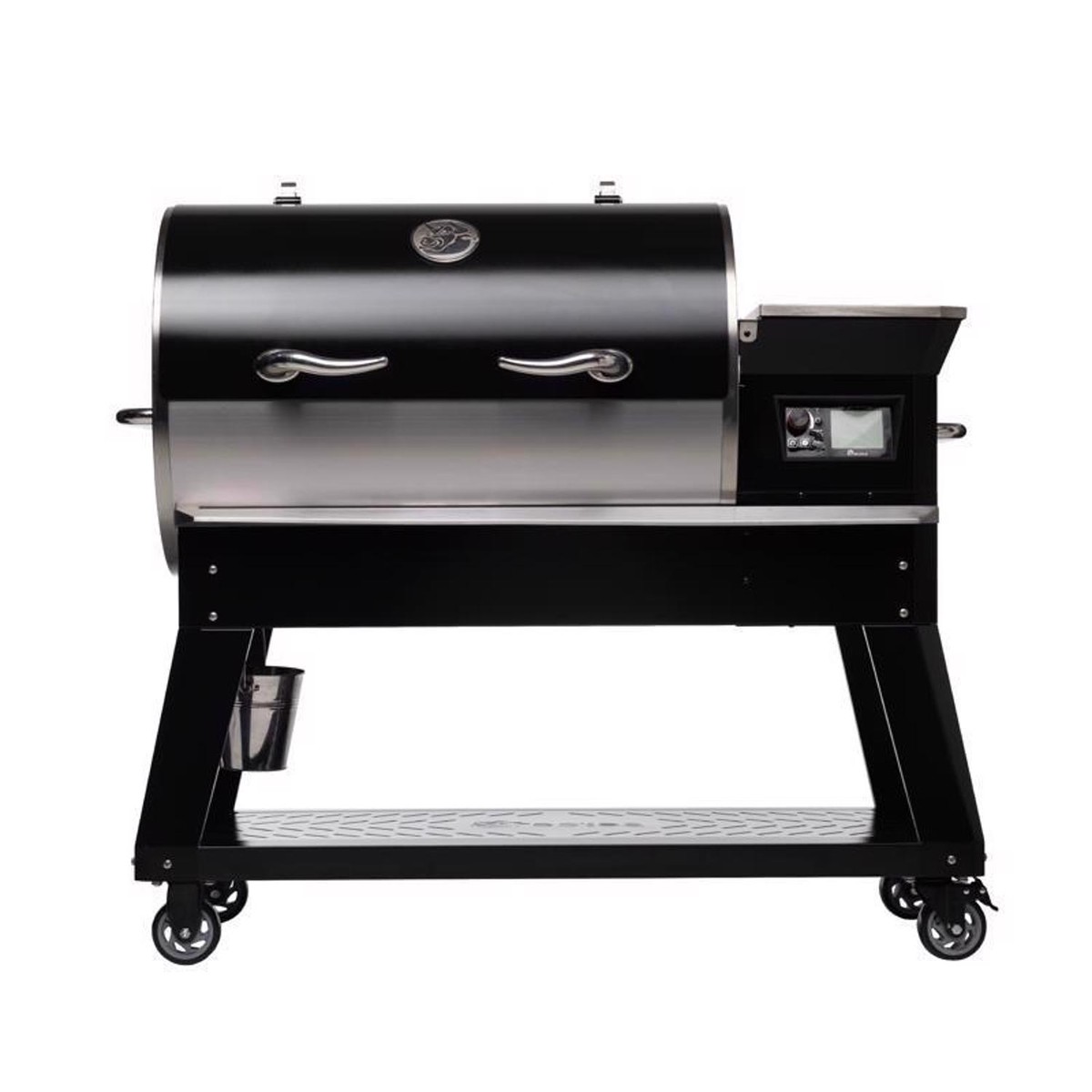
The Recteq Backyard Beast 1000 is the successor to the beloved RT-700 'Bull', pairing 1,014 sq in of stainless cooking space with a dual-band WiFi PID controller and a class-leading 180-700°F temperature range that lets it sear as well as it smokes. Note: this model is no longer sold new as of 2026. Its current equivalent is the Recteq Backyard Beast 1200 (RT-1200BB). (RT-1000 discontinued; Backyard Beast 1200 replaces it (and the Flagship 1100) at $1,199.99, frequently on sale at $1,049.99. No verified non-Amazon rating for the discontinued RT-1000)
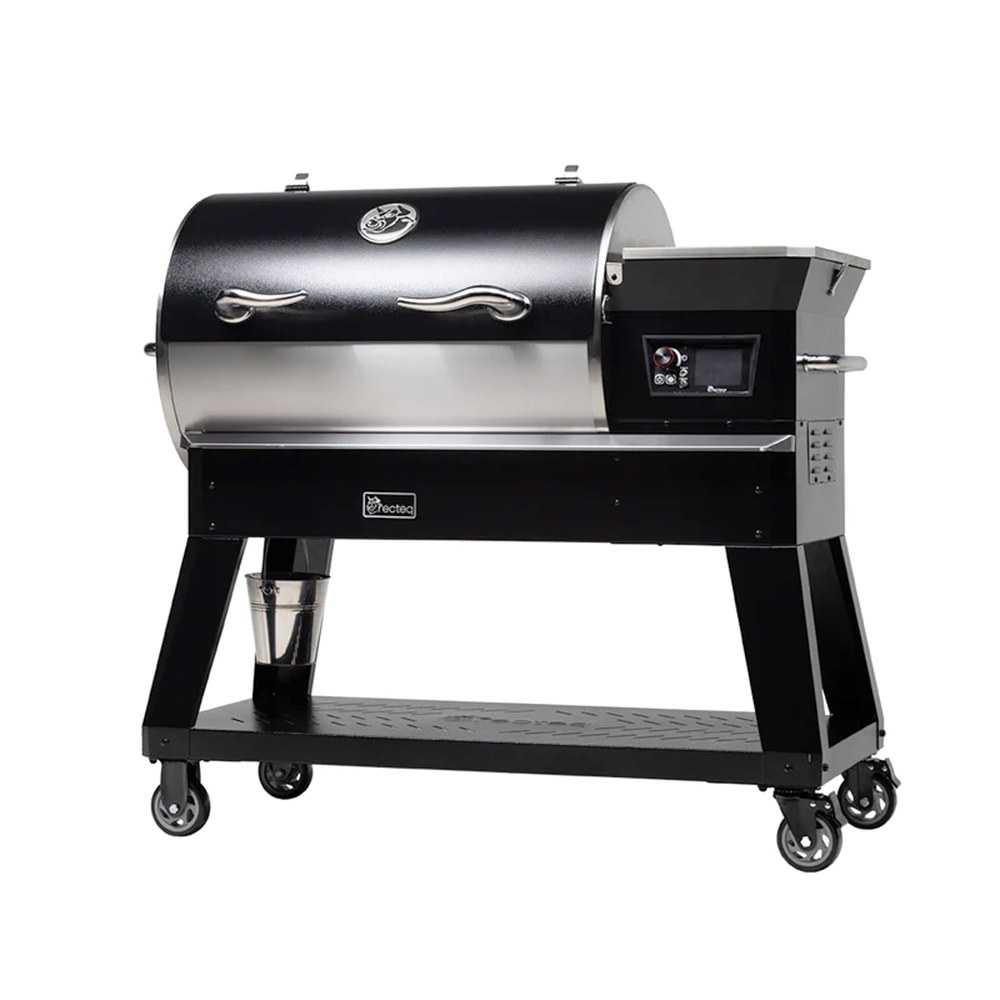
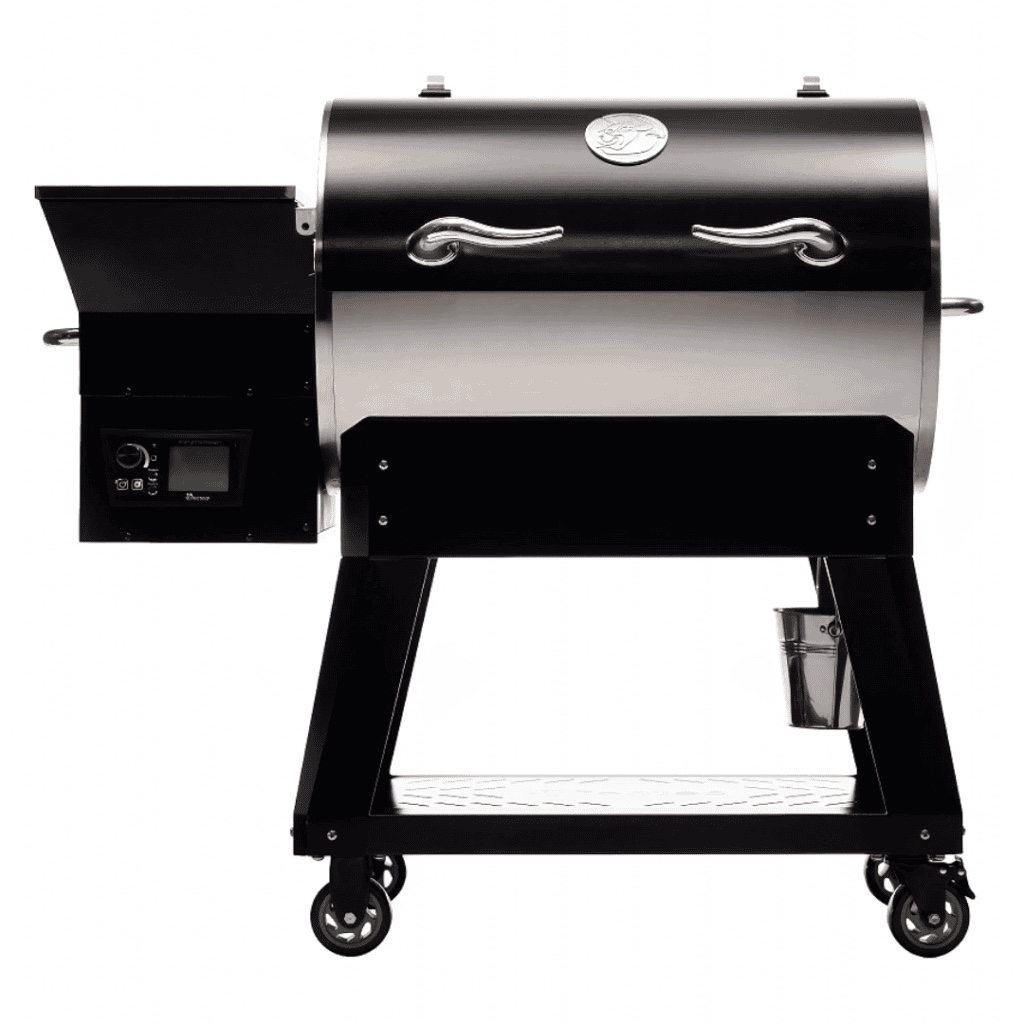
The Backyard Beast 1200 replaced the Backyard Beast 1000 and gained both grate and hopper: 1,220 sq in with the sliding second rack in, fed by a 30 lb hopper good for about 30 hours. Stainless runs from the cooking chamber through the firepot, drip pan and the bull-horn handles, with a cast iron heat deflector underneath. Against the Deck Boss 900 below it, the step up is capacity, hopper and two more years of warranty.
Recteq
Recteq Deck Boss 590
The Recteq Deck Boss 590 is the mid-size workhorse of Recteq's lineup, bringing the same 180-700°F WiFi PID controller and stainless build as its bigger siblings in a family-friendly 590 sq in footprint that fits comfortably on a standard deck or patio. Note: this model is no longer sold new as of 2026. Its current equivalent is the Recteq Deck Boss 900 (RT-900DB). (RT-590 lineage: Deck Boss 590 -> Deck Boss 800 -> Deck Boss 900 (introduced 2026) at $999.99. No verified non-Amazon rating with sufficient count for the discontinued 590)
Recteq
Recteq Deck Boss 900
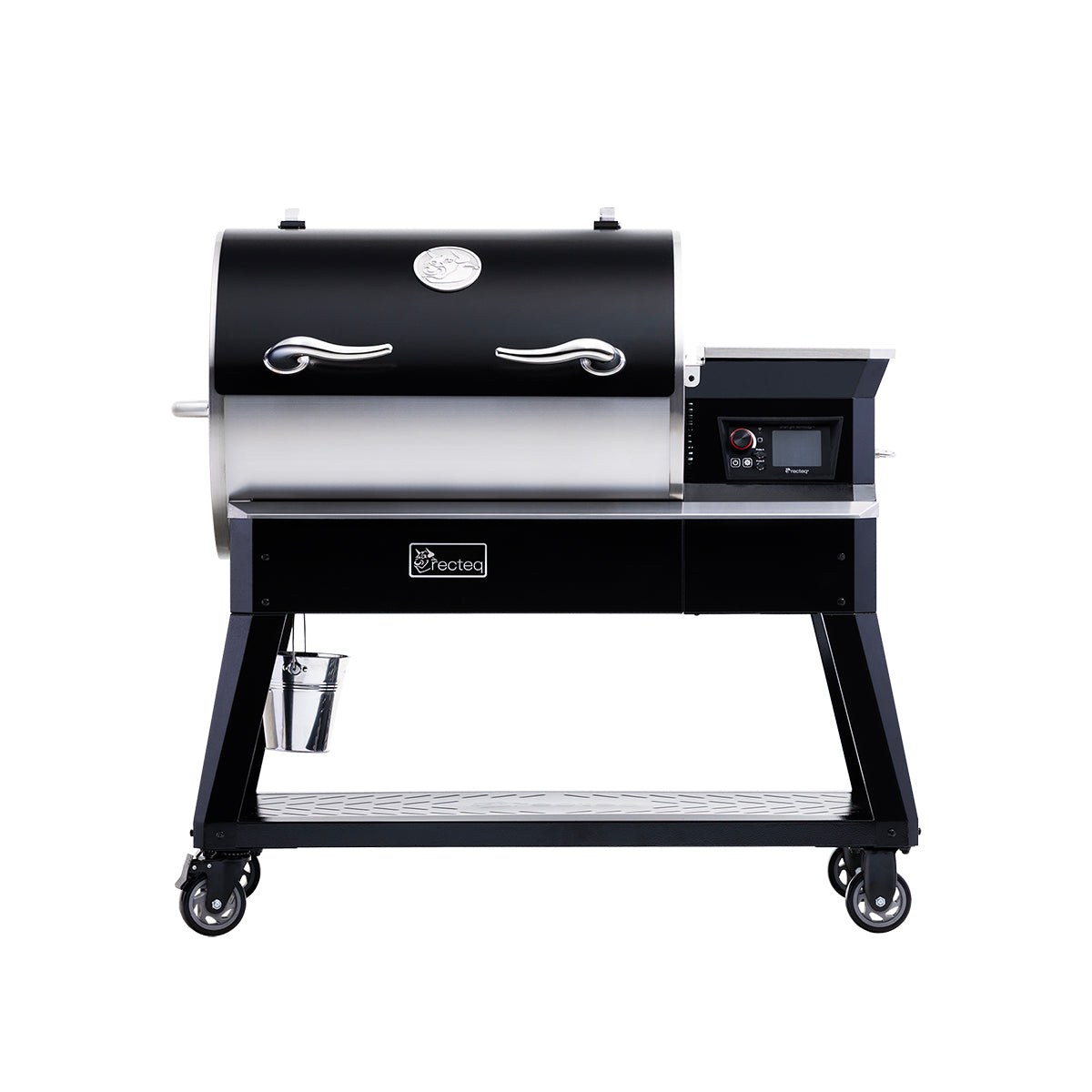
The Deck Boss 900 is what Recteq put in place of the Deck Boss 590, and it is a bigger grill than that name swap suggests — 956 sq in against the 590's 592. It keeps the 304 stainless firepot and drip pan, cast iron heat deflector and the PID controller, and the HotFlash ceramic igniter rated past 100,000 cycles. It sits below the Backyard Beast 1200 mainly on hopper size, 18 lb against 30.
Recteq
Recteq Bullseye RT-B380
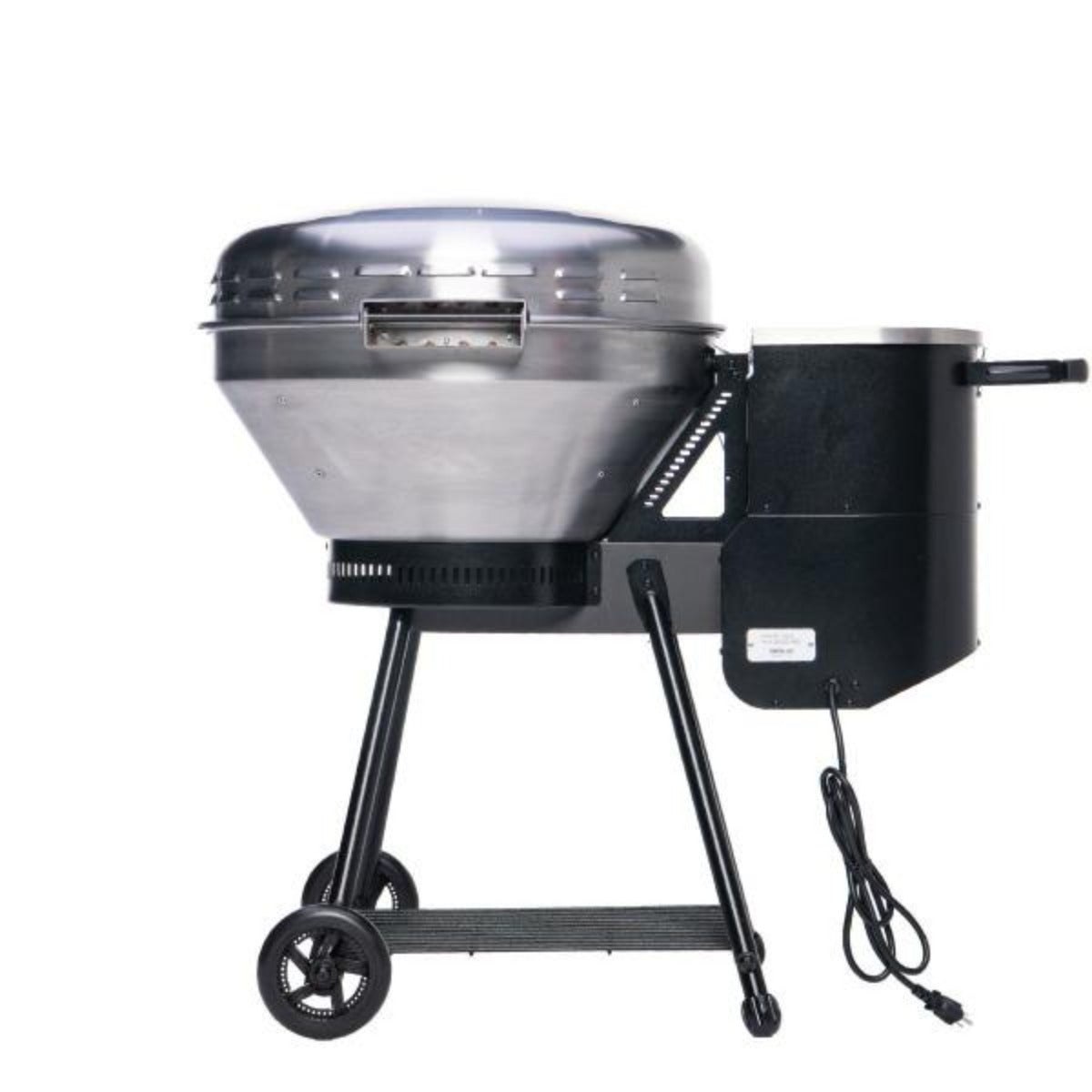
The Bullseye is the odd one in the Recteq line: a 22-inch kettle-shaped pellet grill that runs the fire directly under the grate instead of over a heat deflector. That is how it reaches 749°F when every cabinet pellet grill stops at 500–700°F. The trade is that it smokes less well than a Deck Boss, and the base RT-B380 is the non-WiFi version — the $949 Bullseye Deluxe RT-B380X adds WiFi and an 18 lb hopper.