Recteq
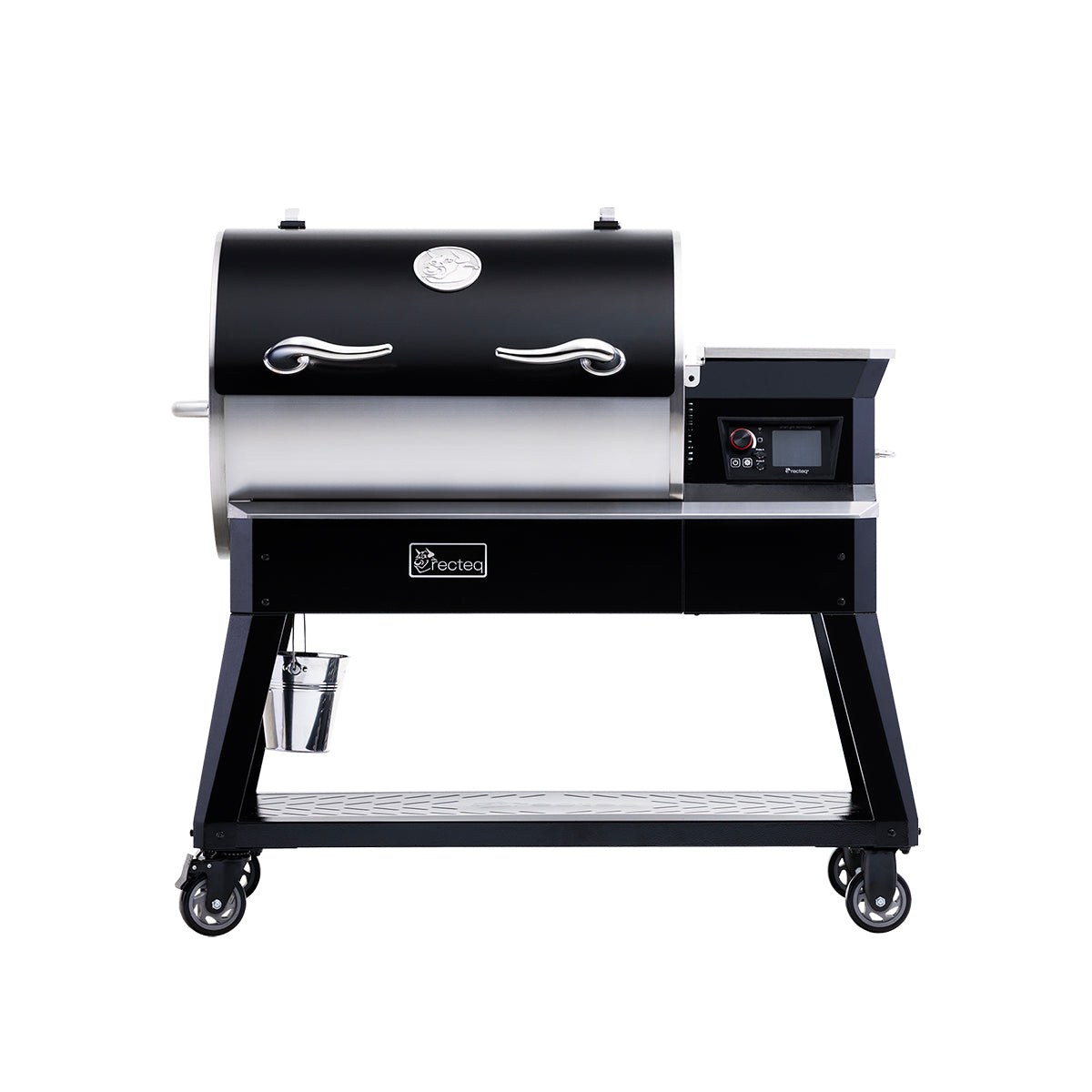
Recteq Deck Boss 900
The Deck Boss 900 is what Recteq put in place of the Deck Boss 590, and it is a bigger grill than that name swap suggests — 956 sq in against the 590's 592. It keeps the 304 stainless firepot and drip pan, cast iron heat deflector and the PID controller, and the HotFlash ceramic igniter rated past 100,000 cycles. It sits below the Backyard Beast 1200 mainly on hopper size, 18 lb against 30.
Goes to the manufacturer. We earn nothing on this one.
Specifications
Features
Pros
- ✓956 sq in for around $900 is more grate per dollar than any Traeger at the same price
- ✓700°F ceiling is 200°F above every Traeger in the line — it will actually sear on the main grates
- ✓PID controller holds a set point far tighter than the timer-driven augers on budget pellet grills
- ✓304 stainless firepot and drip pan are the parts that burn out first on cheaper grills
- ✓HotFlash ceramic igniter is rated over 100,000 cycles, where hot-rod igniters are a common failure item
- ✓4-year bumper-to-bumper warranty with US-based support
Cons
- ✗18 lb hopper is small for a 956 sq in grill — an overnight brisket needs a refill
- ✗4-year warranty is Recteq's shortest on a full-size cabinet grill; the Beast and Flagship get 6
- ✗Recteq sells direct and through a thin dealer network, so there is no local store to walk into in much of the country
- ✗No side burner, sear station or induction top at a price where Traeger's Woodridge family offers one
- ✗Recteq does not publish an exterior footprint, which makes it hard to plan a patio around
Owner Insightssummarized from owner discussions
The Deck Boss 900 is the mid-size Recteq that most first-time pellet buyers in these threads end up choosing, and the early-ownership posts about it are close to uniformly positive. The pattern is people leaving an offset, a Weber Smokey Mountain or a failing Traeger who want to stop tending a fire at 2 a.m.; one owner logged 16 cooks in his first 20 days, another called his first brisket the best meat he had eaten, and several say the customer service is the reason they will stay with the brand. Buyers who handled one at an Ace Hardware describe it as visibly heavier and better built than what sits beside it, and one who works in mechanical contracting said the difference in components was night and day.
Two things about it get argued hard. The first is the 18 lb hopper, which is smaller than the 30 lb hopper on the Deck Boss 800 it replaced; at roughly half a pound to a pound of pellets per hour that is enough for most cooks, but the people who have run out mid-brisket are emphatic, and in the direct 800-versus-900 comparison almost every reply votes for the bigger hopper. The second is that there is no pellet dump, so changing pellet flavors or emptying for storage means a shop vac or a scoop, and at least one shopper picked a Weber Searwood over it for that reason alone. Beyond that, owners report overshoot at low set points, sometimes badly — one saw 280°F with the grill set to 180°F — and the fixes are to clean grease off the chamber probe and have support walk the minimum auger feed rate down, after which owners describe it as holding solid. Weather is a non-issue for most; owners run theirs in rain and snow, though Recteq's own support advises keeping it unplugged when idle, and one owner of a larger model had water track along the lid seam onto his brisket.
It suits a household of two to four that already has a gas grill or a griddle and wants a dedicated smoker rather than a do-everything cooker, which is exactly how the owners who chose it over a Searwood describe the decision. The honest caveats are the smoke and the rack. Smoke is clean but light, with no Super Smoke equivalent, so people coming from a Traeger Ironwood notice its absence; the workarounds are running the first hours at 200°F or on Lo, or adding a smoke tube. And the top rack on this model sits close enough to the main grate that one shopper who saw it in person bought elsewhere. Against the Backyard Beast, the case for the 900 is that you are not paying to heat and fill 50 percent more grill than you use, which is how a family of three who chose it puts it.
What owners like
- +New owners are unusually happy in the first month. One who had never smoked before logged 16 cooks and 45 hours of cook time in his first 20 days, another ran eight cooks in his first week, and a third called his first brisket the best piece of meat he had eaten
- +Recteq's customer service is what converts people. The most enthusiastic owner post about this grill spends more words on the support than the cooking, and owners repeatedly describe calling in about a problem and getting a fix or a part without argument
- +Build quality reads as solid even to people who inspect metal for a living. One owner who works for a large mechanical contractor said the Recteqs were night and day against the other brands he compared, and buyers who put hands on one at an Ace Hardware consistently come away saying it feels heavier and better finished than the Traegers next to it
- +It heats fast and holds low well. Owners report going from cold start to 450°F in about 20 minutes, and the grill is praised for behaving on the Lo setting, which is the mode that produces the most smoke
- +The app is no longer the liability its old reviews suggest. Owners specifically warn shoppers to check the dates on negative app reviews, since two rounds of updates changed it, and one describes the trend data as comparable to the building-automation systems he uses at work
- +It is a deliberate one-job tool, and the owners who chose it over a Weber Searwood say that was the point. Several already own a griddle or a gas grill and wanted a dedicated low-and-slow cooker rather than an all-in-one, and a cast iron griddle insert covers wings and burgers when they want it
Common complaints
- −The 18 lb hopper is the complaint that dominates every comparison thread. Against the 30 lb hopper on the outgoing Deck Boss 800 and the Backyard Beast, owners vote for the bigger one almost unanimously, and at the half-pound to one pound per hour these grills burn while smoking, an unattended overnight cook is exactly the case that gets tight
- −There is no hopper dump. One shopper walked away over it outright, saying he was not going to drag a shop vac around to empty a hopper, and it is the first advantage Searwood owners list. The owners who live with it scoop the hopper out with a new kitty litter scoop or a pasta strainer, which also sifts the dust out
- −The upper rack is awkward on this specific model. A buyer who inspected one in a store passed on it because the oversized top rack sits where it interferes with the lower grate on every cook, and there is less overhead clearance for tall items than on Recteq's larger grills, which get a half rack instead
- −Overshoot at low set points catches owners out. One running a 13 lb brisket saw 280°F on the grill set to 180°F. The fixes that work are cleaning grease off the chamber probe and dropping the minimum auger feed rate, which support walks people down to around 2 to 3 percent; one owner went from 3.5 to 2.0 and called it perfect afterwards
- −Smoke output is mild and there is no Super Smoke equivalent, which is the feature owners leaving Traeger say they miss. A first cook of ribs at 250°F for five hours was described as clean but very light on smoke. The standard answers are to run the first two to three hours at 200°F or on Lo, or to add a smoke tube, which some owners feel defeats the point
- −Cleanup is not as automatic as advertised. Ash and drippings are supposed to land in the same cup, and an owner who cleaned his said he still ends up vacuuming the chamber out
Common Questions
Is the 18 lb hopper big enough for an overnight brisket?
Why is it running hotter than the temperature I set?
How do I get more smoke flavor out of it?
Can I use it in the rain?
Deck Boss 900 or Backyard Beast?
How does it compare to the Weber Searwood 600?
Compare the Recteq Deck Boss 900
Related grills
More from Recteq →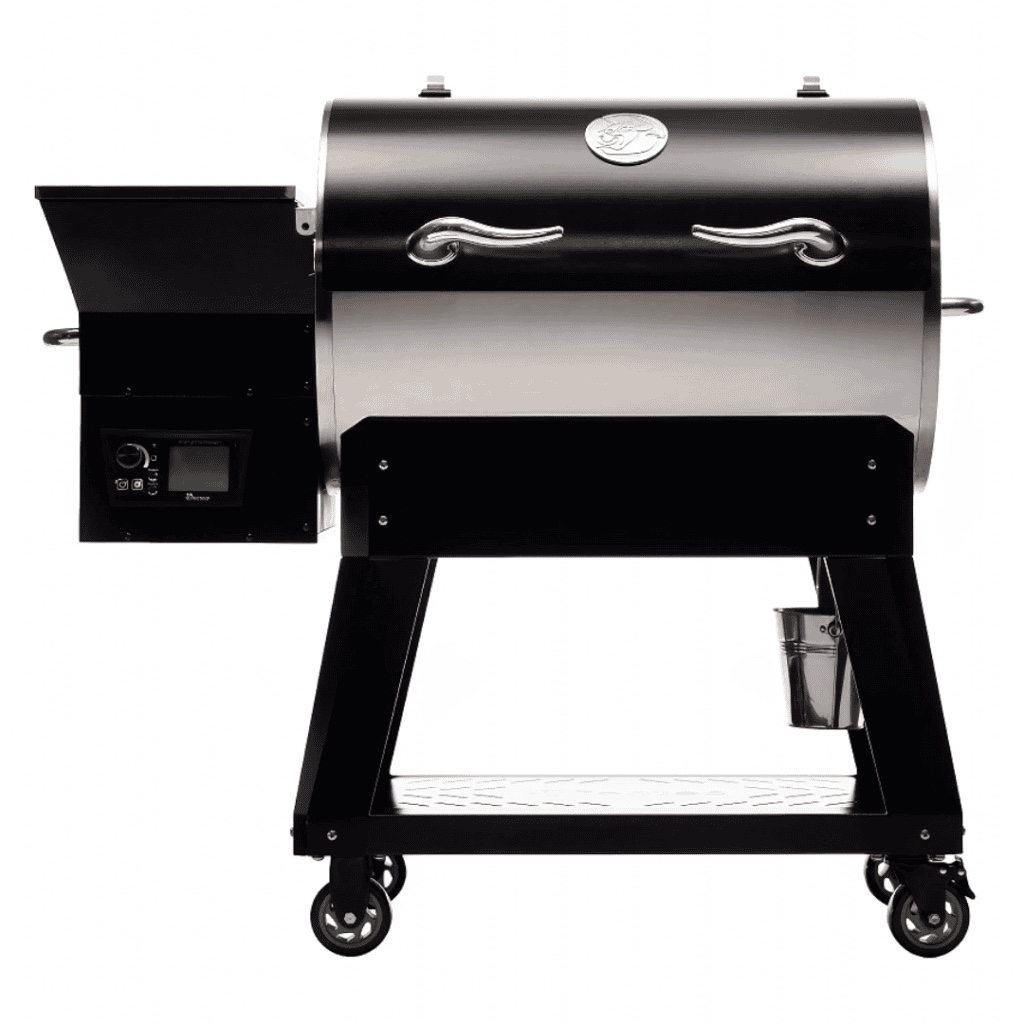
Recteq
Recteq Deck Boss 590
The Recteq Deck Boss 590 is the mid-size workhorse of Recteq's lineup, bringing the same 180-700°F WiFi PID controller and stainless build as its bigger siblings in a family-friendly 590 sq in footprint that fits comfortably on a standard deck or patio. Note: this model is no longer sold new as of 2026. Its current equivalent is the Recteq Deck Boss 900 (RT-900DB). (RT-590 lineage: Deck Boss 590 -> Deck Boss 800 -> Deck Boss 900 (introduced 2026) at $999.99. No verified non-Amazon rating with sufficient count for the discontinued 590)
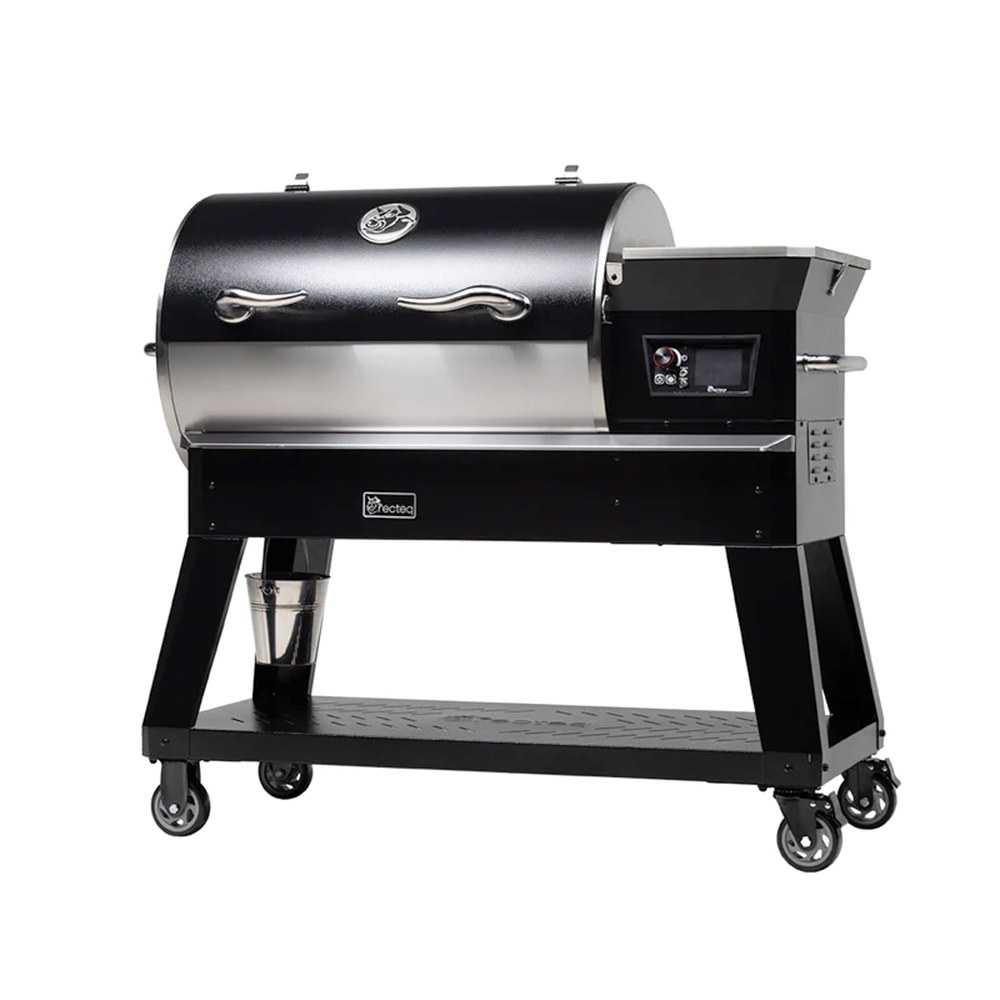
The Backyard Beast 1200 replaced the Backyard Beast 1000 and gained both grate and hopper: 1,220 sq in with the sliding second rack in, fed by a 30 lb hopper good for about 30 hours. Stainless runs from the cooking chamber through the firepot, drip pan and the bull-horn handles, with a cast iron heat deflector underneath. Against the Deck Boss 900 below it, the step up is capacity, hopper and two more years of warranty.
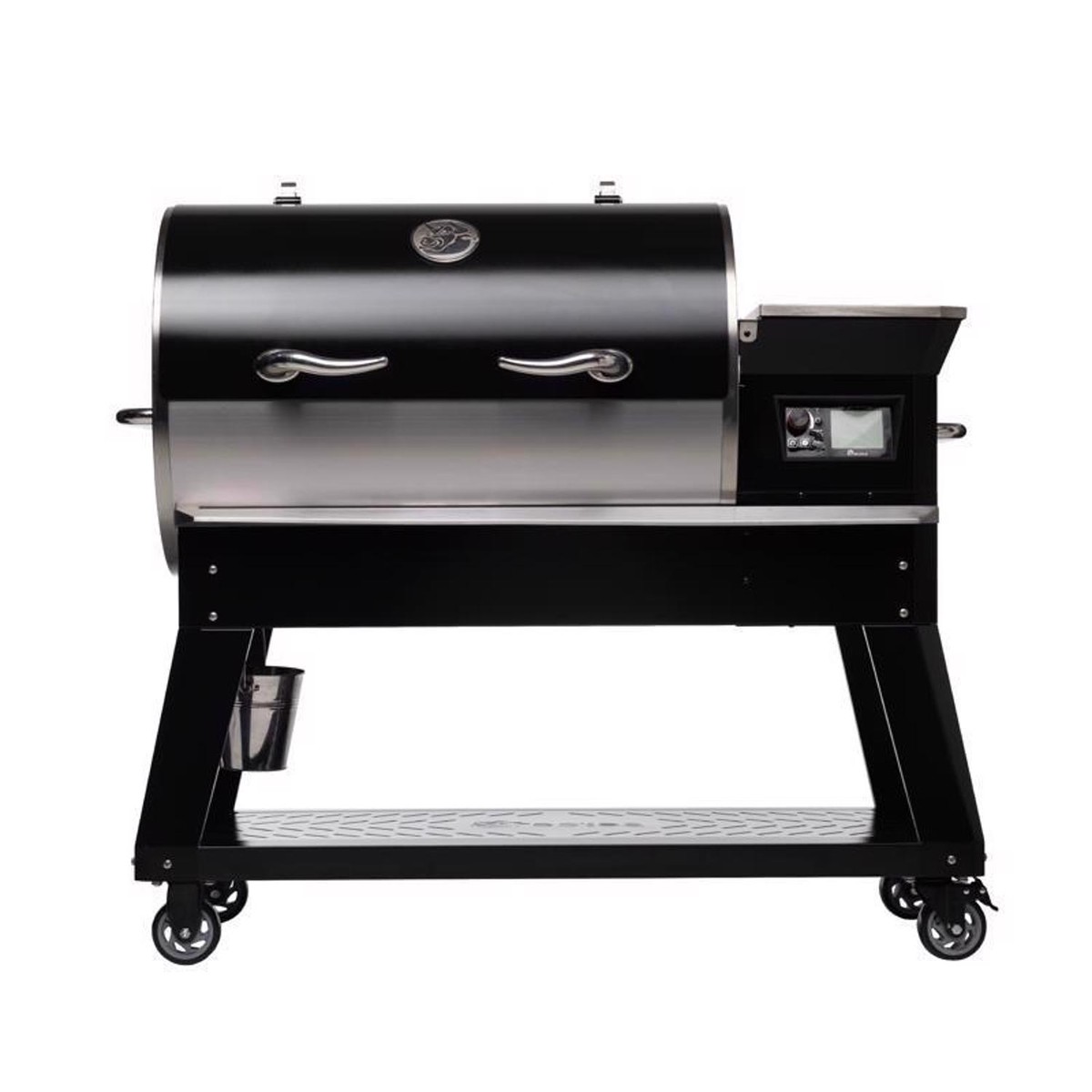
The Recteq Backyard Beast 1000 is the successor to the beloved RT-700 'Bull', pairing 1,014 sq in of stainless cooking space with a dual-band WiFi PID controller and a class-leading 180-700°F temperature range that lets it sear as well as it smokes. Note: this model is no longer sold new as of 2026. Its current equivalent is the Recteq Backyard Beast 1200 (RT-1200BB). (RT-1000 discontinued; Backyard Beast 1200 replaces it (and the Flagship 1100) at $1,199.99, frequently on sale at $1,049.99. No verified non-Amazon rating for the discontinued RT-1000)
Recteq
Recteq Bullseye RT-B380
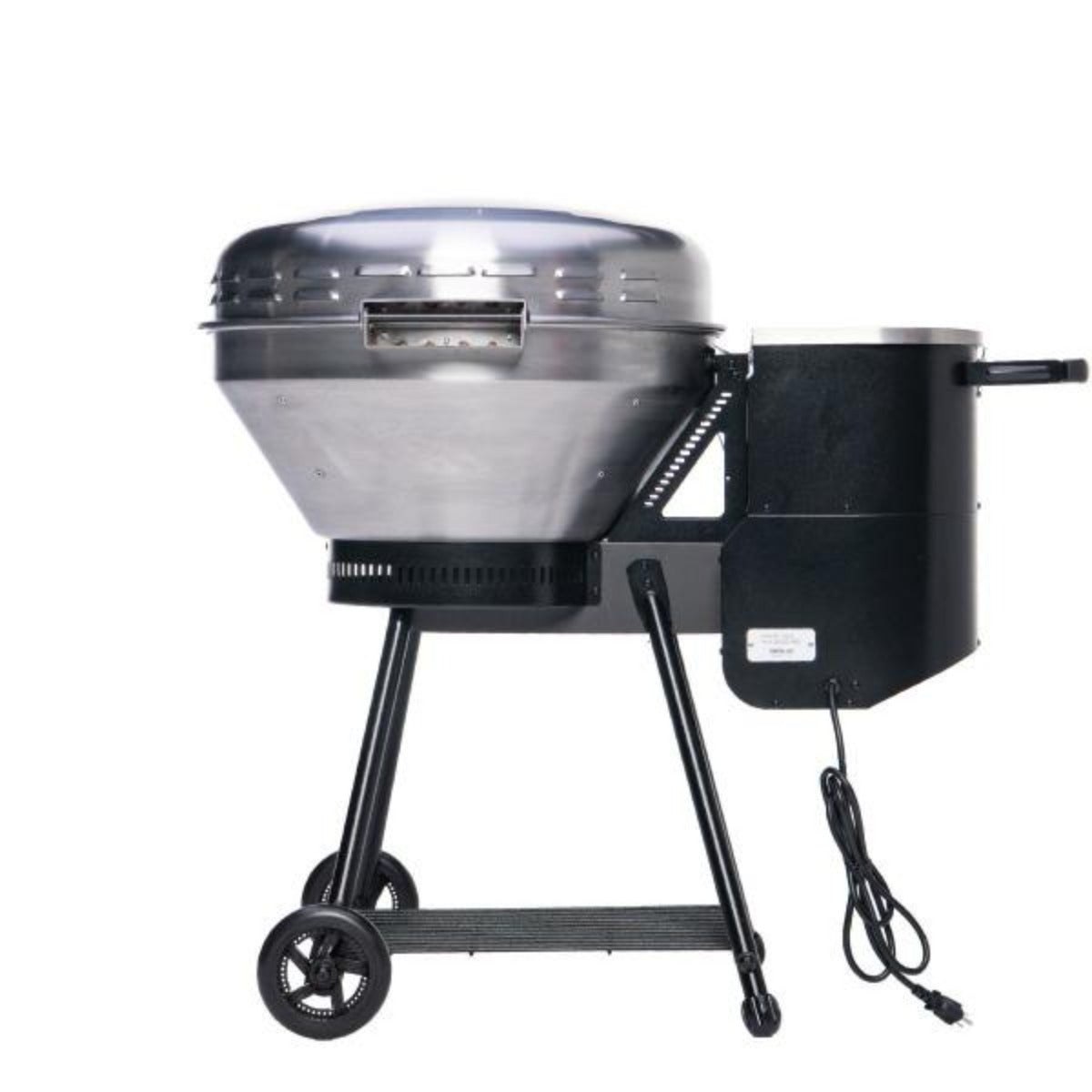
The Bullseye is the odd one in the Recteq line: a 22-inch kettle-shaped pellet grill that runs the fire directly under the grate instead of over a heat deflector. That is how it reaches 749°F when every cabinet pellet grill stops at 500–700°F. The trade is that it smokes less well than a Deck Boss, and the base RT-B380 is the non-WiFi version — the $949 Bullseye Deluxe RT-B380X adds WiFi and an 18 lb hopper.
Recteq
Recteq Flagship 1600
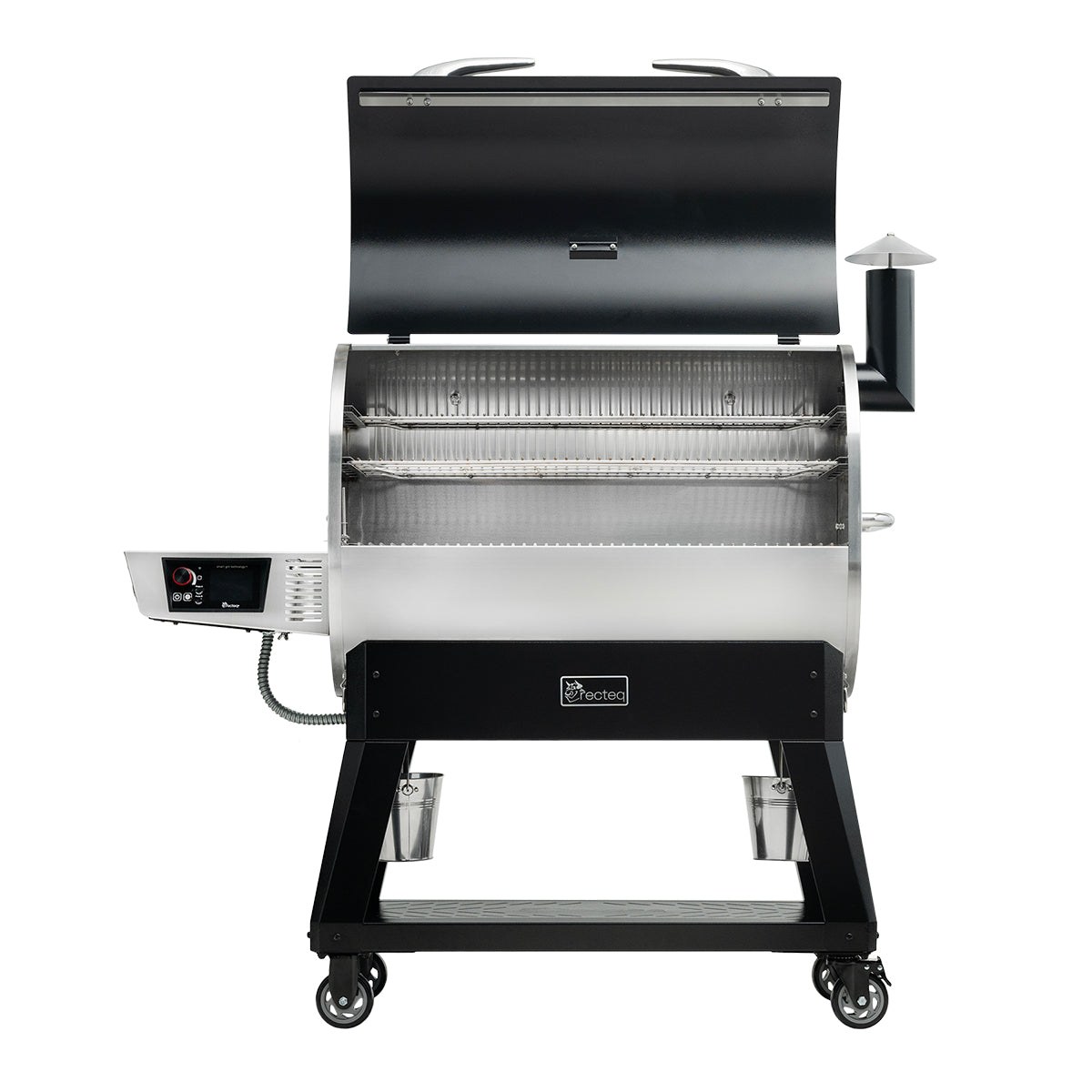
The Flagship 1600 is the current top of Recteq's main cabinet line, replacing the RT-700 and RT-1250 generation that our catalog's era of Recteq grills came from. It holds 1,667 sq in with the second shelf, a 40 lb hopper — a whole bag of pellets, about 40 hours — and 304 stainless grates. Everything below it in the line uses the same PID controller and 180–700°F range; the Flagship buys capacity, grate material and the bull-horn stainless build.
Recteq
Recteq DualFire 1200
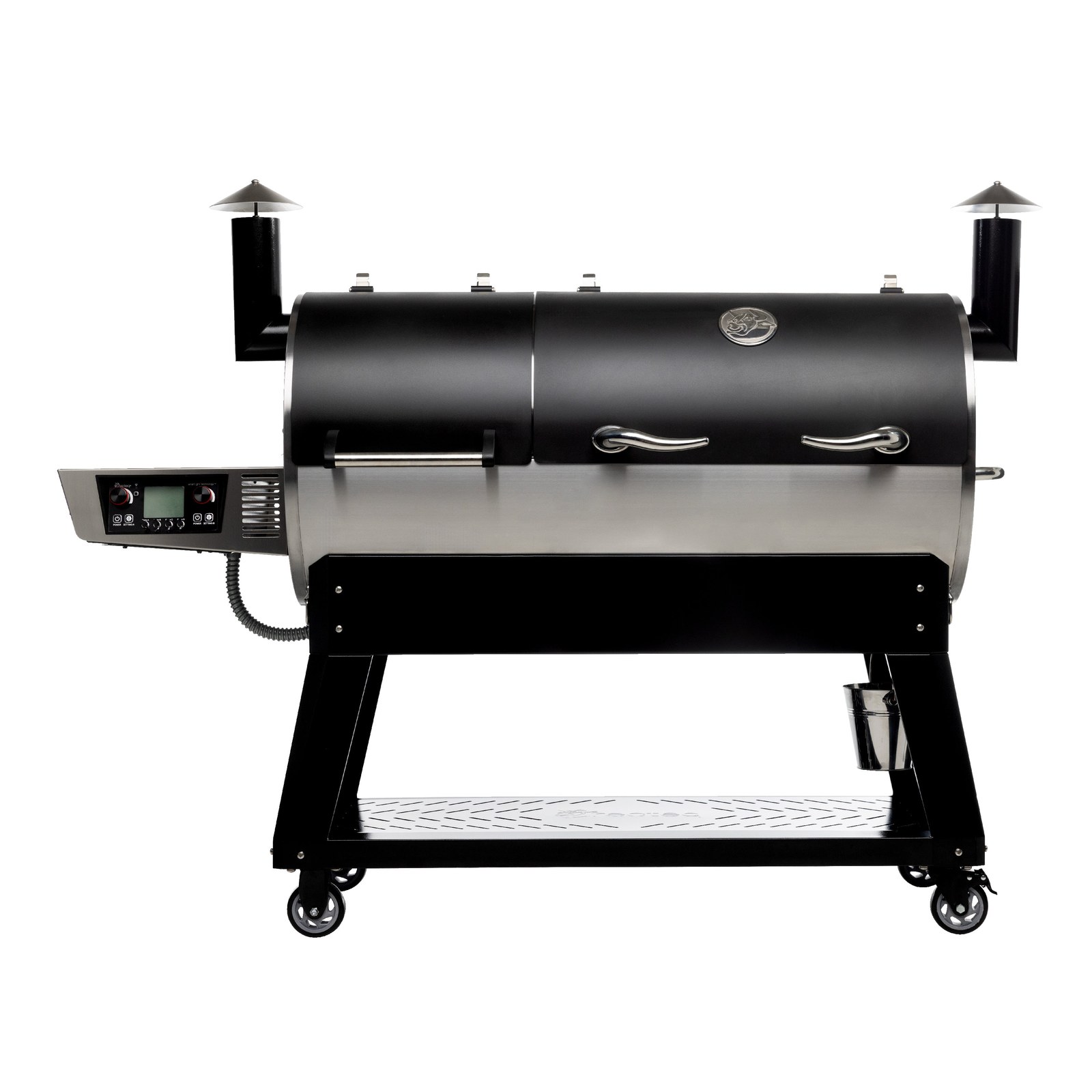
The DualFire 1200 is a two-chamber pellet grill: about 900 sq in of indirect smoking space on one side and roughly 300 sq in of direct-flame grilling on the other, each with its own fire and its own set point. That is the feature no other mainstream pellet grill has — you can hold 225°F on a brisket and sear at 700°F at the same time without moving anything. It carries a 70 lb hopper, the largest in Recteq's line.