
Traeger
Traeger Timberline XL
The Traeger Timberline XL is Traeger's top-of-the-line flagship pellet grill, with a fully insulated double-wall body, induction side burner, and a touchscreen controller. It's aimed at serious enthusiasts.
We may earn a commission. Price and availability on Amazon may differ.
Specifications
Features
Pros
- ✓Fully double-wall insulated stainless construction holds temperature rock-steady even in freezing weather, making it the most consistent Traeger for winter brisket
- ✓Massive 1320 sq in over three shelves swallows multiple briskets, pork butts, and racks of ribs for catering-level cooks
- ✓The built-in induction cooktop on the side is genuinely useful for searing, finishing sauces, or making sides without a second appliance
- ✓The full-color touchscreen and refreshed app are the most polished controls Traeger has ever shipped, with helpful step-by-step guidance
- ✓Super Smoke mode plus the larger firepot produces strong, clean smoke and excellent bark on low-and-slow cooks
- ✓Pop-and-lock accessory rails and the modular shelf system make it easy to add hooks, shelves, and a roll rack
- ✓A class-leading 10-year warranty backs the big price tag and signals Traeger's confidence in the build
- ✓The downdraft exhaust and sensor suite keep heat even front-to-back and top-to-bottom across that huge cooking area
Cons
- ✗At roughly $3,800 it's brutally expensive, and many reviewers feel you're paying a heavy premium for the Traeger badge and touchscreen
- ✗It still maxes out around 500°F, so despite the price you cannot true-sear on the main grates without the side burner or GrillGrates
- ✗Even on this flagship, owners report the WiFi dropping and the app occasionally losing connection mid-cook
- ✗At 289 lbs it's extremely heavy and awkward to move, and assembly is a long two-person job
- ✗Early units shipped with firmware bugs and touchscreen glitches that required updates, frustrating early adopters
- ✗Pellet consumption is high given the size, and you'll feed it a lot of fuel on long all-day cooks
- ✗The induction burner and electronics add more failure points, and out-of-warranty repairs on a grill this complex are costly
- ✗Its sheer footprint (62 in wide) is too big for many patios and it dominates the space
Owner Insightssummarized from owner discussions
The Timberline XL is Traeger's flagship, an insulated cabinet with a touchscreen, an induction side burner and 1,320 square inches of grate, and it sits at the exact price point where owner opinion turns hostile. The recurring verdict in buying threads is that Traeger trades on its name while Recteq, Yoder, Lone Star Grillz and Camp Chef deliver more build for the money, and the single most upvoted piece of advice to anyone eyeing one is that if you really need this much space, a Recteq 1250 costs less than what the shop wants for the Timberline floor model. The people who actually own one are much warmer than the people advising against it: a three-year owner who has had parts fail still calls the failures minor against the work it does, and a first-time owner who used to cook professionally was surprised by his own first rack of ribs.
What it does well is volume and convenience. Six racks of ribs plus sides in a six-hour session, three turkeys at once, roughly ten minutes from cold to 500F. An owner who has run a Big Green Egg for a decade cooked the same 3-2-1 ribs on both and gave the Traeger start-up speed, app, capacity and cleanup, while still giving the Egg the nod on smoke flavour and tenderness. That is the honest shape of it. Against that, the failure stories are specific and expensive: temperature readouts that run 25 to 150F optimistic, WiFi that drops while the grill insists it is connected, firmware updates that take twenty minutes or occasionally break a sensor, and warranty service that ranges from outstanding to a buyer losing a whole grilling season. A promised 800F pizza mode never arrived and was eventually confirmed to be impossible on the hardware.
It makes sense for someone who cooks for crowds, wants the app and the built-in option for an outdoor kitchen, and finds one heavily discounted, which is common: owners report buying them at half price and lower against a four-thousand-dollar sticker. At full price the alternatives named over and over are the Recteq 1250 and BFG 2500, the Yoder YS640S, Lone Star Grillz, the Camp Chef Woodwind Pro 36 with a Sidekick, and Traeger's own Ironwood XL for around two thousand less with the same controller and cooking. The sharpest single data point comes from an owner who ran a Masterbuilt gravity-fed 1050 against his Timberline XL on brisket, pork butt, ribs, chicken and sausage and put it to forty guests: the gravity feeder won about three to one.
What owners like
- +The capacity is the part nobody disputes. Owners run six racks of ribs plus chicken and skewers in one session, and one cooked three whole turkeys on it at once for a church dinner. A Big Green Egg XL owner who bought one alongside his Egg reckons the Traeger would stack a dozen rib racks against the Egg's realistic four.
- +Start-up and recovery are fast for a cooker this size. Owners report roughly ten minutes from cold to 500F on current units, which is the main thing kamado owners notice when they switch between the two.
- +The app is the best in the category by owner consensus. One owner running a Z Grills board with an aftermarket WiFi module described the Timberline app experience as ten times better after using a relative's, and it is the feature people cite when they defend the price.
- +Cleanup is genuinely easier than a charcoal cooker. The owner running head-to-head rib cooks against his Egg gave the Traeger the nod on cleanup without hesitation.
- +It is the only Traeger owners discuss building into an outdoor kitchen island, and the cabinet build quality is what buyers say attracted them even when they had no use for the induction side burner.
- +The floor-model and clearance market on this grill is extraordinary. Owners report picking them up at half price, at $2,000 from a local shop, at $1,900 at a big-box store, and in one case at $1,290 against a $4,300 sticker, which changes the value argument completely.
Common complaints
- −At list price the owner consensus is blunt: Traeger trades on the name, and buyers at this budget are steered to a Recteq 1250 or BFG 2500, a Yoder YS640S, a Lone Star Grillz cabinet or a Camp Chef Woodwind Pro 36 instead. The most common single objection is that the Timberline costs roughly twice an Ironwood XL that cooks the same food.
- −Reliability complaints are not rare and they are severe when they land. One buyer went from a week before Mother's Day through Father's Day without a single completed cook, through replacement parts, a whole replacement grill and then a failed igniter. Another had paint peeling, got approved for a replacement, and then had the company lose the record of both the pickup and the replacement order.
- −Temperature readout accuracy is a recurring complaint. One owner measured roughly 200F when the screen said 225, and no hotter than 350F when it claimed 500. Others report that a true 500F is hard to reach at all and that the realistic ceiling is closer to 480.
- −A salesman-level promise of an 800F pizza mode through a firmware update turned out not to exist, and support later confirmed the grease bucket could not survive that temperature anyway. Owners who want pizza are told to buy a dedicated oven, since even a good Traeger pizza takes about half an hour per pie at 400F.
- −WiFi dropouts are the most persistent software complaint. One owner with an access point right beside the grill watched it show connected on the grill and offline in the app within minutes, repeatedly, and got the same script from support each time pointing at his home network.
- −Firmware is a live hazard rather than a background process. Updates can run twenty minutes or more, so owners warn each other to fire it up days before a holiday cook, and at least one update left a unit reporting flame sensor not detected.
- −Smoke output is mild, which is the standard pellet complaint but stings more at this price. Plenty of owners run a smoke tube, often with a different pellet variety in the tube than in the hopper, to get a flavour they feel they already paid for.
- −The grease and ash management hardware corrodes if it lives outdoors through a wet winter, and owners report real difficulty sourcing replacement drip trays, lid sensor magnets and induction tops afterwards. Older Traeger accessories, down to the grate scraper, do not fit it.
Common Questions
Is it worth roughly $2,000 more than the Ironwood XL?
Will it really hit 800F for pizza?
How accurate is the temperature readout?
Is the WiFi reliable?
Can it be built into an outdoor kitchen?
Compare the Traeger Timberline XL
The Traeger Timberline XL is one of 8 sizes in this line.
See every size, to scale →Related grills
More from Traeger →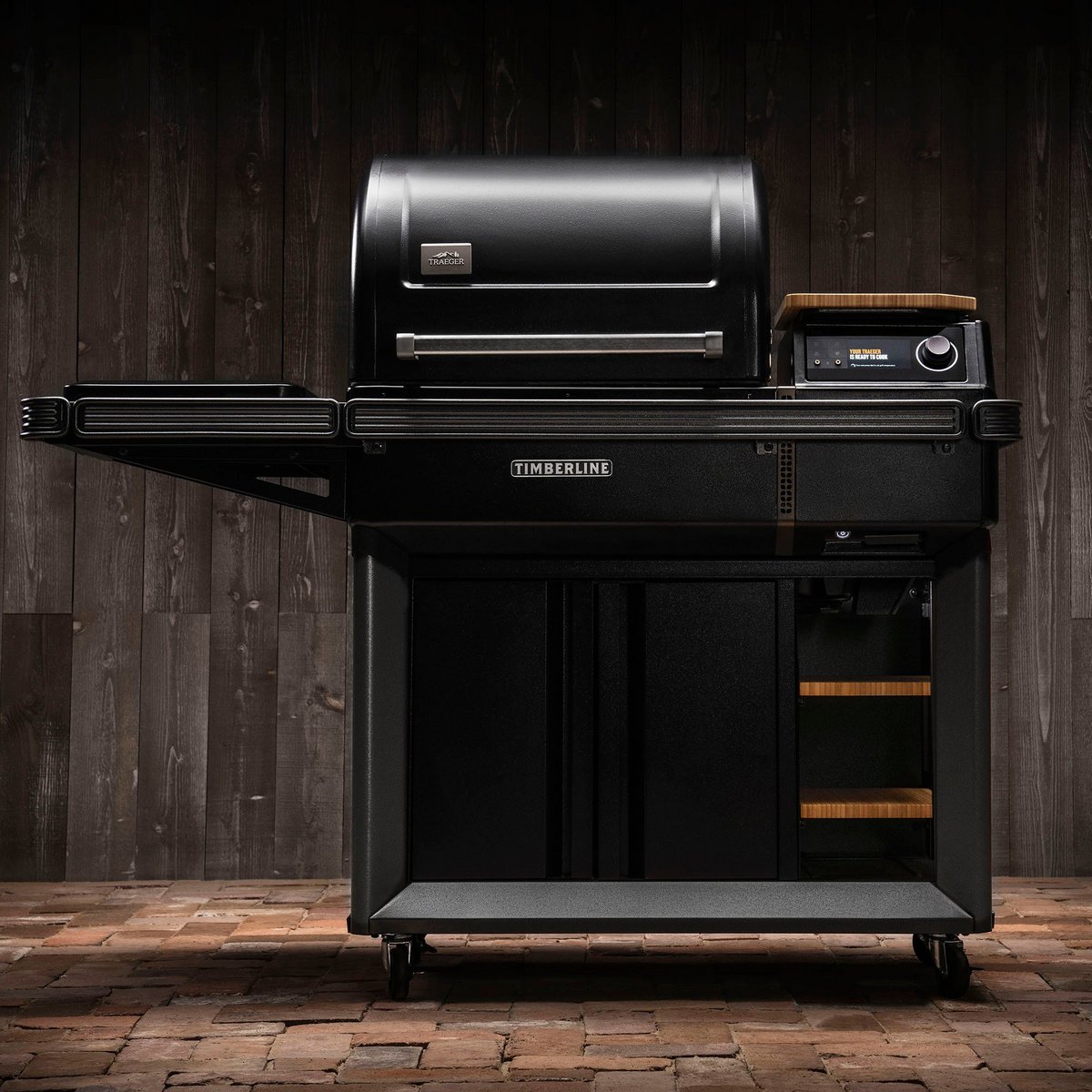
Traeger
Traeger Timberline
The smaller of Traeger's two flagships: 880 sq in across three racks in a stainless cabinet, with an electric induction cooktop built into the left side and a soft-close lid. It ships with two wired probes and two Traeger x MEATER wireless thermometers. The only difference from the $4,000 Timberline XL is chamber size — 880 sq in against 1,320.
Traeger
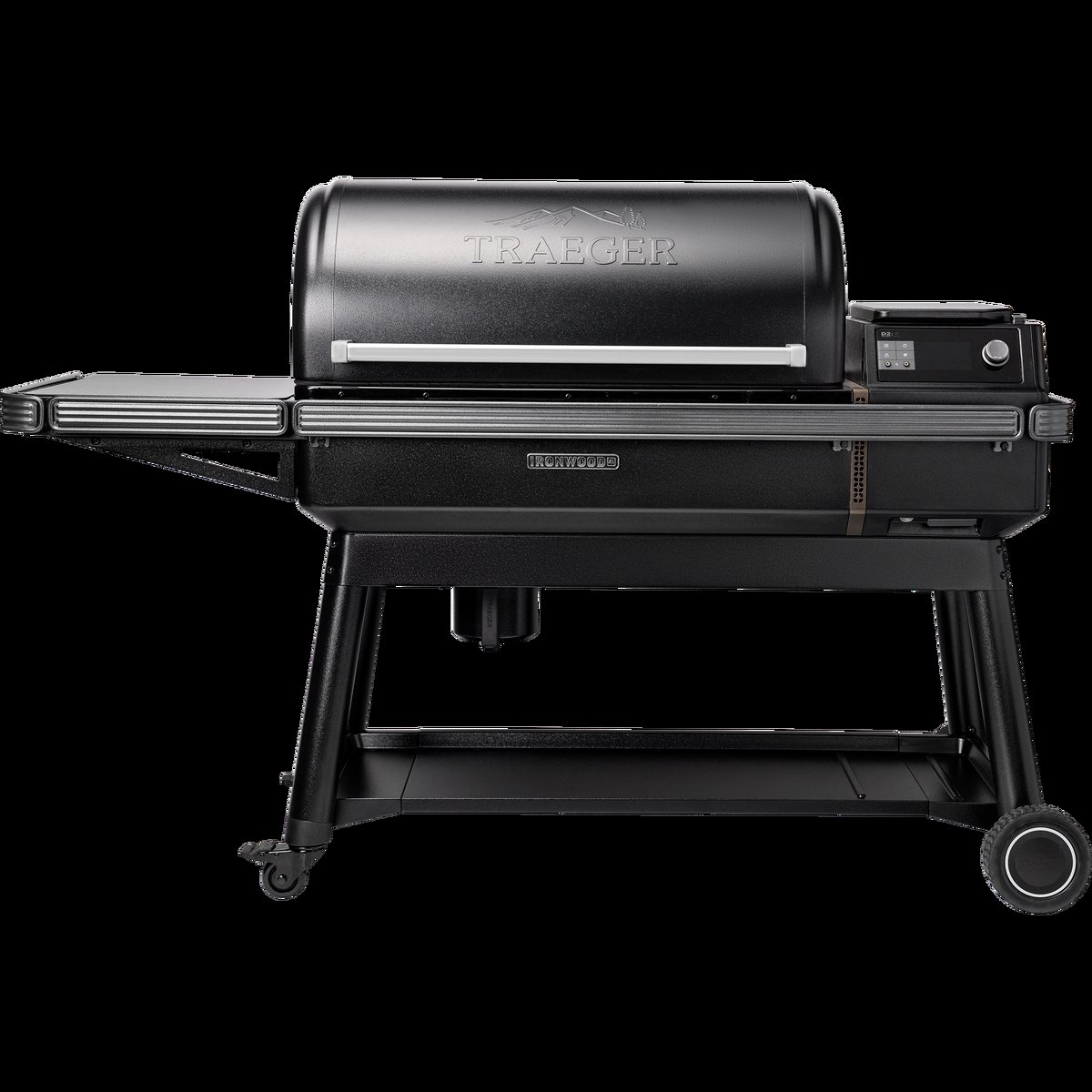
Traeger Ironwood XL
The Ironwood XL is the standard Ironwood stretched from 616 to 924 sq in; controller, touchscreen, sealed chamber, pellet sensor and grease keg are all identical. Against the Timberline above it, it gives up the third rack, the induction side cooktop and the stainless build for $1,500. Against the Woodridge Elite at the same money, it trades the gas burner for the touchscreen controller and the better-sealed chamber.

Traeger
Traeger Ironwood
The current-generation Ironwood replaced the discontinued Ironwood 885 in Traeger's lineup, trading raw cooking area for a dual-wall insulated barrel, a color touchscreen, and Smart Combustion tech that owners consistently say holds temps within a few degrees even in wind and cold. The EZ-Clean ash keg is the sleeper feature — cleanup drops from a shop-vac session to emptying a bucket. The honest knocks: at $1,800 you're paying a steep premium over a Woodridge Pro that cooks nearly as well with more space, the 500F ceiling still won't sear like a gas grill or a Weber Searwood's 600F, and Traeger's smoke profile stays on the mild side unless you lean on Super Smoke and 225F cooks. Some owners report WiFIRE connectivity drops and occasional startup temp overshoot, and the induction fan is audible. But as a set-and-forget smoker with genuinely modern controls and a 10-year warranty, it's the best-sorted mid-size Traeger yet — just know you're paying for polish, not capacity.
Traeger
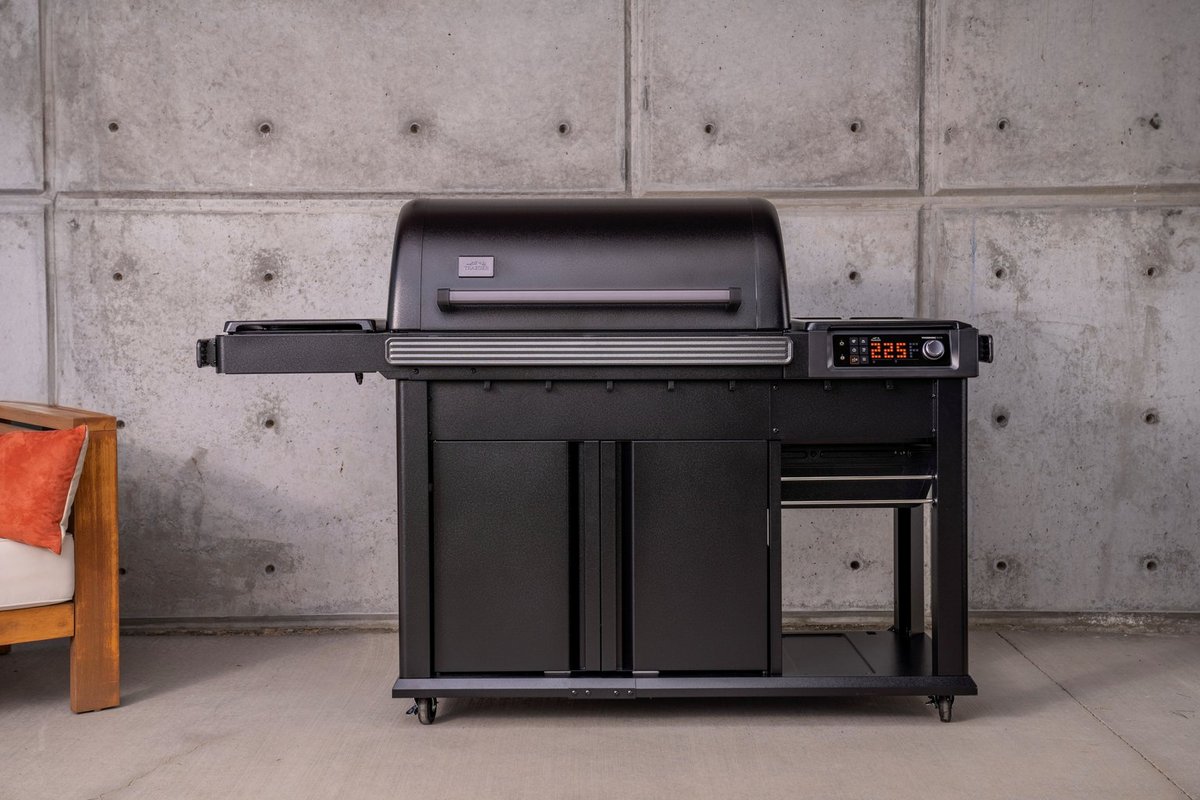
Traeger Woodridge Elite
The top of the Woodridge family and the only one with a gas side burner. Chamber, hopper and controller are identical to the Woodridge Pro Plus — 970 sq in across two racks, 24 lb hopper, 500°F ceiling — so the entire $400 step up buys the burner plus the enclosed cabinet. It sits at the same $1,800 as the Ironwood, which trades the burner for a touchscreen, pellet sensor and a sealed chamber.

Traeger
Traeger Ironwood 885
The Traeger Ironwood 885 is a WiFi-connected wood-pellet grill and smoker from Traeger, the company that popularized pellet grills. It uses the D2 direct-drive controller and WiFIRE app for hands-off cooks. Traeger has moved it to its Legacy Grills line — still sold new on traeger.com, but the current equivalent is the Ironwood XL.
Traeger
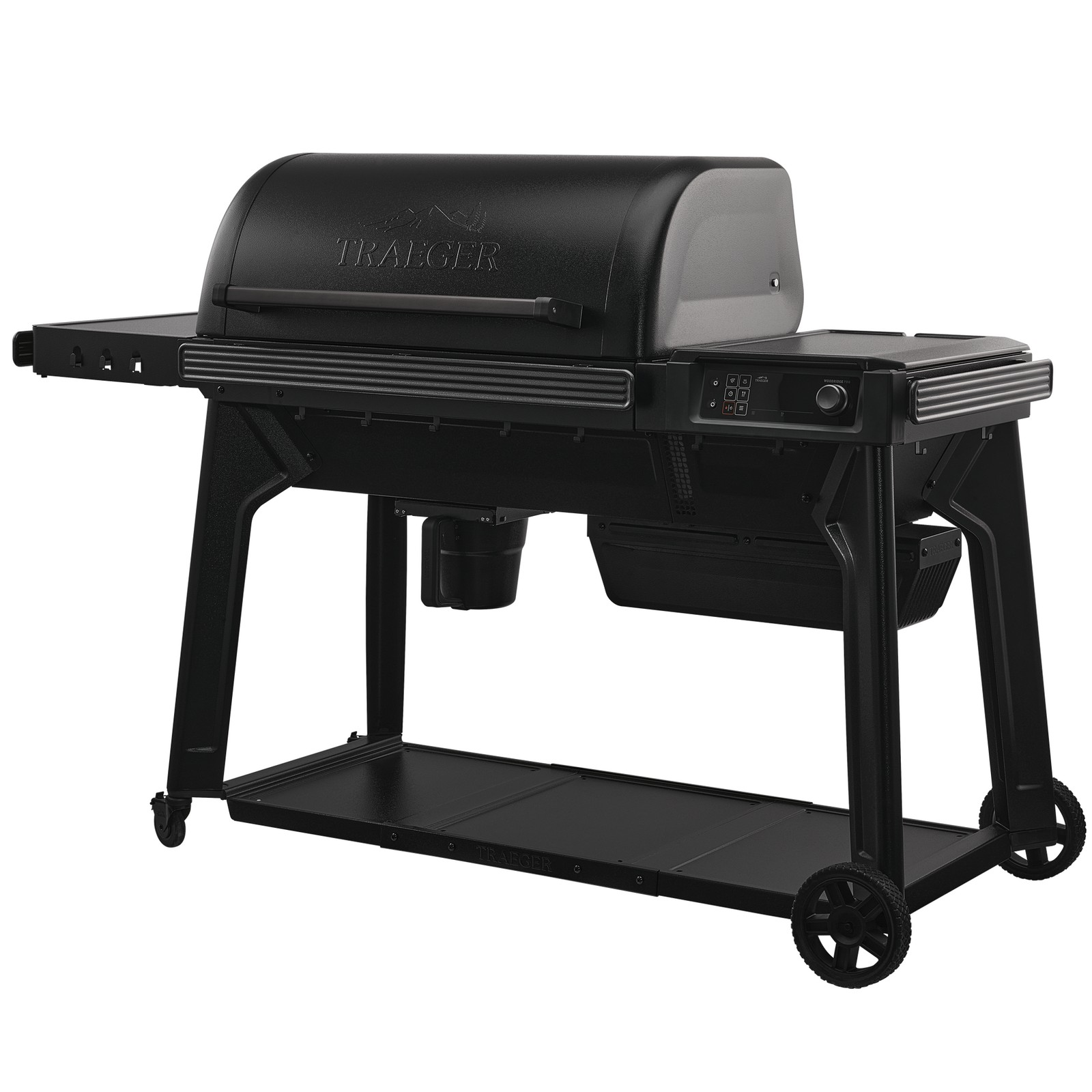
Traeger Woodridge Pro
The Traeger Woodridge Pro is the 2025 replacement for the aging Pro series - 970 sq in, a 24 lb hopper with pellet sensor, Super Smoke mode, and a 10-year warranty at $1,000. Reviewers call it the biggest upgrade to Traeger's entry lineup in years.