Traeger Timberline XL vs Yoder YS640s

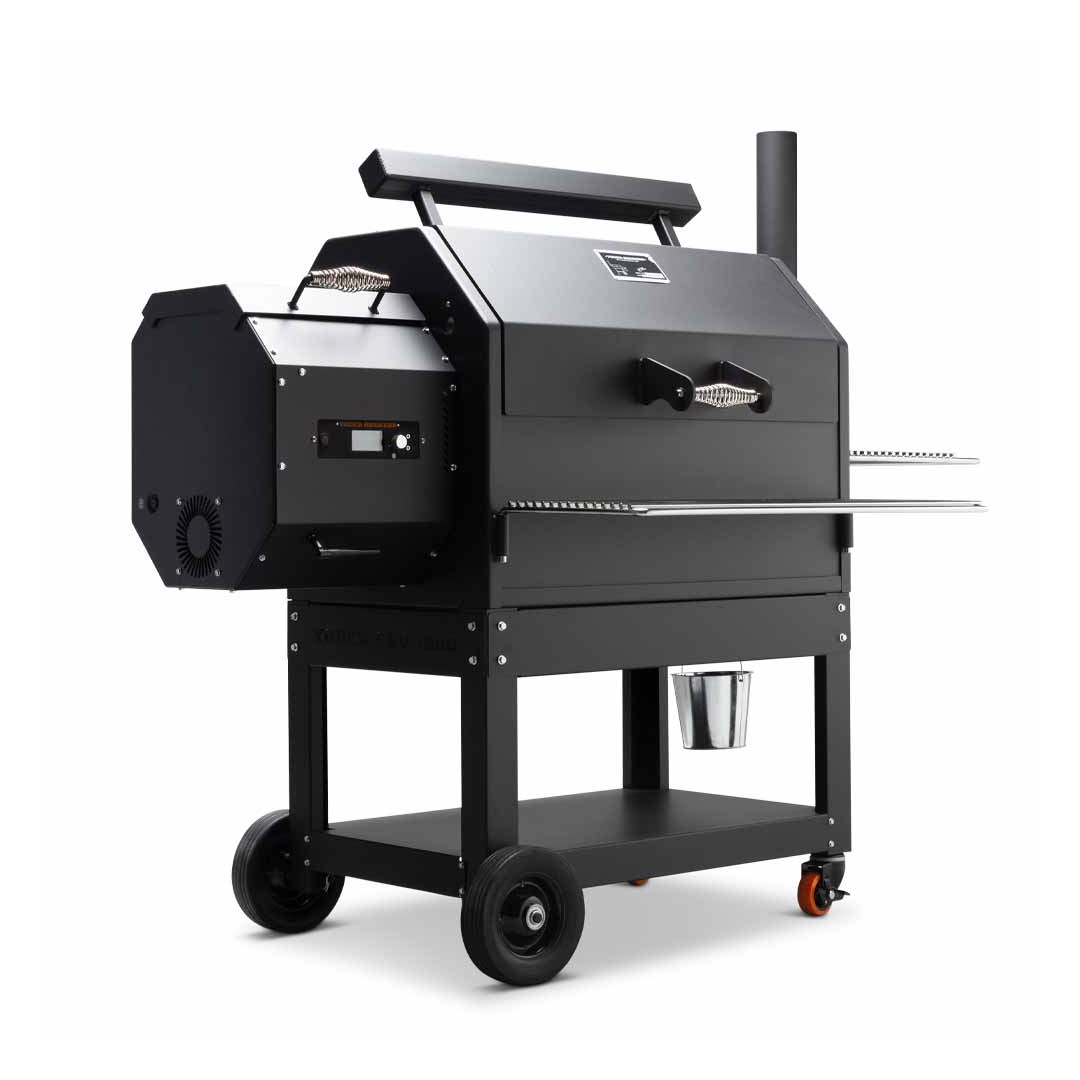
Quick take: The Yoder YS640s costs $1,001 less; the Traeger Timberline XL offers more cooking space (1,320 vs 1,070 sq in); the Yoder YS640s reaches a higher max temp (600 vs 500°F).
| Spec | Traeger Timberline XL | Yoder YS640s |
|---|---|---|
| Price | $3,800 | $2,799 |
| Rating | 4.3★ (650) | 4.9★ (850) |
| Type | Pellet Grill | Pellet Grill |
| Cooking Area | 1320 sq in | 1070 sq in |
| Max Temp | 500°F | 600°F |
| Fuel Type | Wood Pellets | Wood Pellets |
| Build Material | Powder-Coated Steel | 10-Gauge Steel |
| Hopper Capacity | 22 lb | 20 lb |
| Burners | — | — |
| WiFi / App | Yes | Yes |
| App control | Yes | Yes |
| Meat probe | Yes | Yes |
| PID controller | Yes | Yes |
| Side burner | No | No |
| Rotisserie | No | No |
| Searing | Yes | Yes |
| Dimensions | 62 x 51 x 25 in | 57 x 25 x 47.5 in |
| Weight | 289 lbs | 315 lbs |
| Warranty | 10 years | 10 years (body) |
Pros & cons
Traeger Timberline XL
- ✓Fully double-wall insulated stainless construction holds temperature rock-steady even in freezing weather, making it the most consistent Traeger for winter brisket
- ✓Massive 1320 sq in over three shelves swallows multiple briskets, pork butts, and racks of ribs for catering-level cooks
- ✓The built-in induction cooktop on the side is genuinely useful for searing, finishing sauces, or making sides without a second appliance
- ✓The full-color touchscreen and refreshed app are the most polished controls Traeger has ever shipped, with helpful step-by-step guidance
- ✓Super Smoke mode plus the larger firepot produces strong, clean smoke and excellent bark on low-and-slow cooks
- ✓Pop-and-lock accessory rails and the modular shelf system make it easy to add hooks, shelves, and a roll rack
- ✓A class-leading 10-year warranty backs the big price tag and signals Traeger's confidence in the build
- ✓The downdraft exhaust and sensor suite keep heat even front-to-back and top-to-bottom across that huge cooking area
- ✗At roughly $3,800 it's brutally expensive, and many reviewers feel you're paying a heavy premium for the Traeger badge and touchscreen
- ✗It still maxes out around 500°F, so despite the price you cannot true-sear on the main grates without the side burner or GrillGrates
- ✗Even on this flagship, owners report the WiFi dropping and the app occasionally losing connection mid-cook
- ✗At 289 lbs it's extremely heavy and awkward to move, and assembly is a long two-person job
- ✗Early units shipped with firmware bugs and touchscreen glitches that required updates, frustrating early adopters
- ✗Pellet consumption is high given the size, and you'll feed it a lot of fuel on long all-day cooks
- ✗The induction burner and electronics add more failure points, and out-of-warranty repairs on a grill this complex are costly
- ✗Its sheer footprint (62 in wide) is too big for many patios and it dominates the space
Yoder YS640s
- ✓Nothing under $3,000 approaches its build - 10-gauge steel everywhere means thermal mass that laughs at wind, winter, and decade-plus daily use
- ✓The 'Yoder' name caps out search results across r/pelletgrills, r/smoking, r/BBQ, and r/grilling - the consensus endgame pellet grill
- ✓The ACS controller is built on FireBoard hardware with WiFi and two probe ports, and holds within about 5°F across a 14-hour brisket in independent testing
- ✓Swap the heat diffuser for the direct-grilling setup and it sears steaks over live flame at 600°F+ like a charcoal grill
- ✓1,070 sq in across two shelves with nearly 12 inches of headroom swallows briskets, turkeys, and rib racks simultaneously
- ✓Smoke flavor is heavier than mainstream pellet grills thanks to the thick body and firebox design
- ✓It's hand-built in Kansas with a 10-year body warranty and a company that answers the phone and ships parts for decades-old pits
- ✓Resale holds remarkably well - used YS640s still command most of their original price
- ✗At ~$2,799 (over $3,100 on the competition cart) it costs as much as three mainstream pellet grills
- ✗315 lbs means delivery, assembly, and any relocation is a two-person-minimum event, and it's never going to a tailgate
- ✗The painted steel finish (not stainless) needs occasional touch-up to prevent surface rust, especially in humid climates
- ✗Pellet consumption is higher than insulated thin-wall grills since all that steel takes energy to heat
- ✗No frills - no pellet sensor, no ash-cleanout system (you vacuum the firepot), and side shelves cost extra on some configs
- ✗The direct-grilling conversion means physically swapping internal plates, not flipping a lever like Pit Boss's slide plate
- ✗It's sold mostly direct or through specialty dealers, so you likely can't see one before committing to freight shipping
- ✗Electrical components carry a much shorter warranty than the 10-year body coverage