Traeger
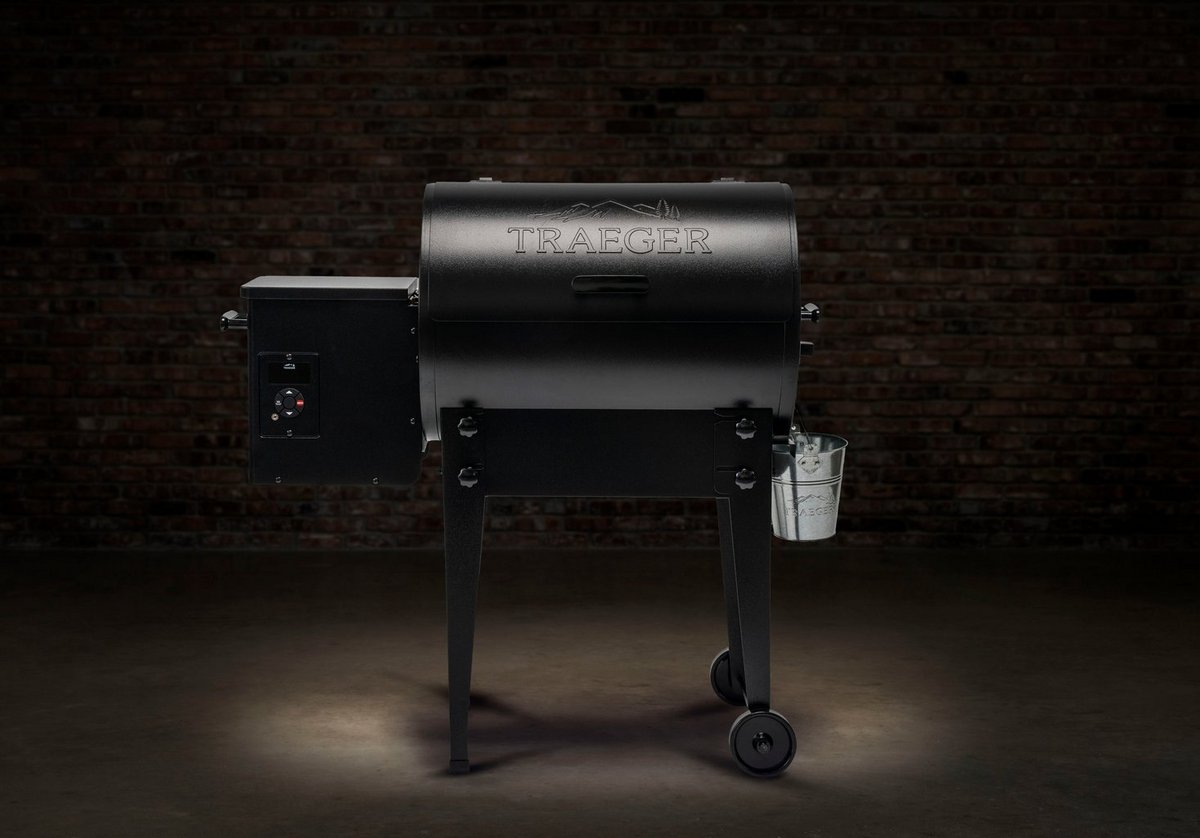
Traeger Tailgater
Traeger's folding-leg portable, and the larger of its two. It runs the Digital Arc controller rather than a WiFIRE board, so there is no app and no Super Smoke — you set a temperature on the dial and the grill holds it. The 300 sq in grate takes two chickens or three rib racks, which is more than most portables and enough that people buy it as a small patio grill rather than only for tailgates.
We may earn a commission. Price and availability on Amazon may differ.
Specifications
Features
Pros
- ✓300 sq in is roughly double what most portable pellet grills offer
- ✓EZ-Fold legs collapse without tools and the body is one-person liftable at 62 lbs
- ✓Covered by Traeger's 7-year non-connected grill warranty, not a short portable-only term
- ✓Uses the same Traeger pellets and porcelain grates as the full-size line
- ✓Simpler controller means fewer of the firmware complaints that dog the WiFIRE models
Cons
- ✗Digital Arc controller swings wider than the WiFIRE boards and has no app, alarms or remote monitoring
- ✗8 lb hopper is roughly four hours at smoking temperatures, so it needs babysitting
- ✗Needs a 120V outlet or an inverter — not a charcoal-style grill you can run anywhere
- ✗450°F ceiling and no sear zone
- ✗3.8 out of 5 across 268 reviews on Traeger's store, with auger and igniter complaints recurring
Owner Insightssummarized from owner discussions
The Tailgater is Traeger's larger folding-leg portable, and owner sentiment on it is split in an unusual way: the food is frequently praised and the machine is frequently not. People cook well on it — ribs, pulled pork, wings, sausages, smoked queso, and briskets both large and small, including a 14 lb prime packer that barely fit and an 8-hour cook that held 225-260°F throughout. It is also the rare grill that solves real constraints: it runs off a marine battery and inverter at tailgates, it travels, and it is legal on condo balconies where charcoal and propane tanks are not.
The problem is temperature control, and the strongest evidence is Traeger's own. One owner who could not get the grill to stay below 250°F when set to 165°F went through the support process, had parts replaced, and was finally refunded because the company concluded it could not be fixed — with the explanation that this is how the model works. Other owners describe the same pattern from the other direction: set 275°F and land at 318 immediately, drift to 300 whenever unattended, or flare to 400°F two hours into a 250°F cook. The fixes people try do not reliably stick. Upgraded control boards and replacement RTD sensors both appear in reports where the swinging continued afterward. Without an app or alarms, all of this happens while you are somewhere else, which is why owners describe babysitting a grill they bought expecting to set and forget. Ignition faults are the other recurring theme, from hot rods that never heat on a brand-new unit to augers that jam and grills that stop lighting entirely.
It suits someone who needs portability or balcony-legality specifically, and who is buying used. New at around $500 it is hard to defend against what else that money buys; at the $100-300 people actually pay for them on the secondhand market it is a reasonable way to learn, and every failure-prone part is available to replace. Owners who want a better portable point at Traeger's own Ranger, which several describe as substantially better than the Tailgater. The upgrade path is well trodden in either case — most owners' posts about this grill are eventually about what comes after it.
What owners like
- +It turns out good food despite everything else in this list. Owner cooks include ribs by the Meat Church method that one first-timer called the best thing he had ever smoked, pulled pork, wings, sausages, pork chops, smoked queso and mac and cheese. A long-time owner with a stick burner alongside it calls his Tailgater 20 a workhorse for smaller smokes
- +Briskets fit better than the 300 sq in suggests. Owners have run a 14 lb prime packer overnight — barely fitting — and a smaller 5 lb trimmed brisket for eight hours, with one reporting it held 225-260°F steadily through the whole cook
- +It genuinely goes places. Owners run it at college football tailgates off a marine battery and inverter, feeding 8-12 people inside the six-hour window before kickoff, and take it camping
- +It is one of the few real options for an apartment or condo balcony, where charcoal and propane tanks are commonly banned by HOAs and city code but pellet grills are not, and where an open-flame grill is not permitted
- +Used ones are everywhere and cheap. Owners report $100 marketplace finds that needed only a wash, $200 on a staff sale, $300 from a coworker who won one — while they still list near $500 new, which makes the used route obviously the right one
- +Every part that fails is a part you can buy. Owners replace control boards, auger motors, RTD probes, hot rods, incinerator pots, heat and grease plates and even the barrel, and third-party makers sell a second-rack system to add capacity
Common complaints
- −Temperature control is the defining complaint and Traeger has effectively conceded it. A traveling owner found that set to 165°F it would not stay below 250°F, spent enough time with support replacing parts that the company gave up, refunded his money outright, and told him that is simply how the model behaves
- −It overshoots badly and repeatedly. Owners report setting 275°F and immediately seeing 318, drifting back to 300 any time they step inside, and one describes it flaring to 400°F two hours into a 250°F cook with a power cycle the only fix
- −Replacing the controller does not reliably solve it. One owner fitted an upgraded control board and still had wild swings; another replaced the RTD sensor, verified the controller now matched an independent probe, and still had the same climb-and-collapse cycle
- −With no app and no alarms, the overshooting happens while you are not watching. The phrase owners keep using is that it requires far more babysitting than the set-and-forget reputation of pellet grills implies
- −Ignition is a recurring failure point. One buyer's brand-new unit would not heat the hot rod during the first priming run; another's stopped igniting pellets altogether and he chose to replace the grill rather than repair it; auger jams are common enough that units get given away over them
- −One owner has a persistent problem where the hopper fills with smoke an hour or two into every cook and smoke stops reaching the cooking chamber. He has ruled out an auger jam by disassembling it and tried several pellet brands, including premium ones, with no change
- −People outgrow it fast. The upgrade threads are relentless — owners moving to Recteq RT-700s, Ironwood XLs, Pit Boss and gravity-fed cabinets within a year or two — and owners of Traeger's own Ranger say it is the better portable of the two
Common Questions
Why does it run so much hotter than I set it?
Will a new controller or temperature probe fix the swings?
Can I actually smoke a brisket on it?
Can I use it on an apartment balcony?
Should I buy one new or used?
Compare the Traeger Tailgater
Related grills
More from Traeger →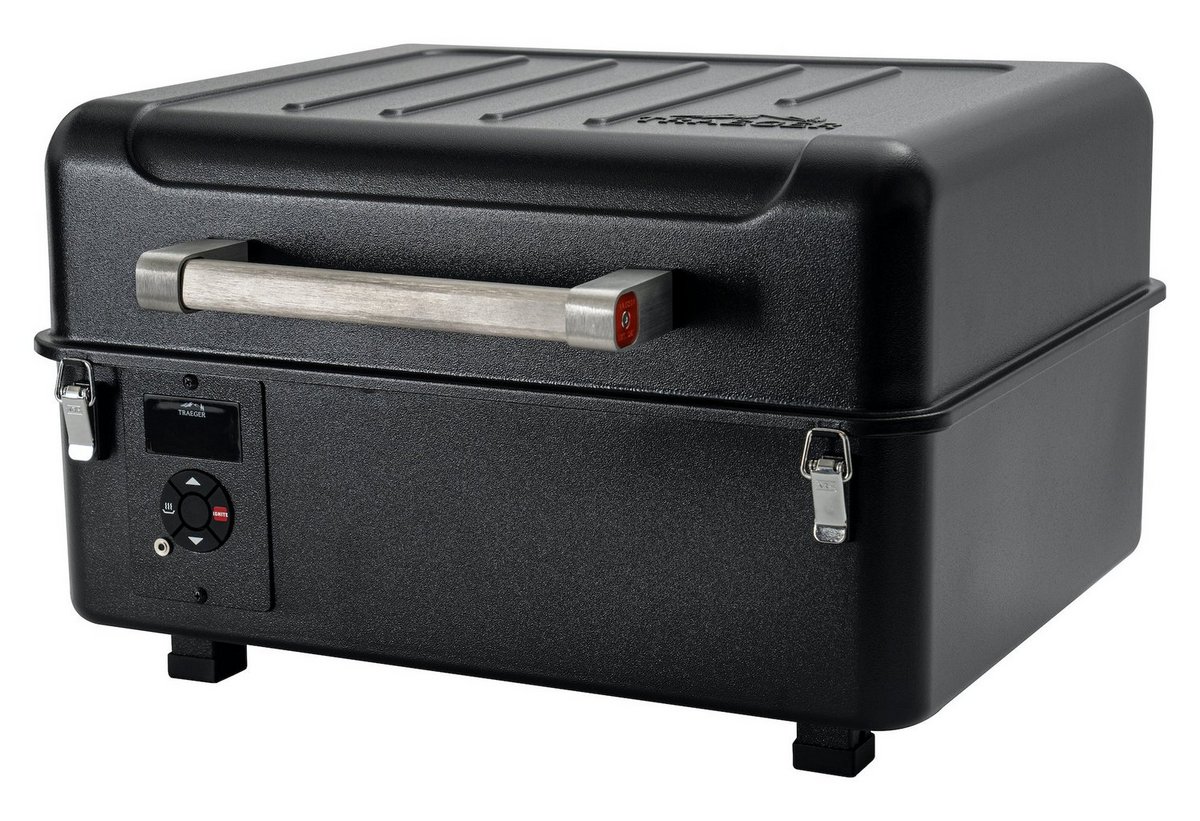
Traeger
Traeger Ranger
Traeger's tabletop pellet grill — a legless box meant to sit on a truck gate or picnic table rather than stand on its own. It runs the same Digital Arc controller and 8 lb hopper as the Tailgater but only 176 sq in of grate, and it ships with a cast iron griddle insert that the Tailgater does not include. Its 60 lbs is heavy for a tabletop, which is the one thing buyers consistently do not expect.

Traeger
Traeger Pro 575
The Traeger Pro 575 is Traeger's best-selling entry-level WiFi pellet grill, using the D2 controller and WiFIRE app. It's the model most people picture when they think 'Traeger.' Note: this model is no longer sold new as of 2026. Its current equivalent is the Traeger Woodridge.
Traeger
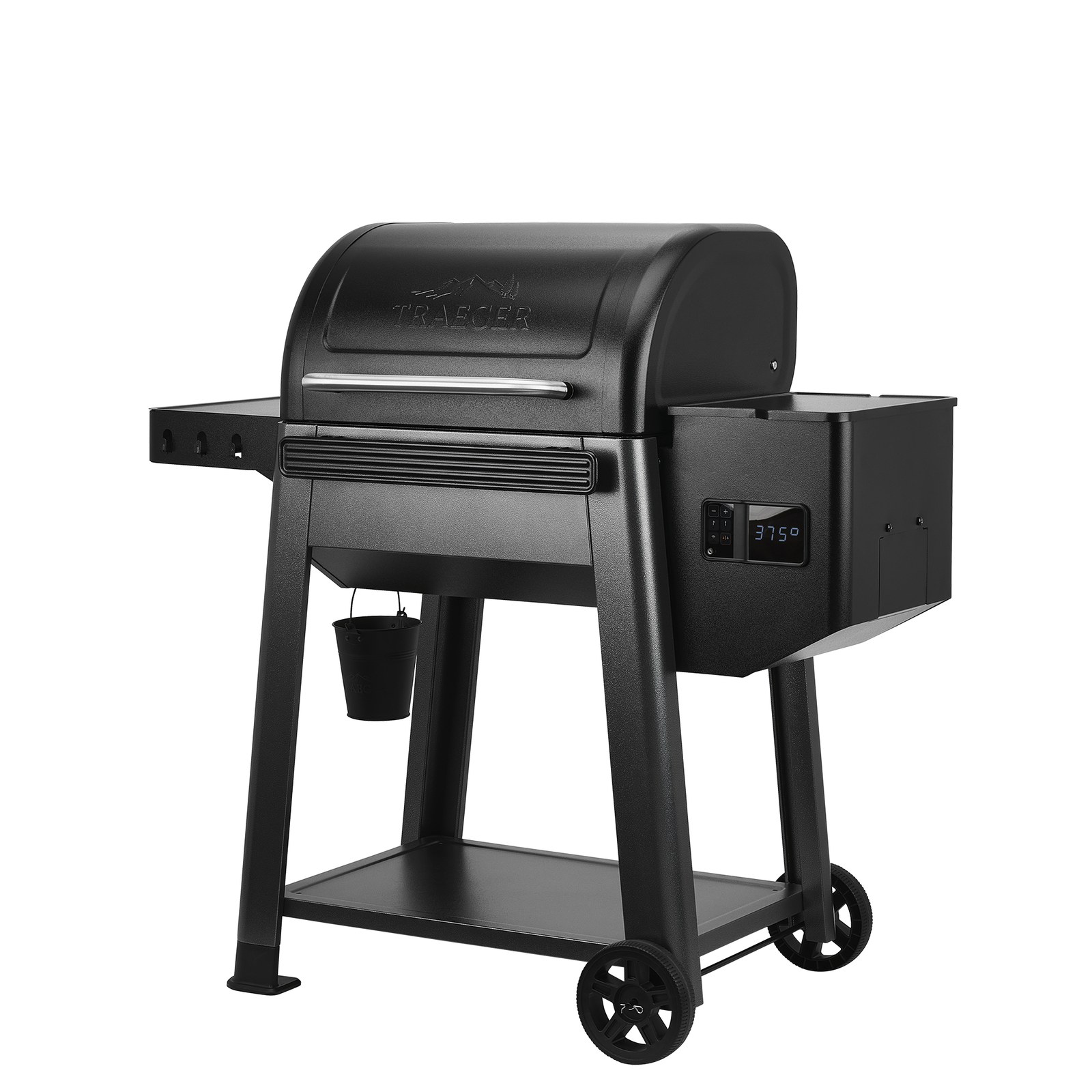
Traeger Westwood
The Westwood is the model Traeger built to replace the Pro 575 at the bottom of the line, and it is now the cheapest WiFIRE grill the company sells. It gives up the Woodridge's 500°F ceiling, 24 lb hopper and Super Smoke mode, capping out at 450°F with an 18 lb hopper and a plain digital controller. What it keeps is the part buyers actually came for: app control, a wired probe, the P.A.L. accessory rail and a two-tier 653 sq in chamber.

Traeger
Traeger Woodridge
The Woodridge is the grill that finally retired Traeger's ancient Pro Series platform — it's the true successor to the Pro 575/780, and at $799 it undercuts them while fixing their two biggest complaints: cleanup and hopper size. You get 860 sq in (more than the old Pro 780), a 24 lb hopper with a clean-out chute, WiFIRE, a wired probe, and the same EZ-Clean ash keg as the $1,800 Ironwood, all under a 10-year warranty. owners call it the best value Traeger has ever shipped, with steady temps from the new digital controller. The honest trade-offs: no Super Smoke mode (that's the $1,149 Woodridge Pro), no pellet sensor or side shelf, and like every Traeger it tops out at 500F with a mild smoke profile — Camp Chef's Woodwind and the Weber Smoque both produce noticeably more smoke flavor. Early-batch owners reported some app-pairing friction and thin-ish lid steel. If you want the Traeger ecosystem without flagship pricing, this is the one to buy; if you mostly chase heavy smoke, look at the Pro trim or a competitor.
Traeger
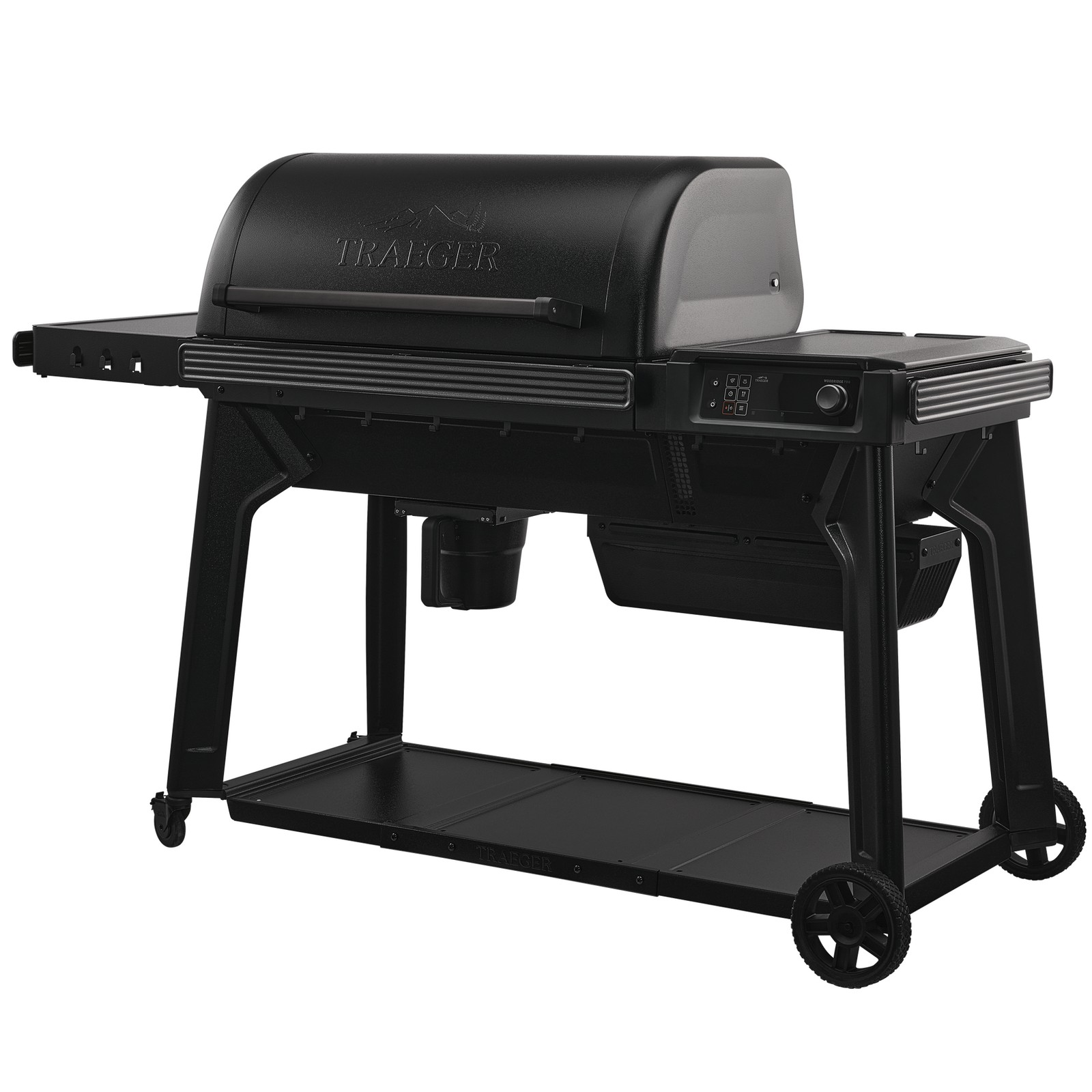
Traeger Woodridge Pro
The Traeger Woodridge Pro is the 2025 replacement for the aging Pro series - 970 sq in, a 24 lb hopper with pellet sensor, Super Smoke mode, and a 10-year warranty at $1,000. Reviewers call it the biggest upgrade to Traeger's entry lineup in years.

Traeger
Traeger Ironwood 885
The Traeger Ironwood 885 is a WiFi-connected wood-pellet grill and smoker from Traeger, the company that popularized pellet grills. It uses the D2 direct-drive controller and WiFIRE app for hands-off cooks. Traeger has moved it to its Legacy Grills line — still sold new on traeger.com, but the current equivalent is the Ironwood XL.