Weber
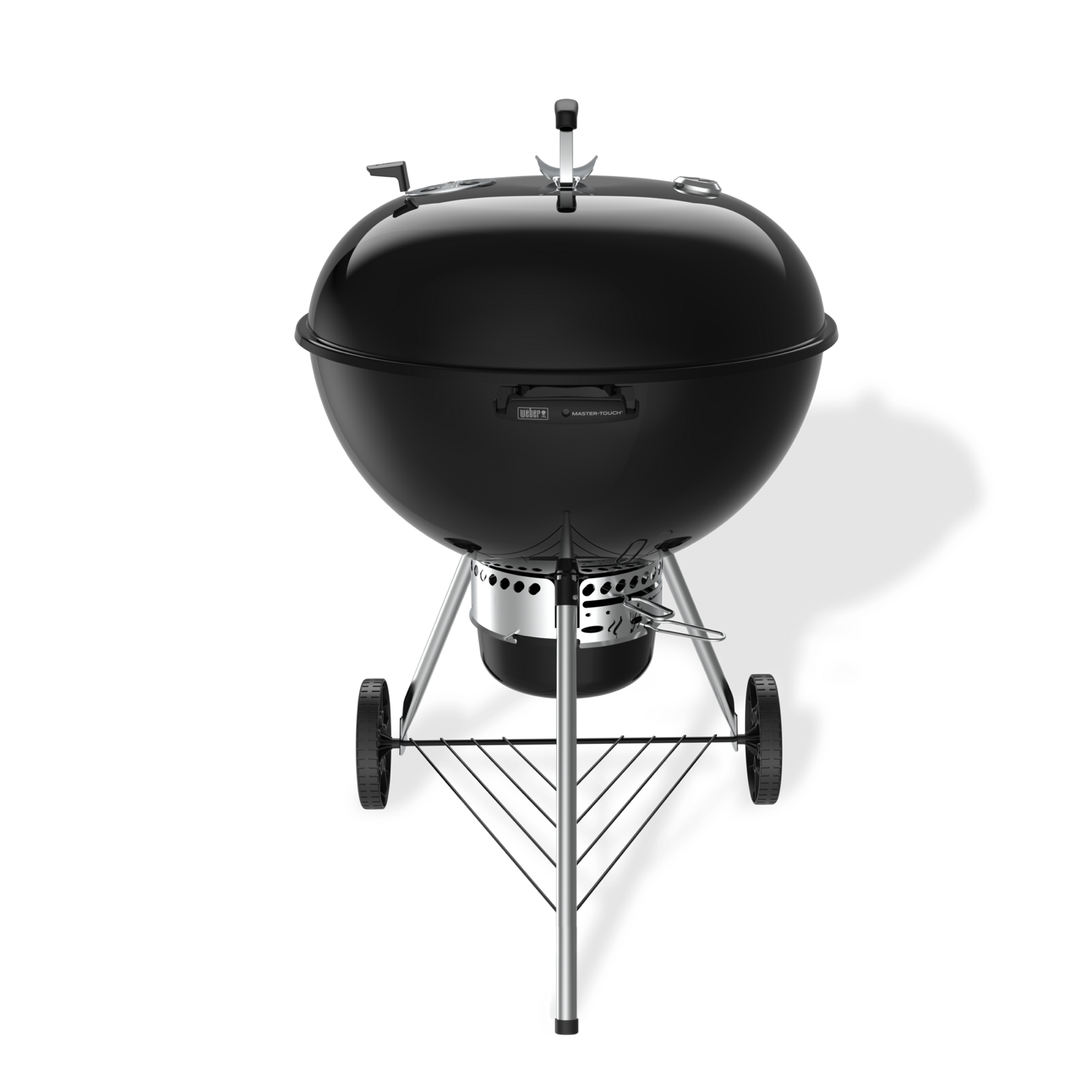
Weber Master-Touch 26
The 26-inch Master-Touch is the largest kettle Weber makes below the Ranch, with a 508 sq in primary grate plus an 80 sq in warming rack. It carries the Master-Touch package — hinged stainless grate, Char-Rails, lid thermometer and Tuck-Away lid holder — on a bowl four inches wider than the 22-inch Master-Touch already in the catalog. Weber no longer lists a plain 26-inch Original Kettle, so this is the only way to buy the 26-inch bowl new.
We may earn a commission. Price and availability on Amazon may differ.
Specifications
Pros
- ✓508 sq in is 40% more grate than the 22-inch Master-Touch for roughly $200 more
- ✓Hinged stainless grate flips on both sides, so coals can be topped up without lifting food off
- ✓Included Char-Rails hold coals in a defined bank, which makes a two-zone fire repeatable rather than eyeballed
- ✓The extra four inches of diameter is what lets a whole turkey or a full packer sit in a true indirect zone
- ✓Built-in lid thermometer and Tuck-Away lid holder, neither of which the Original Kettle line includes
Cons
- ✗The 26-inch bowl is off the main accessory standard — most kettle inserts, baskets and rotisserie rings are sized for the 22
- ✗No cart, side table or work surface at $499, which buys a full cart on the Performer
- ✗Burns noticeably more charcoal than a 22 to hold the same temperature, because the larger bowl has more volume to heat
- ✗Smoke Grey finish is a $30 upcharge over black for no functional difference
Owner Insightssummarized from owner discussions
The 26-inch Master-Touch is the biggest kettle Weber sells short of the Ranch, and the interesting question is not whether it is a good grill - it is a kettle, the design is settled - but whether the extra four inches over the 22 is worth roughly $200 and a whole accessory ecosystem you no longer fit into. Owners who made the jump answer that overwhelmingly yes. The consistent report is that a 22 runs out of room quickly once you are cooking for more than two or three people with a two-zone fire, and that the 26 is the size at which a turkey, a party's worth of wings, or six ribeyes stop being a logistics problem. Several owners who intended to buy a dedicated smoker later say the 26 handled smoking well enough that they never did.
The cooking experience is the kettle experience with more room to arrange it: two chimneys banked at the back with indirect space across most of the grate, or baskets at each side with a cool lane down the middle. Charcoal snakes run long - one owner reports 14 hours with a fifth of the snake left, and doubling it up runs all day. The one thing owners genuinely dislike is the stock grate. It comes in pieces, the removable center circle falls into the bowl if you lean on it with a brush, and the flip-up coal-banking section is too narrow to use. Plenty of owners replace it on day one with a one-piece stainless grate, and a stretch of units shipped without the correct grate at all, with a letter inside directing owners to support and replacements backordered for months. Weber's support handled that well - free replacement grates and parts are the norm in these threads - though owners are openly nervous about whether that continues after the ownership change.
It suits a kettle cook who has outgrown a 22 and is not planning to lean on accessories. That is the caveat worth weighing: the 26 sits outside the standard kettle accessory size, so rotisseries, inserts and carts either cost more, come from specialty makers, or get improvised - a 22-sized coal insert works but leaves gaps, and a 26-inch rotisserie only became available from a small manufacturer at around $250. Owners cross-shopping it against the Summit Kamado, at roughly three times the price, mostly conclude the Summit is not worth the difference; it gets hotter but does not smoke better. Stock has been unreliable, and the legs are thin enough that a fresh build often wobbles until you go back over the assembly.
What owners like
- +The size upgrade is close to unanimous among people who made it. The recurring phrasing is that a 22 runs out of room fast once you are cooking two-zone for more than two or three people, and that the only regret owners have about the 26 is not buying it sooner
- +Two-zone cooking is where the extra four inches pays. Owners run two heaping chimneys banked at the back with indirect space across most of the grate, or coal baskets down each side with an indirect lane through the middle - layouts that simply do not fit on a 22
- +It handles the once-a-year cooks that force people to buy a second grill: a 20 lb Thanksgiving turkey, six or more ribeyes at a time, enough wings for a party in one load
- +It smokes well enough that owners stop planning to buy a dedicated smoker. One reports 14 hours with 20% of the charcoal snake still unburned, and a 2x2 snake running all day
- +Weber's customer service is a genuine part of the value. Owners who received the wrong or a defective grate were sent replacements free, in one case two of them, and the same goes for parts years into ownership
- +It lasts long enough to distort people's expectations of grills - one owner replaced his only when the bowl had burned through after 18 years of service
Common complaints
- −The stock cooking grate is the loudest complaint. It is a multi-piece design whose removable center circle pops out and drops into the bowl under brush pressure, and the flip-up section for banking coals is too narrow to be useful. A large share of owners replace it immediately with an aftermarket one-piece stainless grate
- −Accessories are the real cost of going up a size. Most kettle inserts, baskets and rotisserie rings are built for the 22 - a 26-inch rotisserie only became available from a specialty maker at around $250, carts come from third parties or get built, and a 22-sized coal insert works but leaves gaps
- −Supply has been erratic. Units shipped with a letter inside saying the new grate had supply chain problems and to contact support, with replacements backordered into the following spring, and owners trying to order were told there was no restock date
- −Legs are thin-walled and owners report a noticeable wobble out of the box. Re-checking the assembly or shimming it fixes it, but a $499 grill should stand still
- −The 26 is now sold only in Master-Touch trim. Owners who preferred the simpler hinged grates of the Original Kettle Premium can no longer get that configuration in this size
Common Questions
Is the 26 worth it over the 22?
What is wrong with the factory cooking grate?
Mine arrived without the correct grate. What now?
Will my existing kettle accessories fit?
Can it smoke, or do I still need a dedicated smoker?
Why does mine wobble?
Compare the Weber Master-Touch 26
Related grills
More from Weber →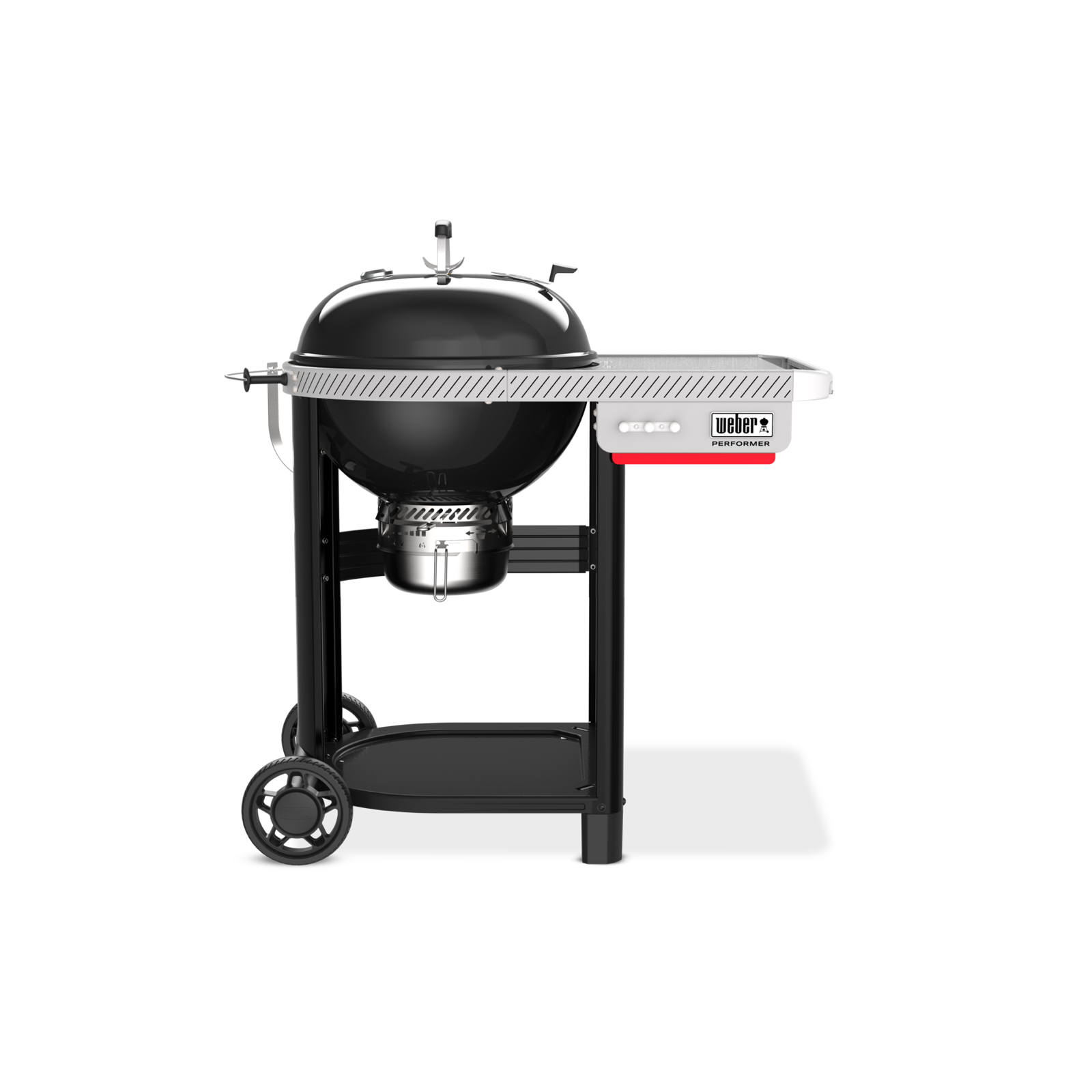
Weber
Weber Performer 22
Weber redesigned the Performer for 2026: it is a 22-inch kettle bowl mounted on a wheeled cart with a fixed side table, a bottom storage shelf and the Weber Works side rail for snap-on accessories. The grate, at 363 sq in, is identical to the Original Kettle 22 — what the money buys is the cart, the hinged grate, the lid thermometer and the improved ash catcher. It sits above the 22-inch Master-Touch and below the Smart version, which adds a Wi-Fi airflow controller.

The Weber Master-Touch 22 is the upgraded version of Weber's iconic charcoal kettle, adding a hinged Gourmet BBQ System grate, a built-in thermometer, and a Tuck-Away lid holder. It's a benchmark backyard charcoal grill.
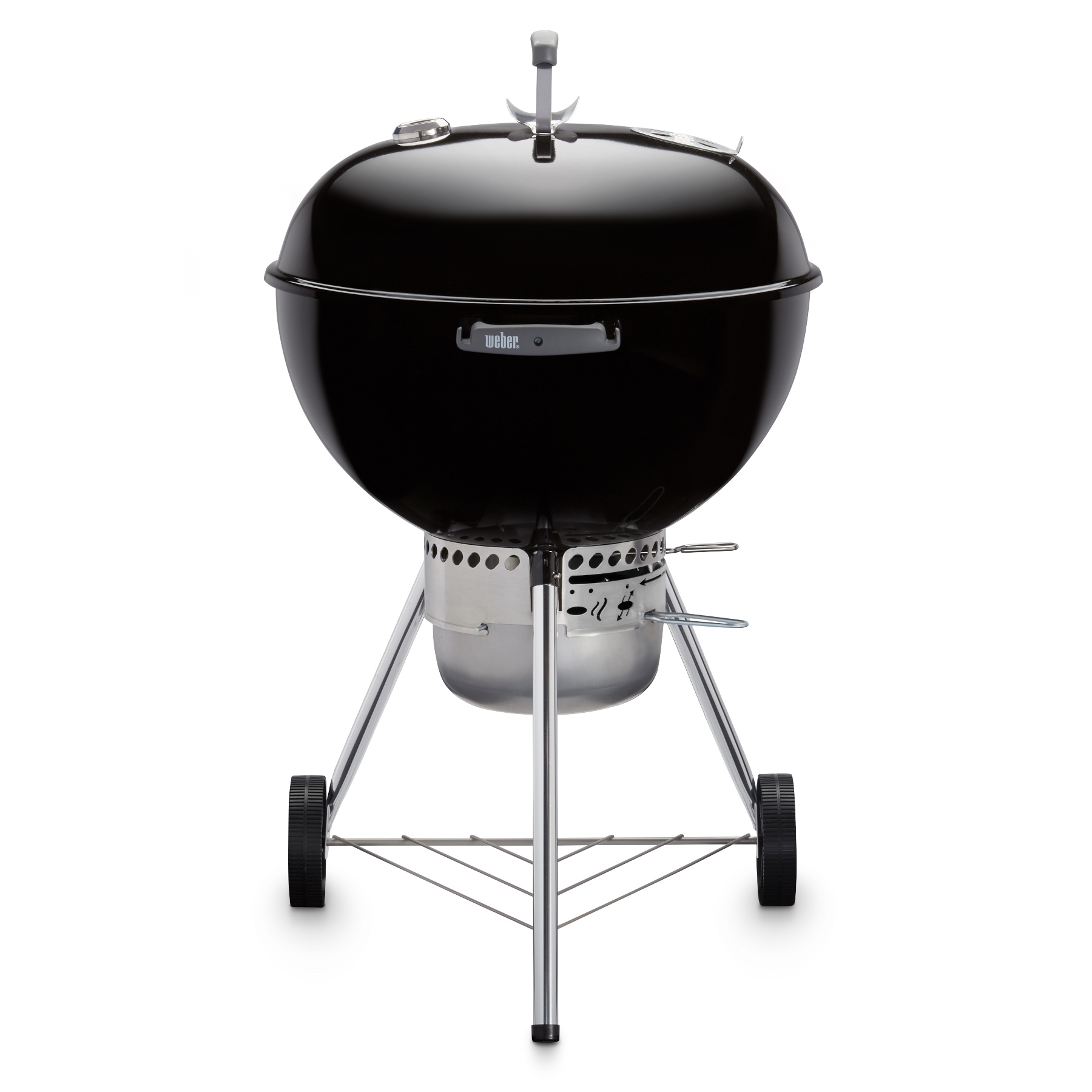
The Weber Original Kettle Premium 22 is the iconic charcoal kettle that started backyard grilling in America, upgraded with a built-in thermometer, hinged grate, and sealed One-Touch ash catcher. It's the single most-recommended first grill in owner discussions.
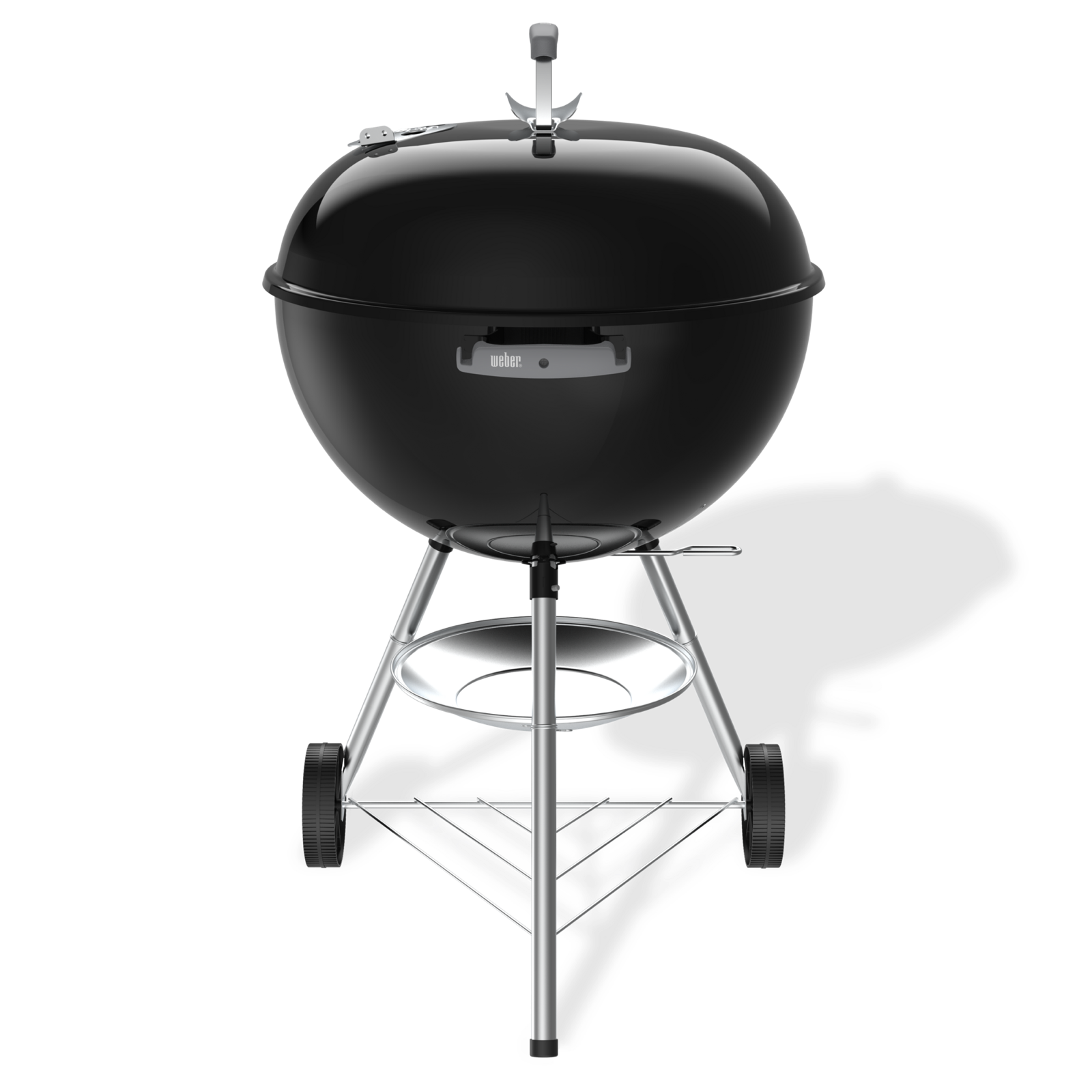
The base 22-inch Weber kettle and the entry point to the whole charcoal ladder. It has the same 363 sq in grate and One-Touch ash sweep as the Original Kettle Premium above it, but drops that model's hinged grate, built-in lid thermometer and enclosed ash catcher for an open ash pan. Against the 18-inch below it, the extra four inches is the difference between fitting a two-zone fire and not.
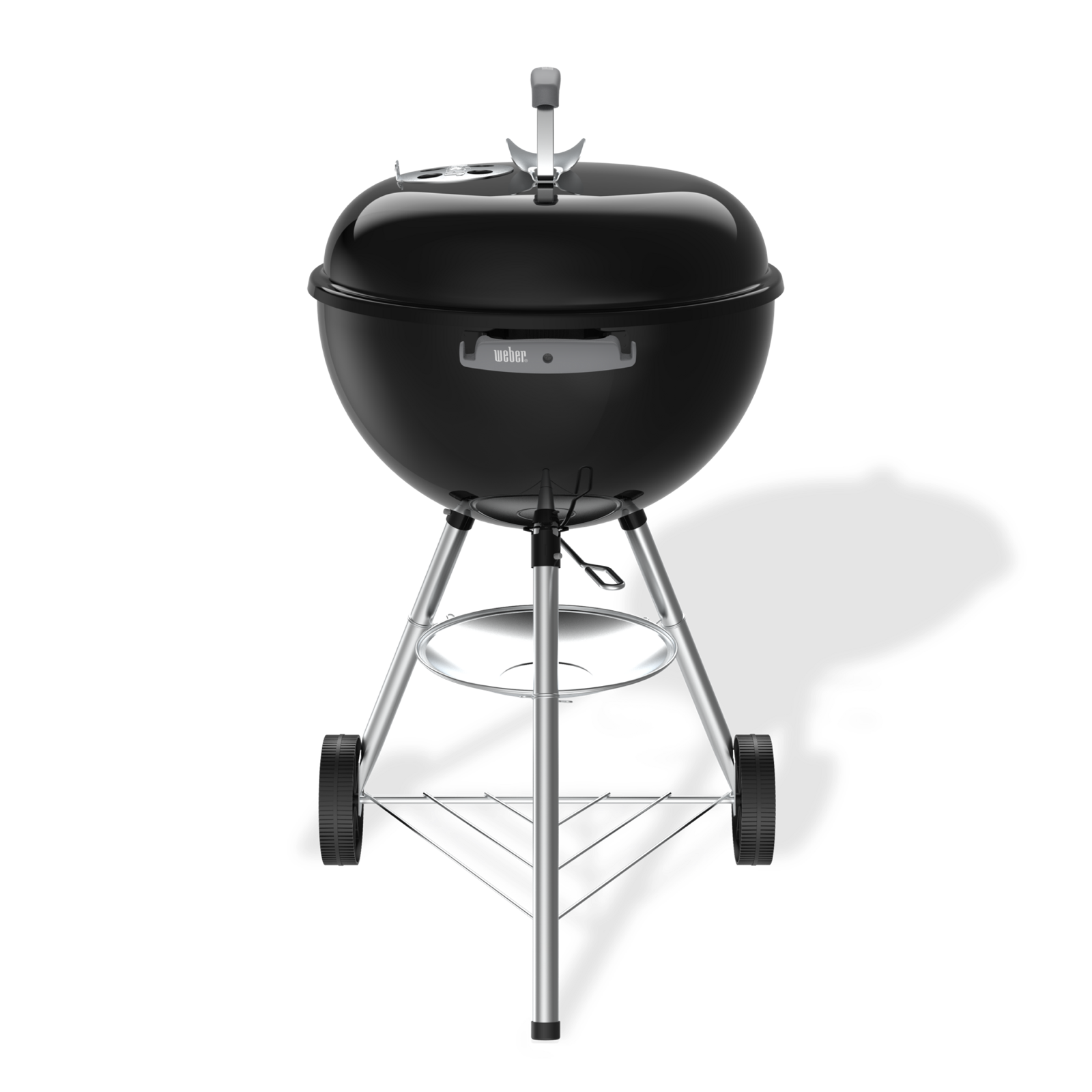
The smallest full-size Weber kettle, an 18-inch bowl with 240 sq in of grate against the 22-inch model's 363. It keeps the One-Touch ash sweep, enclosed ash catcher and the same porcelain-enameled bowl and lid as its bigger sibling, so the only real difference is diameter. Weber sells it as the apartment-balcony and small-patio kettle rather than a budget version of the 22.
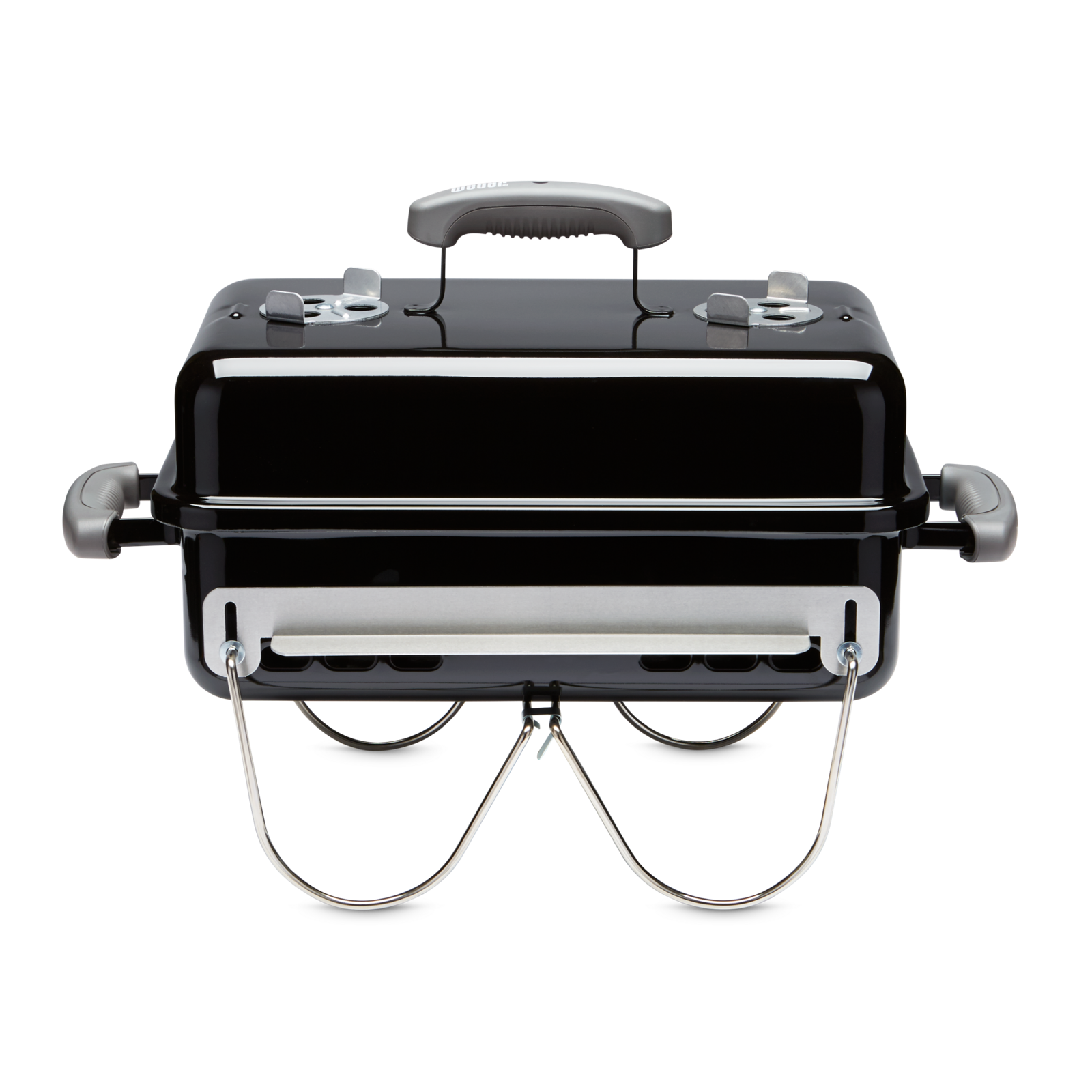
A rectangular portable charcoal grill with legs that fold up and lock the lid shut for carrying. The 160 sq in rectangular grate suits long items — sausages, corn, a rack of ribs cut in half — better than the round Smokey Joe's 147 sq in. It is the charcoal twin of Weber's long-running Go-Anywhere gas model.