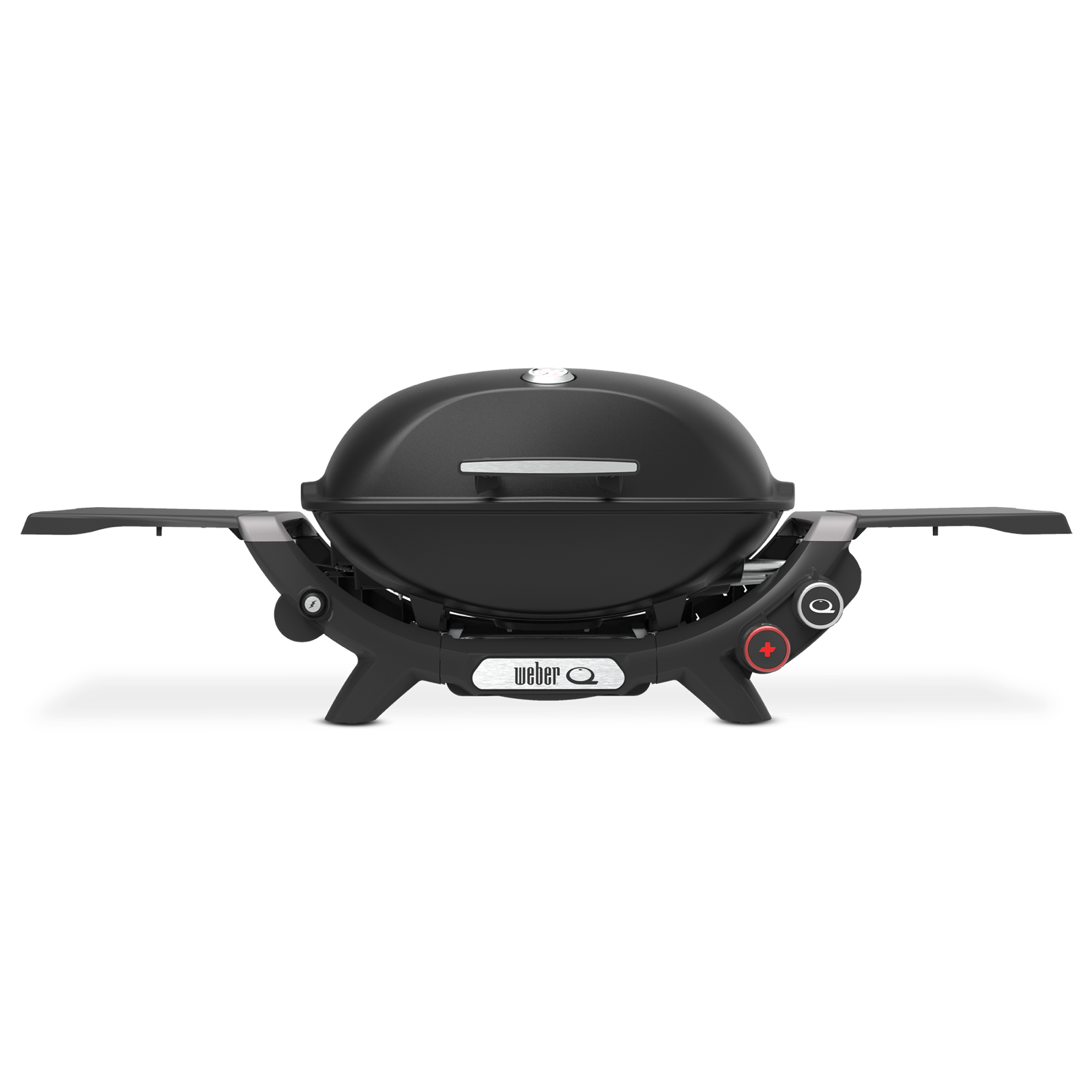
Weber
Weber Q 2800N+
The grill that replaced the Q 2200 in Weber's US lineup and is now effectively the whole Q series here. Against the old Q 2200 it adds 14% more grate area (320 vs 280 sq in) and 50% more heat (18,000 vs 12,000 BTU), plus a separate 4,000 BTU "Plus" burner that lets the dome hold a genuine 250°F for roasting. Priced as the tabletop unit; the rolling stand is a separate $129.99 accessory, or $599 bundled.
We may earn a commission. Price and availability on Amazon may differ.
Specifications
Features
Pros
- ✓A published 250–700°F range is rare on a portable and makes roasting a whole chicken realistic
- ✓Cast aluminum body will not rust through the way painted steel portables do
- ✓4.6 stars across 432 reviews on Weber's own store
- ✓32 lbs and 30 in wide — genuinely liftable by one person, unlike the Traveler
- ✓High-dome lid clears a roast or two full rib racks
Cons
- ✗The stand is not included; budget $129.99 more or it needs a table
- ✗320 sq in matches the Traveler but with no built-in cart or wheels
- ✗5-year warranty across the board, well short of the Spirit and Genesis lines
- ✗No side shelves on the tabletop configuration
- ✗Weber has thinned the US Q lineup to essentially this one model, so there is no cheaper Q step-down anymore
Owner Insightssummarized from owner discussions
The Q 2800N+ is the current centre of Weber's small gas line-up, and the discussion around it is mostly buying advice rather than long-term cooking reports, so treat any confident verdict on how it cooks over years with caution. What owners do talk about is why you would want a grill this size at all, and the clearest case is made by someone who went the other way first. After a decade on a Q, he bought a full-size Genesis, spent a year finding it too big, too thirsty and too fiddly for two or three people, and went back to a Q for the simplicity and the easy cleaning. That is the buyer this grill is for: balconies, small patios, and households where the big grill was overkill.
The practical problems reported are about getting it into service rather than about cooking on it. Two separate owners received grills with no cooking grates in the box, and the one who went to the manufacturer was told there was no date for replacement grates, while the one who went back to the retailer got the whole unit swapped. The heat deflector is the other snag, with the instructions unclear enough that owners cannot work out the correct orientation from the manual or from searching. Owners who want to bake pizza on it find that the shield, trivet and stone stack drops the achievable temperature by something like 70 degrees compared with direct grilling, and that the interior dimensions are not published, so stone sizing is guesswork.
Buy it if you want a small, simple gas grill that will live on a balcony or a small patio, you cook for two or three, and you would rather have one that does not rust through the way painted steel portables do. Budget for the stand separately or plan on a table. The comparison worth making honestly is against the older, larger Q3200, which turns up used for a fraction of the price and which owners raise directly as the smarter buy for anyone who is never going to carry the grill anywhere.
What owners like
- +The strongest endorsement comes from someone who downsized to it on purpose. After ten years on a Q3200 he moved up to a Genesis 330, found it was too much grill, burned more fuel and felt fussy with all its knobs, and after a year went back to a Q. His verdict is that for two or three people the simplicity, ease of use and ease of cleaning make it the best thing going.
- +It is a grill you can put on a balcony and use weekly. Owners with no yard buy it specifically for that, and the combination of a small footprint, a cast aluminium body and gas rather than charcoal is what makes it workable where a full cart grill is not.
- +The cart-and-grill bundles do get discounted meaningfully. One owner picked up a 2800N+ with the premium cart for $350 shipped from a home centre, against a grill that is normally priced as a tabletop unit with the stand sold separately.
- +It takes modification well for anyone who finds the stock arrangement lacking. One owner who disliked the clip-on side shelves built a sliding front shelf from scrap wood and a shelf bracket, with the only change to the grill being two plastic front corners that unscrew and go straight back on if needed.
Common complaints
- −Grills have shipped without their cooking grates, and the fix is slow. One owner assembled his to find no grates in the box, and was told by support that it did not know when replacement grates would be back in stock, leaving the grill unusable. A second owner had the identical thing happen and only got moving because the retailer agreed to swap the whole unit, which is the better route if it happens to you.
- −The heat deflector installation is genuinely ambiguous. Owners report the instructions being unclear about how it seats, with one unable to find a definitive answer anywhere after searching and another posting two photographs asking which orientation was correct. Expect to spend time on this one component.
- −The stand is a separate purchase and owners actively hunt for cheaper alternatives, since the branded one adds a substantial amount to the price of what is otherwise a tabletop grill.
- −Stacking the accessories for pizza costs you a lot of heat. With the heat shield, trivet and stone in place one owner topped out around 500 degrees, against comfortably over 570 for direct grilling on the same grill. Weber also does not publish the interior dimensions, so owners cannot confirm whether a given pizza stone will fit before buying.
- −Against the used market the value case is hard to make and owners say so. The blunt version asked in these threads is why anyone would spend several hundred more on a 2800N+ than on a used Q3200 selling for under $100, and nobody in the discussion produces a convincing answer for a buyer who only cooks at home.
Common Questions
Why buy this over a used Q3200?
My grill arrived without the cooking grates. What now?
How does the heat deflector go in?
Can I bake pizza on it?
Do I need the stand?
Compare the Weber Q 2800N+
Related grills
More from Weber →
Weber
Weber Spirit E-310
The Weber Spirit E-310 is a compact 3-burner propane gas grill and one of the best-selling backyard grills in America. The latest redesign adds Snap-Jet ignition and a more modern cart.

Weber
Weber Spirit E-210
The Spirit E-210 is the compact half of Weber's best-selling gas grill family - the current Snap-Jet generation of the 2-burner that thousands of small-patio owners have run for decades. The formula hasn't changed because it works: a porcelain-enameled cookbox that won't rust through (and is warrantied for 10 years against it), cast iron grates, Flavorizer bars that turn drippings into flavor instead of flare-ups, and burners that light on the first click years in. At 48 inches wide it fits patios and townhome decks where even the 3-burner E-310 feels bulky, and the 2025 refresh added per-burner Snap-Jet ignition and Weber Works rails for accessories. The honest limits: 26,600 BTU across two burners means preheating takes a while, a hard steakhouse sear takes patience, and two burners make real indirect cooking cramped - a whole chicken works, a brisket doesn't. Owners also note the current generation's lid can drip rainwater into the grease tray if stored uncovered. Against value rivals like the Char-Broil Performance, you pay roughly double up front and get a grill that routinely outlives three of them; used Spirits famously hold resale value.
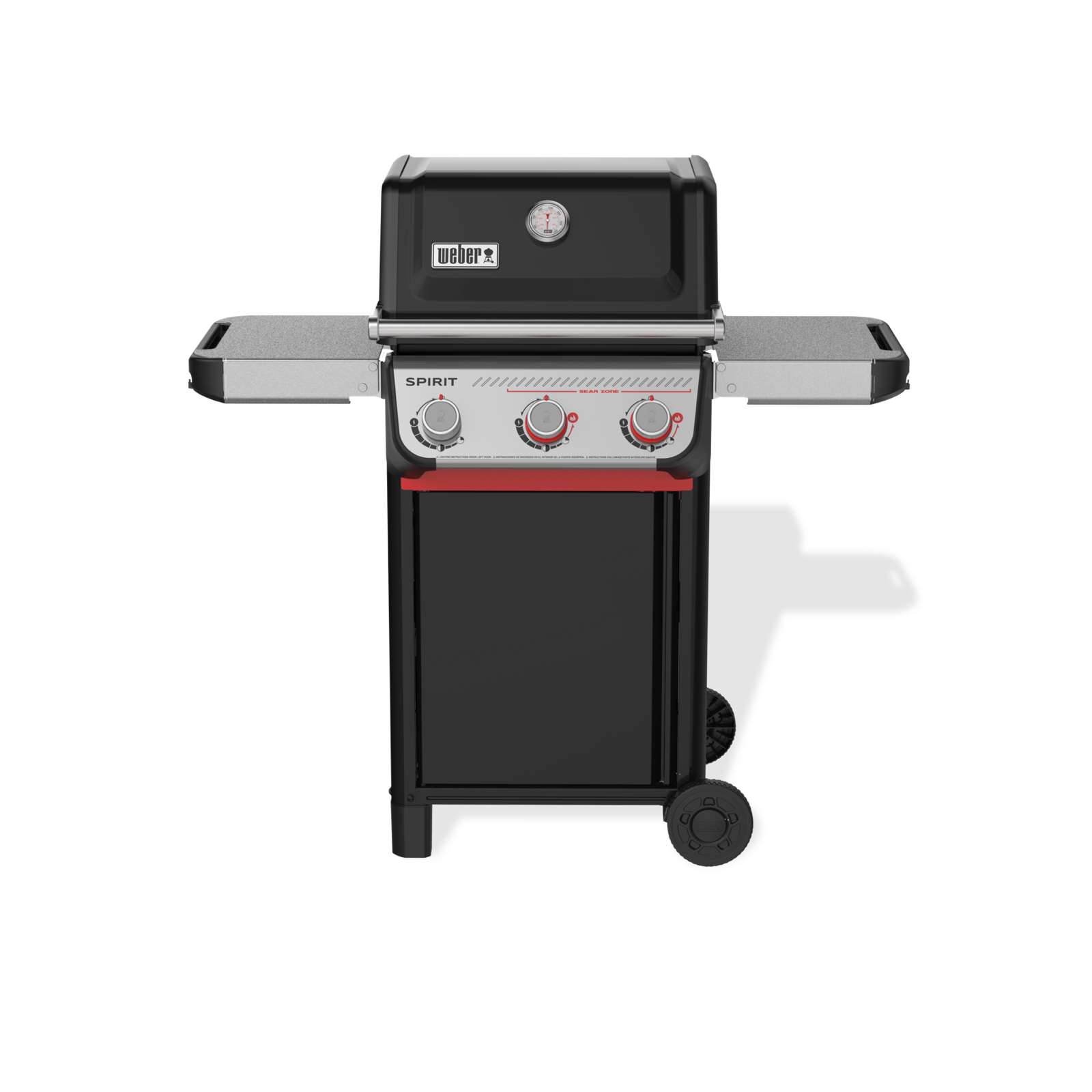
Weber
Weber Spirit E-325
The top of Weber's non-smart Spirit line and the model directly above the Spirit E-310 already in this catalog. It adds a Sear Zone — two Boost Burners that concentrate roughly 40% more power over one section of the grate — on the same 360 sq in primary grate as the current E-310. Priced as the LP version in black; natural gas runs $549.
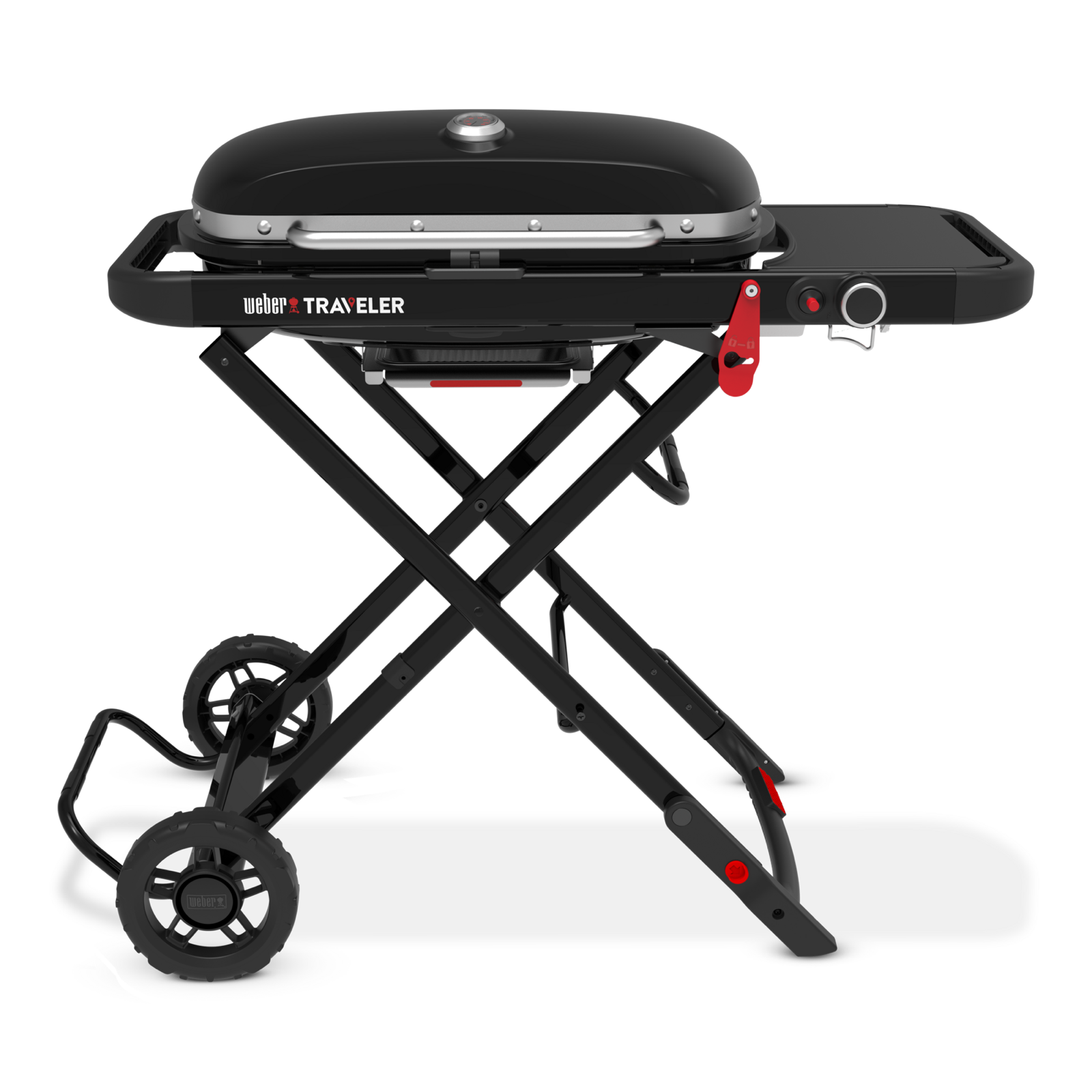
Weber
Weber Traveler
A full-size portable: 320 sq in of cast-iron grate on a folding cart that collapses in one motion and rolls on two wheels like a hand truck. That is roughly the grilling area of a Weber Spirit compacted into something that fits a car trunk, which is what separates it from the tabletop Q series. Single 13,000 BTU burner, so it trades heat output for footprint. A Traveler Compact and an RV-specific version are also sold.
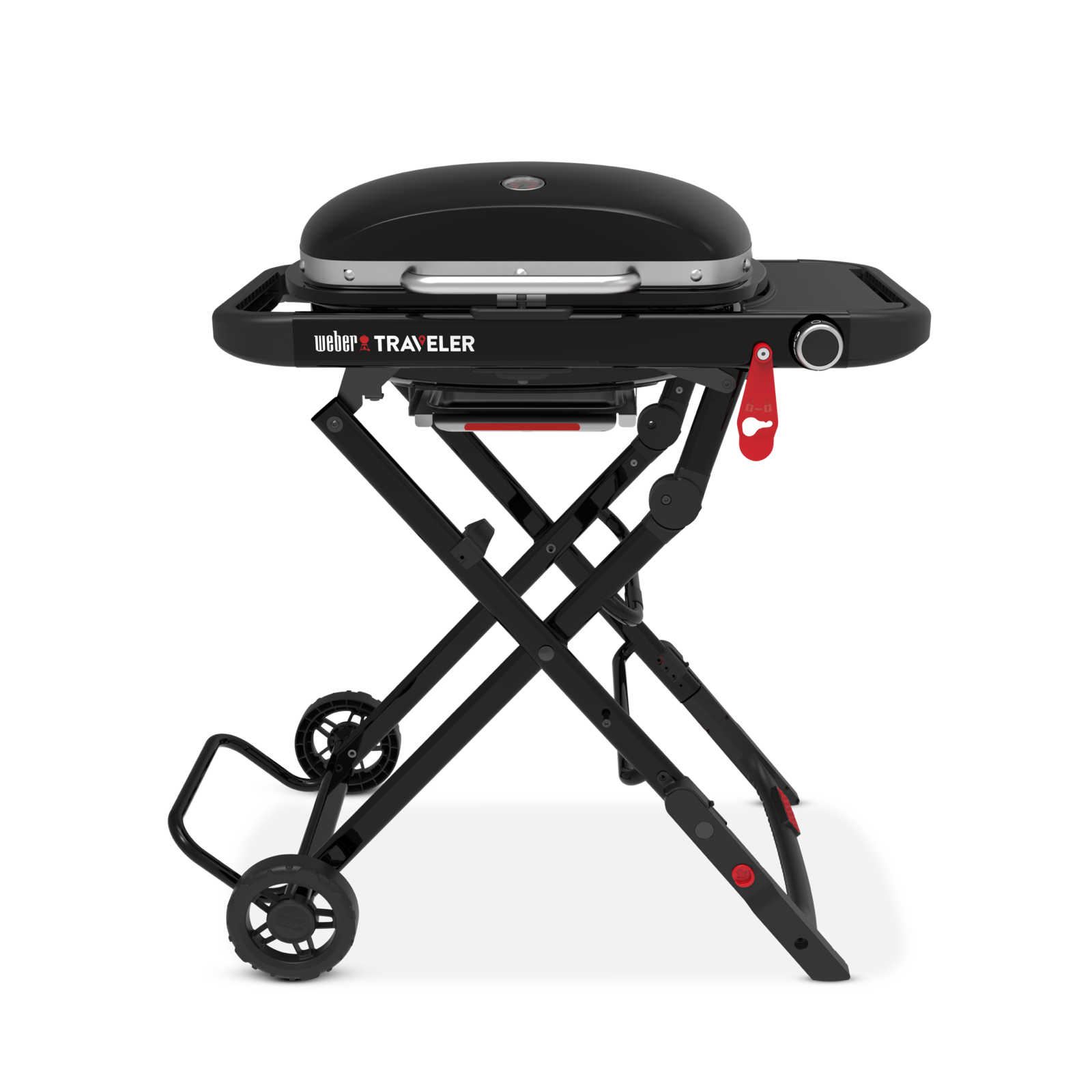
The Traveler shrunk by about a fifth: 240 sq in, 11,000 BTU, 37 lbs and 34 inches wide folded, which is the difference between fitting in a compact car trunk and not. Same folding-cart mechanism and same warranty as the full Traveler. It also uses split cooking grates, so one half can be swapped for a griddle insert.

Weber
Weber Q 1200
The Q 1200 has been the default answer to 'best portable gas grill' for over a decade, and the review volume backs it up - it's one of the most-reviewed grills Weber sells. Unlike the thin folding camp grills it competes with, the Q is a real grill shrunk down: a cast aluminum cookbox that retains heat like a full-size Weber and porcelain-enameled cast iron grates that lay down legitimate sear marks on steaks and burgers. OutdoorGearLab has ranked it their top tabletop portable for years, and owner threads about balcony and tailgate setups almost always land here. Honest limitations: one U-shaped burner means no two-zone cooking, so thick cuts and bone-in chicken take lid management and patience; 189 sq in feeds about four people; it drinks 1 lb canisters, so most owners buy the adapter hose for a 20 lb tank; and the low-profile grease tray will flare if you never clean it. The regulator's low-flow safety lockout (weak flames after a bottle swap) is the most common owner complaint, fixable with the well-known reset ritual. Against a Blackstone 22 you're trading griddle versatility for real grill marks and a lid.