Weber
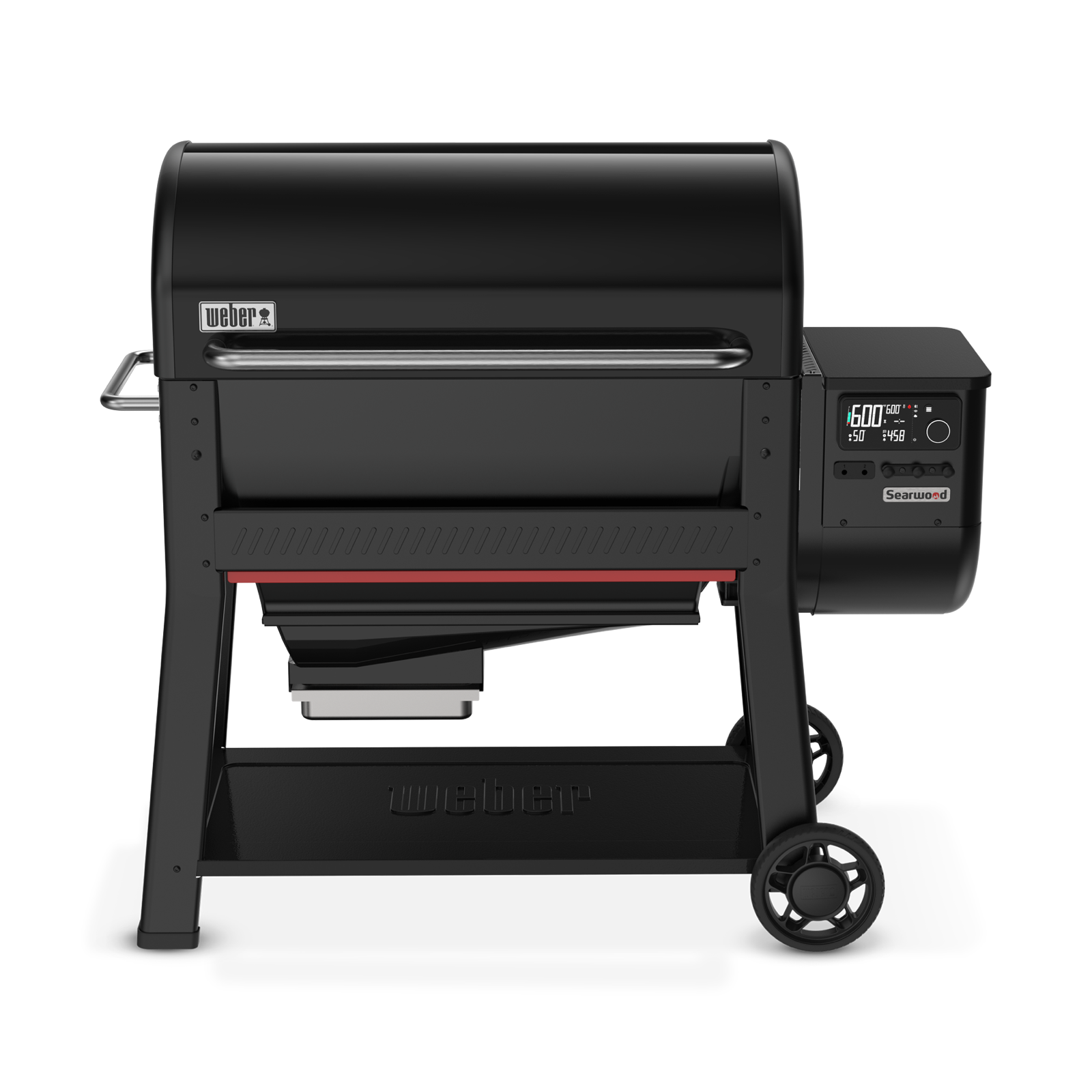
Weber Searwood XL 600
The XL 600 is the 36-inch version of the Searwood 600 already in the catalog: the same DirectFlame sear system, Weber Connect controller and 600°F ceiling, in a chamber that holds 972 sq in across two racks instead of 600. The extra width is the point — the top rack lifts out to leave 11.5 inches of headroom for a turkey or a pair of pork butts. Hopper capacity stays at 20 lb and the burn pot is unchanged, so cook times and pellet consumption scale with load rather than with chamber size.
We may earn a commission. Price and availability on Amazon may differ.
Specifications
Features
Pros
- ✓DirectFlame sear zone runs the full width of the grate rather than a corner patch, so a whole rack of steaks sears at once
- ✓600°F ceiling is 100–150°F above most pellet grills at this price and is what lets it work as a one-grill setup
- ✓Removable top rack opens 11.5 in of vertical clearance for a turkey or standing rib roast
- ✓Hopper fuel gauge reports pellet level to the app and pushes a low-fuel alert, so overnight cooks do not need a flashlight check
- ✓Cast-iron grates and porcelain-enameled lid, both a step up from the plated steel common at $1,199
- ✓Weber Connect firmware is updated over WiFi, and Weber's service network is the widest of any grill brand
Cons
- ✗20 lb hopper is the same as the smaller Searwood 600 despite 60% more grate area, so big loads need a mid-cook refill
- ✗Warranty is 5 years on the cook box and only 3 on electrical components — short next to Traeger's 10-year Woodridge cover
- ✗158 lbs and 50 inches wide; this is a grill you place once, not one you move around a deck
- ✗No Super Smoke-style low-temperature smoke boost, and Searwood smoke output at 180–225°F is modest
- ✗$1,199 puts it against the Traeger Ironwood and Recteq Flagship 1600, both of which bring more insulation
Owner Insightssummarized from owner discussions
The Searwood XL 600 is the grill that turns up in nearly every pellet smoker shortlist in the $1,200 range, and the shortlist is always the same: Recteq's Backyard Beast, Deck Boss and Flagship, the Camp Chef Woodwind Pro 36, Traeger's Ironwood and Woodridge, and occasionally a Pit Boss or a Green Mountain. What makes it win those comparisons, according to the people who bought it, is not any single feature but the combination of a searing setup that works across the whole grate rather than in one corner, Weber's record for grills that survive years outdoors, and an accessory range that lets it cover grilling as well as smoking. Buyers arriving from grills with wild temperature swings single out stability as the upgrade they actually feel.
The cooking reports are strong and come from people with the background to judge. Seventeen-hour briskets, ribs that owners describe as having serious bark and smoke, rotisserie chicken cooked at 350 for around three hours and coming out without needing a brine, and a long-time offset and charcoal cook calling a wagyu short rib cook the best thing he had ever made. Against that, the failures reported are electrical and software. One brand-new grill was bricked by a firmware update pushed through the app, showing an E04 communication failure with nothing starting up, and surviving every reset and reseat its owner could think of. Another owner had a fan motor die and waited over a week for the part. Neither is common in these threads, but both are the kind of fault that takes a grill out of service entirely rather than degrading it.
Buy it if you want one machine that smokes long and also grills and sears properly, and you value a service network and an accessory range over squeezing out maximum smoke. Look hard at the Camp Chef with its separate smoke box if smoke flavour is the priority, and at Recteq if build materials and insulation matter most to you. The pricing note worth acting on is that this model does not discount, while the smaller Searwood 600 does: one buyer walked into a store intending to buy the XL and found the smaller one cleared to $499 against the XL's $1,300, and took it on the grounds that an $800 gap is a different decision from the $300 gap the two normally sit at.
What owners like
- +Temperature holding is the thing owners volunteer without being asked. One puts it as holding better than his kitchen oven and says it has worked flawlessly every time he has used it, which is a pointed comment in a category where buyers arrive specifically because their last grill swung 50 degrees either side of the set point.
- +It converts experienced cooks, which is the endorsement that carries weight. An owner with a history of charcoal grills, offset smokers and modified pellet grills ran wagyu short ribs low and slow on his first long cook and called the result the single best thing he had ever smoked or barbecued.
- +Long cooks go the distance without drama. Owners report 17-hour smokes on a 14.5 lb brisket and on a first-ever brisket attempt, and pork butt and rib cooks that come back describing serious bark and smoke flavour rather than the thin results pellet grills are often accused of.
- +The sear is even rather than concentrated, and owners cross-shopping rivals specifically weigh that. The comparison people draw is that competitors hit a higher peak temperature but develop one overly hot patch, while this one runs cooler but sears consistently across the whole grate, which matters if you are putting 16 to 20 burgers on at once.
- +Weber's durability record is a large part of why people pick it, and they cite evidence rather than reputation. One buyer replacing a pellet grill that had died after five years pointed at his own kettle still looking new after six years outdoors as the reason he went back to the brand.
- +The accessory range is a genuine reason owners choose it over rivals, particularly the rotisserie, which produces some of the most enthusiastic cooking reports in these threads, and the griddle and sear-plate inserts that let one grill cover more ground.
- +Against the boutique end it looks like a bargain and buyers say so. One had priced a custom pellet smoker at north of $4,750 delivered with a three-month lead time before buying this instead at roughly a quarter of the cost, and does not report regretting the trade.
Common complaints
- −A firmware update can brick it, and the failure is ugly. One owner with a brand-new grill completed setup and a successful first cook, updated the firmware through the app, and was left with a unit that powers on, shows the startup screen and then throws an E04 communication failure with the fan, auger and igniter never starting. Unplugging, discharging, forcing a reset, removing and reinstalling the app, reseating wiring and pulling the probes all failed.
- −Electrical parts do fail and the parts pipeline is slow. One owner had the fan motor die on his and waited over a week for a replacement after eventually reaching a product team case handler, with warehouse delays offered as the explanation.
- −It effectively does not go on sale. One owner reports watching for a discount for a year without one materialising, and resorting to asking whether any bundle of tray tables, rotisserie and grates could be negotiated into a deal. Budget the list price rather than planning around a seasonal drop.
- −The smoke question is unsettled and worth being honest about. Buyers repeatedly wonder whether the rival with a dedicated smoke box produces more flavour, and are surprised how rarely it gets recommended over this one. Owners here report good smoke, but if maximum smoke output is your single priority, this is the comparison to research rather than to take on trust.
- −Accessories are priced accordingly and the fitment is not obvious. The rotisserie draws complaints at around $150 and owners go hunting for generic equivalents, and at least one owner panicked about whether the accessory frames come in different sizes after recycling the packaging.
- −Buying second-hand is a warranty gamble nobody in these threads can resolve. An owner looking at a brand-new unit from a private seller, bundled with a griddle, rotisserie and cover for $1,000, could not establish whether coverage transfers to a second owner, which is the same question anyone buying a marketplace unit will face.
Common Questions
What is the E04 communication failure and should I worry about firmware updates?
How does it compare to the Camp Chef Woodwind Pro 36?
Should I buy the XL or the regular Searwood 600?
Can it actually sear, or do I still need a separate grill?
Does it ever go on sale?
Is it a reasonable first smoker?
Compare the Weber Searwood XL 600
Related grills
More from Weber →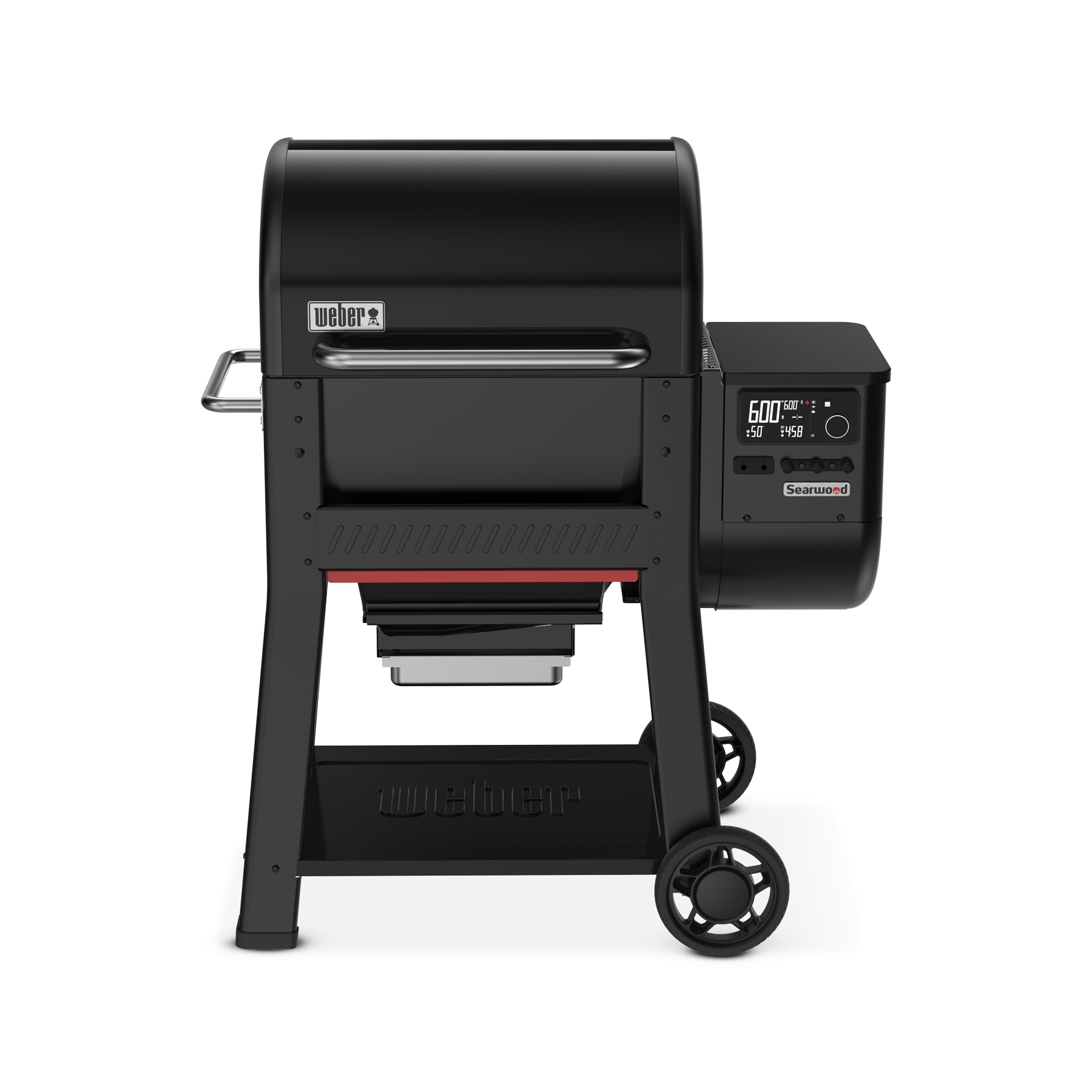
Weber
Weber Searwood 600
The Weber Searwood 600 is Weber's 2024 pellet grill that finally fixed the SmokeFire's sins - a 180-600°F range, DirectFlame searing, manual offline mode, and a Rapid React PID controller at a sharper price. owner discussions's pellet crowd calls it the redemption arc.

Weber
Weber Smoque
The Smoque is Weber's 2025 answer to the entry-level Traeger, and it deliberately does less than the Searwood to cost $300 less: no direct-flame searing, no 600F mode, just a smoker-first pellet grill that nails the fundamentals. Reviewers and early owners consistently rate its smoke flavor ahead of equivalently priced Traegers - the SmokeBoost setting and SmoqueVent circulation produce visibly better smoke rings and bark - and the Rapid React PID recovers temp fast after lid opens. The porcelain-enameled barrel (the same coating Weber kettles wear for decades) and 5-year warranty make the hardware feel more durable than the sheet-metal norm at this price, and the enclosed grease-plus-ash drawer is genuinely tidy. Trade-offs are real: 500F max with no sear zone means steaks finish better on a separate grill, 594 sq in is one-brisket territory, the single-position upper rack limits tall cooks, and Weber Connect - though improved - still draws occasional app-pairing complaints carried over from the SmokeFire era. Against the $799 Traeger Woodridge you're choosing more smoke flavor and simpler controls over Traeger's bigger 860 sq in and accessory ecosystem.

Weber
Weber SmokeFire EX6
The Weber SmokeFire EX6 is Weber's WiFi pellet grill, notable for reaching 600°F to sear and using a steep-walled firebox for direct grilling. The 2nd-gen revision fixed many early reliability issues. Note: this model is no longer sold new as of 2026. Its current equivalent is the Weber Searwood XL 600.
Weber
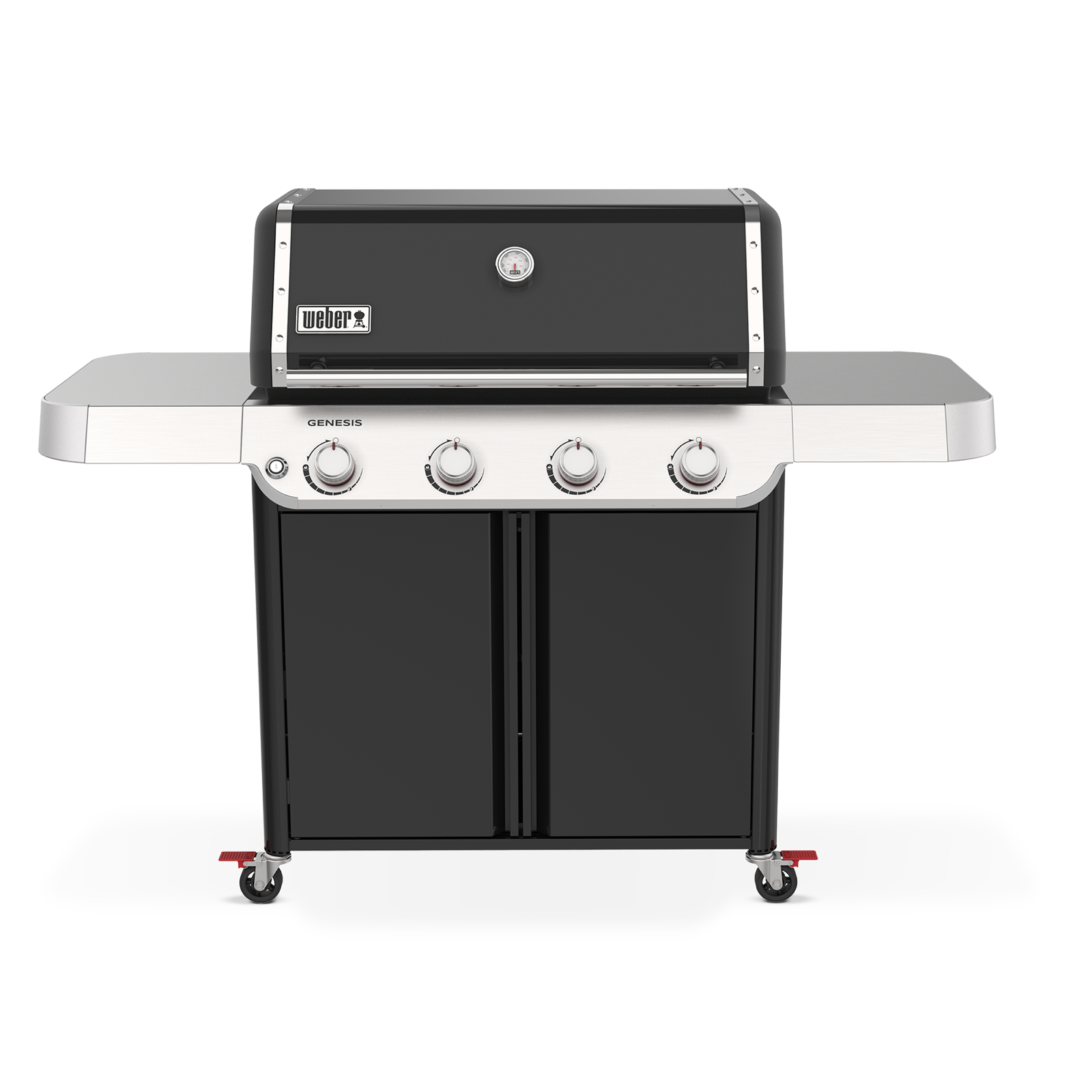
Weber Genesis E-415
The four-burner Genesis with an enclosed cabinet, and the volume seller of the Genesis line. 646 sq in of primary grate — 820 sq in with the warming rack — makes it roughly a third larger than the 3-burner Genesis models, at the cost of the Sear Zone and smart thermometer those carry. Porcelain-enameled steel lid and painted steel doors; the S-415 is the same grill in stainless for $100 more.
Weber
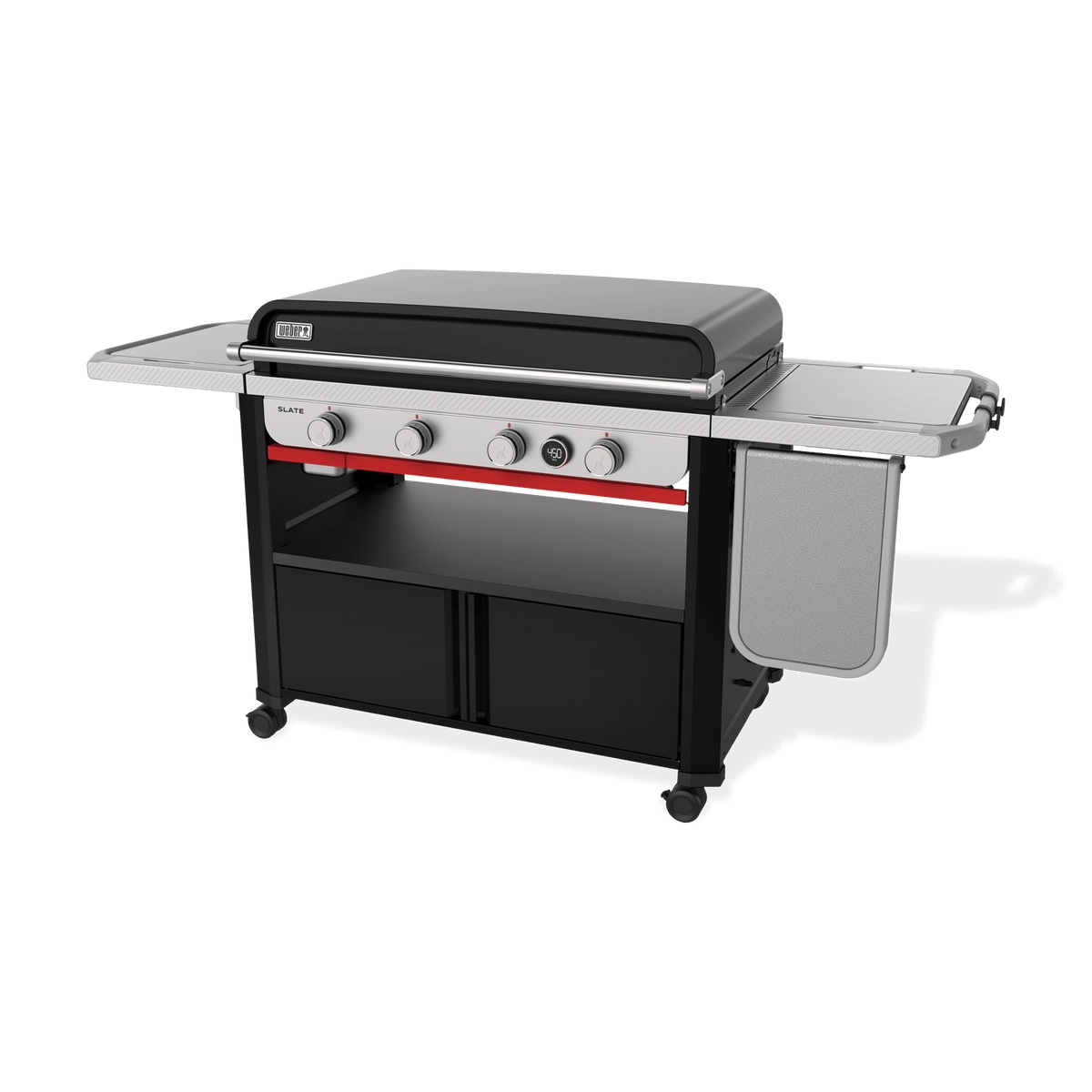
Weber Slate 36
The Weber Slate 36 is Weber's flagship flat-top griddle, pairing a pre-seasoned rust-resistant carbon steel cooktop with four independent burners, a built-in digital cooktop thermometer, and the storage and side tables that made it an instant Blackstone rival.
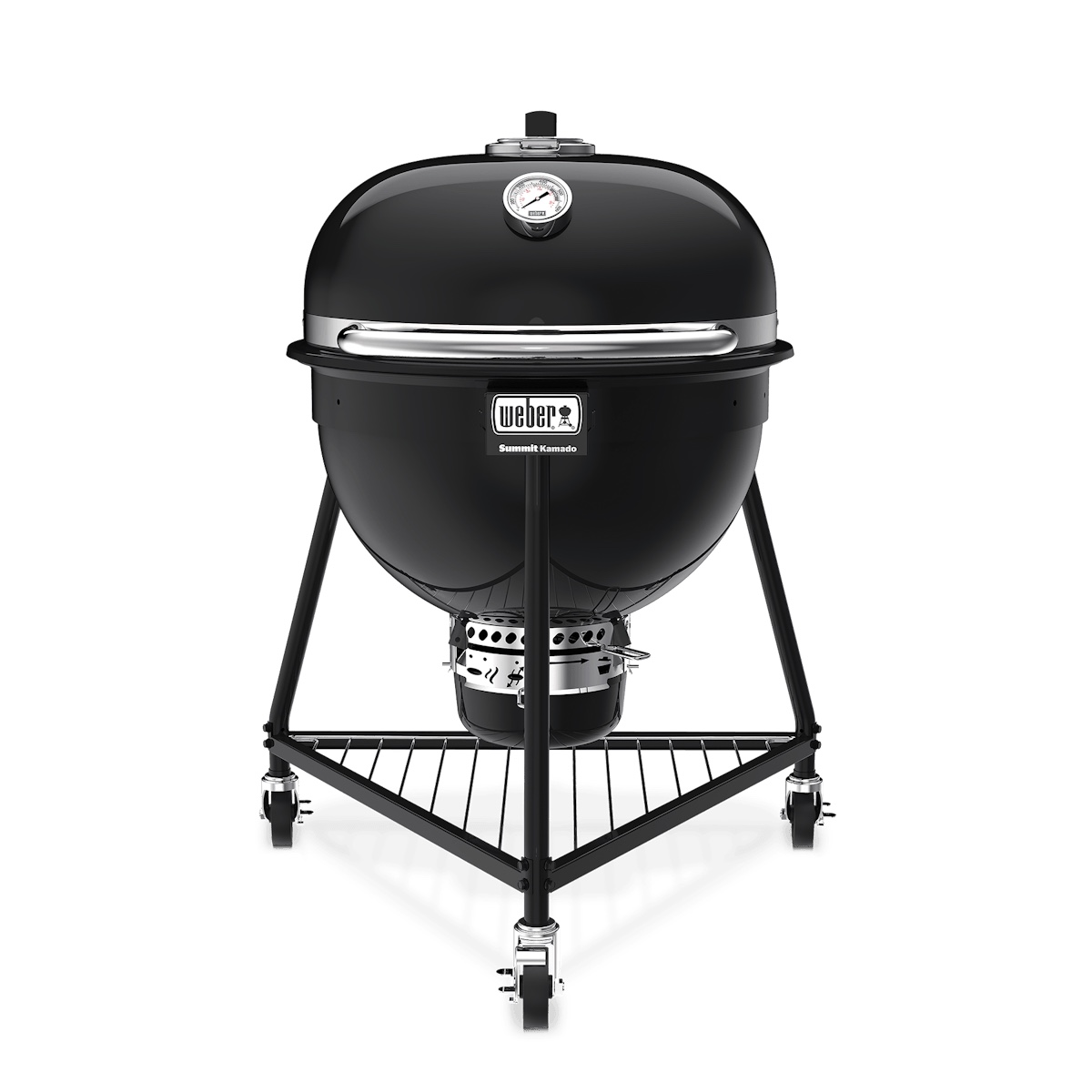
The Weber Summit Kamado E6 is Weber's 24-inch kamado-style charcoal grill built from dual-walled, air-insulated porcelain-enameled steel instead of ceramic. It pairs kamado heat retention with kettle conveniences like the One-Touch ash cleanup, a hinged RapidFire lid damper, and a flip-up diffuser for easy fuel access.