Best Grills for Smoking a Turkey (2026)
Smoking the Thanksgiving turkey is the category's final exam, and the equipment question is mostly a clearance question: a 12-14 pound bird needs real grate space, and a spatchcocked one needs even more width. Every pick below holds steady indirect heat with room for the bird — ranked by owner rating. Our #1 pick is the Big Green Egg Large.

Big Green Egg
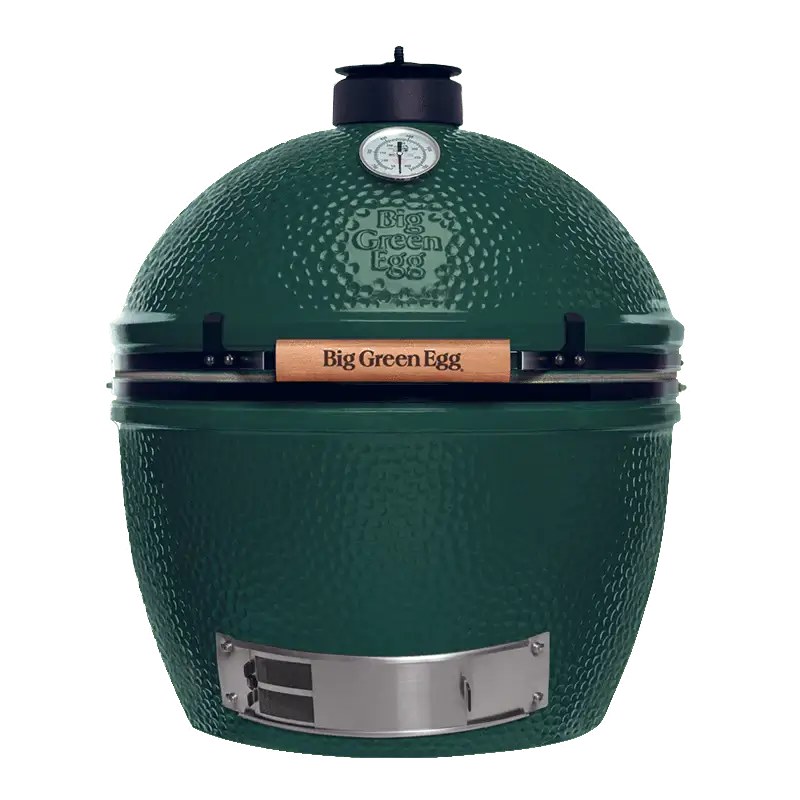
Big Green Egg Large
The Big Green Egg Large is the most popular size of the iconic ceramic kamado cooker, capable of grilling, smoking, roasting, and baking. Big Green Egg is the brand that brought kamado cooking to the American mainstream.
Big Green Egg
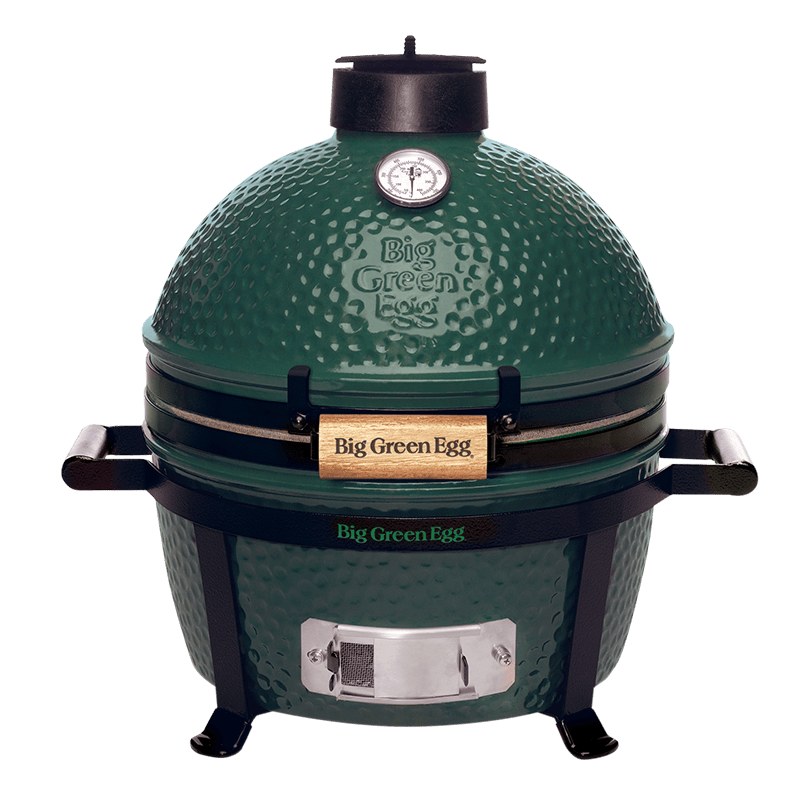
Big Green Egg XLarge
The Big Green Egg XLarge is the crowd-size version of the iconic ceramic kamado, with a 24-inch grate that swallows two packer briskets or four whole chickens side by side. Same thick ceramic and lifetime warranty as the Large - nearly double the cooking area.
Big Green Egg
Big Green Egg MiniMax
The Big Green Egg MiniMax packs the full ceramic kamado experience into a 19.5-inch-tall tabletop cooker that ships with its own carrier. It's the Egg for balconies, tailgates, and campsites - same 750°F ceiling, a quarter of the footprint.

Kamado Joe
Kamado Joe Classic III
The Kamado Joe Classic III is an 18-inch ceramic kamado loaded with innovations like the 3-tier Divide and Conquer system, SloRoller smoke chamber, and a single-finger Air Lift hinge. It's the feature-rich rival to the Big Green Egg.

Kamado Joe
Kamado Joe Joe Jr.
The Kamado Joe Joe Jr. is a compact 13.5-inch portable ceramic kamado that brings full kamado versatility to small spaces, balconies, tailgates, and camping. It's the most portable cooker in the Kamado Joe line.
Pit Barrel Cooker Co.
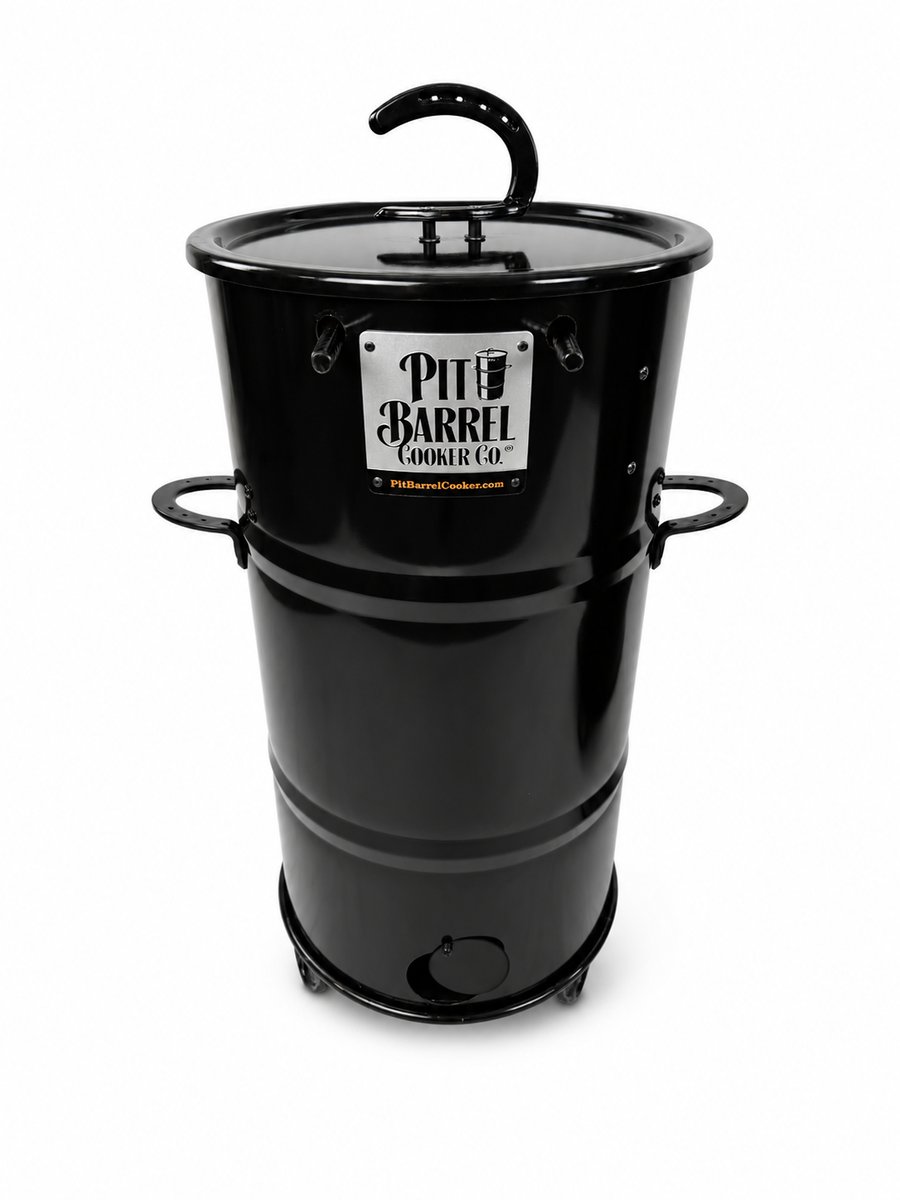
Pit Barrel Cooker Junior Premier 14
The 14-inch sibling of the Classic already in the catalog, rebuilt in 2026 as the Premier series. It is the same sealed drum design — charcoal basket in the base, meat hung from rods on hooks rather than laid on a grate — shrunk to a 14-inch barrel that Pit Barrel rates at four to eight people or up to six racks of ribs hung vertically. The Premier revision adds an elevated lid handle, a detachable single-tier heat shield so it can sit on a deck, and an attachable ash pan; it ships with the hook tool as standard, which used to be an upsell.
Hunsaker Smokers
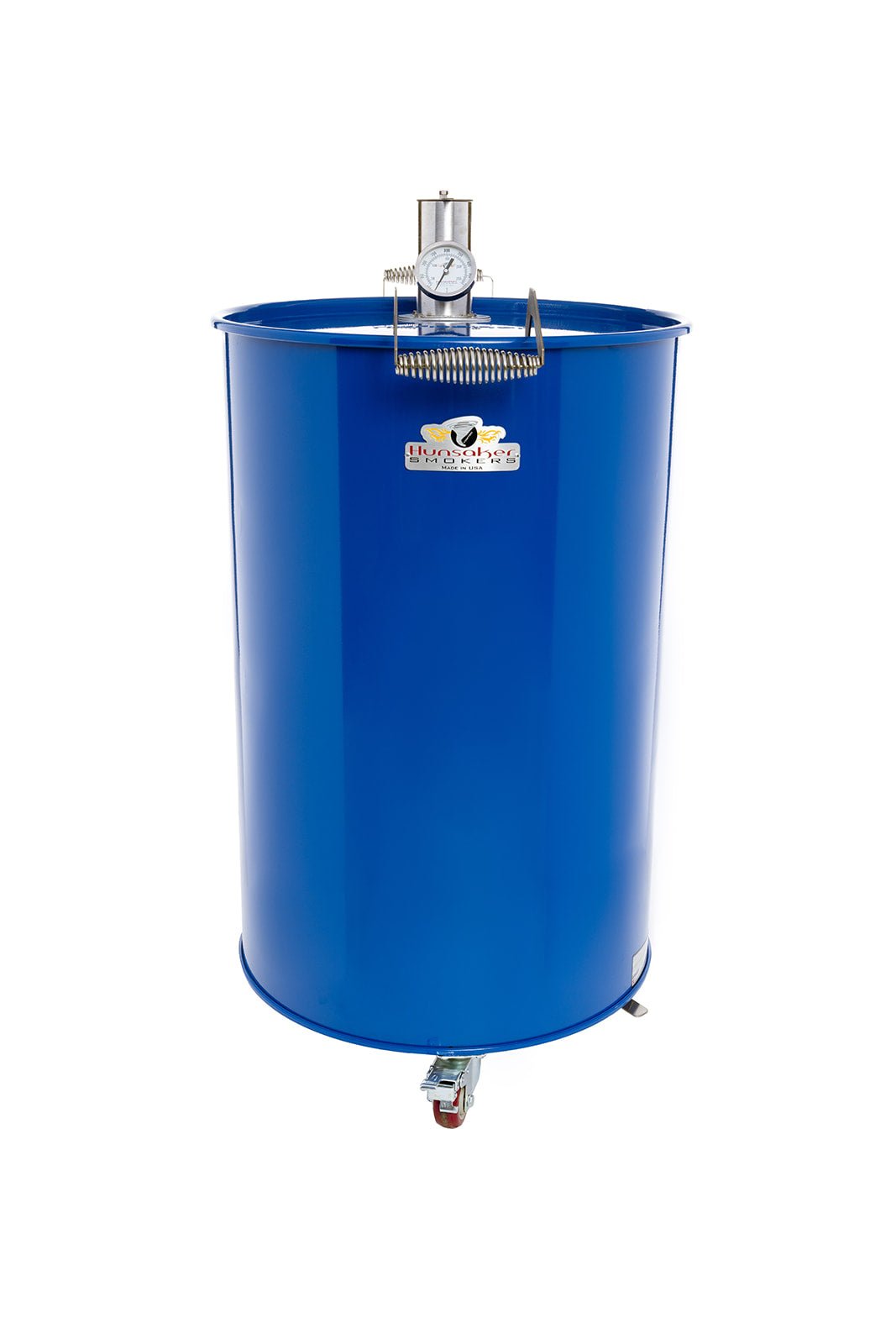
Hunsaker Vortex 55 Gallon Drum Smoker
Built in Columbia, Missouri, and the drum that Meathead's AmazingRibs put on the map. Its distinguishing part is the patented Vortex charcoal basket, which spins the intake air around the fire instead of straight up through it, and a single lever-operated intake with a printed scale so you can return to a known setting rather than guessing at a ball valve. The grate rides on a five-position pin lock and stays level while you move it, and all the grates and external hardware are 304 stainless rather than chrome-plated mild steel.
Pit Barrel Cooker
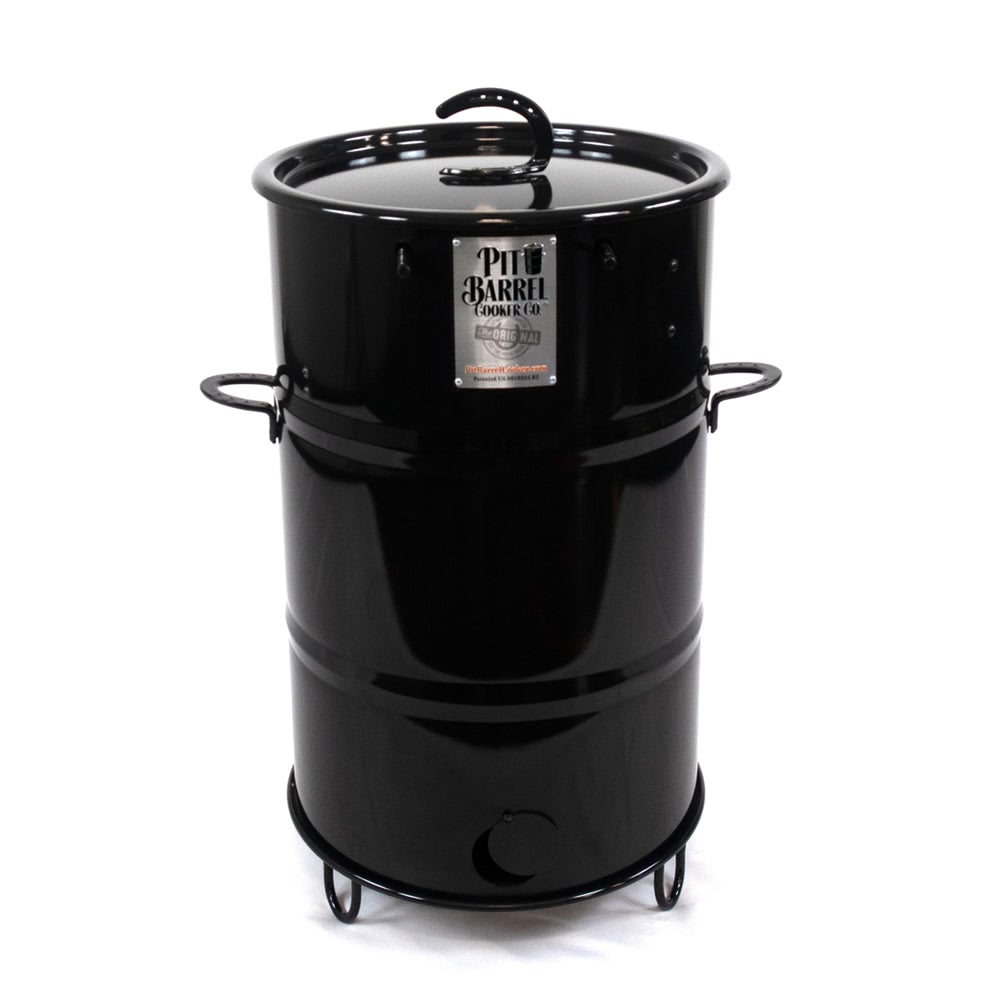
Pit Barrel Cooker Classic
The Pit Barrel Cooker Classic is an 18.5-inch porcelain-coated drum smoker that hangs meat vertically over the coals on hooks. It's beloved in owner discussions for being nearly foolproof - light it, hang the meat, and walk away.
Pit Barrel Cooker Co.
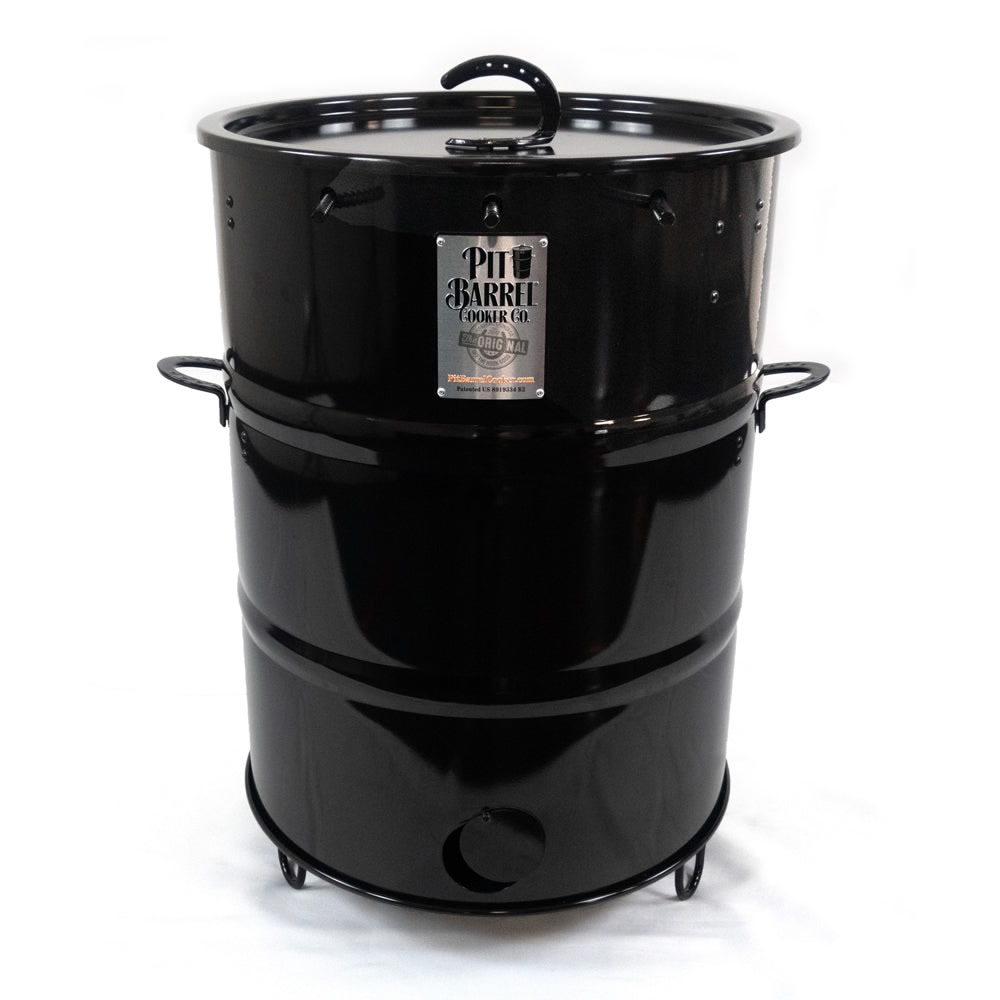
Pit Barrel Cooker PBX 22.5
Pit Barrel's largest drum and the one the catalog is missing at the top end: a 22.5-inch porcelain-coated barrel with three hanging rods and sixteen hooks against the Classic's two rods and eight. Pit Barrel rates it at 16 to 20 racks of ribs, four pork butts, four full packer briskets or four turkeys in a single load, which is catering and competition capacity rather than backyard capacity. The trade-off is the one Pit Barrel prints on the page themselves: with a light load there is less meat absorbing heat, so the barrel runs hotter than the 18.5.
Cookshack
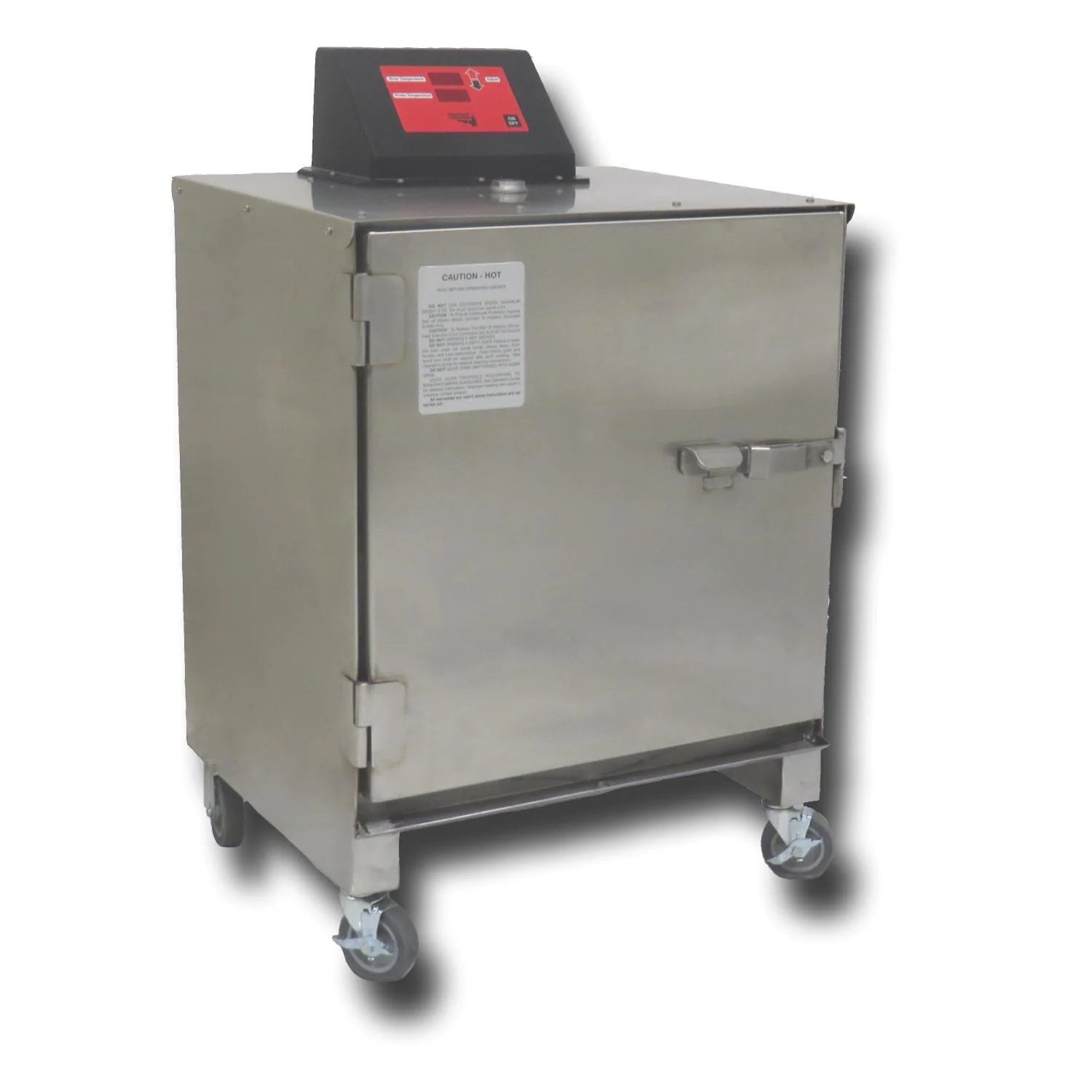
Cookshack Smokette Elite SM025
Cookshack build electric cabinets the way commercial kitchens do, and the Smokette Elite is the smallest one: double-walled stainless around 850°F Spin-Glas insulation, so the outside stays cool and the inside holds a set temperature through weather that shuts down a thin-walled cabinet. Smoke comes from a couple of ounces of real wood chunks in a steel box on the element, not chips or pucks - you load it once for the whole cook. 504 sq in over two 14 x 18 in grills, 20-25 lbs of meat, a digital cook-and-hold controller and a meat probe, on four lockable casters.
Cookshack
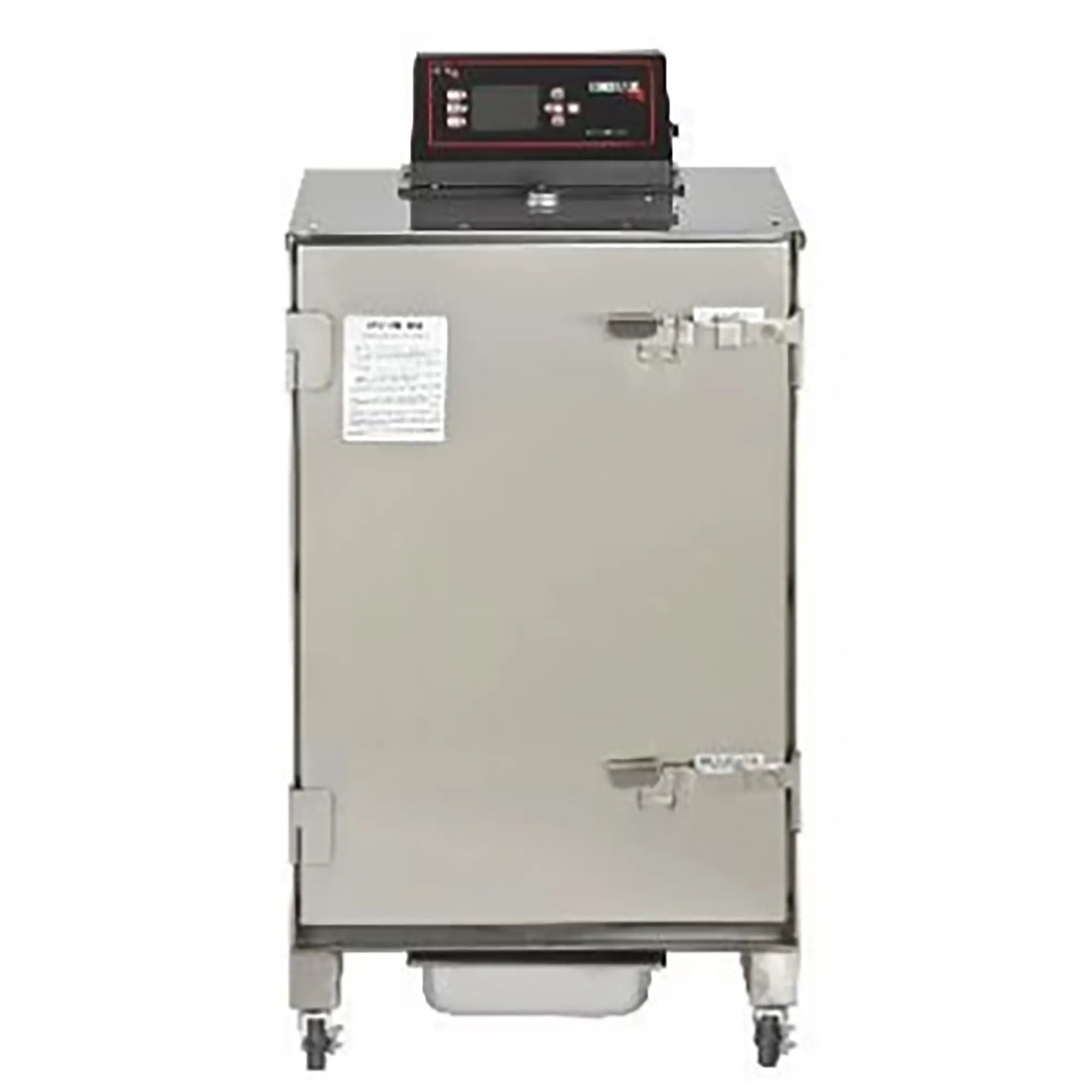
Cookshack AmeriQue SM066
The big Cookshack: same double-walled stainless and 850°F Spin-Glas insulation as the Smokette Elite, scaled to four 14 x 18 in grills, 1,008 sq in and a 50 lb meat capacity, with two-position side racks so you can reconfigure the interior for tall cuts. The digital cook-and-hold controller and meat probe carry over. At $2,375 it is priced against a good offset or a high-end pellet grill, and what it buys instead is an insulated box that will run all night at 225°F in any weather without you touching it.
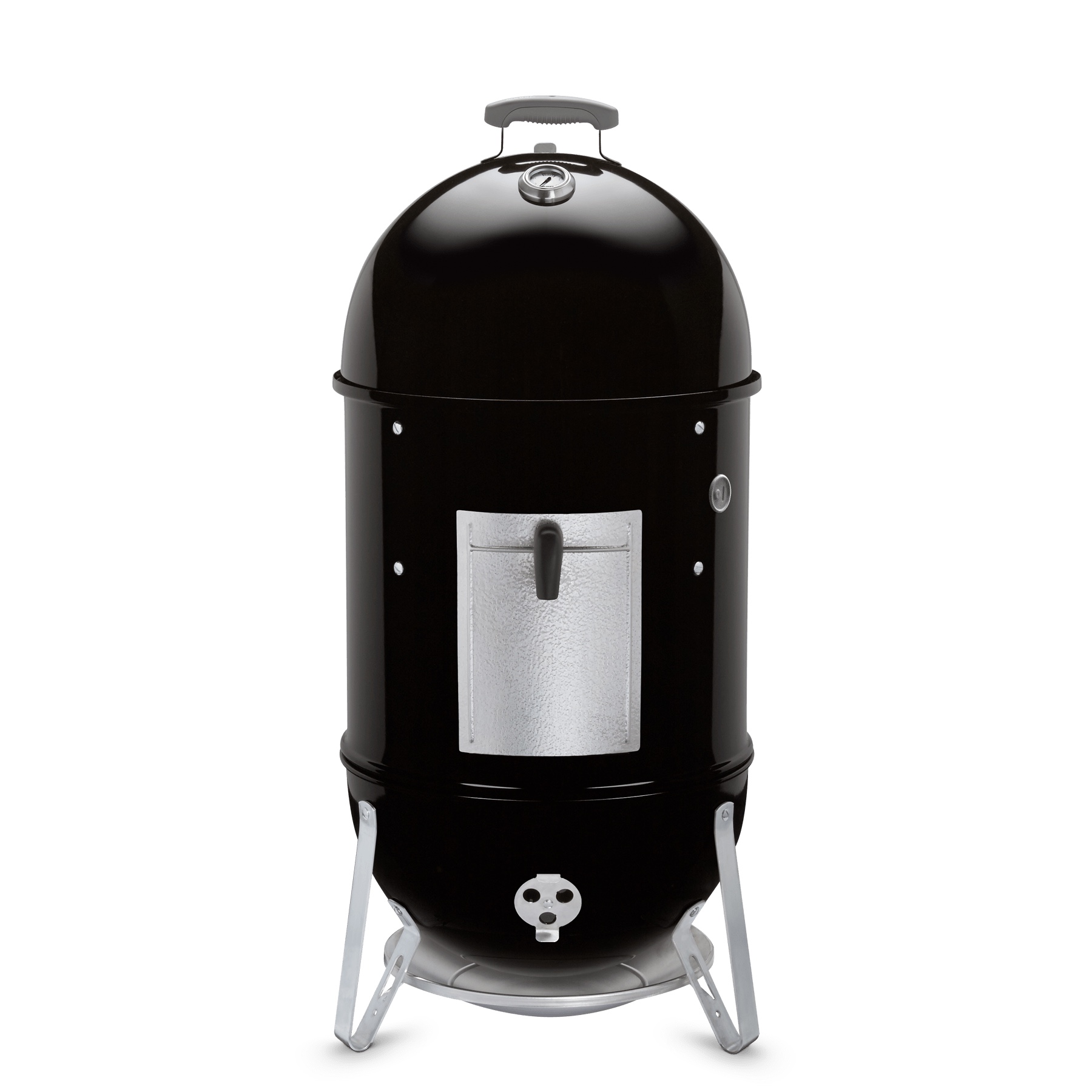
The Weber Smokey Mountain is the legendary bullet-shaped charcoal water smoker that has been the 'first real smoker' recommendation for decades. Two stacked grates and a water pan turn out competition-quality BBQ for under $500.
Spatchcock sizing: the clearance math by grill class
Spatchcocking — cutting out the backbone and flattening the bird — is the community's near-unanimous move: it cooks 30-40% faster, evens out the breast-vs-thigh race, and crisps skin that a trussed bird steams. The catch is footprint: a flattened 13-pound turkey spans roughly 16 by 14 inches, which redraws the equipment map. A 22-inch kettle or WSM handles it with room to spare; an 18-inch WSM fits a 12-pounder snugly and nothing bigger; the Big Green Egg Large's 18.25-inch grate takes a flattened 14-pounder exactly, which is why the XL exists; and any mid-size pellet grill's main grate swallows it sideways. Whole (unflattened) birds trade footprint for headroom — kamados and kettles need the bird under a closed dome, so check lid clearance against a 10-inch-tall bird before committing to the presentation shot.
The two-bird Thanksgiving is where people discover their grill is too small at the worst possible moment: two 12-pounders spatchcocked need serious real estate — an offset, an XL pellet deck, or the time-honored answer of smoking one and roasting one indoors. Our size-family pages show exact grate dimensions to scale if you're shopping with November in mind.
The brine debate, settled honestly
Dry brine wins the community consensus and it isn't close: salt the bird (a half teaspoon of kosher per pound, more or less) 24-72 hours ahead, uncovered in the fridge the final night, and you get seasoned meat AND dry skin — the two things that matter — with zero cooler-of-sloshing-saltwater logistics. Wet brining still has loyalists and genuinely produces a juicy bird, but it waterlogs the skin (fighting the crisp you smoked outdoors to get), demands fridge Tetris nobody has on Thanksgiving week, and mostly adds water weight rather than flavor. The one non-negotiable either way: if the bird is 'enhanced' or kosher (check the label — 'contains up to 8% solution'), it's already brined; salting it again makes ham.
The 300°F+ skin rule and the timing math
The classic first-turkey mistake is smoking at brisket temperature: at 225°F, turkey skin renders into a rubber sheet you'll peel off and hide, because poultry skin needs heat to crisp and the meat underneath gains nothing from the low-and-slow treatment — there's no collagen to melt in a turkey breast. The community's converged rule: 300-350°F, which still takes plenty of smoke in the first hour, crisps the skin, and — bonus — moves the bird through the 40-140°F food-safety window fast enough that even the USDA nods along. On a kettle, that's a normal two-zone fire; on a pellet grill, just set it; on a kamado, it's easier to hold than 225 anyway.
Timing at 325°F runs roughly 11-13 minutes per pound spatchcocked — a 13-pounder is done in well under three hours, which surprises everyone who blocked out the whole day. Pull at 157-160°F in the deep breast (carryover finishes the job; the thigh should read 175+ and always does when the breast is right), rest 30-40 minutes uncovered, and plan the reveal accordingly: the bird finishing two hours before the sides is the most common Thanksgiving-thread confession, and the fix is starting later than feels safe, not holding a done bird in a 170°F oven where the skin goes soft and the breast dries out.
Questions, answered
What size turkey fits on my grill?
Spatchcocked, a 12-14 lb bird needs roughly a 16 x 14 inch footprint: comfortable on any 22-inch kettle or WSM, exact on a Big Green Egg Large's 18.25-inch grate, tight-but-fine on an 18-inch WSM at 12 lbs, and easy on any mid-size pellet deck. Whole birds need lid headroom too — about 10 inches. Bigger than 16 lbs, think two smaller birds instead: they cook faster, more evenly, and fit equipment people actually own.
What temperature should I smoke a turkey at?
300-350°F — not brisket temperature. At 225°F the skin turns to rubber and the lean meat gains nothing; at 325°F you still get real smoke in the first hour, crisp skin, and a bird that clears the food-safety window fast. Pull at 157-160°F deep breast and rest 30-40 minutes.
Should I brine the turkey — wet or dry?
Dry brine: a half teaspoon of kosher salt per pound, 24-72 hours ahead, last night uncovered in the fridge. Seasoned meat, dry skin, no cooler logistics. Skip any brining entirely if the label says 'enhanced' or kosher — those birds are pre-salted, and doubling up makes ham.
How long does a smoked turkey take?
Spatchcocked at 325°F: 11-13 minutes per pound — a 13-pounder finishes in under three hours, not the all-day epic people plan for. The most common mistake is the bird finishing two hours early; start later than feels safe and trust the thermometer, not the schedule.
Can I smoke a turkey on a regular kettle grill?
Absolutely — a 22-inch kettle with a two-zone fire (coals banked on one side, bird over the cool side, lid vent over the meat) is a legitimately great turkey rig, and millions of Thanksgiving birds prove it annually. Add a chunk or two of cherry or apple wood, hold 300-350°F with the vents, and rotate the bird once.