
Kamado Joe
Kamado Joe Joe Jr.
The Kamado Joe Joe Jr. is a compact 13.5-inch portable ceramic kamado that brings full kamado versatility to small spaces, balconies, tailgates, and camping. It's the most portable cooker in the Kamado Joe line.
Specifications
Features
Pros
- ✓It packs full kamado versatility - searing, smoking, baking - into a portable 68 lb package you can take camping or tailgating
- ✓The thick ceramic body delivers the same excellent heat retention and fuel efficiency as full-size kamados
- ✓At ~$499 it's an affordable entry into the ceramic kamado world and the Kamado Joe ecosystem
- ✓It includes the heat deflector plate, so you can do indirect cooking and low-and-slow right out of the box
- ✓It hits high searing temps and holds steady low temps just like its big siblings, with great flavor and moisture
- ✓The compact 148 sq in is perfect for couples, small families, or cooking a few steaks without firing up a big grill
- ✓The cast-iron vent and hinged grate give precise air control and let you add charcoal mid-cook
- ✓Lifetime ceramic warranty and the wide Kamado Joe accessory ecosystem back it
Cons
- ✗148 sq in is small - it's really a 2-4 person cooker and can't handle a full brisket or a crowd
- ✗The narrow opening makes maneuvering racks of ribs or large roasts awkward
- ✗It's portable but still 68 lbs of ceramic, so it's heavier and more fragile to transport than it sounds
- ✗Charcoal capacity is limited, so very long overnight smokes require refueling more often than a big kamado
- ✗Temperature recovery after opening the small dome can be touchy given the limited thermal mass
- ✗No built-in lid thermometer accuracy you'd fully trust, so a separate probe is recommended
- ✗The included basic stand is low and minimal - many buyers add a higher cart or table for comfort
- ✗The same kamado learning curve, ash cleanup, and slow cooldown all apply in miniature
Owner Insightssummarized from owner discussions
The Joe Jr. is a 13.5-inch ceramic kamado that costs a fraction of a full-size one, and owner opinion on it is unusually clear about what it is: a second grill that happens to be many people's first. The pattern that repeats through the long-term threads is someone buying one to test whether they like kamado cooking before spending $1,500 on a Classic, then either upgrading within a year or — more often — keeping the Jr permanently for the quick cooks and buying a bigger one alongside it. Owners with a Classic and a Big Joe in the same yard still use the Jr several times a week, because lighting it for two burgers costs a handful of lump and ten minutes rather than a full basket and a long heat soak.
The practical experience has a real learning curve and the threads do not hide it. The built-in dome thermometer reads high and measures the wrong part of the cooker, so experienced owners run a two-probe thermometer at grate level and keep the lid shut. The most common complaint is not being able to push past 300-350°F, and the causes owners identify are specific and fixable: lump that has absorbed humidity in storage, pieces that are too big to light quickly or too small to pass air, ash choking the bottom vent, or the heat deflector left in when you are trying to sear. The advice that works is banking the coals to one side, using medium lump, clearing the ash, and giving it air — several people admit to pointing a USB fan or a leaf blower at the intake. Set up right it will run past 700°F, though push it to 1,000°F and you will melt the lid gasket. Two other things owners flag: shipping damage on big-box orders is common enough to expect, and the accessory bill adds up, with a $250 stand that is too short and a heat deflector that cracks and costs over $60 to replace.
It suits couples, small families and anyone cooking for two to four who wants charcoal flavor and searing heat without a full-size kamado's footprint, fuel appetite or price. What it does not suit is actual barbecue ambition — a full brisket will not fit, pizzas are cramped, and three or four ribs is the ceiling, which is why owners who have both keep telling newcomers to buy the Classic if low-and-slow is the point. The strongest argument for the brand is the warranty: cracked domes, split fireboxes, bent carts and failed hinges all get replaced, and when a retailer refuses to help, going to the manufacturer directly is what actually works. Buy it used and you give that up entirely.
What owners like
- +Kamado Joe's warranty is the single most praised thing about owning one. Owners report cracked domes, cracked and chipped fireboxes, a crooked cart and a failed dome hinge all replaced free, in several cases after the retailer refused — register it with the manufacturer and deal with them directly
- +People who own a Classic or a Big Joe alongside one still reach for the Jr constantly, because for two burgers or a couple of sausages on a weeknight it lights faster and burns a fraction of the lump that firing up the big one would
- +It is the cheapest honest way to find out whether you like kamado cooking before committing $1,500-$2,000. Owners routinely catch it between $200 and $350 at Walmart, Best Buy, Lowe's outlet and Home Depot special buys, and used ones turn up around $120-$250
- +The ceramic is tougher than it looks. One owner's Jr blew off a patio in high winds and fell about a foot onto the ground with the stand attached, and neither the body nor the firebox broke
- +Set up properly it genuinely reaches searing heat — owners report dome readings well past 700°F, which is more than a gas grill in this price range will do
- +The accessory ecosystem extends it a long way: a rotisserie makes what one owner calls the best chicken wings he has had, and a cast iron griddle, a Dutch oven and a pizza stone all fit with a little improvisation
- +First-cook reports are consistently good. Spatchcocked chicken and pork chops come off it at a quality that surprises people coming from gas
Common complaints
- −The learning curve genuinely defeats some people. One owner catalogues it honestly: lit too much charcoal, then could not light any, had lump spark into his face with a torch, watched the temperature ping-pong past his target in both directions, then found the built-in thermometer was not telling him the truth anyway
- −The dome thermometer reads high and is measuring the wrong place. Experienced owners say to ignore it and run a two-probe thermometer at grate level with wires long enough that you never open the lid
- −Struggling to get past 300-350°F is one of the most common posts about this grill. The usual causes are damp lump from humid storage, charcoal pieces too large or too small rather than medium, ash choking the bottom vent, or leaving the heat deflector in, and owners resort to a USB fan or a leaf blower at the intake to force it
- −Fuel burn at low temperatures frustrates some owners — one who also runs a Big Joe says he should not have to add lump to cook for two hours. Others diagnose it as ash buildup or going indirect before the dome is heat-soaked, so it may be fixable, but it comes up repeatedly
- −148 sq in is small in a way that bites once ambitions grow. Owners are direct that a full brisket does not fit, pizza is awkward, and three or four ribs is the practical limit. The recurring advice from people who own both is that if low-and-slow is your real goal, buy the Classic
- −Shipping damage is rampant, and specifically so from big-box online orders: units arriving with a crack up the side, cracked or chipped fireboxes, bent accessory-rack legs, a missing grill gripper. Several long-time owners say quality control is not what it was
- −The accessories cost more than new buyers expect and some are poor value. The branded stand runs around $250 and is too short even for a 5'9" owner — the known fix is swapping in 5-inch wheels — and a replacement heat deflector is over $60 when they crack, which is why owners substitute a $25 pizza stone
- −Two smaller traps: the lid gasket will melt into goo if you run it near 1,000°F, to the point that one owner now runs with no gasket at all, and rust appears around the vent within days if you leave it uncovered in the rain
Common Questions
Why won't mine get above 300-350°F?
Joe Jr. or the Classic?
Is the built-in dome thermometer accurate?
Mine arrived cracked or chipped — what should I do?
Which accessories are actually worth buying?
Can I use it for low-and-slow smoking?
Compare the Kamado Joe Joe Jr.
The Kamado Joe Joe Jr. is one of 3 sizes in this line.
See every size, to scale →Related grills
More from Kamado Joe →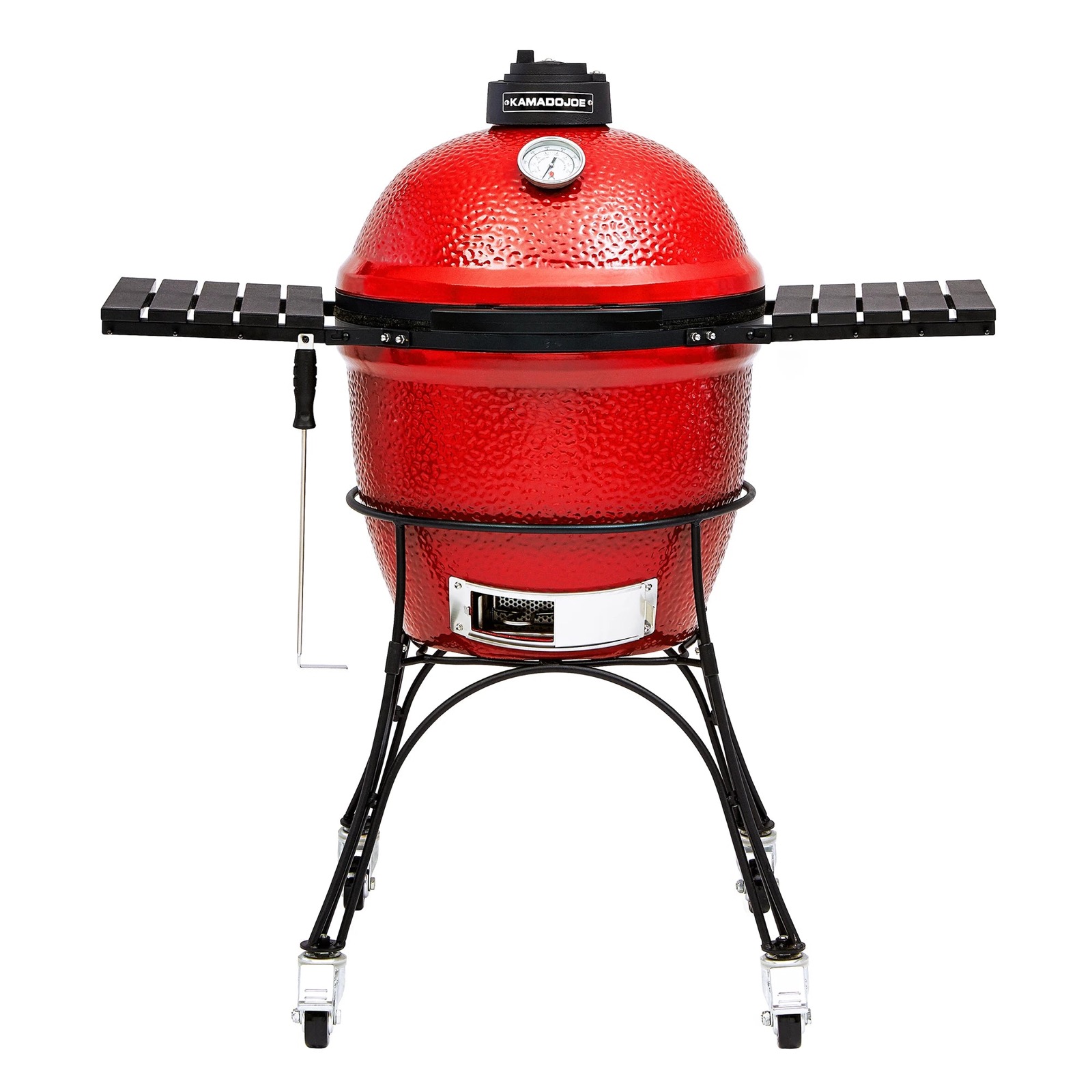
Kamado Joe
Kamado Joe Classic Joe I
The entry Kamado Joe: an 18-inch ceramic grill with 250 sq in of grate, on a cart with locking wheels and folding side shelves. Series I keeps the two-tier Divide & Conquer rack and the slide-out ash drawer but uses a cast-iron daisy-wheel top vent instead of the Kontrol Tower, and has no Air Lift hinge — those are what the $500 step to Series II buys.
Kamado Joe
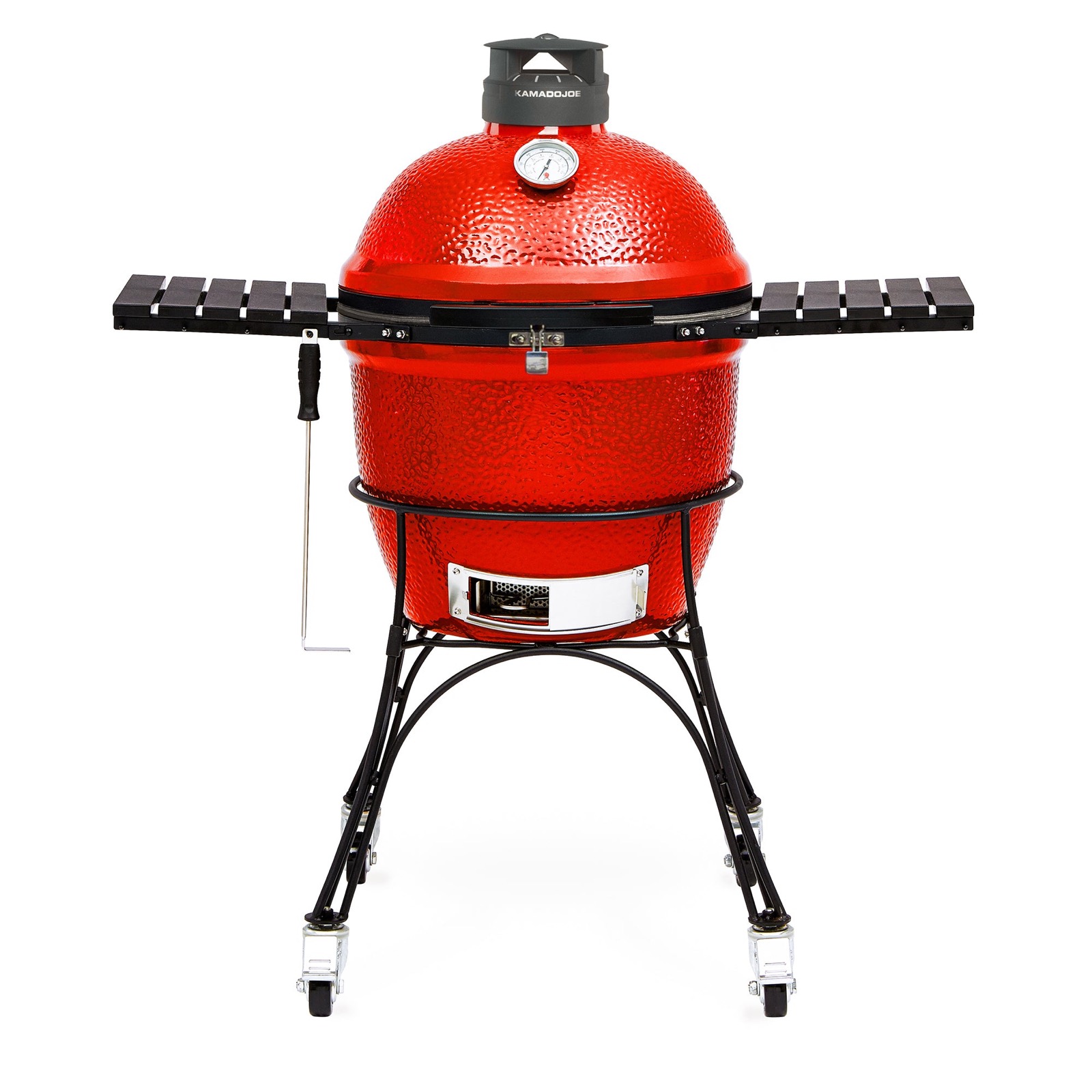
Kamado Joe Classic Joe II
Series II is the same 18-inch, 250 sq in ceramic body as Series I with the two upgrades that define the tier: the Kontrol Tower top vent, which holds a set position through rain and lid lifts, and the Air Lift hinge, which takes most of the dome weight off the handle. It keeps the two-tier Divide & Conquer rack; the three-tier system and premium shelves are reserved for Series III.

Kamado Joe
Kamado Joe Classic III
The Kamado Joe Classic III is an 18-inch ceramic kamado loaded with innovations like the 3-tier Divide and Conquer system, SloRoller smoke chamber, and a single-finger Air Lift hinge. It's the feature-rich rival to the Big Green Egg.
Kamado Joe
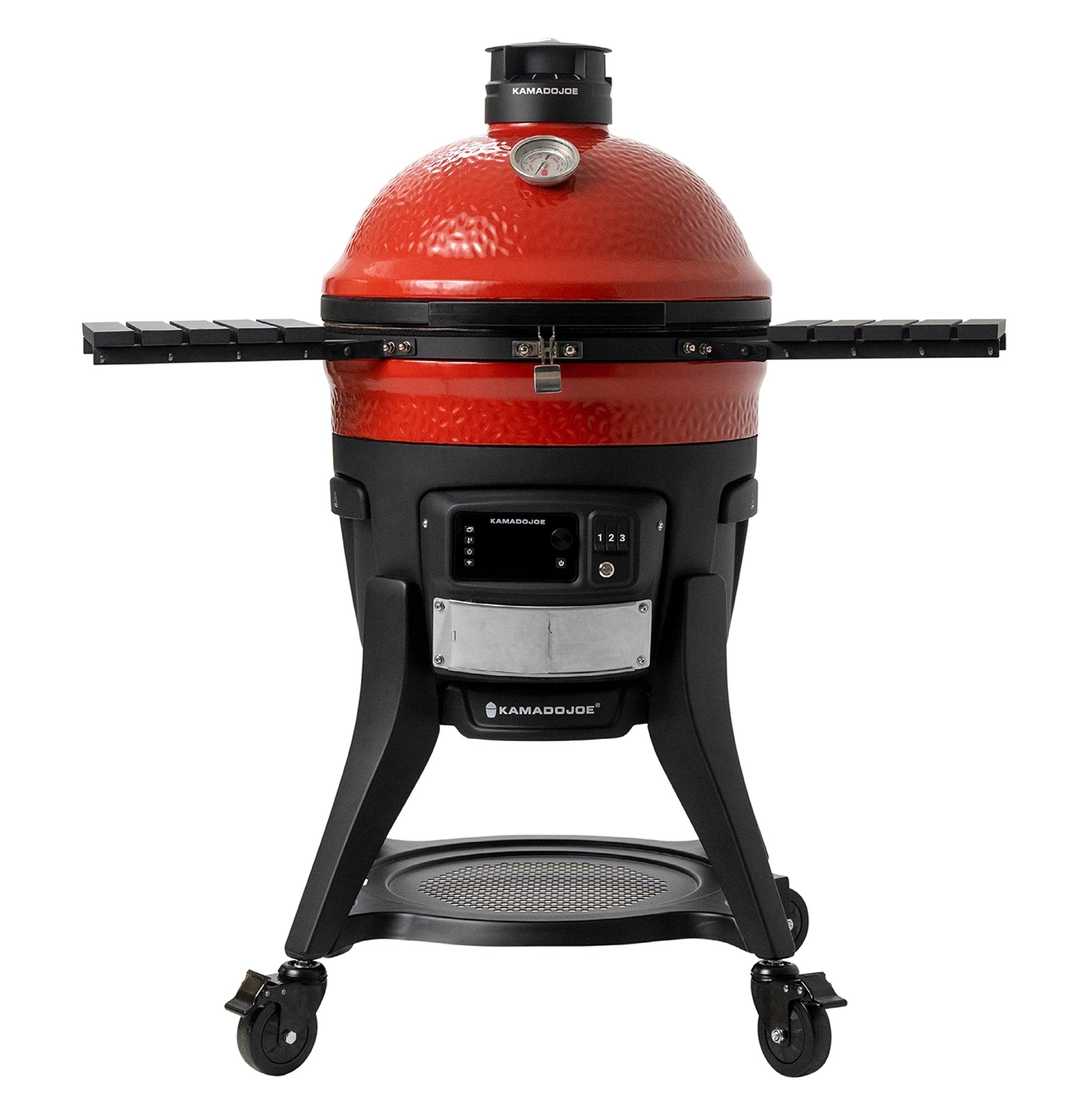
Kamado Joe Konnected Joe
The Kamado Joe Konnected Joe is an 18-inch ceramic kamado with pellet-grill convenience bolted on: a push-button electric fire starter lights the charcoal for you, and a WiFi-connected fan holds your set temperature automatically while real lump charcoal does the flavoring.
Kamado Joe
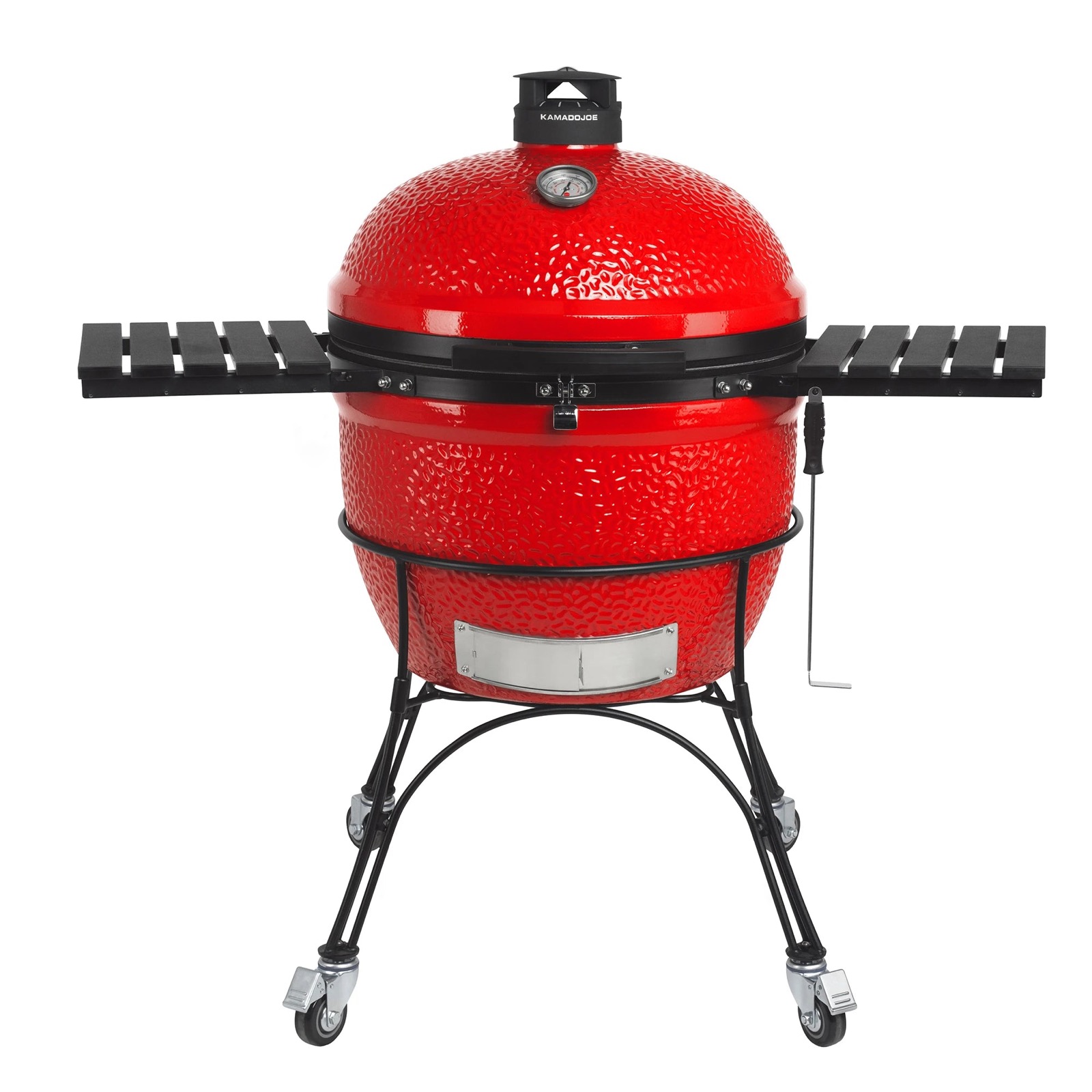
Kamado Joe Big Joe II
The 24-inch Big Joe in Series II trim: 450 sq in of grate, Kontrol Tower vent, Air Lift hinge and the two-tier Divide & Conquer rack, on a cart with locking wheels. It is the Classic Joe II scaled up by six inches of grid, which is the difference between one packer brisket and two. Series III adds a third rack tier and premium aluminum shelves for about $1,000 more.
Kamado Joe
Kamado Joe Big Joe III
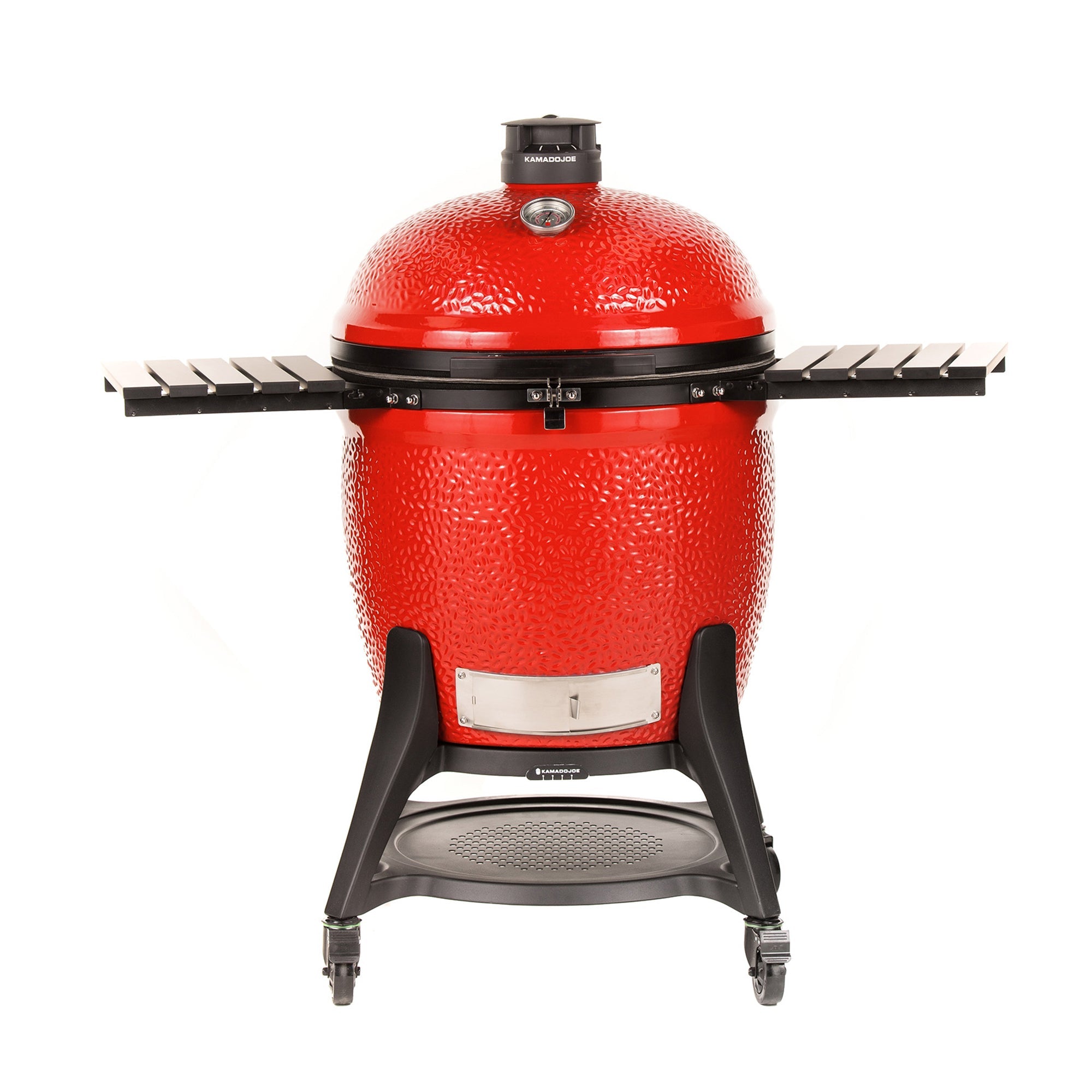
The Kamado Joe Big Joe III is the 24-inch flagship of Kamado Joe's ceramic lineup - everything the Classic III does, scaled up to brisket-and-a-half capacity, with the 3-tier Divide & Conquer rack system, SloRoller smoke chamber, and a heavy-duty rolling cart included.