
Kamado Joe
Kamado Joe Classic III
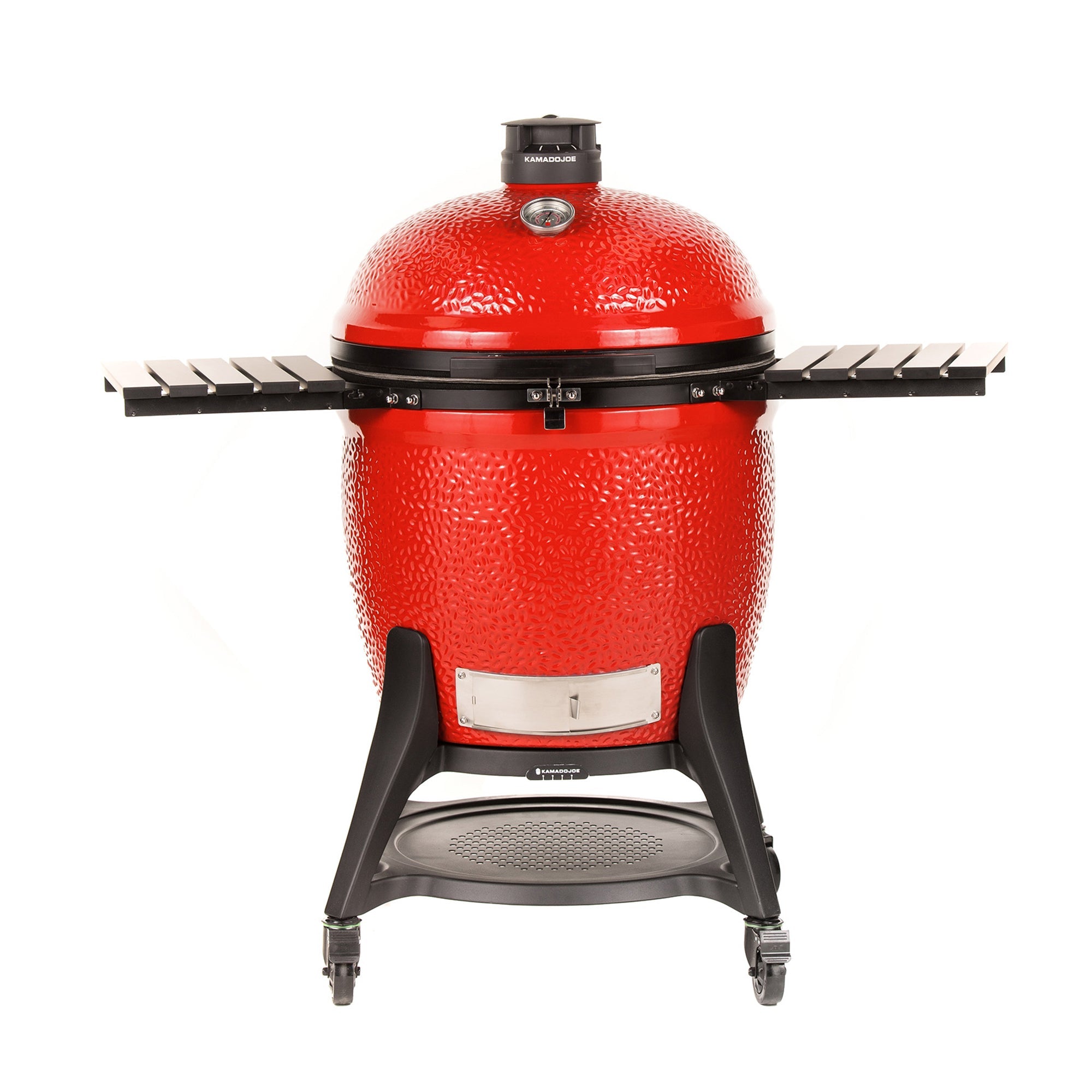
The Kamado Joe Classic III is an 18-inch ceramic kamado loaded with innovations like the 3-tier Divide and Conquer system, SloRoller smoke chamber, and a single-finger Air Lift hinge. It's the feature-rich rival to the Big Green Egg.
We may earn a commission. Price and availability on Amazon may differ.
Specifications
Features
Pros
- ✓The Divide and Conquer 3-tier rack system effectively doubles cooking space and lets you cook different foods at different heights and temps at once
- ✓The SloRoller insert uses cyclonic airflow to distribute smoke and heat evenly, noticeably improving low-and-slow results over a bare kamado
- ✓The Air Lift hinge makes the heavy ceramic dome lift with one finger, a genuine quality-of-life upgrade over the Egg
- ✓Unlike the Big Green Egg, it ships with a rolling cart, fold-down side shelves, and accessories included in the price
- ✓Ceramic construction gives the same incredible fuel efficiency and steady temps as any top kamado
- ✓510 sq in on the main grate (more usable with the tiered system) handles bigger cooks than a Large Egg
- ✓The thick-gauge stainless cooking grates and overall fit-and-finish feel premium and built to last
- ✓It does it all - 225°F brisket, 750°F pizza and searing - with a lifetime ceramic warranty backing it
Cons
- ✗At ~$2,000 it's one of the priciest kamados, a significant premium even over the Big Green Egg
- ✗It's extremely heavy at 282 lbs and a real chore to assemble and move once set up
- ✗The many included parts (SloRoller, multi-tier racks, gaskets) mean more components to store, clean, and eventually replace
- ✗The felt or fiber gasket can wear and need replacement after heavy high-heat use
- ✗Like all kamados it's slow to cool down, so overshooting a low target temp is hard to correct
- ✗Charcoal lighting, ash management, and the kamado learning curve all apply
- ✗No built-in smart features or app despite the flagship price
- ✗Some owners report shipping damage to the ceramic given the weight, requiring a warranty claim
Owner Insightssummarized from owner discussions
The Classic III is an 18-inch ceramic kamado and the owners who get along with it are unusually devoted, cooking on it several nights a week even when they own a pellet grill and a griddle as well. The case for it is that it does almost everything: 15-minute heat-up with the vents open, a single half-basket of fuel holding 250F for four or five hours, hot enough for steak, controlled enough for brisket, and stable enough that people bake lasagna in it. Kamado cooking has a learning curve, but most first-timers in these threads are through it inside a month.
The experience has two rough edges. The first is delivery. Cracked and shattered ceramic arriving from freight carriers comes up over and over, including one owner whose dealer-delivered grill was cracked and whose dealer-delivered replacement was cracked too. The standard owner advice is to take the day off, inspect every surface before signing, and refuse the delivery on the spot rather than dealing with it afterwards, because support has become hard to reach and owners describe waiting weeks without an answer. The second is the SloRoller. It does what it claims for even low-and-slow heat, but it buries the fire. You cannot add charcoal easily, you cannot see whether your smoke wood has caught, and going from smoking to searing means unstacking hot ceramic mid-cook. Owners who love the grill still list this as the thing they wish were different.
It suits someone cooking for two to six people who wants one charcoal cooker to handle everything and is willing to learn fire management. It does not suit someone feeding twenty, where owners hit the 18-inch ceiling fast and find themselves fighting a grill expander, nor someone who bought it primarily for pizza, where a dedicated oven beats it and the DoJoe accessory gets mixed reviews at $300. Watch the price: the same grill has sold anywhere from around $1,171 to $2,000 new and $500 used, so the deal you get matters more than the model choice.
What owners like
- +It heats up faster than charcoal's reputation suggests. Owners running all vents open with an electric lighter report being at temperature in about 15 minutes, which one Classic III owner describes as barely slower than his gas grill and quicker than he can finish prepping.
- +Fuel efficiency is not exaggerated. One owner ran a half-basket of cheap briquettes, hit 270F within half an hour, and held around 250F from mid-afternoon until evening on that single load with no refueling.
- +It genuinely replaces multiple appliances for people who use it daily. Owners who also own a pellet grill and a griddle report cooking on the Classic III almost every night, and it gets used for weekly pizza, seared steaks, brisket, wings, turkey and even lasagna baked with the deflectors in like an oven.
- +The Joetisserie is the accessory owners name first when asked what to buy, and repeatedly as their favorite. It does not need an airtight lid seal to work, which is the objection people usually raise before buying it.
- +Ash handling is better than expected. The removable basket means a full cook's worth of ash lifts out and shakes into the bin rather than needing to be scraped from the bowl.
- +It is fuel-tolerant in practice. Owners run lump by default, but those who use briquettes report steadier temperatures because the pieces are uniform, with more ash as the only real cost. The rule owners hold to is never briquettes with lighter fluid in them.
Common complaints
- −Ceramic arriving cracked or broken is the loudest complaint against this grill, and it is not rare. One owner's unit arrived from a freight carrier in pieces. Another took delivery from an authorized dealer with a crack under the rear gasket, and the replacement the dealer brought out was cracked as well.
- −Support has gotten much harder to reach. An owner with a damaged new grill reported no phone number to call and no response for nearly two weeks while the return window ran out. Long-time owners connect this to the change in corporate ownership and say service quality fell off after it.
- −The SloRoller makes the things around cooking harder. With it installed you cannot easily add charcoal mid-cook, you cannot see the fire to tell whether your wood chunk is doing anything, and switching from smoking to searing means pulling out and stacking hot ceramic. Owners describe it as a lot of pieces to break down.
- −Internal parts do not always seat well. Owners report the metal ring above the firebox not sitting properly and the grate falling off it, which is unnerving with a live fire underneath.
- −At 18 inches the capacity runs out sooner than the price suggests. Owners can only lay two racks of ribs flat, and standing more in a rib rack cooks them unevenly. Turkey is limited by dome headroom rather than width, so most owners spatchcock.
- −The dome thermometer does not agree with the grate. Owners consistently see a 20-25F gap, with the dome reading 250F while a probe at the food reads 225-230F, so you have to decide which number you are cooking to.
- −It is only adequate at pizza despite the pizza marketing. Owners say it is hard to get enough top heat without burning the base, and the $300 DoJoe attachment draws complaints about struggling to hold temperature because of its open front. People who own both reach for a dedicated pizza oven instead.
- −Pricing is chaotic enough to punish buying at the wrong moment. Reported prices run from about $1,171 through $1,300 and $1,999 up to $2,000, used units have gone for $500, and retailers that once price-matched have stopped. Paying near the top of that range is easy to do by accident.
Common Questions
How likely is it to arrive damaged, and what should I do about it?
Is the SloRoller worth having over plain heat deflectors?
Should I trust the dome thermometer?
Can I use briquettes instead of lump?
How much can it actually cook at once?
Is it good for pizza?
Compare the Kamado Joe Classic III
The Kamado Joe Classic III is one of 3 sizes in this line.
See every size, to scale →Related grills
More from Kamado Joe →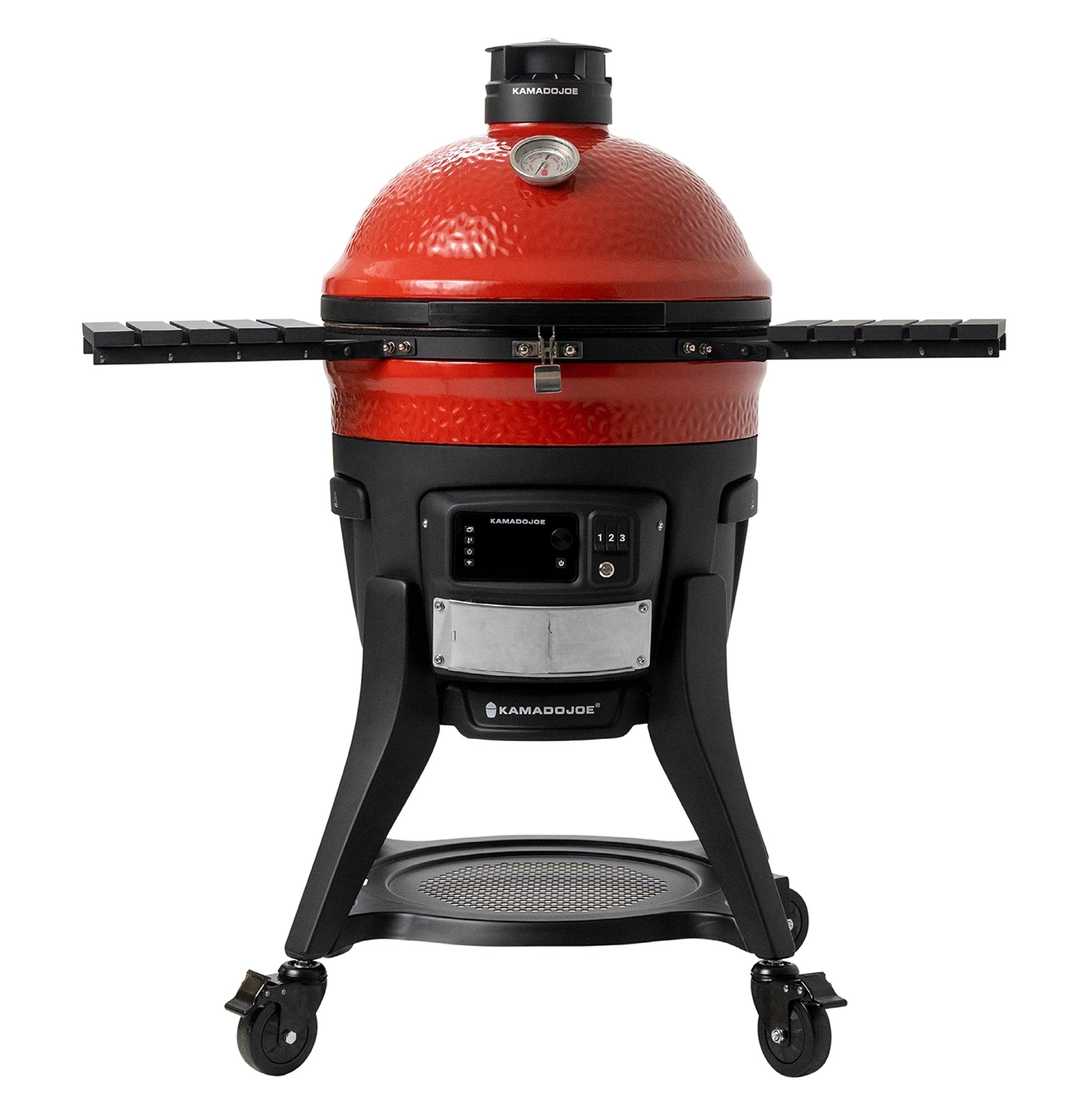
Kamado Joe
Kamado Joe Konnected Joe
The Kamado Joe Konnected Joe is an 18-inch ceramic kamado with pellet-grill convenience bolted on: a push-button electric fire starter lights the charcoal for you, and a WiFi-connected fan holds your set temperature automatically while real lump charcoal does the flavoring.
Kamado Joe
Kamado Joe Classic Joe II
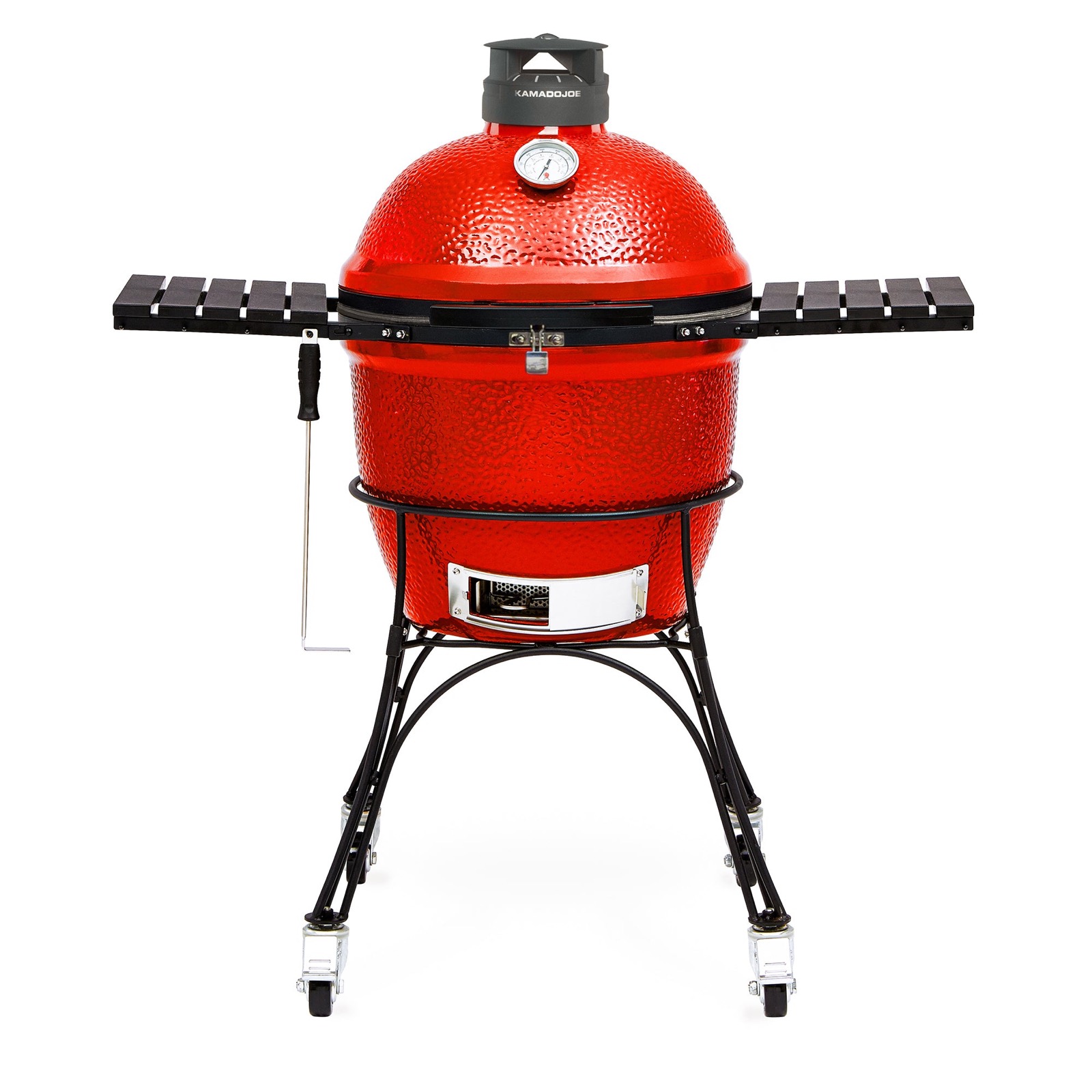
Series II is the same 18-inch, 250 sq in ceramic body as Series I with the two upgrades that define the tier: the Kontrol Tower top vent, which holds a set position through rain and lid lifts, and the Air Lift hinge, which takes most of the dome weight off the handle. It keeps the two-tier Divide & Conquer rack; the three-tier system and premium shelves are reserved for Series III.
Kamado Joe
Kamado Joe Big Joe II
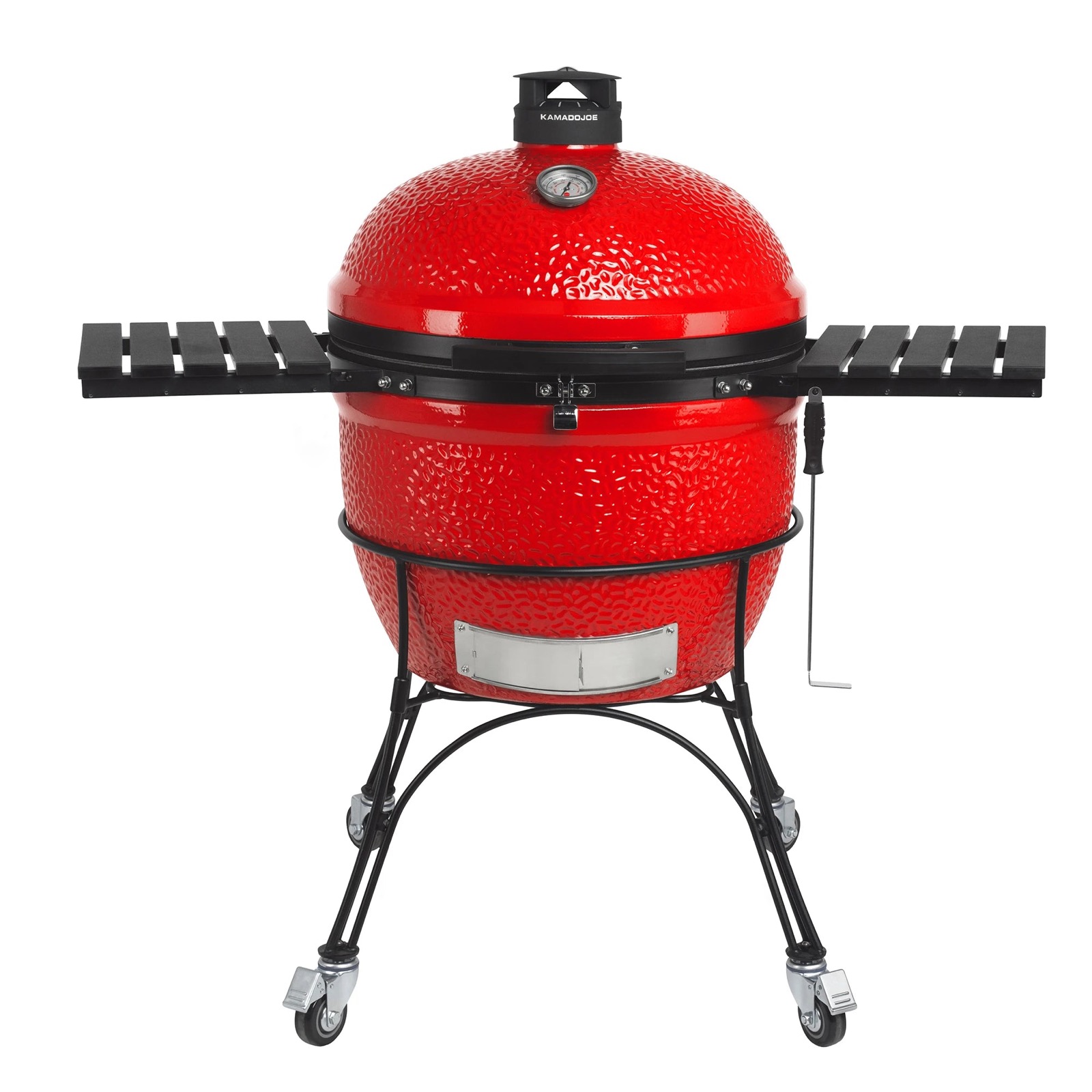
The 24-inch Big Joe in Series II trim: 450 sq in of grate, Kontrol Tower vent, Air Lift hinge and the two-tier Divide & Conquer rack, on a cart with locking wheels. It is the Classic Joe II scaled up by six inches of grid, which is the difference between one packer brisket and two. Series III adds a third rack tier and premium aluminum shelves for about $1,000 more.
Kamado Joe
Kamado Joe Classic Joe I
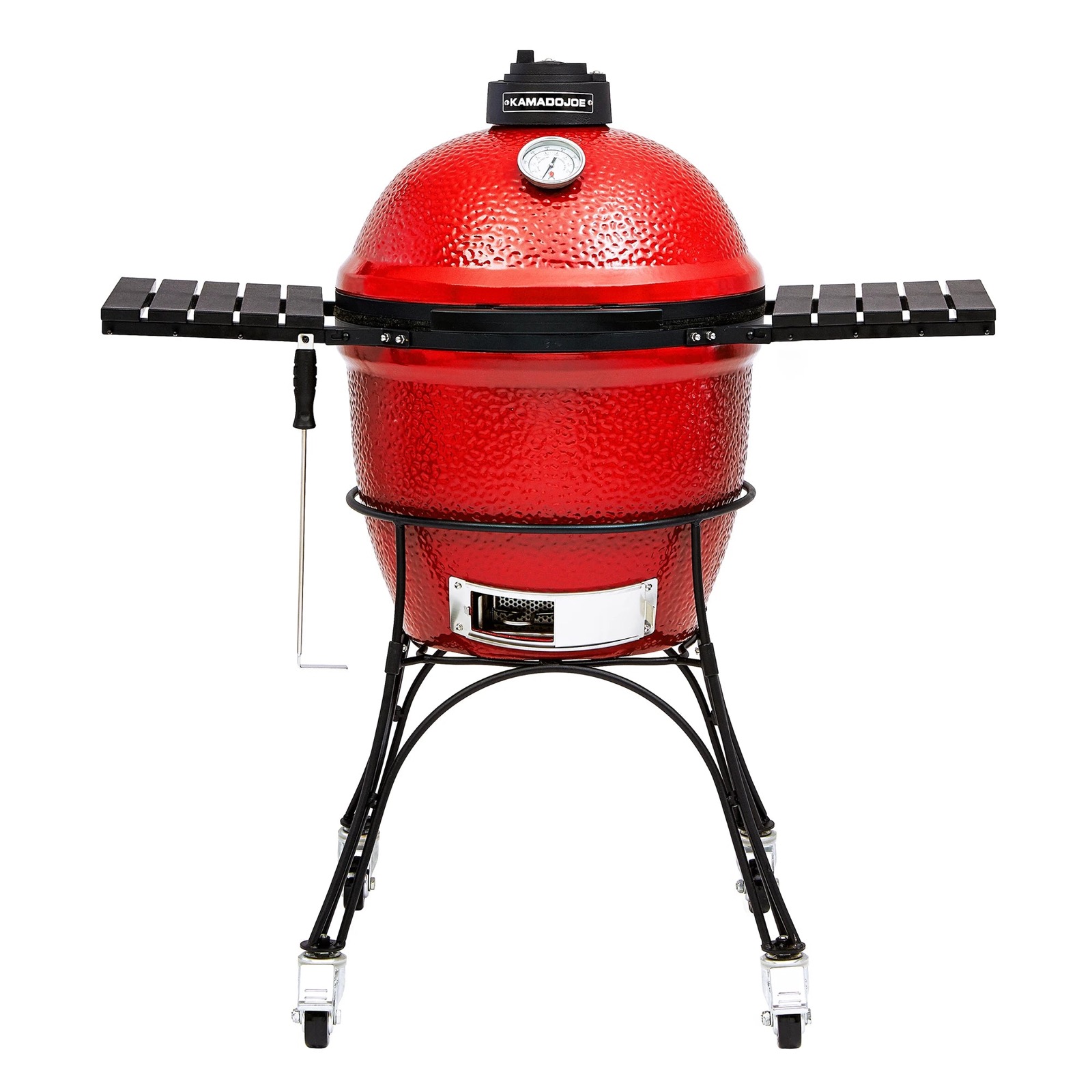
The entry Kamado Joe: an 18-inch ceramic grill with 250 sq in of grate, on a cart with locking wheels and folding side shelves. Series I keeps the two-tier Divide & Conquer rack and the slide-out ash drawer but uses a cast-iron daisy-wheel top vent instead of the Kontrol Tower, and has no Air Lift hinge — those are what the $500 step to Series II buys.

Kamado Joe
Kamado Joe Joe Jr.
The Kamado Joe Joe Jr. is a compact 13.5-inch portable ceramic kamado that brings full kamado versatility to small spaces, balconies, tailgates, and camping. It's the most portable cooker in the Kamado Joe line.
Kamado Joe
Kamado Joe Big Joe III
The Kamado Joe Big Joe III is the 24-inch flagship of Kamado Joe's ceramic lineup - everything the Classic III does, scaled up to brisket-and-a-half capacity, with the 3-tier Divide & Conquer rack system, SloRoller smoke chamber, and a heavy-duty rolling cart included.