Kamado Joe
Kamado Joe Konnected Joe
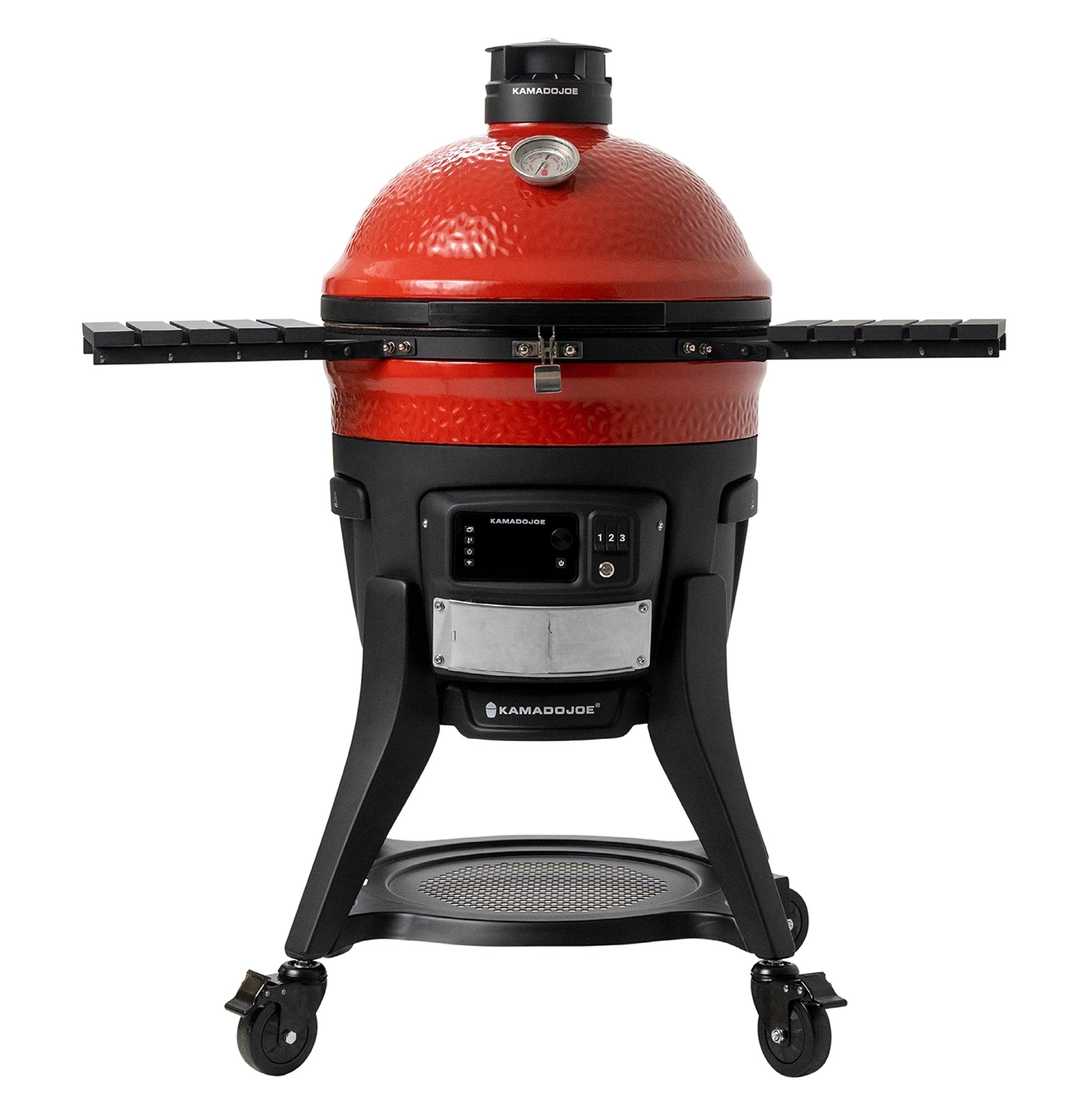
The Kamado Joe Konnected Joe is an 18-inch ceramic kamado with pellet-grill convenience bolted on: a push-button electric fire starter lights the charcoal for you, and a WiFi-connected fan holds your set temperature automatically while real lump charcoal does the flavoring.
We may earn a commission. Price and availability on Amazon may differ.
Specifications
Features
Pros
- ✓The Automatic Fire Starter lights lump charcoal at the push of a button - no torch, chimney, or fire-tending, which removes the single biggest barrier to kamado cooking
- ✓The Kontrol Fan holds set temperatures from 225°F to 700°F automatically, so overnight brisket cooks are genuinely set-and-forget on charcoal
- ✓You get real lump charcoal flavor and searing power that pellet grills can't match, with roughly the same effort level
- ✓The Kamado Joe app handles temp control, timers, cook programs, and up to three meat probes from your phone
- ✓Full manual fallback - close the fan door and it cooks exactly like a normal ceramic kamado, so dead electronics never brick the grill
- ✓Thick ceramic construction gives the same fuel efficiency, moisture retention, and 700°F sear capability as the Classic series
- ✓The 2-tier Divide & Conquer grate system enables two-zone cooking at different heights, and the Air Lift hinge makes the dome feel weightless
- ✓Slide-out ash drawer makes cleanup faster than scooping out a traditional kamado firebox
Cons
- ✗At around $2,000 it costs the same as the larger-capacity Classic III while giving you an 18-inch, 250 sq in primary grate
- ✗The electronics that justify the price carry only a 3-year warranty, versus lifetime coverage on the ceramic itself
- ✗It needs a 120V outlet within reach, which complicates placement compared to a fully analog kamado
- ✗The fan can overshoot low smoking targets if you load too much charcoal or leave the top vent too far open - there's still a small learning curve
- ✗216 lbs of ceramic means moving it is a two-person job and it should live under cover on a stable surface
- ✗WiFi setup and app pairing are hit-or-miss for some owners, with occasional mid-cook disconnects reported
- ✗Grate expansion racks, half moons, and other accessories are all extra, pushing real-world cost well past MSRP
- ✗The control panel and wiring add failure points and weather exposure concerns that traditional kamados simply don't have
Owner Insightssummarized from owner discussions
The Konnected Joe is an 18-inch ceramic kamado with a push-button charcoal igniter and a fan-driven temperature controller built into the base, aimed at people who want charcoal flavor without learning fire management. Owner opinion on it is sharply divided in a way that is worth understanding before buying, because both camps are describing the same grill honestly. The enthusiasts are unambiguous: load lump, press ignite, set a temperature, walk away, and come back to a cooker sitting exactly where you left it. One owner with a decade of kamado experience and three separate aftermarket controllers says this one outperforms all of them.
The other camp has a specific, repeating complaint: the fan melts. It comes up again and again, from owners on their third and fourth replacement, from owners who have checked their gaskets and airflow, and from owners running ordinary low-and-slow cooks rather than high-heat ones. The consensus diagnosis among those affected is that a plastic fan sitting that close to the fire is a design problem rather than a run of bad units, and the worst part is the failure mode — you find out when you go to light the grill for whatever event you planned around it. Other electronics fail too, including fire-starter elements. Beyond reliability, there are quirks to plan for: the digital controller typically reads about 25°F apart from the dome gauge, so owners set it 25°F high to compensate; the igniter lights nearly the entire charcoal bed at once, which makes temperatures overshoot until you go back to torch-lighting a small area and using a charcoal basket; it must be plugged into mains power for every cook; and WiFi reliability is described as a gamble on a device that requires a cloud login.
It suits someone who genuinely will not cook on charcoal without automation and who wants that automation integrated rather than clipped on — and who is buying it at a discount with the warranty intact, since that warranty is what has made the fan failures survivable for the people who kept the grill. What owners keep recommending instead is the version of this idea that has been working for years: a standard Classic or Big Joe plus an external controller such as a FlameBoss, Fireboard, Billows or Egg Genius. That route costs less, holds temperature just as tightly, keeps the electronics out of the fire, can run off a battery bank, and lets you replace the controller without replacing the grill. The counter-argument from owners who love the Konnected is simply that nothing else is this seamless, and for them that is worth the risk.
What owners like
- +When it works, it delivers exactly what it promises. Owners describe the whole routine as loading charcoal, pressing ignite, setting a temperature and coming back in thirty minutes — one calls it stupidly simple and uses it for both low-and-slow and hot-and-fast
- +A ten-year Kamado Joe owner who also runs a Fireboard, a FlameBoss and the old iKamand says the Konnected holds temperature better than any of them, which is a meaningful endorsement from someone with the comparison in his own backyard
- +It removes the real barrier to kamado cooking for novices. Several buyers say plainly that they have wanted to do ribs, pork butts and wings for years and would not have attempted charcoal fire management on their own
- +You keep everything a kamado does — lump charcoal flavor, searing heat, pizza, and rotisserie with an add-on kit, where owners point at a third-party unit at roughly half the price of the branded one
- +The ceramic carries a lifetime warranty, and Kamado Joe has been good about replacing the parts that fail, including repeat fan replacements for owners who kept having the same problem
- +It discounts hard at the right moment. Floor models turn up around $600-$650 when stores rotate seasonal displays, and bundle deals cut the price further
Common complaints
- −Melted fans are the defining problem with this grill. One owner is on his fourth, having adjusted gaskets and ensured airflow around the unit, and it kept happening; another is on his third and blames plastic fans sitting too close to the heat source; a European owner reports the same failure. Multiple owners say it happens on ordinary low-and-slow runs, not just high-heat cooks
- −The cruel part of that failure is how you discover it. The fan only announces itself as dead when you go to start the next cook, which is typically the morning of whatever you were cooking for
- −Other electronics fail too. One owner had the fire-starter heat-conduction element die at six months and the fan die five months later, leaving him lighting the grill with a hair dryer — which other owners warn can overheat the ceramic and cause worse problems
- −The digital controller and the dome gauge disagree, commonly by about 25°F and by as much as 50°F, with first-cook reports as wide as 50-100°F. The practical workaround owners use is to set the digital temperature 25°F above what they actually want
- −The electric igniter spans nearly the whole bottom, so it lights the entire charcoal bed at once and temperatures can run away on you. Owners who fixed this went back to lighting a small area with a torch and using a charcoal basket, and report much tighter control afterwards
- −It has to be plugged into mains power for every cook, which owners find genuinely annoying and which is a real problem in places with frequent storms — external controllers can run off a battery bank, this cannot. WiFi reliability is also described as a gamble, and the cloud login requirement angers owners who remember the previous iKamand controller being bricked when its servers were shut down
- −Outdoor durability is not what the price suggests. One owner had the stand support and wheels rust within a year and was told it was not covered, with a link to buy replacement parts — his advice to prospective buyers was to consider a Big Green Egg instead. Warranty also does not transfer, so a used one comes with nothing
- −The alternative owners keep proposing is hard to argue with: buy a standard Classic or Big Joe and bolt on an external controller. A FlameBoss, Fireboard 2 Drive, ThermoWorks Billows or Egg Genius gets you the same automation, sits outside the fire, and can be replaced or upgraded independently. One owner's FlameBoss has held within a degree or two since 2017
Common Questions
Is the melted fan problem real, or is it a few bad units?
Why do the digital readout and the dome thermometer disagree?
My temperatures run away at startup — what am I doing wrong?
Should I just get a regular Kamado Joe and an external controller?
Can I leave it outside?
Konnected Joe or Classic 3?
Compare the Kamado Joe Konnected Joe
Related grills
More from Kamado Joe →
Kamado Joe
Kamado Joe Classic III
The Kamado Joe Classic III is an 18-inch ceramic kamado loaded with innovations like the 3-tier Divide and Conquer system, SloRoller smoke chamber, and a single-finger Air Lift hinge. It's the feature-rich rival to the Big Green Egg.
Kamado Joe
Kamado Joe Big Joe II
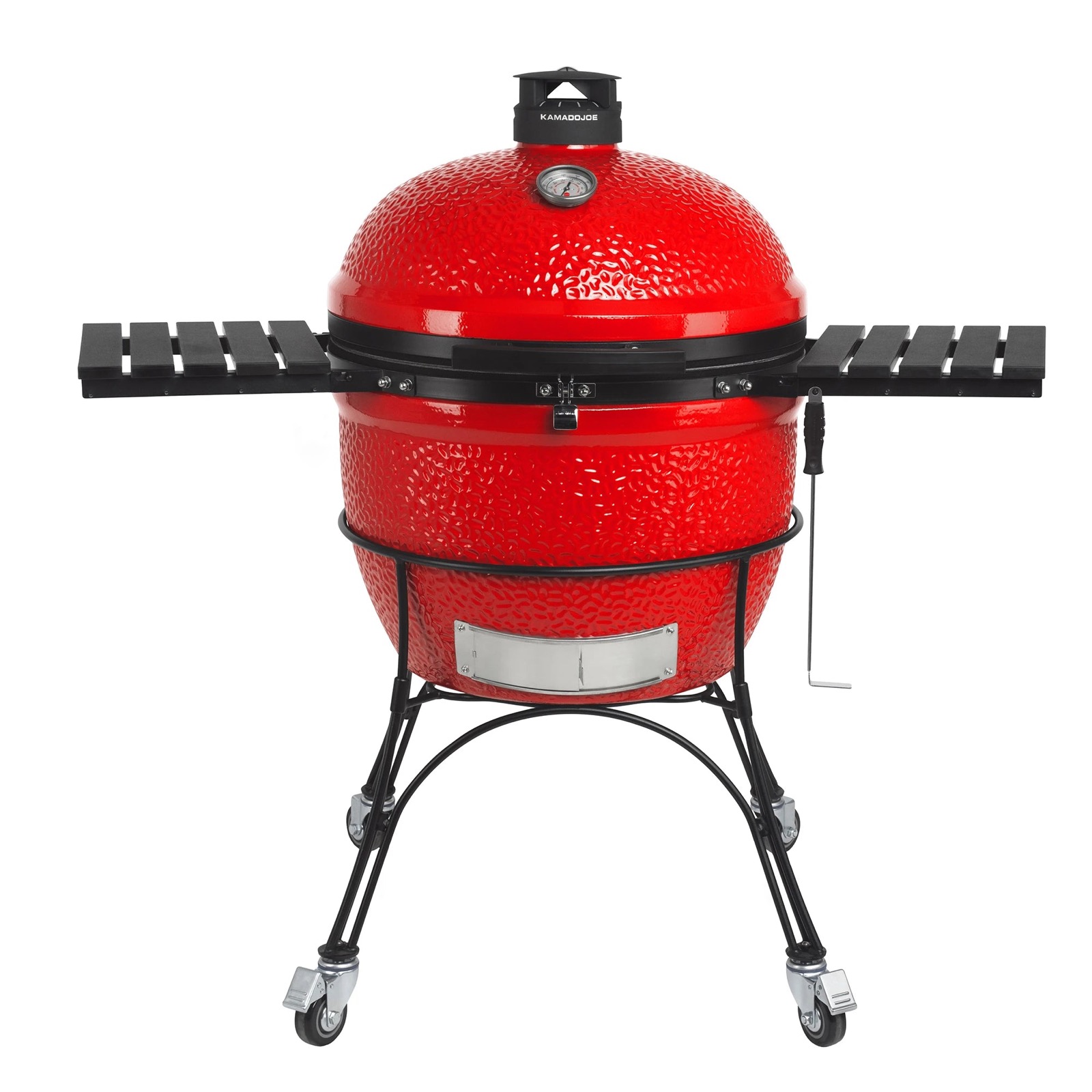
The 24-inch Big Joe in Series II trim: 450 sq in of grate, Kontrol Tower vent, Air Lift hinge and the two-tier Divide & Conquer rack, on a cart with locking wheels. It is the Classic Joe II scaled up by six inches of grid, which is the difference between one packer brisket and two. Series III adds a third rack tier and premium aluminum shelves for about $1,000 more.
Kamado Joe
Kamado Joe Classic Joe II
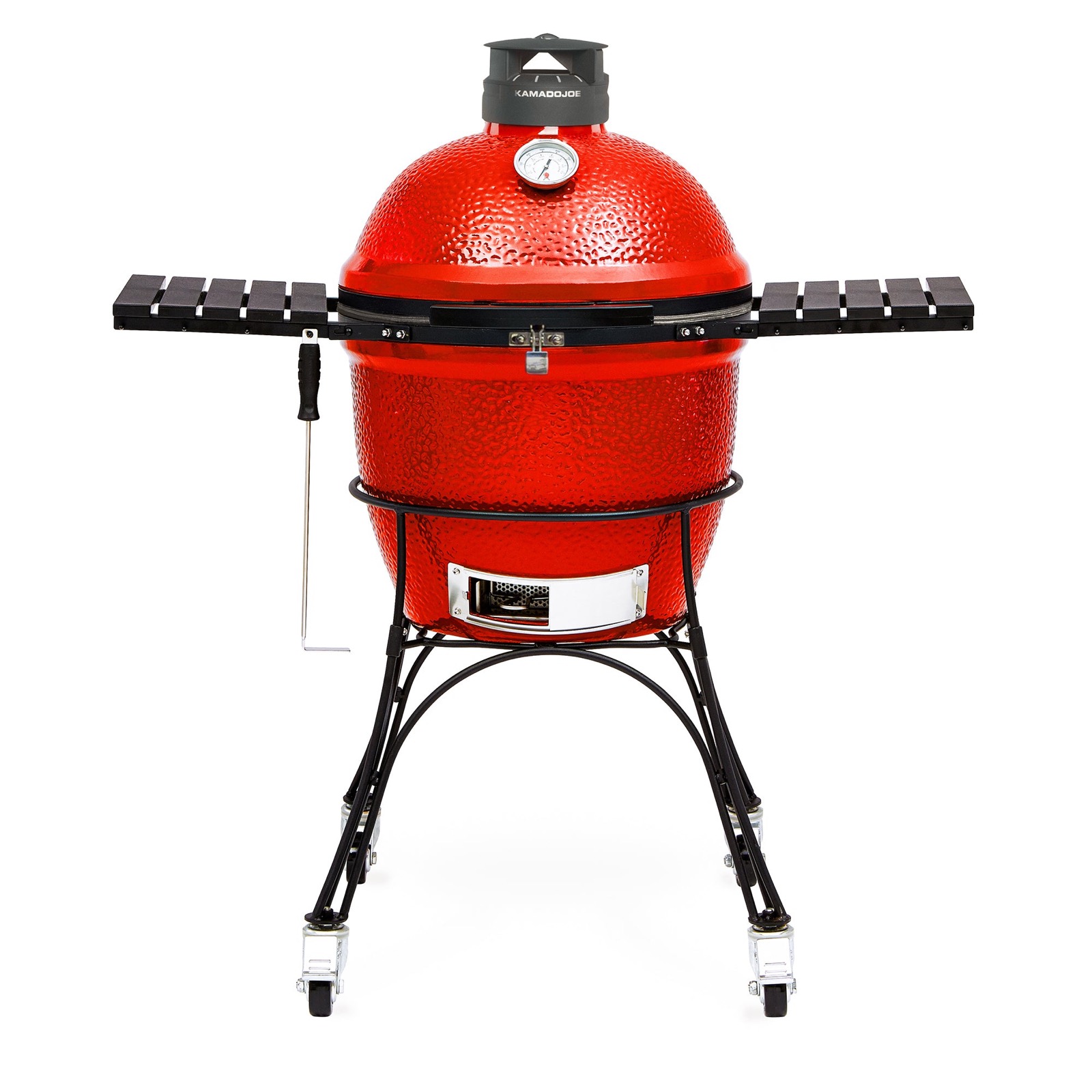
Series II is the same 18-inch, 250 sq in ceramic body as Series I with the two upgrades that define the tier: the Kontrol Tower top vent, which holds a set position through rain and lid lifts, and the Air Lift hinge, which takes most of the dome weight off the handle. It keeps the two-tier Divide & Conquer rack; the three-tier system and premium shelves are reserved for Series III.
Kamado Joe
Kamado Joe Classic Joe I
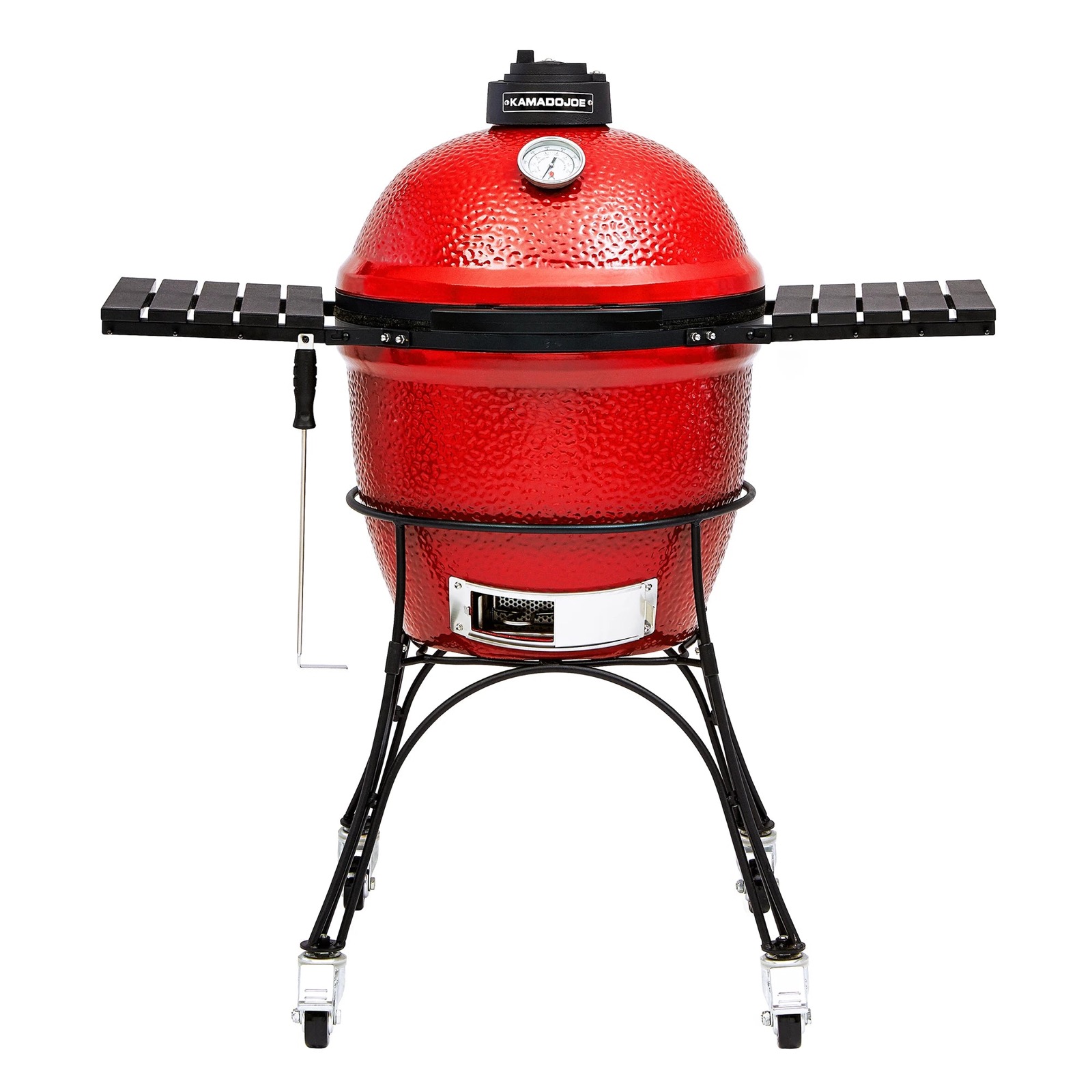
The entry Kamado Joe: an 18-inch ceramic grill with 250 sq in of grate, on a cart with locking wheels and folding side shelves. Series I keeps the two-tier Divide & Conquer rack and the slide-out ash drawer but uses a cast-iron daisy-wheel top vent instead of the Kontrol Tower, and has no Air Lift hinge — those are what the $500 step to Series II buys.
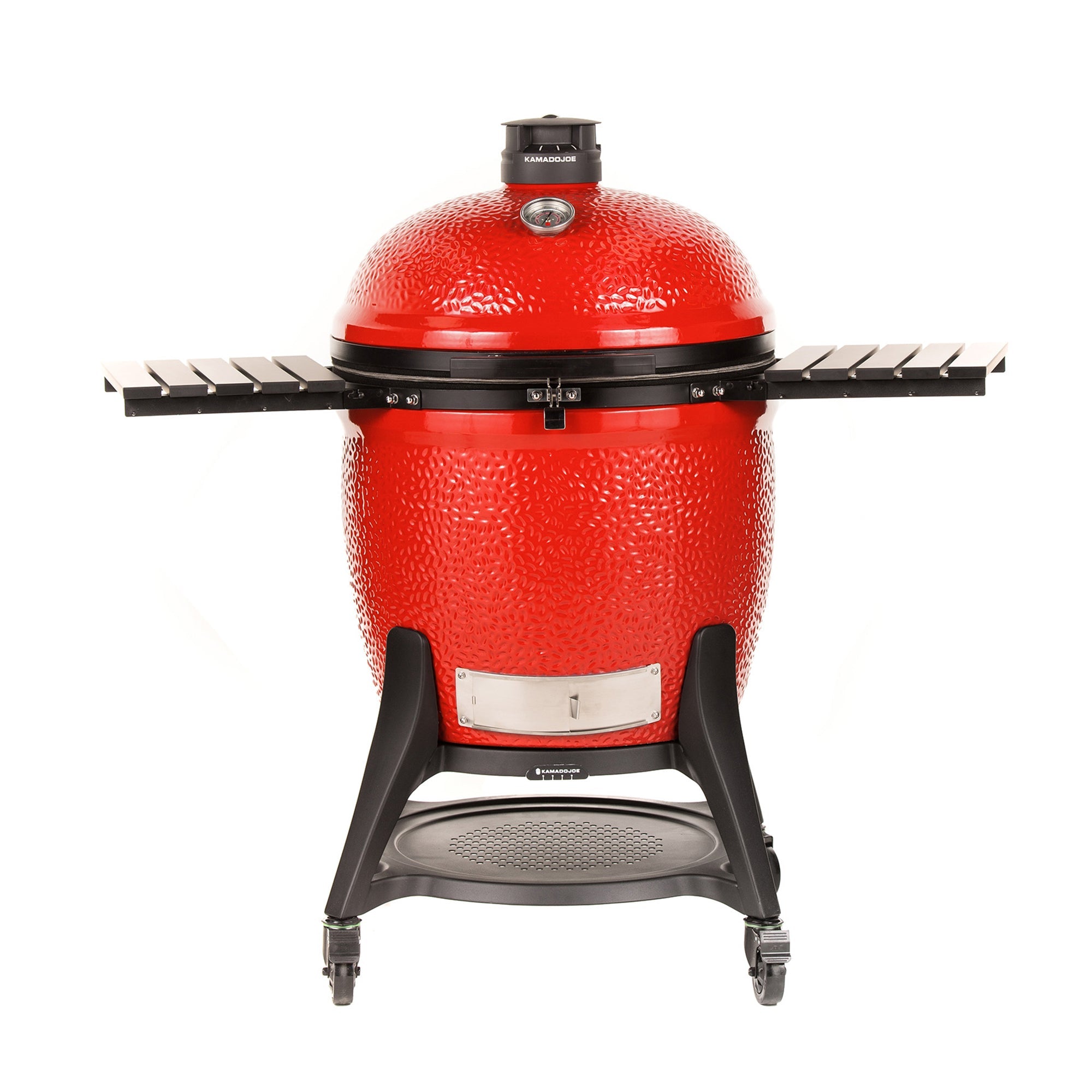
Kamado Joe
Kamado Joe Big Joe III
The Kamado Joe Big Joe III is the 24-inch flagship of Kamado Joe's ceramic lineup - everything the Classic III does, scaled up to brisket-and-a-half capacity, with the 3-tier Divide & Conquer rack system, SloRoller smoke chamber, and a heavy-duty rolling cart included.

Kamado Joe
Kamado Joe Joe Jr.
The Kamado Joe Joe Jr. is a compact 13.5-inch portable ceramic kamado that brings full kamado versatility to small spaces, balconies, tailgates, and camping. It's the most portable cooker in the Kamado Joe line.