Big Green Egg
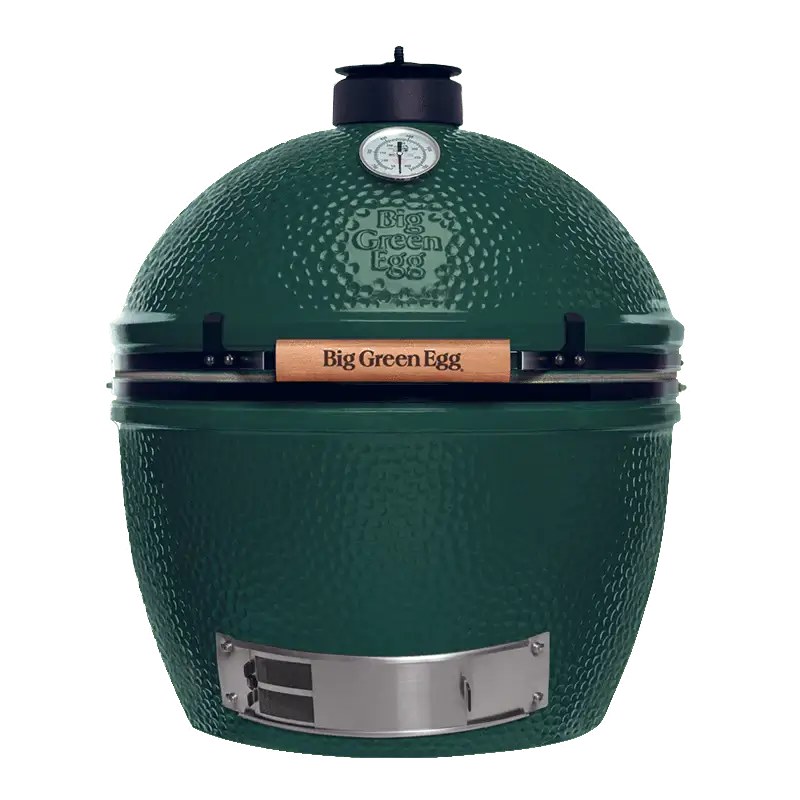
Big Green Egg XLarge
The Big Green Egg XLarge is the crowd-size version of the iconic ceramic kamado, with a 24-inch grate that swallows two packer briskets or four whole chickens side by side. Same thick ceramic and lifetime warranty as the Large - nearly double the cooking area.
Goes to the manufacturer. We earn nothing on this one.
Specifications
Features
Pros
- ✓The 24-inch grate answers the Large's biggest complaint - two packer briskets or four whole chickens fit flat with room for airflow, no folding required
- ✓Same rock-steady ceramic temperature control as every Egg: dial in 250°F and it holds all night with the vents barely cracked
- ✓Best price-per-square-inch in the whole Egg lineup - roughly 30% more money than a Large buys nearly double the grate
- ✓Hits 750°F for pizza and searing just like its smaller siblings, and the wide dome fits vertical rib racks and tall roasts
- ✓The 5-piece EGGspander system multiplies capacity again, pushing usable space well past 800 sq in for party cooks
- ✓Thick ceramic is remarkably fuel-efficient for its size - an overnight brisket cook doesn't need a lump refill
- ✓It's built to outlive you, with the same lifetime ceramic warranty and generational build quality as the rest of the line
- ✓Owners rate it a perfect 5.0 - the size upgrade gives up nothing the Large does well
Cons
- ✗At $1,650 for the bare egg - no nest, no side shelves - a usable XL setup lands well past $2,000
- ✗219 lbs of fragile ceramic: moving it is a two-to-three person job, and you'll want the dealer to handle assembly
- ✗Small weeknight cooks feel wasteful - the big firebox wants a proper lump load, and lighting it for four burgers gets old
- ✗All that thermal mass moves slowly - heat-up takes longer than the Large, and overshooting a low target is hard to walk back
- ✗Kamado Joe's Big Joe III costs similar money and includes the rolling cart, side shelves, and multi-level racks the Egg sells separately
- ✗No app, fan, or automation at any price - long cooks rely on vent skill or an aftermarket controller
- ✗Ash cleanout is still through the bottom vent door, and the bigger fire bowl makes more of it
- ✗The XL-size accessories (convEGGtor, pizza stone, EGGspander) cost noticeably more than their Large equivalents
Owner Insightssummarized from owner discussions
The XLarge is the size Big Green Egg owners move up to rather than start with, and the upgrade threads follow a consistent shape: someone with a Large or a Medium runs out of grate on the cooks they care about, buys the XL, and stops thinking about capacity. It is a heavy ceramic cooker with a lifetime warranty on the ceramic itself, and it holds heat well enough that a fan controller turns it into something close to a set-and-forget smoker.
The practical experience divides into the ceramic and everything bolted to it. Airflow control is a skill rather than a setting, and owners are honest that the learning curve includes wasted cooks. Pizza in particular disappoints people at first, and the wedges and stones that fix it are expensive — with the added annoyance that some accessories are offered only in the Large size. The accessory habit is the real ongoing cost: the Eggspander and the Ceramic Grill Store rigs both have devoted users, and 'what do I actually need' is a permanent thread.
It suits someone cooking for crowds who wants one cooker that sears, roasts and smokes, and who is willing to learn it. Owners cross-shopping the Kamado Joe Big Joe weigh the Egg's warranty and resale against Kamado Joe's included hardware, and weight is a genuine part of that decision. Buying used is a live option because these hold value — the trade-off is the lifetime warranty, which is exactly the debate owners keep having.
What owners like
- +The ceramic holds temperature well enough that owners running a fan controller on it describe genuinely unattended overnight cooks, and a controller is one of the most common early additions
- +Capacity is the reason people move up to it, and owners upgrading from the Large or Medium consistently say they stopped wishing for more room
- +Resale is unusually strong — used units hold enough value that owners actively debate whether buying second-hand is worth losing the lifetime warranty, which is not a conversation most grills generate
- +The lifetime warranty on the ceramic is real and is the main argument for buying new despite the price
- +The accessory ecosystem is deep, with the Eggspander and Ceramic Grill Store rigs both having committed followings and letting one cooker do several jobs
- +It reaches grilling temperature considerably faster than a pellet grill, which owners point out when the 'is a Traeger easier' argument comes up
- +Owners regularly build custom tables and surrounds for it, and the platform is stable and long-lived enough to justify that kind of investment
Common complaints
- −Venting is a real learning curve, and owners are candid that there are plenty of ways to ruin a cook while you are still learning to control airflow
- −Pizza is not the slam dunk the marketing implies — owners report poor first attempts, and the accessories that fix it are expensive and, frustratingly, some are made only for the Large
- −The accessories are where the money goes after purchase, and 'what do I need to want' threads make clear the sticker price is not the final cost
- −It is extremely heavy, and weight comes up directly in comparisons against the Kamado Joe Big Joe as a practical consideration for moving or mounting it
- −Not everyone gets on with it — there is a recurring, honest strand of owners who say they want to like theirs more than they do
Common Questions
Is it worth upgrading from a Large to an XLarge?
Should I buy used or new?
Do I need a temperature controller?
Why is pizza so difficult on it?
How does it compare to the Kamado Joe Big Joe?
Is a pellet grill easier than this?
Compare the Big Green Egg XLarge
The Big Green Egg XLarge is one of 7 sizes in this line.
See every size, to scale →Related grills
More from Big Green Egg →
Big Green Egg
Big Green Egg Large
The Big Green Egg Large is the most popular size of the iconic ceramic kamado cooker, capable of grilling, smoking, roasting, and baking. Big Green Egg is the brand that brought kamado cooking to the American mainstream.
Big Green Egg
Big Green Egg Medium
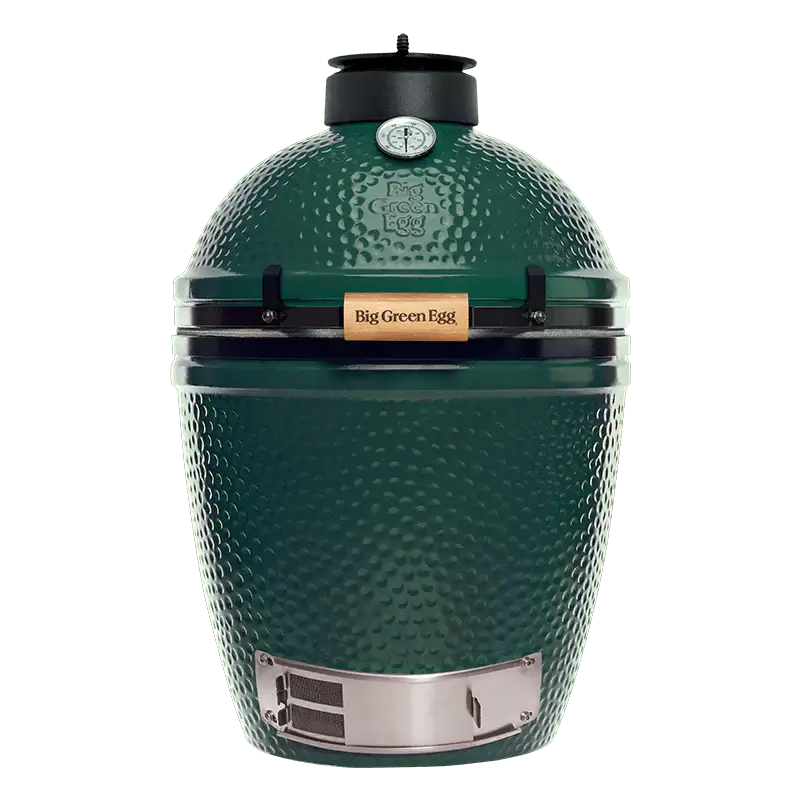
The Medium sits between the Small and the Large with a 15-inch grid and 177 sq in of cooking area. Big Green Egg rates it for an 18 lb turkey, six burgers or four steaks — enough for a couple or a small family, in a body 48 lbs lighter than the Large. It is the smallest Egg that still takes the full-size ceramic accessories most owners eventually want.
Big Green Egg
Big Green Egg MiniMax
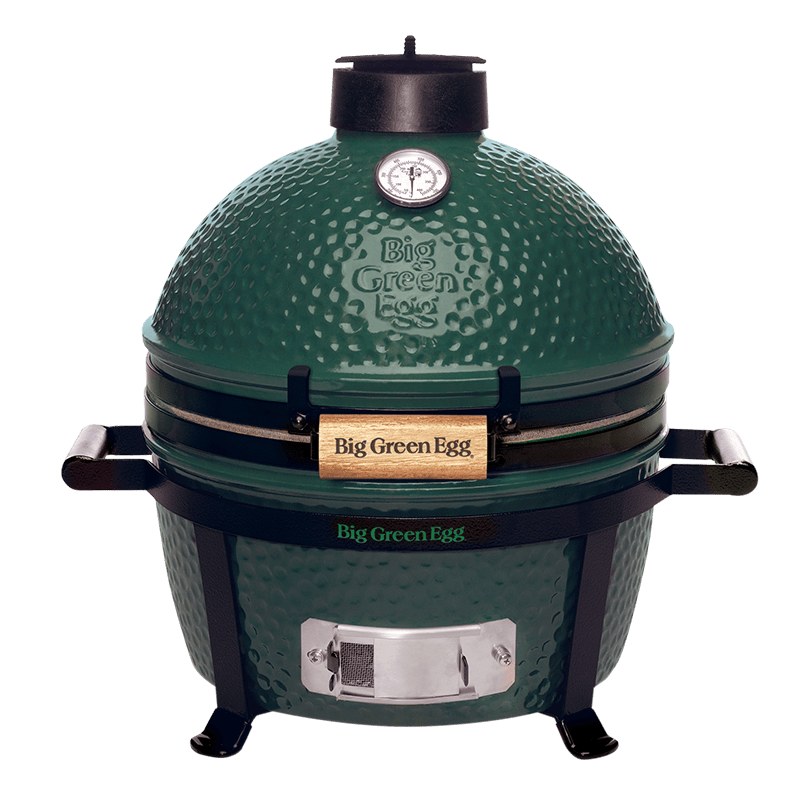
The Big Green Egg MiniMax packs the full ceramic kamado experience into a 19.5-inch-tall tabletop cooker that ships with its own carrier. It's the Egg for balconies, tailgates, and campsites - same 750°F ceiling, a quarter of the footprint.
Big Green Egg
Big Green Egg Small
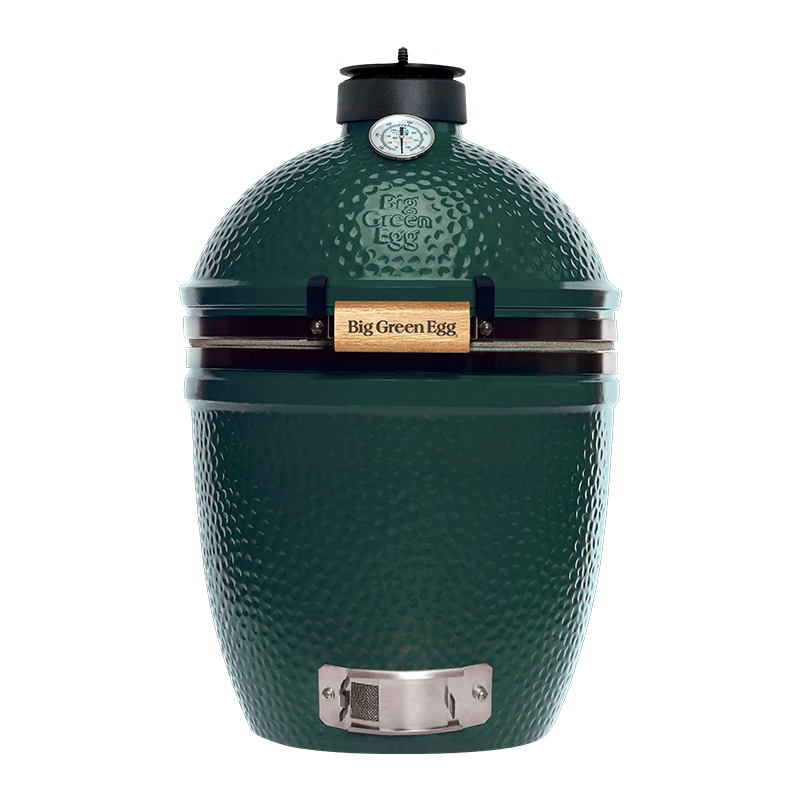
A 13-inch grid and 133 sq in in a tall, narrow 80 lb body. It shares its cooking area with the MiniMax but not its shape: the Small is a conventional standing Egg meant to live on a nest or in a table, where the MiniMax is a squat carry-handle model built to travel. At $699.99 it is the cheapest full-shape Egg.
Big Green Egg
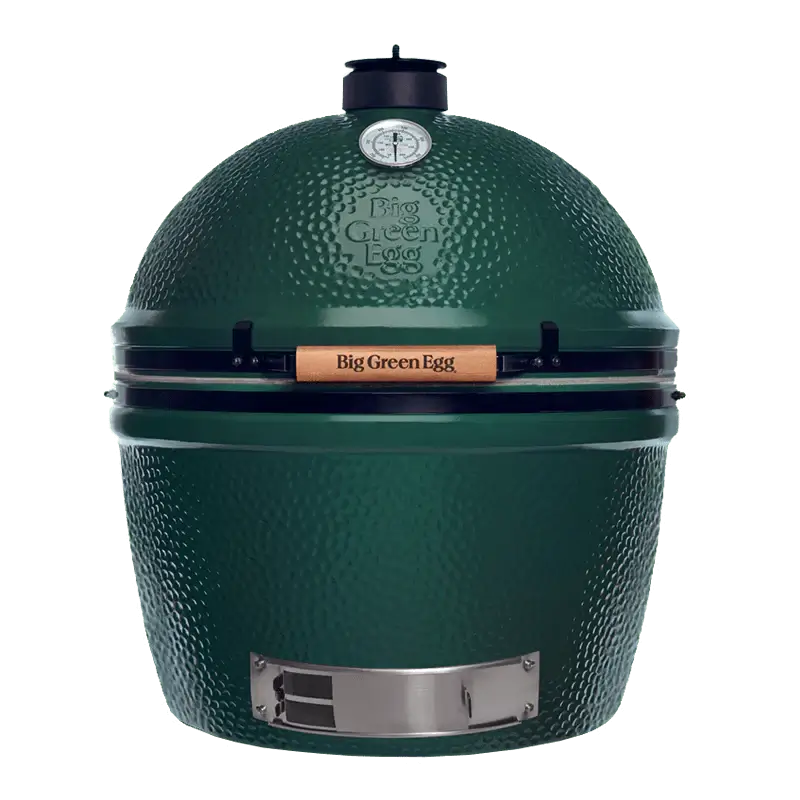
Big Green Egg 2XL
The largest Egg, with a 29-inch grid and 672 sq in of cooking area against the XLarge's 452. At 375 lbs of ceramic it is a fixed installation, not a grill that gets moved, and Big Green Egg positions it for restaurants and competition teams rather than backyards. Everything else — the ceramic body, the 200-750°F range, the lifetime warranty — matches the rest of the line.
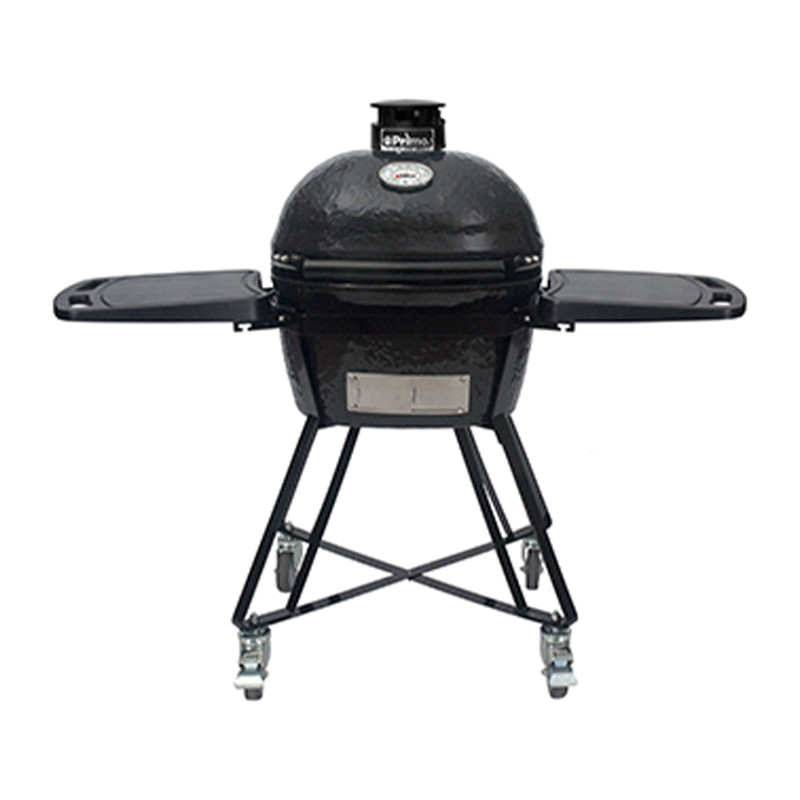
The smallest oval Primo: 210 sq in, 100 lbs, and the same 151–850°F range and two-zone oval firebox as the LG 300. Primo also sells a two-piece GO cradle and base for it, which makes it the largest genuinely portable ceramic kamado on the US market. Priced here as the All-In-One package — head, cradle, shelves and tools.