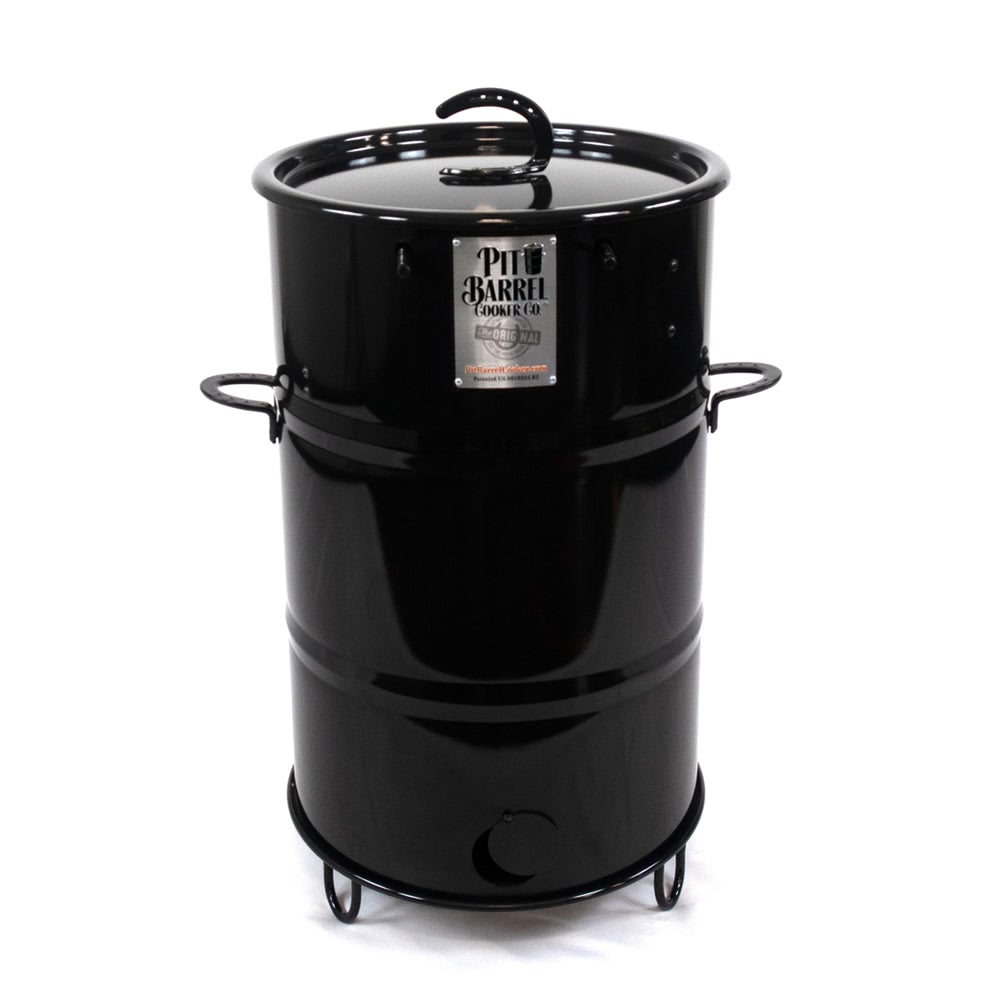
Pit Barrel Cooker
Pit Barrel Cooker Classic
The Pit Barrel Cooker Classic is an 18.5-inch porcelain-coated drum smoker that hangs meat vertically over the coals on hooks. It's beloved in owner discussions for being nearly foolproof - light it, hang the meat, and walk away.
Specifications
Pros
- ✓It's the closest thing to a foolproof smoker - no vents to babysit, no water pan, no controller; light the basket, hang the meat, and come back hours later
- ✓Hanging meat vertically over the coals bastes it in its own rendered drippings, producing ribs and chicken that many owners say beat their offsets
- ✓Capacity is deceptive - 8 hanging racks of ribs or two pork butts fit in a barrel with a small footprint, feeding 10-20 people
- ✓The complete package includes hooks, rods, grate, charcoal basket, and stand - no accessory nickel-and-diming to get started
- ✓It holds its natural 250-300°F band for 6-8 hours on one basket of charcoal without any adjustment
- ✓The 18-gauge porcelain-coated barrel is sturdier than the cheap drum knockoffs and shrugs off weather
- ✓At ~$400 all-in it undercuts the WSM while being simpler to run, making it a favorite gift/starter recommendation in owner discussions
- ✓It doubles as a charcoal grill with the included grate when you want burgers instead of BBQ
Cons
- ✗You give up control - there are no real vents to dial temps up or down, so it cooks at the temp it wants (usually 250-300°F)
- ✗It can't do true low-and-slow 225°F easily, and it can't sear or grill hot without removing the lid and losing the magic
- ✗The grate is only about 240 sq in, so non-hanging cooks (brisket flat, big roasts) are cramped versus a kettle or cabinet smoker
- ✗Hanging big briskets risks the meat tearing off the hook late in the cook and landing in the coals - a rite of passage per owner discussions
- ✗There's no built-in thermometer at all on the classic model, so you're trusting the process or adding your own probe
- ✗The 1-year warranty is short next to Weber's 10 years on the WSM
- ✗Ash cleanup means lifting out the basket and dumping the barrel - simple but messy
- ✗Smoke flavor is milder than a stick burner since the fire runs mostly charcoal with just a chunk or two of wood
Owner Insightssummarized from owner discussions
The Pit Barrel is a drum cooker that hangs meat on hooks over the coals, and its reputation is built almost entirely on one thing: ribs. The endorsements come from people who own far more expensive equipment. One owner with eight smokers, including a custom offset, says he still sends anyone asking for a recommendation straight to the Pit Barrel, and the common description is a rib smoking machine. Hanging puts every rack at the same distance from the fire, so they finish evenly, and they finish fast, often under three hours rather than the six a low-and-slow routine takes. Whole chickens and picanha draw the same kind of praise. Owners describe it as simple in a way that other cookers are not: one piece and a lid, no doors, no gaskets, no water pan.
The real debate is about what hanging does to flavor on long cooks. Fat renders straight onto the coals and burns, and that is the taste the barrel is known for. Owners are split: on ribs and chicken it is the point, but several say it becomes too much across a twelve-hour brisket or pork butt, and at least one moved to a Weber Smokey Mountain specifically so he could choose between direct and indirect rather than fight it. Temperature behaves predictably rather than adjustably. Dialed in it settles around 220-275°F, and cracking the lid will take it to 330°F and higher, which owners use to crisp poultry skin or push through the back half of a cook. Anyone describing it as set-and-forget is using a leave-in remote thermometer, and they still say the occasional adjustment is needed. It is not quite as foolproof as the reputation suggests: a four-year owner calls it fun but a lot of work and easy for a beginner to ruin.
It suits someone who cooks ribs and chicken often, for a crowd, and values not having to think about the cooker. The comparison that comes up in nearly every buying thread is the 18 or 22 inch Weber Smokey Mountain, and the split is clear: the Weber gives you indirect cooking, finer temperature control and decades of parts and upgrades, while the Pit Barrel gives you hanging capacity, speed and far less to manage, though a Hunsaker kit will let a Weber hang ribs too. The honest caveat is that if brisket and pork butt are the reason you are buying a smoker, this is the cooker owners most often say they would not choose, and the lay-flat space is small enough that big single cuts are a genuine constraint.
What owners like
- +Ribs are what it is famous for, and the praise comes from serious cooks: one owner with eight smokers including a custom offset says he still points everyone who asks toward the Pit Barrel, and hanging produces a notably even cook across every rack at once
- +Hanging is fast. Owners who switched from a 3-2-1 routine report full racks done in under three hours, and describe them as juicy enough that they stopped cooking ribs any other way
- +Poultry is the other standout. One long-time owner says he would not cook whole birds on anything else, and picanha hung in a hot barrel gets singled out repeatedly
- +You are not forced to hang. Pork butts, brisket and hams go on the grate instead, and most owners use a mix depending on the cut
- +Once dialed in it holds roughly 220-275°F on its own, and cracking the lid lifts it to 330°F or beyond, which owners use to crisp poultry skin or push through the end of a cook
- +There is nothing to maintain. It is essentially one piece plus a lid, with no doors, gaskets or water pan to manage, which owners coming from more complicated cookers appreciate
- +It doubles as more than a smoker. Owners use theirs as a grill, a tailgating cooker and the backyard pit for parties, and it gets genuinely hot
Common complaints
- −The direct-heat flavor divides people and it is the most substantive criticism. Fat drips onto the coals and burns, which several owners say is good or even preferable on short cooks but too heavy on long ones; two independently say it does not suit brisket and pork butt, and one moved to a Weber Smokey Mountain specifically to stop fighting it
- −Flat cooking space is limited. Capacity lives in the hanging hooks, and owners planning a big spread work around the small grate; a large wagyu brisket simply would not fit and had to be cooked elsewhere
- −There is not much temperature adjustment available, which is exactly what makes it simple and also what frustrates people who want to dictate the number rather than accept the barrel's natural band
- −It is not truly hands-off without a remote probe. Owners who describe walking away for six hours are all using a leave-in thermometer and admit they still occasionally have to go adjust something
- −It is easier to get wrong than the reputation suggests. One owner of four years calls it fun but a lot of work and easy for a beginner to mess up, and says that after trying a friend's pellet grill he is saving for one because the results were as good for far less effort
Common Questions
Do you have to hang everything?
What temperature does it run and can you change it?
Is it good for brisket?
Is it really set and forget?
Pit Barrel or Weber Smokey Mountain?
What is it genuinely best at?
Compare the Pit Barrel Cooker Classic
Related grills
More from Pit Barrel Cooker →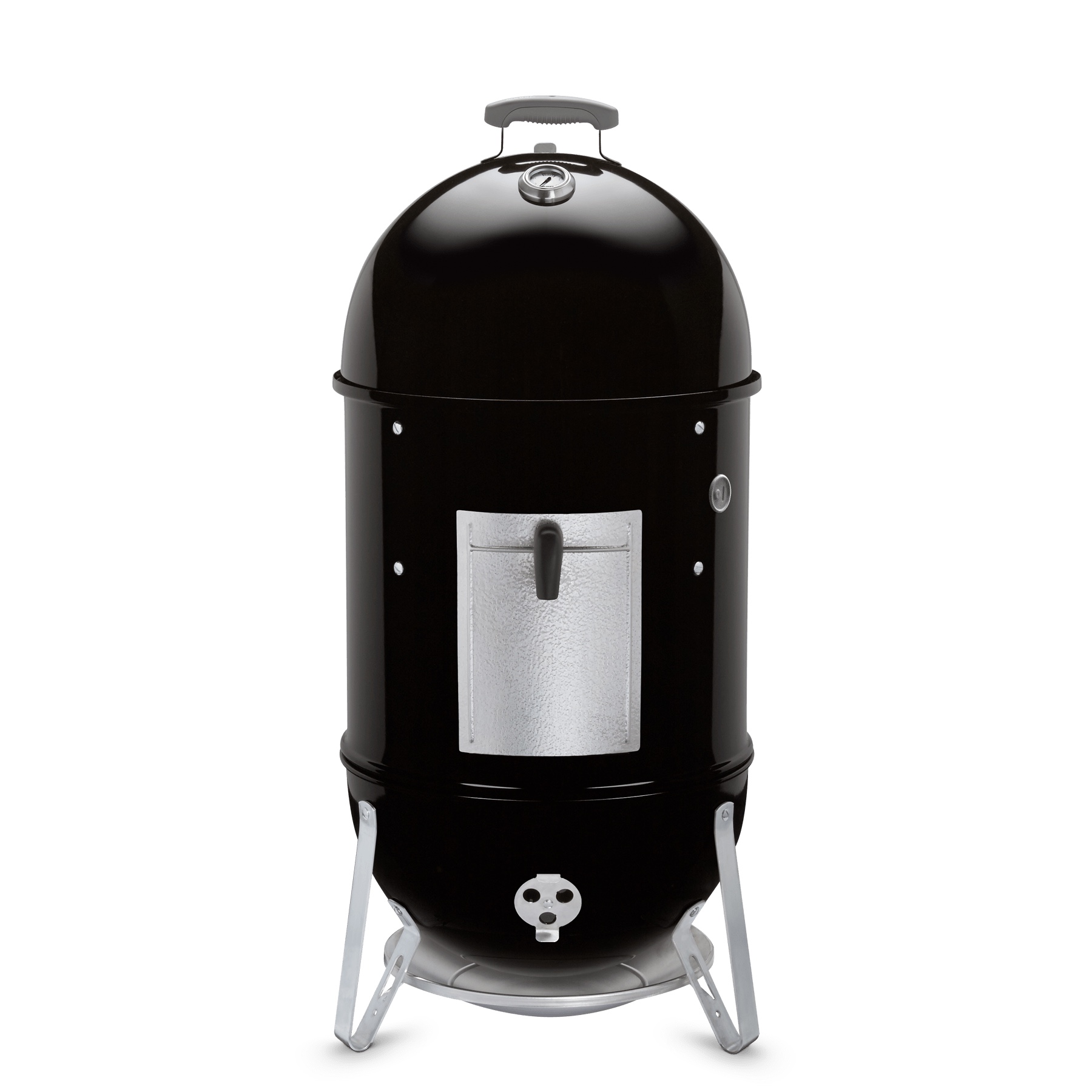
The Weber Smokey Mountain is the legendary bullet-shaped charcoal water smoker that has been the 'first real smoker' recommendation for decades. Two stacked grates and a water pan turn out competition-quality BBQ for under $500.
Oklahoma Joe's
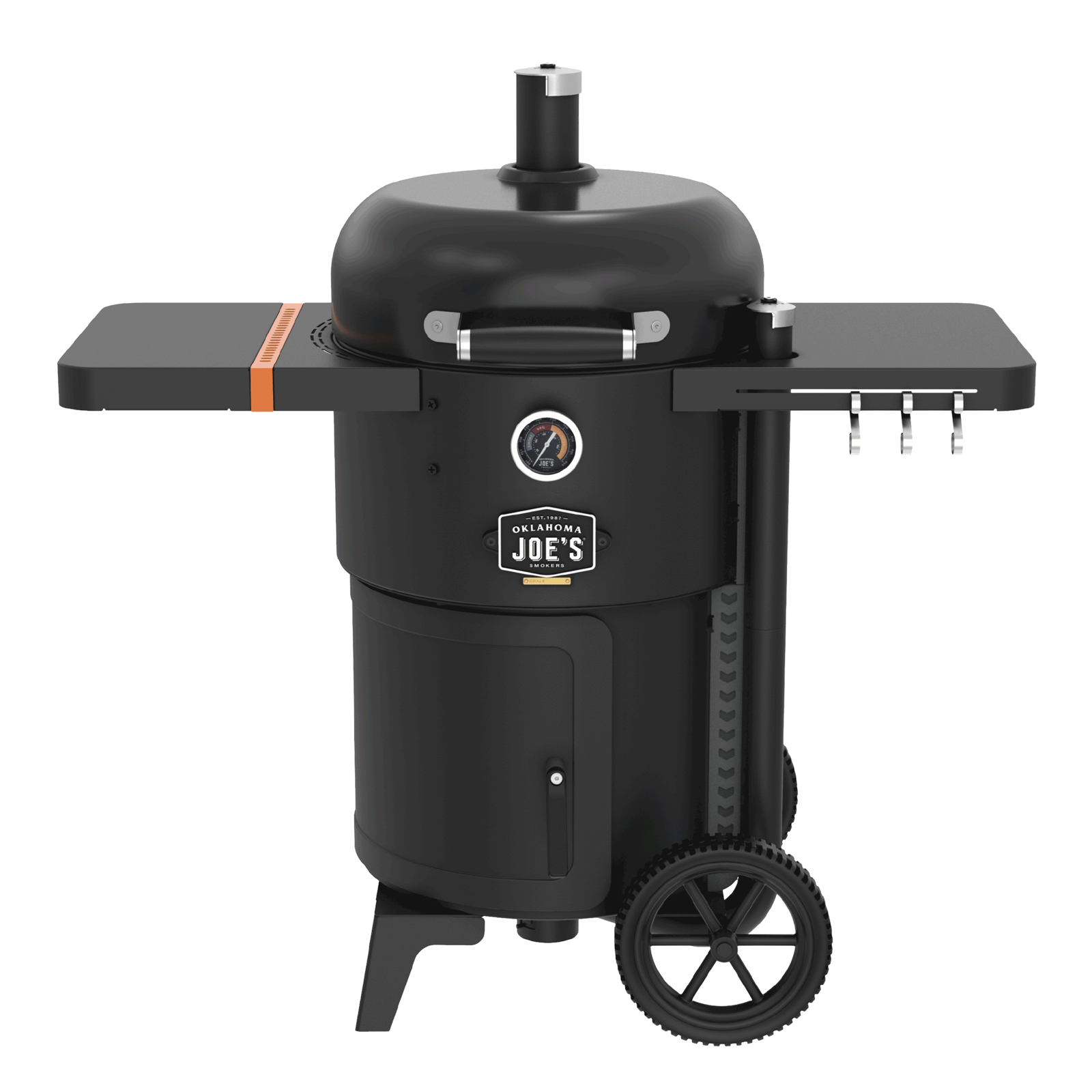
Oklahoma Joe's Bronco Drum Smoker & Grill
The 2025 revision of the Bronco and the model below the Bronco Pro already in the catalog. It keeps the two things that made the original Bronco worth buying - a side fuel door that lets you add charcoal without lifting the grate or the food, and an 8 lb charcoal basket rated for 14-plus hours - and adds dual side shelves, rubber-tread wheels and the rib hanger kit as standard. The grate lowers toward the fire for grilling, which is where the '& Grill' in the name comes from. 284 sq in of grate plus nine hooks on three hangers.
Pit Barrel Cooker Co.
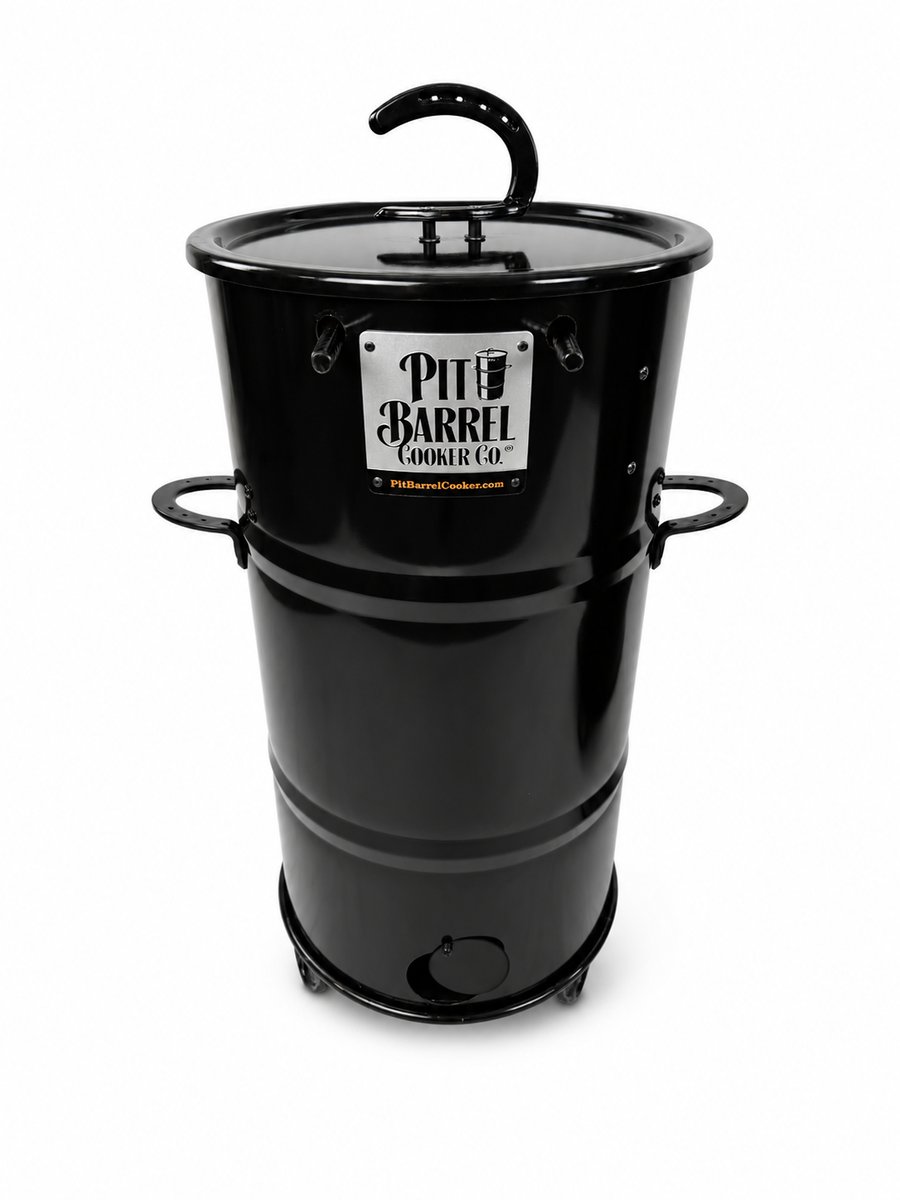
Pit Barrel Cooker Junior Premier 14
The 14-inch sibling of the Classic already in the catalog, rebuilt in 2026 as the Premier series. It is the same sealed drum design — charcoal basket in the base, meat hung from rods on hooks rather than laid on a grate — shrunk to a 14-inch barrel that Pit Barrel rates at four to eight people or up to six racks of ribs hung vertically. The Premier revision adds an elevated lid handle, a detachable single-tier heat shield so it can sit on a deck, and an attachable ash pan; it ships with the hook tool as standard, which used to be an upsell.
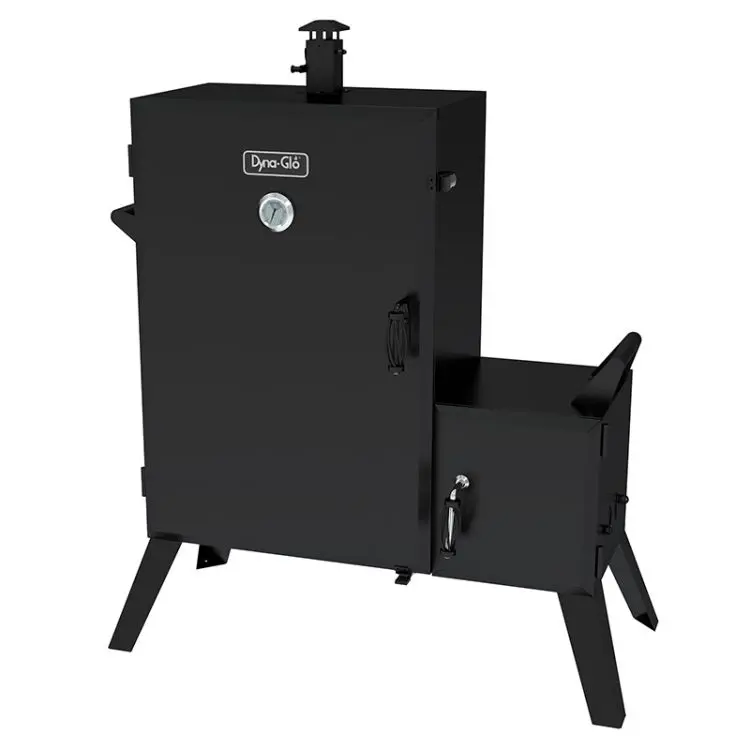
A vertical offset, which is a different animal from the horizontal offsets already in the catalog: the firebox sits at the base of a tall cabinet and heat rises through six adjustable grates rather than travelling sideways down a barrel. Dyna-Glo's wide-body version gives 1,890 sq in across those six grates, each rated to 25 lbs, with a porcelain-enameled charcoal chamber, a pre-installed high-temp rope door seal and a removable ash pan. At $349 it is the cheapest way to get close to 2,000 square inches of charcoal smoking space.
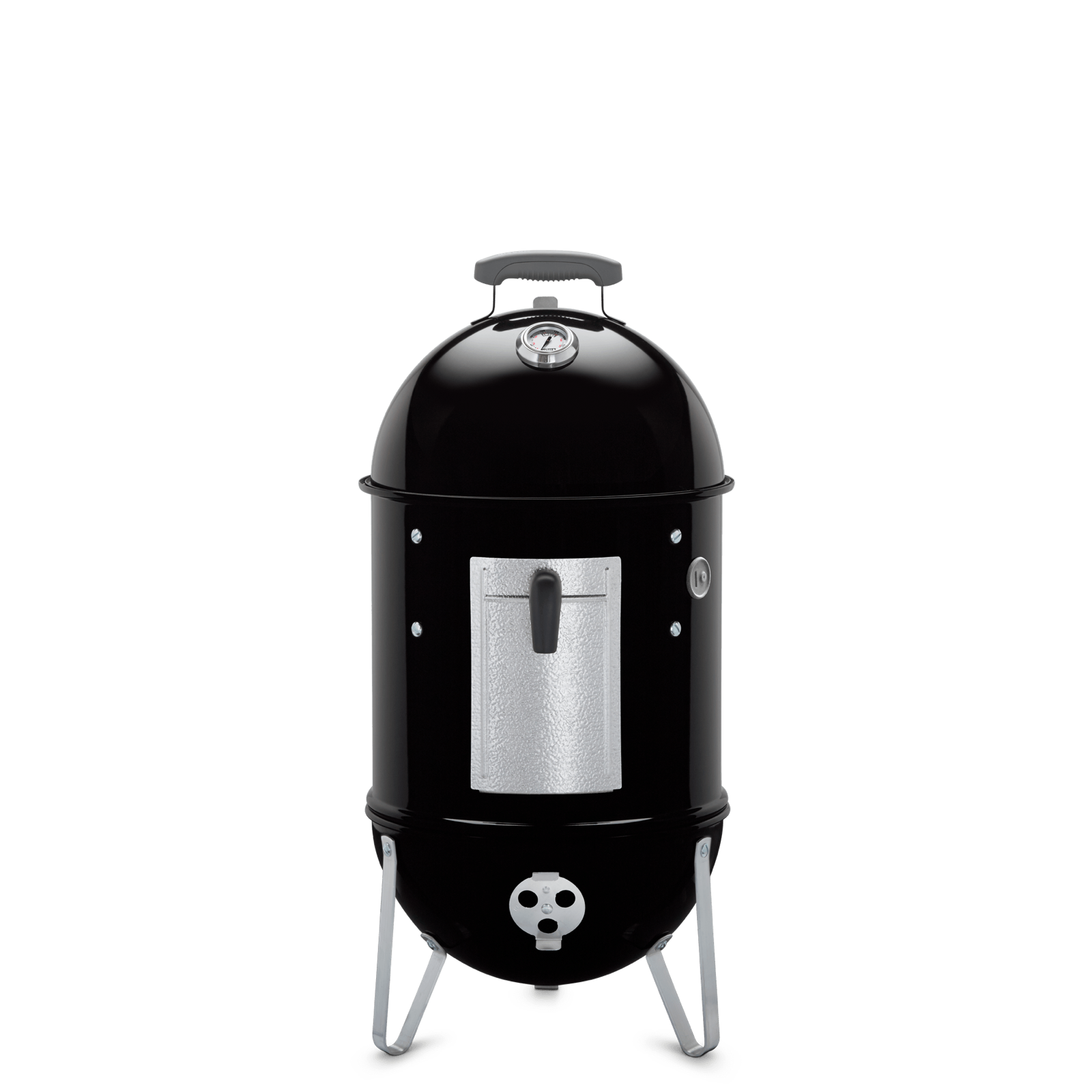
The smallest of Weber's three bullet smokers: a two-rack water smoker on a 14.5-inch charcoal bowl, the same diameter as the Smokey Joe. It runs the identical design as the 18-inch already in the catalog — charcoal ring at the bottom, water pan in the middle, two cooking grates above — scaled down to 286 sq in and 23 lbs, which is the point: it is the only WSM light enough to carry to a campsite or a tailgate. The small fuel ring is also the catch, since it holds enough charcoal for roughly 6 to 8 hours rather than the overnight burns the larger bullets manage.
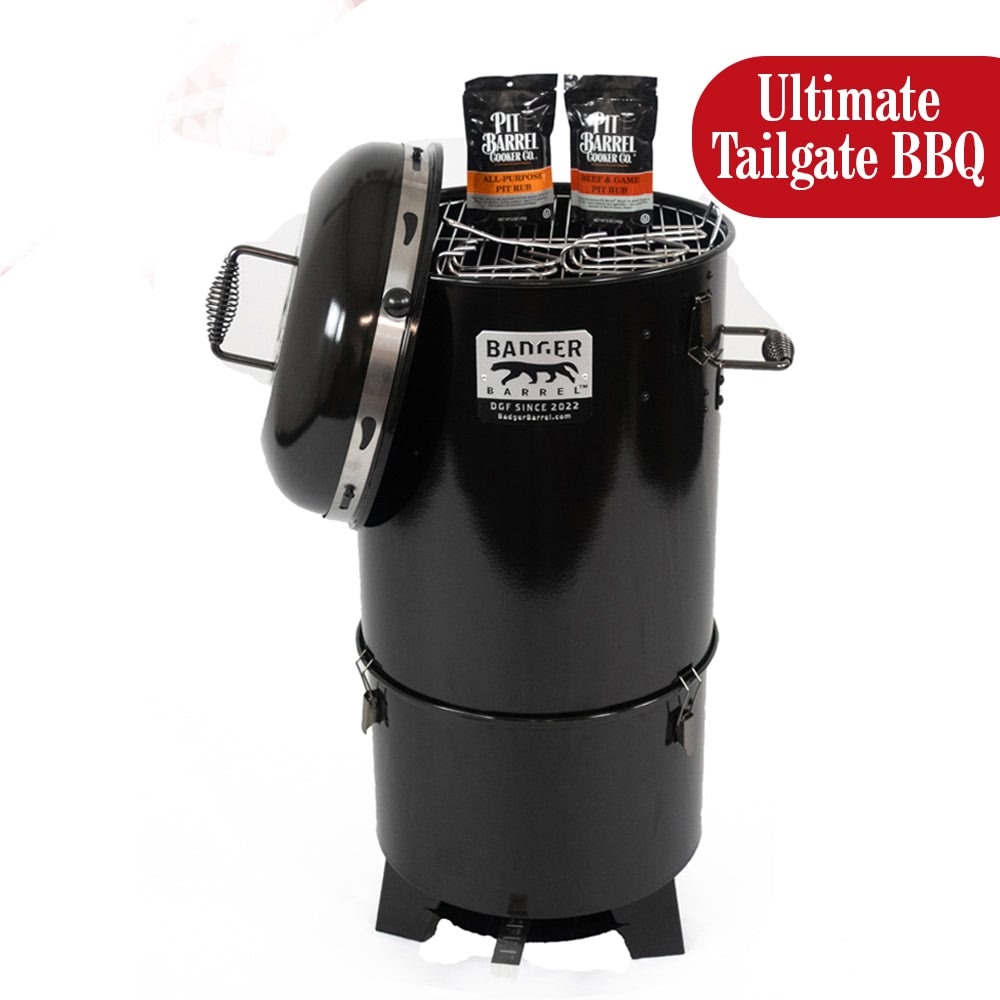
Pit Barrel Cooker Co.
Pit Barrel Cooker Badger Barrel 16.5
The odd one out in Pit Barrel's line and the only model in it with real dampers: a 16.5-inch porcelain drum with adjustable vents on both the lid and the base, which the Classic and Junior deliberately do not have. The mid-section lifts out so the base becomes a shallow hibachi for hot-and-fast grilling, and the hanging rack stays for smoking — Pit Barrel rates it at six racks of ribs. Priced at $275 against the $360 Junior, it is the cheapest way into the line and the only one you can actually dial down.