Z Grills
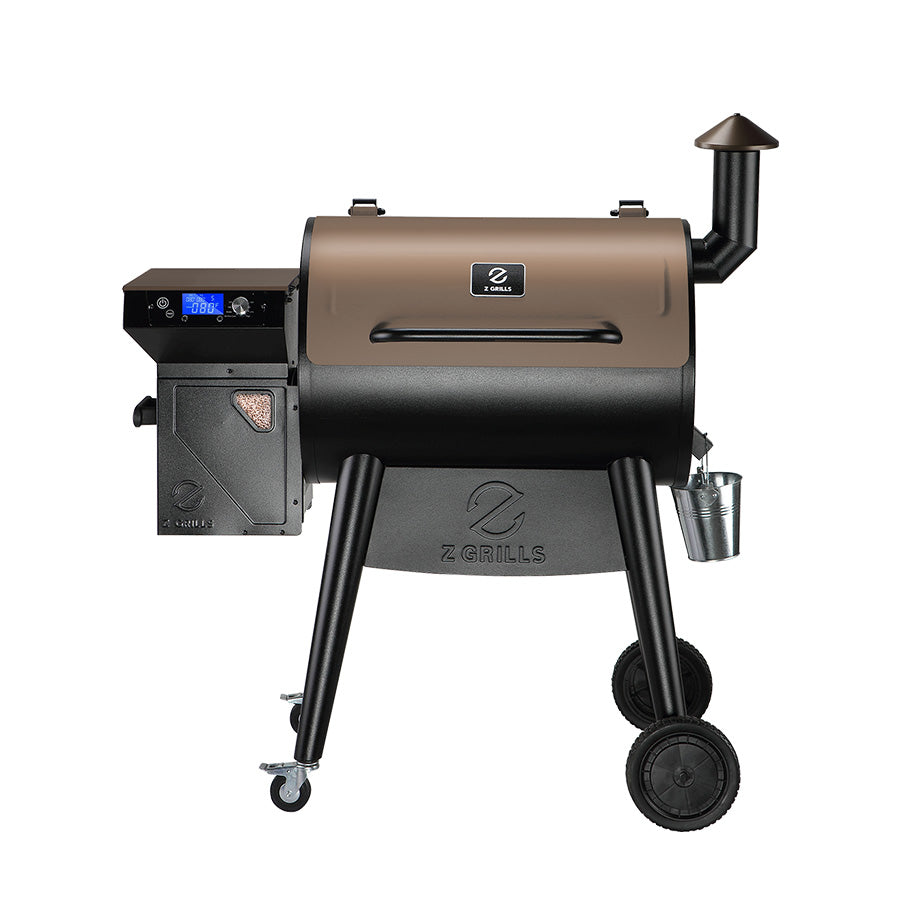
Z Grills 7002C3E
The Z Grills 7002C3E is the value pick of the popular 700 series - 697 sq in of two-rack cooking space, a 28 lb hopper, and an upgraded PID 3.0 controller with dual meat probes, at a price hundreds below the name-brand pellet grills it competes with.
Specifications
Features
Pros
- ✓Dollar-for-dollar capacity is the headline - 697 sq in and a 28 lb hopper for roughly half the price of a comparable Traeger
- ✓The upgraded PID controller holds set temps within about 10°F in fair weather, a genuine step up from the swingy older Z Grills controllers
- ✓The 28 lb hopper runs long overnight briskets without a refill, and the pellet view window lets you check fuel level at a glance
- ✓The hopper cleanout chute makes swapping pellet flavors or emptying for storage a 30-second job that many pricier grills still lack
- ✓Two meat probes are included in the box rather than sold as accessories
- ✓The manual feed button primes the auger for faster, more reliable startups
- ✓Simple electronics with no WiFi to break means fewer failure points, and owners consistently praise how easy it is to just turn on and cook
- ✓A 3-year warranty is solid coverage at this price, matching Traeger's coverage on grills costing twice as much
Cons
- ✗Tops out at 450°F with no direct-flame sear option, so steaks need a cast-iron finish indoors or on a separate grill
- ✗No WiFi or app monitoring at a time when Traeger, Pit Boss, and Recteq offer it in the same price neighborhood on sale
- ✗The steel body is thinner than premium pellet grills, so cold or windy weather increases pellet consumption and temp swings noticeably
- ✗There's no super-smoke mode, and like most budget pellet grills the smoke flavor is mild at temps above 250°F
- ✗The lid thermometer routinely reads far off from grate temperature - trust the controller and probes instead
- ✗Quality control is hit-or-miss, with shipping dents and misaligned holes during the 45-plus-minute assembly a recurring complaint
- ✗Grease routing works but is messier to clean than Traeger's or Recteq's collection systems
- ✗Z Grills' US customer support is slower and harder to reach than the big brands if you do need warranty parts
Owner Insightssummarized from owner discussions
Owners treat the 700 series as one grill and use the model numbers interchangeably, so this is 700-series experience rather than anything specific to a single SKU. What comes through is a cheap grill that keeps working: owners at five, six and seven years, one who cooked roughly a thousand meals on his, another who bought one secondhand and has run it four years. It holds temperature well enough for the cooks people actually buy a pellet grill for — an owner running a Boston butt at 225°F on wireless probes described it as rock steady through a 15-hour overnight with no intervention.
The thing that separates it from other budget grills is that it can be fixed. The auger is the part that fails, either from moisture swelling pellets or from oversized pellets binding it, and the owner whose grill jammed after a Pacific Northwest downpour stripped it and replaced the auger, bushing, motor and electronics himself for about $165 in parts. Owners a few years in say the auger tube fouls and needs cleaning to keep pellets flowing. Smoke output is light and nearly every long-term owner runs a smoke tube, sometimes two, loaded with a mix of pellets and hardwood chips. WiFi on these SKUs is a control board you add afterwards rather than something built in, and owners who have done it describe a genuinely frustrating setup involving 2.4GHz-only networks and three different versions of the app before it connects. Outside the US, replacement electronics are close to unobtainable.
It suits someone who wants a large-capacity smoker for well under what the name brands charge and does not mind owning a machine they may have to take apart. Cross-shopped, it loses on features rather than price: buyers have chosen a Camp Chef for $60 more because of its ash cleanout and slide-out firebox, and a discounted Pit Boss Navigator 1000 undercut it outright. Among enthusiasts the brand is dismissed as disposable, with the counter-argument being that a grill costing a third of a Yoder and lasting six years with a $165 rebuild is not a bad trade. One warning about research: a large share of what is written about this grill online is promotional rather than genuine ownership, including confident secondhand claims about how it holds temperature in freezing weather, so weight what owners say about their own grills and discount the rest.
What owners like
- +The 700 series lasts longer than its price suggests. Owners report six and seven years of regular use, one with a grill that has lived on a back porch year-round for five years and still works, and a rancher who cooked everything from skewers to 22 lb turkeys on his for seven years before he started shopping for an upgrade
- +It is genuinely repairable, which is rare at this price. An owner whose auger jammed rebuilt the whole thing himself — new auger, bushing, motor and electronics — for about $165 in parts, and reckons that bought him another thousand meals. Another picked one up secondhand and has run it four years
- +Temperature holding is steady enough for unattended overnight cooks. An owner running a Boston butt at 225°F watched it on wireless probes and reported it rock steady for the whole cook, coming up to 200°F and probe tender in about 15 hours with no intervention
- +It takes accessories well and owners treat it as a platform. A thermal blanket is the standard cold-weather addition, smoke tubes are near universal, and the WiFi control board can be retrofitted to these SKUs later rather than paid for up front
- +The price is the whole point and owners are unsentimental about it. One calls his the best deal he ever got on the site he bought it from, and buyers cross-shopping it against the name brands are comparing a grill in the $500 to $630 range against machines costing twice that
Common complaints
- −The auger is the weak link. One owner's jammed after a heavy rainstorm swelled the pellets and needed a full rebuild; another's jammed on pellets that were simply too large. Owners who have had theirs a few years say the auger tube fouls over time and needs cleaning for pellets to flow properly
- −WiFi is not standard on these SKUs, it is a control board you add, and getting it onto a network is a fight. One owner who upgraded worked through a 2.4GHz-only network, Bluetooth pairing that identified the controller but went no further, and three different versions of the app before one of them finally completed the connection
- −Parts support outside the US is effectively nonexistent. An owner in New Zealand with a shorted controller found that no local seller could supply a 230V replacement and ended up trying to work out whether a generic board sold for another brand would fit
- −Smoke output is mild, and nearly every long-term owner runs a smoke tube. Some run two, loaded with a mix of pellets and hardwood chips, and one owner specifically wants more smoke on higher-temperature cooks than the grill produces on its own
- −Among people who cook a lot, the brand carries a reputation problem. It gets grouped with the other budget pellet brands as disposable, with the advice from that camp being that anything expected to last means spending a thousand dollars or more, and that judgement turns up whenever someone asks what to buy
- −It loses head-to-head comparisons on features rather than price. One shopper picked a Camp Chef with an ash cleanout and slide-out firebox over the Z Grills for $60 more, and another was pulled away by a Pit Boss Navigator 1000 at half price with the same two meat probes and a cover thrown in
- −Researching it is harder than researching most grills. A large share of what circulates about this model online is promotional rather than written by owners, and the enthusiastic secondhand accounts of how well it holds temperature in the cold are exactly the material people who cook on theirs do not recognise
Common Questions
How long do these actually last?
What breaks, and can I fix it myself?
Does it have WiFi?
How much smoke flavor does it produce?
How does it compare to a Pit Boss or a Camp Chef at the same money?
Is it worth cooking in cold weather on?
Compare the Z Grills 7002C3E
Related grills
More from Z Grills →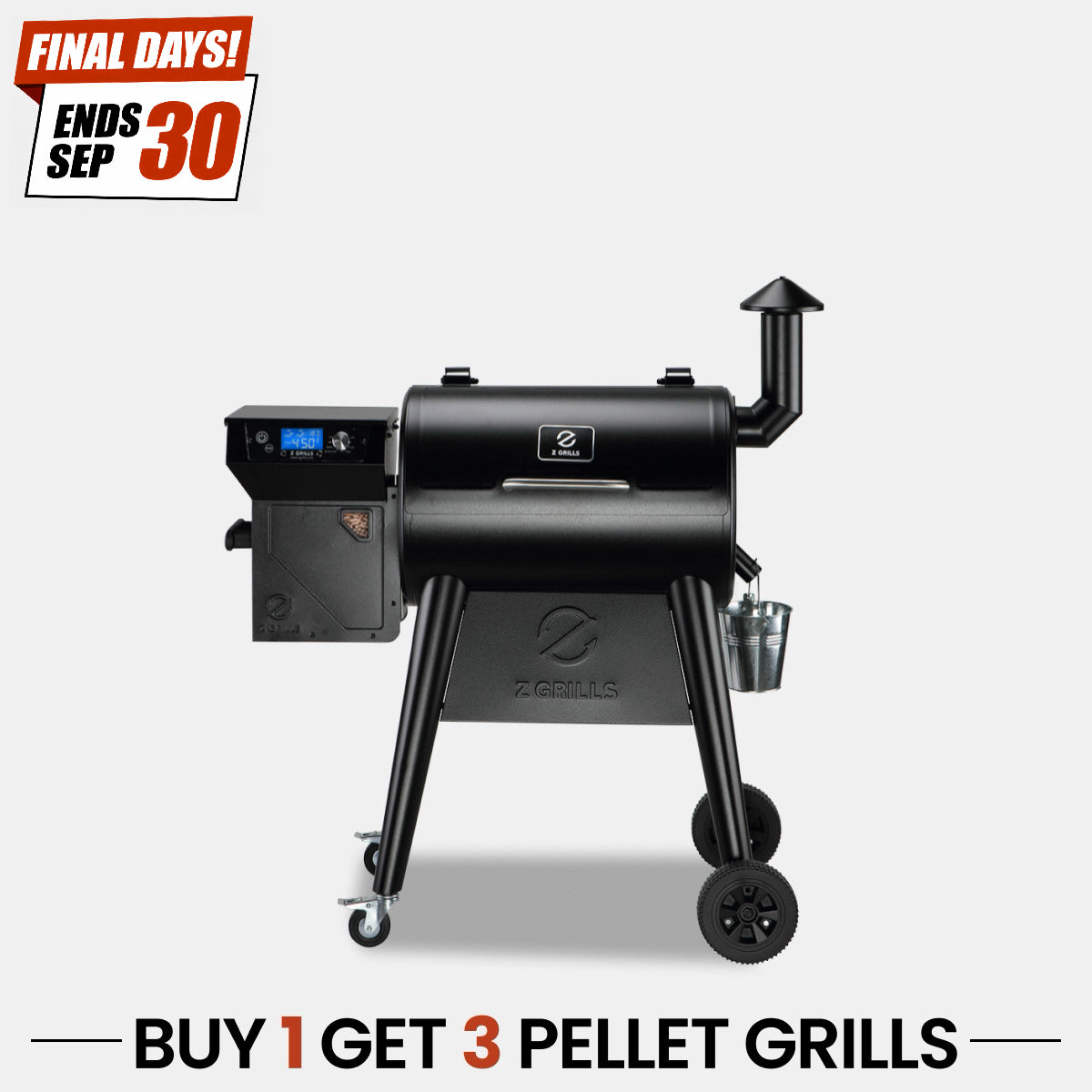
Z Grills
Z Grills 450B
Z Grills' entry model, refreshed for 2026. It keeps the thing that makes the brand worth listing at all — a genuine PID 3.1 controller — at a price where Traeger and Pit Boss both ship simpler boards. 459 sq in, an 18 lb hopper with a cleanout door for swapping pellet species, two meat probes and a grease bucket. There is no WiFi at this tier; that starts at the 700-series.
Z Grills
Z Grills Multitasker 11002B
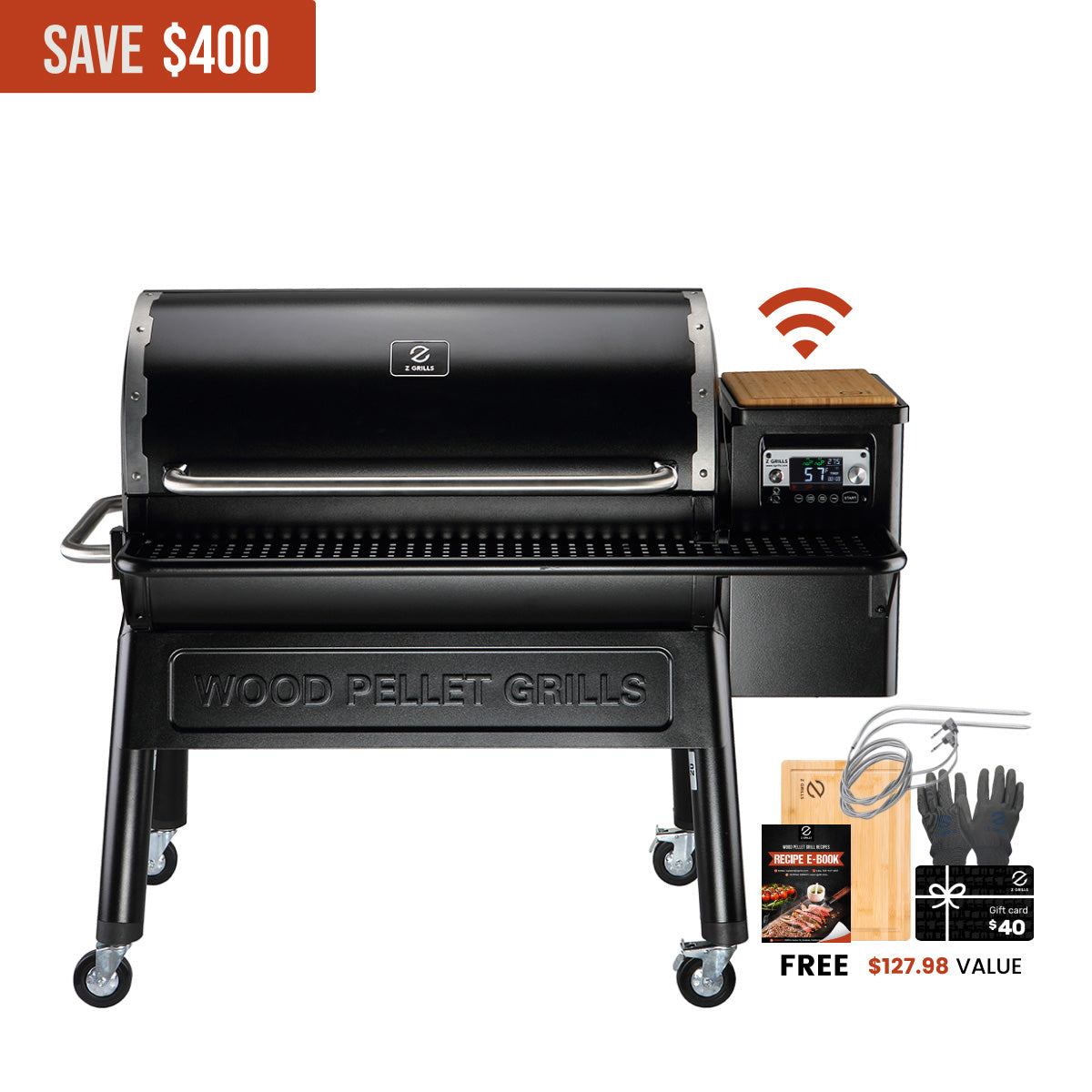
The Multitasker is Z Grills' answer to cold-weather cooking: a fully insulated dual-wall chamber with a full-length lid gasket, which the company says cuts pellet consumption by up to 40% in winter. It runs the Z-Ultra PID 3.1 controller over WiFi, holds 1,068 sq in and a 28 lb hopper, and ships by truck freight. The 7052B is the same grill at 709 sq in for the same $1,399.

Weber
Weber SmokeFire EX6
The Weber SmokeFire EX6 is Weber's WiFi pellet grill, notable for reaching 600°F to sear and using a steep-walled firebox for direct grilling. The 2nd-gen revision fixed many early reliability issues. Note: this model is no longer sold new as of 2026. Its current equivalent is the Weber Searwood XL 600.
Traeger
Traeger Tailgater
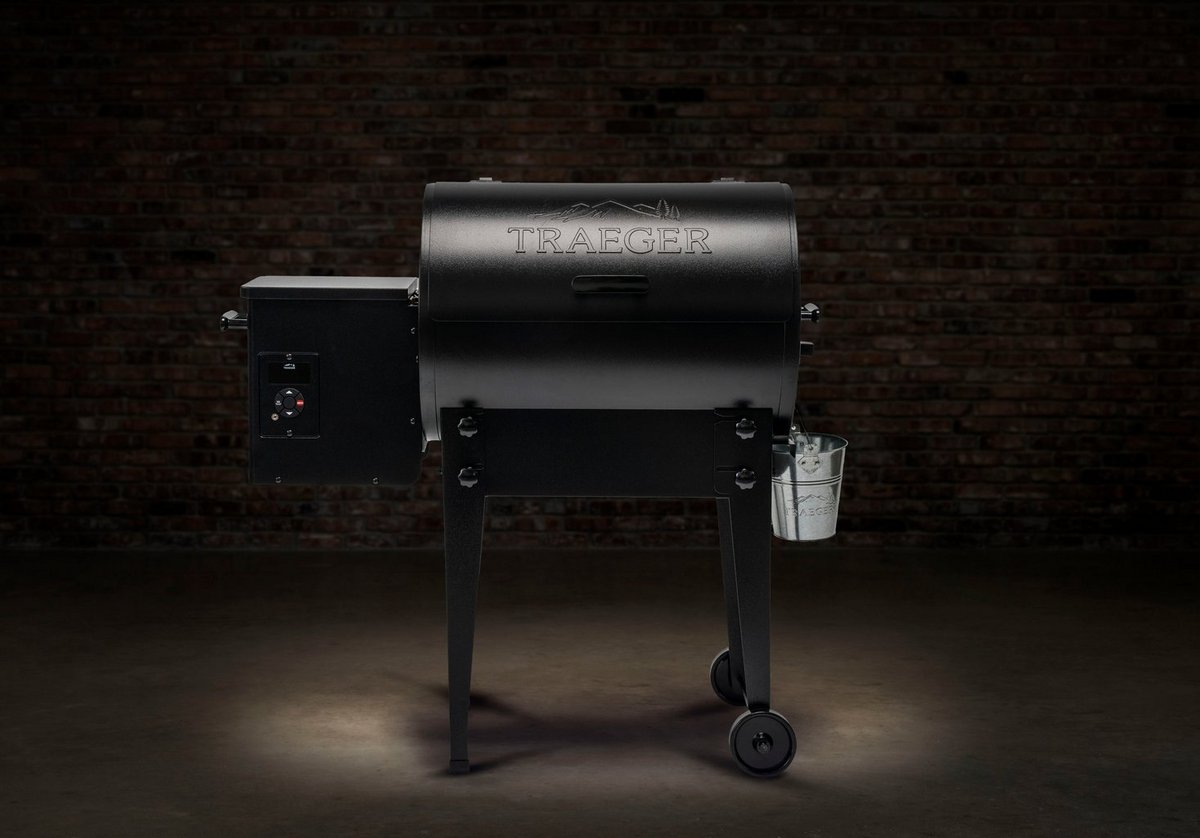
Traeger's folding-leg portable, and the larger of its two. It runs the Digital Arc controller rather than a WiFIRE board, so there is no app and no Super Smoke — you set a temperature on the dial and the grill holds it. The 300 sq in grate takes two chickens or three rib racks, which is more than most portables and enough that people buy it as a small patio grill rather than only for tailgates.
Louisiana Grills
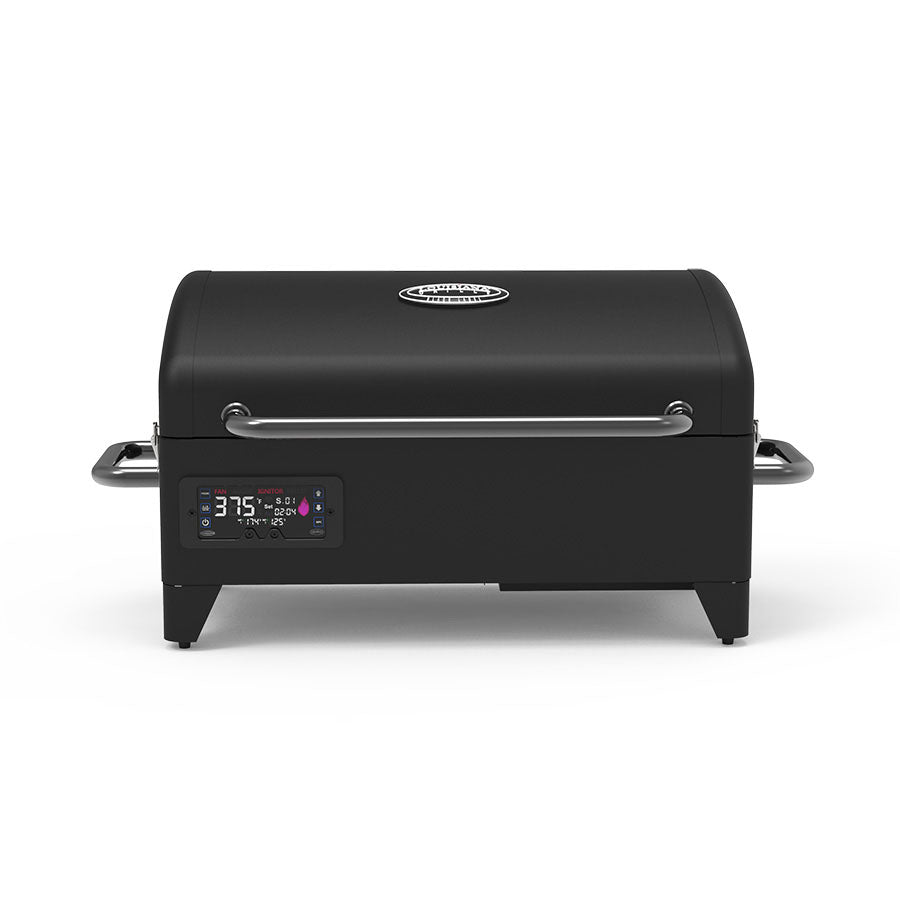
Louisiana Grills 300 Black Label Portable
The 300 Black Label is Louisiana Grills' tabletop pellet grill and the only portable in this catalog that ships with both WiFi and Bluetooth — the Traeger Ranger and Tailgater have neither. 333 sq in across a main grate and an upper rack, fed by a 10 lb hopper, in a 56 lb body with a cover and a meat probe included. It sits directly against the Traeger Tailgater at $500 and the Green Mountain Trek Prime at $399.
Traeger
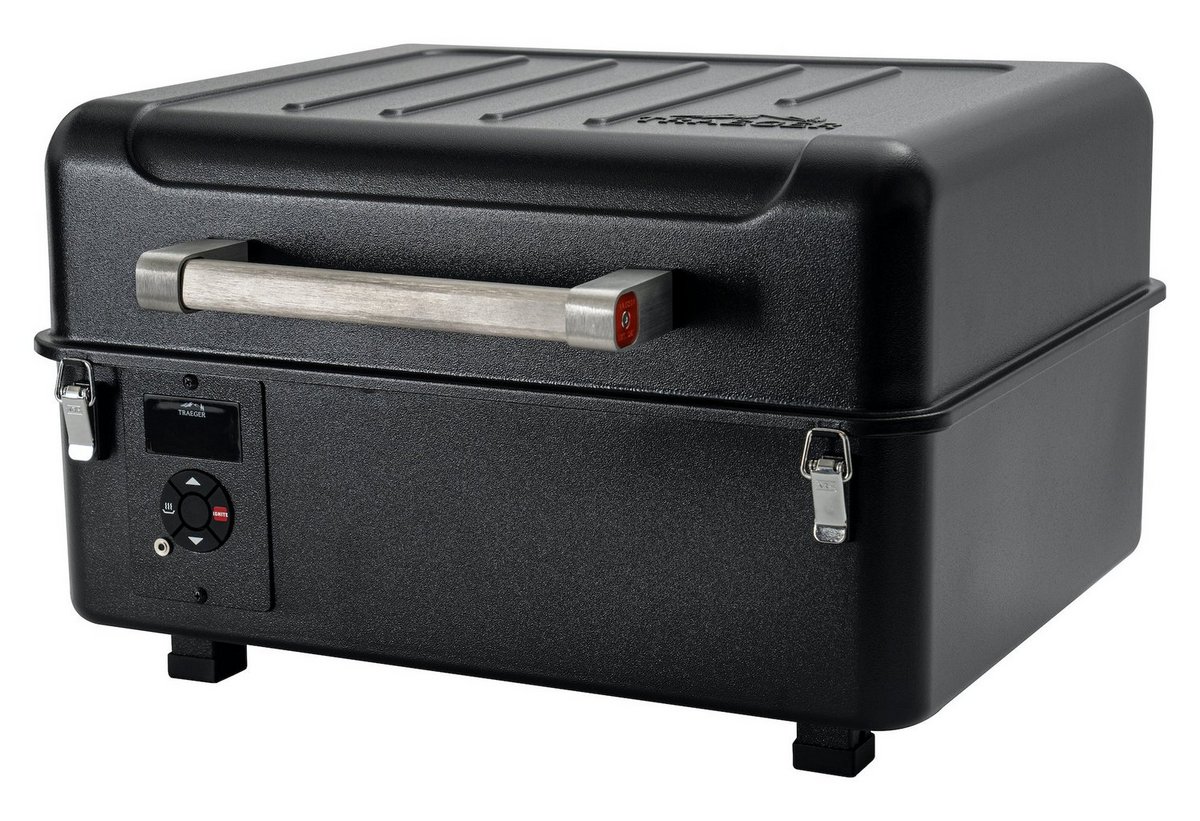
Traeger Ranger
Traeger's tabletop pellet grill — a legless box meant to sit on a truck gate or picnic table rather than stand on its own. It runs the same Digital Arc controller and 8 lb hopper as the Tailgater but only 176 sq in of grate, and it ships with a cast iron griddle insert that the Tailgater does not include. Its 60 lbs is heavy for a tabletop, which is the one thing buyers consistently do not expect.