
Camp Chef
Camp Chef Woodwind Pro 24
The Camp Chef Woodwind Pro 24 is a WiFi pellet grill with a reinvented Smoke Box that lets you burn wood chunks, chips, or charcoal alongside pellets for real-wood smoke flavor. It's a favorite of smoke-flavor purists.
We may earn a commission. Price and availability on Amazon may differ.
Specifications
Features
Pros
- ✓The Smoke Box is the killer feature - burning real wood chunks or charcoal gives it the deepest, most authentic smoke flavor of any pellet grill, close to a stick burner
- ✓It includes four meat probe ports built into the controller, more than almost any competitor, so you can monitor multiple proteins at once
- ✓The PID controller and full-color screen hold temps accurately and the menu is intuitive to navigate
- ✓The patented ash-cleanout cup lets you dump ash in seconds by pulling a lever - one of the easiest cleanups in the category
- ✓It's compatible with the Sidekick attachment, turning the side into a sear station, griddle, or burner for huge versatility
- ✓811 sq in handles big cooks, and the Smoke Box mode plus pellets gives you fine control over how heavy the smoke is
- ✓Build quality and value are strong for the price, and Camp Chef's reputation for solid customer support reassures buyers
- ✓The slide-and-grill direct-flame option lets you get higher heat for searing than a typical indirect-only pellet grill
Cons
- ✗The Smoke Box requires tending - you feed it wood every 30-60 minutes, so it's less truly 'set and forget' than a plain pellet grill
- ✗Running the Smoke Box well has a learning curve, and getting the airflow and smoke right takes a few cooks to dial in
- ✗WiFi connectivity and the Camp Chef Connect app are the weak link, with owners reporting drops and pairing headaches
- ✗At ~$1,200 it's priced near premium territory while still using powder-coated rather than stainless construction
- ✗Without the Smoke Box engaged, its smoke output on pellets alone is only average for the category
- ✗The 3-year warranty matches Traeger but trails Recteq's 6 years at a similar price
- ✗It's heavy at 182 lbs and the Smoke Box adds bulk on the side, increasing the footprint
- ✗Some owners report the auger or igniter needing service after a couple seasons, typical for the category
Owner Insightssummarized from owner discussions
The Woodwind Pro 24 exists for one reason, and owners are unanimous about what it is: the smoke box. It is a separate chamber that burns wood chunks, chips or charcoal alongside the pellets, and it answers the standard knock on pellet grills. As one owner puts it, pellets themselves do not create that much smoke. People arriving from a Traeger or a Pit Boss with the specific complaint that their food lacked flavor are pointed here more than anywhere else, and the ones who make the switch generally report the problem solved rather than merely improved. The usual advice when someone asks for maximum smoke from a pellet cooker is blunt: go Camp Chef, or buy something else and figure out how to add smoke yourself.
In practice the box is a chore as well as a feature. A full load of chunks gives roughly an hour of smoke before it needs the ash dumped and a refill, and the common method is to run it hard for the first few hours until the bark sets, wrap in butcher paper, then stop feeding it and let the pellets carry the rest. That is a genuinely different rhythm from a set-and-forget pellet grill. Grate temperatures track the controller closely, within five to ten degrees by owners' own probe testing, but the chamber cooks faster than people expect and converts from a Weber Smokey Mountain routinely overshoot their first few cooks. Build quality is the other reservation. Nobody calls it flimsy, but owners who have stood next to a Recteq say the steel is visibly thinner, and out-of-box faults turn up regularly enough to be worth checking on delivery: a stalled auger motor, a butterfly valve that fouls the heat deflector.
Buy it if smoke flavor is the thing you are actually chasing and you accept trading some convenience to get it. If you want a pellet grill to be genuinely hands-off, the box will annoy you and a Recteq or Weber Searwood is the better-built, simpler machine at similar money. The price is the real sticking point: it has risen to roughly double Camp Chef's own SG 24, and even owners who love theirs say out loud that they are not sure it is worth twice a normal pellet grill. Searing is the other honest caveat. The Sidekick attachment exists, but experienced pellet owners warn that no pellet grill sears well and that paying the premium for a side burner may not get you the crust you want.
What owners like
- +The smoke box is the reason people buy this grill and it delivers: loading wood chunks or charcoal alongside the pellets puts on noticeably more smoke than a pellet-only cooker, and owners who came from Traegers complaining about weak flavor say it is the fix
- +Four probe ports on the controller, against two on most rivals, which owners cite directly when choosing it over the Weber Searwood
- +Adjustable smoke settings plus the box mean you can dial flavor up or down rather than taking whatever the auger gives you
- +It runs low enough to cold smoke cheese and fish without buying a separate attachment, which owners of tube-and-tray setups call out as a real upgrade
- +Camp Chef's customer service has a good reputation in the long-term threads: one owner who wrecked a leg driving a screw too hard was sent a free replacement, no argument
- +The top rack is a full-width second shelf rather than the half rack some competitors ship, so both levels are actually usable for a big cook
- +Discounts are easy to find if you qualify: 20 percent for veterans buying direct, plus first-responder pricing, which changes the value math considerably
Common complaints
- −Price is the single biggest complaint: it has climbed to roughly twice what Camp Chef's own SG 24 costs and owners openly question whether the smoke box justifies double the money
- −The smoke box needs tending. A full load smokes for about an hour before you dump the ash and refill, so a long cook means returning to the grill repeatedly rather than setting it and walking away
- −Smoke box ash has to go somewhere, and owners with decks or porches complain about the debris; most end up keeping a metal ash bucket next to the grill
- −Build quality is a step behind Recteq. Owners who have handled both say the steel is thinner, and more than one shopper walked away after finding lids that did not sit right on the showroom floor
- −Assembly defects show up often enough to mention: a dead auger motor out of the box, and a butterfly valve misaligned badly enough to foul the heat deflector
- −It cooks faster than owners expect. Several people moving over from a Weber Smokey Mountain found their usual timings overshot and their meat came out dry until they recalibrated
Common Questions
Does the smoke box actually add smoke flavor, or is it marketing?
How often do you have to refill the smoke box?
Is it worth twice the price of the cheaper Camp Chef SG 24?
Can it sear steaks, or do I still need a gas grill?
How does the build quality compare to Recteq?
What should I check when it arrives?
Compare the Camp Chef Woodwind Pro 24
This model is no longer sold new.
We keep this page for the many still in use and on the used market — specs and honest pros/cons below still apply.
Related grills
More from Camp Chef →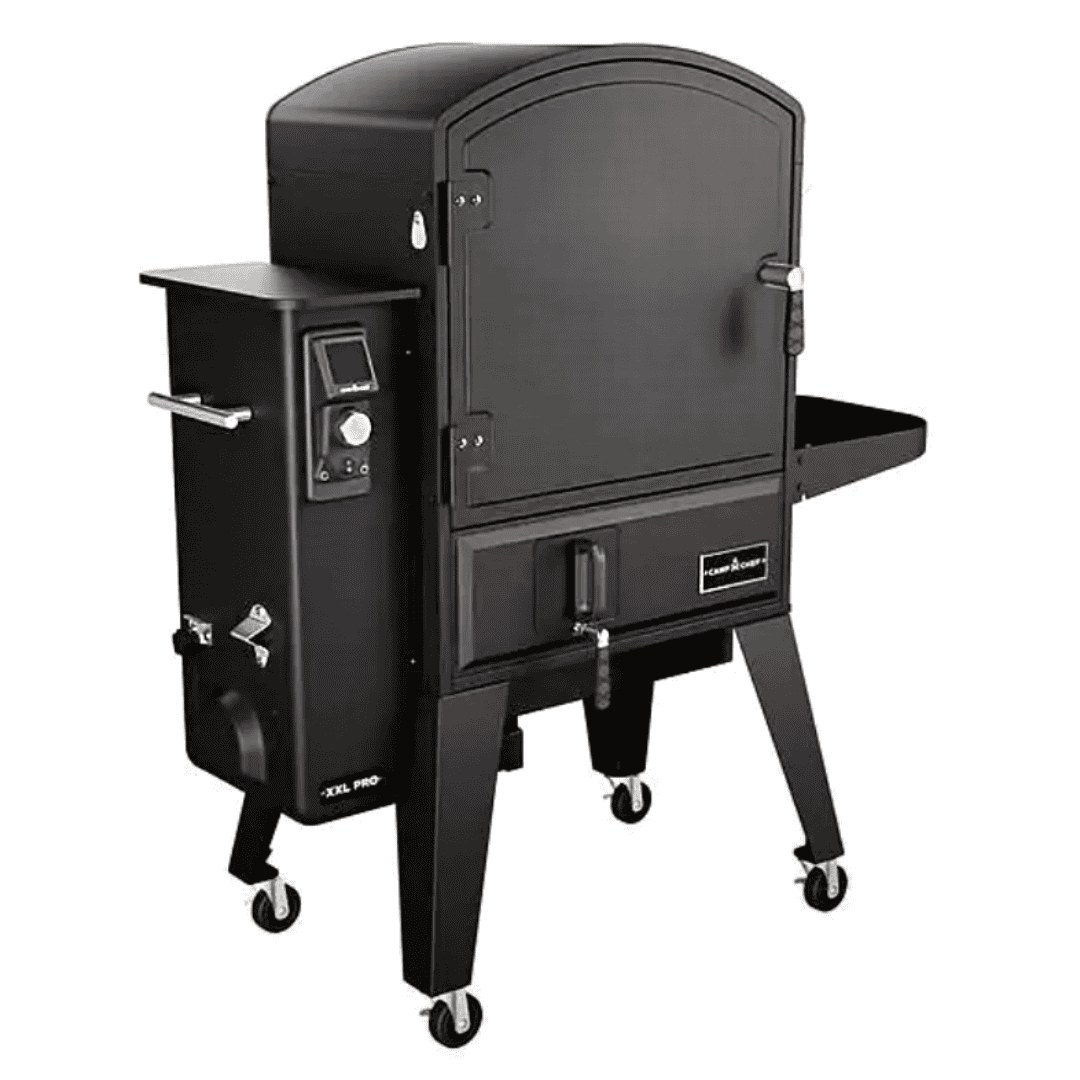
A vertical pellet smoker rather than a pellet grill: the auger feeds a burn pot at the base of a tall cabinet, heat and smoke rise through seven racks, and there is no grilling surface at all. Camp Chef's differentiator was the Smoke Box - a separate chamber that smoulders wood chunks alongside the pellet fire, which is what pellet smokers are usually criticised for lacking. 2,408 sq in, a 30 lb hopper, a WiFi PID controller with Camp Chef's 1-10 Smoke Number, and a 150-350°F range. Camp Chef have since pulled it: their vertical-pellet-smoker collection page still exists but lists nothing, and retailers from BBQGuys to CampSaver mark it discontinued.
Camp Chef
Camp Chef Woodwind 24
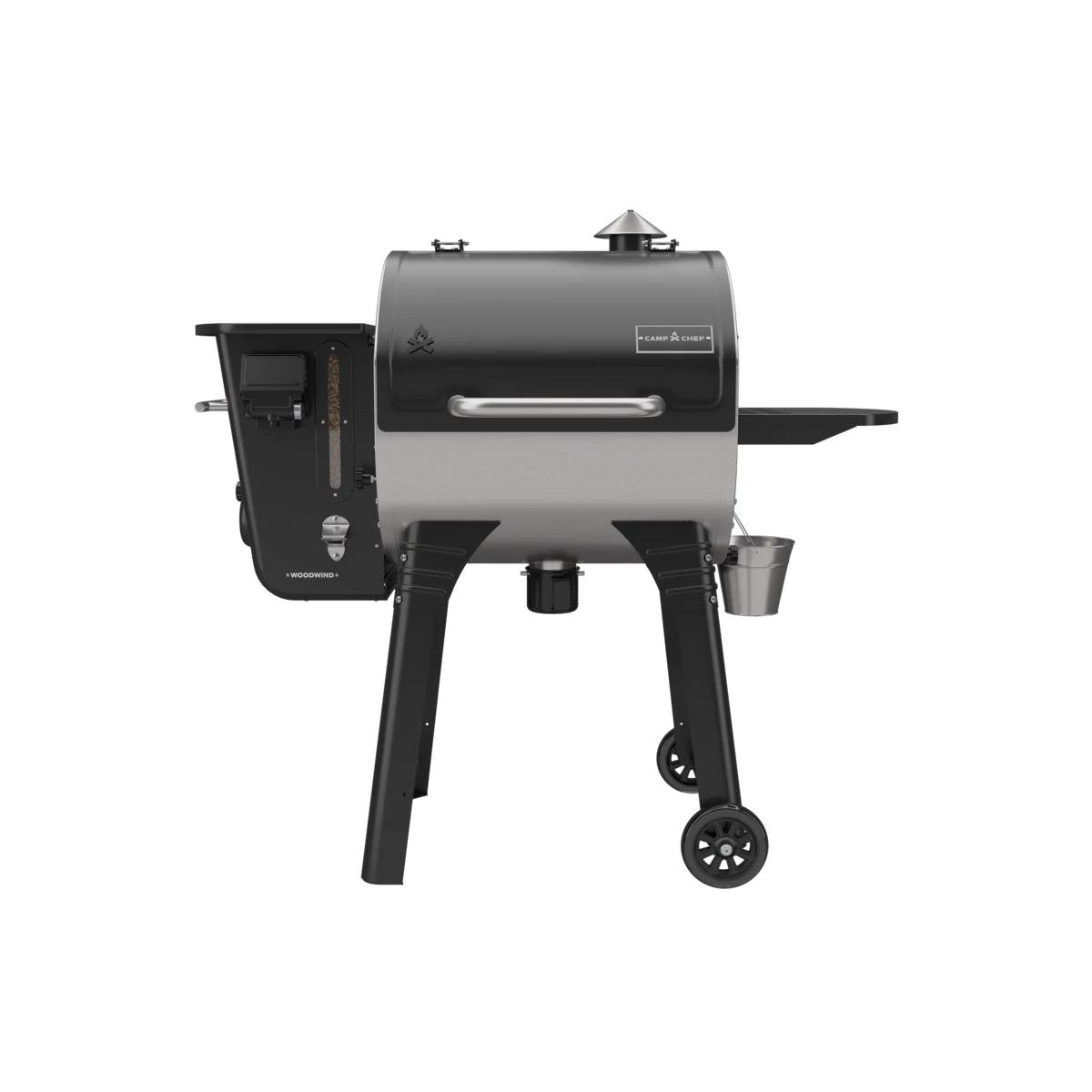
The redesigned Woodwind — black lid over a stainless body — is the only pellet grill Camp Chef currently lists on its own store. Its distinguishing feature is Slide and Grill: pull a knob and the heat diffuser slides aside, exposing the fire for direct-flame grilling at 650°F while the chamber itself runs 160–500°F. It ships with four meat probes, a full-color WiFi PID controller and a pull-knob ash cleanout into a removable cup.
Camp Chef
Camp Chef Gridiron 36
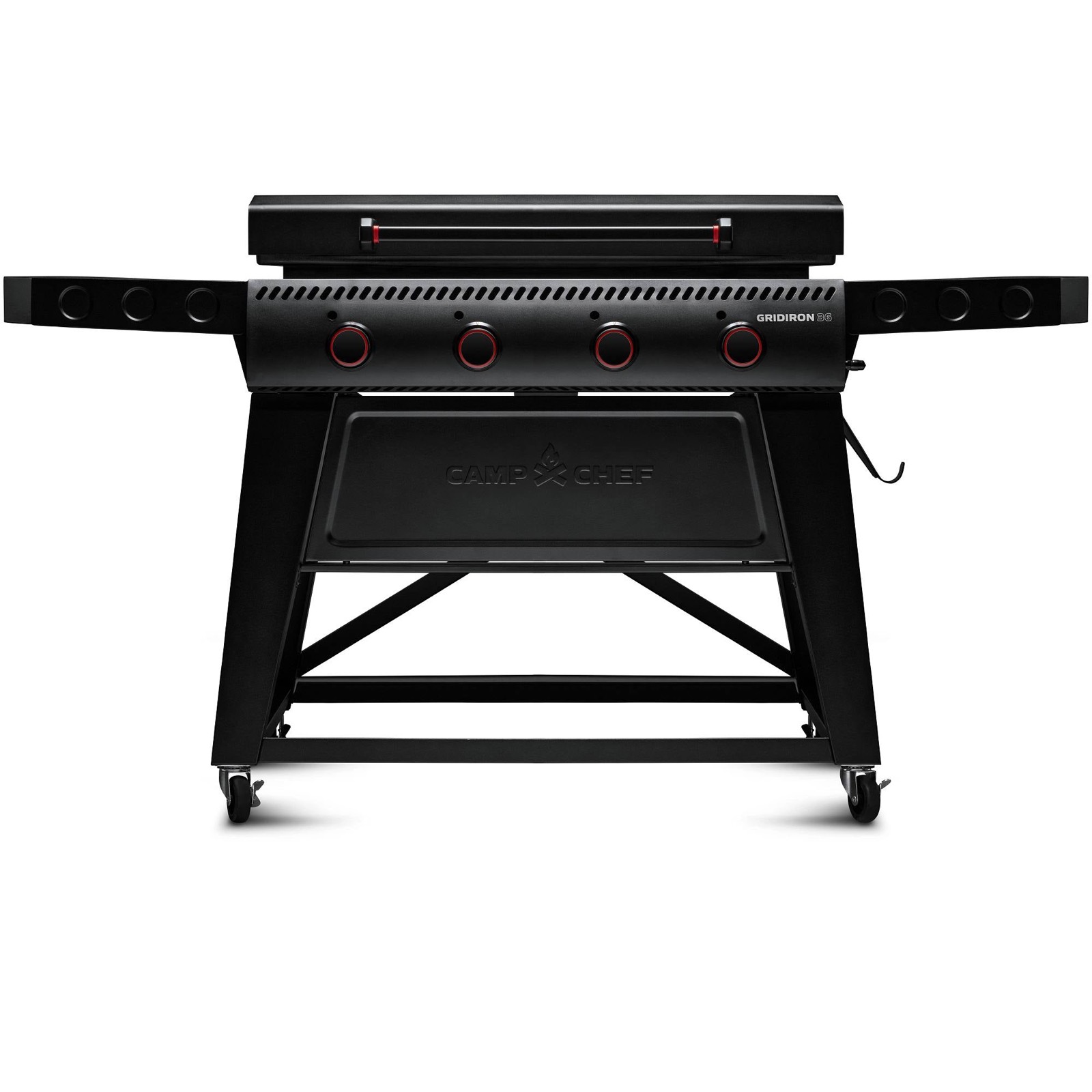
This is the griddle Camp Chef used to sell as the Flat Top Grill 600 — same 604 sq in and 48,000 BTU across four burners, renamed Gridiron 36 in the 2026 line. Camp Chef's distinguishing move is that the round grill grates lift out of the flat top, so the same unit runs as a griddle or as a conventional grate grill. Camp Chef sells it through dealers rather than direct.
Camp Chef
Camp Chef Smoke Vault 24
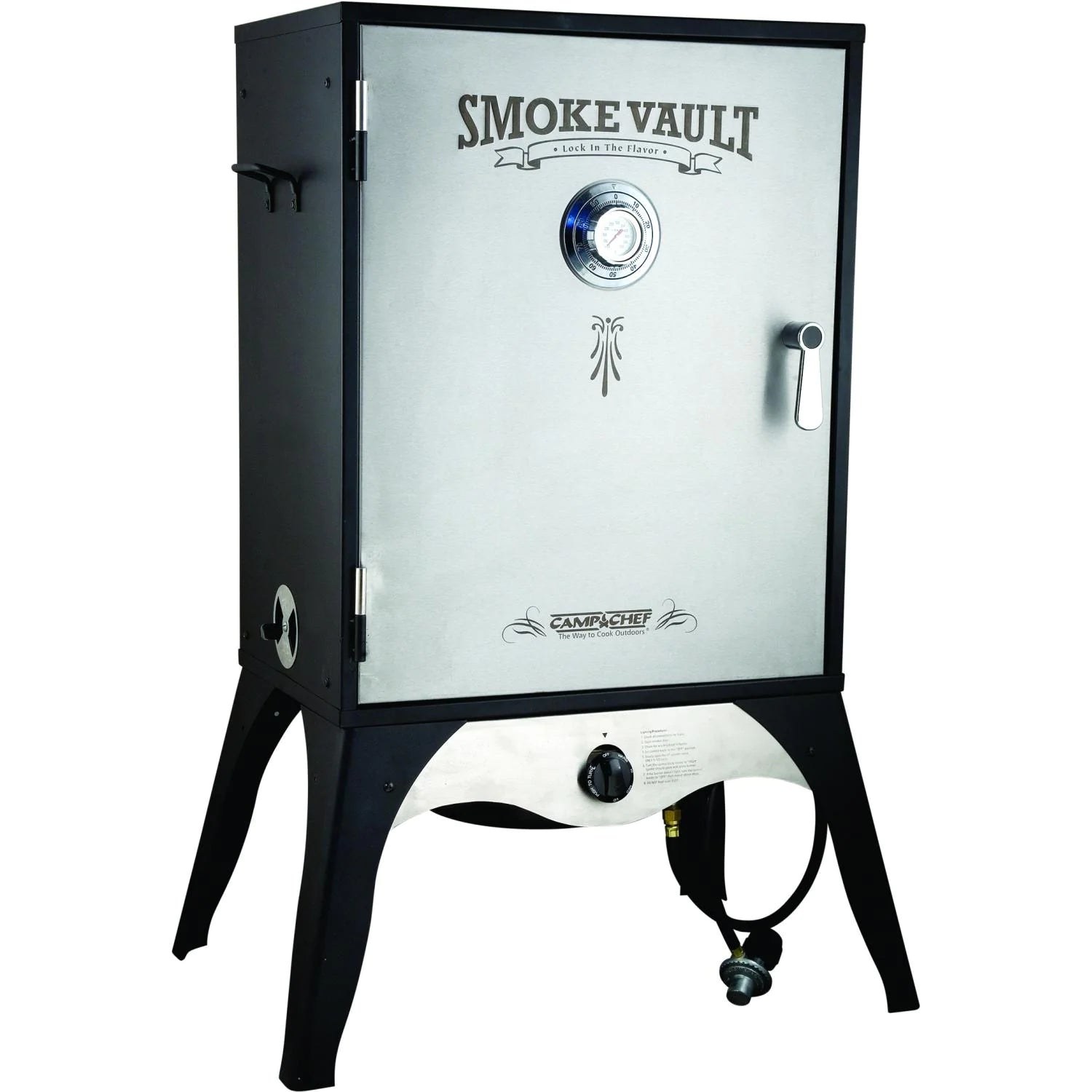
The wide version of the Smoke Vault: identical 20,000 BTU burner, dampers and 160-350°F range, but a chamber six inches wider that takes a whole turkey or two full pork butts side by side instead of front-to-back. Three cooking grids rather than the 18's two-plus-jerky. Discontinued alongside the 18 in April 2026; it is the size worth hunting for on clearance, because the extra width is the only thing that separates it from the smaller model and it was only $60 more at list.
Camp Chef
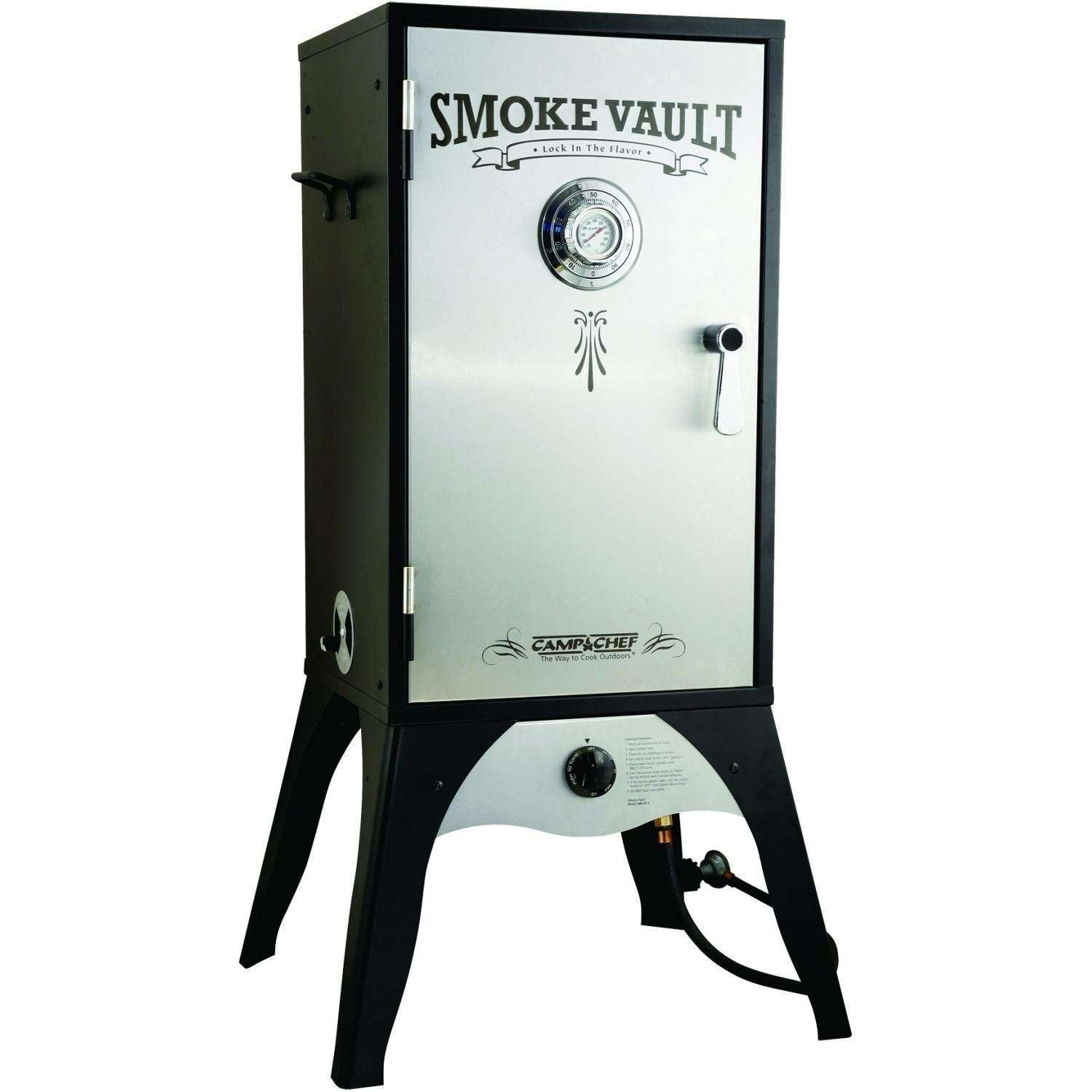
Camp Chef Smoke Vault 18
For fifteen years this was the default propane vertical: a 20,000 BTU cast-iron burner under a wood-chip tray, three damper valves, two adjustable racks and a jerky rack, and a 160-350°F range that goes low enough for sausage and high enough to bake. Camp Chef discontinued the Smoke Vault in April 2026 and it is gone from campchef.com entirely, though Sportsman's Warehouse and BBQGuys are still clearing new stock well below the $380 list price. It is listed here because it remains one of the most-owned propane cabinets in the country and the nearest thing to a reference point for anyone shopping the category.
Camp Chef
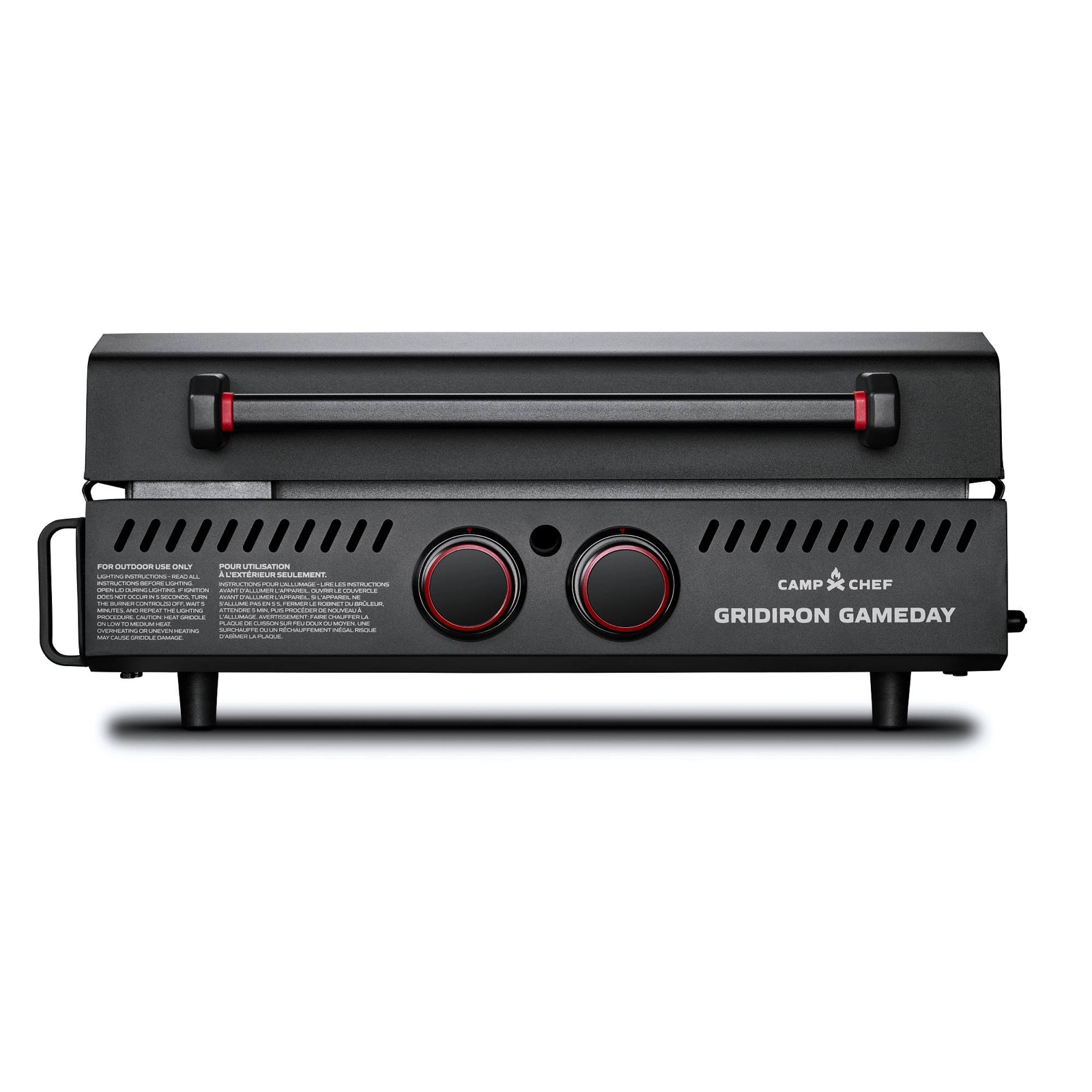
Camp Chef Gridiron Gameday
Camp Chef's tailgating griddle: 425 sq in and 24,000 BTU across two burners, with a hinged lid that locks down for transport. The pitch is that it is a real cooking system rather than a tabletop toy — enough surface to feed a group, with a grease system designed around a parking lot rather than a patio. It takes Camp Chef's 16-inch two-burner accessories.