Big Green Egg
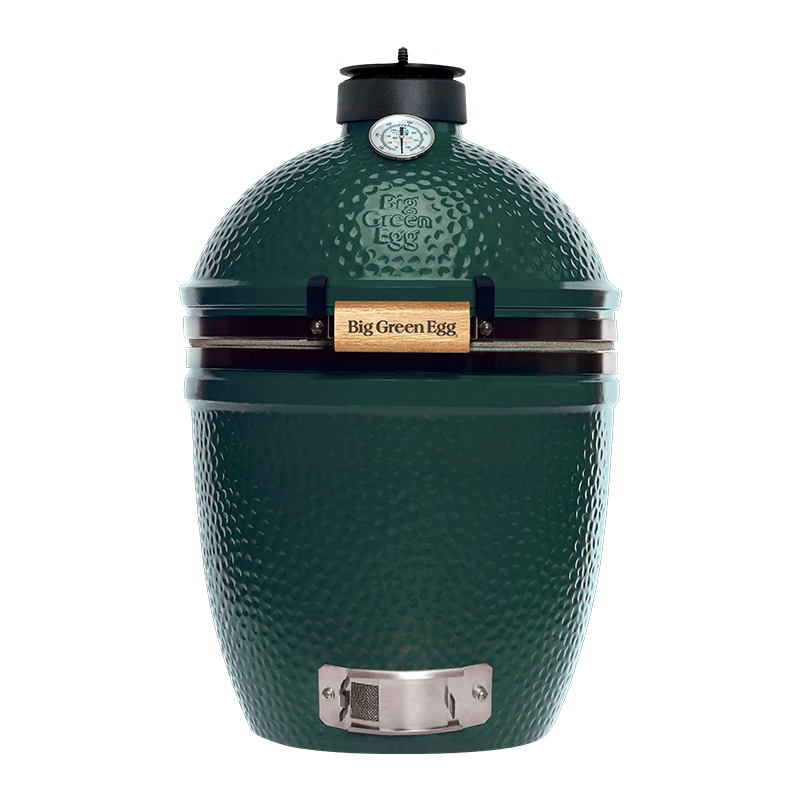
Big Green Egg Small
A 13-inch grid and 133 sq in in a tall, narrow 80 lb body. It shares its cooking area with the MiniMax but not its shape: the Small is a conventional standing Egg meant to live on a nest or in a table, where the MiniMax is a squat carry-handle model built to travel. At $699.99 it is the cheapest full-shape Egg.
Goes to the manufacturer. We earn nothing on this one.
Specifications
Features
Pros
- ✓Cheapest way into the ceramic Egg line at $699.99 direct
- ✓80 lbs is light enough for two people to place without equipment, unlike the 162 lb Large
- ✓Same limited lifetime ceramic warranty and 200-750°F range as the $2,800 2XL
- ✓Tall standing shape takes a nest or a built-in table, which the squat MiniMax does not suit
- ✓The small ceramic mass comes up to temperature noticeably faster than a Large
Cons
- ✗133 sq in is roughly three steaks or a single chicken — it does not scale to guests
- ✗Costs $150 less than the MiniMax for the same cooking area, but gives up the MiniMax's portability and carrier
- ✗Needs a nest or table, sold separately, before it is usable at working height
- ✗Narrow 13-inch grid limits indirect setups; a ceramic plate setter leaves little usable ring
Owner Insightssummarized from owner discussions
The Small is the cheapest full-shape Egg and the one people buy when a Large will not fit, or when they already own a Large and want something that does not burn a basket of lump to cook dinner for two. Owners who use one as their only cooker describe it as exactly right for a two-person household, and owners who have several Eggs describe it as the one that gets used on weeknights. It is also the Egg that turns up secondhand constantly - inherited, found on the curb, bought cracked for $50 - which is a meaningful part of its appeal, because the ceramics are effectively permanent. One owner's Small cooked for 31 years before the firebox cracked, and plenty of people run cracked fireboxes for years without much consequence.
Two things about the cooking are worth knowing before you buy. The first is that the convEGGtor fights the Small's size. Owners report that adding the cold deflector to a hot fire crashes the temperature to 200-250°F and that 350°F becomes the ceiling, which means pizza in particular is frustrating. The fix owners converge on is to stop treating the deflector as an add-on and bring the whole grill up to temperature as a single unit, slowly, with the deflector already in place - and to keep the grate holes clear of lump fines, because clogged airflow produces the same symptom. The second is capacity, which is not flexible. Two racks of ribs do not fit; owners cut them in half or stack them. A brisket needs to be folded over a brick in the center so the lid closes, and it will lie flat only once it has shrunk. What does work well is a bone-in pork shoulder cut in half, chickens, steaks, and long cooks of 7 to 12 hours on a single load if you pack the firebox properly.
It suits a balcony, a small patio, or a household of two where a permanent ceramic cooker is wanted and guests are rare. It does not scale, and owners are honest that anything beyond the main course means juggling. The comparison that matters is the MiniMax, which has the same grate size: the Small has a taller dome and a larger charcoal box, which is why it handles longer cooks better, while the MiniMax has a carrier and a quick-release stand and is the one to buy if it will travel. Owners also weigh it against the Kamado Joe Jr at roughly half the price for the same 13-inch class, and at this size specifically a number of Egg owners say to take the Joe. The caveat that should carry the most weight is parts: accessories in this size are scarce, regional lineups have dropped it, and the lifetime ceramic warranty does not follow the grill to a second owner - which is awkward for a cooker most people buy used.
What owners like
- +For two people it is the right amount of cooker, and owners who have a Large or an XL as well say the Small is what they actually reach for on weeknights - the big Egg burns a lot of lump to cook two steaks
- +It is efficient enough to be worth owning as a second cooker purely as a searing station, because running it alongside an Egg set up for indirect costs almost nothing in fuel
- +Long cooks are within reach despite the size. Owners report 7 to 12 hours on one load if the firebox is packed properly, and an 8 lb bone-in pork shoulder cut in half fits with room to spare
- +The ceramics last on a scale that makes the price argument differently. One owner's Small ran 31 years before the firebox finally cracked, and owners commonly keep cooking on cracked fireboxes for years before replacing them
- +Used ones are everywhere and cheap. Owners pick them up on marketplace sites, inherit them, and find them at the curb - a cracked one for $50 and a complete one for $300 are both real transactions owners describe
Common complaints
- −Accessories and parts are the Small's real problem. Owners report the convEGGtor, gaskets, covers and racks in this size being hard to find at local dealers, and dealers telling them the Small and Mini may be phased out. In the UK the Small was dropped from the lineup entirely, leaving MiniMax, Large and XL
- −The convEGGtor makes it struggle. Owners consistently report that dropping the deflector into a hot fire collapses the temperature to 200-250°F with about 350°F as the ceiling, which puts pizza out of reach. The fix is to bring the whole grill up to temperature as one unit with the deflector already in, ramping slowly
- −It is genuinely small. Two racks of ribs do not fit - owners cut them in half and stack them or hunt for a rack that fits a 13-inch grid. A brisket has to be folded over a brick or an inverted V-rack so the lid will close, and only flattens out once it has shrunk a couple of hours in
- −Opening the lid mid-cook on an indirect setup can drop it below 200°F, and owners report having to pull the food and relight. Clogged grate holes from lump fines are a common cause, and an aftermarket ash basket that lets you shake the fines out fixes a lot of it
- −The lifetime ceramic warranty does not transfer to a second owner, which matters because so many Smalls change hands used, and shipping replacement parts is not cheap
- −The top cap seizes shut with creosote. Owners who smoke regularly find it locked solid within a couple of burns and have to heat the Egg to free it, and several have given up and replaced the older daisy-wheel style cap with the newer one
- −It needs a nest or a table before it is usable, and owners point out it is too heavy and awkward to be genuinely portable while being too tall to use sitting on the ground - it wants a permanent home
Common Questions
Can I cook a brisket on a Small?
Why does my temperature crash when I put the convEGGtor in?
Small or MiniMax?
How hard is it to find accessories and parts in this size?
Is the lifetime warranty worth anything if I buy used?
Why is the top cap stuck?
Compare the Big Green Egg Small
Related grills
More from Big Green Egg →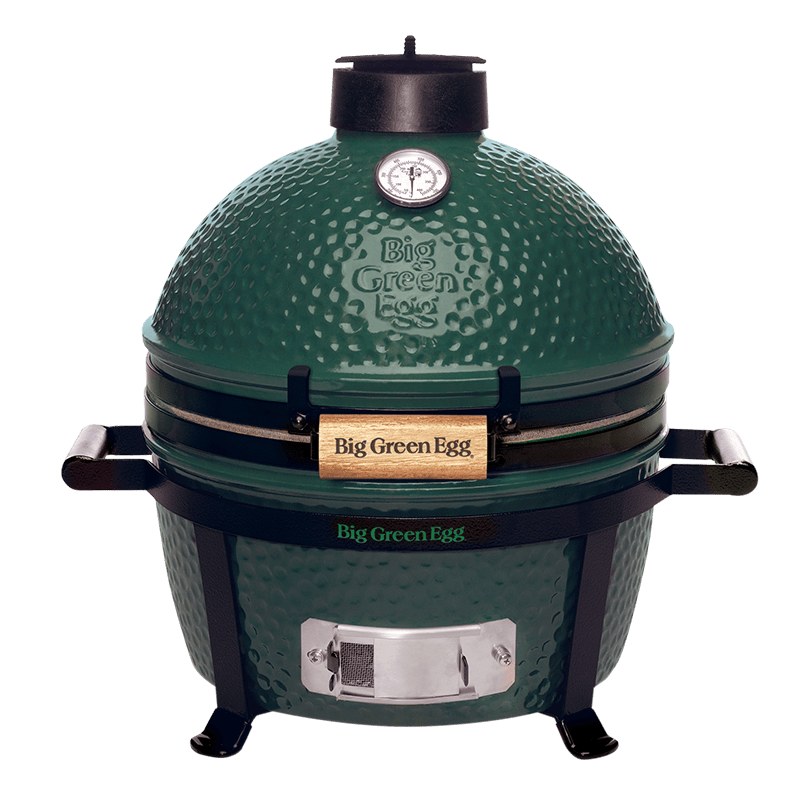
Big Green Egg
Big Green Egg MiniMax
The Big Green Egg MiniMax packs the full ceramic kamado experience into a 19.5-inch-tall tabletop cooker that ships with its own carrier. It's the Egg for balconies, tailgates, and campsites - same 750°F ceiling, a quarter of the footprint.
Big Green Egg
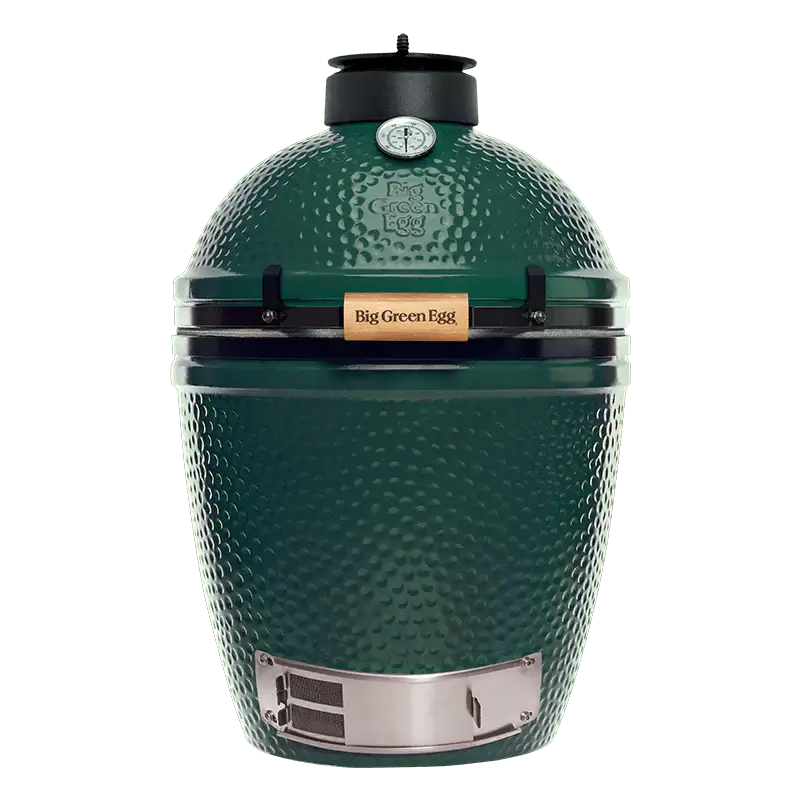
Big Green Egg Medium
The Medium sits between the Small and the Large with a 15-inch grid and 177 sq in of cooking area. Big Green Egg rates it for an 18 lb turkey, six burgers or four steaks — enough for a couple or a small family, in a body 48 lbs lighter than the Large. It is the smallest Egg that still takes the full-size ceramic accessories most owners eventually want.

Big Green Egg
Big Green Egg Large
The Big Green Egg Large is the most popular size of the iconic ceramic kamado cooker, capable of grilling, smoking, roasting, and baking. Big Green Egg is the brand that brought kamado cooking to the American mainstream.
Big Green Egg
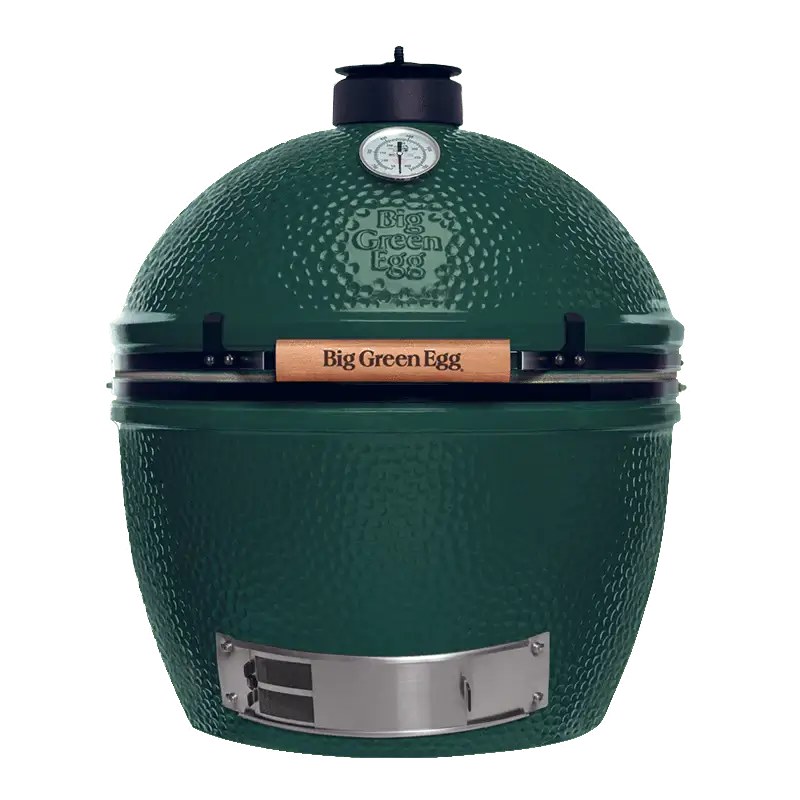
Big Green Egg XLarge
The Big Green Egg XLarge is the crowd-size version of the iconic ceramic kamado, with a 24-inch grate that swallows two packer briskets or four whole chickens side by side. Same thick ceramic and lifetime warranty as the Large - nearly double the cooking area.
Big Green Egg
Big Green Egg 2XL
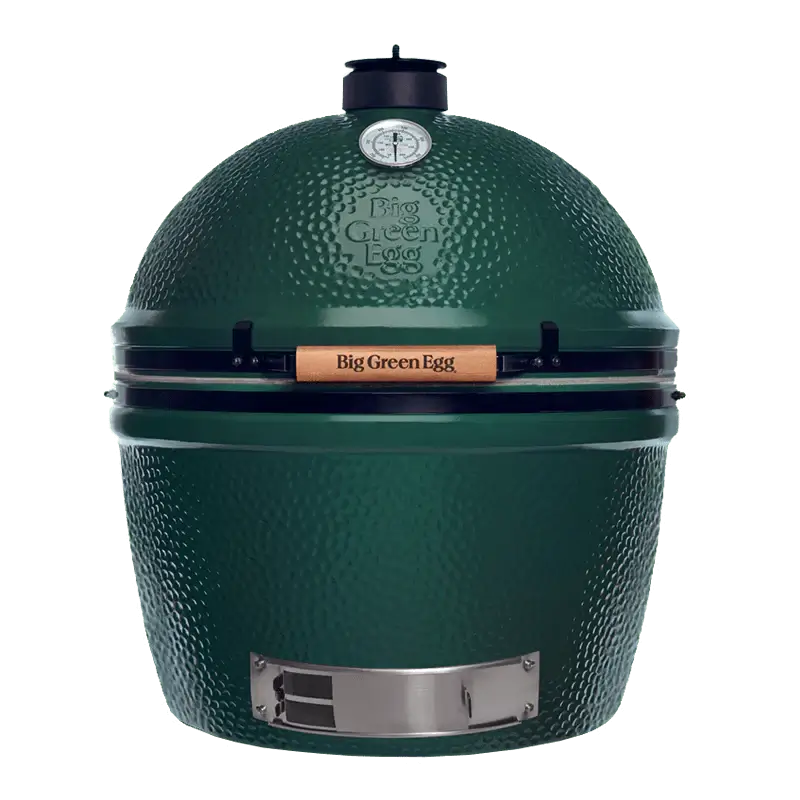
The largest Egg, with a 29-inch grid and 672 sq in of cooking area against the XLarge's 452. At 375 lbs of ceramic it is a fixed installation, not a grill that gets moved, and Big Green Egg positions it for restaurants and competition teams rather than backyards. Everything else — the ceramic body, the 200-750°F range, the lifetime warranty — matches the rest of the line.
Goldens' Cast Iron
Goldens' Cast Iron 14" Mini Cooker
Goldens' calls it the Little Brother: the same US-poured cast iron construction, integral hinge and two-tier cast iron grate system as the 20.5-inch cooker, scaled to a 14-inch cooking area and 123 lbs. It is the direct competitor to a Big Green Egg MiniMax or a Kamado Joe Joe Jr., in iron instead of ceramic and at roughly the same price.