Big Green Egg
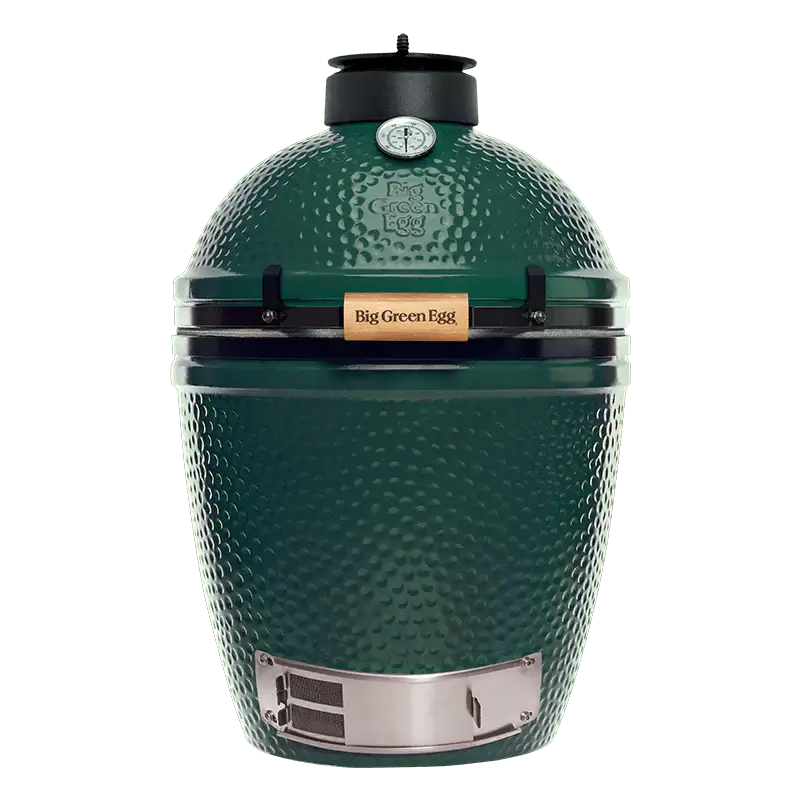
Big Green Egg Medium
The Medium sits between the Small and the Large with a 15-inch grid and 177 sq in of cooking area. Big Green Egg rates it for an 18 lb turkey, six burgers or four steaks — enough for a couple or a small family, in a body 48 lbs lighter than the Large. It is the smallest Egg that still takes the full-size ceramic accessories most owners eventually want.
Goes to the manufacturer. We earn nothing on this one.
Specifications
Features
Pros
- ✓177 sq in handles an 18 lb turkey or four steaks, which covers most weeknight and holiday cooking
- ✓$300 less than the Large and 48 lbs lighter, so it fits a small patio and a smaller budget
- ✓Same ceramic construction, 200-750°F range and limited lifetime warranty as the Large and XL
- ✓Charcoal consumption scales with body size — the Medium is meaningfully cheaper to run than a Large for two people
- ✓Big Green Egg lists it at $899.99 direct with free delivery, so no dealer markup hunting
Cons
- ✗177 sq in is a real step down from the Large's 262 — it fills up fast with a crowd
- ✗Ceramic accessory selection for the Medium is thinner than for the Large, which is the volume size
- ✗114 lbs still needs a nest or table, sold separately, before it can be used
- ✗Like every ceramic kamado it is slow to change temperature — dropping from a sear back to low takes patience
Owner Insightssummarized from owner discussions
The Medium is the Egg for households of one or two, and among owners it is treated less as a compromise than as the sensible size. It does what the Large does — the reported cooks include two large pork butts at once, pulled pork, jerk chicken, whole chicken on a vertical roaster, smash burgers on a cast iron griddle, and briskets that fit, if only just. What it also does is hold its value and survive neglect: owners regularly buy thirty-year-old Mediums that were used twice and left in a garage, and bring them back with a gasket, a thermometer and a can of paint.
The cooking experience has the same shape as any kamado, with one twist specific to this size. Low and slow is the easy part and new owners get there quickly. High heat is where the Medium's smaller thermal mass shows up: the most detailed frustration in the owner threads is pizza, where a Medium held at 450°F dropped sharply the moment the first pie went on, took ten minutes to climb back, and turned out cracker-thin results. Getting the fire right is the other early hurdle. Owners describe billowing white smoke that would not clear, fires that died the moment the vents were closed down, and a usable band stuck between 300 and 400°F — all of it fire-building rather than grill faults, but made harder by the fact that the vent-setting guides people find online are written for the Large.
It suits a couple, a small family, or anyone whose patio cannot take the Large's footprint. The accessory caveat is the one to weigh before buying: it takes the essentials, including plate setters, charcoal baskets and third-party expander rigs, but nobody makes half-moon grates for it, which rules out the split direct-and-indirect grate setup that Large owners use for reverse-searing. The capacity caveat is the other. Owners who entertain regularly tend to upgrade to an XL and keep the Medium for small cooks, which is a common and well-regarded end state rather than a sign of a bad purchase. If you are buying used — and a lot of people should be, given what these sell for — check the firebox for cracks and budget for a gasket.
What owners like
- +It cooks the same food as the Large in a smaller body, and owners push it further than the spec sheet implies. Reported cooks include two jumbo pork butts at once, a brisket that barely fit but did, jerk chicken and smash burgers on a small cast iron griddle
- +The used market for Mediums is excellent, better than for Larges, because it is the size people outgrow. Owners report paying $175 from a relative, $200 from a neighbor who had used it twice and threw in the accessories, $450 with a pizza setup and rolling nest, and $600 for a brand new one with the stand
- +These things come back from the dead. Owners routinely refurbish 14- and 30-year-old Mediums — new gasket, thermometer, draft door, wire-brushed and repainted bands and nest — for under $100 in parts, and even a firebox that arrives cracked can be run as-is or repaired with furnace cement
- +It is the right size for cooking for two without wasting fuel heating a body you are not filling, which is the practical case owners make for choosing it over the Large when there are no kids at home
- +It takes the useful accessories: the plate setter or ConvEGGtor for indirect, a charcoal basket that makes ash cleanup trivial, and third-party expander rigs and grate stackers when you want a second level
Common complaints
- −Some accessories are simply not made in this size. No manufacturer produces half-moon grill grates for the Medium, so the split direct-and-indirect setup that makes reverse-searing easy on a Large is not available, and owners have considered cutting a grate in half to improvise one
- −Capacity runs out sooner than people plan for. A brisket fits only barely, and owners who cook two or three things at once describe constantly juggling the fire against the different items rather than cooking calmly
- −Published vent settings are for the Large, and owners of the Medium report being unable to find any for their size, which makes the first few cooks more trial-and-error than they need to be
- −The learning curve catches new owners hard. One refurbished-Medium owner found his entire usable range was 300-400°F — everything closed and the fire died, everything open and it would not exceed 400 — and had to relight four times to get started at all
- −High-heat pizza is where owners struggle most. A seven-month owner who had low-and-slow figured out watched the temperature tank from 450°F when the first pizza went on, take ten minutes to crawl back to 350, and produce pizzas that took twenty minutes and came out like crackers
- −It is still 114 lbs of ceramic that needs a nest or table bought separately, and even at a closeout discount an owner walked out having paid about $940 for a display Medium with a nest and basic accessories — so the real cost to get cooking is well above the body price
Common Questions
What does a used Medium actually cost?
Can I fit a brisket on it?
Why can't I get it above 400°F?
Is it any good for pizza?
Which accessories should I avoid assuming will fit?
Compare the Big Green Egg Medium
Related grills
More from Big Green Egg →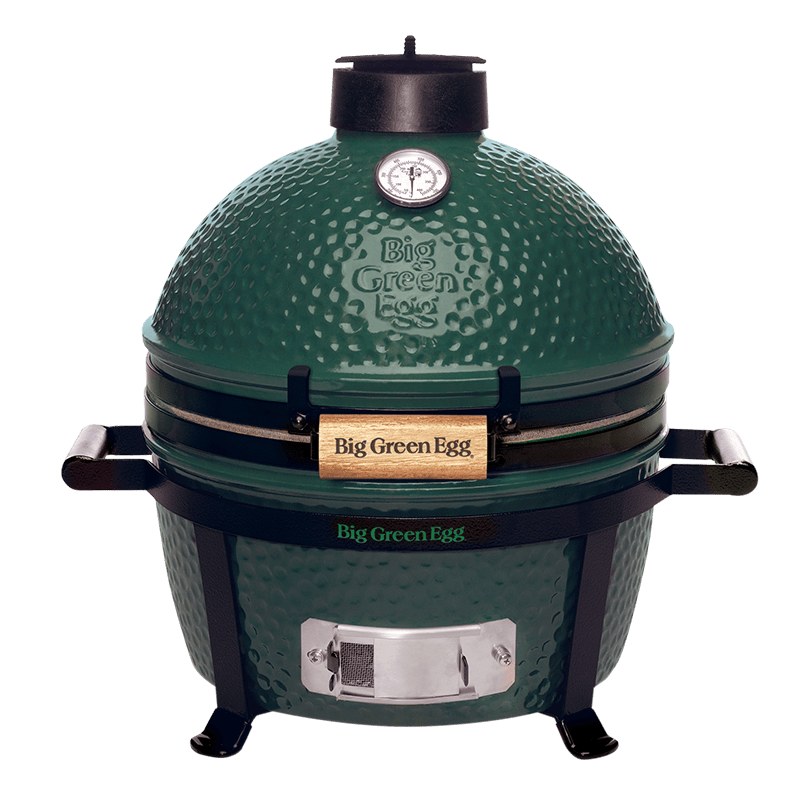
Big Green Egg
Big Green Egg MiniMax
The Big Green Egg MiniMax packs the full ceramic kamado experience into a 19.5-inch-tall tabletop cooker that ships with its own carrier. It's the Egg for balconies, tailgates, and campsites - same 750°F ceiling, a quarter of the footprint.
Big Green Egg
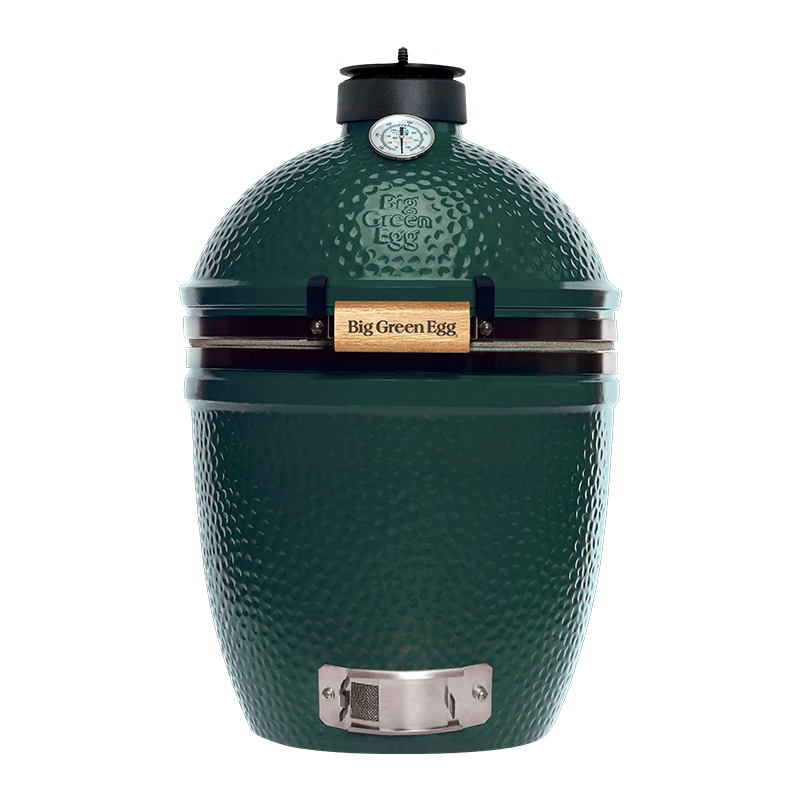
Big Green Egg Small
A 13-inch grid and 133 sq in in a tall, narrow 80 lb body. It shares its cooking area with the MiniMax but not its shape: the Small is a conventional standing Egg meant to live on a nest or in a table, where the MiniMax is a squat carry-handle model built to travel. At $699.99 it is the cheapest full-shape Egg.

Big Green Egg
Big Green Egg Large
The Big Green Egg Large is the most popular size of the iconic ceramic kamado cooker, capable of grilling, smoking, roasting, and baking. Big Green Egg is the brand that brought kamado cooking to the American mainstream.
Big Green Egg
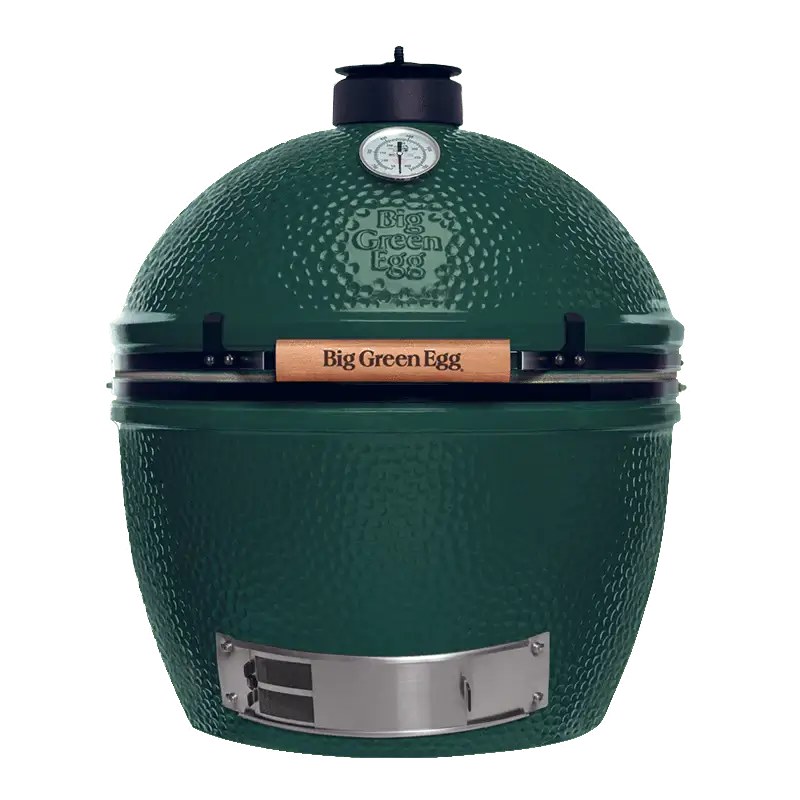
Big Green Egg XLarge
The Big Green Egg XLarge is the crowd-size version of the iconic ceramic kamado, with a 24-inch grate that swallows two packer briskets or four whole chickens side by side. Same thick ceramic and lifetime warranty as the Large - nearly double the cooking area.
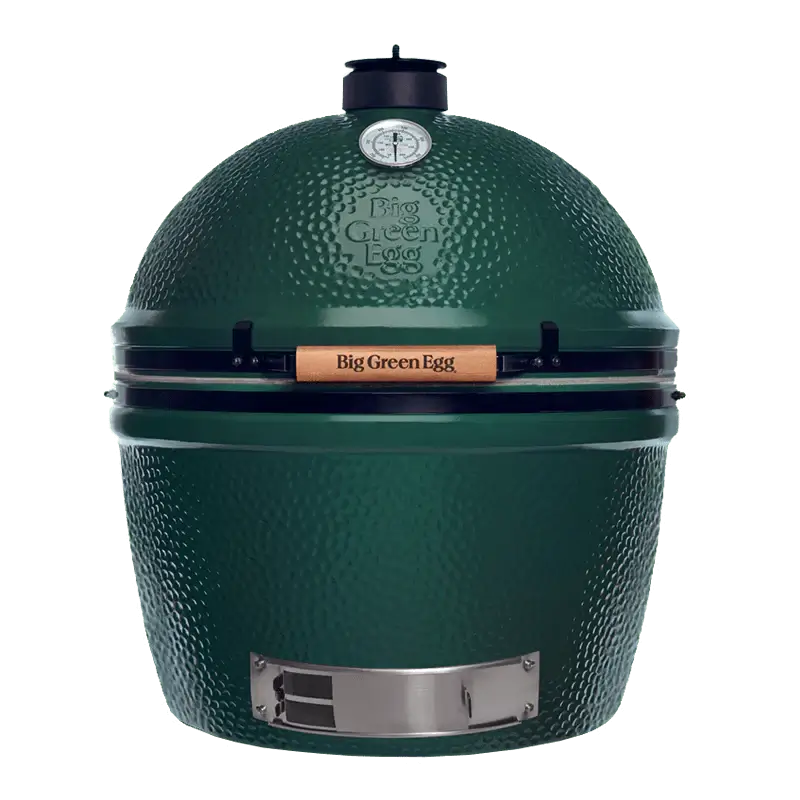
Big Green Egg
Big Green Egg 2XL
The largest Egg, with a 29-inch grid and 672 sq in of cooking area against the XLarge's 452. At 375 lbs of ceramic it is a fixed installation, not a grill that gets moved, and Big Green Egg positions it for restaurants and competition teams rather than backyards. Everything else — the ceramic body, the 200-750°F range, the lifetime warranty — matches the rest of the line.
Goldens' Cast Iron
Goldens' Cast Iron 14" Mini Cooker
Goldens' calls it the Little Brother: the same US-poured cast iron construction, integral hinge and two-tier cast iron grate system as the 20.5-inch cooker, scaled to a 14-inch cooking area and 123 lbs. It is the direct competitor to a Big Green Egg MiniMax or a Kamado Joe Joe Jr., in iron instead of ceramic and at roughly the same price.