Traeger Pro 575 vs Traeger Flatrock 3 Zone Griddle

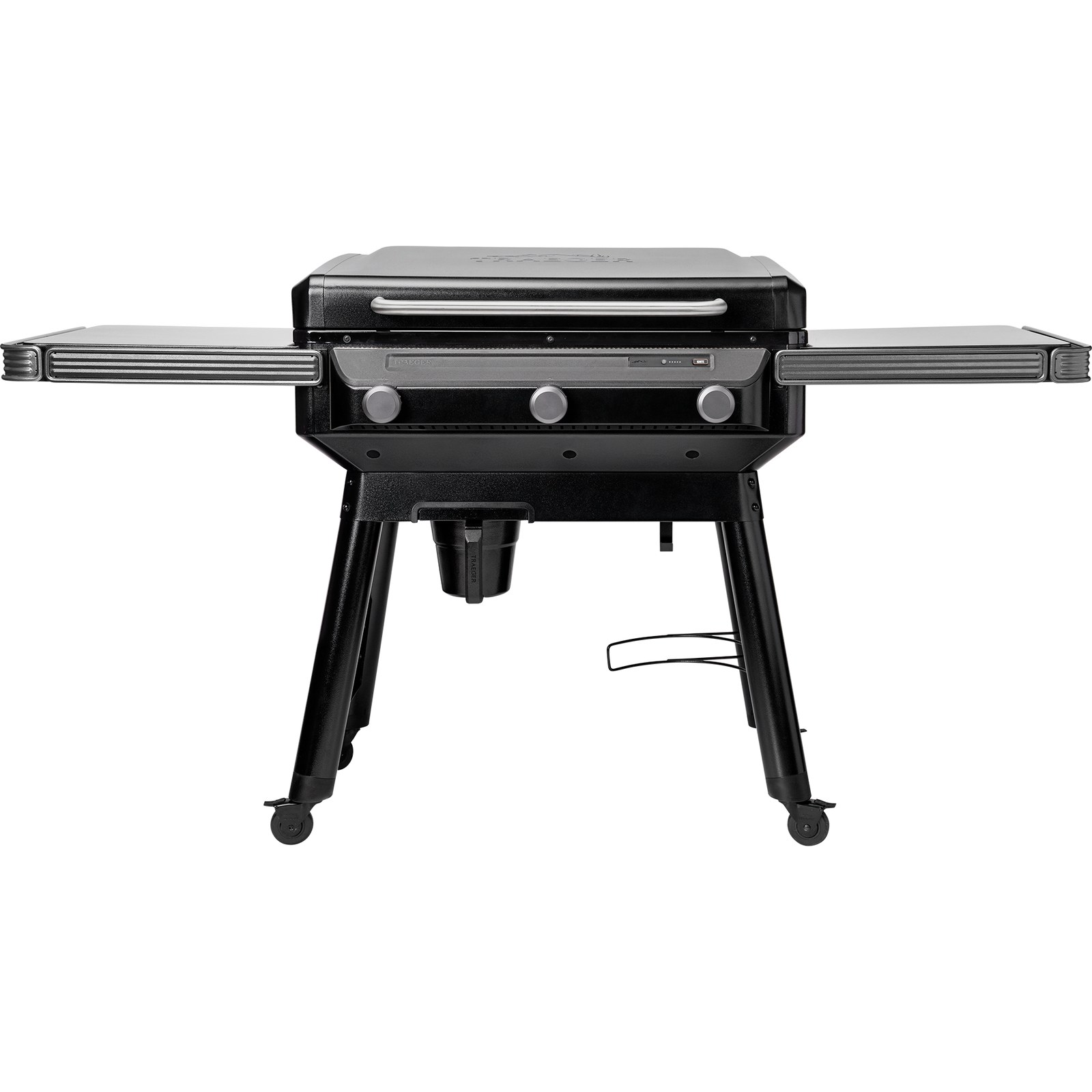
Quick take: The Traeger Pro 575 costs $199 less; the Traeger Flatrock 3 Zone Griddle offers more cooking space (594 vs 575 sq in); the Traeger Flatrock 3 Zone Griddle reaches a higher max temp (600 vs 500°F).
| Spec | Traeger Pro 575 | Traeger Flatrock 3 Zone Griddle |
|---|---|---|
| Price | ~$800 | ~$999 |
| Rating | 4.6★ (1,214) | — |
| Type | Pellet Grill | Griddle |
| Cooking Area | 575 sq in | 594 sq in |
| Max Temp | 500°F | 600°F |
| Fuel Type | Wood Pellets | Propane/Natural Gas |
| Build Material | Powder-Coated Steel | Cold-Rolled Steel |
| Hopper Capacity | 18 lb | — |
| Burners | — | 3 |
| WiFi / App | Yes | No |
| App control | Yes | No |
| Meat probe | Yes | No |
| PID controller | Yes | No |
| Side burner | No | No |
| Rotisserie | No | No |
| Searing | No | No |
| Dimensions | 41 x 27 x 53 in | 33 x 18 in cooktop |
| Weight | 128 lbs | 189 lbs |
| Warranty | 3 years | 5 years |
Pros & cons
Traeger Pro 575
- ✓It's the most accessible entry into the Traeger ecosystem and frequently goes on sale at Home Depot for $400-$560, making it a great value buy
- ✓The D2 controller and single meat probe make hands-off ribs and chicken genuinely easy for a complete beginner
- ✓WiFIRE app control means you can start, monitor, and shut down the grill from the couch or the store
- ✓575 sq in fits about five racks of ribs or four chickens - enough for most families without being huge
- ✓Quick 15-minute startup and reliable auto-ignition get you cooking fast on weeknights
- ✓It's lightweight at 128 lbs with all-terrain wheels, so one person can reposition it on the patio
- ✓Smoke flavor at the 180-225°F range is solid for a budget pellet grill, especially with the optional smoke setting
- ✓Parts and accessories are everywhere and the huge owner community means troubleshooting any issue is a quick search away
- ✗Single-wall construction means it struggles to hold temp in cold or windy weather and burns through pellets fast in winter
- ✗It tops out around 450-500°F and has no real sear zone, so steaks come out grilled rather than seared
- ✗The same WiFi drop-off issues as the rest of the lineup plague it - the connection is flaky and the app loses the grill mid-cook
- ✗Only one meat probe is included, which is limiting when you're cooking multiple proteins at once
- ✗Temperature can swing 25-30°F around the set point, more than premium PID grills, so it's less precise for delicate cooks
- ✗The powder-coated steel body and grease management feel cheap, and the bucket-style grease catch is messy to empty
- ✗No pellet-level sensor, so you have to manually check the hopper to avoid running dry on long cooks
- ✗Owners report auger and hot-rod failures after a couple seasons, and the 3-year warranty is shorter than budget rivals offer
Traeger Flatrock 3 Zone Griddle
- ✓Physically insulated zone dividers hold a real temperature difference across the plate, not just a gradient
- ✓Five-year warranty against Blackstone's one, on a griddle at a comparable-to-premium price
- ✓FlameLock wind blocking addresses the most common cause of a griddle failing to hold heat
- ✓Published 350–600°F range, where most griddle makers publish nothing at all
- ✓Pop-and-Lock accessory rail shares Traeger's existing accessory ecosystem
- ✗$999 for 594 sq in, against 768 sq in on a $549 Blackstone Iron Forged 36
- ✗189 lbs is the heaviest griddle in this class by a wide margin
- ✗350°F low end is high — it will not hold food at a gentle warm the way a four-zone griddle set to minimum can
- ✗Cold-rolled steel plate, so the rust maintenance is the same as any Blackstone despite the price
- ✗No hood in the base configuration, which limits melting and steaming
Similar grills

Weber
Weber Smoque
The Smoque is Weber's 2025 answer to the entry-level Traeger, and it deliberately does less than the Searwood to cost $300 less: no direct-flame searing, no 600F mode, just a smoker-first pellet grill that nails the fundamentals. Reviewers and early owners consistently rate its smoke flavor ahead of equivalently priced Traegers - the SmokeBoost setting and SmoqueVent circulation produce visibly better smoke rings and bark - and the Rapid React PID recovers temp fast after lid opens. The porcelain-enameled barrel (the same coating Weber kettles wear for decades) and 5-year warranty make the hardware feel more durable than the sheet-metal norm at this price, and the enclosed grease-plus-ash drawer is genuinely tidy. Trade-offs are real: 500F max with no sear zone means steaks finish better on a separate grill, 594 sq in is one-brisket territory, the single-position upper rack limits tall cooks, and Weber Connect - though improved - still draws occasional app-pairing complaints carried over from the SmokeFire era. Against the $799 Traeger Woodridge you're choosing more smoke flavor and simpler controls over Traeger's bigger 860 sq in and accessory ecosystem.
Brisk It
Brisk It Origin 580
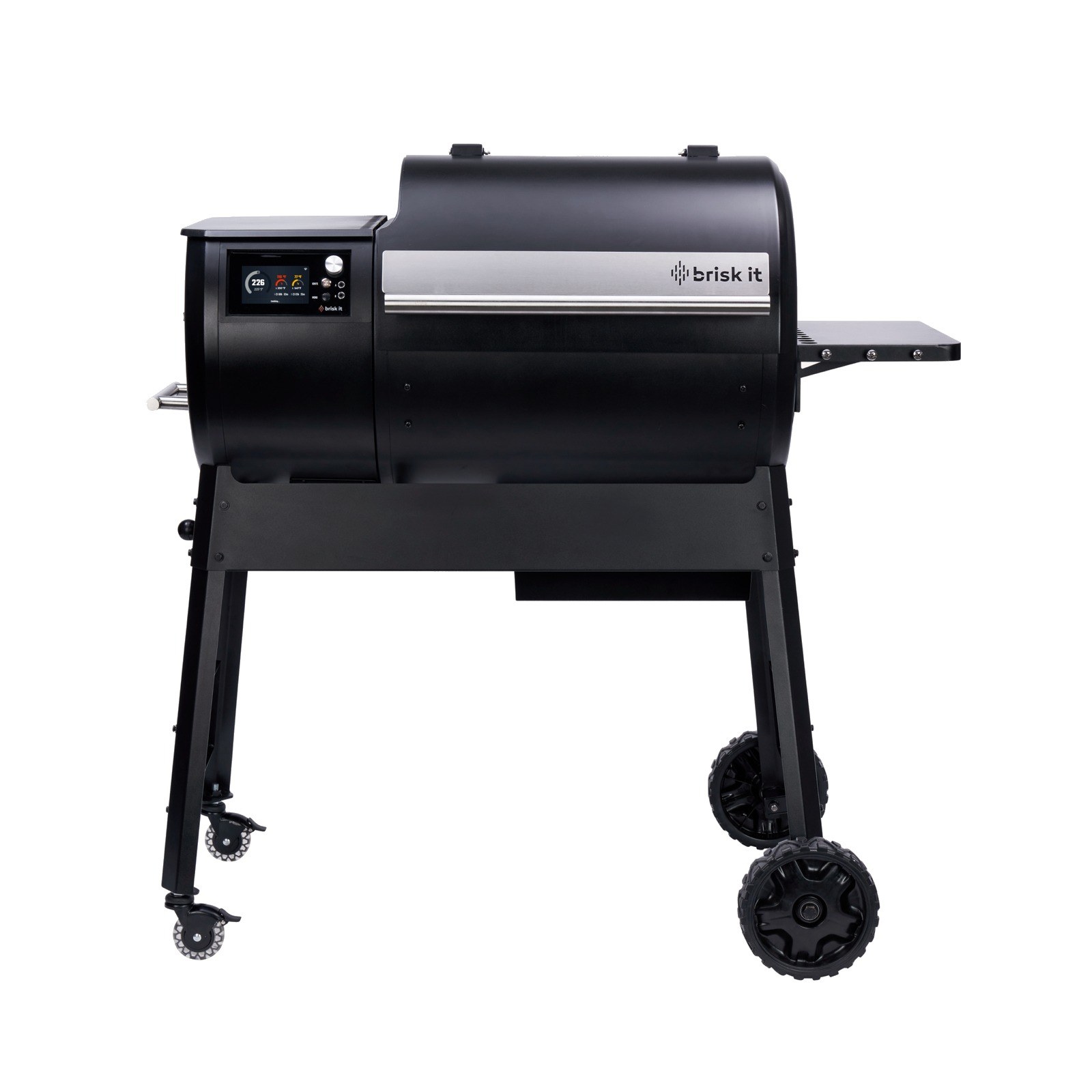
The Origin 580 is Brisk It's full-size cart pellet grill and the model its AI pitch is really built around: 580 sq in across two racks, a 22 lb hopper and a predictive PID controller driven by the same Vera generative-AI software as the Zelos. Where the Zelos is a tabletop-scale starter, the Origin is sized against a Traeger Pro or Weber Searwood. It is sold out on Brisk It's own store but stocked at Costco, Lowe's and Walmart.
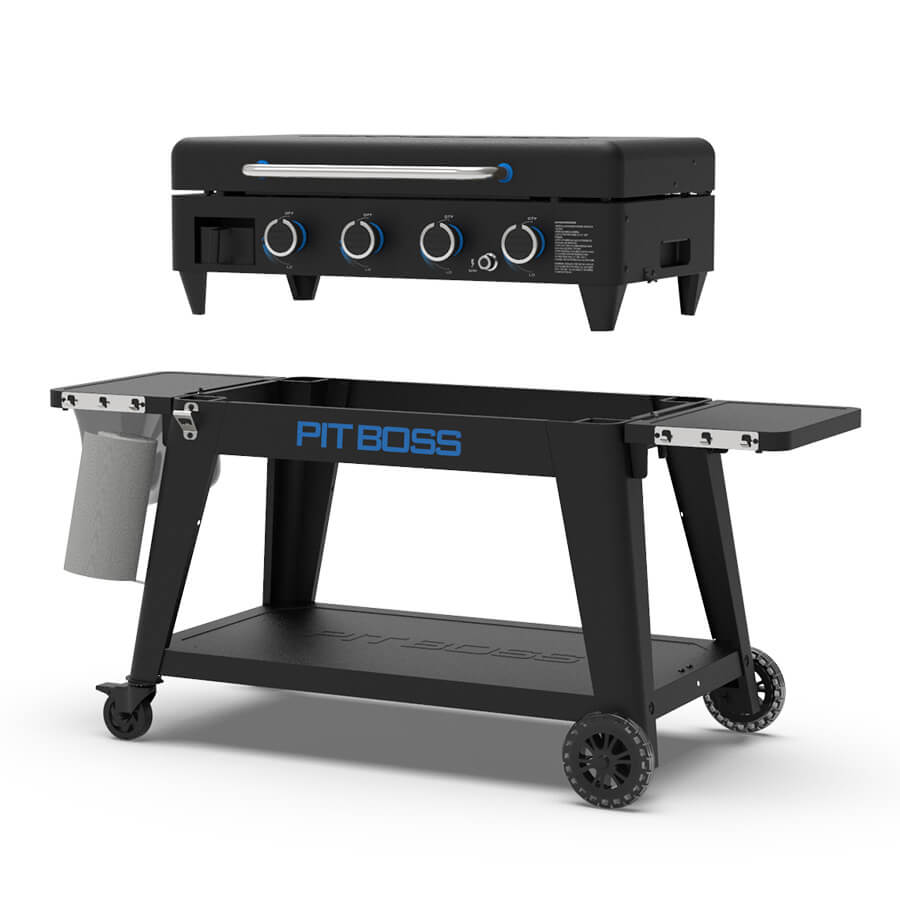
Pit Boss's answer to the two things people dislike about griddles. First, the cooktop is coated in a non-stick armored ceramic that ships ready to cook and resists rust, so there is no seasoning ritual. Second, the 89 lb top lifts off the cart entirely and becomes a tabletop griddle for a campsite. 647 sq in and 46,000 BTU across four burners.