
PK Grills
PK Grills PK360
The PK Grills PK360 is a cast-aluminum charcoal grill and smoker with a capsule-shaped body and 4-vent airflow control for precise two-zone cooking. PK Grills makes rustproof, heirloom-quality American charcoal cookers.
We may earn a commission. Price and availability on Amazon may differ.
Specifications
Features
Pros
- ✓The thick cast-aluminum capsule is rustproof and basically indestructible - these grills are heirloom pieces that get passed down
- ✓The four-vent design gives unusually precise airflow and temperature control, making both hot searing and low-and-slow smoking easy
- ✓The capsule shape creates a natural two-zone setup, so you can sear over direct heat and smoke on the cool side simultaneously
- ✓Cast aluminum heats evenly and retains heat well while staying cooler to the touch on the outside than steel
- ✓It excels at both grilling and smoking, making it a true do-it-all charcoal cooker in a compact footprint
- ✓360 sq in is nearly 40% more cooking area than a Large Big Green Egg, useful for the price and size
- ✓It's relatively light at 90 lbs for its capability, and the capsule lifts off the stand for tailgating or transport
- ✓Marine-grade stainless grates and a passionate owner community give it a premium, well-supported feel
Cons
- ✗At ~$800 it's expensive for a charcoal grill, costing far more than a Weber kettle of similar size
- ✗360 sq in is on the smaller side, so big-crowd cooks require batching
- ✗Cast aluminum doesn't retain heat as massively as a ceramic kamado, so very long overnight smokes need more fuel tending
- ✗It has no thermometer built into the lid on the base model, so you supply your own probe
- ✗The narrow capsule shape can make fitting large items like a full packer brisket a tight squeeze
- ✗Charcoal management and the usual lighting/ash cleanup apply, with the inherent learning curve
- ✗It's a niche brand without big-box presence, so most buyers order online sight-unseen
- ✗The open-cart design offers no enclosed storage and limited prep shelf space
Owner Insightssummarized from owner discussions
The PK360 is a cast-aluminum charcoal cooker with a capsule-shaped body and four vents, and the owners who have one tend to be devoted to it rather than merely satisfied. It is one of the few charcoal grills people genuinely use for both jobs: the threads are full of six-hour pork bellies and twelve-hour snake-method cooks alongside reverse-seared tomahawks finished at ninety seconds a side. Chicken is its signature dish and the thing owners post about most, usually thighs or legs run at 225°F over hardwood with apple and cherry chunks. Owners also buy more than one. It is common to find someone who started with a 300, added the 360, then picked up the portable, and someone who inherited his father's.
The honest problem is ash. It empties through a hole in the bottom that a bucket is supposed to hang under, and owners say the bucket misses a fair share of what falls. People coming from a Weber kettle with its ash sweep find it cumbersome, and this is not a minor grumble: shoppers comparing it against a Weber Performer or an SNS kettle repeatedly pick the other grill purely on ash handling. Worse, ash that builds up blocks the intake vents and the grill stops reaching temperature, which is far and away the most common problem thread about it. The fix is habit rather than repair: burn lump instead of briquettes, whose sediment clogs the vents fastest, keep both exhausts open, and move the coal basket now and then to shift ash off the intakes. Owners also say not to trust the lid thermometer and to cook on a probe at grate level instead. Long cooks are workable but not hands-off; one owner running an 8.5 lb shoulder held 225-250°F for 8.5 hours with three charcoal additions, and others describe needing to tend it throughout.
It suits someone who wants one well-made charcoal cooker for a household of two to four and who enjoys the tending rather than resenting it. Against a Weber kettle it is a better-built, more controllable grill and a worse one to clean. Against a Weber Summit Kamado it gives up capacity and heat retention but comes up to temperature much faster. The real caveat is size and workload combined: a full packer brisket has to be cut into point and flat to fit, and owners who want to smoke regularly without babysitting often keep the PK for grilling and buy a separate smoker rather than asking it to do everything.
What owners like
- +It genuinely does both jobs: owners run it at 225°F for six to twelve hour cooks and then open it up to sear a reverse-seared steak at ninety seconds a side, on the same fire
- +It comes up to heat fast, which owners who also own kamados notice immediately and cite as the reason they keep coming back to the PK for weeknight cooking
- +Chicken is what owners post about most and what they rate it highest for: thighs and legs at 225°F with a couple of fruitwood chunks is the dish the grill has a reputation for
- +The four-vent layout, two intakes and two exhausts, gives fine enough control that owners hold 225-250°F through an eight-hour pork shoulder with only three charcoal additions
- +These last long enough to be handed down; at least one owner in the long-term threads inherited his father's, and PK owners tend to end up with two or three of the company's grills rather than switching brands
- +The capsule shape and side table make two-zone cooking natural, with a genuinely usable indirect side rather than a cramped edge
Common complaints
- −Ash cleanup is the defining complaint and it costs the grill sales. It empties through a hole in the bottom that you are meant to hang a bucket under, and owners report the bucket misses a good share of it. People used to a Weber kettle's ash sweep call it cumbersome, and shoppers regularly choose something else specifically to avoid it
- −Ash that is not cleared blocks the intake vents and the grill then will not reach temperature. This is the single most common troubleshooting thread about it, and the fixes are maintenance habits: burn lump rather than briquettes, whose sediment clogs the vents fastest, and shift the coal basket periodically to move ash away from the intakes
- −The built-in thermometer is not trusted by experienced owners, who advise cooking on a separate probe at grate level
- −Long smokes need tending. Owners describe having to watch it the whole cook, and some who use it happily for grilling buy a second, dedicated smoker because low-and-slow on the PK is more work than they want
- −Capacity is tight for big cooks. A full packer brisket does not fit, and owners separate the point from the flat to get it on; anyone planning to cook for a crowd regularly finds it small
Common Questions
How do you actually clean the ash out?
Why won't my PK360 get hot enough?
Can you really smoke on it, or is it mainly a grill?
Will a whole brisket fit?
PK360 or a Weber kettle?
Compare the PK Grills PK360
Related grills
More from PK Grills →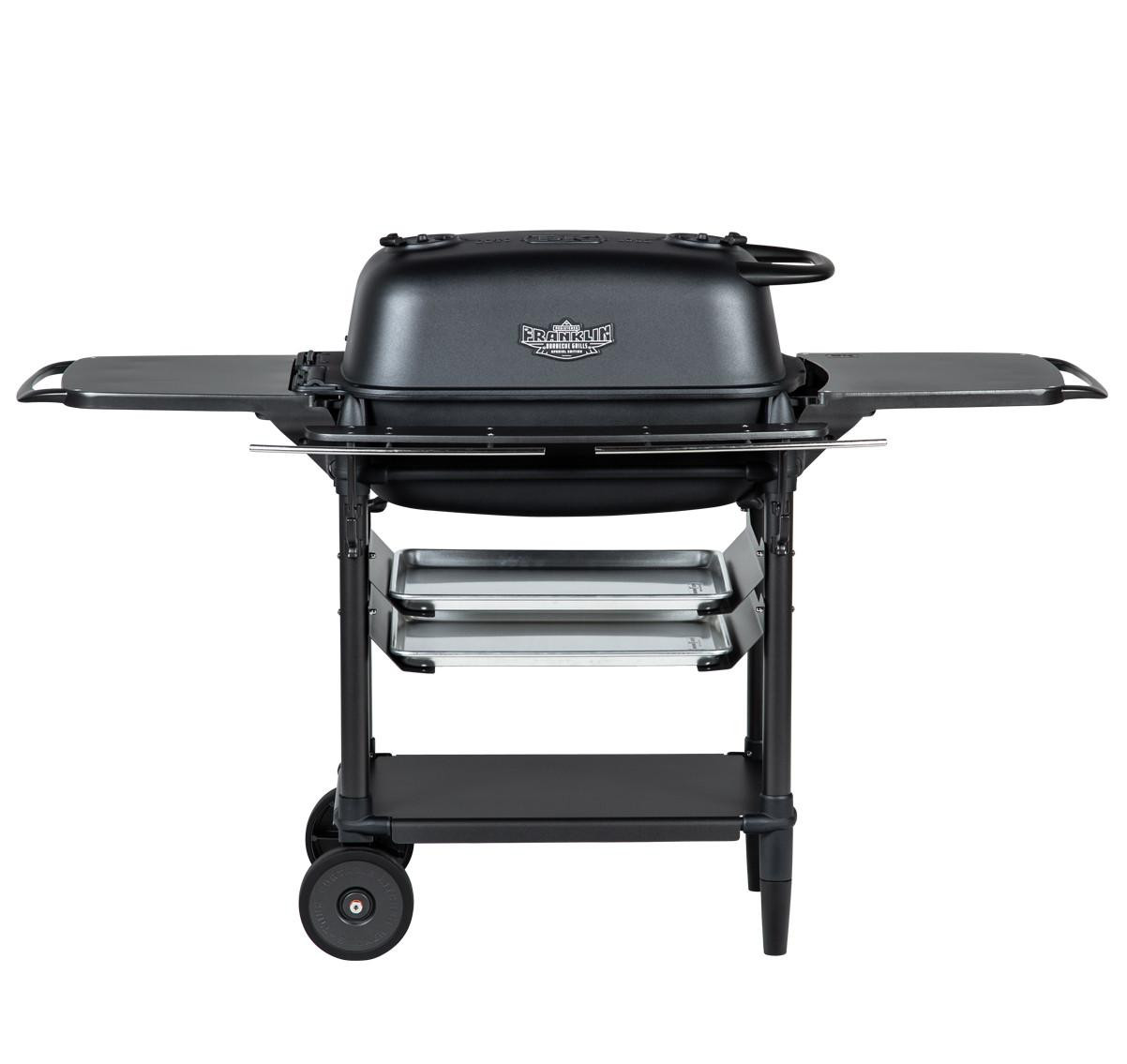
PK Grills
PK Grills PK300AF Franklin Edition
PK's collaboration with Aaron Franklin, sitting $100 above the standard PK300. Same rust-proof cast-aluminum capsule and four-vent layout, but with a redesigned lid seal, cast-aluminum wheels with rubber tires, two folding cast-aluminum shelves that lock the capsule to the cart, and an all-aluminum cart instead of the PK300's. It is the PK300 with the parts most owners complain about upgraded.
PK Grills
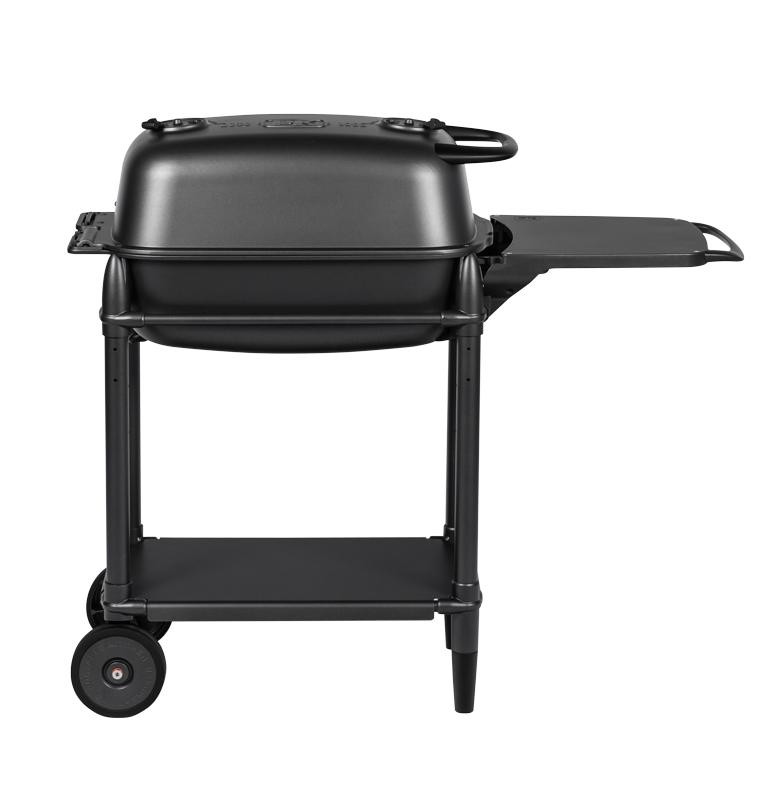
PK Grills PK300
The PK300 is the modern version of the capsule-shaped cast aluminum grill PK has built since 1952, sitting below the PK360 already in the catalog. Cast aluminum conducts heat several times faster than steel and cannot rust, which is why 60-year-old PKs still turn up working. The four-point venting system — a damper at each corner of the capsule — is what makes its two-zone cooking unusually controllable for a grill with no fan or controller.
PK Grills
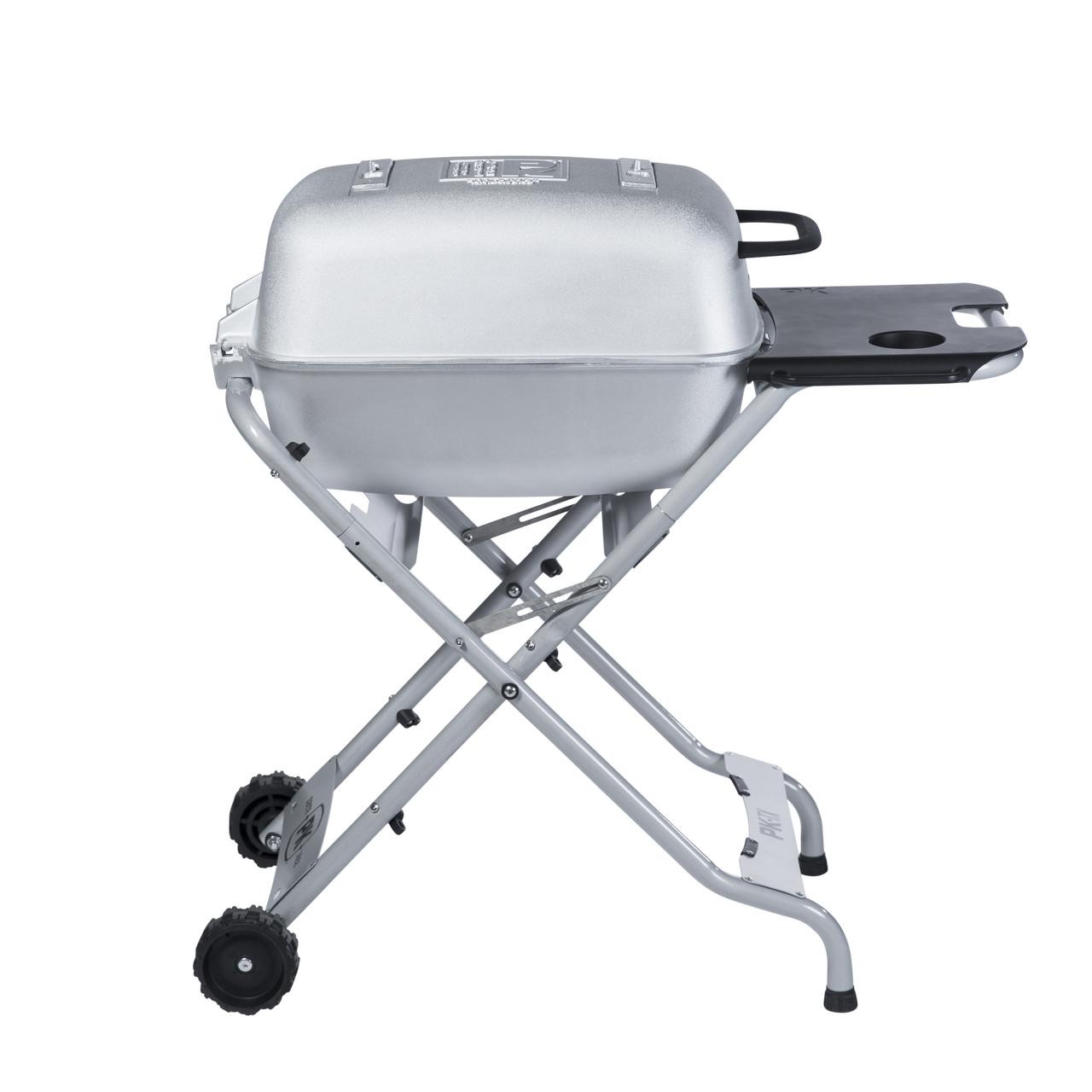
PK Grills PKTX Grill & Smoker
The original 1950s PK capsule, still in production, on a knock-down aluminum cart with stainless hardware. PK calls it 'King of the Tailgate' because the capsule lifts off and the cart disassembles without tools, so the whole grill goes in a trunk. The PK300 and PK300AF use a newer, redesigned capsule; the PKTX is the classic one, sold in classic silver.
PK Grills
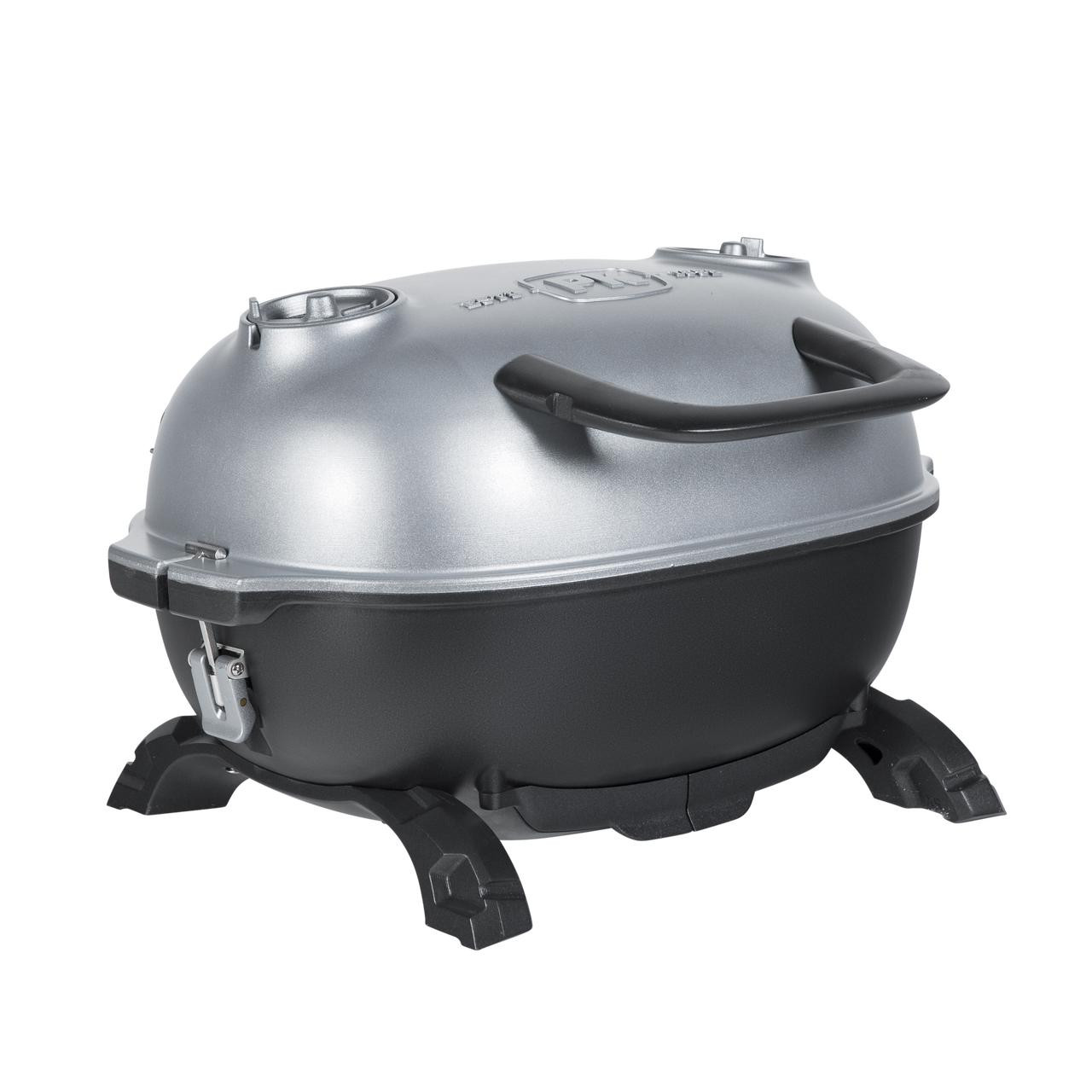
PK Grills PKGO with FlipKit
PK's portable: a cast-aluminum clamshell on a molded cradle with cast iron cooking surfaces, 204 sq in, 39.5 lbs. The FlipKit is the second grate and charcoal grate that lets it be run as a covered grill or flipped open as a double-sided hibachi. It carries the same 20-year warranty as the full-size PKs, which is unusual for a portable.

Masterbuilt
Masterbuilt Gravity Series 800
The Masterbuilt Gravity Series 800 is a digital, app-controlled charcoal grill, griddle, and smoker that uses a gravity-fed charcoal hopper and a fan-driven digital controller to automate charcoal cooking. It blends real charcoal flavor with set-and-forget convenience.
The smallest Arteflame: a 20-inch round CORTEN steel cooktop with an open centre grate over the fire and a flat plancha surface ringing it. You sear over the centre at 1,000°F-plus, then move the meat outward onto the griddle ring to finish, where the temperature falls off with distance from the fire. It is the same one-piece weathering-steel construction and the same cooking geometry as the Classic 40 the catalog already carries, at roughly a third of the price and a quarter of the footprint.