PK Grills
PK Grills PK300
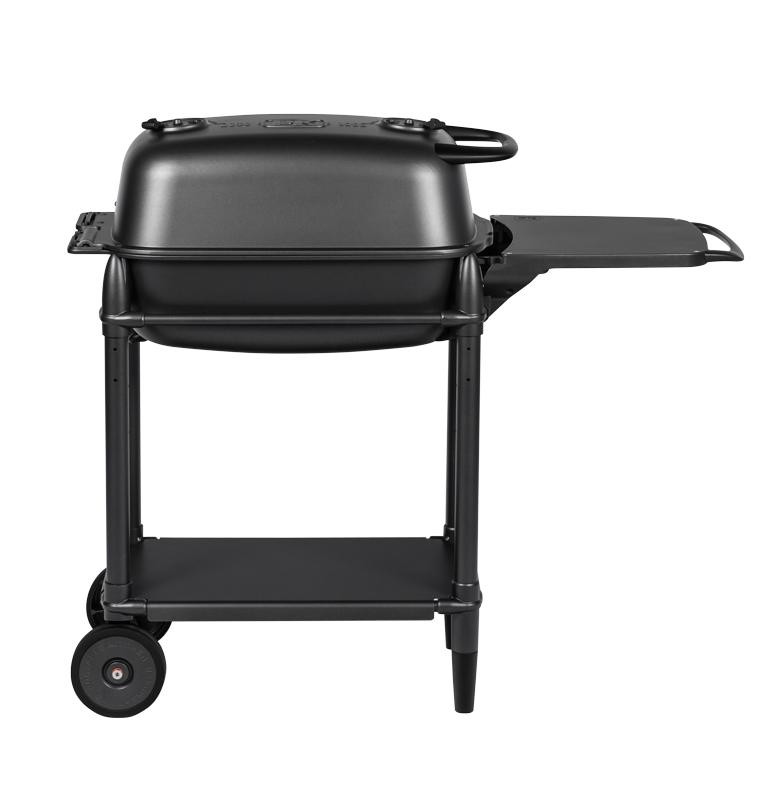
The PK300 is the modern version of the capsule-shaped cast aluminum grill PK has built since 1952, sitting below the PK360 already in the catalog. Cast aluminum conducts heat several times faster than steel and cannot rust, which is why 60-year-old PKs still turn up working. The four-point venting system — a damper at each corner of the capsule — is what makes its two-zone cooking unusually controllable for a grill with no fan or controller.
We may earn a commission. Price and availability on Amazon may differ.
Specifications
Features
Pros
- ✓Cast aluminum body carries a 20-year warranty and physically cannot rust through, unlike porcelain-over-steel
- ✓Four-point venting — one damper per corner — gives finer two-zone control than a kettle's two dampers
- ✓The capsule shape puts a deep hot end and a shallow cool end in one chamber without any insert
- ✓60 lbs and the body lifts off the cart, so it can go in a truck for tailgating
- ✓$300 less than the PK360 while keeping the same aluminum construction and venting system
Cons
- ✗316 sq in is less grate than a $149 Weber kettle for four and a half times the money
- ✗Aluminum heats fast but stores little heat, so it is more sensitive to wind than a ceramic or a heavy steel cooker
- ✗Rectangular capsule shape means kettle accessories — rotisserie rings, baskets, inserts — do not fit
- ✗No hinged lid; the lid comes fully off and needs somewhere to go
- ✗Temperature gauge is warranted for only one year, the weakest part of an otherwise 20-year grill
Owner Insightssummarized from owner discussions
The PK300 is a cast aluminum capsule grill with a damper at each corner, and it sells to a specific person: someone who has already worn out one or more steel charcoal grills. The threads about it are full of owners describing kettles that rusted through the bowl after ten years, or twenty, or a Performer that dissolved living near the water - and the PK is the answer to that problem, because aluminum does not rust. That is a narrower pitch than most grills make, and it explains both the enthusiasm and the price complaints. Owners who cook on them like them a great deal; people seeing the price against a kettle's react accordingly.
The practical difference from a kettle is heat behavior. Cast aluminum holds and conducts heat in a way thin steel does not, and owners of the PK line describe locking in at 250°F and simply leaving, with the cook ending when the charcoal runs out rather than when the temperature wanders. Fuel efficiency follows from the same property: one owner got six hours at 250-275°F from half a chimney of leftover coals plus a dozen new briquettes, lighting at the corners. The four-point venting is what makes the two-zone setup controllable without a fan or a controller, and it handles a full reverse sear on one grate - smoke to temperature, then bring the grill up and sear. The one assembly complaint that recurs is a wobbly frame on new units, more often on pre-assembled ones; owners who built their own report it rock solid, so taking the base apart and rebuilding it is the usual remedy.
It suits someone cooking for a family who wants a grill that outlives them, and it does not suit anyone who needs to put a packer brisket on. Owners are consistent that around 300 square inches means no whole brisket, and that two big pork shoulders fill it - people who need more keep a bullet smoker or a kamado alongside for the few times a year it matters, and say they would not trade the PK's fuel efficiency for a little more room. That is the honest trade: it is less grate than a kettle costing a fraction as much, bought for construction and control rather than capacity. Anyone weighing it against another Weber should ask how long the last one lasted, because that number is the whole argument.
What owners like
- +Rust immunity is the actual purchase reason. The people who buy these are owners whose kettles rusted through the bowl at ten to twenty years, often near salt water, and who have worked out that a cast aluminum body ends that cycle permanently
- +Heat retention is the difference owners notice first coming from steel. Owners of the cast aluminum PKs describe setting it and leaving, coming back hours later still locked at 250°F, and running out of charcoal before they run out of temperature stability
- +It restarts on leftovers. One owner ran a six-hour pork shoulder at 250-275°F on half a chimney of coals left from a previous cook plus about a dozen fresh briquettes, lit at the corners
- +One cooker does the whole reverse sear - owners smoke to an internal temperature, rest the meat while the grill comes up, and sear on the same grate without moving to a second grill
- +It arrives with a cart and a work surface, which is specifically why owners tired of a kettle with no table and nowhere to put the lid choose it
- +It discounts and holds value on the used market. The manufacturer has marked it down from $699 to $549, the plain Original sits near $399, and owners find used ones around $300 - which is where the value case gets easy
Common complaints
- −Around 300 square inches is the real constraint, and owners say so plainly: a whole packer brisket is not happening on it. A pair of large pork shoulders fills the grate, and owners who want brisket capacity keep a bullet smoker or a kamado as well
- −Wobble shows up on new units, particularly pre-assembled ones, and tightening the accessible bolts only partly helps. Owners who assembled their own report rock-solid frames, so the fix is usually to take the base apart and rebuild it yourself
- −It costs several times what a kettle of similar or larger grate area costs, and the reaction from people encountering the price for the first time is exactly what you would expect. The argument for it is lifespan, not capacity per dollar
- −The official cover is expensive enough that owners go looking for third-party alternatives
Common Questions
Can I cook a brisket on it?
Why is mine wobbly?
Does it really use less charcoal than a kettle?
Is it worth the money over another kettle?
How do I set it up for two zones?
Compare the PK Grills PK300
Related grills
More from PK Grills →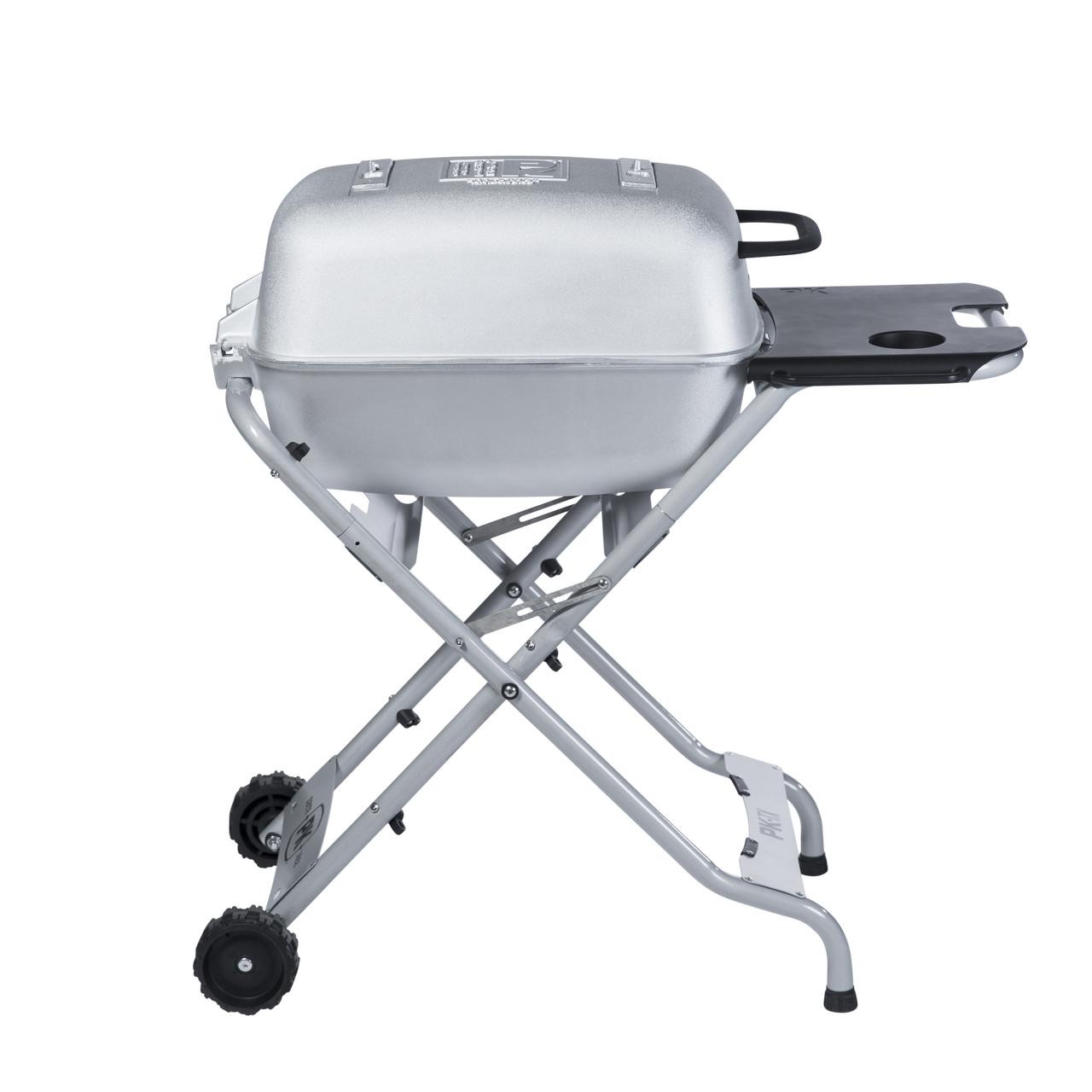
PK Grills
PK Grills PKTX Grill & Smoker
The original 1950s PK capsule, still in production, on a knock-down aluminum cart with stainless hardware. PK calls it 'King of the Tailgate' because the capsule lifts off and the cart disassembles without tools, so the whole grill goes in a trunk. The PK300 and PK300AF use a newer, redesigned capsule; the PKTX is the classic one, sold in classic silver.
PK Grills
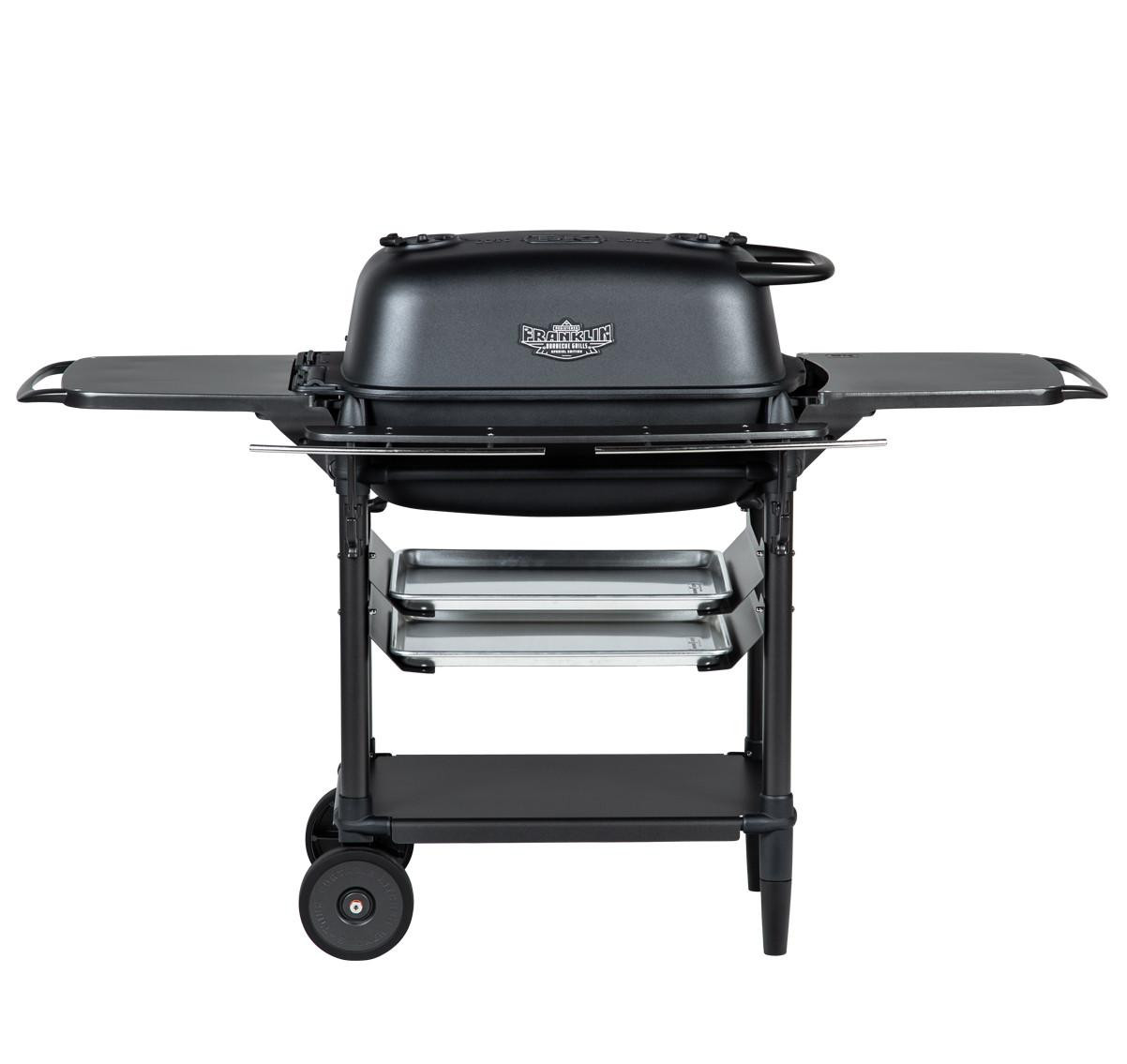
PK Grills PK300AF Franklin Edition
PK's collaboration with Aaron Franklin, sitting $100 above the standard PK300. Same rust-proof cast-aluminum capsule and four-vent layout, but with a redesigned lid seal, cast-aluminum wheels with rubber tires, two folding cast-aluminum shelves that lock the capsule to the cart, and an all-aluminum cart instead of the PK300's. It is the PK300 with the parts most owners complain about upgraded.

PK Grills
PK Grills PK360
The PK Grills PK360 is a cast-aluminum charcoal grill and smoker with a capsule-shaped body and 4-vent airflow control for precise two-zone cooking. PK Grills makes rustproof, heirloom-quality American charcoal cookers.
PK Grills
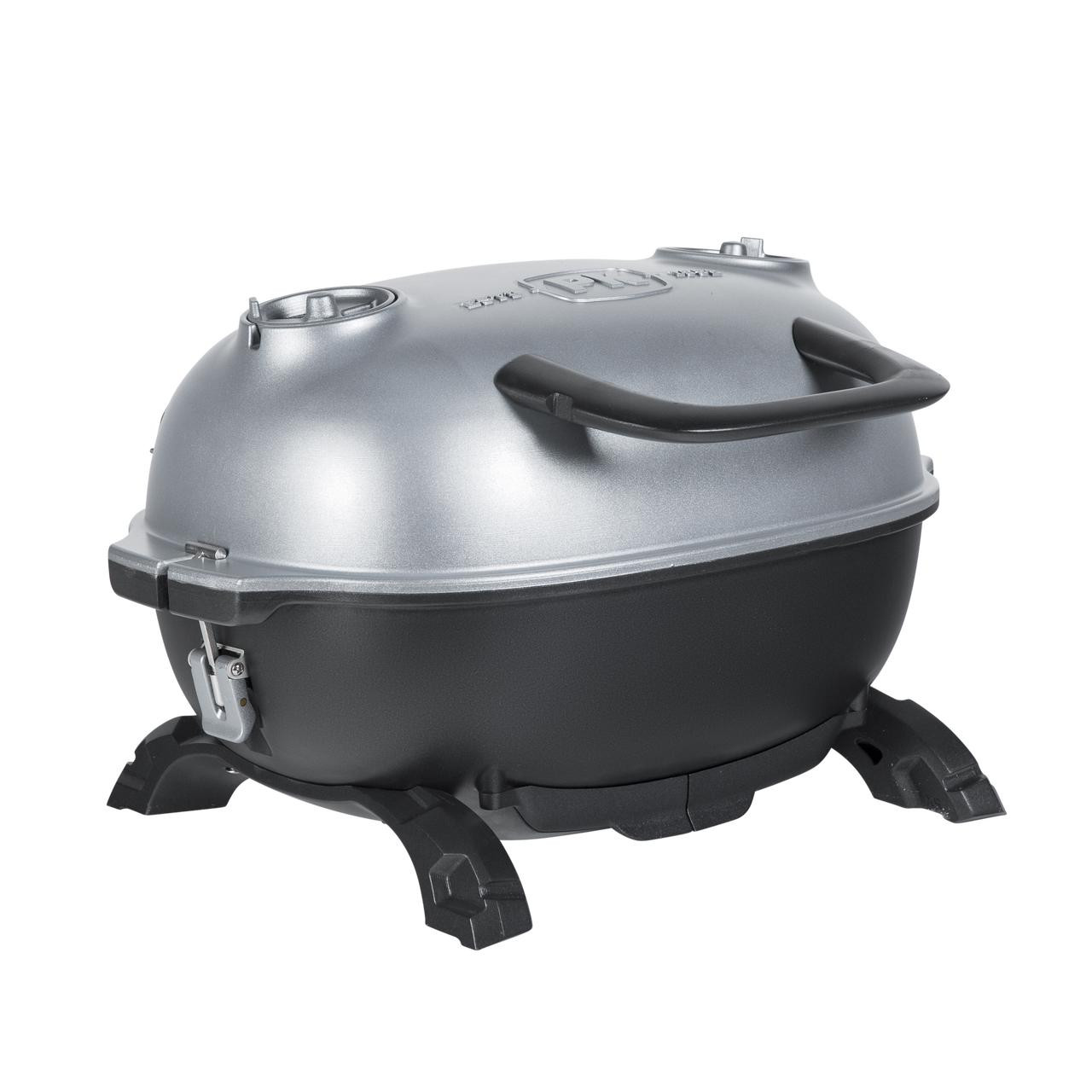
PK Grills PKGO with FlipKit
PK's portable: a cast-aluminum clamshell on a molded cradle with cast iron cooking surfaces, 204 sq in, 39.5 lbs. The FlipKit is the second grate and charcoal grate that lets it be run as a covered grill or flipped open as a double-sided hibachi. It carries the same 20-year warranty as the full-size PKs, which is unusual for a portable.
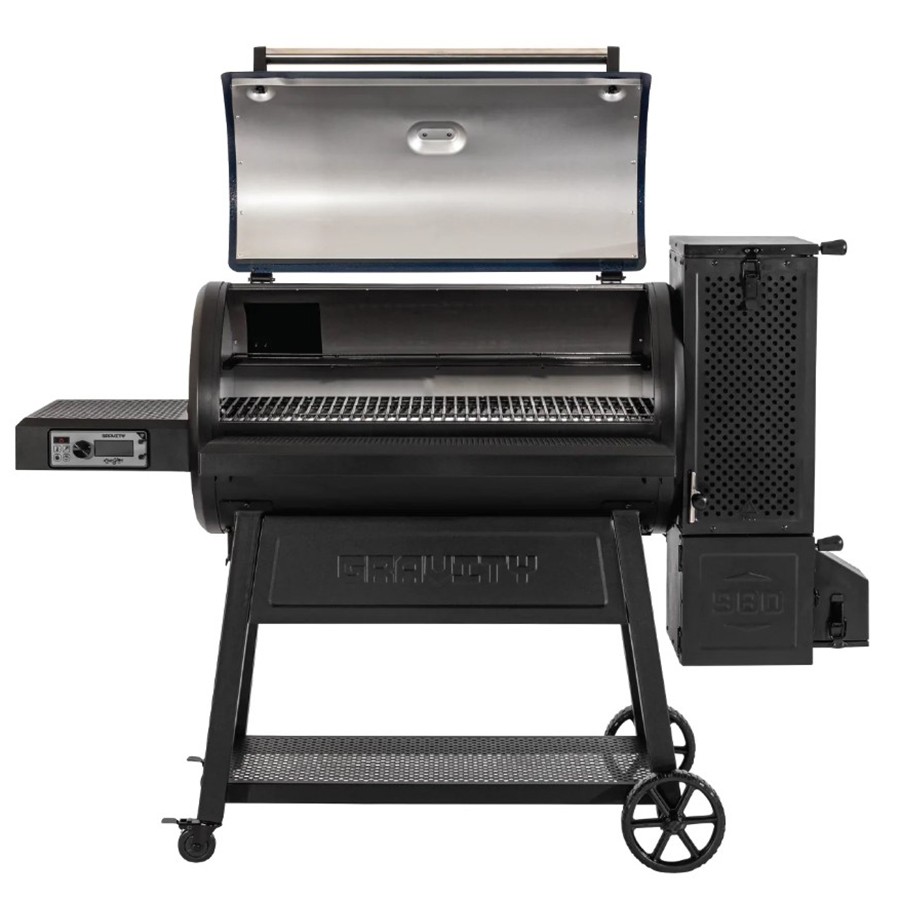
Char-Griller
Char-Griller Gravity Fed 980
The Char-Griller Gravity Fed 980 is a WiFi-controlled gravity charcoal grill and smoker with a 16 lb hopper, fan-driven 200-700°F range, and 980 sq in of space. It's the budget rival to Masterbuilt's Gravity Series with a triple-insulated body.
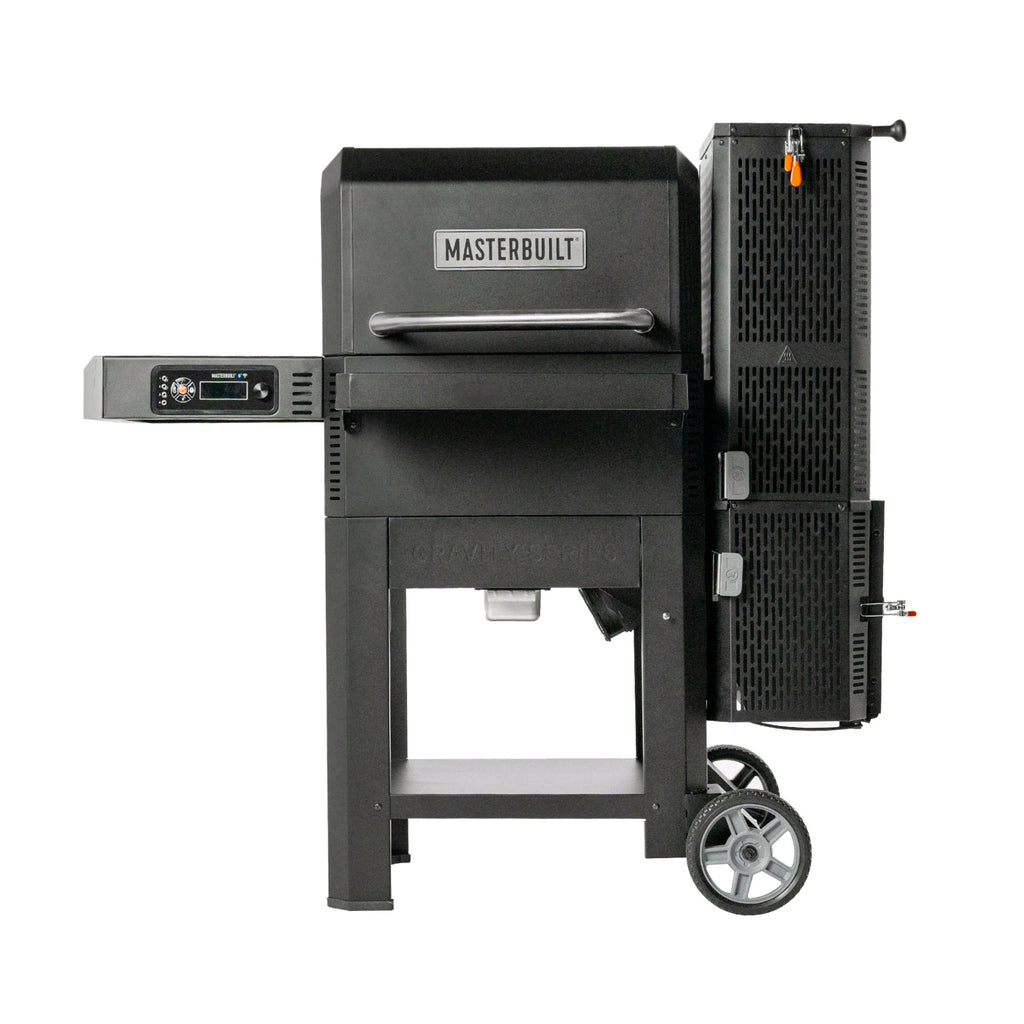
Masterbuilt
Masterbuilt Gravity Series 600
The current entry point to Masterbuilt's gravity-fed line and the direct replacement for the discontinued Gravity Series 560. A vertical hopper holds charcoal above the firebox and feeds it down by gravity while a variable-speed DigitalFan regulates air, so it behaves like a pellet grill but burns lump or briquettes. The 600 keeps the 560's footprint but adds dual-wall insulation with a porcelain interior and takes the hopper to 17.6 lb.