
Oklahoma Joe's
Oklahoma Joe's Longhorn Classic
The Oklahoma Joe's Longhorn Classic is the larger, heavier-gauge sibling of the Highland, built from 2.5mm cold-rolled steel for better heat retention and more cooking capacity — 751 sq in on the main chamber, 1,060 sq in counting the firebox grate. Oklahoma Joe's added "Classic" to the name without changing the grill: it is the same SKU (13201747-50) people still search for as plain "Longhorn".
Goes to the manufacturer. We earn nothing on this one.
Specifications
Pros
- ✓The 2.5mm heavy cold-rolled steel adds real thermal mass, so it holds temperature more steadily than the lighter Highland
- ✓1060 sq in total cooking area is genuinely large, easily handling multiple briskets and racks for a party or competition practice
- ✓It produces the same authentic wood-fired flavor that's the whole reason to own an offset
- ✓The substantial 250 lb build feels solid and durable, and the extra steel resists warping better than entry offsets
- ✓The side firebox works as a charcoal grill too, making it a versatile 2-in-1
- ✓Multiple dampers and a pro temp gauge give the airflow control needed to manage a clean fire
- ✓At ~$679 it offers a lot of capacity and mass for the price compared to custom-welded smokers costing thousands
- ✓It responds extremely well to the same popular mods (gaskets, tuning plates, charcoal basket) that turn it into a near-pro pit
Cons
- ✗Even with thicker steel it still leaks smoke from the factory and benefits from gaskets and sealing to hold temps
- ✗There's still a hot spot near the firebox, requiring a tuning plate to even out the chamber
- ✗At 250 lbs it's heavy and a bear to move or reposition once assembled
- ✗Like all offsets it demands constant fire-tending - feeding wood and adjusting vents every 30-45 minutes for hours
- ✗Assembly is long and QC varies, with some owners getting warped doors or panels needing adjustment
- ✗It burns a lot of fuel and the per-cook wood/charcoal cost and prep is significant
- ✗The paint and finish can rust and the firebox shows wear with heavy use
- ✗The same steep learning curve applies - mastering fire management takes many cooks
Owner Insightssummarized from owner discussions
The Longhorn Classic is the larger of Oklahoma Joe's two mainstream backyard offsets, and it is the grill most people in North America learn stick burning on. Oklahoma Joe's added "Classic" to the name without changing anything about the cooker, so owners still call it simply the Longhorn, and the separately sold reverse-flow version gets called that too — worth knowing when you are reading owner reports, because the reverse-flow plates come with their own complaints. The verdict among people who own one is consistent and two-sided: it produces genuinely good barbecue, and it makes you work considerably harder for it than the price alone suggests.
Out of the box it leaks. New owners report smoke escaping from the cook chamber, the firebox and the bottom of the smokestack at the same time, and the near-universal advice is to run high-heat silicone between the firebox and chamber during assembly and gasket the doors before the first cook. The steel is thinner than the heft suggests, which shows up at both ends of the range — owners fight to hold low temperatures steady and also struggle to push past 300-350°F when they want chicken skin. Fuel use is high: a thirteen-hour pork shoulder cook can run through a bag and a half of charcoal plus several bags of wood. And the single biggest source of disappointment is dirty smoke. Owners who load big splits into a starved firebox get soot-covered food and wild temperature chasing; the fix the experienced ones give is counterintuitive — cut splits down to chunk size, add a few briquettes with each one, and keep the fire small and hot rather than large and smoldering. A tuning plate and a water pan near the firebox even out the hot end.
It suits someone who wants the fire tending to be part of the hobby and has a budget around the $600 mark rather than the $2,000 an Old Country Brazos or similar would take. Owners who cross-shopped the Brazos generally agree it is the better pit and buy the Longhorn anyway to find out whether they will actually use an offset. The honest warning comes from the people who did not enjoy it: several traded theirs for a pellet grill and did not look back, and the common thread is that they wanted barbecue rather than fire management. If long unattended cooks and predictable results matter more than the process, that is the signal. If the process is the appeal, this is a lot of smoker for the money, and the used market is full of them.
What owners like
- +It makes real offset barbecue, and the cook reports back that up: a 21 lb prime brisket run at 230-250°F for twelve hours, 15 lbs of pork shoulder over thirteen hours, and a lot of first-timers describing the best thing they have ever eaten off their own patio
- +It is the standard recommendation for learning fire management, and owners frame that as the point. One who moved on to a custom pit put it that if you can master smoking on an entry-level offset, you can smoke on any rig afterwards
- +It responds extremely well to cheap modifications. The list owners repeat is high-heat silicone between the firebox and cook chamber at assembly, a door gasket, a tuning plate, a water pan near the firebox as a heat sink, and stainless hardware throughout. Most report spending $200-300 and getting a meaningfully better smoker
- +Weber-priced it is not. Owners buy these used constantly — $200 for a well-used one already modded, $50 at a yard sale, $5 at an auction that cleaned up with a pressure wash and high-heat paint — because the heavy steel body outlasts the finish
- +It comes with a second thermometer bung from the factory, and owners who fit a second gauge get left-and-right chamber readings, which is most of what you need to learn where the hot end is
- +Owners who enjoy the process rather than tolerating it are unreserved about it. The recurring description is sourcing local wood, managing the fire from a chair on the deck with a beer, and treating the cook itself as the hobby — that is what this grill is for, and it delivers it at a fraction of custom-pit money
Common complaints
- −It leaks from the factory, in several places at once. A new owner reported smoke escaping from the main chamber, the firebox and the base of the smokestack simultaneously. Sealing it is not an optional upgrade, it is part of assembly
- −Rust turns up early. One owner said theirs started rusting almost immediately and they would not buy another Oklahoma Joe's offset; others report white heat scaling on the firebox floor within three to six months of purchase
- −The steel is thinner than the marketing implies and it struggles at the top of its range. An owner two seasons in could not reliably get past 300-350°F for chicken thighs even with a solid bed of lump and the chimney and vents wide open
- −Fuel consumption is startling if you have only used a pellet grill. A first cook of 15 lbs of pork shoulder over thirteen hours burned through roughly a bag and a half of charcoal plus several bags of wood chunks
- −Dirty smoke is the failure mode that makes people quit. The most-discussed complaint thread is an owner whose every cook came out covered in soot with constant temperature chasing, logs either burning through in ten minutes or going out entirely. The fix owners give is smaller splits cut down to chunk size with a few briquettes added alongside each one, not bigger fires
- −There is a pronounced hot end near the firebox. Owners work around it by cooking sausages and cast iron close to the fire and the low-and-slow items at the far end, but evening out the chamber properly takes a tuning plate and a water pan
- −Owners from Oklahoma itself are among the ones saying the brand is not what it was, that the older American-made pits were better built, and that the current build quality is unimpressive at the price
- −Hardware works loose, especially after moving it. One owner replaced every fastener with stainless specifically because the originals kept backing out after the smoker had been transported
Common Questions
Does it need modifications to work properly?
Why does my food come out sooty?
How much fuel does a long cook actually use?
Can it hold temperature for an overnight brisket?
Should I buy this or save up for a better offset?
Compare the Oklahoma Joe's Longhorn Classic
Related grills
More from Oklahoma Joe's →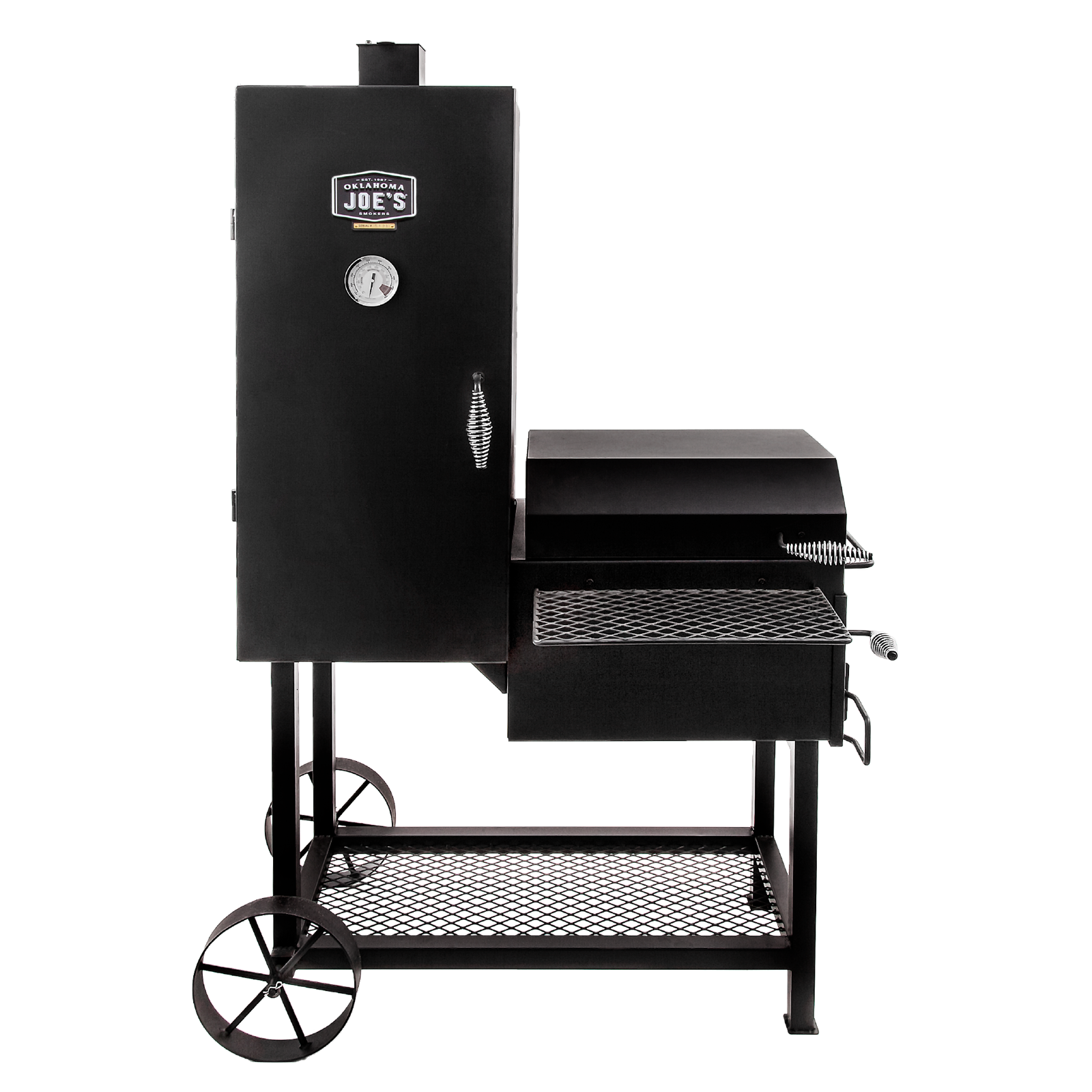
Oklahoma Joe's
Oklahoma Joe's Bandera Vertical Offset Smoker & Grill
The Bandera is the odd one in Oklahoma Joe's line: a vertical cabinet with the firebox offset to the side, so smoke rises through four stacked racks rather than travelling sideways across a barrel. It is the revival of a cult 1990s Oklahoma Joe's model and takes a 39-inch footprint instead of the 64 inches a Longhorn needs. Capacity is 744 sq in primary across four adjustable racks, plus a 248 sq in secondary, and it ships with a rib rack set.
Oklahoma Joe's
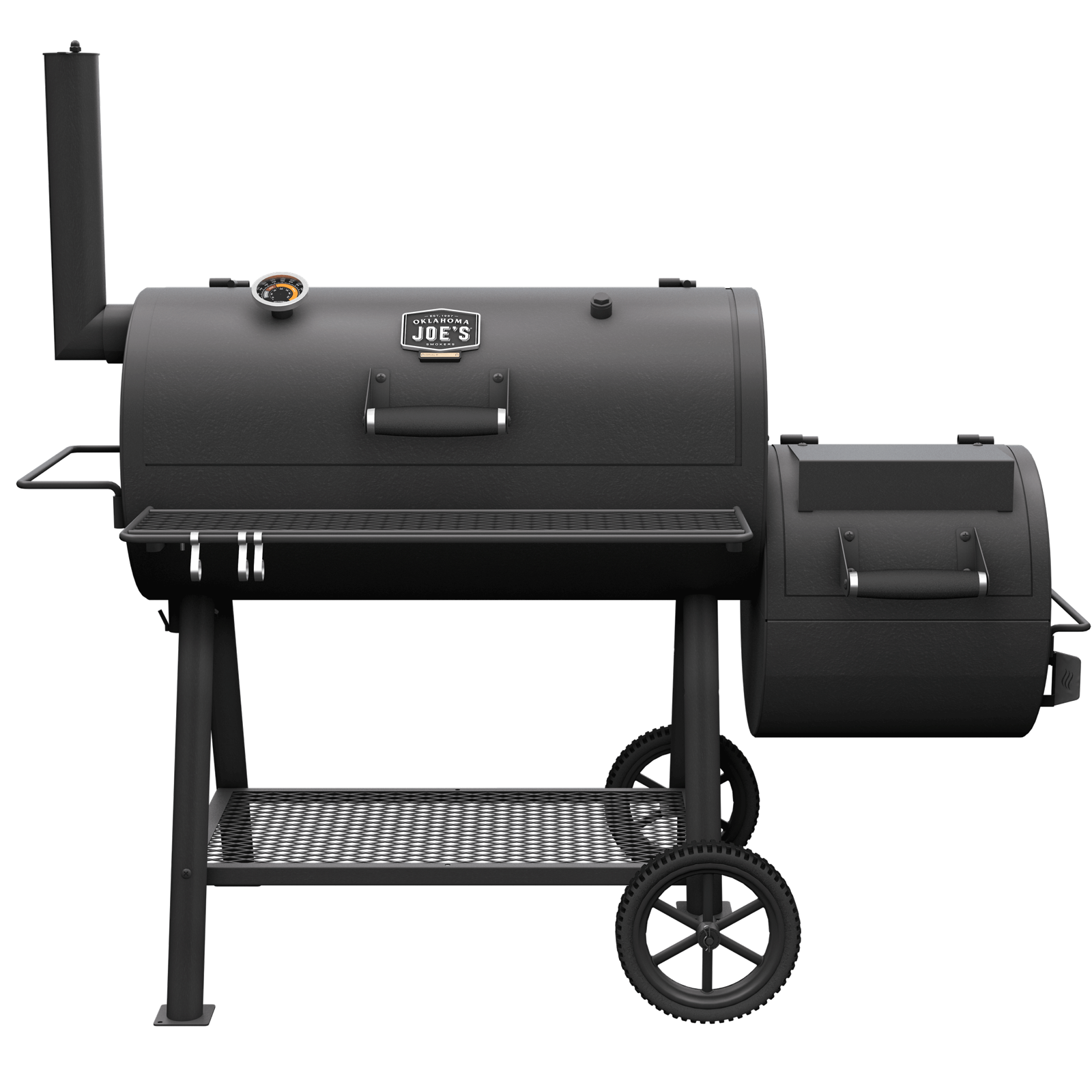
Oklahoma Joe's Highland Classic Offset Smoker & Grill
The Highland Classic is the 2025 replacement for the long-running Oklahoma Joe's Highland, which the brand retired when it re-badged its whole offset line with the 'Classic' suffix. It is a true horizontal offset — firebox bolted to the side of a 616 sq in barrel chamber, with a second 263 sq in warming rack above — and burns charcoal with hardwood splits or chunks. Construction is thin painted steel rather than the quarter-inch plate of a Texas pit, so it needs gasket and baffle modification to hold a steady 250°F, which is the trade for the entry price.

Oklahoma Joe's
Oklahoma Joe's Highland
The Oklahoma Joe's Highland is the most popular entry-level traditional offset smoker, with a heavy-gauge steel cook chamber and side firebox for real wood-and-charcoal Texas-style barbecue. It's the classic stick-burner starting point. Note: this model is no longer sold new as of 2026. Its current equivalent is the Oklahoma Joe's Highland Classic. (2024 line refresh renamed Highland to Highland Classic (24203001); oklahomajoes.com $379.99 (reg $429.99), out of stock direct but stocked at Home Depot)
Oklahoma Joe's
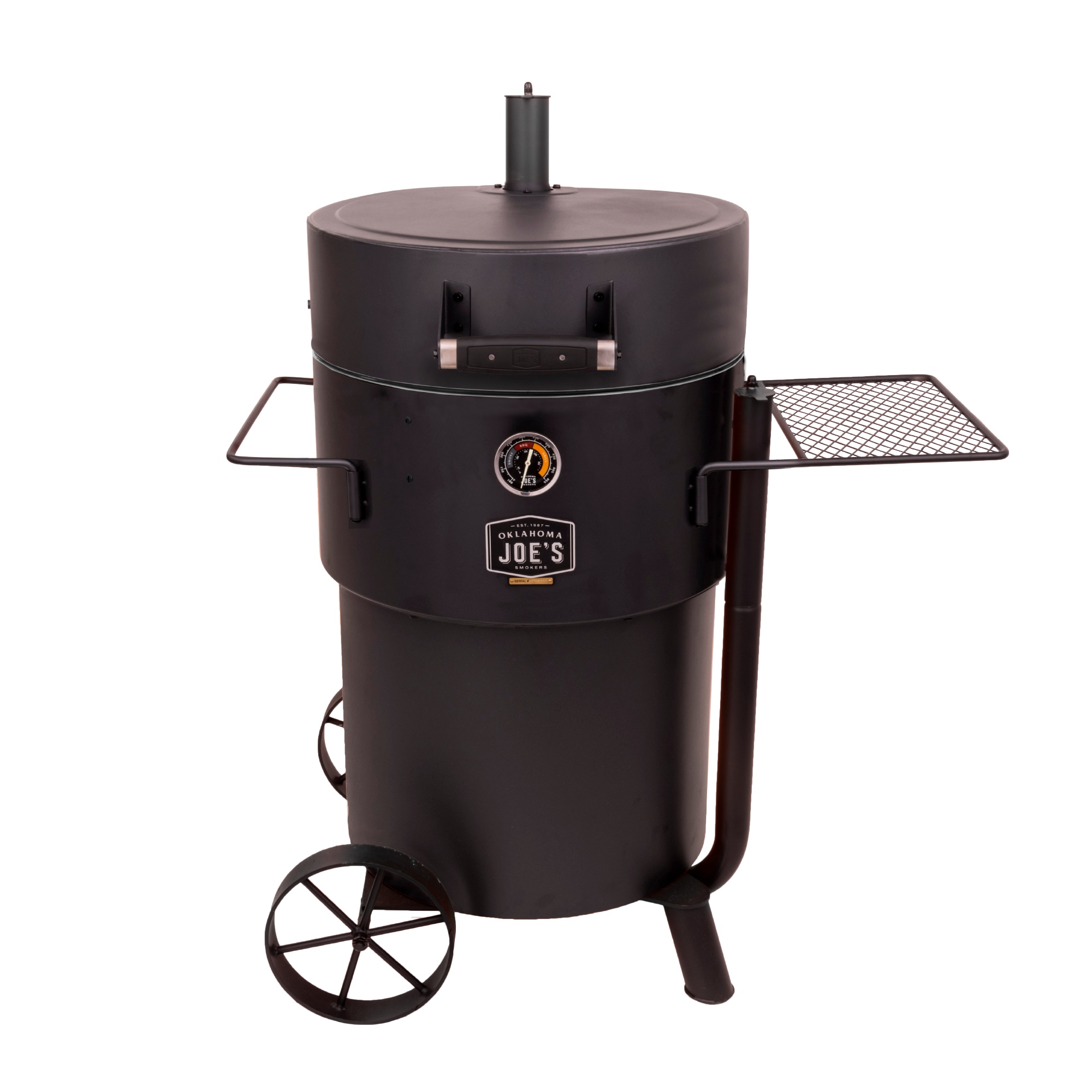
Oklahoma Joe's Bronco Pro
The Oklahoma Joe's Bronco Pro is a heavy-duty 21.5-inch charcoal drum smoker with a sealed intake-pipe airflow system that gives drum-style cooking unusually precise temperature control, plus meat hangers and hooks for classic hang-style smoking.
Oklahoma Joe's
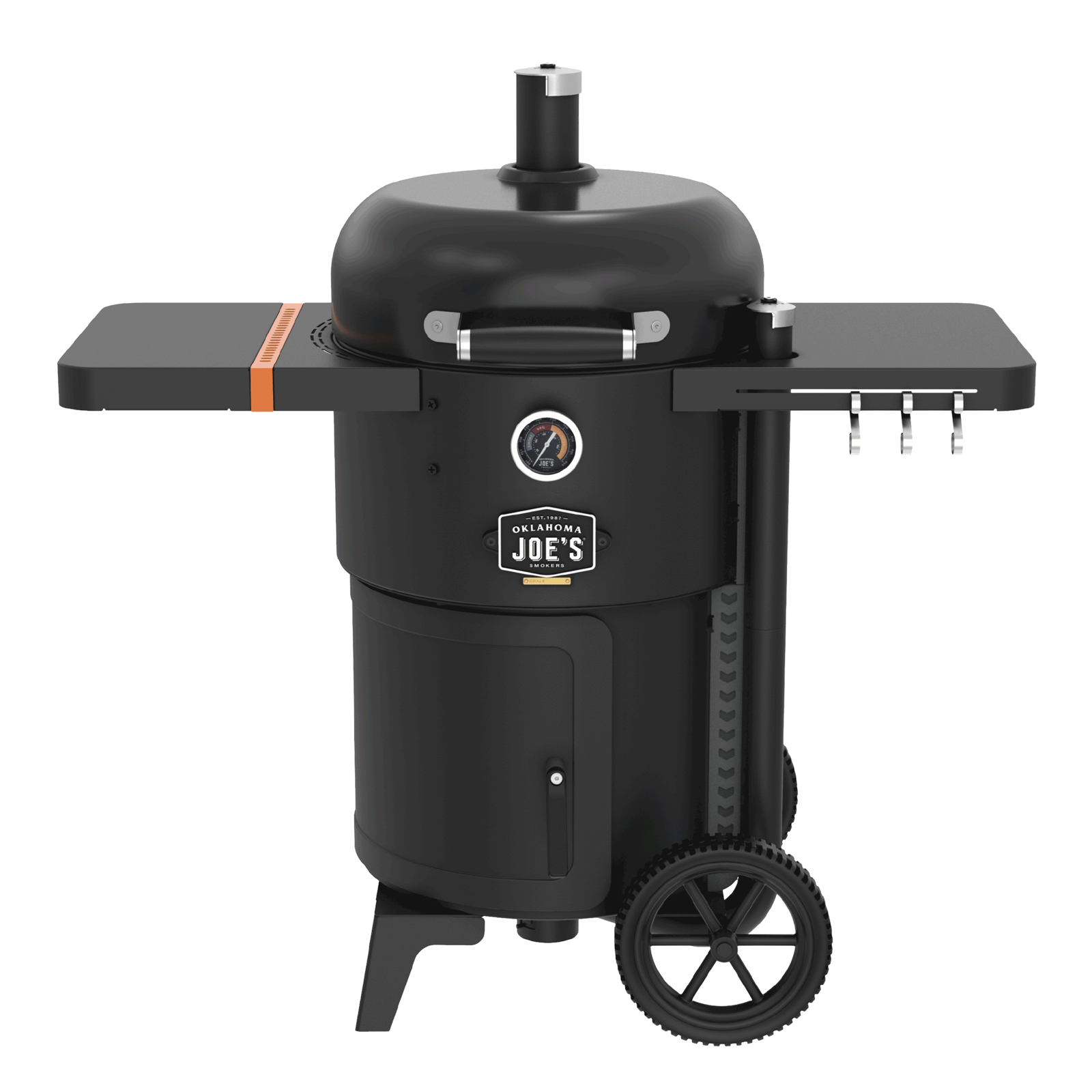
Oklahoma Joe's Bronco Drum Smoker & Grill
The 2025 revision of the Bronco and the model below the Bronco Pro already in the catalog. It keeps the two things that made the original Bronco worth buying - a side fuel door that lets you add charcoal without lifting the grate or the food, and an 8 lb charcoal basket rated for 14-plus hours - and adds dual side shelves, rubber-tread wheels and the rib hanger kit as standard. The grate lowers toward the fire for grilling, which is where the '& Grill' in the name comes from. 284 sq in of grate plus nine hooks on three hangers.
Char-Griller
Char-Griller Grand Champ Offset Smoker
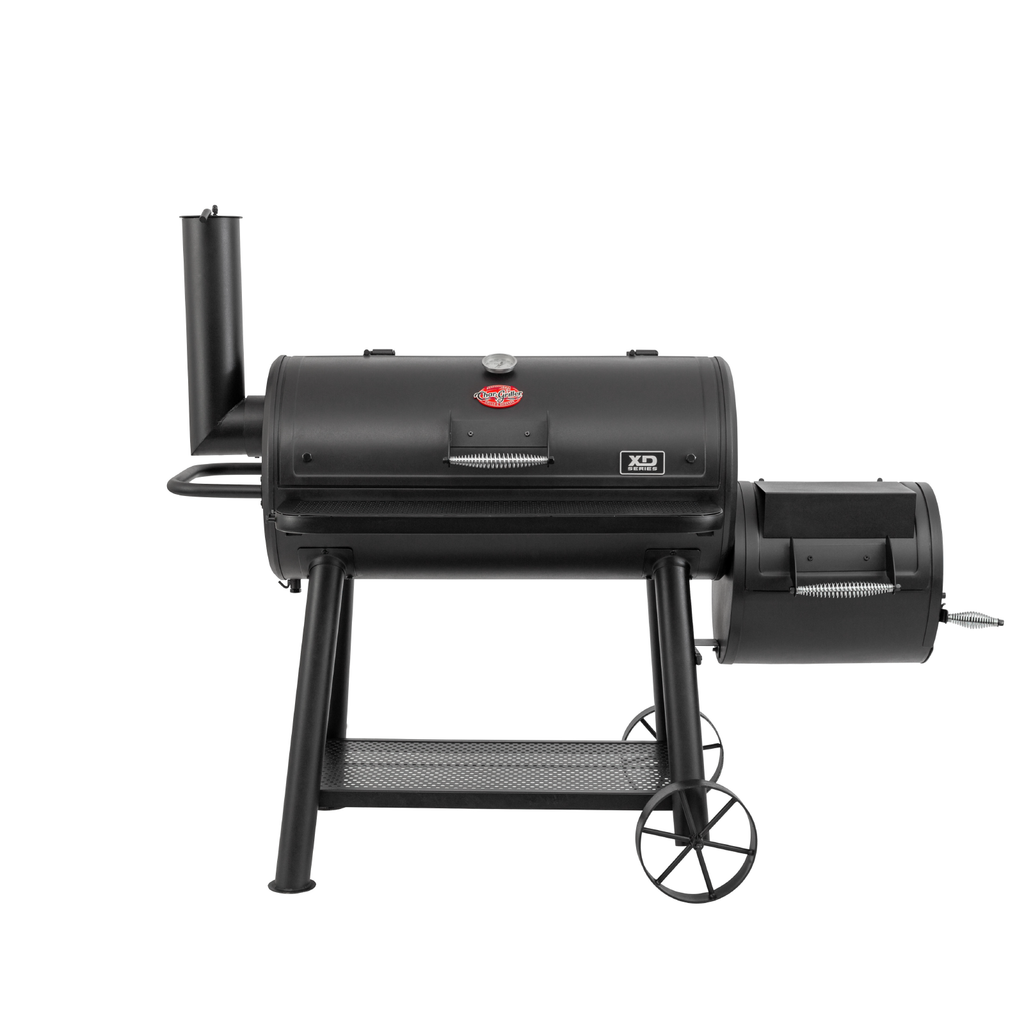
The Grand Champ is the top of Char-Griller's offset line and the heaviest thing the brand sells at 254 lbs — meaningfully more steel than the Competition Pro at 151 lbs for the same nominal capacity class. It runs 780 sq in of primary grate and 1,200 sq in total, with an EasyDump ash pan and a folding front shelf. It is sometimes badged 'Grand Champ XD' at Lowe's and Home Depot; the underlying model is the 8250.