
Oklahoma Joe's
Oklahoma Joe's Highland
The Oklahoma Joe's Highland is the most popular entry-level traditional offset smoker, with a heavy-gauge steel cook chamber and side firebox for real wood-and-charcoal Texas-style barbecue. It's the classic stick-burner starting point. Note: this model is no longer sold new as of 2026. Its current equivalent is the Oklahoma Joe's Highland Classic. (2024 line refresh renamed Highland to Highland Classic (24203001); oklahomajoes.com $379.99 (reg $429.99), out of stock direct but stocked at Home Depot)
We may earn a commission. Price and availability on Amazon may differ.
Specifications
Pros
- ✓It's the classic affordable entry into real stick-burning - you get authentic wood-smoke flavor that pellet grills can only approximate
- ✓Heavy-gauge steel construction holds heat better than flimsier offsets and gives it real durability for the price
- ✓619 sq in of primary space (900 total with the secondary grate) handles several racks of ribs or a couple of pork butts
- ✓The side firebox doubles as a charcoal grill, so it's a 2-in-1 smoker and grill
- ✓Multiple adjustable dampers and a usable temperature gauge give you the airflow control to learn fire management
- ✓At ~$550 it's the most accessible true offset, far cheaper than custom welded smokers
- ✓It teaches real BBQ skills - managing a wood fire is the heart of the hobby and this is the proven trainer
- ✓Tons of popular mods (sealing gaskets, baffle/tuning plates, a charcoal basket) inexpensively make it perform like a much pricier smoker
Cons
- ✗Out of the box it leaks smoke around the lid and firebox, so most owners add gaskets and sealant to control temps
- ✗The thin-by-offset-standards steel means big temperature swings between the firebox and far ends of the chamber
- ✗There's a real hot spot near the firebox - without a baffle/tuning plate, the firebox-side food cooks much faster
- ✗It demands constant attention - you feed the fire every 30-45 minutes and babysit vents, the opposite of set-and-forget
- ✗The factory paint and finish can rust, and the firebox warps over time with heavy use
- ✗Assembly quality control is inconsistent, with owners reporting warped doors and misaligned parts
- ✗It burns a lot of wood and charcoal, so fuel cost and prep per cook is high
- ✗The learning curve is steep - your first few cooks will likely have temperature struggles before you master the fire
Owner Insightssummarized from owner discussions
The Highland is the offset most people learn on, and owners describe it with a mixture of affection and clear-eyed criticism. The food it produces is not in question: the threads are full of first briskets that came out tender and juicy, ribs that the family ate before anyone could photograph them, and one owner arriving from a kamado who called it the best brisket he had made. What is in question is how much work it takes to get there. As one long-term owner put it after listing his modifications, she does not smoke like a more expensive smoker, but it is honest work.
The specific problems are consistent enough to plan around. The stack is short and narrow and chokes the draft, so the fire runs lazy until you extend it; owners have done this with everything from a bolted-on automotive exhaust extension to a custom laser-cut smoke collector welded up for under $100. The firebox is small and will not take full splits, so wood gets cut down and burned through quickly, and the fire has to be kept near the door or it goes out. The doors are not welded and bleed heat, which is why gasket kits are near-universal. The result is temperature that wanders: people targeting 250°F report swings from 200°F up to 335°F, and a 50°F spread across the cooking grate is normal rather than a fault. Many owners find it far easier to run at 275-325°F than to chase a low 225°F, and the food is no worse for it. Rust is the other long-term issue, especially in wet climates, and neglected secondhand units routinely need sanding and re-seasoning inside.
Buy it if you want to learn to cook with wood and treat the learning as the point. It is the cheapest honest entry to stick-burning, and a used one at around $100 is close to unbeatable value. Buy something else if you want results without tending: the Weber Smokey Mountain comes up constantly as the alternative for the same money, and owners agree it holds temperature far more easily and will last longer, at the cost of the horizontal layout and easy access the Highland gives you. The caveat worth hearing is the one owners raise themselves: the full mod list costs real money on top of the purchase price, and several of them worked out afterwards that the combined total would have bought a better pit outright.
What owners like
- +The food genuinely competes above the price. First-timers post brisket that came out probe tender and jiggling, and one owner who moved over from a kamado said it produced the best brisket he had ever made
- +It is a real fire-management education. Owners who want to learn the craft rather than push a button say the Highland taught them to read a fire, and they keep it even after they know what they are doing
- +The used market is remarkable: working Highlands turn up on marketplace listings for around $100, and at that price even owners who criticize the design call it an obvious buy
- +It responds well to modification. A stack extension, baffle or tuning plates, door gaskets and springs, and a fire management basket are all cheap and well documented, and owners report large improvements from each
- +Running it hotter works better than fighting for 225°F. Owners who cook at 275-325°F report steadier fires and still get good bark and smoke, which is a more forgiving way to learn
- +It is easy to get at. Owners choosing it over a Weber Smokey Mountain often cite the horizontal chamber and open access, which make loading, arranging and checking food simpler than a vertical cooker
Common complaints
- −Temperature stability is the constant complaint. Owners aiming for 250°F report spikes to 335°F and drops to 200°F in the same cook, and one measuring across the grate found a 50°F gradient even after modding
- −The factory stack is short and narrow and chokes the draft. This is so widely accepted that most owners replace or extend it, one simply bolting on an automotive exhaust extension to gain about two feet, which he said made the fire burn far better
- −The firebox is small and will not burn full splits. Owners describe cutting wood down repeatedly, keeping the fire pressed near the door or watching it die, and burning through a wood supply quickly
- −It cannot be left alone. Multiple owners say ten minutes unattended is enough for the fire to start dying and the smoke to turn dirty
- −It is not welded and it leaks. Owners buy gasket kits to stop heat bleeding out of the doors, which otherwise means burning more fuel for the same cook
- −Rust is a real long-term issue, particularly in wet or snowy climates, and secondhand units frequently arrive with corroded interiors and seized dampers that need sanding and re-seasoning
- −The modifications add up. One owner's honest summary after buying stack extension, baffle plates, door springs and latch and a fire management box was that he had spent enough that he could simply have bought a better smoker
Common Questions
How hard is it to learn on?
What modifications does it actually need?
Why won't it burn full splits, and why does my wood smolder?
Why do my temperatures swing so much?
Highland or Weber Smokey Mountain?
Is a used one worth buying?
Compare the Oklahoma Joe's Highland
This model is no longer sold new. Its current equivalent is the Oklahoma Joe's Highland Classic.
We keep this page for the many still in use and on the used market — specs and honest pros/cons below still apply.
Related grills
More from Oklahoma Joe's →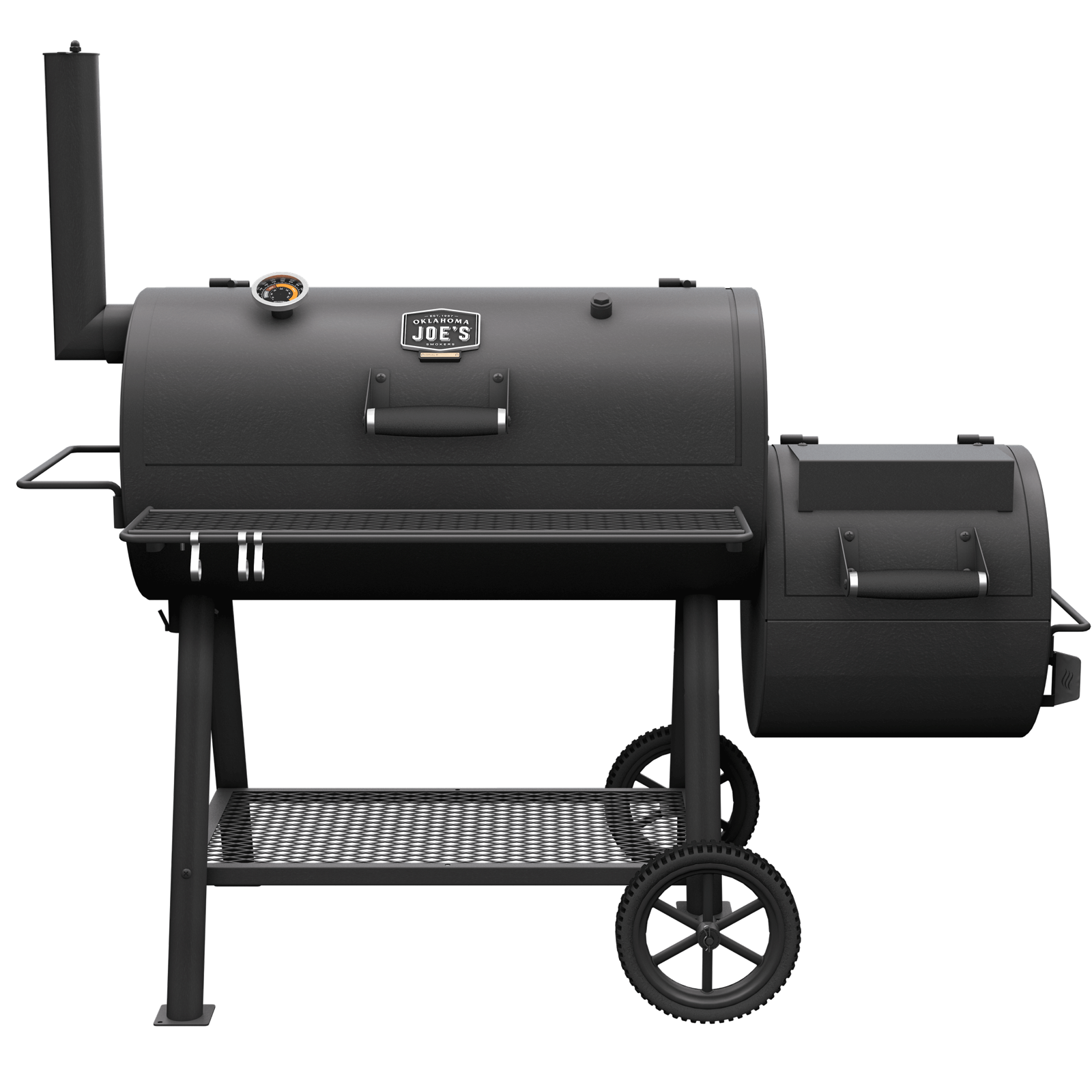
Oklahoma Joe's
Oklahoma Joe's Highland Classic Offset Smoker & Grill
The Highland Classic is the 2025 replacement for the long-running Oklahoma Joe's Highland, which the brand retired when it re-badged its whole offset line with the 'Classic' suffix. It is a true horizontal offset — firebox bolted to the side of a 616 sq in barrel chamber, with a second 263 sq in warming rack above — and burns charcoal with hardwood splits or chunks. Construction is thin painted steel rather than the quarter-inch plate of a Texas pit, so it needs gasket and baffle modification to hold a steady 250°F, which is the trade for the entry price.
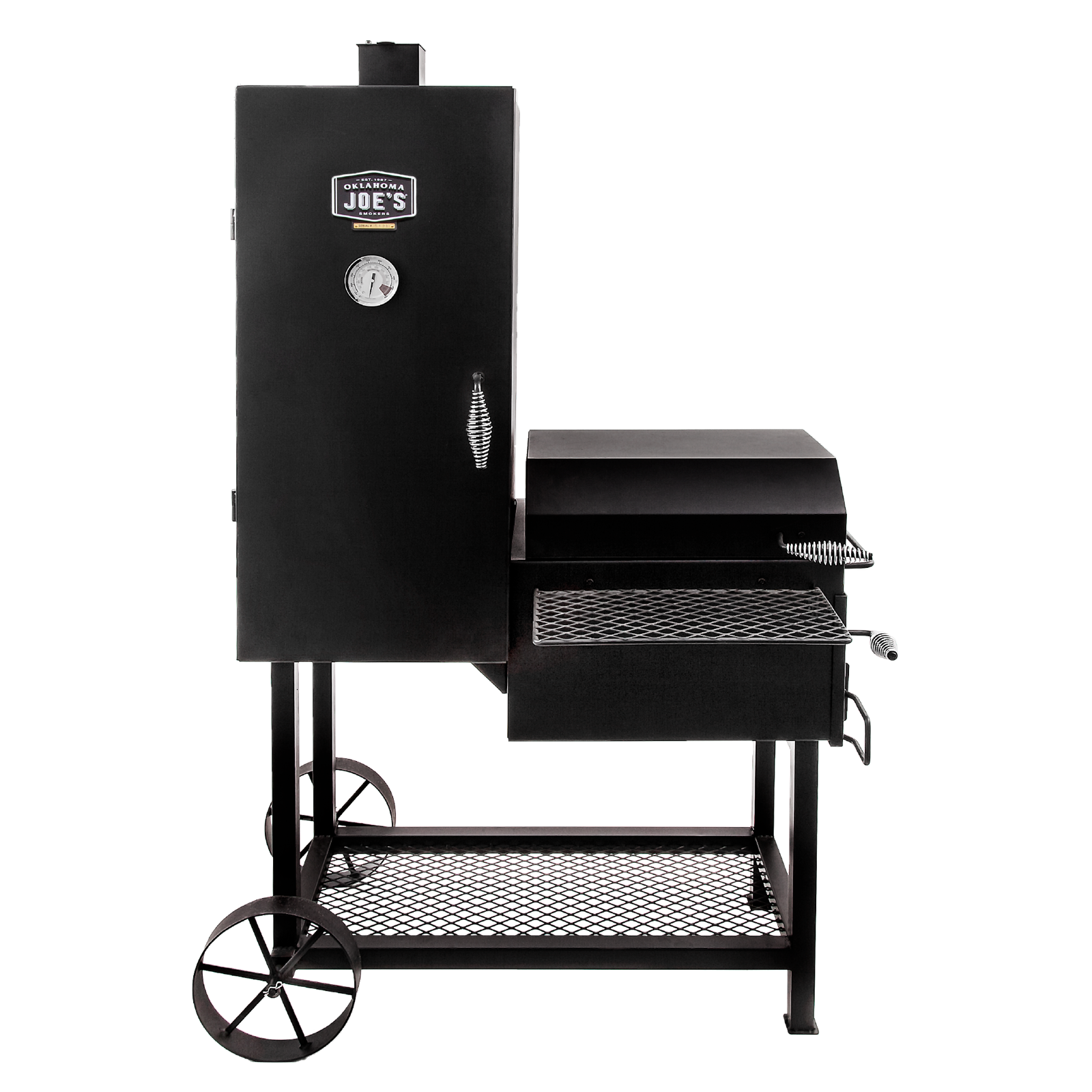
Oklahoma Joe's
Oklahoma Joe's Bandera Vertical Offset Smoker & Grill
The Bandera is the odd one in Oklahoma Joe's line: a vertical cabinet with the firebox offset to the side, so smoke rises through four stacked racks rather than travelling sideways across a barrel. It is the revival of a cult 1990s Oklahoma Joe's model and takes a 39-inch footprint instead of the 64 inches a Longhorn needs. Capacity is 744 sq in primary across four adjustable racks, plus a 248 sq in secondary, and it ships with a rib rack set.

Oklahoma Joe's
Oklahoma Joe's Longhorn Classic
The Oklahoma Joe's Longhorn Classic is the larger, heavier-gauge sibling of the Highland, built from 2.5mm cold-rolled steel for better heat retention and more cooking capacity — 751 sq in on the main chamber, 1,060 sq in counting the firebox grate. Oklahoma Joe's added "Classic" to the name without changing the grill: it is the same SKU (13201747-50) people still search for as plain "Longhorn".
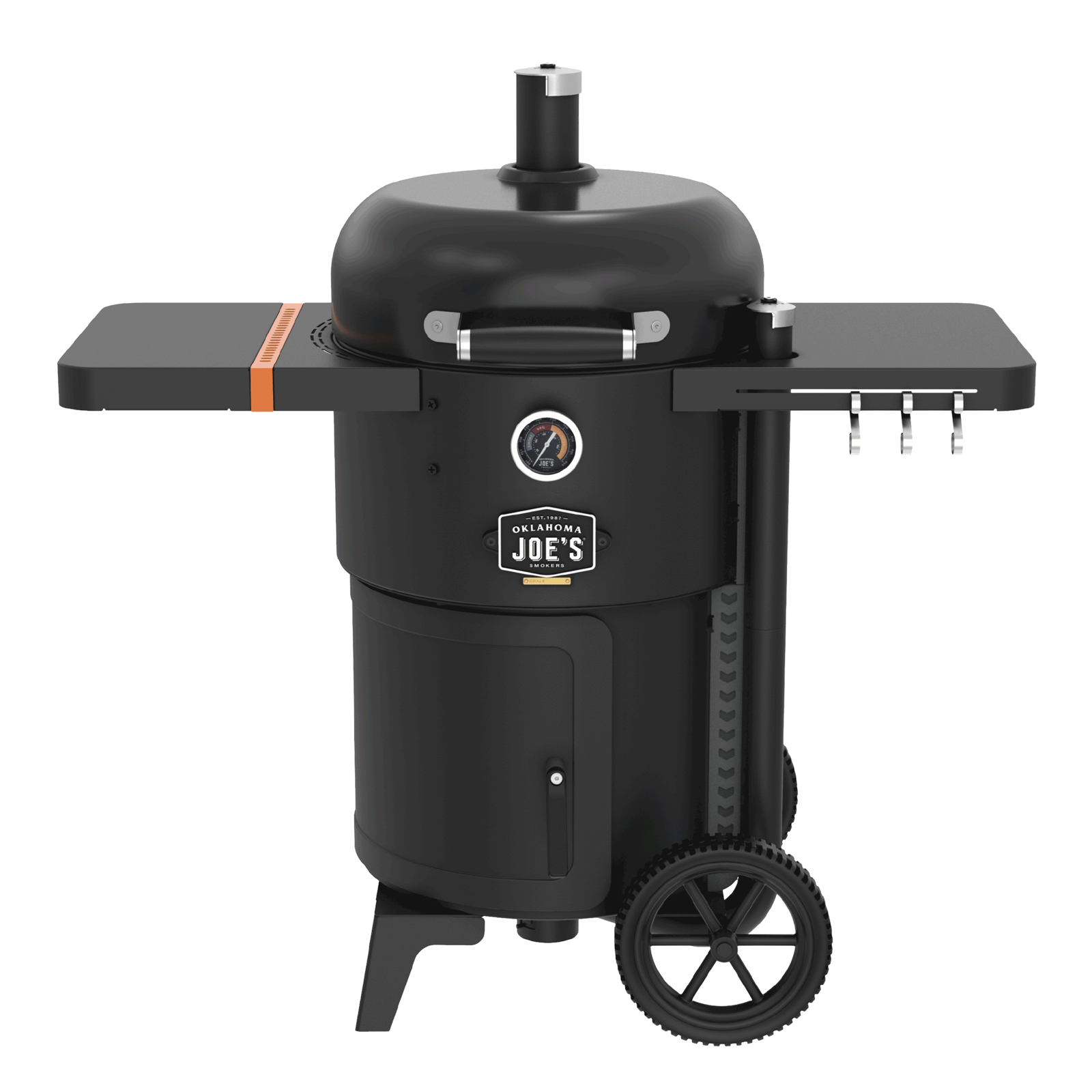
Oklahoma Joe's
Oklahoma Joe's Bronco Drum Smoker & Grill
The 2025 revision of the Bronco and the model below the Bronco Pro already in the catalog. It keeps the two things that made the original Bronco worth buying - a side fuel door that lets you add charcoal without lifting the grate or the food, and an 8 lb charcoal basket rated for 14-plus hours - and adds dual side shelves, rubber-tread wheels and the rib hanger kit as standard. The grate lowers toward the fire for grilling, which is where the '& Grill' in the name comes from. 284 sq in of grate plus nine hooks on three hangers.
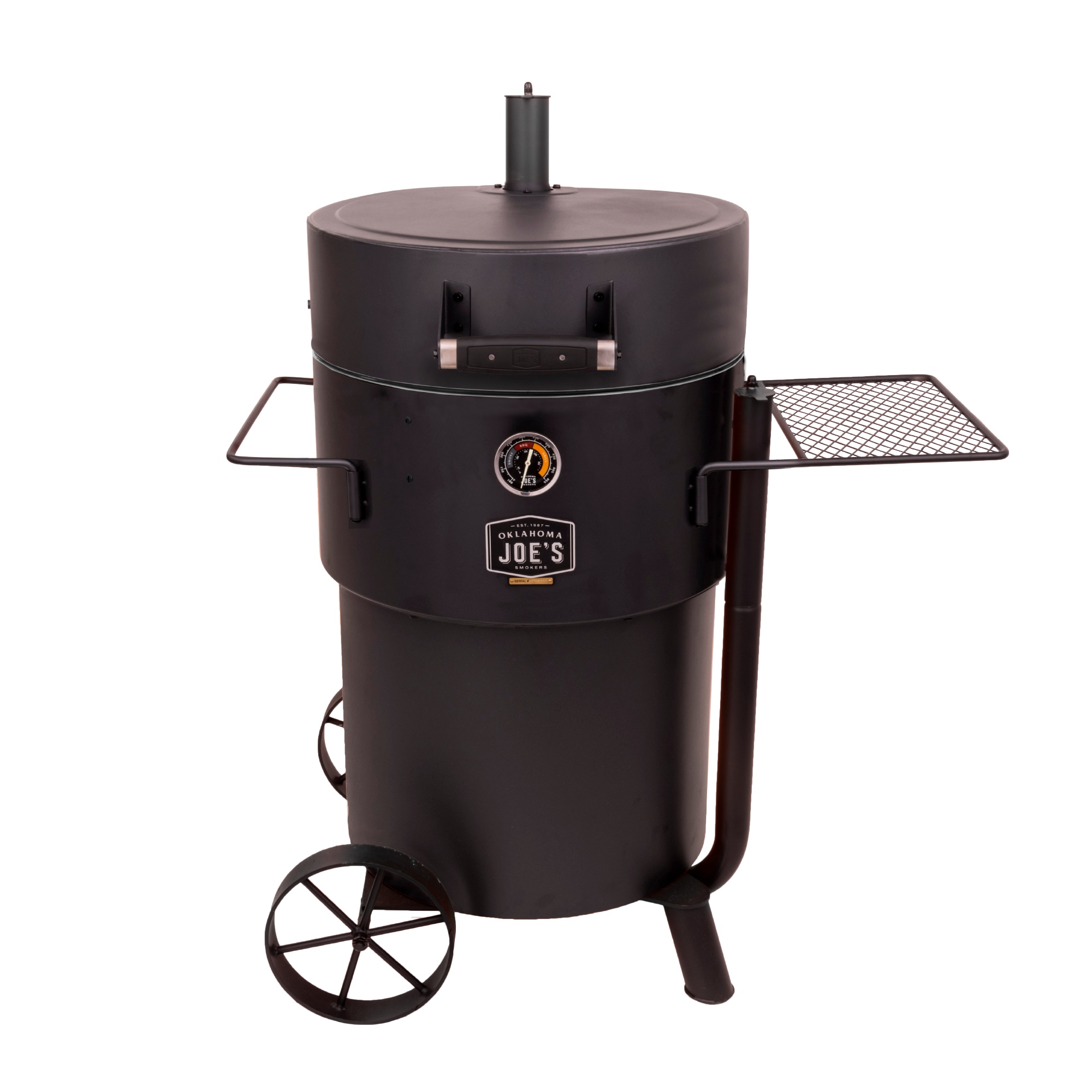
Oklahoma Joe's
Oklahoma Joe's Bronco Pro
The Oklahoma Joe's Bronco Pro is a heavy-duty 21.5-inch charcoal drum smoker with a sealed intake-pipe airflow system that gives drum-style cooking unusually precise temperature control, plus meat hangers and hooks for classic hang-style smoking.
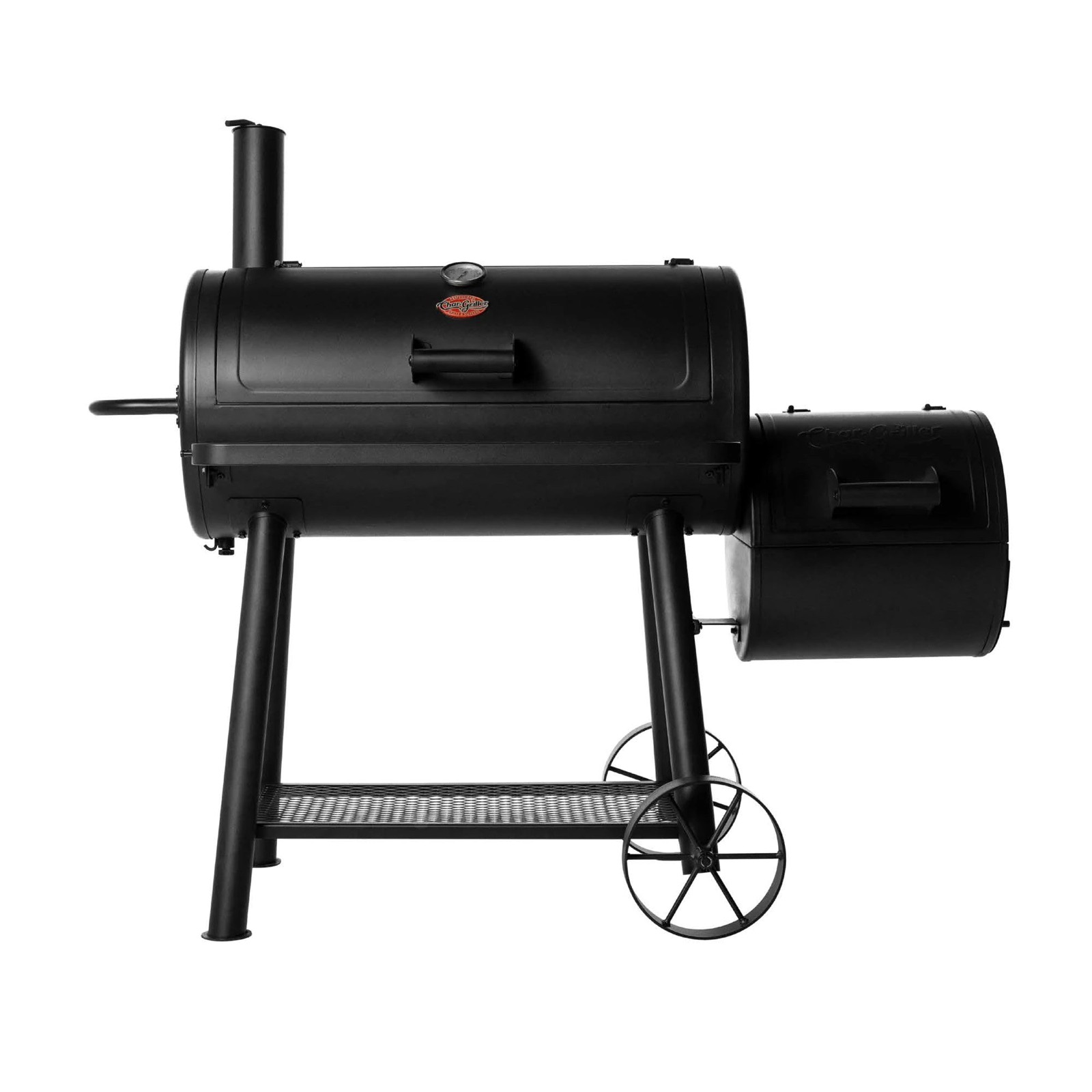
Char-Griller
Char-Griller Dakota Offset Smoker
A newer Char-Griller offset that sits above the Competition Pro and below the Grand Champ: 580 sq in of cooking chamber, 141 lbs, and a firebox that takes splits rather than only charcoal. It is the model Char-Griller added when the entry-offset market moved upmarket, and at $400 it competes directly with the Oklahoma Joe's Highland Classic.